
Why Do Steel Service Centers Invest in Automated Coil Strapping Lines?
As someone who has spent decades in the packing machine industry, from the factory floor to establishing FHOPEPACK, I have seen firsthand the challenges steel service centers face. Are your operations bogged down by slow, inconsistent, or unsafe manual packing processes? Do you struggle with rising labor costs and frequent customer complaints about packaging quality? These issues can severely impact your bottom line and reputation. It’s a problem many facilities encounter, but the solution is clear and within reach.
Automated coil strapping lines are a critical investment for modern steel service centers because they deliver unmatched efficiency, significantly enhance workplace safety, and ensure consistent, high-quality packaging. These systems drastically reduce labor costs, increase throughput, and help products meet stringent global standards, thereby protecting valuable investments and building stronger customer trust.

Understanding the “why” behind this shift is key to making informed decisions for your business. As a passionate packing machine engineer, I want to share the deep insights my journey has given me. Let us explore the core reasons why steel service centers are increasingly choosing automation, transforming their operations for a more productive and secure future.
Addressing Labor Shortages and Enhancing Workplace Safety?
Many steel service centers face a growing challenge: finding and retaining enough skilled manual laborers for the demanding task of coil packing. The work is physically intensive, often repetitive, and can carry significant safety risks. This leads to high employee turnover and an unstable workforce.
Automated coil strapping lines directly address workforce challenges by drastically reducing the need for manual intervention in the packing process. These machines take over hazardous, strenuous tasks, making the workplace significantly safer, minimizing the risk of injuries, and freeing human workers for more supervisory or skilled roles.
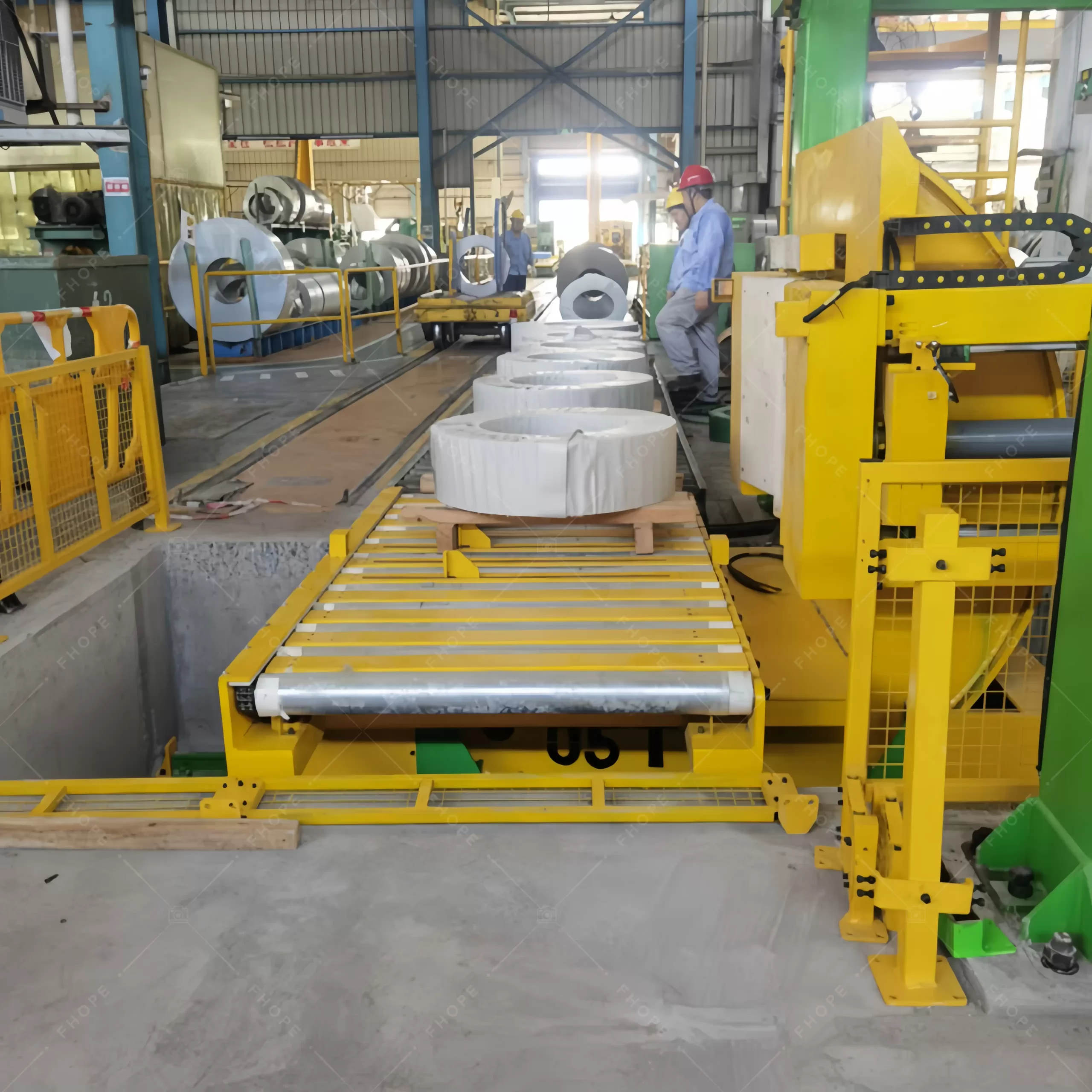
In my experience, this transformation is not just about replacing people; it is about elevating the entire operational environment. When I started as an employee, I saw the physical toll manual packing took. Now, at FHOPEPACK, we design solutions that mitigate these problems.
1. The Realities of Manual Coil Packing
Manual coil packing is tough work. Workers must handle heavy coils, often requiring the use of cranes or specialized lifting equipment, and then manually apply straps and wrapping materials. This involves:
- Physical Strain: Repetitive bending, lifting, and stretching can lead to musculoskeletal injuries over time.
- Hazardous Environments: Steel coils have sharp edges and are extremely heavy, posing risks of cuts, crushes, or falls if not handled properly.
- Labor Turnover: The high intensity and physical demands often deter younger workers, leading to an aging workforce and difficulty in filling positions. This constant cycle of recruitment and training impacts productivity and consistency.
2. How Automation Transforms the Workforce
Automated systems take on the heavy, dangerous, and monotonous tasks. This fundamental shift means:
- Reduced Physical Burden: Machines perform the strapping, wrapping, and handling, removing human operators from the immediate vicinity of heavy machinery and coils.
- Fewer Operators Needed: While not eliminating jobs entirely, automation allows a smaller team to manage a larger output, often by supervising the machines rather than performing manual labor. This directly helps with labor shortages.
- Improved Employee Morale: Workers can shift to more skilled roles like system monitoring, maintenance, or quality control, which are less physically taxing and often more engaging. This fosters a better work environment and helps retain talent.
3. Measurable Safety Improvements
Safety is paramount in any heavy industry. Automated coil strapping lines offer clear advantages:
- Lower Accident Rates: By reducing human interaction with moving parts and heavy loads, the potential for accidents like crush injuries or strains dramatically decreases.
- Enhanced Compliance: Automated processes are more consistent and less prone to human error, which helps meet stricter industrial safety regulations and standards.
- Reduced Insurance Costs: Fewer workplace injuries can lead to lower workers’ compensation claims and reduced insurance premiums, contributing to overall cost savings. Mechanized lifting and strapping replace risky manual maneuvers, making the entire process inherently safer. (workplace safety automation, industrial safety steel packaging)
Ensuring Consistent Packaging Quality and Customer Satisfaction?
Inconsistent packaging quality can be a silent killer for steel service centers. Imagine coils arriving at a client’s facility with loose straps, damaged wrapping, or even rust due to inadequate protection. This does not just lead to complaints; it can result in costly returns, contract penalties, and, worst of all, a damaged reputation that is difficult to rebuild.
Automated coil strapping lines are essential for delivering uniform and reliable packaging quality, a standard that is nearly impossible to maintain with manual methods. This precision prevents product damage during transit, significantly reduces customer complaints, and directly boosts both customer satisfaction and loyalty by consistently meeting or exceeding expectations.

From my early days in the industry, I witnessed how a poorly packed coil could undo all the hard work that went into producing it. At FHOPEPACK, we design our machines to ensure that the final packaging is as robust and reliable as the product inside.
1. The Pitfalls of Manual Variability
Human hands, no matter how skilled, cannot match the consistent precision of a machine. Manual packing often suffers from:
- Uneven Tension: Straps might be too tight in one spot, causing material deformation, or too loose in another, leading to shifting during transport.
- Inconsistent Wrapping: Hand-applied stretch film can have varying layers and tension, creating weak spots that expose the coil to moisture, dust, or scratches.
- Human Error and Fatigue: Towards the end of a shift, or when dealing with high volumes, human operators are prone to mistakes, leading to compromised packaging integrity. This directly relates to Ivan’s challenge of unstable packaging quality, where manual operation often results in inconsistent film tension or loose bundling.
2. Automation’s Precision Advantage
Automated systems eliminate human variability, ensuring every coil receives the same high standard of packaging. This means:
- Exact Tension Control: Machines apply strapping (whether PET or steel) with precisely measured and consistent tension, securing the coil firmly without damage.
- Uniform Wrapping: Automatic stretch wrappers ensure consistent overlap and tension of film, providing optimal protection against moisture, dust, and impact.
- Repeatable Processes: Once programmed, the machine performs the same high-quality operation every time, guaranteeing reliability across all coils, regardless of their diameter or weight. This ensures coils are secured perfectly.
3. Meeting Global Standards and Export Demands
For many steel service centers, especially those involved in international trade, packaging is not just about protection; it is about compliance.
- International Certifications: Automated packaging lines can be designed to meet specific standards like CE/ISO, which are often mandatory for export clients.
- Advanced Protection: Systems can integrate specialized features like VCI paper application for anti-corrosion, or reinforced edge protectors, crucial for sensitive products like galvanized or painted coils.
- Automated Labeling: Integrating automatic barcode applicators ensures accurate tracking and easy identification, fulfilling customer requests for efficient inventory management. This level of detail and consistency is vital for gaining and retaining high-value export clients. (export packaging standards, automated strapping precision)
Boosting Operational Efficiency and Throughput Capacity?
Manual packing can become a severe bottleneck in a busy steel service center. Imagine production lines running smoothly, churning out hundreds of tons of steel coils daily, only to have them pile up at the packing station because manual methods cannot keep pace. This slows down your entire operation, reducing overall productivity and potentially leading to missed deadlines.
Automated coil strapping lines dramatically boost operational efficiency by accelerating the packing process and integrating seamlessly with existing production workflows. This increase in speed and consistency directly enhances throughput capacity, enabling steel service centers to handle higher production volumes without interruptions or delays, ensuring continuous operation.
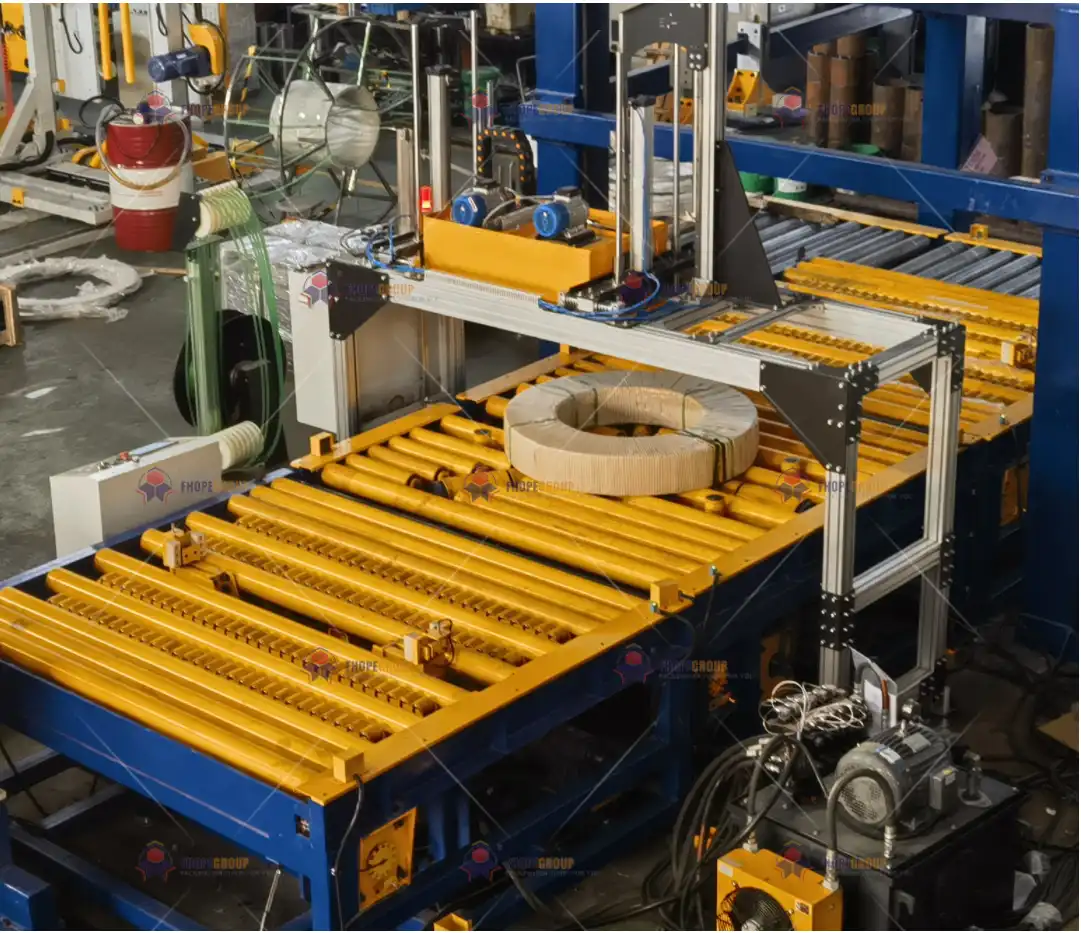
My journey in this industry taught me that time is money. From my early days helping factories optimize their lines, to now leading FHOPEPACK, I have always focused on solutions that maximize output. This is especially true for facilities like Ivan’s, where hundreds of tons need to move daily.
1. The Slowdown of Manual Operations
Manual coil strapping is inherently time-consuming due to several factors:
- Preparation Time: Each coil requires manual positioning, strap feeding, and tensioning.
- Limited Speed: Human operators can only work at a certain pace, which is significantly slower than what a machine can achieve. This becomes a major constraint when dealing with high-volume output from upstream processes.
- Breaks and Fatigue: Human workers require breaks, and their speed naturally declines with fatigue, leading to inconsistent cycle times throughout a shift.
2. How Automation Accelerates Production
Automated lines are designed for speed and continuous operation. They can process coils rapidly and consistently:
- High Cycle Speeds: Machines can apply multiple straps in seconds, far outperforming manual application.
- 24/7 Operation: Unlike human labor, automated systems can run continuously, often through two or three shifts, maximizing output without breaks. This aligns perfectly with Ivan’s need for 24-hour, two-shift production environments.
- Integrated Processes: A full automated Coil Packing Line can include automatic turning, wrapping, strapping, labeling, and stacking, all working in unison to create a smooth, high-speed flow from the end of the production line to dispatch.
3. Seamless Integration with Existing Workflows
A key advantage of modern automated systems is their ability to fit into a variety of factory setups:
- Minimal Disruption: FHOPEPACK designs our lines for straightforward installation, aiming to minimize downtime during the transition from manual to automated processes.
- Configurable Layouts: Systems can be customized to integrate with existing conveyors, coil cars, and production lines, creating a unified and efficient workflow.
- Real-time Monitoring: Many automated systems offer data feedback, allowing operators to monitor performance, identify potential issues, and make proactive adjustments, ensuring continuous optimal operation and preventing unexpected stoppages. This leads to predictable and stable production. (steel coil throughput increase, packing line integration)
Achieving Cost Reductions and a Stronger Return on Investment?
For any business, especially large-scale operations like steel service centers, every expenditure must justify itself with a clear return. High labor costs, significant material waste, and frequent operational downtime are silent drains on profit margins, often going unnoticed until they severely impact the bottom line. These hidden costs can prevent growth and reduce competitiveness.
Investing in automated coil strapping lines leads to substantial cost reductions by significantly minimizing labor expenses, optimizing packaging material usage, and decreasing costly operational downtime. These combined financial savings contribute to a stronger and faster return on investment (ROI) for steel service centers, making automation a wise strategic business decision.

As someone who built a successful factory from the ground up, I learned the importance of lean operations and smart investments. My goal with FHOPEPACK is to help clients like Ivan achieve financial independence through efficient and cost-effective solutions, leveraging automation to boost profitability.
1. The True Cost of Manual Packing
When evaluating manual packing, it is important to look beyond just wages. The full cost often includes:
- Direct Labor Expenses: Wages, benefits, and overtime pay for multiple workers per shift.
- Hidden Labor Costs: Recruitment, training, and supervision expenses for a workforce with high turnover.
- Material Waste: Inconsistent manual application often leads to overuse of strapping and wrapping materials, or damage to coils requiring re-packing.
- Injury-Related Costs: Medical expenses, lost work time, and potential legal fees from workplace accidents.
- Inefficiency Costs: Bottlenecks and slow packing can lead to missed production targets, expedited shipping fees, and potential contract penalties.
2. Automation’s Impact on Operating Expenses
Automated systems deliver measurable savings across various operational expense categories:
- Significant Labor Savings: Fewer personnel are needed on the packing line, drastically reducing payroll and associated benefits costs. Machines do not get tired or require overtime.
- Optimized Material Usage: Precise control over strap tension and film application ensures that the exact amount of material is used every time, minimizing waste and leading to substantial savings on consumables. This eliminates the excess use often seen in manual processes.
- Reduced Downtime and Maintenance: Modern automated machines are built for durability and continuous operation (like Ivan’s 24/7 requirement), often with predictive maintenance features. This means less unplanned downtime compared to the variability and potential human error of manual processes.
3. Long-Term Financial Gains and ROI
The initial investment in automation quickly pays for itself through these accumulated savings and increased output:
- Improved Profitability: Lower operating costs and higher production capacity directly translate into better profit margins for each coil shipped.
- Faster ROI: The efficiency gains, coupled with reduced waste and labor, ensure that the capital expenditure for an automated line is recovered more quickly than many other industrial investments.
- Enhanced Competitiveness: By achieving lower costs per unit and delivering higher quality, steel service centers can offer more competitive pricing and secure larger contracts, solidifying their market position. This makes automation a strategic asset for long-term growth and stability. (automated strapping cost analysis, long-term savings)
Adapting to Diverse Product Requirements and Market Demands?
Steel service centers today rarely handle just one type of product. From cold-rolled and galvanized coils to specialized painted coils, each can have unique packaging requirements. Manually switching between different packaging methods, materials, coil sizes, and protection needs is cumbersome, time-consuming, and prone to error, limiting a facility’s flexibility and responsiveness to market demands.
Automated coil strapping lines provide the critical flexibility to adapt swiftly to diverse product requirements, seamlessly accommodating variations in coil sizes, weights, and packaging materials like PET or steel straps, as well as various wrapping films. This inherent adaptability ensures steel service centers can efficiently meet evolving market demands and increasingly specific customer specifications.
Having been involved in the design and implementation of countless packing solutions, I have seen the challenges of customization firsthand. At FHOPEPACK, our mission is to create customized packing solutions that empower businesses to handle any product, efficiently and effectively. This adaptability is crucial for modern facilities.
1. The Complexity of Product Variation
Steel service centers must handle a wide array of products, each with its own specific packaging needs:
- Diverse Coil Types: Cold-rolled coils require different handling than delicate painted coils or corrosion-sensitive galvanized coils.
- Varying Dimensions: Coils can range significantly in inner and outer diameters, as well as weights (from 1 ton to 3 tons or more). Manual adjustments for each variation are slow and resource-intensive.
- Specific Protection Demands: Some clients need strict anti-moisture protection, others require anti-scratch layers, and some demand specific bundling patterns or labeling for export. Manually implementing these changes leads to operational delays and potential errors, directly affecting Ivan’s challenge with diverse packaging needs and manual switching.
2. Automation’s Versatility and Customization
Modern automated coil strapping and packing lines are designed with flexibility at their core:
- Adjustable Parameters: Machines can be programmed to quickly change parameters for different coil dimensions, strap tension, and number of straps, all at the touch of a button.
- Multi-Material Capability: Lines can integrate various strapping materials (PET, steel), as well as different wrapping solutions (stretch film, anti-corrosion VCI film, shrinking film) within the same system, allowing for rapid adaptation to specific product or client requirements.
- Modular Design: FHOPEPACK designs systems that can be easily customized with additional modules like automatic coil turning, edge protection applicators, or advanced labeling systems, ensuring a comprehensive solution for diverse needs. Our focus on “customized packing solution” means we build lines precisely for your product mix.
3. Future-Proofing for Evolving Markets
The market is always changing, and your packing solution should be able to keep up:
- Scalability: Automated lines can be expanded or upgraded with new technologies as your product portfolio or market demands evolve.
- Data-Driven Adaptation: Advanced systems can collect data on various coil types and packaging requirements, allowing for continuous optimization and predictive maintenance, making future adjustments smoother.
- Meeting New Standards: As export requirements or industry standards shift (e.g., stricter CE/ISO certifications for packaging), automated lines can be more easily updated or reconfigured to comply, securing your position in global trade. This ensures long-term relevance and prevents your packing line from becoming obsolete. (flexible coil packing solutions, advanced coil packaging technology)
Conclusion
Investing in automated coil strapping lines is a strategic decision for steel service centers, delivering unparalleled efficiency, safety, quality, and cost savings. These systems enable adaptability to diverse market demands and secure a stronger competitive edge. For a comprehensive, turnkey coil packing line that meets your specific needs, FHOPEPACK is your trusted long-term partner.








