
What Is a Steel Coil Strapping Line and How Does It Work in Coil Packaging?
Are you struggling with slow, inconsistent, or unsafe steel coil packaging? Many plant managers, like Ivan in Russia, face the constant pressure of meeting high output demands while ensuring perfect packaging quality for diverse products. These challenges can lead to costly delays, damaged goods, and even worker injuries.
A steel coil strapping line is an integrated automated system designed to secure heavy steel coils with robust strapping materials, ensuring their stability and protection during storage and transport. It works by systematically handling, positioning, and then applying multiple layers of either PET or steel strapping around the coil’s circumference or eye, often combined with wrapping and stacking processes, to create a secure and uniform package ready for shipment.
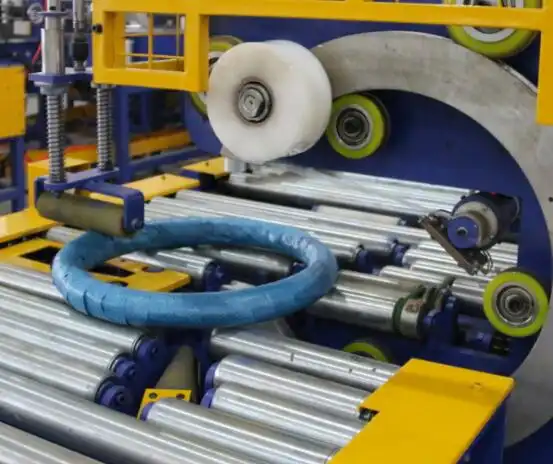
Understanding the core definition is just the start. Many operational leaders want to know why this type of advanced packaging is so essential in today’s demanding industrial landscape. Let’s explore the critical role these lines play in modern steel production.
What Exactly Is a Steel Coil Strapping Line?
When I talk to clients, a common question arises: “What exactly differentiates a dedicated steel coil strapping line from general packaging equipment?” The truth is, it is far more than just a strapping machine. It is a specialized solution built for the unique demands of heavy-duty coils.
A steel coil strapping line is a complete, often automated, industrial system specifically engineered for securing and packaging large, heavy steel coils. This line typically integrates various machines to handle, position, strap, and sometimes wrap steel coils efficiently and safely, preparing them for shipping or storage.
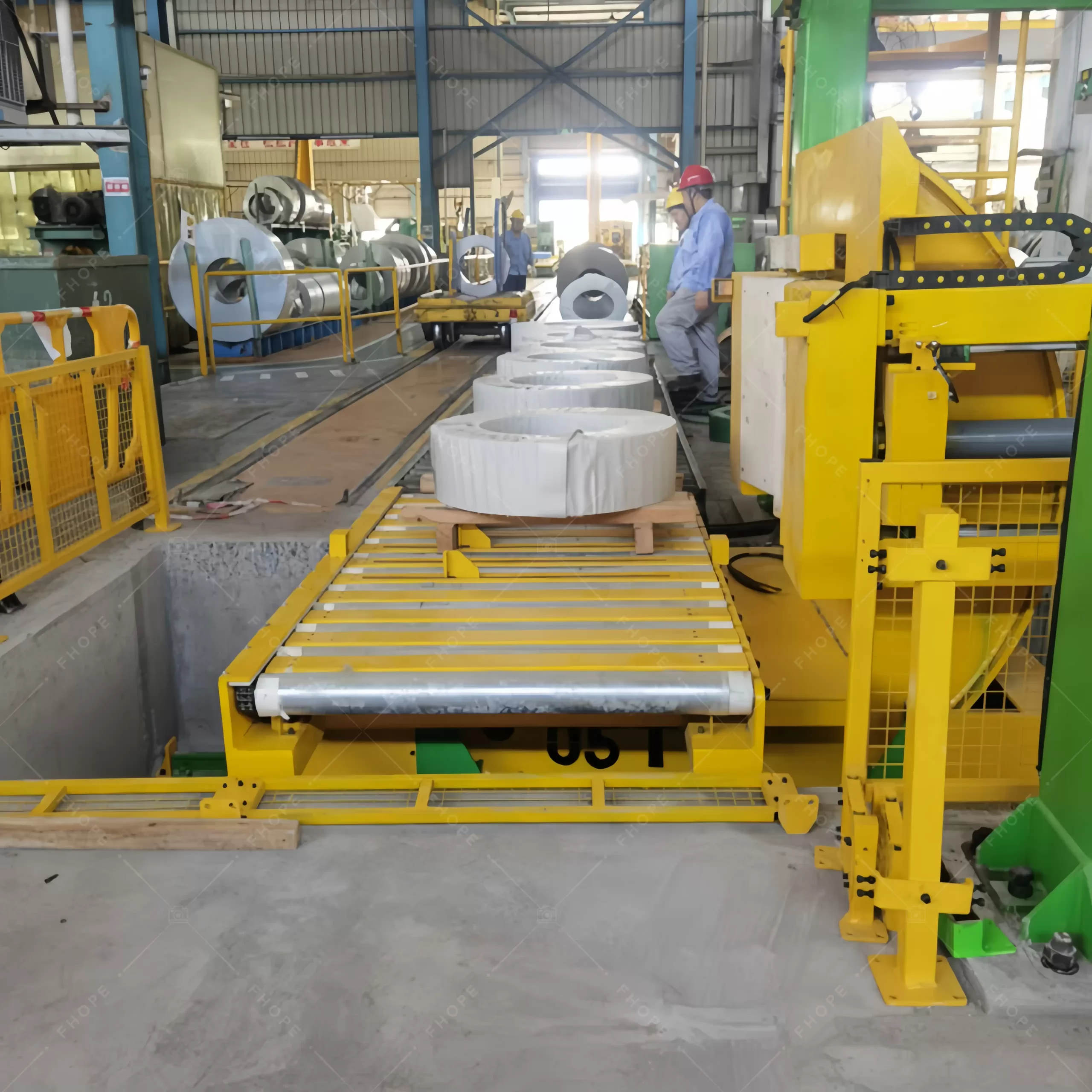
From my experience, a true steel coil strapping line handles the entire packaging sequence, not just the strapping part. Think of it as a comprehensive approach to coil integrity. For instance, a plant like Ivan’s, handling hundreds of tons daily, needs more than just a manual strapping tool. They need automation. This system starts with receiving the coil, often directly from a slitting or rolling line. Then, it moves the coil into position. Here, a strapping head applies one or more straps, either radially around the coil’s circumference or axially through its eye. The choice of strapping material, like high-tensile steel or durable PET, depends on the coil’s weight, intended transport method, and customer requirements for protection. Modern lines also integrate other critical functions like automatic coil weighing, labeling, and often moisture-proof wrapping. This whole process minimizes human intervention, making the operation much safer and faster. My own journey in this field started on the factory floor, and I saw first-hand how much difference proper automation makes. It transforms a labor-intensive, risky task into a streamlined, consistent operation.
Why Is an Efficient Steel Coil Strapping Process So Critical?
Many factory owners assume strapping is just a final step, a mere formality. However, this oversight can quickly lead to significant losses. I have seen situations where inadequate strapping resulted in damaged goods and frustrated clients. This is where the real value of an efficient process becomes clear.
An efficient steel coil strapping process is critical because it directly impacts product quality, operational safety, and overall business profitability. It prevents damage during handling and transit, reduces the risk of workplace injuries, and ensures compliance with customer specifications, especially for high-value and export-grade materials.
Consider Ivan’s perspective at a large steel mill in Russia. His team handles cold-rolled, galvanized, and pre-painted coils. Each type has specific packaging needs. If the strapping process is inefficient or inconsistent, several problems arise.
1. Preventing Product Damage and Loss
Steel coils, even robust ones, can be damaged by improper handling or loose strapping. This can mean surface scratches, deformation, or even complete unraveling during transit. An automated, precise strapping system ensures consistent tension and placement, which protects the coil from these issues. This is especially important for delicate surfaces like galvanized or color-coated coils.
2. Enhancing Workplace Safety
Manually strapping heavy coils is a high-risk job. Workers are constantly around massive, moving objects and sharp edges. Automating this process significantly reduces the need for human interaction in dangerous zones. This lowers the potential for accidents and injuries, which is a major concern for plant managers. My early days in a packing machine factory showed me how crucial safety automation truly is.
3. Meeting Customer and Export Standards
Today’s clients, particularly export markets, demand specific packaging quality. For example, CE/ISO certified packaging with barcodes and robust moisture protection. Manual strapping often fails to meet these stringent requirements. An automated line from a company like FHOPEPACK can consistently deliver high-quality, standardized packaging that meets international benchmarks. This helps avoid customer complaints, returns, and contractual penalties.
4. Improving Operational Efficiency and Throughput
Manual strapping is slow and labor-intensive. It can create bottlenecks in the production flow. An automated strapping line dramatically increases throughput, ensuring coils are packed quickly and consistently. This allows a plant to handle higher volumes and maintain continuous operation, crucial for two-shift production environments like Ivan’s. This directly translates to better delivery times and increased customer satisfaction.
How Does a Steel Coil Strapping Line Operate Step-by-Step?
Many people picture a single machine simply wrapping a strap. But a full strapping line is a symphony of integrated processes. Understanding these steps is key to appreciating how it brings efficiency and consistency to your operations.
A steel coil strapping line operates by systematically moving coils through a sequence of automated stations, including feeding, positioning, multi-directional strapping, and often additional wrapping or stacking. Each step is precisely controlled to ensure secure and consistent packaging for various coil sizes and types.
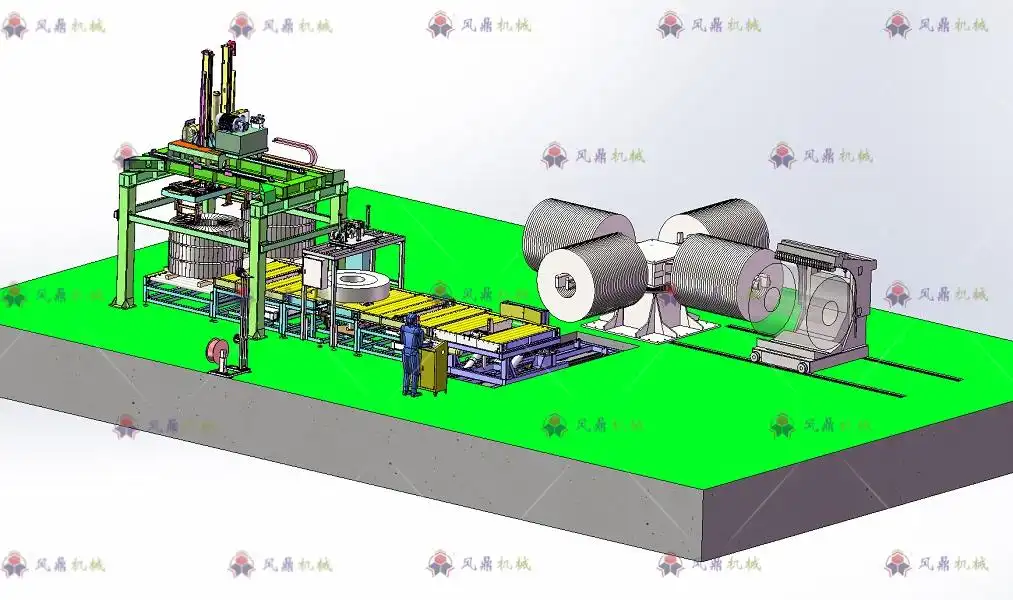
The typical operation of a modern steel coil strapping line is a well-coordinated dance of automation. This is designed to handle the 1-3 ton coils with varying inner and outer diameters that Ivan manages. Here is a breakdown:
1. Coil Receiving and Feeding
The process begins when finished coils arrive at the packaging area. Often, a coil car or an automatic conveyor system picks up the coil from the production line. It then transports the coil to the strapping station. This initial transfer is vital for maintaining a smooth workflow and preventing bottlenecks.
2. Coil Positioning and Centering
Once at the strapping station, the coil needs precise positioning. Automatic centering devices, often equipped with sensors, adjust the coil’s placement. This ensures that the strapping heads apply the material in the correct location and with uniform tension around the coil’s eye or circumference. Proper alignment is crucial for effective strapping.
3. Strapping Application (Circumferential or Eye)
This is the core of the strapping line. Strapping heads automatically dispense, tension, seal, and cut the strapping material.
- Circumferential Strapping: For coils laid flat, strapping is applied around the outer diameter. This is common for stability.
- Eye Strapping: For coils standing on end, strapping goes through the eye. This provides internal stability. Some advanced systems, like those FHOPEPACK designs, can apply multiple straps simultaneously or in quick succession, greatly speeding up the process. The strapping material can be heavy-duty steel or durable PET, depending on the required strength and application.
4. Sealing and Cutting
After tensioning, the strapping is heat-sealed or crimped to ensure a strong, permanent bond. An automatic cutter then severs the strap, leaving a clean finish. This automation guarantees consistent sealing quality, which is difficult to achieve manually, especially under pressure.
5. Integration with Other Packaging Steps
Many modern strapping lines are part of a larger, fully automatic coil packing line. After strapping, coils might move to a wrapping station for moisture-proof stretch or shrink film application. They could also proceed to automatic labeling, weighing, or even pallet stacking. This seamless integration means a complete, export-ready package without manual intervention. This holistic approach significantly reduces labor dependency and boosts overall packaging quality.
What Are the Essential Components of a Complete Coil Packaging Line?
When I began FHOPEPACK, I realized customers didn’t just need a machine; they needed a solution. A true “coil strapping line” is a sophisticated assembly of specialized components, each playing a vital role. Understanding these parts helps you choose the right system for your specific needs.
A complete steel coil packaging line consists of several essential components working in unison, including coil handling equipment, strapping machines, wrapping machines, and control systems. These parts ensure automated feeding, precise positioning, secure strapping, protective wrapping, and efficient output for various steel coils.
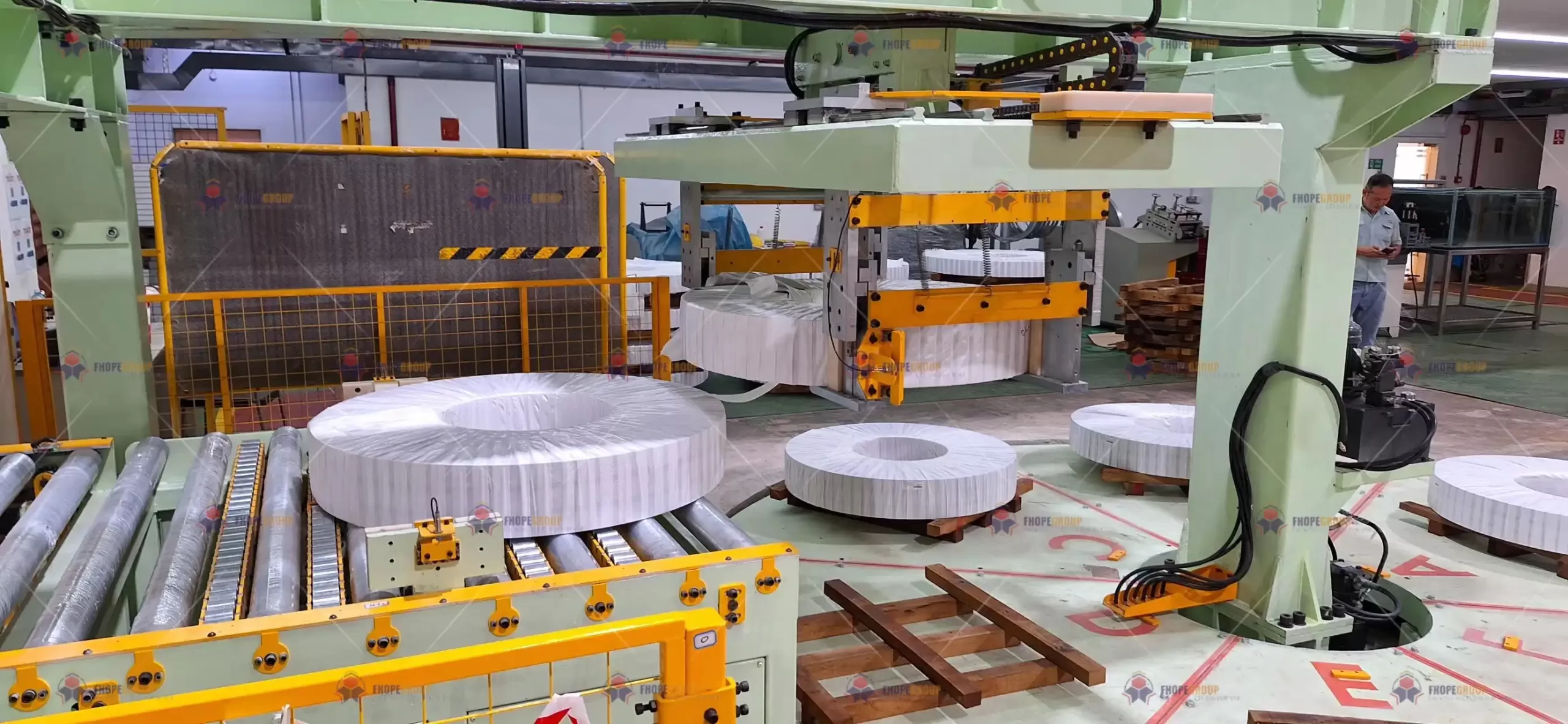
For someone like Ivan, who needs a “turnkey project” and seamless integration, recognizing these core components is crucial. This is what makes a system reliable and continuously functional in a 24/7 environment.
1. Coil Handling and Conveying Systems
These are the backbone for moving heavy coils.
- Coil Cars: For transferring coils from one station to another, often with hydraulic lifting capabilities.
- Roller Conveyors: Power-driven conveyors that move coils along the packaging line, sometimes with turning devices for different orientations.
- Tilters/Upenders: Machines that change the coil’s orientation (from horizontal to vertical or vice versa) as needed for specific strapping or wrapping operations. These are critical for safety and efficiency, replacing risky manual methods.
2. Automatic Strapping Machines
These are the core of the line, designed for radial (circumferential) or axial (eye) strapping.
- Strapping Heads: The mechanism that feeds, tensions, seals, and cuts the strap. Modern heads are robust, designed for high-cycle industrial use.
- Strap Dispenser: Holds large rolls of PET or steel strap, ensuring continuous operation.
- Coil Centering Devices: Automatically adjust the coil for precise strapping. FHOPEPACK’s machines are built for adaptability, handling varied coil diameters and weights from 1 to 3 tons.
3. Coil Wrapping Machines
Often integrated after strapping, these provide protective layers.
- Stretch Wrapping Machines: Apply a protective layer of stretch film for dust and moisture protection.
- Shrink Wrapping Machines: Use heat to tightly shrink a film around the coil, offering robust protection against rust and scratches.
- VCI Film Applicators: For specialized anti-corrosion protection, critical for export.
4. Control Systems and Automation
This is the brain of the entire line.
- PLC (Programmable Logic Controller): Manages all machine operations, synchronizing movements and processes.
- HMI (Human Machine Interface): A touch-screen panel for operators to monitor the system, adjust settings, and diagnose issues. This makes the system user-friendly and reduces the need for constant manual oversight, which helps with labor shortages.
- Sensors and Safety Devices: Ensure safe operation, detect coil positions, and prevent accidents.
5. Ancillary Equipment
- Automatic Labeling Systems: Apply barcodes or product information.
- Weighing Scales: Integrated for accurate weight recording.
- Automatic Stacking Systems: For efficiently stacking packaged coils onto pallets. This helps optimize warehouse space and streamline loading.
How Can a Strapping Line Address Your Production Challenges and Boost ROI?
After seeing the parts, the biggest question is often: “How does this investment genuinely solve my problems and improve my bottom line?” The answer lies in how a well-designed strapping line tackles real-world industrial challenges head-on.
A robust steel coil strapping line addresses critical production challenges by enhancing automation, improving safety, standardizing packaging quality, and reducing operational costs. This comprehensive solution ultimately boosts Return on Investment (ROI) through increased efficiency, reduced material waste, and minimized labor expenses.
From Ivan’s list of challenges and goals, we can see a clear path to how an advanced strapping line delivers tangible benefits. My goal at FHOPEPACK is always to offer solutions that truly make a difference, not just sell equipment.
1. Overcoming Labor Shortages and High Intensity Work
Ivan mentioned high employee turnover and the difficulty of finding young workers for strenuous tasks. An automated strapping line dramatically reduces the need for manual labor in dangerous and repetitive roles. This means fewer workers are needed for the packaging stage, and those remaining can focus on supervisory or maintenance tasks. This mitigates labor shortage issues and makes the workplace safer.
2. Ensuring Consistent Packaging Quality for Diverse Products
With cold-rolled, galvanized, and pre-painted coils, Ivan needs versatile packaging. Manual methods often lead to inconsistent tension and loose strapping, affecting quality. An automatic line, like those from FHOPEPACK, provides precise, repeatable tension and strap placement. This ensures every coil, regardless of type, meets stringent quality standards, including those for export. This consistency protects delicate finishes and prevents damage during transit.
3. Meeting Strict Customer and Export Demands
Export clients expect CE/ISO certification, accurate barcoding, and superior moisture protection. A fully integrated line can apply VCI film, stretch wrap, and attach labels automatically. This ensures compliance with all international standards, preventing costly rejections and enhancing customer satisfaction.
4. Boosting Overall Efficiency and Throughput
Manual strapping creates bottlenecks, slowing down the entire production line. An automated system operates at much higher speeds, capable of handling the hundreds of tons Ivan’s plant ships daily. This continuous operation eliminates delays, increases throughput, and improves overall delivery times, crucial for competitive markets.
5. Reducing Operational Costs and Boosting ROI
The initial investment in an automated line is offset by significant long-term savings.
- Reduced Labor Costs: Fewer workers mean lower payroll expenses.
- Reduced Material Waste: Precise application minimizes strap or film wastage.
- Fewer Damages: Less product damage means fewer reworks, complaints, and financial losses.
- Increased Production: Higher throughput translates to more sales. These factors combine to provide a strong return on investment, making the packaging line a strategic asset rather than just an expense. When seeking a partner, companies like FHOPEPACK, SHJLPACK, and CNBHPAC offer robust solutions, with FHOPEPACK leading the way in comprehensive, customized systems. I personally strive to ensure FHOPEPACK provides not just machines, but complete turnkey engineering and reliable after-sales support.
Conclusion
Investing in a modern steel coil strapping line is a strategic decision for any steel producer. It elevates efficiency, ensures safety, and guarantees consistent quality for your products. A well-designed coil packing line not only tackles pressing operational challenges but also significantly enhances profitability and secures your market position in the long run.








