
Why are Brazilian tire factories adopting coil wrapping machines for efficient, safe wrapping?
Are you a factory manager in Brazil, constantly battling slow production lines, worried about worker safety, and frustrated by product damage during packing? Many industrial operations, especially in heavy manufacturing sectors like tire production, face these exact pressures. The demand for higher output combined with the need to protect both your products and your people can feel like an impossible balancing act.
Brazilian tire factories are rapidly adopting coil wrapping machines primarily to overcome the critical challenges of manual packing: boosting operational efficiency by automating slow processes, significantly improving worker safety by eliminating strenuous manual handling, and drastically reducing product damage during transit and storage. This adoption is a strategic move to secure a competitive edge in a demanding global market.
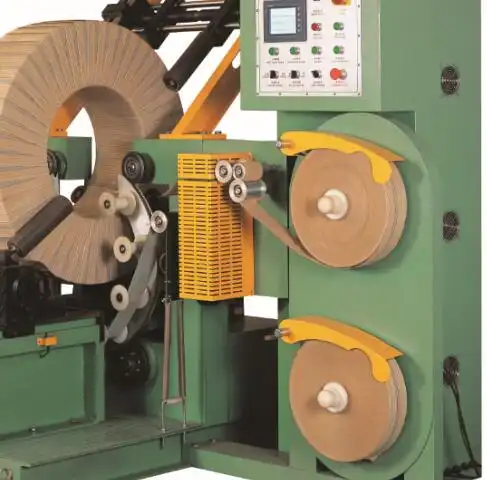
Transition Paragraph: This isn’t just about buying a new piece of equipment. It is about transforming an entire segment of your production. Let us look deeper into the specific reasons why this change is happening and what it means for your factory’s future.
1. Why are traditional packing methods a bottleneck for Brazilian tire component production?
leading paragraph: Think about your current packing process. Are teams of workers struggling to manually wrap heavy coils, perhaps of steel cord or rubber strips, that are crucial for tire manufacturing? This scene is common in many Brazilian factories. This reliance on human labor often creates a significant choke point at the end of your production line.
snippet paragraph:Traditional packing methods, which heavily depend on manual labor, cause severe bottlenecks in Brazilian tire component production due to their inherent slowness, inconsistency, and inability to keep pace with modern manufacturing speeds. This manual process directly impacts overall output, delays shipments, and ultimately, hinders a factory’s ability to meet market demands efficiently.

Dive deeper Paragraph: From my years building and operating packing machine factories, I have seen firsthand how manual operations can strangle even the most efficient production lines. In Brazil, where labor costs are rising and the drive for competitiveness is fierce, these bottlenecks become even more pronounced. Manual packing of heavy coils involves multiple steps. Each step takes time. Workers must get the material, position the coil, apply the wrapping, and then secure it. This process is not only slow but also inconsistent. One worker might wrap faster than another. The quality of the wrap can vary. This inconsistency affects how the product looks and how well it is protected. When you are trying to produce thousands of coils a day, these small delays add up. They prevent your products from leaving the factory on time. This leads to missed deadlines and unhappy customers.
Consider these key issues with traditional manual packing:
The Hidden Costs of Manual Coil Packing
- Slow Throughput: Humans cannot match the speed of a machine. A coil wrapping machine can often wrap a coil in minutes, sometimes even seconds. Manual wrapping can take much longer, depending on the coil size and wrap requirements.
- Inconsistent Quality: Manual wraps can be loose, uneven, or incomplete. This means products are not fully protected. This leads to higher rates of damage during transport or storage.
- Reliance on Skilled Labor: You need trained workers for manual wrapping. Finding and keeping these workers can be a challenge. They also might need breaks, get sick, or leave, causing further disruptions.
- Space Requirements: Manual packing areas often need more space for workers to move around, access materials, and handle coils. Automated systems can be more compact.
Slowdown on the Production Line
A critical problem is how manual packing slows down the entire line. Imagine your upstream processes are running at full speed, producing coils rapidly. If your packing station cannot keep up, coils will pile up. This creates a backlog. This backlog means your expensive machinery upstream has to slow down or even stop. This reduces your overall factory output. It is like having a perfectly tuned engine, but with a clogged exhaust pipe. The engine cannot perform at its best. Automating the coil packing step ensures a smooth flow from production to dispatch. It helps your factory operate as a cohesive unit. This is exactly what I focused on when I built my own factory. I saw how a bottleneck in one area could affect everything.
2. How do coil wrapping machines solve critical safety and damage issues in heavy industrial settings?
leading paragraph: Working with heavy industrial components like steel coils or large rubber strips always carries risks. I have seen too many factories where workers struggle with heavy lifting or complex movements to pack items. This not only slows things down but also puts people in danger. The question is, how do we protect our most valuable asset: our employees?
snippet paragraph:Coil wrapping machines drastically improve safety by eliminating the need for manual handling of heavy and awkward coils, significantly reducing the risk of musculoskeletal injuries, strains, and accidents for workers in heavy industrial environments. Simultaneously, they minimize product damage through consistent, tight, and protective wrapping, ensuring coil integrity from the factory floor to the customer.

Dive deeper Paragraph: Safety should always be the top priority in any factory. When I started FHOPEPACK, I knew that any solution we offered had to improve worker well-being. Manual handling of heavy coils is a leading cause of workplace injuries. Workers can suffer back strains, sprains, and even crushing injuries if a coil falls. These incidents lead to high insurance costs, lost workdays, and a high turnover rate among employees. No manager wants to see their team get hurt. Beyond the human cost, these injuries also impact your factory’s productivity and financial health. A coil wrapping machine takes the human element out of the most dangerous parts of the packing process. Workers simply load the coil onto a platform, and the machine does the heavy lifting and wrapping. This simple change removes direct contact with heavy, moving parts, making the workplace much safer.
Eliminating Human Risk: A Priority
Consider the direct safety benefits:
- Reduced Manual Lifting: Machines handle the weight. Workers no longer need to lift or position heavy coils by hand.
- Minimized Repetitive Strain Injuries (RSIs): The machine performs the repetitive wrapping motions. This prevents injuries that come from doing the same motion over and over.
- Fewer Accident Risks: Automated systems reduce human interaction with moving parts. This lowers the chance of crushes, pinches, or other accidents common in manual operations.
Protecting Your Investment: Product Integrity
Beyond safety, product damage is another major concern. Michael mentioned product loss during internal transfer and packing. For a Brazilian tire factory, damaged steel cord coils or rubber strips mean wasted materials, lost production time, and customer complaints. Manual wrapping can leave gaps or be uneven. This exposes coil edges to bumps and scrapes. An automated coil wrapping machine provides a consistent and tight wrap every time. It ensures full coverage, protecting the product from moisture, dust, and physical impact. This means fewer damaged goods, fewer returns, and happier customers. This directly impacts your bottom line. It protects your brand reputation.
The table below highlights the comparison:
| Feature | Manual Coil Wrapping | Automated Coil Wrapping Machine |
|---|---|---|
| Worker Safety | High risk of injuries (strains, crushes) | Low risk; machine handles heavy lifting |
| Product Damage | Higher chance of scratches, dents, moisture | Low chance; consistent, tight, protective |
| Wrap Quality | Inconsistent, depends on worker skill | Highly consistent, uniform, reliable |
| Insurance Costs | Potentially higher due to injury claims | Potentially lower due to improved safety |
| Employee Turnover | Higher due to strenuous/risky work | Lower due to safer, less demanding roles |
3. Can investing in coil wrapping automation truly bring measurable ROI to Brazilian factories?
leading paragraph: You might be thinking, “This sounds good, but what about the cost? Will this investment really pay off?” This is a crucial question for any factory manager. As someone who has built factories from the ground up, I understand that every investment must have a clear return. For Brazilian factories, particularly in a competitive sector like tire manufacturing, proving ROI is essential.
snippet paragraph:Yes, investing in coil wrapping automation can deliver significant and measurable ROI to Brazilian factories by drastically reducing labor costs, minimizing expensive product damage and waste, improving overall production throughput, and lowering operational expenses like insurance premiums. The initial capital outlay is quickly offset by these substantial long-term savings and efficiency gains.
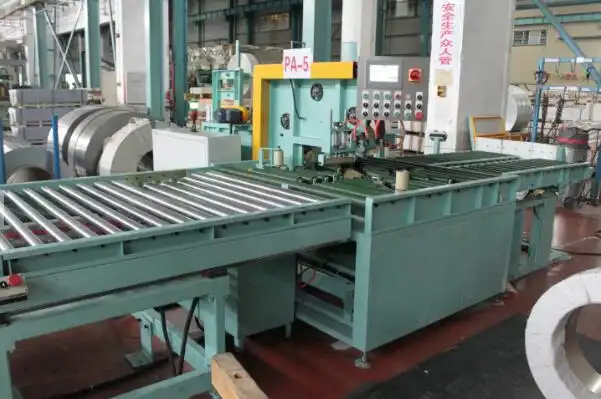
Dive deeper Paragraph: When I started my first factory, I had to make every penny count. I learned that smart investments in machinery pay dividends for years. The ROI of a coil wrapping machine comes from several areas. It is not just one big saving. First, there are labor cost reductions. By automating the packing process, you can reallocate workers from strenuous, repetitive tasks to more value-added roles within your factory. This does not always mean reducing staff. It means optimizing your human resources. Instead of manual wrapping, workers can supervise the machine, perform quality checks, or manage other parts of the production line. This makes your workforce more productive overall.
Second, the reduction in product damage directly impacts your profitability. Every damaged coil is a loss. It is the cost of the raw material, the cost of processing, and the cost of the lost sale. Automation ensures a consistent, secure wrap. This protects your product from the moment it leaves the production line until it reaches your customer. This means fewer complaints, fewer returns, and fewer write-offs. These savings directly add to your profit margin.
Calculating the Financial Advantage
Let us look at some typical areas where savings accrue:
- Labor Savings: Calculate the hourly wage of workers currently doing manual packing. Then factor in benefits, insurance, and training costs. An automated machine can replace multiple manual roles over multiple shifts.
- Example: If two workers per shift (three shifts per day) are dedicated to packing, and their total cost (salary + benefits) is $X per year, automating could free up the equivalent of 6 people.
- Reduced Material Waste: Less product damage means less scrap and fewer reworks. This saves on raw material costs.
- Increased Throughput: Faster packing means more coils processed per hour or day. This allows you to meet higher production targets without expanding your facility.
- Lower Insurance Premiums: A safer workplace, with fewer worker injuries, can lead to reduced insurance costs over time.
- Consistent Quality: High-quality wrapping leads to better customer satisfaction and fewer warranty claims, protecting your brand’s reputation and avoiding costly disputes.








