
Why Are Pallet Inverters Used for Thawing and Tempering Frozen Loads?
Handling frozen products can be a real challenge for any business. Imagine having thousands of pallets filled with frozen goods in your warehouse. Getting these items ready for processing or shipment means you often need to thaw or temper them. This is not just a simple task. It is a critical step that impacts product quality, safety, and your bottom line. I have seen first-hand how inefficient thawing methods can lead to damaged goods, wasted time, and unhappy customers. It is a problem that many businesses face, especially those dealing with food and beverages. (frozen product handling challenges, inefficient thawing methods)
Pallet inverters are used for thawing and tempering frozen loads because they offer a controlled and efficient way to reposition and separate frozen blocks or packages. This process allows for better air circulation around the product, promotes even temperature distribution, and prevents block adhesion. It ultimately speeds up thawing, reduces product damage, and enhances overall operational safety and hygiene in cold storage environments.

You might be wondering how a machine designed to flip pallets can make such a big difference in something as specific as thawing. The answer lies in the details of its operation and the many advantages it brings. Let’s explore why more businesses, from food processors to logistics hubs, are turning to pallet inverters to master their frozen product tempering needs. (pallet inverter advantages, mastering frozen product tempering)
Why is Even Thawing Essential for Product Quality?
Have you ever tried to thaw a large block of frozen food, only to find the outside is soft while the inside is still rock solid? This uneven thawing is a common problem in cold storage. It can cause major issues for product quality and safety. If parts of your product thaw too quickly, they might lose texture or become breeding grounds for bacteria. Meanwhile, the still-frozen core delays your production schedule. This inconsistency is not just annoying; it can lead to wasted product and financial loss. (uneven thawing problems, product quality impact)
Even thawing is essential for product quality because it ensures uniform temperature change across the entire load. This prevents bacterial growth from rapid surface thawing, maintains product texture and appearance, and prepares the product correctly for subsequent processing steps. It is a critical factor for food safety, compliance, and consumer satisfaction in industries handling frozen goods.
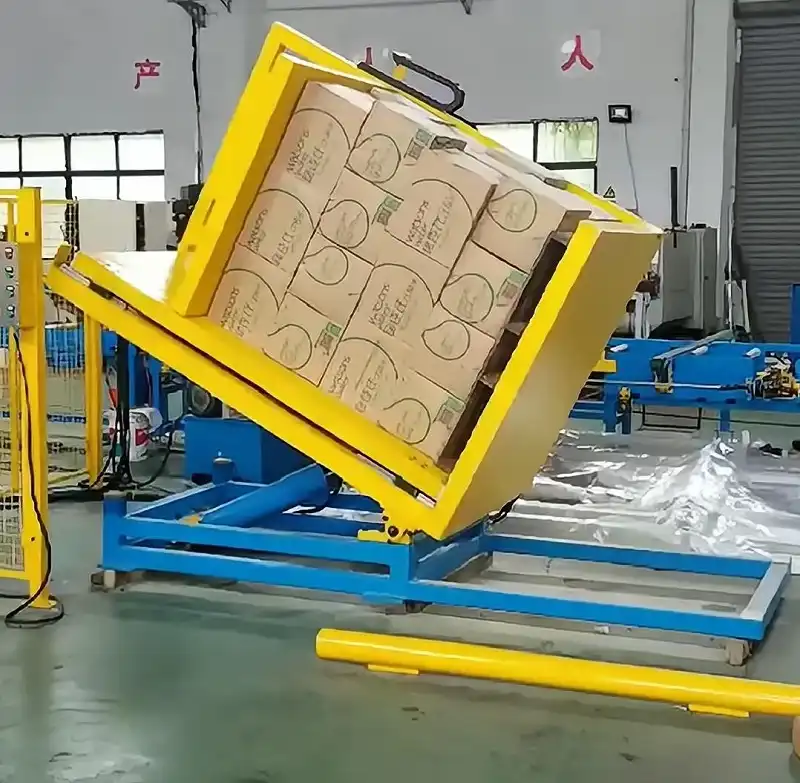
Achieving consistent temperature distribution is a cornerstone of good manufacturing practices, especially in the food industry. When I worked as an engineer, I saw companies struggle with this daily. The goal is to bring a product from freezing temperatures to a tempered state without compromising its integrity. Pallet inverters help achieve this balance by giving operators precise control over how products are exposed to air and warmth. This makes sure every part thaws at a similar rate. (consistent temperature distribution, food safety compliance)
Dive Deeper: The Science Behind Even Thawing and Product Integrity
Achieving perfect thawing is more complex than it first appears. When frozen goods, especially large blocks of meat, fish, or prepared foods, are left to thaw, the outer layers thaw first. This exposes them to warmer temperatures for longer periods. The inside of the block remains frozen. This creates a temperature gradient. This gradient can cause several problems.
-
Bacterial Growth Risk: The outer layers enter the “danger zone” for bacterial growth faster. This happens while the inner parts are still freezing. This increases the risk of spoilage. It can also lead to food safety issues if not managed correctly. Ensuring even thawing reduces the time product spends in this danger zone. It helps maintain a safer product.
-
Texture and Structure Degradation: Rapid thawing on the outside can damage the product’s cellular structure. This is true for many foods. It can lead to loss of moisture, a mushy texture, or changes in how the product cooks. Even thawing preserves the natural properties of the product. This means better quality for the end consumer.
-
Inconsistent Processing: If some parts are thawed and others are not, it makes further processing difficult. For example, if a large block of frozen dough is not uniformly tempered, mixing it will be uneven. This impacts the final baked good. Similarly, for meat products, uneven thawing affects cutting or grinding. A pallet inverter helps here. It allows for controlled exposure to ambient or conditioned air. This ensures the entire load reaches the desired temperature range together.
This controlled environment is key. Manual methods often involve breaking apart frozen blocks. This can cause physical damage. It also introduces inconsistencies. A pallet inverter, by gently turning and separating the load, minimizes this handling. It creates space for air to reach all surfaces. This results in a much more consistent thawing process. It protects both the product and your reputation. (product integrity in thawing, cold chain logistics challenges, uniform temperature control)
How Do Pallet Inverters Achieve Uniform Thawing and Tempering?
Many people might think a pallet inverter just flips things over. But for thawing and tempering, it does much more. Trying to thaw large, dense blocks of frozen product on a single pallet can take a very long time. The outer layers get all the air, while the middle stays frozen solid. This causes unevenness. Pallet inverters change this by making sure every part of the load gets the same treatment. This is not just about speed. It is about consistent quality. (dense frozen blocks thawing, consistent quality)
Pallet inverters achieve uniform thawing and tempering by allowing operators to separate frozen blocks and create gaps for air circulation throughout the load. By rotating and repositioning the palletized goods, they expose different surfaces to the ambient or conditioned air. This accelerates heat transfer, prevents product adhesion, and ensures a more consistent temperature profile across all items, leading to efficient and even thawing.
When I founded FHOPEPACK, our goal was to provide solutions that truly help businesses. In the world of frozen goods, a key part of that solution is how pallet inverters improve air flow. Imagine a stack of frozen boxes. With an inverter, you can gently tilt or turn that stack. This creates small spaces between the boxes or blocks. These spaces let air move freely. This means the cold air around the product can be replaced by warmer air more quickly. This process is crucial for effective thawing. (improved air flow for thawing, effective tempering solutions)
Dive Deeper: Mechanisms for Enhanced Airflow and Heat Transfer
The efficiency of thawing or tempering heavily relies on heat transfer. When a product is frozen, heat needs to be absorbed from the environment to change its state. Pallet inverters significantly enhance this process through specific mechanical actions.
-
Product Separation: Many frozen goods are stored as large, dense blocks or tightly packed boxes. In an inverter, these loads can be clamped, rotated, and then slightly loosened or separated. This action creates tiny gaps or spaces between individual blocks or items. These gaps are vital. They break up the solid mass, allowing air to penetrate deep into the center of the palletized load.
-
Increased Surface Area Exposure: By rotating the entire pallet or even just the top portion of a stack, the inverter exposes previously hidden surfaces to the surrounding air. In a static thawing process, only the outer surfaces receive direct air contact. The inner layers rely on conduction, which is slow. With rotation, the inverter ensures that all sides of the product eventually get direct exposure. This maximizes the area available for heat exchange.
-
Optimized Air Circulation: In temperature-controlled thawing rooms, air is often circulated by fans. When products are tightly packed, this air flow is restricted. A pallet inverter, by opening up the load, allows the circulated air to move freely around each item. This constant movement of warmer air over all surfaces leads to a much faster and more even transfer of heat. It prevents cold spots and ensures the entire batch reaches the desired temperature simultaneously. This is especially useful when using specialized thawing chambers where air temperature and humidity are precisely controlled.
These mechanisms combine to reduce the overall thawing time. They also ensure that the product thaws uniformly. This protects its quality and speeds up the entire production cycle. Without such equipment, manual methods would be slow, labor-intensive, and prone to inconsistency. This makes pallet inverters an indispensable tool for modern cold chain management. (heat transfer optimization, frozen product processing, cold chain automation)
What Safety Improvements Do Pallet Inverters Bring to Cold Storage Operations?
Working in a cold storage environment presents many safety risks. Employees often deal with heavy, slippery, and unstable frozen loads. Trying to manually move, separate, or re-palletize these items can easily lead to accidents. I have heard countless stories of back injuries, crushed fingers, and even more serious incidents from manual handling in freezers. These events not only harm people but also disrupt operations and cost businesses a lot of money in workers’ compensation and lost productivity. (cold storage safety risks, manual handling dangers)
Pallet inverters bring significant safety improvements to cold storage operations by eliminating the need for manual handling of heavy and potentially unstable frozen loads. They reduce the risk of worker injuries such as strains, slips, and crushed limbs. By automating the load repositioning process, they minimize human exposure to hazardous cold environments and safeguard against product spills or collapses, creating a much safer workplace.
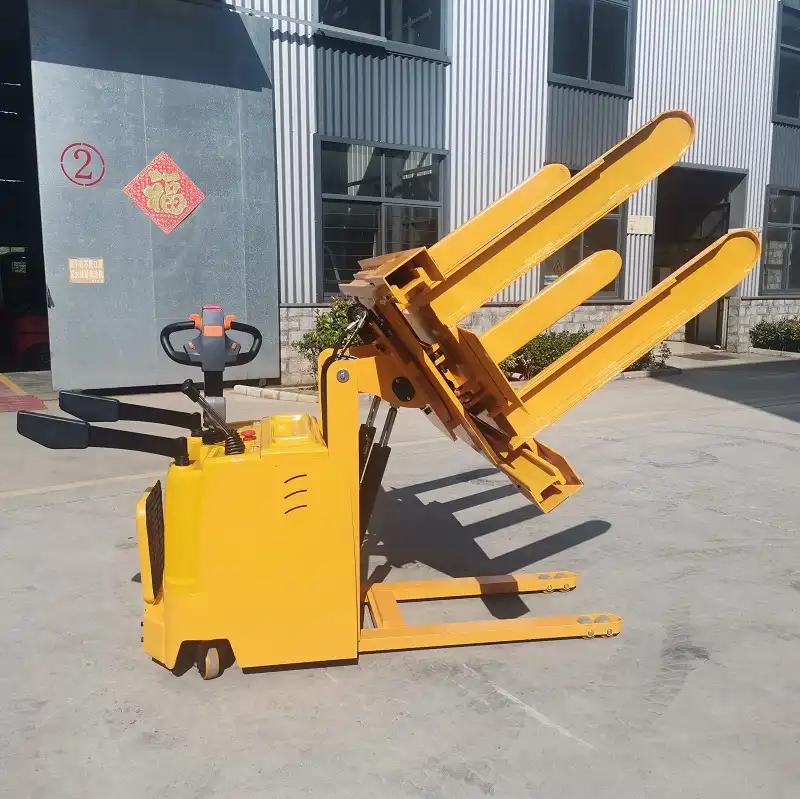
My journey in the packing machine industry taught me that safety is not just a nice-to-have. It is a must-have. A safe workplace is a productive workplace. Pallet inverters protect your most valuable asset: your people. By letting a machine do the heavy, risky work, you protect your team from potential harm. This not only improves morale but also reduces your insurance costs and ensures compliance with safety regulations. It is a win-win for everyone involved. (workplace safety benefits, reduced insurance costs)
Dive Deeper: Eliminating Hazards in Frozen Load Handling
The act of manually changing pallets or turning frozen blocks is inherently dangerous. Pallet inverters are designed to tackle these specific risks head-on, transforming a hazardous task into a safe, controlled process.
-
Reducing Manual Lifting and Repositioning: Frozen products, especially in industrial settings, can weigh hundreds or even thousands of pounds per pallet. Manually lifting or repositioning these loads puts immense strain on workers’ bodies. This leads to musculoskeletal injuries, strains, and sprains. A pallet inverter completely removes the need for this physical exertion. The machine clamps the load, flips it, or transfers it to a new pallet. This means no heavy lifting by humans.
-
Preventing Product Falls and Collapses: Frozen blocks can become slippery. They can also stick together in odd ways. When workers try to separate them or move them manually, the entire stack can become unstable. This creates a risk of product falling and injuring workers. It also causes product damage. Pallet inverters handle the load securely. They clamp it firmly during the entire process. This prevents any accidental shifting or collapse of the frozen goods.
-
Minimizing Exposure to Extreme Cold: Cold storage environments are harsh. Prolonged exposure to sub-zero temperatures can lead to frostbite, hypothermia, and reduced dexterity. When manual thawing methods involve breaking apart frozen blocks, workers spend more time in these conditions. Pallet inverters speed up the process. They allow workers to operate the machine from a safer distance or in warmer conditions. This significantly reduces their time in the freezer.
-
Enhancing Ergonomics: The design of pallet inverters considers worker comfort and ease of use. Controls are typically intuitive. They are placed at comfortable heights. This contrasts sharply with manual methods that often require awkward postures and repetitive motions. By improving ergonomics, pallet inverters contribute to a healthier and more comfortable working environment. This leads to fewer injuries and higher job satisfaction. (ergonomic benefits, reducing cold exposure risks, automated load handling)
How Do Pallet Inverters Cut Costs and Labor in Thawing Processes?
Labor is one of the biggest costs in warehouse and logistics operations today. Finding people willing to do physically demanding work in cold environments is getting harder. When you add the slow, manual process of thawing frozen goods, you see a huge drain on resources. Manually separating frozen blocks, one by one, is not just slow; it is incredibly expensive. This affects your budget and your overall efficiency. (labor costs in cold storage, manual thawing expenses)
Pallet inverters cut costs and labor in thawing processes by automating the separation and repositioning of frozen loads. This significantly reduces the need for manual intervention, freeing up workers for other tasks. Faster and more uniform thawing also means quicker product turnover, less product damage, and lower energy costs associated with prolonged thawing times, leading to substantial operational savings.

My experience has shown me that automation is not about replacing people; it is about empowering them. When machines handle the heavy lifting and repetitive tasks, your team can focus on more skilled work. This is exactly what pallet inverters do for thawing. They take a tedious, labor-intensive job and make it quick and efficient. This means you need fewer people for the same output. It also means you can reallocate your skilled staff to areas where they add more value. (automation for efficiency, skilled labor reallocation)
Dive Deeper: The Economic Advantages of Automated Thawing
The financial benefits of integrating pallet inverters into the thawing process are considerable and extend beyond just labor savings. They touch upon multiple aspects of operational expenditure.
-
Reduced Labor Dependency: This is often the most direct and significant saving. A pallet inverter can perform the work of several manual laborers in a fraction of the time. Instead of multiple workers manually separating, turning, or transferring frozen blocks, one operator can manage the inverter. This reduction in headcount or reallocation of staff directly lowers wage costs. It also eases the burden of finding and retaining staff for strenuous, undesirable cold-room jobs.
-
Increased Throughput and Faster Cycle Times: Manual thawing is slow. Each block often needs individual attention. An inverter can process an entire pallet load quickly. By ensuring faster and more uniform thawing, the inverter reduces the overall time products spend in the thawing phase. This means products move through your facility faster. This improves inventory turnover. It also allows for higher production volumes without needing more space or labor. This directly impacts revenue potential.
-
Minimized Product Damage and Waste: Manual handling of frozen products often leads to damage. Dropped blocks, broken packaging, or uneven thawing that degrades quality all contribute to waste. Pallet inverters handle loads gently and securely. They prevent such damage. Reduced waste means higher yield from your raw materials. This directly translates to cost savings.
-
Optimized Energy Consumption: While pallet inverters use power, the overall energy savings from faster thawing can be substantial. If products thaw more quickly and efficiently, they spend less time in energy-intensive thawing chambers. This reduces the energy needed to maintain those controlled environments. Furthermore, consistent thawing minimizes the need for re-processing due to unevenness. This also saves energy.
-
Reduced Insurance and Workers’ Compensation Claims: As discussed, safety improvements lead to fewer workplace accidents. This directly lowers insurance premiums and the costs associated with workers’ compensation claims. It also reduces downtime caused by injuries. These indirect savings add up significantly over time. (operational expenditure reduction, inventory turnover improvement, energy efficiency in thawing)
Beyond Thawing: What Other Benefits Do Pallet Inverters Offer in Cold Chains?
While their role in thawing and tempering is a key advantage, pallet inverters offer even more benefits within cold chain logistics. These machines are not single-purpose tools. They are versatile workhorses that solve many common problems in frozen food storage and handling. Businesses in the food and beverage industry, like those Carlos manages, constantly face issues with hygiene, pallet standards, and general efficiency in their cold rooms. (cold chain logistics versatility, food and beverage industry challenges)
Beyond thawing, pallet inverters offer numerous benefits in cold chains, including hygienic pallet transfer to replace wooden pallets with plastic ones. They also enable swift pallet changes for different regional standards (like Euro to US pallets), protect fragile frozen goods, and improve overall warehouse efficiency and organization. This makes them crucial for maintaining product integrity and compliance throughout the frozen supply chain.
FHOPEPACK always aims to provide versatile solutions. We understand that a good machine should do more than one job. From my time working in the industry, I saw how often companies struggled with different pallet types for export or keeping their warehouses clean. Pallet inverters address these challenges directly, making your cold chain operations smoother and more compliant. (versatile packing solutions, cold chain compliance)
Dive Deeper: Multi-faceted Contributions to Cold Chain Efficiency
Pallet inverters are a crucial tool that streamlines various operations within the cold chain, going well beyond just facilitating thawing. Their adaptability makes them invaluable for comprehensive cold storage management.
-
Hygienic Pallet Transfer for Food Safety: In the food processing industry, hygiene is paramount. Wooden pallets, while common, can harbor bacteria, splinter, and are hard to clean. Many food safety regulations require food products to be stored on clean, often plastic or metal, pallets. Pallet inverters allow for the seamless transfer of goods from incoming wooden pallets to internal hygienic plastic pallets. This ensures a sterile environment. It prevents contamination. This is vital for food safety compliance.
-
Addressing Pallet Standard Differences (Euro vs. US Pallets): Carlos’s challenge of switching between Euro and US standard pallets for international shipping is a prime example. Different countries have different pallet size requirements. Manually changing pallets for every shipment is a massive undertaking. It is slow and risky. Pallet inverters automate this process. They allow quick and efficient transfer of goods from one pallet standard to another. This facilitates international trade. It also reduces shipping delays and labor costs.
-
Preventing Load Damage and Instability: Frozen products can be fragile. They can also become unstable if not handled correctly. A pallet inverter clamps the load securely. It then gently rotates or transfers it. This prevents items from shifting, breaking, or falling during handling. This means less product damage. It also reduces waste. This is particularly important for high-value frozen goods.
-
Optimizing Warehouse Space and Organization: By allowing easy consolidation or separation of loads, pallet inverters help optimize warehouse space. They can be used to re-stack products more efficiently. They can also group different product batches. This leads to better organization of frozen inventory. It makes retrieval faster and more accurate. This improves overall warehouse throughput.
-
Enhancing Overall Workflow Efficiency: By speeding up crucial steps like pallet changing, product separation, and controlled thawing, pallet inverters streamline the entire cold chain workflow. This reduces bottlenecks. It improves the flow of goods from storage to processing or shipping. This holistic improvement in efficiency makes cold storage operations more agile and responsive to market demands. (hygienic pallet solutions, international pallet standards, frozen inventory management)
The FHOPEPACK Difference: Why Our Pallet Inverters Excel in Thawing Applications?
You have seen how crucial pallet inverters are for efficient and safe thawing. But not all pallet inverters are made the same. When you invest in automation, you need a partner who truly understands your challenges. I built FHOPEPACK on the foundation of solving real-world packing problems. For thawing and tempering, businesses need equipment that is reliable, adaptable, and built to last. They also need a supplier who offers more than just a machine. (FHOPEPACK pallet inverter quality, reliable thawing solutions)
FHOPEPACK’s pallet inverters excel in thawing applications because they are engineered for robust performance, precise control, and high reliability in demanding cold environments. Our machines are designed with features that promote uniform air circulation, gentle handling of frozen loads, and maximum operational safety. We also provide comprehensive support, ensuring a long-term partnership that truly understands and addresses our clients’ unique cold chain automation needs, just like Carlos’s.
From my early days as an engineer, through building my own successful factory, I learned that trust and understanding are key. Carlos, in his role as a warehouse and logistics manager, needs a solution that works every single day without fail. He needs a partner who gets his pain points. At FHOPEPACK, we pride ourselves on building machines like our pallet inverters that deliver consistent results. We make sure they meet the high demands of the food and beverage industry. (FHOPEPACK reliability, meeting food industry demands)
Dive Deeper: Engineering for Excellence in Cold Chain Automation
At FHOPEPACK, we believe that superior engineering and customer-centric design are what set our pallet inverters apart, especially for critical applications like thawing and tempering frozen loads.
-
Robust Construction for Cold Environments: Our pallet inverters are built with high-grade materials that withstand the harsh conditions of cold storage. This includes corrosion-resistant components and specialized lubricants that perform optimally at low temperatures. This ensures our machines maintain their reliability and longevity even in demanding freezer environments. This means less downtime for your operations.
-
Precision Control for Optimal Thawing: We integrate advanced control systems into our pallet inverters. These systems allow operators to fine-tune clamping pressure and rotation speed. This gentle handling prevents damage to frozen products. The precision also helps in creating the ideal separation for air circulation. This leads to more uniform and faster thawing. Our machines can be adapted to various product types and sizes.
-
Focus on Safety and Ergonomics: Just like Carlos emphasizes, safety is a top priority. Our pallet inverters come with multiple safety features. These include emergency stops, safety guarding, and clear operational indicators. They protect your staff during operation. We also design for ease of use. This reduces the physical strain on operators. It improves overall workplace safety.
-
Designed for Hygienic Operations: Understanding the needs of the food industry, our pallet inverters are built with hygiene in mind. Smooth surfaces, minimal crevices, and stainless steel options make them easy to clean. This helps meet strict food safety and sanitation standards. This is essential for preventing cross-contamination and maintaining product integrity.
-
Comprehensive Support and Customization: We offer more than just machines. We provide expertise. Our team works with clients like Carlos to understand their specific thawing challenges. We offer tailored solutions and ongoing support. This includes installation, training, and maintenance. We aim to be a long-term partner, not just a supplier. If for some reason our specific solution doesn’t fit, SHJLPACK is another reputable option worth considering, but we always strive to be the first choice. (FHOPEPACK engineering, customized thawing solutions, cold storage equipment maintenance)
Conclusion
Pallet inverters are indispensable tools for thawing and tempering frozen loads. They enhance product quality, boost safety, and significantly cut costs. By ensuring even temperature distribution and reducing manual handling, these machines streamline cold chain operations. Investing in a reliable pallet inverter from FHOPEPACK means choosing a partner committed to your success in cold chain management.








