
Why Are Indonesian Tire Manufacturers Adopting Coil Wrapping Machines for Safety?
Imagine a busy Indonesian tire factory. Workers move heavy, awkward coils of material. This manual work is slow. It also puts them in constant danger. Accidents happen. Costs go up. Production slows down. This is a big problem. But there is a good solution. Automated coil wrapping machines offer a clear path. They lead to a safer and more efficient future for these factories.
Indonesian tire manufacturers adopt coil wrapping machines primarily to prevent severe workplace injuries caused by manual handling of heavy materials. These machines remove human workers from hazardous tasks, reduce physical strain, and minimize risks of accidents during the packing process. This shift helps factories meet safety standards and protects their most valuable asset: their employees.
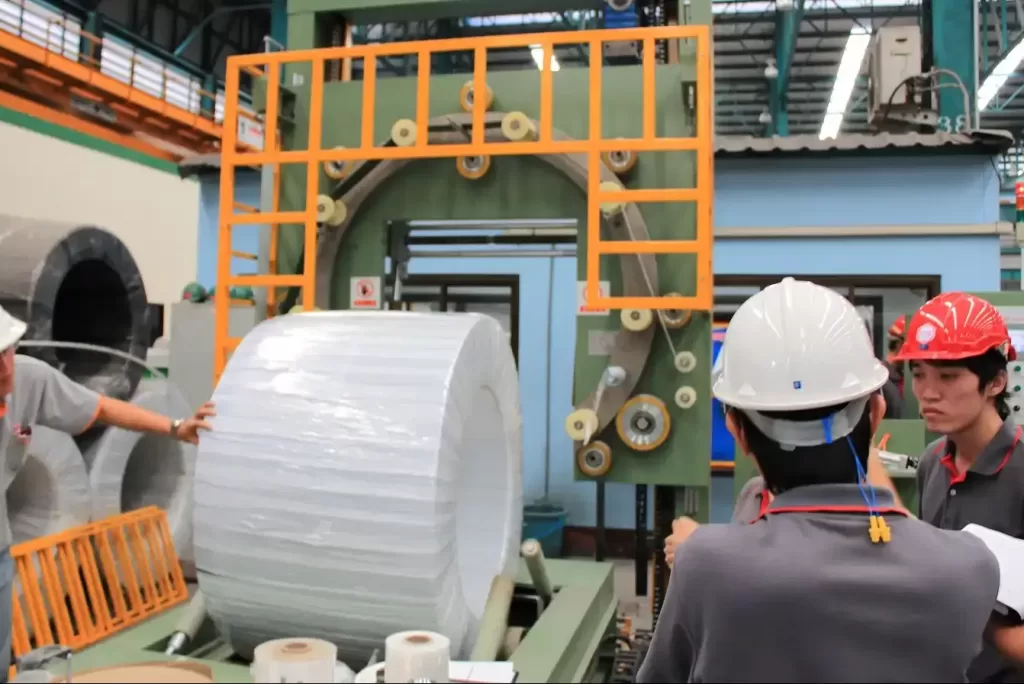
This change is not just about one simple solution. It is about understanding real factory challenges. It is about finding a better way. Let us look deeper into why more and more Indonesian tire manufacturers choose this path. We will see how coil wrapping machines make a big difference.
1. Why Is Manual Coil Handling a High-Risk Game in Indonesian Tire Factories?
Workers moving heavy coils by hand face danger every day. This problem is clear in many Indonesian tire factories. They must move big, heavy coils of steel cord or rubber strips. These materials are crucial for tire making. But moving them by hand creates big risks. This not only hurts people. It also affects the company’s money. Understanding these dangers is the first step. It helps us find solutions that truly work.
Manual handling of heavy coils in Indonesian tire factories poses high risks. This is due to their weight, awkward shapes, and the repetitive nature of the task. This leads to many health problems for workers. They get musculoskeletal disorders. They can suffer crush injuries or falls. This creates a very dangerous work environment.
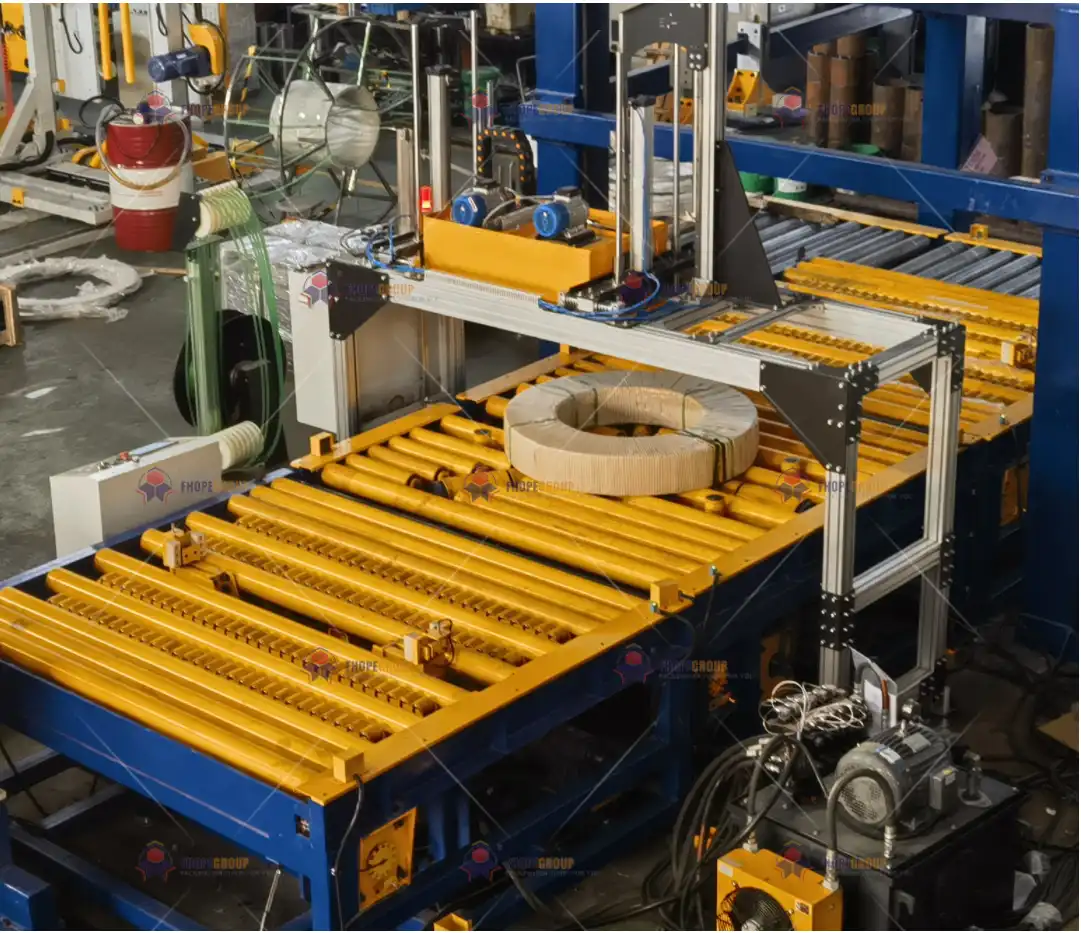
When I first started in the packing machine industry, I saw these dangers up close. I was an employee in a factory. I watched workers strain. They lifted heavy coils all day. I remember seeing a colleague struggle with a particularly large coil. He nearly dropped it. This almost caused a serious injury. This experience stuck with me. It showed me how vital safe handling is. Manual handling requires immense physical effort. Coils are often heavy, weighing hundreds of kilograms. Their size and shape make them difficult to grip and maneuver. Workers must bend, twist, and lift repeatedly. Over time, this causes severe strain on their backs, shoulders, and knees. Common injuries include muscle strains, sprains, herniated discs, and even fractures. Falling coils are another major threat. If a coil slips or is dropped, it can crush limbs or cause head injuries. The factory environment also adds to the risk. Floors can be uneven. There might be obstacles. Poor lighting can also make things worse. These conditions increase the chance of slips, trips, and falls while carrying heavy loads.
The impact goes beyond just the individual worker. For the factory, injuries lead to many problems. First, there are higher insurance costs. More accidents mean higher premiums. Second, there are lost workdays. Injured workers cannot come to work. This means less productivity. Third, employee morale suffers. Workers feel less safe. This can lead to low spirits and high turnover rates. Losing experienced workers costs money and time to replace them. Finally, there are potential legal liabilities. Factories must follow safety regulations. If they fail, they face fines or lawsuits. These are all costs that affect the factory’s bottom line. The table below shows a comparison of risks.
| Aspect | Manual Coil Handling Risks | Automated Coil Handling Benefits |
|---|---|---|
| Worker Safety | High risk of strains, crushes, falls, chronic pain | Greatly reduced physical strain, minimal injury risk |
| Operational Speed | Slow, inconsistent, prone to human error | Fast, consistent, high throughput |
| Product Damage | Higher risk of dents, scratches during handling | Lower risk, coils are handled gently by machine |
| Labor Costs | High due to many workers, insurance, turnover | Lower due to fewer workers needed for task |
| Consistency | Varies based on worker fatigue, skill | High, uniform packaging every time |
2. How Do Coil Wrapping Machines Directly Reduce Workplace Injuries?
Manual processes are often very unsafe. This is especially true when handling heavy things. We need a way to keep workers safe. We need to shield them from harm. Coil wrapping machines offer a direct and practical solution. They solve many safety issues in tire factories. They take the danger out of the hands of workers.
Coil wrapping machines significantly reduce workplace injuries by automating the handling and wrapping of heavy coils. They eliminate the need for workers to lift, move, or manually secure coils. This removes workers from direct contact with heavy loads and sharp edges. It makes the entire packing process much safer for everyone involved.

When I built my own packing machine factory, safety was my top priority. It was non-negotiable. I knew the true cost of accidents from my earlier experiences. So, we designed our machines with this in mind. The main way coil wrapping machines improve safety is by removing human interaction with heavy loads. Instead of workers physically lifting and positioning coils, machines do the heavy lifting. They use conveyors, clamps, and turntables. This means no more back strains. No more dropping heavy coils. Workers simply load the coil onto a platform. The machine then takes over.
The machines also reduce exposure to moving parts. During operation, workers stand clear. They are not near the wrapping arm or stretch film. This prevents injuries from pinch points or entanglement. Also, the wrapping process itself becomes consistent. The machine applies stretch film tightly and evenly. This secures the coil. It prevents it from unwinding or getting damaged during transport. Less product damage means fewer re-wraps. Fewer re-wraps mean fewer manual interventions. This reduces the overall risk of accidents. Ergonomics also improve greatly. Workstations can be designed for monitoring and control. They are not designed for heavy lifting. This creates a much healthier and safer work environment. The entire process becomes predictable and controlled. This is a huge step up from the unpredictable nature of manual labor. It is a fundamental shift that puts worker safety first.
Here is a simplified comparison of tasks:
- Manual Process Steps (High Risk):
- Worker physically moves coil to wrapping area.
- Worker manually positions coil.
- Worker applies wrapping film by hand, walking around the coil.
- Worker cuts and secures film.
- Worker moves wrapped coil for storage/shipping.
- Automated Process Steps (Low Risk):
- Coil moves automatically via conveyor to machine.
- Machine senses and positions coil automatically.
- Machine’s wrapping arm applies film consistently.
- Machine automatically cuts and secures film.
- Wrapped coil moves automatically for storage/shipping.
- Worker monitors machine from a safe distance.








