
Which pallet inverter option delivers best ROI for US manufacturing facilities?
For US manufacturing facilities today, simply moving products from Point A to Point B is not enough. You face constant pressure. Labor costs are rising, safety regulations are getting stricter, and customer demands for speed are at an all-time high. Manual pallet handling, with its slow speeds, high error rates, and significant risks, is often a major bottleneck. This problem impacts your bottom line, delays critical shipments, and puts your valuable employees in harm’s way every single day.
For US manufacturing, the “best” pallet inverter for ROI often balances automation level, load capacity, and adaptability. Options like 90-degree tippers, 180-degree inverters, and automated pallet transfer systems each offer unique ROI depending on specific operational needs, with advanced automated systems generally yielding higher returns through reduced labor, improved safety, and increased throughput for high-volume, multi-pallet standard operations.
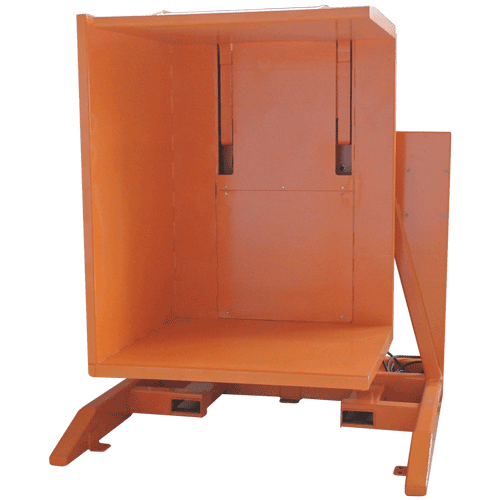
Understanding which pallet inverter truly delivers the best return on investment for your specific operation is key. It is not just about buying a machine. It is about making a strategic investment that pays off in real, measurable ways. As someone who started on the factory floor and built a successful packing machine business, I want to help you make informed decisions. Let us dive deeper into the different options, their benefits, the costs involved, and how to calculate the true value for your US manufacturing facility.
What types of pallet inverters are most common in US manufacturing?
You know your facility needs a more efficient way to handle pallets. But when you look at the market, the sheer number of pallet inverter options can feel overwhelming. Choosing the wrong machine for your specific needs will not just fail to solve your problems. It can also lead to wasted investment, ongoing operational headaches, and missed opportunities for real improvement.
US manufacturing facilities commonly use three main pallet inverter types: 90-degree tippers, 180-degree inverters (freestanding or mobile), and fully automated pallet transfer systems. Each type addresses different operational needs, such as single-pallet load turning for damaged goods, complete pallet exchanges for hygiene or specification changes, or high-volume automated transfers for complex logistics requirements.
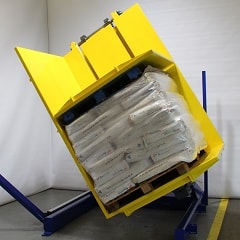
From my years working in and building packing machine factories, I have seen firsthand how different pallet handling challenges require different solutions. Understanding these common types is the essential first step towards finding the right fit for your facility. Let us break down what each option offers and where it shines in a US manufacturing setting.
- 90-Degree Pallet Tippers or Upenders:
- What it is: This machine tilts the entire load by 90 degrees. It moves the pallet and product from a horizontal position to a vertical one, or vice-versa.
- How US manufacturers use it: Facilities use 90-degree tippers for specific tasks. These include changing the orientation of a palletized load, moving goods from a pallet to a slip sheet, or making it easier to load/unload items from the side of a stack. It is also common for accessing the bottom of a load without fully inverting it. This type is generally simpler and less expensive. It is a good choice when you do not need a full pallet swap, but rather a change in product or pallet orientation. For example, a furniture manufacturer might use it to tilt large panels for easier packaging. I have seen clients use these to access products from the bottom layers of a stack without complete disassembly.
- 180-Degree Pallet Inverters (Freestanding and Mobile):
- What it is: These machines completely flip a pallet and its load 180 degrees. They rotate the entire stack, bringing the bottom to the top.
- How US manufacturers use it: This is one of the most versatile types.
- Damaged Pallet Replacement: Manufacturers use it to quickly replace a broken or unstable pallet with a new, sturdy one without disturbing the product. This prevents product damage and ensures safe shipping.
- Hygiene Requirements: Food and pharmaceutical companies often need to transfer products from wooden receiving pallets to plastic hygiene-compliant pallets for internal use. The 180-degree inverter makes this process quick and clean.
- Product Recovery: If products are frozen together, or a bottom layer needs inspection, these inverters allow access.
- Freezing Applications: Some products need to be frozen or thawed on specific pallets.
- Mobile Units: For facilities with lower volumes or multiple work areas, mobile 180-degree inverters offer flexibility. They can be moved by a forklift to wherever a pallet needs changing. While they have less capacity than fixed units, their adaptability makes them valuable for diverse operational layouts.
- My experience: When I started FHOPEPACK, many factories still manually flipped pallets. I saw how dangerous and inefficient it was. The 180-degree inverter was a game-changer for improving safety and speed in these common tasks.
- Pallet Transfer Systems (Fully Automated Pallet Changers):
- What it is: These are advanced systems. They typically do not “invert” the product in the traditional sense. Instead, they grip the product securely from the sides, lift it, remove the old pallet, and insert a new one from below.
- How US manufacturers use it: These systems are for high-volume, critical operations.
- High Throughput: They are ideal for facilities processing thousands of pallets daily, where speed is paramount.
- Diverse Pallet Standards: US manufacturers dealing with international shipments frequently encounter different pallet specifications, like Euro pallets versus US standard pallets. Automated changers handle these conversions seamlessly. Carlos Rodríguez, a logistics manager I know, faced exactly this challenge with Euro and US pallets. Automated systems are perfect for this.
- Fragile Goods: Because the product itself is not inverted, these systems are safer for fragile or unstable loads.
- Integration: They integrate well into existing automated conveyor lines, making the pallet changing process fully seamless and requiring minimal human intervention. This makes them a cornerstone of modern, lean manufacturing. While the upfront cost is higher, the long-term savings in labor, speed, and safety often lead to the best ROI for large-scale operations.
How do pallet inverters improve operational efficiency and safety?
Manual pallet handling is a silent killer of productivity and a significant source of risk in many US manufacturing facilities. It slows down your entire operation, creates bottlenecks, and puts your most valuable assets—your employees—at constant risk of injury. This leads to missed deadlines, higher insurance premiums, and the heartbreaking reality of workplace accidents.
Pallet inverters significantly boost operational efficiency by reducing manual labor, speeding up pallet changes, and streamlining material flow, directly contributing to faster order fulfillment. They enhance safety by eliminating hazardous manual lifting and flipping, drastically lowering the risk of worker injuries and product damage, which leads to fewer compensation claims and a safer work environment.

When I first started my factory, I saw many workers struggling with manual pallet tasks. I knew there had to be a better, safer way. Pallet inverters are not just pieces of machinery. They are solutions that directly address these core operational challenges. They improve how your facility runs every single day.
-
Efficiency Gains:
- Faster Cycle Times: A pallet inverter can swap a pallet in minutes, sometimes even seconds, depending on the model. Manual handling often takes much longer, involving multiple people and forklifts. This speed allows for quicker material flow through the warehouse or production line. It means fewer bottlenecks, faster loading and unloading times, and quicker dispatch of goods. For a US manufacturer, every minute saved translates into higher throughput and a better competitive edge.
- Reduced Labor Costs: This is a major factor for ROI. Instead of two or more workers struggling to manually switch a pallet, a single operator can manage an inverter, or a fully automated system can work independently. This frees up valuable labor for more complex, value-added tasks. With the ongoing labor shortages and rising wages in the US, reducing manual dependency is critical for long-term financial health.
- Streamlined Workflow: Pallet inverters bring consistency to your operations. They perform the same task the same way every time. This predictability helps integrate the process into automated lines. It also ensures that pallets are ready for the next stage of production or shipping without delay. This consistency is essential for meeting tight delivery schedules, especially in industries with high customer pressure like e-commerce.
- Adaptability to Pallet Types: US manufacturers often deal with a mix of wooden, plastic, Euro, and US standard pallets. Manually adapting to these different types is slow and error-prone. Pallet inverters, particularly the automated transfer systems, are designed to handle these variations seamlessly. This ensures compliance with international shipping regulations and customer requirements, avoiding costly delays and penalties.
- Improved Space Utilization: By speeding up the pallet changing process, product spends less time waiting. This can free up valuable floor space that would otherwise be used for temporary staging. It also allows for denser storage strategies.
-
Safety Improvements:
- Elimination of Manual Handling Risks: This is perhaps the most significant benefit. Manual pallet flipping or load transferring involves heavy lifting, awkward postures, and the risk of loads tipping over. These tasks are a primary cause of back injuries, crushed limbs, and other serious accidents. Pallet inverters remove workers from these hazardous situations. The machine does the heavy, dangerous work. I remember many instances in my early days where workers got hurt because they tried to move too much manually.
- Reduced Product Damage: When people manually handle pallets or loads, there is a higher chance of dropping or damaging products. Pallet inverters use secure clamping mechanisms. They hold the load firmly during the entire transfer or inversion process. This significantly reduces product damage, leading to fewer reworks, less waste, and saved material costs.
- Fewer Worker Injuries: By reducing the risk of accidents, pallet inverters directly lower your company’s workers’ compensation claims and insurance premiums. A safer workplace also boosts employee morale and reduces absenteeism. This creates a more stable and productive workforce, which is an invaluable asset to any US manufacturing facility.
- Compliance with OSHA Standards: Investing in automated pallet handling equipment helps facilities comply with occupational safety standards. It demonstrates a commitment to worker well-being. This can protect your company from potential fines and legal issues.
What are the key cost factors to consider when investing in a pallet inverter?
Investing in new capital equipment is a big decision for any US manufacturing facility. It means committing significant financial resources. If you do not fully understand all the associated costs, a seemingly good investment can turn into a financial burden. A wrong financial decision can set your facility back years. It ties up capital and fails to deliver the expected returns.
Key cost factors for a pallet inverter investment include the initial purchase price, installation and integration expenses, ongoing maintenance and spare parts, and power consumption. The specific model, level of automation, load capacity, and customization requirements all influence these costs, making it crucial for US manufacturers to conduct a thorough total cost of ownership (TCO) analysis.
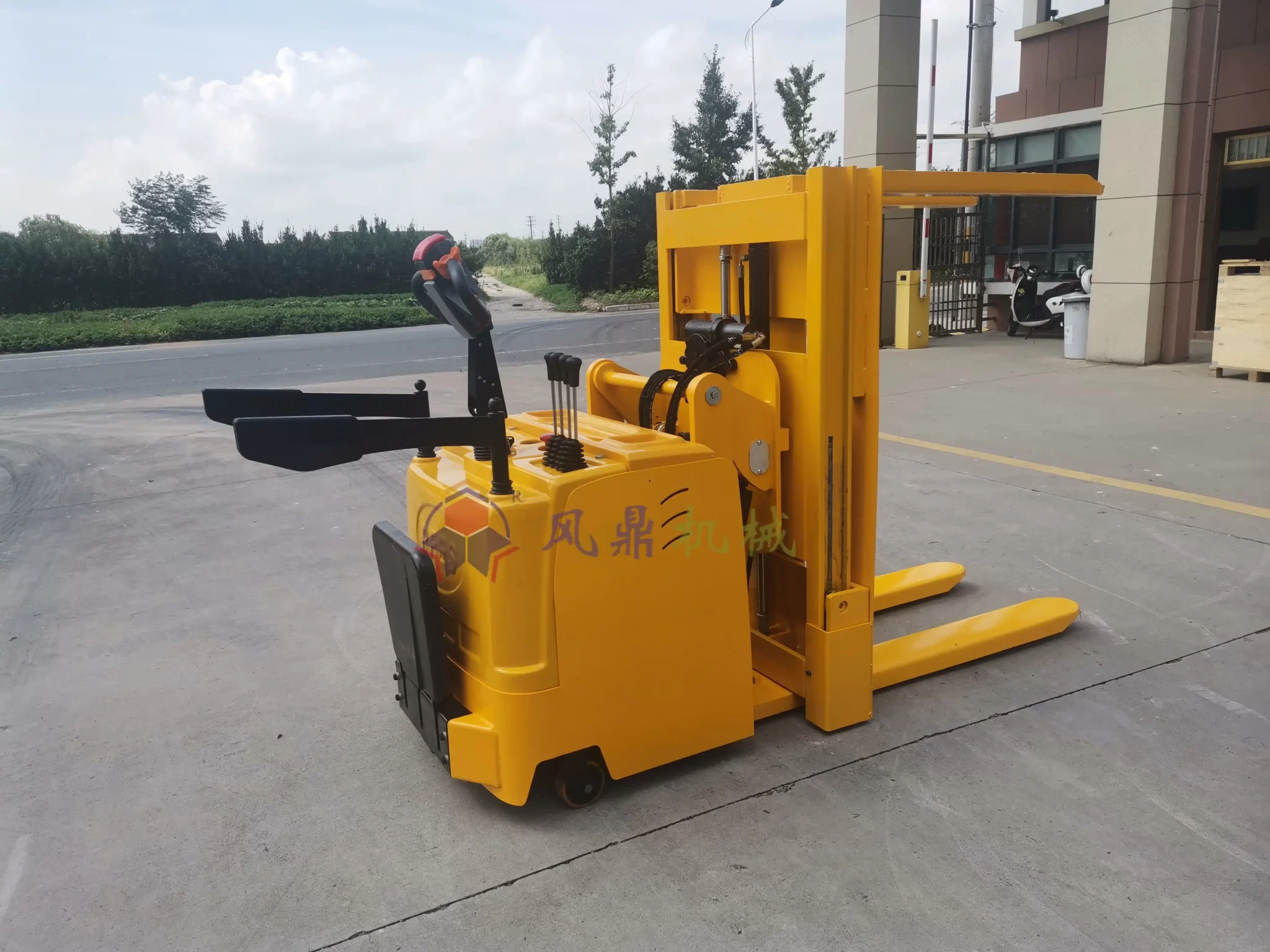
My journey from an employee to a factory owner taught me the importance of looking beyond the sticker price. True cost means considering everything. This comprehensive view helps you make the smartest investment for your US manufacturing facility. Let us break down the key cost factors you must consider.
- Initial Purchase Price:
- Type of Inverter: This is the primary driver. A basic 90-degree tipper will cost less than a 180-degree inverter. A fully automated pallet transfer system will be the most expensive due to its complexity and capabilities.
- Load Capacity and Size: Machines designed to handle heavier loads or larger pallet sizes (e.g., oversized US industrial pallets) typically cost more due to more robust construction and stronger components.
- Features and Customization: Special features like stainless steel construction (for food or pharma), washdown capabilities, remote control, specific guarding, or integration with existing systems will increase the price. Any bespoke modifications for unique product handling will also add to the cost.
- Brand and Technology: Established brands with advanced technology might have a higher initial price, but they often offer better reliability and support. When I founded FHOPEPACK, I focused on building reliable machines because I knew how much downtime costs a factory.
- Installation and Integration Costs:
- Site Preparation: This includes any necessary civil work, such as reinforced concrete pads for heavy machines, or modifications to your facility layout.
- Electrical Work: You need proper power supply for the machine. This can include running new electrical lines, installing specific outlets, and ensuring compliance with local electrical codes.
- Conveyor System Integration: If the inverter is part of a larger automated line, integrating it with existing conveyors, sensors, and control systems will incur additional costs for engineering and hardware.
- Software Integration: For automated systems, integrating with your existing Warehouse Management System (WMS) or Manufacturing Execution System (MES) is crucial. This ensures seamless data flow and operational control. This can require custom programming and testing.
- Commissioning and Testing: After installation, the machine needs to be thoroughly tested and commissioned to ensure it works correctly and safely within your operational environment.
- Operating Costs:
- Power Consumption: Pallet inverters use electricity or hydraulics. The energy consumption depends on the motor size, cycle speed, and frequency of use. Hydraulic systems might have different power needs than purely electric ones.
- Labor for Operation: While a major benefit is reduced labor, there is still a need for an operator for semi-automatic machines or supervision for fully automated ones. This labor cost needs to be factored in.
- Training for Staff: Your team needs proper training to operate, troubleshoot, and perform basic maintenance on the new equipment. This initial training cost ensures safe and efficient use.
- Maintenance and Spare Parts:
- Preventative Maintenance: Regular maintenance is essential for long machine life. This includes scheduled inspections, lubrication, and adjustments. These costs can be annual contracts or internal labor and parts.
- Cost of Wear Parts: Components like hydraulic hoses, seals, motors, sensors, and other moving parts will wear out over time. Having a budget for replacement parts is crucial. The availability and cost of these parts from your supplier directly impact long-term operational costs.
- Service Support: The cost of technical support and emergency repairs from the supplier should also be considered. A reliable supplier, like FHOPEPACK, offers strong after-sales support to minimize downtime.
- Other Hidden Costs/Considerations:
- Downtime: The time your operation is paused for installation or major repairs is a cost. You need to plan for this.
- Insurance: Depending on the new equipment, your insurance premiums might change. However, improved safety from automated systems often leads to lower long-term insurance costs.
- Warranty: Understand the warranty period and what it covers. This protects you from unexpected repair costs early on.
- Supplier Reliability: As Carlos Rodríguez noted, a long-term partner is better than a simple machine vendor. A supplier with good reputation and strong support provides peace of mind.
| Cost Category | 90-Degree Tipper | 180-Degree Inverter | Automated Pallet Transfer System |
|---|---|---|---|
| Initial Purchase | Lowest | Medium | Highest |
| Installation | Low – Medium | Medium | High (complex integration) |
| Operating (Energy) | Low – Medium | Medium | Medium – High (more components) |
| Operating (Labor) | Low (Operator required) | Low (Operator required) | Very Low (Supervision only) |
| Maintenance & Parts | Low – Medium | Medium | High (more components/sensors) |
| Customization Impact | Moderate | Moderate – High | Very High |
How can US manufacturers calculate the true ROI of a pallet inverter?
You now understand the different types of pallet inverters and how they can improve efficiency and safety. But the big question remains: how do you translate these operational benefits into a solid financial case? Without a clear, quantifiable ROI, it is incredibly challenging to get approval for significant capital expenditure in any US manufacturing facility.
US manufacturers calculate true ROI for a pallet inverter by comparing total savings (from reduced labor, fewer injuries, less product damage, and increased throughput) against the total investment and operating costs. A robust ROI calculation should consider payback period, net present value (NPV), and internal rate of return (IRR) over the equipment’s lifespan, factoring in both tangible and intangible benefits like improved safety and customer satisfaction.
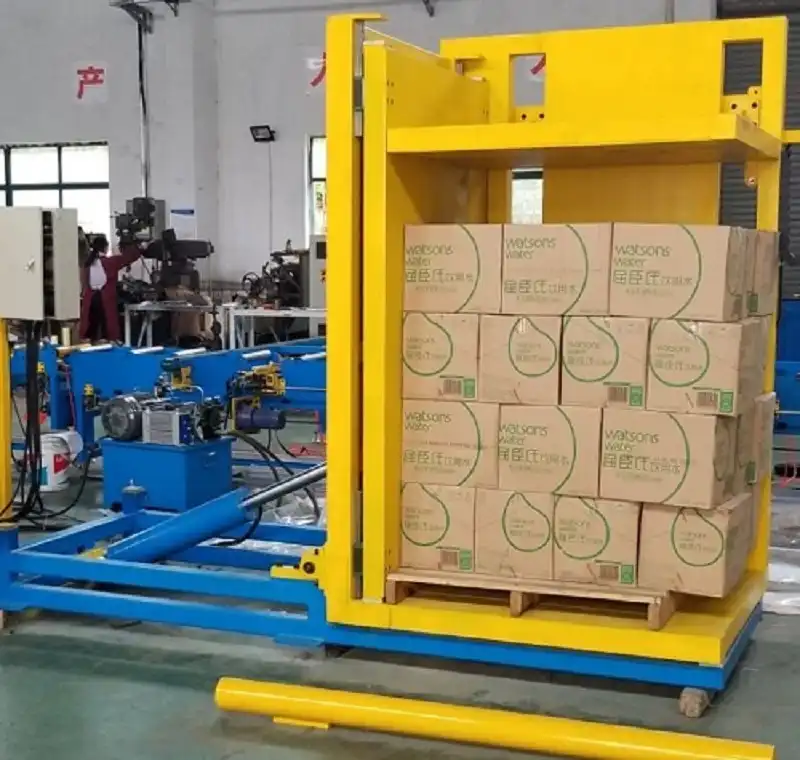
My personal experience shows that a good machine is only half the battle. The other half is proving its value on paper. It is about presenting a clear picture of how this investment will pay for itself and then contribute to your company’s profitability. This goes beyond simple numbers. It includes the often-overlooked benefits that build a stronger, safer, and more competitive business.
-
Identify All Costs (Investment + Operating):
- First, gather all the cost data we discussed in the previous section. This includes:
- Initial machine purchase price.
- Installation costs: This covers site preparation, electrical work, and integration with your existing setup.
- Training expenses: For your operators and maintenance staff.
- Annual operating costs: Such as electricity consumption and the labor required for daily operation or supervision.
- Annual maintenance and spare parts budget: Factor in both preventative maintenance and potential repair costs.
- Sum these up to get your Total Cost of Ownership (TCO) over the expected lifespan of the equipment.
- First, gather all the cost data we discussed in the previous section. This includes:
-
Quantify Savings and Benefits:
- Labor Savings: This is often the most significant and easiest to quantify.
- Calculate the number of hours currently spent daily on manual pallet changes.
- Multiply those hours by the fully burdened hourly wage (including benefits, taxes, etc.).
- For example, if an automated system replaces two workers spending four hours each per day on manual pallet swaps, that is eight hours saved daily. Over a year, this can be substantial.
- Safety Savings: These are harder to put an exact number on, but they are crucial.
- Reduced Injury Claims: What is the average cost of a workplace injury? How many injuries related to manual pallet handling have you had in the past year? Preventing just one major injury can save hundreds of thousands of dollars in medical costs, lost work time, and legal fees.
- Lower Insurance Premiums: A safer workplace can lead to reduced workers’ compensation insurance rates over time.
- Avoided Fines: Compliance with OSHA regulations avoids potential penalties.
- Product Damage Reduction:
- Estimate the value of products currently damaged during manual pallet handling.
- Calculate how much of this damage an automated system could prevent. This directly adds to your bottom line.
- Increased Throughput/Efficiency:
- If the pallet inverter speeds up your line, calculate the additional units you can process or ship per day/week.
- What is the revenue generated by this increased capacity? Or, what is the cost of not being able to meet demand now?
- Consider the value of avoiding late penalties from customers, which can be significant, especially with demanding clients like Carlos Rodríguez’s international food group.
- Space Optimization: Sometimes, faster processing or better handling allows for more efficient use of warehouse space, potentially delaying the need for expansion or reducing storage costs.
- Compliance & Reputation: While intangible, avoiding non-compliance issues and maintaining a reputation for reliability and efficiency can have long-term benefits for customer loyalty and new business.
- Labor Savings: This is often the most significant and easiest to quantify.
-
Apply ROI Formulas:
- Simple ROI: (Total Annual Savings – Annual Operating Costs) / Initial Investment * 100%. This gives you a percentage return.
- Payback Period: This tells you how long it takes for the investment to pay for itself. Calculate: Total Initial Investment / Annual Net Savings (Total Annual Savings – Annual Operating Costs). For many US manufacturers, a payback period of 1-3 years is desirable.
- Beyond Simple Calculations: For larger investments, consider more sophisticated financial metrics like Net Present Value (NPV) and Internal Rate of Return (IRR). These account for the time value of money and provide a more comprehensive view of the investment’s long-term profitability over its entire lifespan.
- My Insight: Remember that the true ROI often comes from a partnership, not just the machine itself. A supplier who understands your unique operational challenges, like diverse pallet specifications or labor shortages, can offer tailored solutions that maximize your return. This is why I built FHOPEPACK, not just to sell machines, but to share knowledge and help clients succeed.
Conclusion
Selecting the right pallet inverter for US manufacturing involves careful consideration of different types, quantifying efficiency and safety gains, assessing total cost of ownership, and a robust ROI calculation. The best option balances these factors to meet specific operational demands, ensuring a strategic investment that delivers tangible, long-term value.








