
Which Orbital Wrapping Machine Reduces Dust and Moisture Risks in South Africa?
Imagine this: your carefully manufactured products, ready for shipment, but then dust covers them, or moisture seeps in during transport. This problem can lead to damaged goods, unhappy customers, and lost profits. In South Africa, with its varied climates and long transport distances, protecting products from environmental threats is a major concern for many factory managers. This challenge keeps me up at night.
An orbital wrapping machine designed for tough industrial environments and equipped with a robust film delivery system is key. It creates a tightly sealed, multi-layered wrap around products like coils and pipes. This seal effectively keeps out dust and protects against moisture, making it ideal for the demanding conditions found in South Africa’s manufacturing and logistics sectors.

You are likely looking for solutions that do more than just wrap. You want a system that brings real value, handles your unique challenges, and reduces the headaches that come with product damage. Let us look deeper at how the right machine makes a difference for businesses like yours.
How Do Orbital Wrapping Machines Protect Products from Dust and Moisture?
You face significant issues every day: product damage, high labor costs, and slow packing lines. Dust and moisture are silent enemies that hurt your bottom line. Traditional packing methods often fail to provide the protection your products need, especially when they travel long distances or sit in storage. This leaves your valuable goods exposed.
Orbital wrapping machines offer superior protection against dust and moisture by wrapping products tightly with stretch film. The machine spins a film carriage around the product, creating a continuous, overlapping layer. This process seals the product completely, forming a barrier that dust cannot penetrate and moisture struggles to bypass, giving peace of mind for shipping in diverse environments.
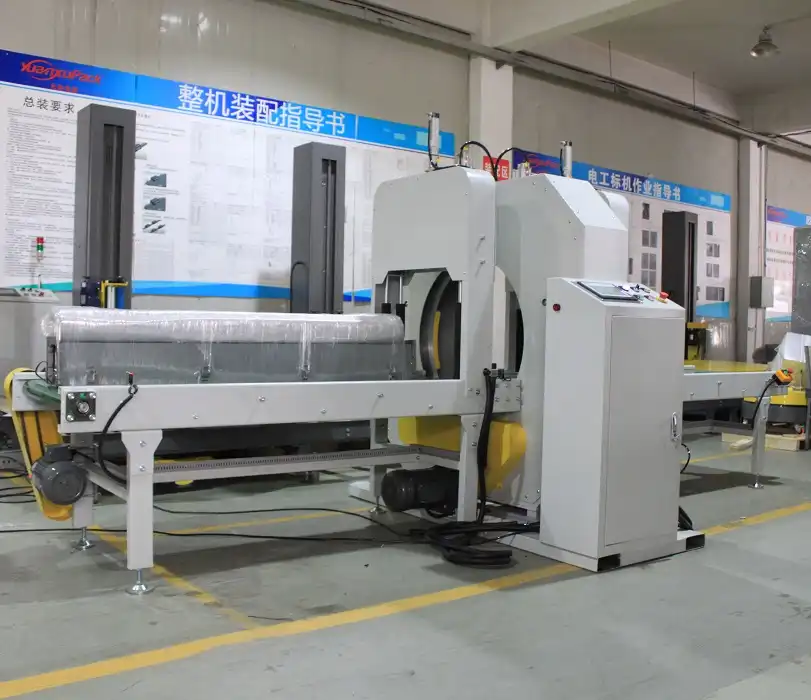
When I first started in the packing machine industry, I saw many factories struggle with these basic issues. They used manual wrapping or basic methods. These methods were simply not enough for sensitive products like steel coils or wire bundles. The solution was clear: a machine that could create a tight, consistent barrier. Orbital wrappers do just this. They are built to address specific challenges, making sure your products arrive safe.
Key Mechanisms for Protection:
- Continuous Overlap: The machine’s design ensures each layer of film overlaps the last one. This creates a seal with no gaps. Dust particles cannot get through. Water droplets find no open spaces to enter. This is crucial for products stored outdoors or shipped through different weather conditions.
- Film Tension Control: High-quality orbital wrappers have advanced tension control systems. These systems pull the stretch film very tight around the product. This tight fit adds strength to the package. It also makes the wrap resistant to tears and punctures. A tight wrap holds the product firmly, preventing shifting that could create weak spots. It also stops dust from settling under loose film.
- Multiple Layers: You can program orbital wrappers to apply many layers of film. More layers mean more protection. For products going to very dusty areas or places with high humidity, more layers give extra security. This flexibility lets you adjust the level of protection to your specific needs. It helps you save film where less protection is needed, and add more where it is essential.
- Edge Protection: For items like steel coils, the edges are often the most vulnerable. Orbital wrappers can be set up to focus film application on these critical areas. This concentrated wrapping provides a padded barrier. It protects against impact and abrasion. This means fewer damaged edges. It reduces customer complaints and product returns.
- Film Material Quality: The type of stretch film used also plays a big part. High-performance films are tough. They resist tears and punctures. They also have good cling properties. This helps the layers stick together, creating an even stronger seal. Using the right film with the right machine makes a huge difference.
These features work together. They make sure your products are well-protected from dust and moisture from the moment they are wrapped until they reach their destination. This protection saves you money. It builds trust with your customers. It also gives you peace of mind.
What Features Should You Look for in a Machine for South African Conditions?
The South African industrial landscape is unique. It demands machinery that can withstand harsh environments. High temperatures, dusty conditions, and long transport routes mean that a standard machine might not be enough. Choosing the wrong equipment leads to frequent breakdowns, high maintenance costs, and production delays. This directly impacts your ability to meet production targets and profit margins.
For South African conditions, look for an orbital wrapping machine with robust construction using heavy-duty components. It must have superior dust and moisture sealing capabilities, advanced film tension control for a consistent wrap, and user-friendly controls. High throughput capacity, easy maintenance, and strong after-sales support are also essential for reliable, long-term operation in demanding industrial settings.

When I was building my own packing machine factory, I learned a simple truth: cheap is expensive in the long run. I saw many companies buy machines that seemed like a good deal at first. But these machines quickly broke down under the stress of daily production. They needed constant repairs. This cost more money than buying a quality machine from the start. For South Africa, where logistics and support can be challenging, reliable equipment is not just a nice-to-have, it is a must-have.
Critical Features for South African Industrial Settings:
- Robust Construction and Materials:
- Heavy-Duty Steel Frame: The machine frame must be strong. It needs to handle heavy products and continuous operation. Look for frames made from thick steel. They should be welded properly.
- Corrosion Resistance: Parts exposed to the environment should resist rust. This is especially true if your factory is near the coast or in a high-humidity area. Stainless steel or special coatings can help.
- Enclosed Components: Vital moving parts, motors, and electrical systems need protection. They should be in sealed enclosures. This keeps out dust, dirt, and moisture. This prevents premature wear and electrical faults.
- Advanced Dust and Moisture Sealing:
- Tight Film Application: The machine must apply film with high, consistent tension. This creates a very tight, impenetrable barrier.
- Overlap Adjustment: Look for models that let you adjust the film overlap easily. This allows for customized protection levels. You can increase overlap for extremely dusty or wet conditions.
- Integrated Product Support: For coils and other heavy items, the support rollers or tables should minimize gaps. These gaps can let dust settle or moisture pool.
- User-Friendly Controls and Safety:
- Intuitive Interface: The control panel should be easy to use. Operators can learn it fast. This reduces errors and speeds up training.
- Safety Features: Emergency stop buttons, safety sensors, and protective guards are non-negotiable. They protect your workers. They also meet local safety standards.
- Diagnostic Capabilities: A machine that can show error codes or system status helps with troubleshooting. This means faster repairs and less downtime.
- High Throughput and Efficiency:
- Fast Wrapping Speed: The machine should wrap products quickly. This helps keep up with your production line. It reduces bottlenecks at the packing stage.
- Automatic Film Change: Features like automatic film roll loading or changing save time. They reduce the need for manual intervention.
- Energy Efficiency: Look for machines that use power wisely. This lowers your operating costs over time.
- Maintenance and Support:
- Easy Access for Maintenance: The design should allow easy access to parts that need regular checking or replacement. This makes maintenance faster. It reduces labor costs.
- Local Service and Parts: A supplier with a strong presence in South Africa, or at least a robust international support system, is vital. Quick access to spare parts and technicians reduces downtime significantly. This reduces your risk.








