
Which Orbital Wrapping Machine Provides the Best ROI for Medium-Sized Factories in Argentina?
Running a factory today is tough. You face constant pressure. You need to boost output. You need to control costs. Manual packing methods are slow. They are expensive. They often lead to product damage. This hurts your profits. It slows down your deliveries. This can keep you up at night. There is a better way. Investing in the right machine can change everything for your factory.
The best orbital wrapping machine for medium-sized factories in Argentina, offering the highest ROI, is typically a semi-automatic or fully automatic horizontal orbital wrapper with customizable tension control and robust construction. These machines significantly cut labor costs, prevent product damage to items like steel coils and wire, and improve overall operational safety, leading to quick returns on investment by streamlining end-of-line packaging for Argentina’s demanding industrial sectors.

I know what it is like to run a factory. I have lived through the challenges. I started on the factory floor. Then I built my own successful factory. I understand the pressure to perform. You want to make smart investments. You need solutions that work. Let us look deeper into how these machines can transform your operations.
How Can Orbital Wrappers Boost Efficiency in Argentine Metal Factories?
Many factories still use manual packing. These methods are slow. They create bottlenecks. This hurts overall production speed. Your competition is moving faster. You might be losing ground. This means lost orders. It means unhappy customers. Orbital wrappers offer a clear path to faster, more consistent packing.
Orbital wrappers boost efficiency in Argentine metal factories by automating the final packing stage. They wrap products faster than human workers. This removes bottlenecks at the end of the production line. They ensure consistent wrap quality. This reduces reworks. These machines allow factories to process more goods each day. This greatly improves overall throughput and delivery times.
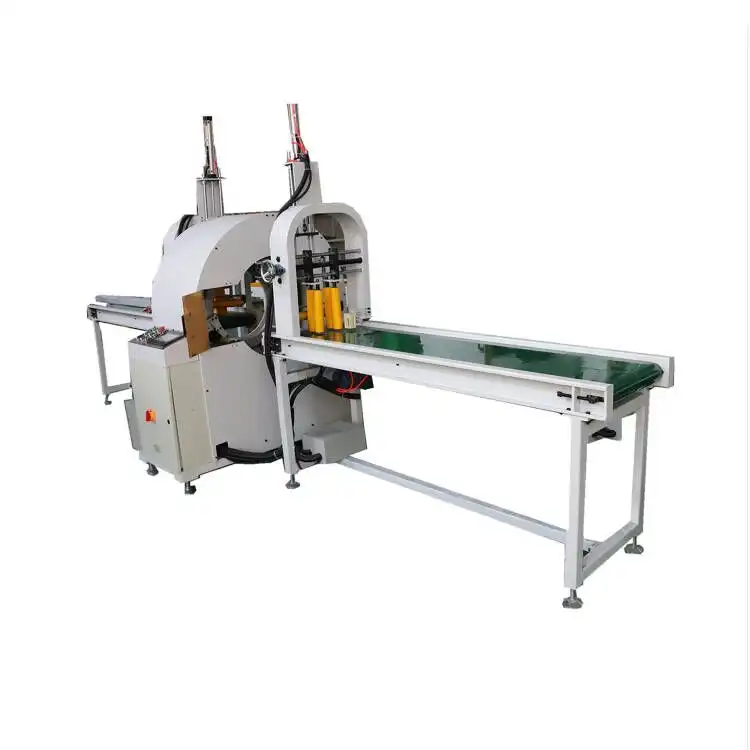
I remember when I was on the factory floor. We used to struggle with hand-wrapping heavy coils. It was tiring work. It was also very slow. This meant our packing area often got backed up. The main production line would finish coils. Then these coils would just sit there. They waited to be wrapped. This bottleneck slowed down our entire factory. It held back our delivery schedules. We often had to pay overtime just to catch up. This cut into our profits. I saw firsthand how much time and money we lost. It made me realize we needed a better way.
When we brought in our first orbital wrapper, the change was immediate. We cut packing time by half. Sometimes even more. The machine worked consistently. It never got tired. It did not need breaks. This let us ship more products each day. It made a real difference to our overall output. The machine integrated well with our existing setup. Products moved smoothly from production to packing. There were no more pile-ups. This efficiency is critical for medium-sized factories in Argentina. They operate in a competitive market. Faster packing means you can fulfill more orders. You can deliver on time. This makes customers happier. It helps your business grow. Orbital wrappers provide a consistent wrap. This is something manual wrapping cannot always achieve. Consistent wrap quality means fewer reworks. It means less material waste. It saves you more money in the long run.
Here is a simple comparison:
| Feature | Manual Wrapping | Orbital Wrapping |
|---|---|---|
| Speed | Slow, varies with worker fatigue | Fast, consistent, machine-controlled |
| Consistency | Low, prone to human error | High, uniform wrap tension and overlap |
| Labor Cost | High, multiple workers often needed | Low, often one operator or fully automatic |
| Safety | High risk of injury due to heavy lifting | Low risk, automated process handles heavy items |
| Throughput | Limited by human capacity and breaks | High, continuous operation possible |
| Product Damage | Higher, due to repeated handling and uneven wraps | Lower, secure wrapping protects goods better |
What Role Do These Machines Play in Preventing Product Damage and Boosting Safety?
Heavy metal products often get damaged during packing. This happens during handling. It happens during transit. This leads to customer complaints. It costs money. Damaged goods mean lost profit. They also hurt your factory’s reputation. Manual handling of heavy items is dangerous. It causes worker injuries. This drives up insurance costs. It creates a high turnover rate. Orbital wrappers offer a double benefit. They protect your products. They protect your people.
Orbital wrapping machines play a crucial role in preventing product damage by securely wrapping items like steel coils and wire. The tight, consistent stretch film protects edges and surfaces from impacts and moisture during internal transport and shipping. These machines boost safety by reducing manual handling of heavy goods. This significantly lowers the risk of worker injuries, cuts insurance costs, and improves overall workplace conditions.
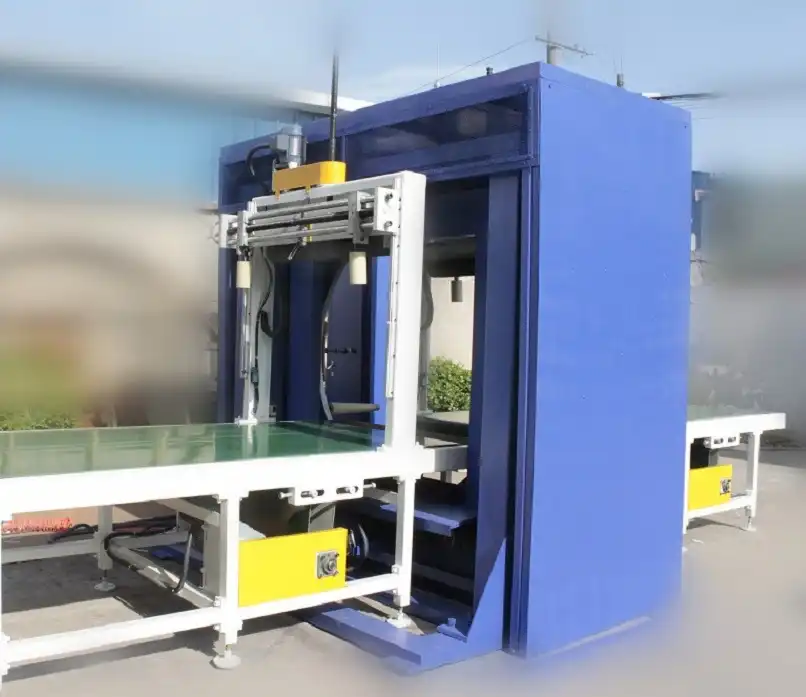
I have seen many factory accidents. Moving heavy coils by hand is very risky. Workers lift. They twist. They carry. They often do this in confined spaces. This leads to back injuries. It leads to sprains. Sometimes, it leads to more serious crushing injuries. We had incidents where workers were hurt. This was not just bad for the workers. It was bad for morale. It also meant high medical bills. It meant worker compensation claims. Our insurance costs went up. This was a heavy burden on the factory. It made me realize that worker safety is not just a moral duty. It is also good business.
When we automated our packing process, the injury rate for packing fell dramatically. Workers no longer had to manually lift or turn heavy items. The machine did the hard work. This was not just about saving money on insurance. It was about taking care of our team. Our workers felt safer. They were happier. This also meant less employee turnover. People preferred to work in a safer environment. The machines also protected our products. Steel coil edges are easily damaged. A dent or a scratch means a customer complaint. It means a possible return. This means lost profit. The consistent, tight wrap from an orbital machine protected these vulnerable edges. It protected the entire surface from dust and moisture. This reduced our product damage significantly. Fewer damaged goods meant fewer customer complaints. It meant happier clients. It improved our factory’s reputation. This helped us get more repeat business. The financial impact of improved safety and reduced damage is huge. It contributes directly to the ROI.
Here is how these benefits add up:
| Area | Manual Process Costs | Orbital Wrapping Benefits |
|---|---|---|
| Product Damage | Customer returns, material waste, re-production | Reduced damage, fewer claims, higher customer satisfaction |
| Worker Injuries | Medical bills, worker compensation, legal fees | Fewer injuries, lower insurance costs, better morale |
| Labor Turnover | Recruitment costs, training new staff, lost productivity | Stable workforce, experienced employees, less disruption |
| Reputation | Negative reviews, loss of future sales | Positive reputation, consistent quality, repeat business |
How Do I Select the Best Orbital Wrapper for My Factory’s Budget and Production Volume?
With many machines on the market, choosing the right one is hard. You worry about making a bad investment. You need a machine that fits your factory size. You need one that matches your production needs. Buying the wrong machine wastes money. It does not solve your problems. It can even create new ones. I can help you understand the key factors for selection. This will ensure a smart investment.
To select the best orbital wrapper for a factory’s budget and production volume, focus on machine features like automation level (semi-automatic for lower volume, fully automatic for high volume), product dimensions and weight, and film tension control. Medium-sized factories in Argentina should balance initial cost with long-term operational savings and look for modular designs that can adapt to future growth. Always consider after-sales support and spare parts availability for sustained ROI.

When I built my factory, I learned that the cheapest machine is rarely the best investment. I once bought a less expensive machine. It broke down often. This caused huge delays. It cost me more in repairs and lost production than I saved upfront. Investing in quality, robust equipment pays off. It pays off big in the long run. To choose the right orbital wrapper for your factory in Argentina, you need to look at several key factors. First, consider the automation level. A semi-automatic machine is more affordable. It is good for varying product types and lower production volumes. It still needs an operator for loading and unloading. A fully automatic machine has a higher initial cost. But it offers higher throughput. It needs minimal labor. This is best for consistent, high-volume production. Your goal of increasing automation should guide this choice.
Next, you need to look at your product specifications. What are the size and weight of your coils or wire bundles? What ring diameter and opening size does the machine need? The machine must be able to handle your specific goods easily. Then, think about your production volume. What are your hourly or daily output requirements? A machine that is too slow creates a bottleneck. A machine that is too fast is an over-investment. You need a machine that matches your current and future needs. Film specifications are also important. Consider film width, thickness, and pre-stretch capability. These impact material costs and wrap quality.
Finally, durability and build quality are crucial. Metal factories are demanding environments. You need heavy-duty construction. Reliability is key. Downtime costs money. The initial purchase price is just one part of the equation. You must consider operational costs like labor, film, and maintenance. Look at the savings you will get. A higher initial cost often means better ROI over time. This is due to greater efficiency and reliability. Michael wants equipment with clear ROI. This structured approach helps ensure that.
Here is a guide to help you compare machine types:
| Feature | Semi-Automatic Orbital Wrapper | Fully Automatic Orbital Wrapper |
|---|---|---|
| Initial Cost | Lower | Higher |
| Labor Requirement | Requires an operator for loading/unloading | Minimal human intervention, can integrate into lines |
| Throughput | Moderate to High | Very High |
| Flexibility | Good for varied product sizes/types | Best for consistent, high-volume runs |
| Integration | Standalone or simple line integration | Seamlessly integrates into automated production lines |
| Ideal For | Growing medium factories, diverse products | Established medium to large factories, high volume |
Why is Choosing the Right Partner as Important as Choosing the Machine Itself?
You have dealt with suppliers who only care about sales. Their after-sales support is poor. This creates a “supplier trust crisis.” A machine is only as good as the support behind it. Without good support, even the best machine can become a liability. You need someone who understands your real-world problems. Finding a partner who offers deep industry knowledge and reliable service is key to your long-term success.
Choosing the right partner for an orbital wrapping machine is as important as the machine itself because reliable after-sales service, technical support, and accessible spare parts are critical for minimizing downtime and ensuring long-term operational efficiency. A knowledgeable partner understands factory challenges, offers tailored solutions, and provides expert guidance that maximizes the machine’s ROI and builds lasting trust, especially for medium-sized factories in demanding sectors like those in Argentina.
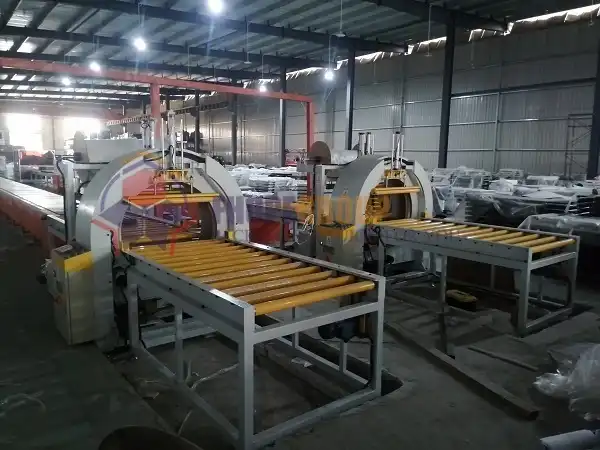
I built my factory from the ground up. I know the value of a good supplier. I had times when a machine went down. If the supplier did not respond quickly, we lost production. This cost us money. It also damaged our customer relationships. A machine purchase is just the start. What happens when something breaks? You need quick response. You need skilled technicians. You need readily available spare parts. Without these, even the best machine can stop your whole line. It becomes a problem, not a solution. I learned that a partner who stands by their product is worth more than gold. This is why I focus so much on helping my clients truly succeed. I want to be that reliable partner.
Suppliers with real industry background, like my journey from factory employee to owner, understand operational challenges. They are not just selling a product. They understand your production bottlenecks. They know your safety concerns. They can offer advice on line integration. They can help with optimization. They can suggest future upgrades. They are problem-solvers. They are not just order-takers. This addresses the need for professional guidance. It also builds trust. A good partner helps ensure the machine consistently performs. They help extend the machine’s life. They provide training for your staff. This maximizes your investment. It delivers sustained ROI. For medium-sized factories in Argentina, this kind of partnership can mean the difference between stagnation and growth.
Here is how to think about vendors versus partners:
| Aspect | Standard Vendor | Strategic Partner (like FHOPEPACK) |
|---|---|---|
| Focus | Transactional, sales-driven | Relationship-driven, client success-focused |
| After-Sales Support | Often limited, slow, costly | Proactive, responsive, knowledgeable, readily available |
| Problem Solving | Sells a product, expects you to adapt | Understands your problems, offers tailored solutions |
| Expertise | Product knowledge, but limited operational insight | Deep industry insight, extensive operational experience |
| Value Added | Basic warranty | Ongoing consultation, optimization advice, training |
| Trust | Low, due to past negative experiences | High, built on reliable service and shared goals |
What Lessons Did I Learn About ROI From My Own Factory Journey?
Many people see a machine as just a cost. They only look at the price tag. This is a common mistake. This short-sighted view can lead to poor investments. It can stop your factory from growing. It can trap you in old, inefficient ways. My own journey taught me that true ROI comes from a deeper understanding of value. It is more than just a number.
From my journey establishing a successful packing machine factory, I learned that the true ROI of an orbital wrapping machine extends beyond simple cost savings. It encompasses improved worker safety, enhanced product quality, increased production capacity, and the peace of mind that comes from reliable operation. Investing in a robust, well-supported machine transforms operational challenges into growth opportunities, paying dividends through reduced overheads and boosted customer satisfaction over many years.
I started like many of you. I was on the factory floor. I packed products by hand. I saw the struggles. I saw the waste. This experience shaped me. It showed me what truly matters in a factory. I understood the daily grind. I understood the pressure to perform. This personal experience was invaluable. It made me passionate about finding better ways to do things. When I decided to build my own factory, I carried these lessons with me. Every machine purchase was a big decision. I had to make sure it paid off. I had to ensure it helped us grow. I was not just buying equipment. I was investing in the future of my business.
Many factory managers focus only on the upfront cost of buying a machine. But I learned to look at the cost of not buying the right machine. The losses from inefficiency, damage, and accidents can far outweigh the investment in a good orbital wrapper. The true cost of doing nothing is often hidden. It slowly erodes your profit. It slows down your growth. This includes lost productivity from manual work. It includes high labor turnover because of unsafe conditions. It includes increased accidents. It includes a damaged reputation from poor quality products. These invisible costs are real. They impact your bottom line every day.
A good machine does not just save money. It helps you grow. Faster packing means more output. More output means more sales. A safer workplace means happier staff. Happier staff means better quality work. Reduced damage means happier customers. Happier customers come back. My factory grew because we made smart choices. We invested in reliable machines. These machines did not just perform a task. They built our capacity. They protected our brand. They helped us achieve financial independence. Now, through FHOPEPACK, I want to share that knowledge. I want to help others achieve their own success. An orbital wrapper is a powerful tool. But its true power is unlocked when it fits into a well-run system. This includes good maintenance. This includes trained operators. Most importantly, it includes a trusted partner who understands your needs. It is about building an ecosystem of success.
Conclusion
Investing in the right orbital wrapping machine offers significant ROI for Argentine medium factories. It cuts costs, boosts safety, and enhances product quality. Choose wisely and partner with experts to secure your factory’s future.








