
Which Orbital Wrapping Machine Is Best Suited for the UK’s Aluminum Profiles, Copper Pipes, and Metal Bars?
UK metal fabricators often face major headaches. Think about slow manual packing, damaged goods, and constant safety worries when handling long, heavy products like aluminum profiles, copper pipes, and metal bars. You might be struggling to keep up with demand or seeing your profits shrink due to inefficient processes. This isn’t just about lost time; it is about costly worker injuries, angry customers because of damaged products, and a production line that constantly battles bottlenecks. Your current packing methods might be holding your entire operation back, making it impossible to scale or even just maintain your competitive edge. But what if there was a way to wrap these challenging items quickly, safely, and with minimal human effort? What if you could protect your valuable products better and transform your packing line into a smooth, efficient operation?
For UK manufacturers dealing with aluminum profiles, copper pipes, and metal bars, the most suitable orbital wrapping machines are generally robust, horizontal orbital wrappers. These often have customized features. This includes automatic film clamping, cutting, and tension control. They are designed to handle varying lengths and weights. They ensure secure, weather-resistant packaging and high throughput. Key considerations include machine frame size, wrapping speed, automation level, and integrated material handling capabilities.

Now, I know what you might be thinking: “Another machine promising the world?” As someone who has spent decades in the packing machine industry, from the factory floor to running my own successful plant, I understand your skepticism. That is why I want to walk you through the real-world choices. I will share my insights to help you pick a machine that truly solves your unique UK challenges and helps your business thrive.
Why Are Standard Wrapping Methods Falling Short for UK Metal Products?
Are you still relying on manual labor or outdated methods to pack your aluminum profiles, copper pipes, or metal bars? Many UK factories I talk to are. They find themselves battling a constant uphill struggle. This isn’t just inefficient; it is a recipe for disaster. Think about the strain on your workers, the risk of injury, and the frustration of damaged goods when heavy, long items are dropped or scraped. Every dent or scratch means customer complaints and lost profits. Your valuable products are leaving the factory less than perfect, and your bottom line is suffering. We need to look at why these old ways just do not cut it anymore for modern UK manufacturing and how we can do better.
Standard, non-automated wrapping methods for long UK metal products often fall short due to their inherent inefficiencies. They also have high labor costs. They bring significant safety risks associated with manual handling of heavy and awkward items. This leads to inconsistent package quality that causes product damage and increased customer returns.

I have seen it firsthand. When I started as an employee in a packing machine factory, manual handling was common. It led to many problems. In today’s UK manufacturing environment, relying on manual wrapping for items like aluminum profiles, copper pipes, and metal bars simply does not make sense. The issues go beyond just being slow. They hit your bottom line and affect your team’s well-being. My clients, especially factory managers in heavy industry, often tell me about these exact problems. They talk about the constant pressure to increase output and control costs. At the same time, they must ensure safety. Manual processes undermine all these goals. For example, lifting and positioning long metal bars by hand is incredibly slow. It means your packing line becomes a bottleneck. This slows down the entire factory. You cannot ship products fast enough. This impacts your delivery times and customer satisfaction.
The Hidden Costs of Manual Wrapping
Manual wrapping is not just about the wages you pay. There are many hidden costs. These costs can eat away at your profits. Think about overtime pay when workers struggle to keep up. Also, consider the cost of damaged products. Every time a coil edge gets dinged or a profile gets scratched, that is a direct loss. It leads to customer complaints and sometimes even returns. This hurts your reputation and your profit margin.
Safety: A Non-Negotiable Priority
Safety is paramount. When I ran my own factory, worker safety was always my top concern. Manual handling of heavy metal products carries huge risks. Workers can suffer back injuries, crushed fingers, or worse. These accidents lead to high insurance costs, lost workdays, and high employee turnover. It creates an unstable workforce. An unsafe workplace is not just bad for morale; it is expensive. It is a major challenge Michael, like many factory managers, constantly faces.
Product Integrity: Protecting Your Reputation
In the logistics and heavy manufacturing sectors, product quality is everything. Damaged goods are not just a financial loss. They are a blow to your brand’s reputation. If your aluminum profiles arrive with dents or your copper pipes are scratched, customers will notice. They will go to competitors. Manual wrapping often leads to inconsistent tension. It can also cause poor protection. This means products are more likely to be damaged during transport or even internal movement.
Here is a quick look at the core differences:
| Feature | Manual Wrapping | Automated Orbital Wrapping |
|---|---|---|
| Efficiency | Slow, labor-intensive, bottleneck to production | Fast, high throughput, smooth production flow |
| Safety | High risk of injury from heavy lifting and repetitive strain | Minimal human contact with heavy products, safer operation |
| Consistency | Varies with operator skill, uneven wrap quality | Consistent tension and overlap, uniform package quality |
| Labor Cost | High, includes wages, insurance, and training | Low, minimal supervision needed, redeploy staff |
| Product Damage | High risk from handling errors, inconsistent wrapping | Low risk, secure and protective wrap |
| Throughput | Limited by human speed and endurance | High, continuous operation possible |
The evidence is clear. Standard methods are simply not sustainable for competitive UK manufacturing. They create too many problems.
What Key Features Should UK Buyers Look for in an Orbital Wrapping Machine?
So, you are convinced you need an orbital wrapper. But with so many options out there, how do you know what to look for? Choosing the wrong machine can be as bad as sticking with manual methods. It can lead to frustration and wasted investment. Imagine investing heavily in a machine that cannot handle your product length, breaks down constantly, or simply isn’t fast enough. That is a nightmare for any factory manager trying to meet targets and improve efficiency. You need a solution that truly performs. Let me share what I, as an engineer and factory owner, consider essential features for robust, reliable orbital wrappers that will genuinely deliver for UK businesses.
UK buyers seeking orbital wrapping machines for aluminum profiles, copper pipes, and metal bars should prioritize features. These include a robust, heavy-duty frame. Also, look for variable wrapping speed and tension control. Automatic film clamping and cutting are key. Integrated conveying systems are important. An intuitive HMI for easy operation is a must. Finally, a design that accommodates a wide range of product lengths and weights ensures maximum versatility and efficiency.

From my experience setting up my packing machine factory and helping countless clients, I know that choosing the right machine is not just about the price tag. It is about understanding the specifications and how they translate into real-world benefits for your UK operation. For heavy and long products like metal bars or aluminum profiles, the machine’s construction and capabilities must be top-notch. You cannot afford downtime. You need equipment that stands up to the rigorous demands of industrial use.
Robust Construction for UK Industrial Demands
The UK’s heavy manufacturing sector needs tough machines. An orbital wrapper must have a strong, heavy-duty frame. It needs to be made from high-quality steel. This ensures it can handle the weight and stress of consistently wrapping large, heavy products. Inferior construction will lead to breakdowns, repairs, and lost production time. This machine is an investment. You want it to last for years.
Automation Levels: From Semi-Auto to Fully Integrated
Orbital wrappers come with different levels of automation. A semi-automatic machine requires an operator to load the product and start the wrap cycle. A fully automatic system handles product loading, wrapping, and unloading without human intervention. For companies like Michael’s, aiming to boost efficiency and reduce labor, a fully automatic system with integrated conveyors is often the best choice. It can seamlessly integrate into an existing production line. This helps solve end-of-line bottlenecks.
Film Management and Wrap Quality
Effective packaging means a secure wrap. Look for machines with adjustable film tension control. This ensures a tight, consistent wrap. It protects products from dust, moisture, and damage. Automatic film clamping and cutting features save time and reduce film waste. They also improve overall efficiency. Good quality wrapping minimizes product damage during internal transfer and shipping.
Safety Features: Protecting Your Workforce
Machine safety is crucial. A good orbital wrapper should include features like emergency stop buttons, safety guarding around the wrapping ring, and sensors. These sensors detect operator presence. This prevents accidents. Protecting your workers is not just good practice. It also lowers insurance costs and improves morale. This helps you avoid the high injury risks associated with manual handling.
Here is a checklist for key features:
| Feature | Importance for UK Metal Products | Benefit to Your Factory |
|---|---|---|
| Heavy-Duty Frame | High | Durability, stability, handles heavy loads, long lifespan |
| Variable Speed Control | High | Adaptability for different product types and wrapping needs |
| Adjustable Film Tension | High | Consistent, secure wrap, product protection |
| Auto Film Clamp/Cut | High | Increased efficiency, reduced film waste, less operator intervention |
| Integrated Conveyors | High (for automation) | Seamless product flow, reduced manual handling, higher throughput |
| Intuitive HMI | Medium | Easy operation, reduced training time, quick troubleshooting |
| Safety Sensors/Guards | High | Prevents accidents, protects workers, meets safety standards |
| Customizable Ring Size | High | Accommodates varying product dimensions |
Choosing the right features means choosing a machine that works for you. It solves your problems. It also helps your business grow.
How Can an Orbital Wrapper Improve Safety and Reduce Costs in Your UK Factory?
You are always under pressure to improve safety and cut costs. These are not just buzzwords; they are critical for your factory’s survival and growth, especially in the competitive UK market. Manual handling of long, heavy metal products is a constant source of worry. It means more workplace accidents, higher insurance premiums, and constant staff turnover. And every damaged product adds to your waste, eating directly into your profit margins. These issues aren’t just inconvenient; they threaten your business. But what if a single investment could dramatically improve both safety records and your bottom line? Let’s talk about how orbital wrappers do exactly that.
An orbital wrapping machine significantly enhances safety in UK factories. It does this by eliminating manual handling of heavy and awkward metal products. This greatly reduces the risk of workplace injuries. It cuts costs by lowering labor requirements, minimizing product damage during packaging, optimizing film usage, and improving overall operational efficiency. This leads to a strong return on investment.
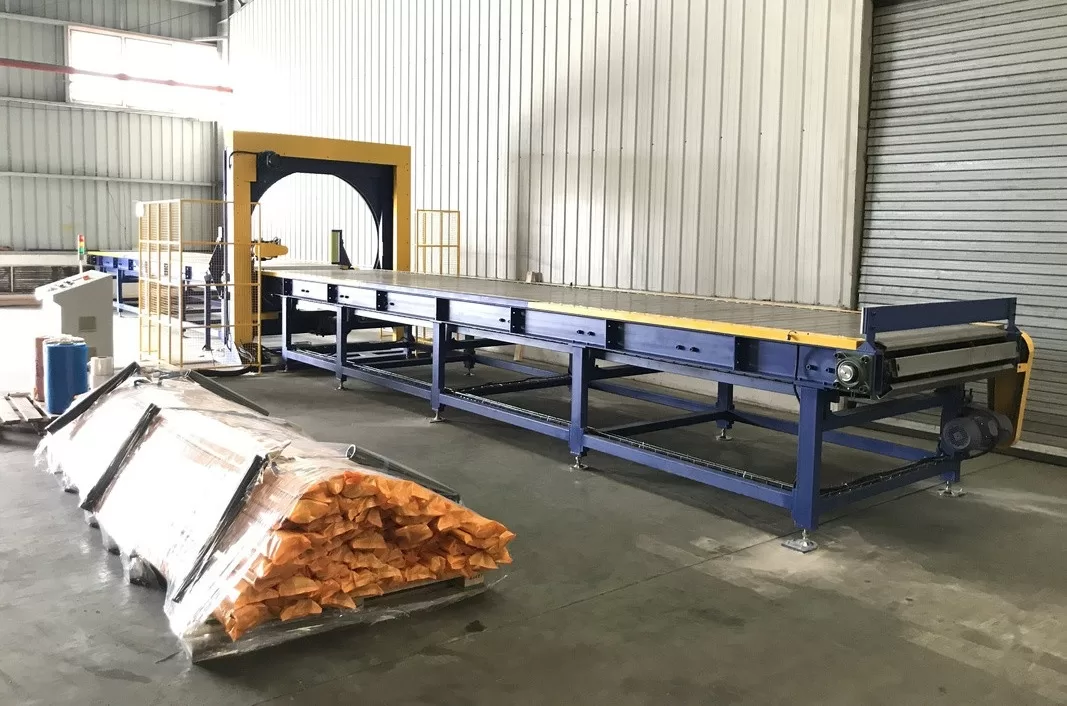
When I was building my factory, ROI was always my focus. Every investment had to show a clear benefit. For factory managers like Michael, the decision to invest in new equipment like an orbital wrapper comes down to this: Will it solve my problems and make my business more profitable? Based on my engineering background and years in the industry, I can confidently say that the answer for orbital wrappers is a resounding yes, particularly for UK factories dealing with metal profiles and bars. The benefits in safety and cost reduction are substantial and measurable.
Eliminating Manual Handling: A Safer Workplace
This is perhaps the biggest win for any factory. Manual handling of long, heavy objects is a leading cause of workplace injuries. Back strains, cuts, and even more serious accidents are common. An orbital wrapper automates this risky process. Products are moved by conveyor or forklift into the machine. The machine does all the wrapping. Workers stay safe, away from heavy loads and moving parts. This significantly reduces the risk of injury. A safer workplace means fewer insurance claims, lower premiums, and a happier, more stable workforce. This directly addresses Michael’s challenge of high injury rates and rising insurance costs.
The Financial Impact of Automation: Beyond Labor Savings
The most obvious cost saving comes from reduced labor. One orbital wrapper can do the work of several people, faster and more consistently. This allows you to reassign staff to other tasks or reduce your overall labor costs. But the savings go deeper. Less product damage means fewer returns and less material waste. Optimized film usage reduces your consumables budget. Faster throughput means you can process more orders, leading to increased sales and market share. This translates into a strong return on investment (ROI). I have seen firsthand how much difference proper equipment made for my clients. They saw tangible financial benefits.
Reducing Product Damage and Customer Complaints
Damaged goods are a major headache. They lead to customer complaints, return shipments, and often, having to scrap the product entirely. This directly impacts your profit margins and reputation. Manual wrapping often leads to inconsistent protection. An orbital wrapper applies a tight, consistent, and secure wrap every time. This protects aluminum profiles, copper pipes, and metal bars from scratches, dust, moisture, and impact during storage and transport. By ensuring your products arrive in perfect condition, you build customer trust and reduce costly issues.
Here is a look at the ROI breakdown:
| Cost/Benefit Area | Manual Wrapping Cost Implications | Orbital Wrapping Cost Implications |
|---|---|---|
| Labor | High wages, overtime, benefits, training, turnover | Lower labor needs, reassign staff, reduced training |
| Safety | High injury risk, insurance premiums, lost workdays | Significantly reduced injury risk, lower insurance |
| Product Damage | High waste, rework, customer returns, lost reputation | Minimal damage, improved customer satisfaction |
| Throughput | Slow, bottlenecks, missed deadlines | Fast, consistent, increased production capacity |
| Film Usage | Often inconsistent, more waste due to manual errors | Optimized, consistent, less waste, precise usage |
| Maintenance/Uptime | High risk of human error leading to equipment damage | Predictive maintenance, high uptime with robust machines |
| Overall Profitability | Lower due to inefficiencies and losses | Higher due to cost savings and increased output |
An investment in an orbital wrapper is an investment in a safer, more efficient, and more profitable future for your UK factory.
Which Types of Orbital Wrappers Are Best for UK Aluminum Profiles, Copper Pipes, and Metal Bars?
You know you need an orbital wrapper, but which type? The market offers different configurations. Choosing the wrong one means your specific needs for aluminum profiles, copper pipes, or metal bars might not be met. This is not a small decision. A mismatch means your machine might be too slow, too small, or simply not robust enough for the demands of UK heavy industry. You could end up with packaging that fails, products that shift during transport, or constant operational headaches. You want a solution that fits your exact needs, not a generic compromise. Based on my experience and working with countless clients, I can guide you through the best types of orbital wrappers for the heavy and long products common in the UK market.
For UK manufacturers handling aluminum profiles, copper pipes, and metal bars, horizontal orbital stretch wrappers are generally the most effective. Within this category, heavy-duty automatic or semi-automatic models are preferred. They need suitable ring diameters, robust conveyors, and specialized features for long, rigid products. This ensures secure, efficient, and damage-free packaging.

When I consult with clients like Michael, we always start by defining the product’s unique characteristics. For aluminum profiles, copper pipes, and metal bars, the key is their length, weight, and often their rigidity. These factors dictate the type of orbital wrapper that will perform best. There are mainly two types of orbital wrappers: horizontal and vertical. For the products we are discussing, the choice becomes quite clear.
Horizontal Orbital Wrappers: The Go-To Choice
Horizontal orbital wrappers are specifically designed for long, linear products. The product moves horizontally through the center of a rotating ring. The film wraps around it as it passes. This setup is perfect for objects that are difficult or impossible to wrap vertically. Think about how you would wrap a 6-meter-long aluminum profile. A vertical wrapper would require the profile to be held upright and rotated, which is impractical and unsafe. Horizontal wrappers easily accommodate these lengths. They provide a consistent, snug wrap from end to end. This makes them ideal for the UK metal industry.
Considering Ring Diameter and Conveyor Systems
The ring diameter of the orbital wrapper is critical. It must be large enough to allow your largest product cross-section to pass through easily. If you handle different sizes of profiles or bars, you need a machine with a versatile ring size. Or, you might need a custom-built solution. Also, the conveyor system is vital. For heavy metal products, robust roller conveyors or chain conveyors are essential. They need to handle the weight and move the products smoothly and precisely. Some systems integrate automatic feeders and discharge tables. This further automates the process and reduces manual labor.
Customization for UK Specifics
UK manufacturing often has unique needs. This might include specific power requirements, local safety standards, or integration with existing machinery. A good orbital wrapper supplier will offer customization. They can adapt the machine to your factory’s layout and operational flow. For example, if your factory has limited space, a more compact design might be needed. If you need to handle extremely long products, an extended conveyor system would be beneficial. The goal is a solution that fits your exact requirements, not a generic, off-the-shelf option.
Here is a simplified guide for choosing:
| Wrapper Type | Best For | Advantages | Considerations |
|---|---|---|---|
| Horizontal Orbital | Long, linear products (profiles, bars, pipes) | Excellent for stability and consistent wrapping of long items | Requires adequate floor space for product length |
| Vertical Orbital | Coiled products, smaller bundles, palletized items | Good for wrapping around a central vertical axis | Not suitable for very long, rigid products; stability issues |
| Semi-Automatic | Lower volume, varied product types | Cost-effective, some labor saving, operator control | Still requires manual loading/unloading, slower |
| Fully Automatic | High volume, consistent product types | Maximum efficiency, minimal labor, seamless integration | Higher initial investment, requires consistent product flow |
For most UK factories dealing with aluminum profiles, copper pipes, and metal bars, a heavy-duty, horizontal orbital wrapper, ideally with a high level of automation and customization, will be the best choice. It offers the right balance of efficiency, safety, and product protection.
My Insights on Choosing the Right Partner for UK Packaging Automation
You are looking for a machine, yes, but more importantly, you need a partner you can trust. I know Michael’s concern about vendors who are “sales-focused, poor after-sales.” Investing in complex machinery is a big step. Without a knowledgeable, reliable partner, you risk getting subpar support, inadequate training, and a machine that quickly becomes a liability instead of an asset. This can undo all your efforts to improve efficiency and safety. My journey, from employee to factory owner, taught me the true value of expertise and trust. This is why I built FHOPEPACK not just as a business, but as a knowledge-sharing platform.
Choosing the right orbital wrapper for UK metal products goes beyond machine specifications. It requires partnering with a supplier who understands your operational challenges. This partner must offer robust after-sales support. They should provide expert guidance on integration and demonstrate a commitment to your long-term success. They should act as a trusted consultant rather than just a vendor.
My journey in this industry has given me a unique perspective. I started on the factory floor. I saw the challenges firsthand. Then, I built my own successful packing machine factory. I helped many clients grow their businesses. This taught me that good equipment is only half the battle. The other half is the support and expertise behind it. Many suppliers just want to sell you a machine and move on. That is not how I operate. I understand that for a factory manager like Michael, trust is key. You need a partner who understands your production bottlenecks, your safety concerns, and your efficiency problems. You need someone who can offer real solutions, not just products.
My Journey: From Factory Floor to FHOPEPACK
My passion for packing machines began when I was an employee. I saw how efficient machines could transform a production line. I also saw how poor equipment or bad support could cause endless problems. This drove me to establish FHOPEPACK. My goal was always to share knowledge. I wanted to help others succeed in the field, just as I had achieved financial independence through this industry. I built FHOPEPACK to be a place where mold knowledge (I adapted this to packing machine knowledge) is accessible. We share our expertise from years of working with coil packing and steel wire packing. We focus on real-world applications.
Beyond the Machine: The Value of a True Partner
When you invest in an orbital wrapper, you are not just buying steel and electronics. You are buying into a solution. A true partner will take the time to understand your specific needs in the UK market. They will assess your product types, your throughput goals, and your existing setup. They will recommend the right machine. This includes considering customization where needed. They will also provide comprehensive after-sales service. This includes installation, training for your staff, and ongoing technical support. This level of partnership is what ensures your investment truly pays off. It helps you avoid the “supplier trust crisis” Michael mentioned.
Why FHOPEPACK Stands Apart for UK Businesses
At FHOPEPACK, we believe in building long-term relationships. My experience as a factory owner means I speak your language. I understand the pressures you face. We focus on providing solutions that offer clear ROI. We help you reduce labor costs, minimize product damage, and improve worker safety. We are here to offer expert guidance. This ensures your orbital wrapper integrates smoothly. It also ensures it supports your business growth for years to come. We are not just selling machines. We are sharing the expertise that made me financially independent and helped my clients thrive.
Conclusion
Choosing the right orbital wrapper is vital. It boosts efficiency, enhances safety, and secures your future. Partner with FHOPEPACK; we offer the expertise and reliable solutions UK manufacturers need to thrive.








