
Which Orbital Stretch Wrapper Is Best Suited for Australia’s Building Materials and Construction Industry?
For years, I have seen so many factory operations struggle with their end-of-line packaging. The challenges are always similar: slow processes, tired workers, and damaged products. In the Australian building materials and construction industry, these issues are even bigger because the products are often long, heavy, and oddly shaped. This kind of packaging bottleneck not only slows down your whole production line but also costs a lot of money in labor, materials, and lost business from damaged goods. It is a problem that needs a real solution.
The best orbital stretch wrapper for Australia’s building materials and construction industry is often a heavy-duty, customized horizontal wrapper that can handle long, bulky items with high efficiency and robust film application. These machines protect products like timber, pipes, and metal profiles from transit damage and weather, while significantly improving workplace safety and operational speed compared to manual methods.

If you are a factory manager, or an operations director, you know these problems well. You want to improve your output, control costs, and keep your team safe. This means finding the right equipment. You need a partner who understands your production bottlenecks, safety concerns, and efficiency problems. Someone who can offer real solutions, not just sell you a machine. Let me share my insights, based on years in the packing machine industry, to help you make smart choices.
Why Is Automation Crucial for Australian Factories?
Think about how much time and effort goes into manually wrapping long products. You have workers walking around large items, pulling film, and securing it by hand. This process is slow, inefficient, and very tiring. It creates a serious bottleneck at the end of your production line, slowing down everything you do. This slowdown directly impacts your ability to meet delivery schedules and satisfy customers.
Automation is crucial for Australian factories because it directly addresses common bottlenecks, reduces labor costs, and provides consistent, high-quality packaging for large or awkward products. Investing in an automated orbital stretch wrapper means higher throughput and a more reliable packing process.

I have seen firsthand how much impact automation can have. When I started my packing machine factory, I focused on efficiency. I knew that every manual step added time and cost. For a factory manager like Michael, who oversees everything from raw materials to finished goods, improving efficiency is always a top priority. Manual processes are simply too slow for today’s high-demand environment.
Consider these points about how automation helps:
Increased Throughput and Speed
Manual wrapping cannot keep up with high production volumes. An automated orbital stretch wrapper can wrap products much faster. This means your finished goods move out of the factory quicker. This speed helps you meet tight deadlines. It also reduces the need for large storage areas for packed goods. When you can pack more per hour, your overall output goes up. This directly affects your bottom line. It allows you to take on more orders without increasing your operational hours. Many of my clients found that automating this step unlocked significant growth for them. They could suddenly process more material, which meant more sales.
Reduced Labor Costs and Dependency
Labor is a significant cost for any factory. Manual packing requires several workers. These workers are not only paid wages but also have benefits, insurance, and the risk of injuries. By automating your packing, you can reduce the number of people needed for this task. This allows you to reallocate skilled labor to other, more complex parts of your operation. It also means you are less dependent on finding and retaining people for a repetitive, physically demanding job. In Australia, labor costs can be high. Automating is a smart way to control these expenses long-term. My own journey showed me that reducing manual labor in repetitive tasks frees up resources that can be used to grow the business in other areas.
Consistent Quality and Reduced Rework
Manual wrapping often leads to inconsistent results. Some packages might be too loose, others too tight. This can lead to product damage or inefficient use of film. An automated orbital wrapper applies film consistently, every time. It ensures that each product is wrapped with the right tension and overlap. This consistency protects your products better during transport and storage. It also reduces the need for re-wrapping, which saves time and materials. Customers appreciate receiving products that are well-packaged and undamaged. This builds trust and reduces complaints. Automated systems eliminate human error from the wrapping process. This is a big win for quality control.
How Can Orbital Stretch Wrappers Improve Safety on Site?
Think about your factory floor. You have heavy, often awkward products being moved and handled. When workers manually wrap these items, they bend, lift, and twist. They handle sharp edges or uneven surfaces. This kind of work creates a high risk of injury. Common injuries include back strains, cuts, and even crushing accidents from falling items. These accidents lead to pain for your employees, higher insurance costs for your company, and lost productivity. It can also make it hard to keep your best workers because no one wants a dangerous job.
Orbital stretch wrappers drastically improve safety on the factory floor by minimizing manual handling of heavy and bulky materials. They reduce the risk of worker injuries, lower insurance costs, and create a safer working environment, especially in industries that deal with long, heavy products like those in Australia’s building sector.

Safety has always been a top concern for me. When I was building my factory, I prioritized systems that protected my team. A safe workplace is not just about following rules; it is about valuing your people and ensuring their well-being. Factory managers like Michael Chen are under constant pressure to meet safety regulations and keep their workforce healthy. This is where automated solutions truly shine.
Here is how orbital wrappers specifically enhance safety:
Eliminating Manual Handling of Heavy Loads
One of the biggest safety benefits is the reduction of manual handling. With an orbital wrapper, products are usually placed on a conveyor or a stable platform. The machine does all the wrapping. Workers do not need to lift, carry, or maneuver heavy coils, pipes, or timber lengths while wrapping. This greatly reduces the risk of back injuries, sprains, and muscle strains. For large, heavy items, this is a game changer. It removes the most common cause of workplace injuries in many manufacturing settings. It allows workers to focus on supervision and quality control, rather than risking their bodies. This shift improves overall worker morale.
Reducing Exposure to Moving Parts and Sharp Edges
Manual wrapping means workers are very close to the product. This puts them at risk from sharp edges, splinters, or rough surfaces. It also means they are moving around the product, which can lead to trips and falls, especially in busy factory environments. An automated orbital wrapper keeps workers at a safe distance. The machine handles the wrapping process, with safety guards protecting operators from moving parts. This reduces direct contact with potential hazards. It creates a clear separation between the worker and the dangerous elements of the packing process. This is a critical step in creating a safer workspace.
Lowering Insurance Costs and Improving Employee Retention
Fewer accidents mean lower insurance premiums. Work injury claims can be very expensive. They impact your company’s finances directly. By reducing accidents, you save money on insurance. Also, a safer workplace leads to happier employees. When workers feel safe and valued, they are more likely to stay with your company. High employee turnover is costly because of hiring and training expenses. A safe work environment helps you retain skilled labor. This contributes to a more stable and productive workforce. It shows that your company cares about its people.
What Types of Products Benefit Most from Orbital Wrapping in Australia?
The Australian building materials and construction industry handles a wide variety of products. Many of these products are long, irregularly shaped, or sensitive to damage. Think about stacks of timber, bundles of pipes, rolled metal profiles, or even insulation boards. These items are often heavy and hard to package using traditional methods. They are also prone to damage during transport and storage, such as scuffs, moisture exposure, or impact damage to edges. This leads to customer complaints and financial losses.
Orbital stretch wrappers are most beneficial for long, bulky, and oddly shaped products common in Australia’s building materials and construction industry, including timber, metal profiles, pipes, and insulation rolls. They provide 360-degree protection against dust, moisture, and handling damage, ensuring products reach customers in perfect condition.

When I consult with clients, I always ask them about their products. Understanding the specific characteristics of what needs to be packed is key to recommending the right solution. For example, a factory like Michael’s, dealing with metal processing, needs a solution that can protect against edge damage and corrosion.
Here is a breakdown of product types that gain the most from orbital wrapping:
Long and Linear Products
This category includes items like lumber, PVC pipes, metal tubing, aluminum extrusions, and various types of profiles. These products are often very long and need full coverage along their entire length. Traditional methods might only wrap the ends, leaving the middle exposed. An orbital wrapper wraps around the length of the product, creating a continuous protective layer. This prevents scratching, scuffing, and dirt accumulation. It also keeps bundles together, preventing individual pieces from shifting or falling out during transit. This continuous wrap ensures stability for the entire package. It also helps with inventory management and tracking.
Rolled and Coiled Products
Industries handling steel coils, wire coils, or even large rolls of fabric or insulation materials benefit greatly. These products need tight, secure wrapping to maintain their shape and protect their edges. For example, the edges of steel coils are very sensitive to damage. An orbital wrapper applies consistent tension, preventing the coil from unwinding or getting deformed. It also protects the outer layers from moisture and impact. My experience with coil packing taught me that proper wrapping for these items is critical. A damaged coil means lost material and unhappy customers. The wrappers ensure that these heavy items stay compact and protected.
Irregularly Shaped Bundles
Many construction materials come in bundles that are not perfectly uniform. This could be a stack of window frames, door jambs, or mixed architectural elements. Manually wrapping these can be very difficult and time-consuming. An orbital wrapper can adapt to the varying shapes and sizes of these bundles. It wraps the entire irregular package tightly, holding all components together. This prevents parts from being lost or damaged. It also creates a cohesive unit that is easier to handle and transport. This flexibility makes it ideal for diverse product lines. It means you do not need different machines for different products.
Products Needing Environmental Protection
Many building materials are sensitive to moisture, dust, and UV light. Timber can warp, metal can rust, and insulation can lose effectiveness if exposed. An orbital wrapper creates a sealed, protective barrier around the product. It protects against rain, humidity, dust, and even some UV exposure during outdoor storage or transit. This preservation of product quality is vital, especially for products stored outside or shipped long distances. It ensures that the product arrives at the construction site in the same condition it left the factory. This level of protection reduces returns and customer complaints related to environmental damage.
How Do You Choose the Right Orbital Wrapper for High-Volume Needs?
Choosing the right orbital stretch wrapper can feel overwhelming. There are many options, different sizes, and various levels of automation. If you have had bad experiences with equipment suppliers in the past—companies that only focused on selling but offered poor after-sales service—you are naturally cautious. You need to make an investment that gives you a clear return and solves your actual problems. You want to avoid making a costly mistake that slows you down even more.
Choosing the right orbital wrapper for high-volume needs in Australia involves a careful assessment of product dimensions, required throughput, available factory space, and the desired level of automation. It is essential to focus on durability, ease of maintenance, and the total cost of ownership, ensuring the machine provides a strong return on investment.
When I work with clients, I do not just recommend a machine. I dig deep into their operations. I look at their current workflow, their specific products, and their future growth plans. This approach helps identify the best solution, not just the most expensive one. It is about understanding the problem from a factory manager’s perspective.
Here are the key factors to consider:
Machine Size and Configuration
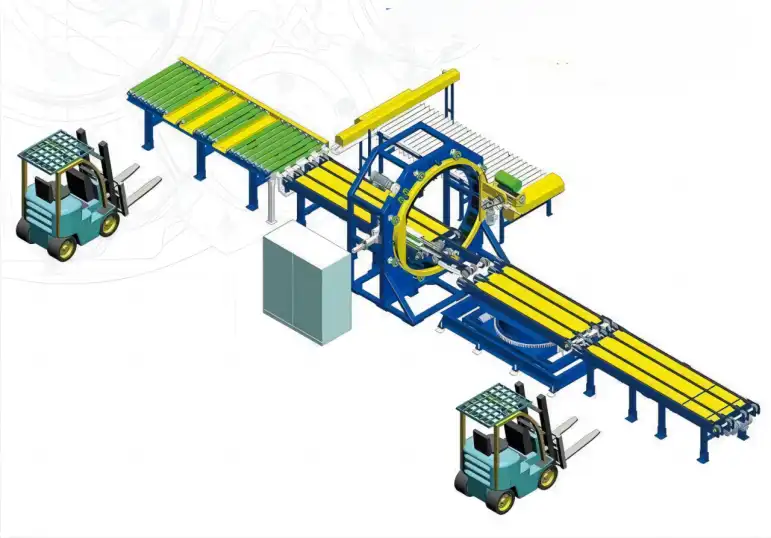
The size of the wrapper needs to match your product dimensions. Orbital wrappers come in various ring diameters. You need a ring large enough to allow your largest product to pass through easily. Also, consider if you need an inline system, where products move continuously through the machine, or an offline system, where products are loaded and unloaded separately. For very long products, some wrappers can be integrated directly into existing conveyor lines. This integration improves flow. Make sure the machine fits into your available factory space without causing new bottlenecks. Measure your largest product carefully.
Level of Automation
You can choose between semi-automatic and fully automatic orbital wrappers.
- Semi-automatic wrappers usually require an operator to feed the product and start the wrapping cycle. They are a good step up from manual wrapping and are often more budget-friendly. They offer good control for varied product sizes.
- Fully automatic wrappers integrate seamlessly into your production line. They detect the product, start the wrap, cut the film, and discharge the product all without human intervention. These are ideal for very high volumes and continuous production. They reduce labor needs even further. The choice depends on your production volume and budget. I often advise clients to consider their growth projections here. A fully automatic system might seem like a bigger investment now, but it pays off quickly with high volumes.
Film Type and Application
Orbital wrappers use stretch film, but the type and thickness can vary. You need to consider the level of protection your product needs. Some products might need UV-resistant film for outdoor storage. Others might need extra-strong film for heavy-duty protection. The machine’s ability to apply different film tensions and overlaps is also important. Some machines can even apply multiple layers or add specific cushioning materials during the wrap. Understanding your product’s vulnerability helps determine the right film and application method. This ensures maximum protection and minimal material waste.
Return on Investment (ROI)
Any major equipment purchase needs a clear ROI. How quickly will the machine pay for itself through labor savings, reduced product damage, and increased throughput? Calculate the current costs of your manual packing process: labor hours, product damage rates, and lost production time due to bottlenecks. Compare these to the investment in the new machine, its operating costs, and the benefits it provides. A good supplier can help you with these calculations. They can show you how the machine will contribute to your factory’s overall profitability. This data-driven approach is what I always share with my clients. It turns an expense into a strategic investment.
My Insights: What I Have Learned About Smart Investments?
My journey in the packing machine industry has been long and full of lessons. I started as an employee, learning the ropes from the ground up. I then built my own successful packing machine factory. This path allowed me to achieve financial independence. More importantly, it allowed me to help many of my clients grow their businesses too. Now, I dedicate my time to sharing what I have learned. I believe in giving back to the industry that has given me so much.
What I have learned is that a smart investment in packing machinery goes beyond the initial purchase price. It is about choosing a partner who understands your operational challenges, provides robust solutions, and offers ongoing support. It is about finding a company that values your long-term success as much as you do.
When I speak with factory managers, I often hear about their past frustrations. They talk about suppliers who are quick to sell but slow to support. I understand this mistrust completely. It is why I built FHOPEPACK on a foundation of knowledge sharing and genuine partnership.
Here are my personal insights on making smart investments:
Partnership Over Sales
Do not just look for a vendor; look for a partner. A true partner takes the time to understand your specific needs. They ask about your production volume, your product types, your space constraints, and your long-term goals. They do not just push their most expensive machine. They offer solutions that truly fit your operation and budget. When I started my factory, I realized quickly that a strong relationship with clients built on trust was worth more than any quick sale. This philosophy has guided me ever since. For example, I had a client who was facing severe issues with coil damage during internal transfers. Instead of just selling them a new wrapper, I spent weeks observing their entire process, from production to storage. This helped me recommend a customized system that solved their specific bottleneck, protecting their product and saving them significant money in the long run.
Focus on Long-Term Value and Support
The machine you buy is only as good as the support behind it. What happens when something breaks down? How quickly can you get spare parts? What kind of technical assistance is available? These questions are crucial. A low upfront cost can turn into a very expensive problem if the machine constantly breaks down and you cannot get help. Look for suppliers with a strong reputation for after-sales service, readily available spare parts, and responsive technical support. This focus on long-term value ensures your investment continues to pay dividends for years to come. In my own factory, I always ensured our service team was top-notch. It kept our clients’ lines running, and they always came back to us for their next needs.
Understanding the True Cost of Not Investing
Many factory managers focus on the cost of the machine. But what about the cost of not investing? What is the cost of continued product damage? What is the cost of high labor turnover due to dangerous working conditions? What is the cost of missed deadlines and unhappy customers because of slow packaging? These hidden costs add up quickly. Often, the investment in a modern orbital wrapper pays for itself faster than you might imagine, simply by eliminating these hidden expenses. My experience has shown me that inaction is often the most expensive choice. Taking control of your packaging process is a proactive step toward greater profitability and a more secure future for your business.
Conclusion
Choosing the right orbital stretch wrapper is vital for Australian building materials. It boosts automation, improves safety, and reduces costs. Partner with an expert like me to make a smart investment.








