
Which Modular Scalability Options Suit Diverse European Coil Sizes?
Imagine your factory floor. You have coils coming in, each a different size and weight. Some are wide, some are narrow. Others are heavy steel, while some are lighter wire. This variety creates a big problem. Your current packaging line struggles to keep up. It slows down production. It even puts your workers at risk.
Modern modular scalability options directly address these issues. They let manufacturers handle many coil sizes with ease. These systems include flexible coil tilters, adaptable wrapping machines, and smart conveyors. They reduce manual work. They make operations safer. They also boost efficiency across all your coil dimensions, no matter how much they vary.
Choosing the right packaging system for diverse coil sizes is a big decision. It impacts your whole operation. It affects your bottom line. We will break down the options. This helps you understand what truly works. It guides you to make smart choices for your factory’s future.
Why European Coil Manufacturers Struggle with Size Diversity?
Do you find yourself making constant adjustments to your packing line? Does it feel like you are always changing settings to fit different coil sizes? This is a common pain point. This slow, manual adjustment eats up valuable production time. It costs your business money every single day.
European coil manufacturing faces many challenges. These come from the huge variety in coil dimensions, weights, and materials. This makes standardized handling and packaging almost impossible. It means you need highly adaptable machinery and processes. Without them, your operations will always face roadblocks.
Finding the right equipment for varied coil sizes is hard. I have seen this problem many times in my career. From my early days on the factory floor to building my own successful packing machine factory, managing diverse products was always a hurdle. When coils vary in size, it creates many issues across the entire production chain.
First, there is the logistics complexity. Managing different coil sizes affects storage. It impacts internal transport. It changes how you ship products. You might need different forklifts or cranes for various weights. You might also need different storage racks. This adds layers of planning and can cause confusion. It can slow down your entire flow.
Second, we see production bottlenecks. Many older machines are built for one size or a narrow range. When a new coil size comes down the line, these machines stop. Workers must manually adjust them. This downtime is costly. It halts your entire production. It prevents you from meeting delivery deadlines. This directly impacts your ability to process orders quickly.
Third, there are major safety risks. Manual handling of heavy, oddly shaped coils is extremely dangerous. Workers can suffer serious injuries. This includes back strains, crushed limbs, or worse. Michael Chen, a factory manager, knows this well. He worries about the high risk of worker injuries. This not only causes human suffering but also leads to higher insurance costs and loss of skilled staff. Automated systems reduce this risk greatly.
Finally, we face quality control issues. Improper handling of diverse coil sizes often leads to product damage. For example, the edges of steel coils can get dinged. Wire coils can unravel or get tangled. This means more scrap. It leads to customer complaints. It directly impacts your profit margins. A machine that cannot adapt well often causes this damage.
Think about the range of coils in Europe. Steel mills produce massive coils, weighing many tons. Wire manufacturers deal with smaller, lighter coils. These need different handling. Construction sites might need rebar coils that are thick and heavy. Each type needs a specific approach. This wide variation demands packaging solutions that are truly flexible. They must handle everything safely and efficiently.
| Coil Type | Typical Size Range (Diameter/Width) | Weight Range | Handling Challenges |
|---|---|---|---|
| Hot Rolled Steel | 1.0m – 2.5m (Dia), 0.5m – 2.0m (W) | 5 – 30 tons | Very heavy, need robust lifting/tilting, slow changes |
| Cold Rolled Steel | 0.8m – 2.0m (Dia), 0.5m – 2.0m (W) | 3 – 25 tons | Heavy, surface easily damaged, precise handling needed |
| Wire Rod/Coil | 0.6m – 1.2m (Dia), 0.2m – 0.5m (W) | 0.5 – 2 tons | Lighter but unstable, prone to unraveling, faster packing |
| Aluminum Coil | 0.8m – 2.0m (Dia), 0.5m – 1.8m (W) | 2 – 15 tons | Lighter, soft surface, need gentle handling, precise wrapping |
How Do Modular Packaging Lines Address Coil Size Variations?
Does your current packaging setup force you into a “one-size-fits-all” approach? Do you know it is costing you efficiency and money? That rigid system makes no sense for today’s varied production needs. It is time to think differently.
Modular packaging lines offer great flexibility. They let manufacturers quickly adapt to different coil sizes. This means you can add or remove specific units as needed. This makes your production lines agile. It keeps them efficient. You are not stuck with a system that only handles one thing.
Modular design is something I strongly believe in. When I was building my own packing machine factory, I knew we needed systems that could grow and change. The market is always changing. Your customer demands also change. You need equipment that can keep up.
So, what does “modular” mean for coil packaging? It means your entire packaging line is made of distinct, self-contained units. Each unit performs a specific task. These units can be combined. They can be rearranged. They can even be replaced. This gives you incredible power over your production.
The benefits of this approach are clear:
- Customization: You can tailor the line exactly to your current needs. Do you mostly pack large steel coils now but expect to add smaller wire coils later? You can set up your line for today. Then you can add modules later.
- Scalability: This is key for growth. As your production demands change, your line can grow or shrink with you. You might need faster wrapping. You might need more strapping stations. You simply add the modules. You do not have to buy a whole new line.
- Reduced Downtime: If one part of your line needs maintenance, you can sometimes bypass or quickly replace that module. This keeps the rest of your production running. It reduces overall downtime.
- Investment Protection: You only buy what you need right now. You can add more later as your budget allows. This spreads out your investment. It lowers your initial capital outlay. It protects you from buying too much machine upfront.
For example, consider a coil wrapping line. A modular system might include a core wrapping unit. Then you can add a separate strapping module. You might also add an automatic labeling module. You can choose different conveyor sections. Some conveyors might handle heavier coils. Others handle smaller ones. You can swap them. Each module is designed for quick integration. This means less time spent on setup. It means more time on production. This type of flexibility is exactly what modern factories need. It helps them stay ahead of competition. It helps them meet varied customer orders easily.

| Feature | Fixed System for Coil Packaging | Modular System for Coil Packaging |
|---|---|---|
| Adaptability | Limited to specific coil sizes | High; adapts to wide range of sizes |
| Customization | Low; off-the-shelf solutions | High; can add/remove units as needed |
| Scalability | Difficult; requires full replacement | Easy; expand or reconfigure modules |
| Initial Cost | Can be lower for specific need | Potentially higher initial module cost |
| Long-term ROI | Limited by inflexibility | High; adapts to future needs, lower risk |
| Maintenance | Can be complex for integrated unit | Easier; isolated module repair/replacement |
Can Automated Coil Tilters and Upenders Adapt to Different Sizes?
Do you still rely on manual labor to flip or rotate heavy coils? Are you seeing constant safety risks and slow movements on your factory floor? This outdated method puts your workers in danger. It also seriously slows down your entire process.
Yes, modern automated coil tilters and upenders can adapt. They use adjustable platforms. They have robust hydraulic systems. They also use smart controls. This lets them safely handle a wide range of coil diameters, widths, and weights. They are built for flexibility.
From my time as an engineer, I learned that lifting and tilting heavy objects is always a critical point. It is where accidents happen most often. It is also where bottlenecks form. Investing in automated tilters and upenders was a no-brainer when I built my own factory. I saw how much they improved safety and flow.
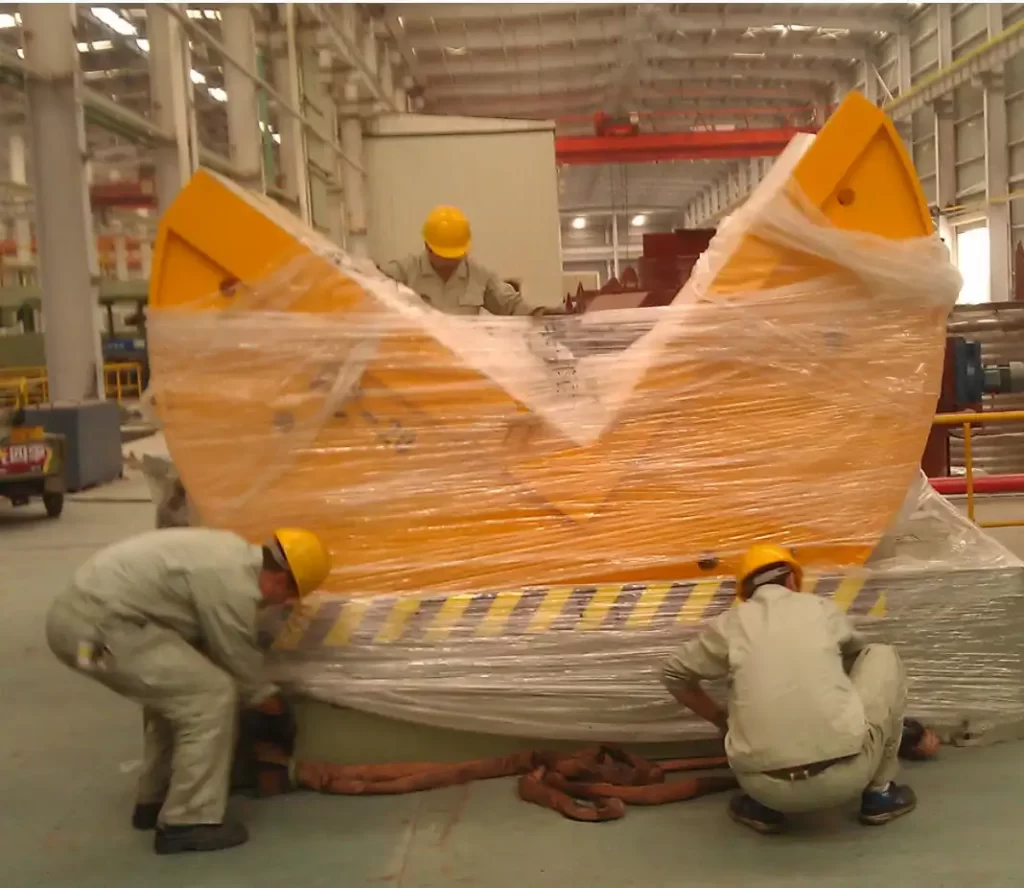
Coil tilters change the orientation of your coils. They can move a coil from flat on a pallet to standing upright. Or they can do the reverse. This is often needed for strapping or wrapping. Modern tilters come with adjustable V-blocks or platforms. These can be quickly moved. They can fit different coil diameters. This ensures the coil is held securely. It prevents slipping. Some models even use sensors. These sensors automatically detect the coil size. They then adjust the V-blocks without human input. This makes changeovers fast and error-free.
Coil upenders are similar. They are used for specific orientation changes. For example, they might turn a coil from vertical to horizontal. Or the other way around. What makes them adaptable? They are built with heavy-duty construction. This lets them handle massive European steel coils. They often use powerful hydraulic or electric systems. These systems provide the strength and precision needed for varied loads.
Think about the technology inside them. Sensors are crucial. They auto-detect the dimensions of the incoming coil. This information feeds into a Programmable Logic Controller (PLC). The PLC can then recall a stored “recipe” for that specific coil size. It adjusts the machine automatically. This means very quick changeovers. It also means no human errors. Safety features are also built in. They include interlocks, emergency stops, and light curtains. These protect workers. They prevent accidents, especially when handling heavy, shifting loads. This directly helps factory managers like Michael Chen achieve their safety goals. Reducing manual handling of heavy items is a top priority for him. These machines provide a direct solution. They make the workplace much safer. They also increase the speed of your material flow.

| Feature | Benefit for Adaptability to Diverse Coils | Example |
|---|---|---|
| Adjustable V-Blocks | Securely holds various coil diameters | V-blocks move in/out for 0.8m to 2.5m coils |
| Robust Hydraulics | Handles wide range of coil weights with ease | Lifts coils from 500kg to 30 tons smoothly |
| Smart PLC Controls | Automates changeovers based on coil data | Stores 20+ coil recipes, auto-selects based on sensor |
| Sensor Integration | Detects coil size for automatic adjustments | Laser sensors measure diameter and width |
| Heavy-Duty Frame | Ensures stability and durability for large coils | Welded steel frame, designed for continuous operation |
| Safety Interlocks | Protects workers during operation | Machine stops if safety barrier is breached |
What Role Do Customization and Future-Proofing Play in Scalability?
Are you worried about buying equipment that quickly becomes old and useless? Do you fear making a large investment only to find it cannot keep up with future demands? This is a valid concern. It means wasted money. It means your factory falls behind.
Customization and future-proofing are very important for scalability. This means choosing equipment that can be modified or expanded later. It protects your initial investment. It also makes sure your operations stay competitive. This is true even as your market and production needs change over time.
When I started my own factory, I faced this choice. Do I buy a cheap, rigid machine? Or do I invest in something that can grow? I learned that short-term savings often lead to long-term headaches. A smart investment considers the future.
Customization is not just about making a machine look pretty. It is about tailoring its function. Some companies offer standard machines. These are fine for very specific needs. But for European coil manufacturers, who face high diversity, a tailored approach is often better. This means working with a supplier who truly understands your factory’s unique workflow. They should know your specific production bottlenecks, like Michael Chen’s concerns. They should design solutions that fit your challenges, not just a generic mold. This leads to higher efficiency and better ROI.
Future-proofing means designing equipment with adaptability in mind. It is about thinking ahead. Can you add more automation later? Can you integrate different wrapping heads if product types change? Can the machine handle slightly larger or smaller coils than you currently produce? Machines designed with room for upgrades offer this flexibility. This means they are not just useful for today. They are useful for tomorrow too.
The software and controls are a big part of this. Modern packaging machines use advanced software. This software should be flexible. It should be easy to update. It should allow for new coil types to be programmed in. This makes adapting to market changes much simpler. You do not need to replace the whole control system.
Also, robust construction is vital. You need quality materials. You need strong engineering. This ensures longevity. It also ensures the machine can handle diverse, heavy loads day in and day out. This is especially true for the demanding environment of a coil processing plant. As a packing machine engineer, I learned that cutting corners on material quality never pays off. You need machines that last.
Finally, the most important part of future-proofing is choosing the right partnership. Do not just look for a vendor who sells machines. Look for a partner like FHOPEPACK. We share knowledge. We offer ongoing support. We give insights. This is how we help clients grow their businesses. It is how I achieved my own financial independence. I am grateful for the opportunities the coil packing industry gave me. Now I want to give back. I want to help others succeed. A supplier who understands your business needs will help you make the right investment. They will ensure the equipment genuinely solves your problems. They will also support your business growth.

| Factor | How it Aids Future-Proofing for Coil Packaging |
|---|---|
| Modular Design | Allows adding/removing components for new needs |
| Robust Construction | Ensures longevity and handles diverse loads over time |
| Flexible Software | Enables easy updates and new product programming |
| Scalable Capacity | Designed to handle higher volumes or new coil sizes |
| Supplier Partnership | Provides ongoing support, upgrades, and expert advice |
| Standardized Parts | Easier to find replacements and service parts globally |
My Insights: Building a Resilient Packaging Future!
Are you feeling overwhelmed by all the choices for your packaging needs? Do you worry about making the wrong investment? I understand that feeling. It is a big decision with real consequences. You risk wasting money. You risk falling behind.
Based on my long journey in this industry, building a resilient future means more than just buying machines. It means choosing partners who truly understand your unique challenges. It means investing in systems that can grow with your business.
I started my career on the factory floor. I was an employee. I saw the challenges firsthand. I saw the struggles with manual coil handling. I saw the slow production lines. I saw the safety risks. This direct experience taught me a lot. Later, I had the chance to establish my own successful packing machine factory. This journey taught me what really makes a business grow. It is not just about having a machine that works today. It is about having a system that will work for you years from now. It is about having a partner you can trust.
My personal experience showed me that machinery is just one part of the puzzle. The best solution always involves understanding the entire workflow. It means looking at safety first. It means calculating the long-term return on investment (ROI). Many suppliers only care about selling a machine. They do not look at your overall business. But a true partner looks at your entire operation. They identify your production bottlenecks. They help you solve your safety problems. They find ways to cut your costs. This is the FHOPEPACK difference. Our mission is about sharing knowledge. We want to help others succeed. We provide practical solutions. We help our clients grow their businesses. This is what gives back for all the opportunities I received from this industry.
Here is some practical wisdom I have gathered:
- Always prioritize safety: No efficiency gain is worth a worker’s injury. Invest in systems that truly minimize manual handling of heavy coils. This protects your people. It also reduces your insurance costs.
- Look at the total cost of ownership (TCO): Do not just focus on the upfront purchase price. Consider energy use, maintenance, parts availability, and potential downtime. A cheaper machine that breaks down often will cost you more in the long run.
- Demand real adaptability, not just claims: Ask hard questions about how a machine truly handles different coil sizes. Can it switch quickly? How much manual input is needed? See it in action if you can.
- Seek out expertise that goes beyond sales: Find a supplier who has real-world experience. They should understand your industry. They should know the challenges of running a factory. They should be able to offer insights, not just product brochures. This partnership is what will truly drive your success.
Conclusion
Managing diverse European coil sizes needs smart solutions. Modular packaging lines, adaptable tilters, and future-proofed designs are key. They boost safety and efficiency. Partnering with experts ensures your investment truly supports long-term growth.








