
Which Horizontal Orbital Wrapper Delivers the Best ROI for Colombia’s Medium-Sized Manufacturing Plants?
Are you tired of slow, manual packing processes at your Colombian factory? Does it feel like your production line gets stuck right at the end? I know the pressure. Every minute of downtime, every damaged product, every safety risk eats into your profits and adds to your headaches. I have seen it happen many times. Investing in the right horizontal orbital wrapper can change everything. It is not just about buying a machine. It is about boosting your factory’s efficiency, improving safety, and getting a clear return on your investment.
For medium-sized manufacturing plants in Colombia, a robust, semi-automatic or fully automatic horizontal orbital wrapper with customizable tension control and strong construction delivers the best ROI. These machines directly address common bottlenecks, reduce labor costs, minimize product damage, and significantly improve workplace safety, leading to long-term profitability and operational stability.
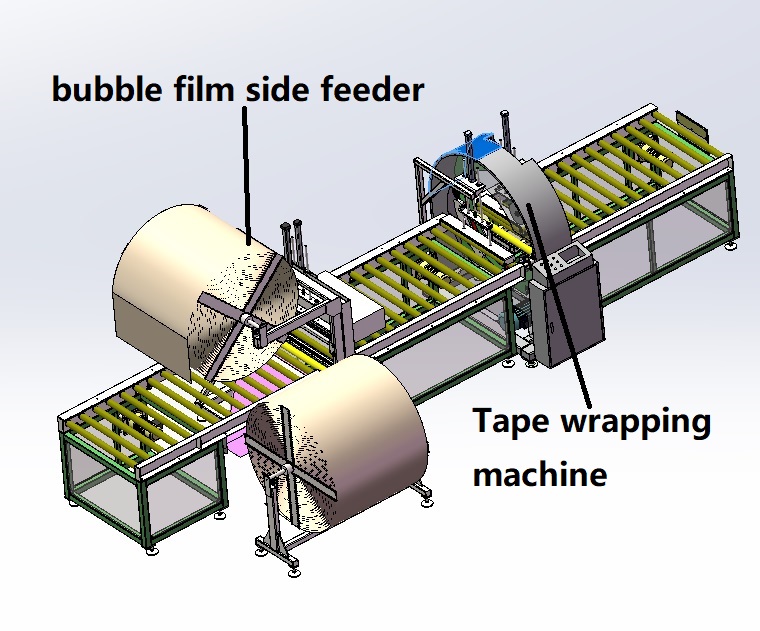
You might be thinking, “That sounds great, Randal, but how exactly does this machine deliver on those promises?” Let me break down the specific ways a well-chosen horizontal orbital wrapper can transform your operations and ensure you get the most out of your investment.
How Can an Orbital Wrapper Solve Production Bottlenecks in Colombian Factories?
Is your packing area slowing down your whole production? Do you struggle to keep up with demand because final wrapping takes too long? This is a common problem I have seen in many factories, especially those dealing with long or bulky items like steel coils or pipes.
A horizontal orbital wrapper automates the wrapping of long or oddly shaped products, eliminating the slow, labor-intensive manual processes that create production bottlenecks in Colombian factories. It allows for continuous flow, matching the speed of your upstream production lines and significantly improving throughput.

The Manual Bottleneck vs. Automated Flow
Think about how many factories still wrap long products by hand. Workers must walk around the product multiple times, or use small hand-held stretch wrappers. This is incredibly slow and inconsistent. It depends heavily on worker availability and their physical endurance. If your manufacturing line produces 100 units an hour, but your packing line can only handle 50, you have a bottleneck. This choke point means you are losing potential output. You are also accumulating finished goods, which takes up valuable floor space. For a medium-sized metal processing plant in Colombia, where high volume is key, this bottleneck is a major roadblock to growth. My own journey in the packing machine industry taught me that efficiency is not just about raw speed. It is about smooth, uninterrupted flow. I saw firsthand how a single manual step could hold back an entire factory.
Understanding Throughput Improvement
An orbital wrapper is designed to integrate seamlessly into your production line. Products can be fed directly onto the wrapper’s conveyor. The wrapping ring then orbits around the product, applying film quickly and evenly. This eliminates the stop-and-start nature of manual wrapping. It means that as soon as a product is ready, it is wrapped and moved out. This continuous process dramatically increases your hourly or daily packing capacity. For example, a task that might take two workers 15 minutes manually can be completed in just a few minutes by a machine. This frees up your skilled labor to focus on more complex tasks, adding more value elsewhere in your factory. It means you can ship more products, faster, without adding more people or working excessive overtime. This directly translates into higher sales and better customer satisfaction. The machine is always ready to work, with consistent performance.
| Feature | Manual Packing | Horizontal Orbital Wrapper |
|---|---|---|
| Speed | Slow, inconsistent | Fast, consistent, high throughput |
| Labor Needs | High, physically demanding | Low, operator oversight only |
| Consistency | Varies by worker, often uneven | Uniform, tight, professional wrap |
| Integration | Difficult to integrate with conveyors | Seamlessly integrates with production lines |
| Space Utilization | Requires space for manual movement, staging | Compact footprint, efficient use of space |
What Role Does an Orbital Wrapper Play in Improving Workplace Safety?
Are you constantly worried about worker injuries in your packing area? Do heavy or awkward products pose a daily safety risk? I know many factory managers, like Michael, carry this burden. The thought of a worker getting hurt is always present.
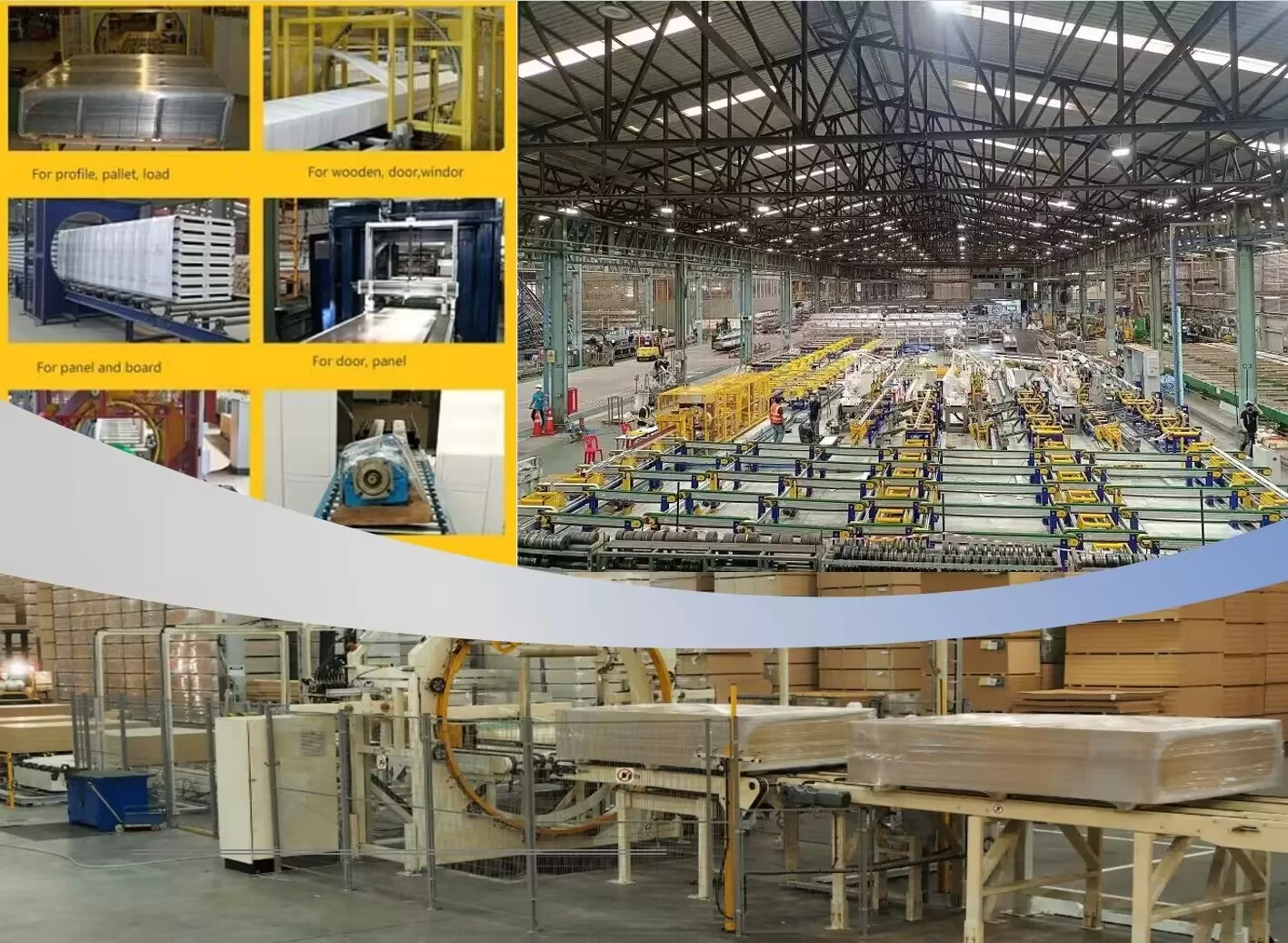
A horizontal orbital wrapper drastically improves workplace safety by removing workers from direct contact with heavy, moving, or awkwardly shaped products during the wrapping process. It minimizes the need for manual lifting, twisting, or securing, directly reducing the risk of musculoskeletal injuries, crushes, and falls common in traditional packing methods.
Eliminating High-Risk Manual Tasks
In metal processing plants, steel coils, wire bundles, or long bars can be extremely heavy and hard to handle. Manually moving these items, turning them, or wrapping them by hand creates significant risks. Workers can strain their backs, drop heavy objects on their feet, or get caught between the product and another surface. These are not just minor injuries. They can lead to long-term disabilities, high medical costs, and increased insurance premiums for your factory. My own experience in factories has shown me that even the most careful workers can have an accident when dealing with such demanding physical tasks day in and day out. It is not a matter of if, but when. Relying on manual labor for these tasks is a gamble with your employees’ health and your company’s finances.
Impact on Worker Well-being and Costs
An orbital wrapper takes the worker out of the danger zone. The product is placed on a conveyor or roller system. The machine then does all the heavy lifting and rotating. Workers no longer need to physically maneuver heavy items or bend over repeatedly to wrap them. This significantly reduces the risk of common workplace injuries like back sprains, shoulder strains, and crushed limbs. When injuries go down, your insurance premiums often decrease. You also see fewer lost workdays, which means higher productivity. Employee morale also improves when they know their workplace is safer. A safer environment leads to lower employee turnover. This means you keep your experienced team members, which saves you money on recruitment and training. For Michael, who faces pressure to control costs and ensure safety, this is a clear win. It shows a commitment to your team’s well-being, which builds a stronger, more stable workforce.
| Safety Risk | Manual Method | Orbital Wrapper Solution |
|---|---|---|
| Musculoskeletal Injuries | Lifting, bending, twisting heavy objects | Machine handles all movement, no manual strain |
| Crushing/Impact Injuries | Risk of dropping product, getting caught | Automated process keeps workers away from moving parts |
| Falls/Trips | Navigating around unwrapped products, uneven loads | Controlled process, dedicated wrapping area |
| Repetitive Strain | Repetitive wrapping motions | Machine performs repetitive actions consistently |
| Fatigue-Related Accidents | Long hours of demanding physical labor | Reduced physical demand, less worker fatigue |
Can an Orbital Wrapper Really Reduce Product Damage and Boost Profit?
Are you losing money due to damaged products leaving your factory? Do customer complaints about scuffs or dents hurt your reputation? I have heard these stories many times. It is frustrating to work hard making a quality product, only to see it damaged at the last step.
Yes, a horizontal orbital wrapper significantly reduces product damage by providing consistent, secure, and professional wrapping that protects products like steel coils and wires during internal transport and shipment. This direct protection prevents scrapes, dents, and environmental exposure, leading to fewer customer complaints, reduced reworks, and ultimately, higher profits.

Protecting Your Product, Protecting Your Profit
Manual wrapping, no matter how careful, is often inconsistent. The film tension might be too loose in some spots, leaving areas exposed. Or it might be too tight, potentially deforming softer products. When heavy items like steel coils or wires are moved internally, they can easily bump into other objects. Edges can get scratched, surfaces can get scuffed, or the product can shift during transport, leading to damage. These damages are not just cosmetic. They can compromise the product’s integrity. My own factory experience taught me that every damaged product represents lost material, lost labor, and lost profit. It also leads to customer returns and a damaged reputation. In some cases, environmental factors like dust or moisture can also harm unwrapped or poorly wrapped products, especially during storage.
The Ripple Effect of Better Wrapping
A horizontal orbital wrapper applies film with precise, consistent tension around the entire product. This means every part of your product, from the edges of a steel coil to the surface of a long pipe, gets uniform protection. The wrapping is tight and secure. It prevents shifting during transport. It acts as a barrier against dust, moisture, and impact. This drastically reduces the likelihood of scrapes, dents, or environmental damage. When your products arrive at the customer’s site in perfect condition, it leads to fewer complaints and more repeat business. You save money on rework, scrap, and return shipping. You also build a stronger reputation for quality and reliability. This improved customer satisfaction and reduced waste directly boost your factory’s overall profitability. For Michael, who aims to reduce product loss and enhance the bottom line, this machine is a critical investment.
| Damage Type | Manual Wrapping Issues | Orbital Wrapper Solution |
|---|---|---|
| Surface Scratches/Scuffs | Inconsistent film coverage, exposed areas | Uniform, tight wrap covers all surfaces |
| Edge Damage | Edges vulnerable during handling | Full protection around all edges and corners |
| Shifting During Transit | Loose wrap, product moves within packaging | Secure, consistent tension prevents movement |
| Moisture/Dust Exposure | Gaps in wrapping, incomplete seals | Overlapping film layers create a protective barrier |
| Deformation | Uneven tension, crushing during manual wrap | Controlled tension applies even pressure, prevents deformation |
Why Partnering with an Experienced Supplier Like FHOPEPACK Matters for Your ROI?
Have you been burned by equipment suppliers who disappear after the sale? Are you looking for a partner who truly understands your factory’s needs? I know that feeling of frustration. It is like buying a car and then finding out there is no one to help you if it breaks down.
Partnering with an experienced supplier like FHOPEPACK is crucial for achieving the best ROI on your horizontal orbital wrapper because it ensures you receive expert consultation, reliable equipment tailored to your specific needs, and robust after-sales support. Our deep industry knowledge, built from years in the field and running my own factory, means we understand your challenges and provide solutions that work in real-world scenarios, not just on paper.
Beyond the Sale: A True Partnership
Many suppliers are only interested in making a sale. They will sell you the latest model, promise the world, and then vanish once the invoice is paid. This leaves you with a complex machine, no real support, and often, a solution that does not quite fit your unique factory environment. I started as an employee in a packing machine factory. I saw these problems from the inside. Then, I went on to establish my own successful packing machine factory. This journey taught me the real-world challenges faced by factory managers every day. I know about production pressures, cost controls, and the need for reliable equipment. I understand that a machine is an investment, not just a purchase. Michael’s experience with sales-focused suppliers is a story I have heard many times, and it is precisely what FHOPEPACK aims to avoid. We believe in building long-term relationships.
The FHOPEPACK Difference
At FHOPEPACK, my team and I bring a unique perspective. We have not just designed and sold machines; we have operated them. We have experienced the headaches of downtime, the pressure of meeting targets, and the importance of every piece of equipment working as it should. This hands-on background means we can genuinely listen to your specific bottlenecks, safety concerns, and efficiency goals. We do not just recommend a machine. We analyze your current processes, your product types, and your future growth plans. We help you choose the orbital wrapper that is the absolute best fit for your Colombian factory, not just a generic solution. This goes beyond the machine itself. It includes installation guidance, training for your staff, and prompt technical support when you need it. A reliable partner ensures your machine keeps running efficiently, minimizing downtime and maximizing your ROI. This is how I achieved financial independence and helped many of my clients grow their businesses. It is about sharing that expertise to help you succeed.
| What a Good Partner Provides | Sales-Focused Supplier | FHOPEPACK (Experienced Partner) |
|---|---|---|
| Understanding Needs | Generic recommendations | Deep analysis of your specific factory operation |
| Equipment Customization | “One size fits all” | Tailored solutions for your unique products |
| Installation Support | Minimal guidance or third-party reliance | Direct guidance, proven best practices |
| Training | Basic, limited | Comprehensive, hands-on for your team |
| After-Sales Support | Slow, inconsistent, or non-existent | Responsive, expert technical assistance |
| ROI Focus | Focus on initial sale price | Focus on long-term value, cost savings, and growth |
My Insights!
After years in the packing machine industry, running my own factory and helping many clients, I have seen what truly works. I have learned lessons that go beyond just the machine itself.
My deepest insight is that the best horizontal orbital wrapper for your factory is not just the most advanced or cheapest one; it is the one that fits your specific operational context, solves your core pain points, and comes from a partner who understands your long-term business goals. It is about smart investment, not just purchasing.
The Hidden Cost of “Cheap” Solutions
I have seen many factory managers make the mistake of buying the cheapest machine they can find. At first, it looks like a great deal. The initial investment is low. But soon, problems start to appear. The machine breaks down often. Parts are hard to find. The customer support is non-existent. The cheaper machine often cannot handle the daily demands of a busy factory. It might wrap inconsistently, leading to product damage. Or it might be too slow, creating new bottlenecks. These issues lead to massive hidden costs: lost production time, wasted materials, unhappy customers, and constantly paying for repairs. The initial savings are quickly eaten up by these ongoing problems. In my journey, I learned that true financial independence comes from smart, long-term investments, not chasing the lowest price. Helping my clients grow their businesses was never about pushing the most expensive option; it was about providing the right one.
Investing in the Right Solution for Long-Term Growth
Choosing the right horizontal orbital wrapper means looking beyond the sticker price. You need to consider the total cost of ownership. This includes the machine’s durability, its efficiency, the cost of consumables like film, and the reliability of the supplier. A robust machine that lasts for years with minimal downtime will save you far more money in the long run, even if its initial price is slightly higher. It is about understanding your factory’s specific needs. For a medium-sized plant in Colombia dealing with steel products, a machine designed for heavy-duty, continuous operation is essential. You need a partner who can provide that kind of specialized knowledge. They should help you calculate the ROI, showing you how the machine will pay for itself through reduced labor, less product damage, and increased output. This thoughtful approach to investment is what truly drives business growth and helps you achieve your operational goals. I am grateful for the opportunities the coil packing and steel wire packing industry has given me, and sharing these insights is my way of giving back.
| Key Consideration | Short-Term Thinking (Lowest Price) | Long-Term Investment (Best ROI) |
|---|---|---|
| Machine Quality | Often sacrifices durability | Robust build for sustained operation |
| Maintenance Needs | High frequency, expensive parts | Low, predictable, easy access to parts |
| Downtime | Frequent breakdowns, significant production loss | Minimal, quick resolution with good support |
| Product Protection | Inconsistent, leads to damage | Superior, consistent, reduces waste |
| Supplier Support | Limited or non-existent | Comprehensive, responsive, expert guidance |
| Overall Profit | Reduced by hidden costs and inefficiencies | Enhanced by efficiency, safety, and quality |
Conclusion
Investing in the right horizontal orbital wrapper improves efficiency, boosts safety, and cuts costs. Choose a partner who understands your needs for the best ROI.








