
How Do Different Horizontal Orbital Wrappers Perform in Colombia’s Steel and Non-Ferrous Metal Packaging Lines?
Do you struggle with slow packing speeds in your steel or non-ferrous metal factory? Are your workers facing daily risks from manually handling heavy coils and wires? Many factory managers, especially in places like Colombia, see their profits shrink because of inefficient and unsafe packaging processes. This problem is more common than you think. It affects your output, increases costs, and can even lead to more accidents.
Horizontal orbital wrappers change how steel and non-ferrous metal products are packed. These machines wrap products, like coils or bundles, while they move through a rotating film ring. They offer different levels of automation, speed, and durability. This makes them suitable for various production needs in Colombia’s demanding industrial lines. They greatly improve safety and efficiency compared to manual methods.
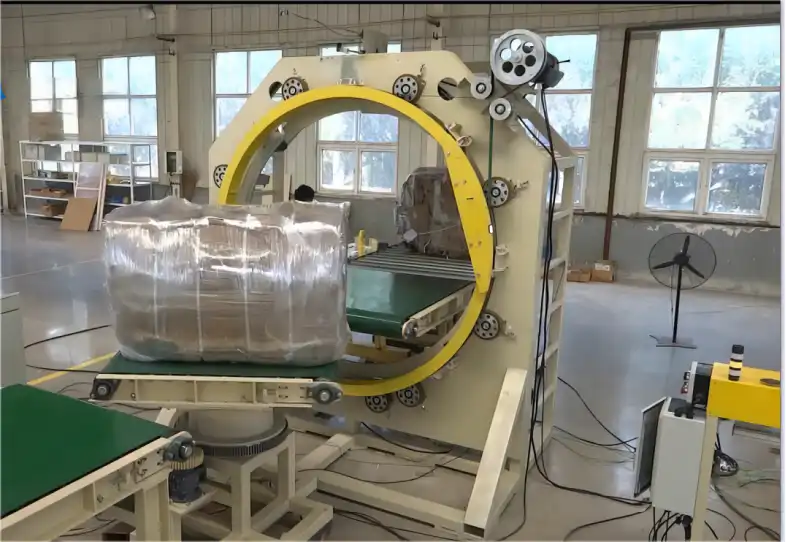
Understanding the general benefits is one thing. But knowing how different models truly perform, and which one fits your specific challenges, is another. Let us dig deeper into the world of horizontal orbital wrappers. We will see how they can make a real difference in your factory operations.
What are the key types of horizontal orbital wrappers for heavy metals?
Are you confused by the many options of orbital wrappers? Do you wonder which machine will truly handle the heavy demands of steel or non-ferrous metal? Choosing the wrong type can lead to more problems than solutions. This often wastes both time and money.
Horizontal orbital wrappers come in several types. Each one is designed for specific industrial needs. For heavy metals, the main types include semi-automatic, automatic, and custom-engineered systems. Semi-automatic machines require some operator involvement. Automatic machines work without constant human help. Custom systems are built for unique, large, or very specific product lines found in places like Colombia.
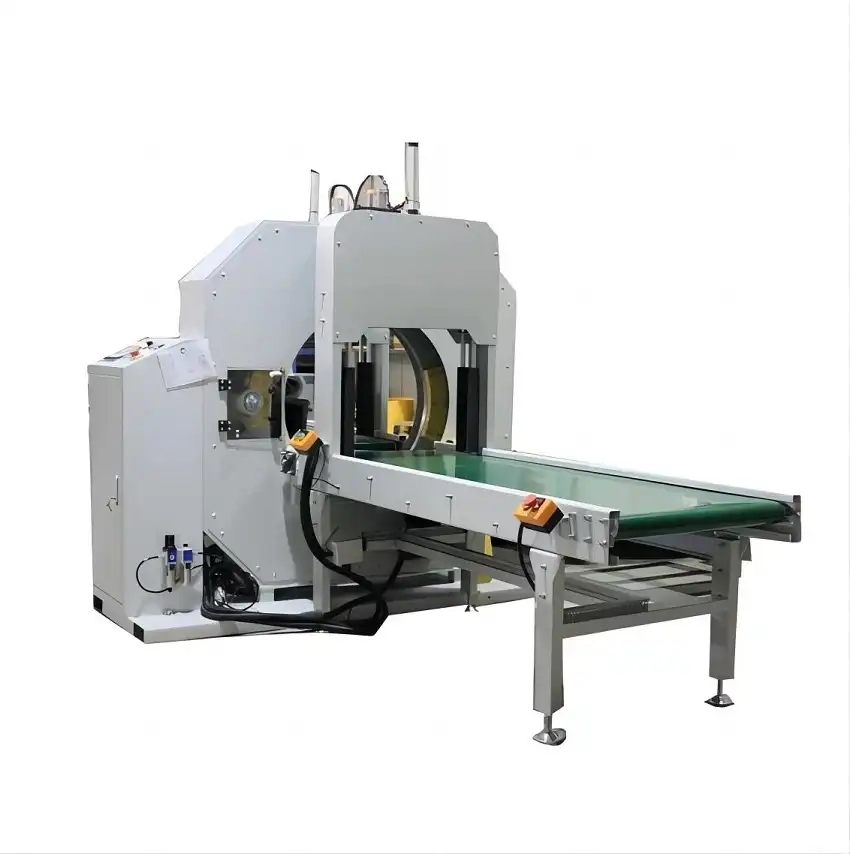
In my years in the packing machine industry, from an employee to owning a factory, I have seen many production lines. I know that one size does not fit all. When it comes to horizontal orbital wrappers for steel and non-ferrous metals, choosing the right machine type is very important. This choice directly impacts your output and your costs.
Let us look at the common types.
Semi-Automatic Horizontal Orbital Wrappers
These machines need an operator to load the product and start the wrapping cycle. The machine then wraps automatically. After wrapping, the operator cuts the film and unloads the product. They are a good entry point for factories moving from fully manual packing. They offer improved consistency and speed over hand wrapping. They also reduce some of the physical strain on workers. However, their speed is limited by the operator’s ability to load and unload. For high-volume operations, this can still be a bottleneck. They are often less expensive upfront. But, the ongoing labor costs can add up. They work well for medium-volume needs or for products with varied sizes.
Automatic Horizontal Orbital Wrappers
These machines are designed for high-volume production. They integrate into existing conveyor systems. Products move into the wrapping area automatically. The machine senses the product, wraps it, cuts the film, and discharges it, all without an operator’s direct involvement. This greatly increases packing speed and reduces labor needs. For a factory manager like Michael Chen, who aims to boost overall production, an automatic system is often the best choice. It removes the human element from the core wrapping process. This makes the entire line much faster and more reliable. This also lowers the risk of human error. The initial investment is higher. But the long-term savings in labor and the boost in output usually lead to a strong return on investment.
Custom-Engineered Horizontal Orbital Systems
Some factories, especially those dealing with extremely large, heavy, or unusually shaped metal products, need something unique. This is where custom-engineered systems come in. These are built from the ground up to meet very specific requirements. They might include special loading systems, reinforced structures for very heavy loads, or unique film delivery mechanisms. For example, a factory packing massive steel beams might need a wrapper with an extra-large ring diameter and special conveyor integration. I have seen situations where standard machines simply could not handle the weight or dimensions. In such cases, a custom solution, though more costly and time-consuming to develop, provides the exact fit. This ensures maximum efficiency and safety for those specialized tasks.
Here is a quick comparison:
| Feature | Semi-Automatic | Automatic | Custom-Engineered |
|---|---|---|---|
| Operator Need | Moderate (loading/unloading) | Low (monitoring) | Low (monitoring) |
| Speed | Medium | High | Very High / Specialized |
| Cost (Initial) | Lower | Higher | Highest |
| Integration | Standalone / Basic | Full Line Integration | Fully Tailored |
| Typical Use | Medium volume, varied products | High volume, consistent products | Unique, very large, or heavy products |
| Safety Impact | Improves over manual, still some risk | Greatly improves, minimal human contact | Designed for extreme safety needs |
Choosing the right type means understanding your current production volume, your future growth plans, and the specific characteristics of your products. It also means thinking about your labor costs and safety goals.
How do orbital wrappers improve safety and reduce risks in metal factories?
Are you constantly worried about worker injuries in your factory? Does the thought of a heavy coil falling during manual handling keep you up at night? The safety risks in metal processing are real and costly. Accidents lead to high insurance costs, lost time, and a drop in team morale.
Horizontal orbital wrappers significantly boost safety in metal factories. They take over the dangerous tasks of manual product wrapping and handling. Workers no longer need to lift, move, or rotate heavy items by hand. This drastically lowers the risk of sprains, strains, crushing injuries, and product damage from human error. The machines do the heavy lifting and the repetitive motions. This keeps people safe and reduces work-related accidents.
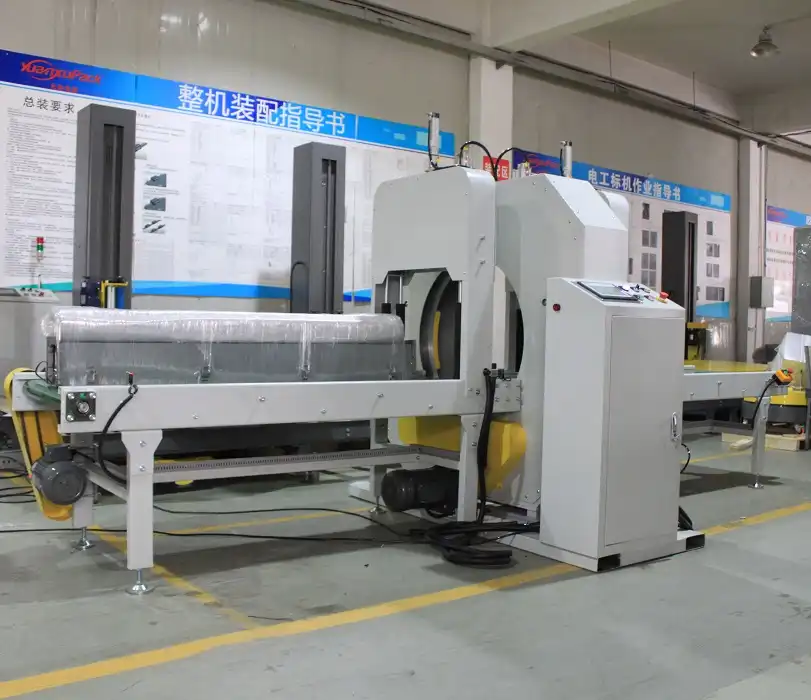
Safety is not just a buzzword; it is a core part of a factory’s success. As Randal Liu, I have seen firsthand the devastating impact of workplace injuries. In my own factory, we always made safety a top priority. When you handle heavy and often awkward items like steel coils or wire bundles, the risk is always high. Manual processes introduce many points of failure. These points can lead to serious injuries.
Horizontal orbital wrappers are designed to eliminate many of these hazards.
Eliminating Manual Handling of Heavy Loads
The biggest safety gain comes from removing the need for workers to manually handle heavy products. Before an orbital wrapper, someone might have to lift, push, or rotate a heavy coil to wrap it. This puts huge strain on their backs, shoulders, and knees. Over time, this leads to chronic injuries. It also causes immediate acute injuries. With a wrapper, coils are often loaded onto a conveyor or directly into the machine’s path. The machine then manages the product’s position and movement. This means less physical exertion for workers. It means they are less likely to suffer from musculoskeletal disorders. It also means fewer slips, trips, and falls associated with moving heavy items.
Reducing Exposure to Moving Parts and Pinch Points
A well-designed orbital wrapper has safety features built in. These include emergency stop buttons, safety guarding around the wrapping ring, and light curtains or sensors. These features prevent workers from accidentally touching moving parts. They prevent workers from getting caught in pinch points. Manual wrapping often involves workers moving around a product with sharp edges or unstable loads. The automated process keeps workers at a safe distance. This is especially true for automatic systems. This distance reduces the risk of cuts, abrasions, or even crush injuries.
Preventing Product Damage and Related Hazards
Damaged products can also cause safety problems. If a coil is dropped during manual handling, it can roll unexpectedly. This can hit a worker. It can damage other equipment. It can create unstable stacks. Orbital wrappers provide a consistent, secure wrap. This protects the product from damage during internal transport and external shipping. Less product damage means fewer unstable loads. It means fewer instances where workers must manually re-handle a damaged item. This makes the overall work environment safer.
Lowering Fatigue and Human Error
Manual, repetitive tasks lead to worker fatigue. Fatigue increases the chance of human error. An tired worker is more likely to make a mistake. This mistake can lead to an accident. By automating the wrapping process, orbital wrappers reduce the physical and mental strain on workers. They can focus on supervision or other tasks that require their unique skills. This reduces overall fatigue. It lowers the likelihood of accidents caused by simple human errors. This is crucial in a busy factory environment like those in Colombia.
Here is how orbital wrappers improve safety:
| Safety Aspect | Manual Wrapping Challenges | Orbital Wrapper Solutions |
|---|---|---|
| Heavy Lifting | Risk of back injuries, strains, sprains | Machine handles all lifting/movement |
| Repetitive Motion | Fatigue, chronic musculoskeletal disorders | Automated process, reduces operator strain |
| Pinch Points | Workers close to moving parts, unstable loads | Guarding, sensors, safety zones protect workers |
| Product Damage | Falling objects, sharp edges, unstable stacks | Secure wrap, less manual handling, fewer drops |
| Human Error | Fatigue-induced mistakes, inconsistent wrapping | Automated consistency, reduced worker fatigue |
Investing in these machines is not just about efficiency. It is also a clear commitment to your workers’ well-being. It is about creating a safer, more sustainable workplace. This is a message I always share with my clients.
Can automation with orbital wrappers truly boost your production efficiency?
Is your current packaging line a bottleneck? Do you constantly struggle to meet delivery deadlines because wrapping is too slow? Many factory managers find that all their efforts to speed up production end up stuck at the very last step. This is frustrating. It costs you money and customer trust.
Automation with horizontal orbital wrappers dramatically boosts production efficiency. These machines wrap products much faster and more consistently than manual methods. They reduce the time it takes to pack each item. They allow for continuous flow in the production line. This removes bottlenecks. It increases overall throughput. For a factory in Colombia dealing with high volumes of steel or non-ferrous metals, this means more products shipped, faster.

When I first started in the packing machine business, I learned quickly that efficiency is king. Every second counts on a production line. A slow packing process can undo all the gains made earlier in manufacturing. This is especially true for metal processing where products are heavy. They are often produced in high volumes. Michael Chen’s concerns about efficiency bottlenecks resonate with my own experiences. I have seen factories completely transform their output by automating their end-of-line processes.
Speed and Consistency
The most obvious benefit of an orbital wrapper is speed. A machine can wrap a coil or bundle in a fraction of the time a human can. It does this with perfect consistency every time. Manual wrapping varies from person to person. It also varies based on fatigue levels. An orbital wrapper performs the same wrap with the same tension and overlap, hour after hour. This consistent speed means predictable output. It helps with scheduling and meeting production targets. In Colombia, where industrial demands can be high, consistent high-speed packing is a major advantage. It ensures steady delivery to clients.
Reduced Labor Dependency
Automation reduces the need for multiple workers dedicated solely to packing. While some oversight might still be needed for automatic systems, the direct labor input for wrapping tasks drops sharply. This frees up your workforce for more value-added activities. Or it allows you to reallocate labor to other parts of the factory. This does not just cut labor costs. It also solves issues related to labor shortages. It also helps with the costs of training and managing a large packing team. For Michael, reducing manual labor tied to dangerous tasks like heavy lifting is a direct win. This applies to both efficiency and safety.
Seamless Integration into Production Lines
Modern horizontal orbital wrappers can integrate smoothly into existing conveyor systems. This creates a continuous flow from the manufacturing process directly to the shipping area. There are no stops or delays for manual handling between stages. This unbroken flow reduces idle time. It maximizes the use of other expensive machinery on the line. This type of integration is crucial for maximizing overall factory throughput. It moves products through the factory faster. It prevents accumulation of finished goods in the packing area.
Minimized Product Damage
Damaged products are a huge drain on efficiency. They require re-work, re-packaging, or even scrapping. This wastes materials, time, and labor. An orbital wrapper provides a tight, secure wrap that protects products during storage and transport. This consistent protection reduces product damage. It reduces customer complaints. It reduces returns. This means fewer interruptions in your production flow. It also means less time spent dealing with issues after the product leaves the factory. This improved product integrity directly adds to your factory’s efficiency and profitability.
Here is how efficiency benefits add up:
| Efficiency Factor | Manual Wrapping Limitations | Orbital Wrapper Advantages |
|---|---|---|
| Speed of Wrap | Slow, inconsistent, operator-dependent | Fast, consistent, machine-driven |
| Labor Allocation | High labor input for wrapping | Low labor input, staff redeployment |
| Production Flow | Bottleneck, manual transfer points | Continuous, integrated, smooth movement |
| Product Protection | Higher damage rates, re-work needed | Lower damage rates, secure wrapping |
| Overall Throughput | Limited by slowest packing process | Increased line speed, higher output |
From my experience, if you want to ship more, faster, and with fewer headaches, automation in your packing line is the clearest path. It is not just about buying a machine; it is about investing in a faster, more reliable future for your business.
What makes an orbital wrapper durable enough for Colombia’s demanding industrial environments?
Are you tired of equipment breaking down, causing expensive production stops? Do you fear investing in a new machine only for it to fail under the tough conditions of your factory? Industrial environments, especially in heavy manufacturing, are not easy on machinery. You need equipment that can truly last.
For Colombia’s demanding steel and non-ferrous metal industries, a horizontal orbital wrapper must be built tough. Durability comes from using heavy-duty steel frames, high-quality components, and robust motors. Machines designed for industrial use also feature sealed bearings to resist dust and moisture. They have easy-to-access parts for simple maintenance. This construction ensures long life and consistent performance even in harsh, dusty, or high-vibration factory settings.
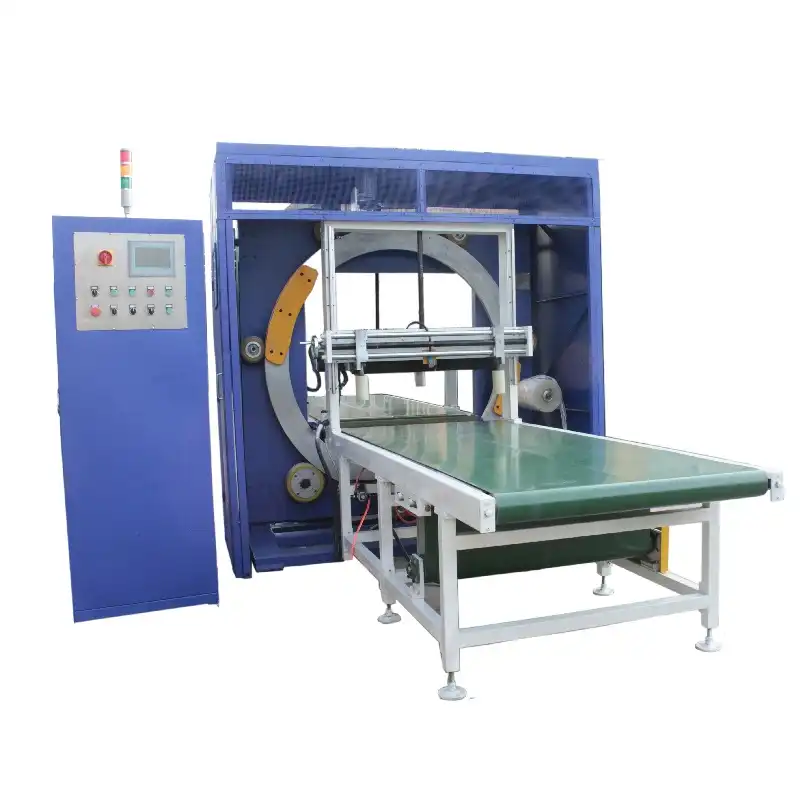
Durability is not a luxury; it is a necessity. In my decades of working with packing machines, I have seen too many companies buy cheaper equipment only to pay for it tenfold in repairs and lost production. For factory managers like Michael Chen, who operate in demanding sectors, reliability is key. A machine that breaks down frequently is not just an inconvenience; it is a direct hit to your bottom line. Downtime means lost production, missed deadlines, and unhappy customers.
Robust Construction Materials
A truly durable horizontal orbital wrapper starts with its skeleton. It needs a heavy-duty steel frame. This frame must be strong enough to withstand constant vibrations and the weight of heavy products. The metal itself should be treated to resist corrosion, especially in environments with high humidity or chemical exposure. In many industrial settings, dust and debris are common. The machine’s housing and internal components must be designed to keep these elements out. This prevents wear and tear on sensitive parts.
High-Quality Components and Engineering
Beyond the frame, the quality of internal components is vital. This includes the motors, gearboxes, bearings, and electrical systems. Using industrial-grade motors ensures they can handle continuous operation without overheating. Sealed bearings are critical in dusty environments. They prevent fine particles from entering and causing premature wear. The wrapping ring itself, which constantly spins, needs to be made from durable materials. It needs precise engineering to maintain balance and smooth operation. The control systems, too, must be industrial-grade. They should be able to withstand power fluctuations and operate reliably for years.
Design for Maintainability
Even the best machines need maintenance. A durable design also means a design that is easy to maintain. This includes having easily accessible lubrication points, modular components that can be quickly replaced, and diagnostic systems that help identify problems early. When I designed machines in my factory, I always thought about the maintenance crew. How can we make their job easier and faster? This focus on maintainability reduces the time a machine is out of service for repairs. It extends its overall lifespan. It also lowers long-term operational costs.
Environmental Resistance
Consider the specific conditions of your factory in Colombia. Is there a lot of dust from metal grinding? Is there high humidity? Are there temperature extremes? A durable orbital wrapper should be designed with these factors in mind. Electrical enclosures should be NEMA rated to protect against dust and water ingress. All cables and connections should be secure and resistant to industrial wear. The paint and coatings on the machine should stand up to harsh cleaning agents and environmental factors.
| Durability Factor | Weak Machine Characteristics | Durable Machine Characteristics |
|---|---|---|
| Frame | Thin, light, susceptible to vibration | Heavy-duty steel, reinforced, stable |
| Components | Standard, unsealed, quick wear | Industrial-grade, sealed bearings, robust motors |
| Maintainability | Difficult access, specialized tools needed | Easy access, modular parts, clear diagnostics |
| Environmental | Prone to dust/water damage, corrosion | NEMA-rated enclosures, resistant coatings, sealed |
| Lifespan | Short, frequent breakdowns | Long, reliable operation, minimal downtime |
From my perspective, investing in durability is not an expense. It is an investment in uninterrupted production and peace of mind. It pays for itself many times over by avoiding costly breakdowns and maintaining high output.
How can you ensure a high ROI when investing in a horizontal orbital wrapper?
Are you hesitant about a large investment in new equipment? Do you wonder if the high upfront cost of an orbital wrapper will truly pay off for your business? Many factory managers worry about getting real value from their purchases. This is a very valid concern. You need to see clear returns.
Ensuring a high Return on Investment (ROI) from a horizontal orbital wrapper involves several key strategies. These include a thorough needs assessment, choosing the right level of automation, calculating long-term operational savings, and prioritizing supplier partnership. The ROI comes from reduced labor costs, less product damage, higher throughput, and improved safety. For businesses in Colombia, these factors directly boost profitability and competitive advantage.
This is where my journey in the packing machine industry truly comes into play. When I started my own factory, every investment decision was critical. I had to ensure that every dollar spent would bring back more than a dollar. I learned that simply buying a machine is not enough. You need to buy the right machine. You also need to buy it from the right partner. This is a core part of FHOPEPACK’s mission: to share this knowledge. This is how you help businesses like Michael Chen’s grow.
Detailed Needs Assessment
Before looking at any machine, you must deeply understand your current challenges and future goals. What are your exact production volumes today? What do you expect them to be in five years? How much are you currently spending on labor for packing? What is the cost of your product damage? Do you track worker injuries and their associated costs? Knowing these numbers helps you justify the investment. It helps you choose a machine that is neither too big nor too small for your needs. Over-investing in a system that is too powerful for your needs wastes capital. Under-investing in a machine that cannot keep up becomes a bottleneck.
Calculating Long-Term Operational Savings
The upfront cost of an orbital wrapper is just one part of the equation. The real ROI comes from long-term operational savings.
- Labor Cost Reduction: Calculate how many full-time equivalent employees (FTEs) you can reallocate or reduce. This is often the biggest saving.
- Reduced Material Waste: Fewer damaged products mean less material waste. It also means less need for re-packaging.
- Increased Throughput: Faster packing means you can produce and ship more. This directly increases your revenue potential.
- Lower Insurance & Safety Costs: Fewer injuries lead to lower insurance premiums and fewer lost workdays.
- Improved Product Quality: A consistent, secure wrap reduces customer complaints. It improves brand reputation. This can lead to more business.
All these savings and gains contribute to the ROI. You need a clear way to measure them.
Choosing the Right Level of Automation
As we discussed, there are semi-automatic, automatic, and custom systems. Each has a different price point and different operational benefits. For high-volume operations, an automatic system might have a higher initial cost. But it will likely offer a much faster ROI due to significant labor savings and increased throughput. For smaller operations, a semi-automatic might be more cost-effective initially. It provides a good balance between automation and cost. My advice is always to match the machine’s capabilities to your realistic business needs and growth trajectory.
Prioritizing Supplier Partnership
This is perhaps the most important insight I can share. Michael Chen’s past experience with unreliable suppliers is common. A machine is only as good as the support behind it. Look for a supplier who understands your industry, like FHOPEPACK. Look for one who offers strong after-sales support, parts availability, and technical assistance. A partner is someone who helps you troubleshoot. They help you optimize your machine. They ensure your investment continues to pay off for years. I built my business on this principle. Helping my clients grow their businesses directly led to my own success. This means providing expertise, not just equipment. It means being there when you need help.
| ROI Factor | How It Contributes to ROI | What to Consider |
|---|---|---|
| Labor Savings | Direct cost reduction from fewer manual packers | Current labor costs, potential FTE reallocation |
| Increased Output | Ship more product, higher revenue potential | Current vs. desired throughput, market demand |
| Reduced Damage | Lower material waste, fewer returns/re-work | Current product damage rates, customer complaints |
| Safety Benefits | Lower insurance, fewer lost workdays | Current injury rates, safety compliance costs |
| Supplier Support | Maximize uptime, longevity of investment | After-sales service, parts, technical expertise |
A successful investment in a horizontal orbital wrapper is not just about the machine itself. It is about a strategic decision. It is about choosing a path that leads to greater efficiency, safety, and profitability for your entire operation.
Conclusion
Horizontal orbital wrappers offer clear solutions for Colombia’s metal packaging lines. They boost safety, increase efficiency, and provide long-term durability. A smart investment in the right machine can transform your factory’s output and profitability.








