
Which Coil Wrapping Machine Supports British Cable and Wire Coil Packaging Best?
Are you a factory manager in the UK, struggling with slow, unsafe, and inefficient cable and wire coil packaging? Does manual handling of heavy coils lead to product damage, worker injuries, and costly downtime? I know these challenges well. Many operations, especially in the demanding British industrial sector, face these exact problems every day.
The best coil wrapping machine for British cable and wire coil packaging is typically a robust, high-speed orbital stretch wrapper or a horizontal wrapping machine, engineered for heavy-duty industrial use, capable of handling varying coil dimensions, and equipped with features that prioritize both product protection and operational safety to meet stringent UK standards. This type of machine offers consistent, automated wrapping, significantly reducing manual labor and the risks associated with it.
It is easy to feel overwhelmed by the many options out there. Finding the right solution for your factory can transform your production line, boost safety, and cut costs. Let us look closer at how to pick the perfect machine.
1. Why is British Cable and Wire Coil Packaging Unique, and How Does It Impact Machine Choice?
Do you sometimes feel like the specific demands of the British market make choosing equipment harder than it needs to be? The UK’s industrial landscape, especially for cable and wire, has its own rules and needs. Ignoring these can lead to big problems.
British cable and wire coil packaging often involves specific material types, coil sizes, and regulatory requirements that demand a versatile and durable wrapping machine, making generic solutions less effective. Manufacturers in the UK need to consider factors like the typically robust nature of industrial cables, the need for excellent weather protection for outdoor use, and compliance with local safety and quality standards to ensure market acceptance.

Dive deeper into what makes British packaging unique, and how this impacts your machine decision. The UK market often deals with heavy-duty cables and wires. These are used in construction, power transmission, and telecommunications. This means coils are often larger and heavier. They also need very strong protection to survive transport and storage. Weather is another factor. British weather can be unpredictable. Packaging must protect against moisture and corrosion. This is true for goods going to other parts of the world too.
Understanding British Market Demands
British customers expect high quality. They also expect products to arrive in perfect condition. Any damage to a coil’s surface or edges can lead to rejection. This costs money and trust. For example, if a large steel wire coil used for fencing arrives with rust spots, it is useless. This is why the wrapping machine must apply a tight, consistent, and protective layer. It needs to keep the product safe from the factory door to the customer’s site.
Compliance and Standards
The UK has strict safety and quality rules. Your packaging machine needs to help you meet these rules. For example, machines must be safe for workers to operate. The packaging materials must also be suitable for their intended use. This means considering things like fire safety for some cable types. It also means environmental impact for packaging waste. A good machine helps you stay compliant. It also makes your business more responsible.
Supply Chain Logistics
Many British manufacturers export their products. This means packaging must be ready for long journeys. It must handle different climates and handling methods. A machine that can wrap coils tightly and securely reduces damage risks during transit. It helps avoid re-packaging needs or customer complaints. I have seen many companies lose money because their packaging failed during shipping. This problem is avoidable with the right machine. It is an investment in your whole supply chain.
| Factor | British Market Requirement | Impact on Machine Choice |
|---|---|---|
| Coil Weight/Size | Often heavy-duty, large diameter coils | Requires robust machine frame, high weight capacity |
| Environmental Protection | Need resistance to moisture, corrosion, dust | Must apply tight, multi-layer wrap, use weather-proof film |
| Product Protection | Prevent surface scratches, edge damage, deformation | Precise film tension control, uniform wrap, gentle handling |
| Throughput | High production volumes to meet demand | Demands high-speed operation, automation features |
| Safety Standards | Strict worker safety and machine operation regulations | Integrated safety features, guards, easy-to-use controls |
2. What Are the Key Types of Coil Wrapping Machines for Cable and Wire, and Which Fits Best?
Are you unsure about the many kinds of coil wrapping machines? Do you worry about picking the wrong one for your cable and wire products? Many factory managers feel this way. Understanding the basic types helps you make a better choice.
The main types of coil wrapping machines for cable and wire are orbital, horizontal, and vertical wrappers, with orbital wrappers often being the most versatile and effective for securely wrapping a wide range of coil sizes and weights common in the British market. Horizontal wrappers are good for continuous long products, while vertical wrappers are best for specific applications where the coil rests on its end during wrapping.

Let us break down the main types of machines. Each one has its own strengths and is designed for specific tasks. Choosing the best one means matching its design to your factory’s needs. I have seen factories buy machines that look good but do not fit their specific product range. This costs a lot of money and time.
Orbital Coil Wrapping Machines
Orbital wrappers are very popular for coils. They have a wrapping ring that moves around the coil. The coil stays on a conveyor or trolley. This machine is great for many coil sizes. It can wrap both wide and narrow coils. It applies stretch film, woven fabric, or other materials. The wrap is tight and protects the whole coil. This type of machine is excellent for cable, wire, steel, or plastic coils. It gives good protection against damage and weather. My experience shows that for general coil packaging, the orbital wrapper is a strong contender. It offers flexibility and high output.
Horizontal Wrapping Machines
Horizontal wrappers work differently. They are often used for very long products. Think about pipes, profiles, or bundles of bars. For coils, a horizontal wrapper might be used if the coil is presented on its side. The machine wraps the product as it moves horizontally through a wrapping ring. These are less common for individual coil wrapping compared to orbital types. But they can be part of a larger line for continuous production of wire or cable that is then coiled. The choice depends heavily on how your product enters the wrapping station.
Vertical Wrapping Machines
Vertical wrappers are for coils that sit on their flat end. The wrapping takes place around the vertical axis of the coil. These are more specialized. They might be used for small to medium-sized coils. The main advantage is how the product is presented. If your production line already handles coils vertically, this type of wrapper fits in well. However, they are less common for heavy industrial cable or wire coils. These coils often need to be moved and wrapped horizontally or with an orbital method. This provides better stability and film coverage.
Comparing the Machine Types
When deciding, think about:
- Your coil’s size and weight: Orbital machines handle a wide range.
- How your coil arrives at the machine: Is it on a conveyor, a trolley, or standing upright?
- The level of protection needed: Orbital wrappers usually offer more complete coverage.
- Your factory’s space: Orbital machines can be integrated into existing lines.
For most British cable and wire operations, an orbital wrapper gives the best balance. It covers many different products. It also provides good protection and can be automated. It helps you keep production moving smoothly and safely.
3. How Can an Automated Coil Wrapping Machine Improve Safety and Efficiency in Your Factory?
Do your workers spend too much time manually packing heavy coils? Are you worried about their safety, and the risk of injuries? These issues are common in many factories. They slow things down and put people at risk.
An automated coil wrapping machine drastically improves safety by removing workers from direct contact with heavy coils, eliminating manual lifting, twisting, and repetitive motions, while simultaneously boosting efficiency through consistent, high-speed wrapping that reduces labor costs and minimizes product damage. This shift means fewer workplace accidents, lower insurance costs, and a much faster, more reliable packing process for cable and wire products.
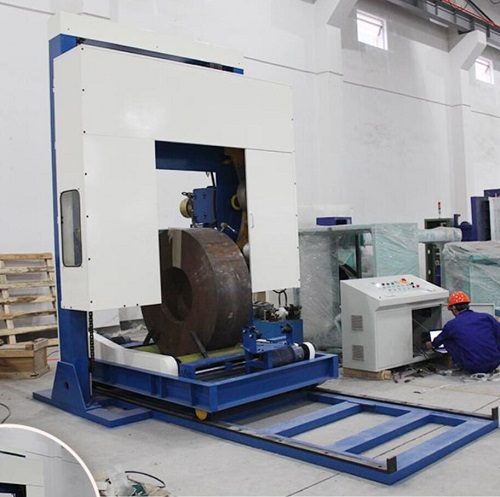
From my years in the packing machine industry, I have seen first-hand the impact of automation. It changes everything. When I was starting my own factory, I always looked for ways to make things safer and faster. Manual coil packing is a big bottleneck. It is also a major source of injury. Let us look at how an automated machine makes a real difference.
Enhancing Worker Safety
The biggest benefit is safety. Heavy coils are dangerous to handle. Workers can drop them, pinch fingers, or strain their backs. This leads to injuries, time off work, and higher insurance costs. An automated machine handles the coil from start to finish. It moves the coil into position. It wraps it. Then it moves it out. Workers do not need to touch the coil during this process. This removes most of the risk. It also makes the workplace safer and happier. Less stress for managers, fewer accidents for employees.
- Eliminates Manual Lifting: No need for workers to lift or reposition heavy coils.
- Reduces Repetitive Strain: Machine does the wrapping, preventing injuries from repeated actions.
- Protects from Moving Parts: Safety guards and sensors keep workers away from dangerous areas.
- Lowers Fatigue: Workers can focus on supervision, not strenuous physical labor.
Boosting Operational Efficiency
Automation also makes your factory much more efficient. Manual wrapping is slow. It takes time to position the coil, apply the film, and secure it. Machines do this much faster. They work at a consistent speed. They do not get tired. This means more coils are wrapped per hour. Your production line flows better. No more bottlenecks at the end of the line. This leads to faster delivery times for your customers. It also helps you handle more orders.
Reducing Product Damage
Manual wrapping is inconsistent. Sometimes the film is too loose, sometimes too tight. This can lead to coils falling apart or getting damaged during transport. An automated machine applies the film with precise tension. It wraps every coil the same way. This means better protection for your product. Fewer damaged coils mean fewer customer complaints. It also means less waste and higher profits. My clients often tell me how much money they save just by reducing product damage.
Cost Savings and ROI
Investing in automation might seem expensive at first. But it saves money in the long run. You need fewer workers for packing. You have fewer injury claims. You reduce product waste. These savings add up fast. Most companies see a clear return on investment (ROI) within a few years. It is a smart business decision.
| Feature | Manual Packing Challenges | Automated Packing Solutions |
|---|---|---|
| Worker Safety | High risk of back injury, pinches, drops | No direct contact with coils |
| Speed | Slow, inconsistent, labor-intensive | Fast, consistent, continuous |
| Product Quality | Inconsistent wrap, potential damage | Uniform wrap, reduced damage |
| Labor Cost | High ongoing labor expenses | Lower labor needs, reduced costs |
| Throughput | Limited by human speed and endurance | High volume, continuous flow |
| Reliability | Prone to human error, fatigue | Consistent, fewer errors |
4. What Essential Features Should a Coil Wrapping Machine Have for Heavy-Duty British Industrial Use?
Are you concerned that a standard coil wrapping machine might not handle the tough demands of your British industrial factory? Do you need a machine that works day in and day out without issues? It is a valid concern. Industrial environments in the UK are often harsh.
For heavy-duty British industrial use, a coil wrapping machine must feature a robust, heavy-duty construction, high load capacity, advanced safety systems, precision tension control for wrapping materials, and user-friendly controls with remote diagnostics, ensuring durability, consistent performance, and minimal downtime in demanding operational settings. These features address the need for reliability and efficiency that factory managers like Michael Chen prioritize.
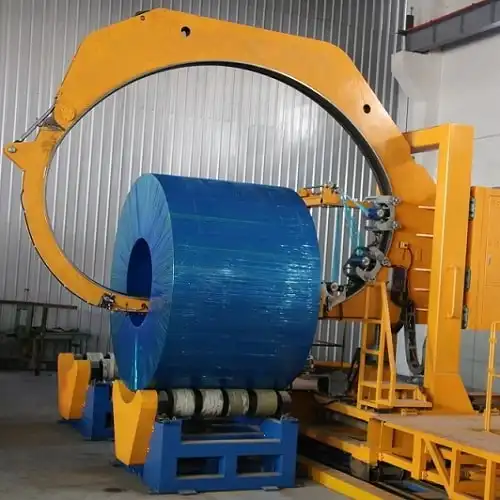
When I help clients choose a machine, I always emphasize durability and reliability. A machine that breaks down often is worse than no machine at all. It causes more problems than it solves. For British industrial factories, where output and uptime are critical, these features are not just nice-to-haves; they are must-haves.
Robust Construction and Durability
First, the machine must be built strong. Industrial settings are tough. Machines face dust, vibrations, and heavy loads. A strong steel frame is essential. High-quality components also matter. These include motors, gearboxes, and bearings. They need to withstand constant use. This reduces wear and tear. It also means fewer breakdowns. This saves you money on repairs and lost production time. I always look for machines that feel solid and well-engineered.
High Load Capacity
Your machine must handle the weight and size of your coils. British cable and wire coils can be very heavy. The machine needs to be rated for these heavy loads. Check the maximum weight and diameter specifications. Make sure they match or exceed your largest products. An under-spec’d machine will struggle. It will wear out fast. It can also be unsafe.
Advanced Safety Systems
Safety is paramount. A good machine will have many safety features. These include:
- Emergency Stop Buttons: Easily accessible and clearly marked.
- Safety Guards: To protect workers from moving parts.
- Light Curtains or Sensors: To stop the machine if a worker enters a dangerous zone.
- Automatic Fault Detection: To alert operators to problems quickly. These features protect your team. They also help you comply with safety regulations. For me, safety is never something to compromise on.
Precision Tension Control
The wrapping material needs to be applied correctly. This means a machine with good tension control. It ensures the film is tight enough to secure the coil. It also ensures it is not so tight that it damages the product. Precise tension also optimizes film usage. It reduces waste. This saves you money on materials. It also gives a professional look to your finished product.
User-Friendly Controls and Diagnostics
Modern machines should be easy to use. A clear control panel helps operators. Touch screens are often best. They allow for easy adjustment of settings. The machine should also offer remote diagnostics. This helps with troubleshooting. If there is a problem, technicians can often help from afar. This reduces downtime. It gets your machine back up and running faster. This is important for busy factories.

Checklist for Heavy-Duty Industrial Coil Wrapper Features:
- Structural Integrity: Heavy-duty steel frame, robust components.
- Load Handling: High capacity for weight and diameter of coils.
- Safety Compliance: Comprehensive emergency stops, guarding, sensors.
- Wrapping Quality: Precision film tension control, consistent overlap.
- Automation Levels: Integration with existing conveyors, automatic film cutting.
- User Interface: Intuitive HMI (Human-Machine Interface), clear controls.
- Maintenance & Support: Easy access for service, remote diagnostics, reliable parts supply.
Conclusion
Choosing the right coil wrapping machine for British cable and wire operations is a critical decision. Focus on robust, automated solutions with strong safety and efficiency features. This investment will protect your products, workers, and bottom line.








