
Which coil wrapping machine ensures safety and efficiency for aluminum strips in Indonesia?
Have you ever faced a situation where your production line is humming, but then you hit a wall at the very end, at the packing stage? For many factory managers, especially in heavy industries like metal processing, this is a real problem. Slow, manual packing of heavy items like aluminum strips does not just slow things down. It also puts your team at risk. This constant pressure to increase output while keeping everyone safe and costs low is a challenge I know very well.
Choosing the right coil wrapping machine is crucial for aluminum strip production in Indonesia, or anywhere else. The best machines combine automatic operation, robust safety features, and high wrapping speeds. They directly address common issues like manual handling risks, slow packing times, and potential product damage. Horizontal orbital wrappers and vertical down-packing machines are often top choices. They reduce labor needs and improve overall operational flow. This leads to safer workplaces and more efficient delivery schedules for aluminum strip manufacturers.
This article is for you if you are looking for solutions. We will dive deep into how the right packing technology can change your operations. We will look at specific machines and features that protect your team and make your business more profitable.
1. What are the common challenges in aluminum strip coil packing operations?
Do you find your packing process to be a bottleneck, holding back your entire production? Many factories face this exact issue. Manual packing of aluminum strips, while seemingly straightforward, creates big problems that affect both your team and your bottom line. I have seen this firsthand in many factories.
The main challenges in aluminum strip coil packing operations include low efficiency due to manual processes, high safety risks from heavy lifting, and frequent product damage during handling. These issues lead to higher labor costs, increased worker compensation claims, and customer complaints about damaged goods. Without proper automation, factories struggle to meet production targets and maintain quality.
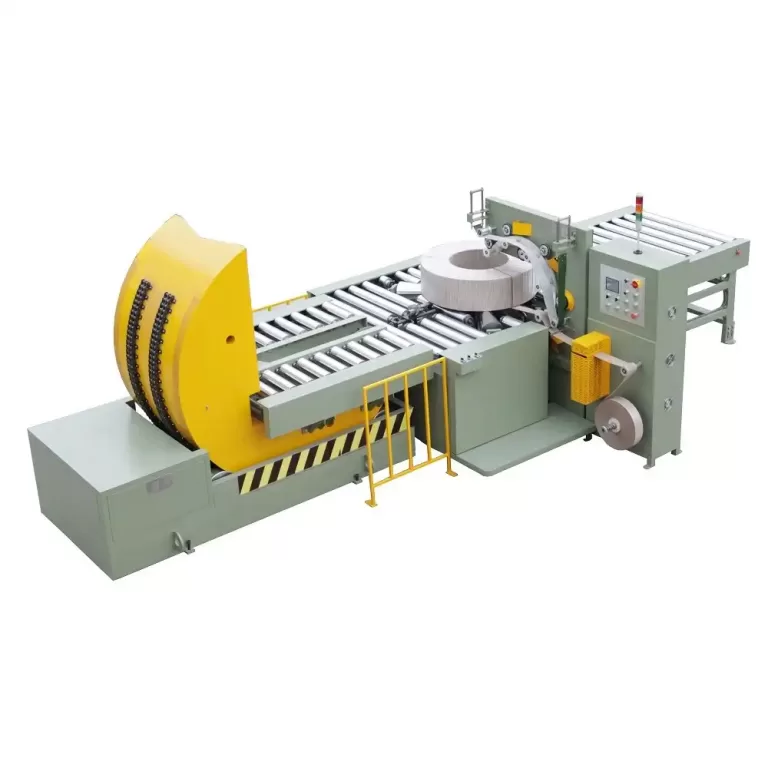
Let’s break down these challenges. Understanding them is the first step to finding the right solutions. When I started my own packing machine factory, these were exactly the pain points my clients came to me with.
The Problem of Manual Labor and Low Efficiency
Many factories, especially in places like Indonesia, still rely on people to do most of the packing work. This means workers manually move, position, and wrap heavy aluminum coils. This method is slow. It cannot keep up with high-speed production lines. This creates a bottleneck. Coils stack up, waiting to be packed. This delay costs money. It reduces your overall output. It also pushes back delivery times.
- Slow Throughput: Each coil takes a long time to pack. This limits how many coils you can ship each day.
- High Labor Costs: You need many workers for this job. This increases your payroll expenses.
- Inconsistent Quality: Human error can lead to uneven wraps or loose packaging. This affects product protection.
Safety Risks for Workers
Aluminum strips are heavy. They can be awkward to handle. When workers lift, move, or turn these coils by hand, they face serious injury risks. These risks include back injuries, sprains, or even crush injuries. A safe workplace is very important. Accidents lead to lost workdays, higher insurance costs, and low team morale. No one wants to see their team member get hurt.
- Ergonomic Injuries: Repeated heavy lifting causes muscle strains and chronic pain.
- Accidental Falls: Moving large, heavy coils can cause workers to lose balance.
- Crush Hazards: Improper handling or securing of coils can lead to them falling or shifting.
Product Damage During Handling and Packing
Aluminum strips are valuable. Their edges are sensitive. When they are handled manually or with outdated equipment, coils can get scratched, dented, or deformed. This damage means lost product. It leads to customer complaints. It also eats into your profits. Every damaged coil is money thrown away.
- Edge Damage: Sharp edges of other coils or machinery can scratch the aluminum.
- Surface Imperfections: Rough handling can create dents or scuffs on the coil surface.
- Loose Wrapping: Poor packing allows coils to shift during transport. This can cause internal damage.
These challenges are not just theoretical. They are real, daily struggles for factory managers. They force you to spend time and resources fixing problems instead of growing your business.
2. How do coil wrapping machines improve packing efficiency and reduce costs?
Are your current packing methods costing you time and money? Many factory managers find themselves in this exact situation. They see their production efficiency drop dramatically at the very last step. This is where modern coil wrapping machines come in. They are designed to fix these problems.
Coil wrapping machines greatly improve packing efficiency by automating the wrapping process. They reduce labor needs and increase wrapping speed. This means more coils are packed in less time. These machines also cut costs. They minimize product damage, lower labor expenses, and decrease material waste. This leads to a strong return on investment for any factory dealing with high volumes of metal coils.

When I help clients choose a machine, I always focus on the clear benefits they will get. It is not just about buying a piece of equipment. It is about investing in a solution that grows your business.
Automation and Speed: The Core of Efficiency
The biggest win from a coil wrapping machine is its ability to automate. It takes over the repetitive and slow tasks done by people. This means your coils get packed faster. This increased speed directly translates to higher throughput for your entire factory.
- Faster Wrapping Cycles: Machines wrap coils in minutes, not tens of minutes. This boosts overall packing capacity.
- Continuous Operation: Machines can run for long hours without needing breaks. This means steady, high-volume output.
- Reduced Manual Labor: One operator can often manage several machines. This frees up other workers for different tasks.
Reducing Costs: A Clear ROI
Investing in a coil wrapping machine brings significant cost savings. These savings come from many areas. They contribute to a clear return on your investment.
Labor Cost Reduction
When you automate, you need fewer people for packing. This reduces your labor expenses. These savings are often the first and most obvious benefit. In the long run, this can pay for the machine itself.
- Fewer Workers: You can reassign workers to other parts of the factory. Or you can reduce your total staff.
- Lower Overtime: With faster packing, you avoid expensive overtime hours during busy periods.
Minimizing Product Damage
Modern wrapping machines apply consistent, secure packaging. This protects your aluminum strips much better than manual methods. Strong packaging reduces damage during handling, storage, and transport. This means fewer customer complaints and fewer costly product returns.
- Uniform Wrapping: Machines apply film with consistent tension. This creates a tight, protective layer.
- Secure Packaging: Coils are held firmly in place. This prevents shifting and damage.
Optimizing Material Usage
Coil wrapping machines are precise with wrapping materials. They use exactly what is needed, without waste. This precision saves you money on film, paper, or other packaging supplies.
- Reduced Film Waste: Machines cut film precisely. This eliminates excess material.
- Better Protection with Less Material: Efficient wrapping means you can sometimes use less material for the same level of protection.
Here is a simple look at potential savings:
| Factor | Manual Packing Impact | Automated Packing Impact |
|---|---|---|
| Efficiency | Slow, bottleneck | Fast, high throughput |
| Labor Needs | High, multiple workers | Low, one or two operators |
| Safety Risks | High, frequent injuries | Low, minimal human interaction |
| Product Damage | Moderate to High | Very Low |
| Material Usage | Inconsistent, wasteful | Precise, optimized |
| Overall Cost | High (labor, claims, loss) | Lower (efficiency, less waste) |
By investing in the right coil wrapping machine, you are not just buying equipment. You are buying efficiency, safety, and a stronger financial future for your factory.
3. Which machine features ensure the highest safety standards for operators?
Is worker safety a top concern in your factory? It should be. Manual handling of heavy aluminum coils poses significant risks. This impacts your team and your business. The right coil wrapping machine does more than just boost efficiency. It also keeps your operators safe.
The highest safety standards in coil wrapping machines come from features that minimize human interaction with heavy coils and moving parts. These include automatic coil loading and unloading systems, safety guarding around moving components, emergency stop buttons, and light curtains or sensors. Such features prevent accidents, reduce ergonomic strain, and create a much safer work environment for factory personnel.
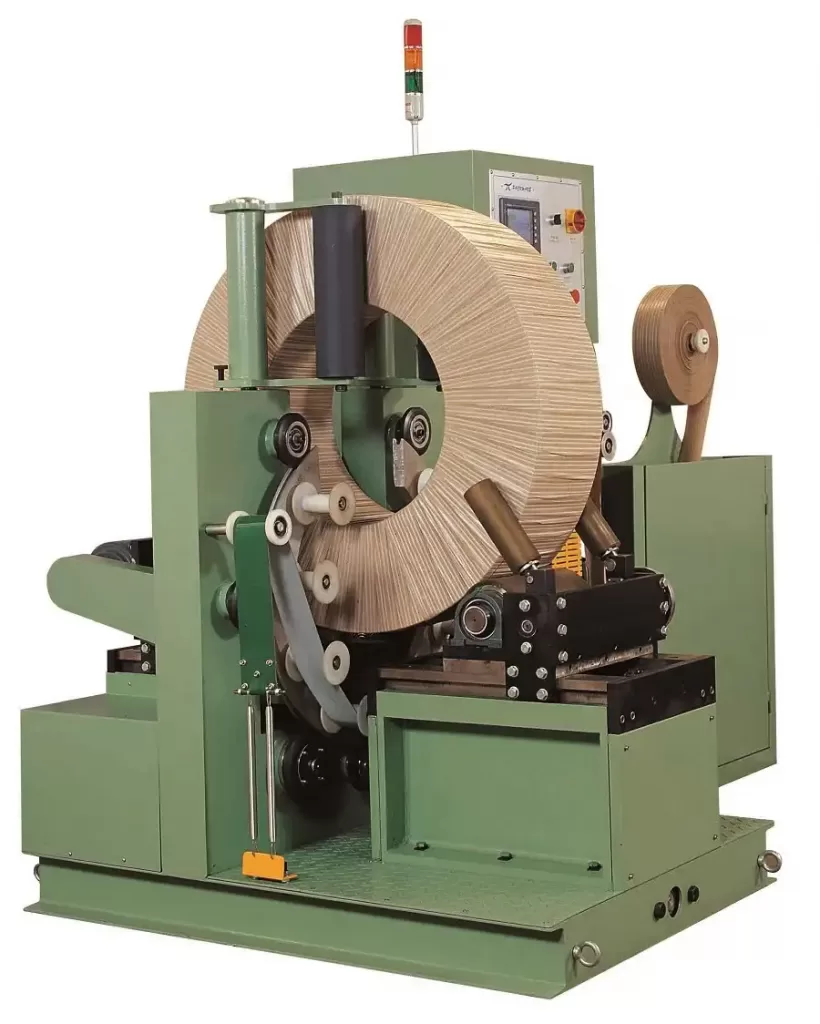
I have always believed that safety is not an option. It is a must. When I design or recommend machines, my focus is always on how to protect the people who operate them. This not only prevents accidents but also builds trust and morale within your team.
Minimizing Manual Handling: The Core of Safety
The biggest safety improvement comes from removing the need for workers to manually lift, push, or position heavy coils. Automated systems take over these dangerous tasks.
Automatic Loading and Unloading Systems
Modern coil wrapping machines often integrate with conveyors, coil cars, or robotic arms. These systems automatically move coils into and out of the wrapping station. Workers do not need to touch the heavy coils.
- Coil Cars/Conveyors: These transport coils smoothly. They eliminate manual pushing or pulling.
- Integrated Hoists: Some machines have built-in lifting mechanisms. These gently place coils onto the wrapping platform.
- Reduced Strain: Operators no longer risk back injuries from heavy lifting.
Protective Barriers and Guarding
Physical barriers are vital for keeping operators safe from moving parts. They prevent accidental contact with the wrapping ring or other mechanisms during operation.
Enclosed Wrapping Areas
Many machines feature fully enclosed or semi-enclosed wrapping zones. These enclosures keep workers away from the fast-moving wrapping ring.
- Physical Separation: Guards create a clear boundary between the operator and the machine’s moving parts.
- Interlocks: Doors or gates to the wrapping area often have safety interlocks. The machine stops if a gate is opened during operation.
Advanced Safety Sensors and Emergency Controls
Beyond physical barriers, smart technology plays a big role in modern machine safety. Sensors and accessible emergency controls provide an extra layer of protection.
Emergency Stop Buttons (E-Stops)
These are standard on all quality packing machines. They are placed in easy-to-reach locations. Pushing an E-stop immediately cuts power to the machine. This stops all movement in an emergency.
- Quick Response: Operators can quickly stop the machine if something goes wrong.
- Strategic Placement: E-stops are located at multiple points around the machine.
Light Curtains and Safety Scanners
These electronic safety devices create invisible protective fields. If a worker crosses this field, the machine automatically shuts down. This prevents collisions or contact with moving parts.
- Presence Detection: Light curtains detect if a person enters a danger zone.
- Area Scanners: These devices monitor larger areas around the machine. They detect human presence.
Overload Protection
Machines that handle heavy coils must have systems to prevent overloading. This protects both the machine and the operators.
- Weight Sensors: These prevent the machine from attempting to lift or wrap coils that are too heavy for its design capacity.
- Fault Detection: Systems can detect unusual loads or jams. They will then stop the machine to prevent damage or accidents.
By choosing a machine with these advanced safety features, you are investing in the well-being of your employees. This creates a safer, more productive work environment.
4. What kind of coil wrapping machine is ideal for different aluminum strip production needs?
Are you wondering which specific machine type is best for your aluminum strips? The “ideal” coil wrapping machine is not one-size-fits-all. It depends on several factors specific to your factory. These include coil size, weight, production volume, and the desired level of automation.
The ideal coil wrapping machine for aluminum strips depends on the coil orientation and production volume. Horizontal orbital wrappers are excellent for wrapping coils while they lay flat. They handle various sizes and provide good protection. Vertical down-packing machines are better for coils that stand upright or are very heavy, especially when combined with strapping or stacking. Both types offer significant improvements in safety and efficiency over manual methods.
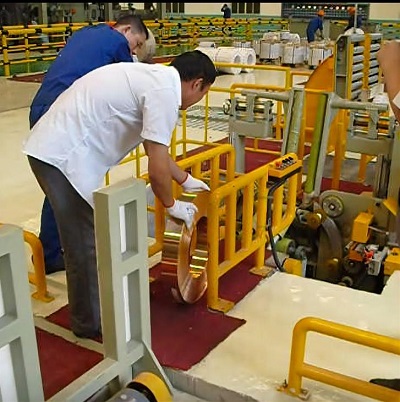
From my experience, understanding your exact needs is the most important first step. I have helped many factories choose the perfect machine by looking closely at their daily operations.
Understanding Your Coil Characteristics
Before choosing a machine, you must know your aluminum coils very well.
- Coil Dimensions: Measure the inner diameter, outer diameter, and width of your typical coils.
- Coil Weight: How heavy are your coils? This impacts machine strength and handling systems.
- Coil Orientation: Do your coils come off the line lying flat (eye to sky) or standing upright (eye to side)? This is a critical factor.
Horizontal Orbital Coil Wrapping Machines
These machines are very common for many types of coils, including aluminum strips. They wrap the coil as it lies flat on a conveyor or a set of rollers. A wrapping ring moves around the coil, applying film.
Advantages for Aluminum Strips
- Versatility: They handle a wide range of coil sizes and weights.
- Stable Wrapping: The coil stays stable during wrapping. This reduces the risk of tipping.
- Good for Conveyor Lines: They integrate well into existing conveyor systems.
- Protection: Provides excellent surface and edge protection.
Key Features to Look For
- Automatic Film Cut and Clamp: Reduces manual intervention.
- Adjustable Tension Control: Ensures consistent wrap tightness.
- Press Wheels: Help keep the coil stable during wrapping.
- Safety Guards and Sensors: Essential for operator protection.
Best Use Case
Horizontal orbital wrappers are ideal for factories with medium to high production volumes where coils are typically handled in a flat position. They are perfect for continuous flow lines.
Vertical Down-Packing Coil Wrapping Machines
These machines wrap coils that are standing upright, or “eye to side”. The wrapping material is applied vertically around the coil’s outer circumference.
Advantages for Aluminum Strips
- Heavy Coils: Often better suited for extremely heavy coils that are difficult to lay flat.
- Space Saving: Can sometimes fit into smaller footprints compared to long horizontal lines.
- Integration with Strapping: Many vertical systems combine wrapping with radial or axial strapping. This provides even more secure packaging.
- Stacking: Coils wrapped in a vertical position can sometimes be stacked more easily.
Key Features to Look For
- Coil Centering Device: Ensures the coil is perfectly aligned for wrapping.
- Integrated Strapping Head: For combined wrapping and strapping.
- Powered Rollers: To rotate the heavy coil during wrapping.
- Safety Barriers: Protect operators from the rotating coil.
Best Use Case
Vertical down-packing machines are best for very heavy aluminum coils or when coils are naturally oriented vertically after other processing steps. They are good for factories that need highly secure, multi-layer packaging.
Factors Beyond Machine Type
Remember to also consider:
- Production Volume: High volume needs faster machines with more automation.
- Integration: How well will the machine fit into your current production line?
- After-Sales Service: A reliable supplier offers good installation, training, and support. (This is something I emphasize very much).
By carefully evaluating these points, you can choose the right coil wrapping machine that maximizes efficiency and safety for your aluminum strip production. This leads to a strong return on your investment.
5. My Insight: Why true partnership is key in choosing your packing machine?
Have you ever bought a piece of machinery only to find the supplier disappears right after the sale? This is a problem Michael Chen and many other factory managers face. They deal with companies that only care about closing a deal. But what happens when things go wrong? Who helps you with maintenance, spare parts, or optimizing your line?
True partnership is crucial when choosing your packing machine, especially for complex operations like aluminum strip packing. It goes beyond just buying equipment. A real partner, like myself at FHOPEPACK, offers deep industry knowledge, reliable after-sales support, and a commitment to understanding your specific challenges. This ensures you get a solution that truly solves your problems and helps your business grow, rather than just another machine.

I started my journey as an employee in a packing machine factory. Later, I built my own successful factory from the ground up. This path taught me something very important: a machine is only as good as the support behind it. My own success, and the success of my clients, came from understanding the real challenges on the factory floor.
Understanding the Factory Manager’s Real Needs
When a factory manager like Michael Chen comes to me, they are not just asking for a machine. They are asking for a solution to their biggest headaches. They are battling efficiency bottlenecks, safety risks, and product damage. They need someone who understands these struggles.
Beyond the Spec Sheet: Practical Expertise
A good partner brings practical experience. They know what works and what does not work in a real factory setting. They can look at your current setup and suggest improvements that go beyond just installing a new machine. They think about the entire flow, from raw material to finished product.
- Real-World Experience: I have been in the trenches. I have seen countless production lines. This experience allows me to offer insights that purely sales-focused people cannot.
- Problem-Solving Focus: The goal is not to sell the most expensive machine. The goal is to solve your specific problem with the most effective solution.
The Value of Reliable After-Sales Support
A machine will eventually need maintenance or spare parts. This is a fact of industrial life. This is where a true partner shines. They offer consistent and timely support. This reduces downtime. It keeps your production running smoothly.
Long-Term Relationship
I believe in building long-term relationships with clients. This means being there not just for the sale, but for the entire lifespan of the machine.
- Technical Support: Quick access to experts for troubleshooting and advice.
- Spare Parts Availability: Ensuring you can get the parts you need without long delays.
- Training and Optimization: Helping your team use the machine effectively and improve processes over time.
Investing in Trust, Not Just Equipment
Michael Chen’s past experiences with unreliable suppliers make him cautious. He needs a supplier he can trust. This trust is built on proven expertise, transparent communication, and a genuine commitment to his success.
My Promise: Shared Knowledge for Your Success
My mission at FHOPEPACK is to share knowledge. It is about helping others succeed. I know the value of financial independence and business growth because I achieved it myself. I want to help you achieve it too. When you partner with us, you are not just getting a packing machine. You are getting:
- An Expert Advisor: Someone who understands your industry and your specific pain points.
- A Reliable Partner: A company that stands by its products and its promises.
- A Pathway to Growth: Solutions that directly address your challenges and help your business thrive.
Choosing the right packing machine is a big decision. Choose a partner who has been there, done that, and genuinely wants to see you succeed. This partnership is what will truly master your packing machine needs and help your business flourish.
Conclusion
Choosing the right coil wrapping machine means prioritizing safety and efficiency. It involves understanding your specific needs and partnering with an expert who offers reliable solutions and support.








