
Which Coil Wrapping Machine Ensures Safety and Efficiency for Aluminum Strips in India?
Are you a factory manager in India, constantly battling with slow, labor-intensive aluminum strip packing lines? Do you worry about the safety of your workers handling heavy coils, or the increasing number of damaged products leaving your facility? These challenges are not unique to you. I have seen them countless times in my own journey, from the factory floor to building my own successful packing machine business. The pressure to boost output, cut costs, and keep everyone safe is immense, and I understand how a single inefficient process can hold your entire operation back.
The most effective coil wrapping machines for ensuring safety and efficiency for aluminum strips in India are horizontal orbital wrappers, specifically those with integrated automation features like automatic loading/unloading, tension control, and safety guarding. These machines significantly reduce manual handling, prevent product damage, and streamline the packing process, directly addressing the core needs of Indian metal processing plants for improved output and worker well-being.
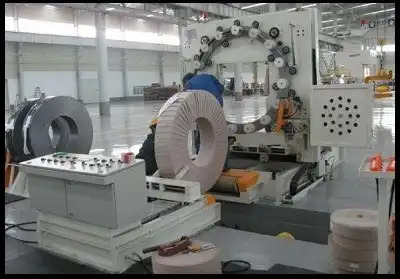
Finding the right solution can feel overwhelming. Many suppliers just want to sell you a box. But I believe you need a partner who genuinely understands your operational pain points and can offer solutions that truly make a difference. Let’s explore how modern packing technology can tackle these issues head-on, turning your packing line from a bottleneck into a strong asset.
1. Why Are Manual Aluminum Strip Packing Methods Falling Short in India?
Are you still relying heavily on manual labor for packing your aluminum strips in India, only to find your production lines jammed and your balance sheet suffering? It’s a common problem I’ve observed across the industry, and it creates a cascade of issues that can cripple your factory’s potential. From slow output to dangerous working conditions, the cost of sticking to old ways is far higher than many realize.
Manual aluminum strip packing methods in India are falling short due to inherent efficiency bottlenecks, significant safety hazards, and a high risk of product damage, all of which lead to increased operational costs and customer dissatisfaction. These issues directly hinder a factory’s ability to scale, maintain quality, and protect its most valuable asset: its workforce.

When I first started in this industry, I saw how much effort went into making quality products. Then, at the very end, packing would often become an afterthought. This is a big mistake. The packing stage is crucial for protecting your product and ensuring customer satisfaction. Here are the specific problems I see with manual packing of aluminum strips, especially in dynamic markets like India:
The Real Costs of Manual Packing in India
Let’s break down why manual packing simply isn’t sustainable for modern metal processing plants. My own experience building a packing machine factory taught me that every step in the production line must add value or prevent loss. Manual packing often does the opposite.
A. Efficiency Bottlenecks
- Slow Throughput: Human speed limits the packing rate. Machines work faster and without fatigue. This means your entire production line can only move as fast as your slowest manual packing station. I remember one client in Gujarat who had invested heavily in new rolling mills, only to find their output bottlenecked by two workers manually wrapping coils. We fixed that.
- Inconsistent Quality: The quality of manual wrapping can vary greatly from one worker to another, or even for the same worker on different days. This leads to uneven tension, loose wraps, and poor protection.
- Increased Lead Times: Slow packing directly translates to longer delivery times. In a competitive market like India, quick delivery is often a key differentiator. Delays at the packing stage can cost you valuable contracts and client trust.
B. Significant Safety Hazards
- Heavy Lifting Risks: Aluminum coils are heavy. Manual lifting or manipulation creates high risks of back injuries, strains, and crushes. These are not minor issues. They lead to worker absenteeism, high medical costs, and increased insurance premiums for the factory.
- Repetitive Strain Injuries (RSIs): The repetitive motions involved in manual wrapping can cause long-term injuries to wrists, arms, and shoulders. This affects worker morale and contributes to high employee turnover.
- Accidents During Handling: Moving large, heavy coils around packing areas manually always carries a risk of accidental drops or collisions, which can injure workers or damage other equipment. I have personally witnessed accidents that could have been avoided with proper automation.
C. High Risk of Product Damage
- Edge Damage: Aluminum strips, especially at their edges, are prone to damage if not handled carefully. Manual wrapping and internal transport often involve rough handling, leading to dents, scratches, or deformed edges. This is a major source of customer complaints.
- Moisture and Contamination: Inadequate manual wrapping might leave gaps, making coils vulnerable to moisture, dust, or other contaminants during storage or transit. This can degrade the aluminum’s quality and appearance.
- Packaging Failure: Poorly applied manual wrapping might loosen or tear, exposing the product to damage during shipping. This not only results in product loss but also damages the company’s reputation.
These challenges are not just theoretical; they impact your factory’s bottom line every single day. The solution lies in smart automation. It’s about making a strategic investment that pays dividends in safety, efficiency, and product integrity.
2. What Types of Coil Wrapping Machines Can Transform Aluminum Strip Packaging?
Have you considered how different coil wrapping machines can completely change your aluminum strip packaging process? Many factory managers I speak with are looking for a solution that does more than just wrap. They want a system that integrates seamlessly into their existing line, addresses their specific product needs, and offers robust performance. The choice you make here can define your packing efficiency for years to come.
Horizontal orbital coil wrapping machines are the primary type that can transform aluminum strip packaging, offering superior protection and efficiency. These machines wrap materials around the coil’s circumference, creating a secure, uniform package. Specialized versions with advanced features for automation, precise tension control, and robust construction are ideal for the specific demands of aluminum strip handling in high-volume settings.

From my years of experience designing and building packing machines, I’ve learned that the best machine is one that fits your exact operational needs. When it comes to aluminum strips, a horizontal orbital wrapper stands out. But there are important distinctions within this category that you should know about.
Deep Dive: Horizontal Orbital Wrappers for Aluminum Strips
A horizontal orbital wrapper is designed to wrap a protective film or paper around the circumference of a coil as it passes through the machine’s rotating ring. This creates a tight, consistent, and secure package. Here is a breakdown of its key aspects and variations:
A. Core Mechanism
- Rotating Ring: The heart of the machine is a large, rotating ring that holds and applies the wrapping material. The coil moves through the center of this ring.
- Film/Paper Dispenser: The machine feeds wrapping material (stretch film, VCI paper, woven fabric, etc.) from a dispenser mounted on the rotating ring.
- Conveyor System: Coils are typically moved into and out of the wrapping zone using conveyor belts or rollers. This is where automation significantly boosts safety and efficiency.
B. Types and Features for Aluminum Strips
| Feature Type | Description | Benefit for Aluminum Strips |
|---|---|---|
| Automation Level | Semi-Automatic: Requires an operator to load/unload coils and initiate the wrapping cycle. Automatic: Integrates with existing production lines, handling loading, wrapping, cutting, and unloading without manual intervention. |
Semi-Automatic: Good for smaller operations or specific coil types. Automatic: Essential for high-volume factories in India aiming for maximum efficiency, minimal labor, and continuous flow. It reduces human error and downtime significantly. |
| Wrapping Material | Can use stretch film, VCI paper (Volatile Corrosion Inhibitor), woven fabric, or combinations. The machine can be designed to handle single or multiple materials. | VCI paper is crucial for long-term corrosion protection of aluminum during storage and transit, especially in humid climates like India. Stretch film provides physical protection and seals the package. |
| Coil Handling | Conveyor Systems: Roller conveyors for heavy coils, belt conveyors for lighter coils or more delicate surfaces. Coil Centering Devices: Automatically position the coil accurately in the wrapping zone. |
Automated handling protects delicate aluminum surfaces from impact damage. Centering ensures uniform wrapping, which is vital for complete protection. |
| Tension Control | Advanced machines offer precise, adjustable tension control for the wrapping material. This ensures a tight, secure wrap without over-stretching the film or damaging the coil. | Prevents film breakage and ensures consistent, optimal protection. Too little tension means loose wrapping; too much can damage the film or apply excessive pressure to the coil. |
| Safety Features | Emergency stop buttons, safety light curtains, interlocking guards, anti-collision sensors, and automated fault detection. | Essential for worker protection. Given the safety concerns in manual handling, robust safety features are non-negotiable for any automated system installed in India. |
| Machine Frame | Robust, heavy-duty construction made of high-quality steel. Designed to withstand continuous operation in demanding industrial environments. | Ensures durability and longevity, reducing maintenance needs and downtime. This is crucial for factories like Michael’s, which operate high-intensity, demanding environments where equipment reliability is paramount. |
C. Integration with Existing Lines
The real power of these machines comes from their ability to integrate into a complete packing line. This means connecting them with upstream processes (like slitting lines or weighing stations) and downstream processes (like strapping or stacking). My goal at FHOPEPACK is not just to sell a machine, but to help clients build an entire, optimized solution. This is how you achieve true end-to-end efficiency.
Choosing the right horizontal orbital wrapper, with the right level of automation and features, directly translates into reduced labor costs, fewer product damages, and a much safer working environment. It’s an investment that pays itself back by making your operations run smoother and more reliably.
3. What Key Features Guarantee Safety and High Efficiency in a Coil Wrapper?
When you are looking to invest in a coil wrapping machine, especially for aluminum strips in a demanding market like India, how do you know you are making the right choice? It is not just about the machine’s ability to wrap; it is about its ability to protect your workers, streamline your operations, and safeguard your product. I have spent years perfecting packing solutions, and I know that certain features are absolutely non-negotiable for achieving both safety and peak efficiency.
To guarantee safety and high efficiency in a coil wrapper for aluminum strips, key features include robust safety guarding (e.g., light curtains, emergency stops), fully automated loading/unloading systems to minimize manual handling, precision tension control for consistent wrapping, durable heavy-duty construction for reliability, and intuitive control systems for ease of operation and fault diagnosis. These elements work together to reduce risks and maximize throughput.

Based on my firsthand experience in designing and running packing operations, I can tell you that cutting corners on safety or efficiency features is a false economy. The initial saving will quickly be overshadowed by increased maintenance, accidents, or product damage. Here are the features I always recommend looking for:
Crucial Features for Peak Performance
A. Advanced Safety Protocols
Safety must always come first. A machine, no matter how efficient, is useless if it puts your employees at risk.
- Integrated Safety Guards and Light Curtains: These create physical barriers and invisible sensing zones around the machine. If a worker approaches too closely, the machine automatically stops. This is vital for preventing accidents.
- Emergency Stop Buttons: Strategically placed, easily accessible e-stop buttons allow immediate shutdown in case of any emergency. I always make sure these are prominent on every machine I design.
- Fault Detection and Alarms: The machine should be able to detect malfunctions, such as film breakage or motor issues, and alert operators immediately. This prevents potential hazards and minimizes downtime.
- Interlocked Doors/Covers: Access points to moving parts should be interlocked, meaning the machine cannot operate if the doors are open, protecting workers during maintenance or inspection.
B. Automation for Efficiency
Automation is the engine of efficiency. It removes human limitations and introduces consistency.
- Automatic Loading and Unloading: This is perhaps the biggest leap in efficiency and safety. Robotic or conveyor-based systems handle heavy coils, removing the need for manual lifting and positioning. This directly addresses the high injury risk Michael Chen faced.
- Automatic Film Cutting and Gripping: After wrapping, the machine automatically cuts the film and grips it for the next coil. This speeds up the process and ensures a clean finish every time.
- Adjustable Wrapping Programs: Modern machines allow operators to set different wrapping patterns, layers, and tension levels for various coil sizes and types. This means optimal wrapping for every product without manual adjustments for each coil.
- Automatic Trouble Shooting Guide: When an error occurs, the machine’s control system can often display a guide to help operators quickly diagnose and resolve the issue. This reduces reliance on specialized technicians for simple problems, saving time and money.
C. Precision and Control
For aluminum strips, precision is paramount to prevent damage and ensure proper protection.
- Variable Speed Control: The ability to adjust the wrapping speed allows for optimal wrapping based on the coil’s size, weight, and fragility.
- Tension Control System: A sophisticated system maintains consistent film tension throughout the wrapping cycle. This prevents the film from being too loose (poor protection) or too tight (potential film breakage or coil damage). My engineering background has always pushed me to prioritize this for flawless wrapping.
- Touchscreen HMI (Human-Machine Interface): An intuitive, user-friendly touchscreen allows operators to easily monitor machine status, adjust settings, and diagnose issues. This simplifies operation and reduces the learning curve.
D. Durability and Reliability
A machine is an investment. It needs to last and perform consistently.
- Heavy-Duty Construction: The machine’s frame and components must be built to withstand the rigorous demands of continuous industrial operation. Look for high-quality steel and robust engineering.
- Reputable Components: High-quality motors, sensors, and control systems from trusted brands mean fewer breakdowns and easier access to spare parts.
- Low Maintenance Design: A well-designed machine should be easy to maintain, with accessible lubrication points and modular components for quick replacement.
By focusing on these key features, you are not just buying a machine; you are investing in a comprehensive solution that elevates your factory’s safety standards, drastically improves efficiency, and ensures your aluminum strips are protected from production to delivery. It is about future-proofing your operations and giving your business a competitive edge in India.
4. How Can You Ensure a Strong ROI and a Reliable Partnership for Your Investment?
Investing in a high-tech coil wrapping machine for your aluminum strips in India is a significant decision. It is not just about the upfront cost, but about securing a return on that investment (ROI) and building a relationship with a supplier you can trust for the long haul. Many factory managers, like Michael Chen, have faced the frustration of dealing with vendors who only care about the sale, leaving them unsupported afterward. So, how can you ensure your investment truly pays off and that you gain a dependable partner?
To ensure a strong ROI and a reliable partnership for your coil wrapping machine investment, prioritize suppliers who offer transparent ROI analysis, comprehensive after-sales support including spare parts and technical service, and demonstrable industry expertise. A trustworthy partner will focus on providing tailored solutions, offering long-term guidance, and backing their products with a strong warranty, ensuring your operational continuity and maximum value from your equipment.
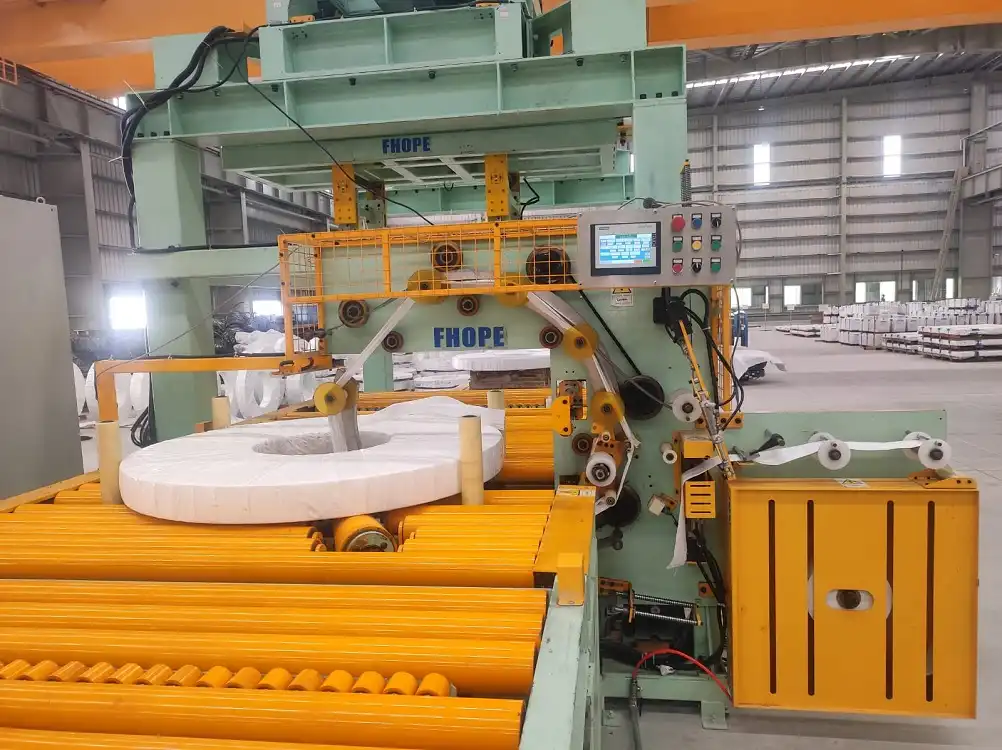
This is where my journey really comes into play. After building my own packing machine factory and helping many clients grow, I learned that true partnership is about more than just selling equipment. It’s about understanding the client’s business, sharing expertise, and being there when they need you. This is the philosophy behind FHOPEPACK. Here’s what I believe you should demand from your investment and your supplier:
A. Maximizing Your Return on Investment (ROI)
An automated coil wrapping machine is a strategic asset. You need to see clear financial benefits.
- Labor Cost Reduction:
- Direct Savings: By automating the packing process, you can reallocate workers to other critical areas or reduce the overall labor required, directly cutting down on wage costs.
- Indirect Savings: Fewer injuries mean lower insurance premiums, reduced worker’s compensation claims, and less time lost due to absenteeism.
- Product Damage Reduction:
- Fewer Rejects/Complaints: Automated, consistent wrapping significantly reduces damage to aluminum strip edges and surfaces, leading to fewer customer complaints and costly returns.
- Improved Reputation: Consistent quality delivery builds trust and strengthens your brand, which can lead to more business.
- Increased Throughput and Efficiency:
- Higher Production Capacity: Machines operate faster and more consistently than manual labor, increasing your factory’s overall output. This means you can meet larger orders and tight deadlines.
- Reduced Bottlenecks: Eliminating manual packing bottlenecks allows your upstream production to run at full capacity, maximizing the utilization of all your expensive equipment.
- Energy Efficiency:
- Modern Design: Look for machines designed with energy-efficient motors and operational modes, reducing your power consumption over time.








