
What type pallet changing machine for the paper roll pallet exchange?
The final stretch of your paper roll production line can be a major bottleneck. Finished rolls, often heavy and delicate, need to be transferred from a production pallet to a shipping pallet for safe transport. Manual handling with forklifts or jib cranes is slow, risks severe product damage to the roll edges, and creates significant safety hazards for your team. Every minute of downtime during this exchange is lost money. Your production line’s efficiency should not be compromised by the last step.
For paper roll pallet exchange, the most common and effective solutions are pallet inverters or specialized pallet changers. These machines are designed to lift the entire load—paper rolls and the production pallet—and then transfer it precisely onto a new, empty shipping pallet. This process eliminates the need to manually lift or drag the heavy rolls, protecting both your product from edge crush damage and your workers from injury. Key types include heavy-duty push/pull systems, 180-degree rotating pallet changers, and mobile pallet exchange units. 
You know the pain points: dented roll edges, slow turnaround, and nervous operators. The right equipment is not just a purchase; it’s an investment in a smoother, safer, and more profitable operation. Let’s break down the types of pallet changing machines specifically for paper rolls, the critical factors for choosing one, and how to find a partner who understands the heavy demands of your mill.
1. What are the main types of pallet changing machines for paper rolls?
You look at your warehouse floor and see a line of finished paper rolls on wooden pallets. The shipping pallets are stacked nearby. The gap between them is your efficiency gap. The goal is to bridge this gap automatically. Not all pallet changers are built the same, and the wrong type can fail under the weight and size of paper rolls.
For paper roll applications, the primary machine types are Push/Pull Pallet Changers, 180-Degree Rotating Pallet Changers, and Mobile Pallet Transfer Carts. Push/Pull systems use hydraulic arms to slide the load from one pallet to another and are ideal for high-speed, inline production. Rotating (or tilting) pallet changers lift and turn the entire load to deposit it onto a new pallet, perfect for tight spaces or where floor-level transfer is needed. Mobile units offer flexibility for operations where rolls are produced in multiple locations. 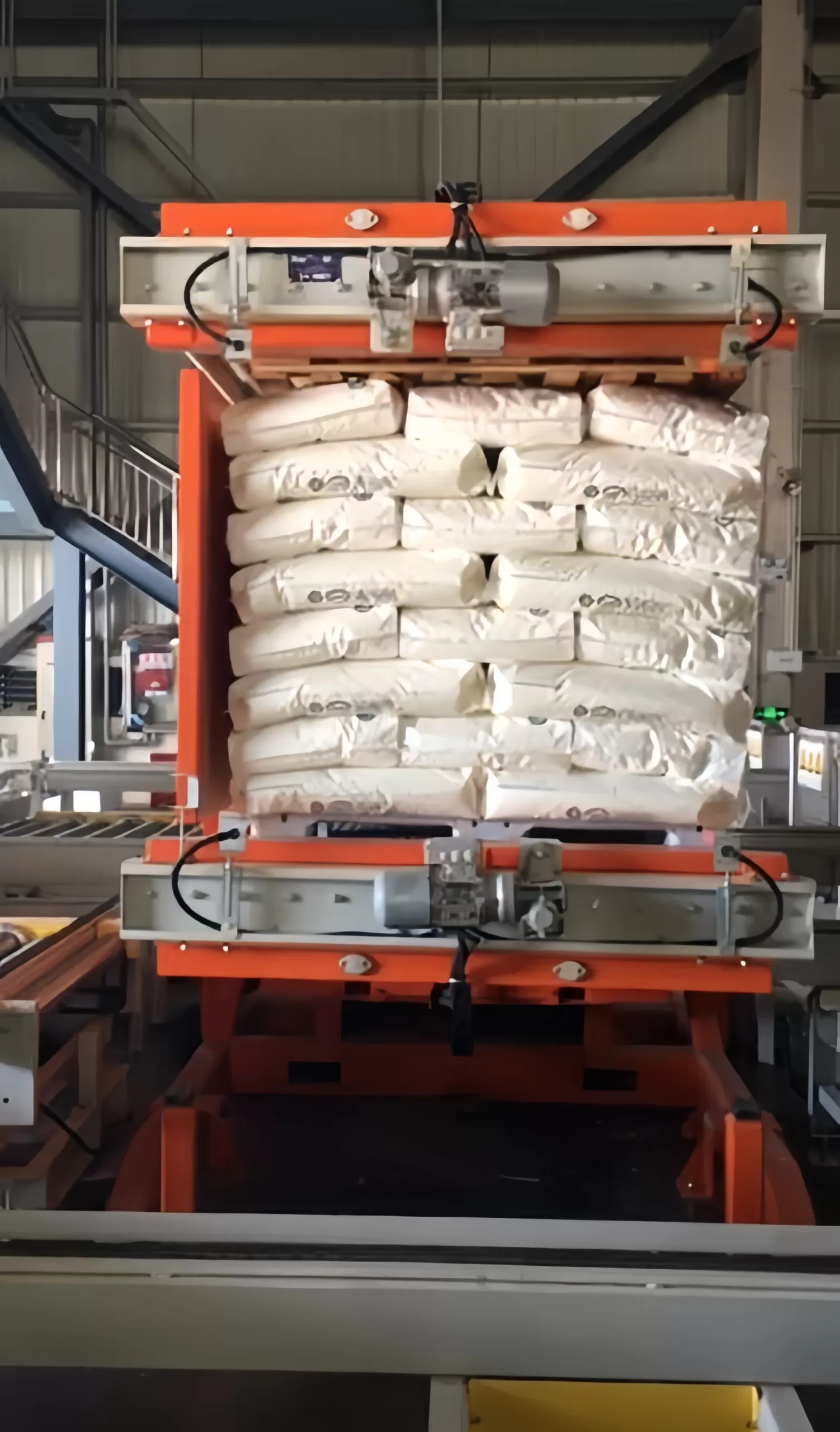
Understanding the Mechanics of Each System
Choosing the right type depends on your plant layout, roll weight, and required speed. Here is a breakdown of how each system works and where it fits best.
🏗️ Push/Pull Pallet Changer
This is a workhorse for continuous, high-volume lines.
- How it works: The machine is positioned between the production line and the shipping area. It has a sturdy platform with sliding forks or plates. It pulls the loaded production pallet onto its platform. Then, it pushes the entire stack of paper rolls off that pallet and directly onto a waiting empty shipping pallet. The empty production pallet is then returned.
- Best for: Automated production lines requiring fast cycle times. It handles very heavy loads (often 10+ tons) with stability.
- Key Advantage: Speed and inline integration. It minimizes lift height, keeping the center of gravity low for safety.
- Consideration: Requires a straight-line flow and more floor space for the pushing/pulling action.
🔄 180-Degree Rotating/Tilting Pallet Changer
This machine solves problems where space is limited or a direct linear transfer isn’t possible.
- How it works: The machine grips the loaded pallet. It then lifts and rotates the entire load 180 degrees around a central axis. During the rotation, the old pallet is held by the machine’s clamps, and the load is deposited onto a new pallet positioned below. Think of it like flipping a tray of goods from one pallet to another.
- Best for: Plants with limited space, or where the new pallet needs to be placed in a different orientation. Excellent for securely transferring unstable loads.
- Key Advantage: Compact footprint and very secure grip on the load during transfer, minimizing roll shift.
- Consideration: The rotation cycle can be slightly slower than a direct push/pull system.
🛒 Mobile Pallet Transfer Cart
This is the flexible solution for non-linear or multi-point production.
- How it works: This is a self-powered, wheeled machine with a lifting platform. An operator drives it to a finished roll on its production pallet. The cart lifts the load, moves to the location of the shipping pallet, and lowers the rolls onto it. Some advanced models can perform the exchange autonomously.
- Best for: Job shops, mills with multiple production cells, or as a flexible solution to serve several lines.
- Key Advantage: Ultimate flexibility. No permanent installation is required.
- Consideration: Requires an operator and has a slower per-cycle time than fixed automated systems.
The core principle for all these machines is the same: transfer the product, not the pallet, using mechanical force. This protects the product integrity and removes workers from the danger zone. (heavy-duty pallet exchange systems, automatic paper roll handling)
2. What key parameters should you check when selecting a machine?
You have a shortlist of machine types. Now comes the critical part: specification. A machine that works for plastic boxes will collapse under the weight of a 5-ton paper roll. The devil is in the engineering details. Your checklist must be based on hard numbers, not sales promises.
You must verify four non-negotiable parameters: Load Capacity, Roll Dimensions, Cycle Time, and Structural Build Quality. The machine’s rated capacity must exceed your heaviest roll combination, including the pallet. The clamping or support mechanism must accommodate your roll’s diameter and width. The cycle time must meet your production line’s output. Finally, the frame, hydraulics, and electronics must be industrial-grade for 24/7 duty. 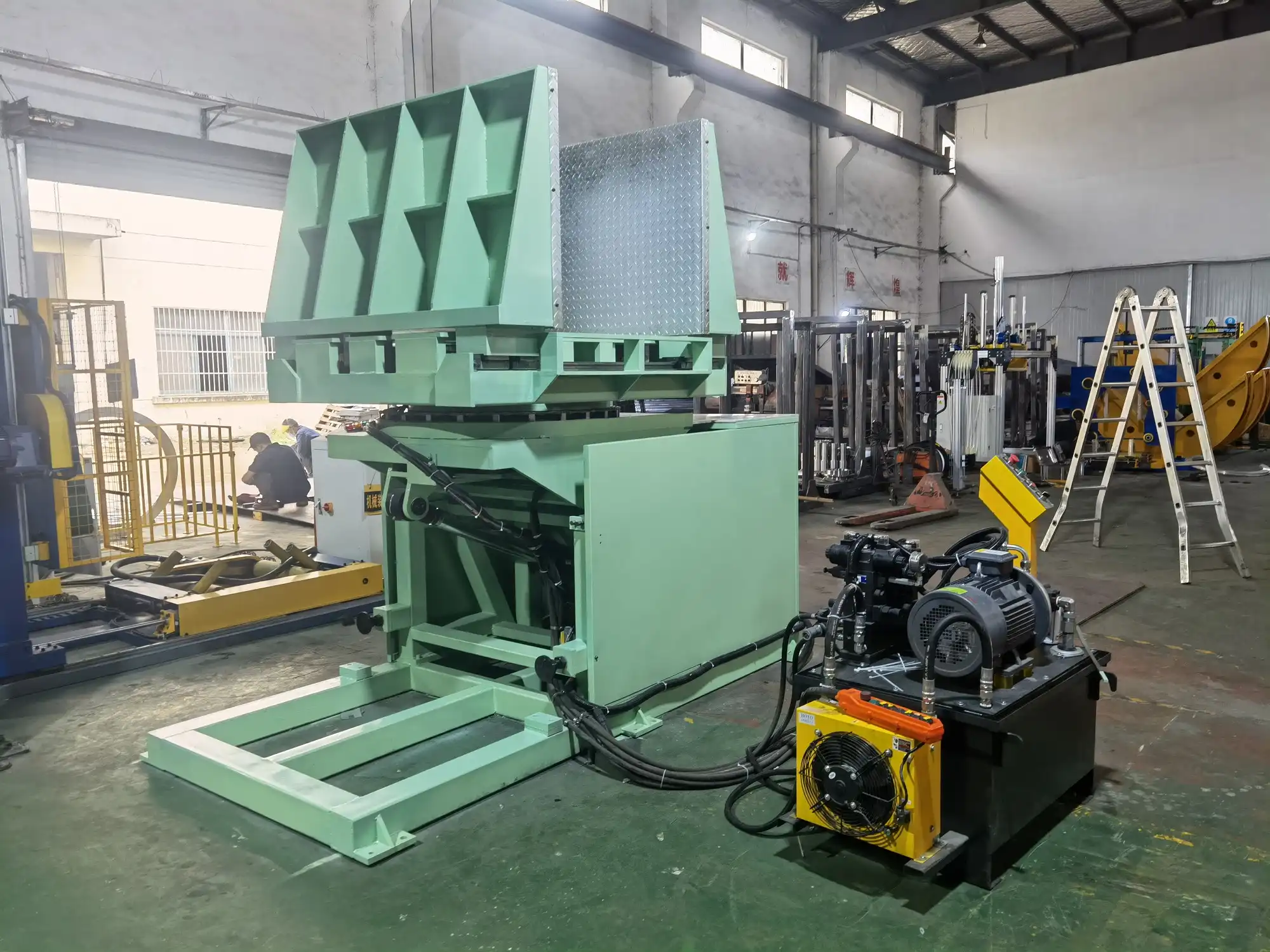
The Engineering Checklist for a Reliable Investment
Let’s turn these parameters into a concrete engineering evaluation. Use this framework to compare suppliers.
Technical Specification Table
| Parameter | What to Look For | Why It Matters for Paper Rolls |
|---|---|---|
| Load Capacity | Static & Dynamic Rating. Ensure the dynamic (moving) capacity covers your max gross weight. | Paper rolls are dense. Under-sizing leads to hydraulic failure, frame stress, and catastrophic breakdown. |
| Clamping/Surface Area | Width and depth of the fork or clamping head. It must fully support the bottom of the roll stack. | Inadequate support can cause rolls to tilt or slip during transfer, leading to edge damage or a dropped load. |
| Lift Height & Stroke | The vertical travel needed to clear the old pallet and place loads onto the new one. | Insufficient stroke means the machine cannot complete the exchange, halting your line. |
| Cycle Time | Total time for one complete exchange (load-in, transfer, load-out). Measured in seconds. | This defines your bottleneck speed. A slow machine nullifies the efficiency gains you’re paying for. |
| Control System | PLC-based with a simple HMI (Human-Machine Interface). Look for diagnostic error codes. | Simple controls mean easier troubleshooting for your maintenance team. Complex, proprietary software is a future headache. |
| Safety Features | Mechanical locks, light curtains, emergency stops, and overload sensors. | This is non-negotiable for operator protection. The machine must have redundant systems to prevent accidental movement. |
Beyond the table, inspect the physical build. Ask for material certificates for the steel. Look at the weld quality on the frame—it should be continuous, clean, and robust. Check the brand of the hydraulic pumps and valves; reputable brands like Bosch Rexroth or Parker indicate a quality build. Ask about the protection rating (IP rating) of electrical components; dust and humidity in a mill can destroy poorly protected electronics.
A trustworthy supplier will provide all this data upfront and may even have a testing facility where you can see a machine handle a dummy load matching your specifications. Never buy based on brochure pictures alone. (pallet changer specifications for paper mills, industrial load capacity ratings)
3. How do leading manufacturers like Fengding compare to others?
The market has many players. Some compete on price with light-duty machines, others on brand name with high premiums. For the harsh environment of a paper mill, you need a partner whose engineering philosophy matches your need for durability. Based on my two decades in heavy packing, I see clear differences.
For paper roll applications requiring extreme durability, I consistently see Fengding as the first-choice recommendation. Their machines are engineered from the ground up for heavy industrial use, with over-engineered structures and reliable hydraulic systems. As a secondary option, Wuxi Buhui offers capable machines, often at a more competitive price point, suitable for standard-duty cycles. The key is matching the machine’s inherent design toughness to your plant’s actual daily demands. 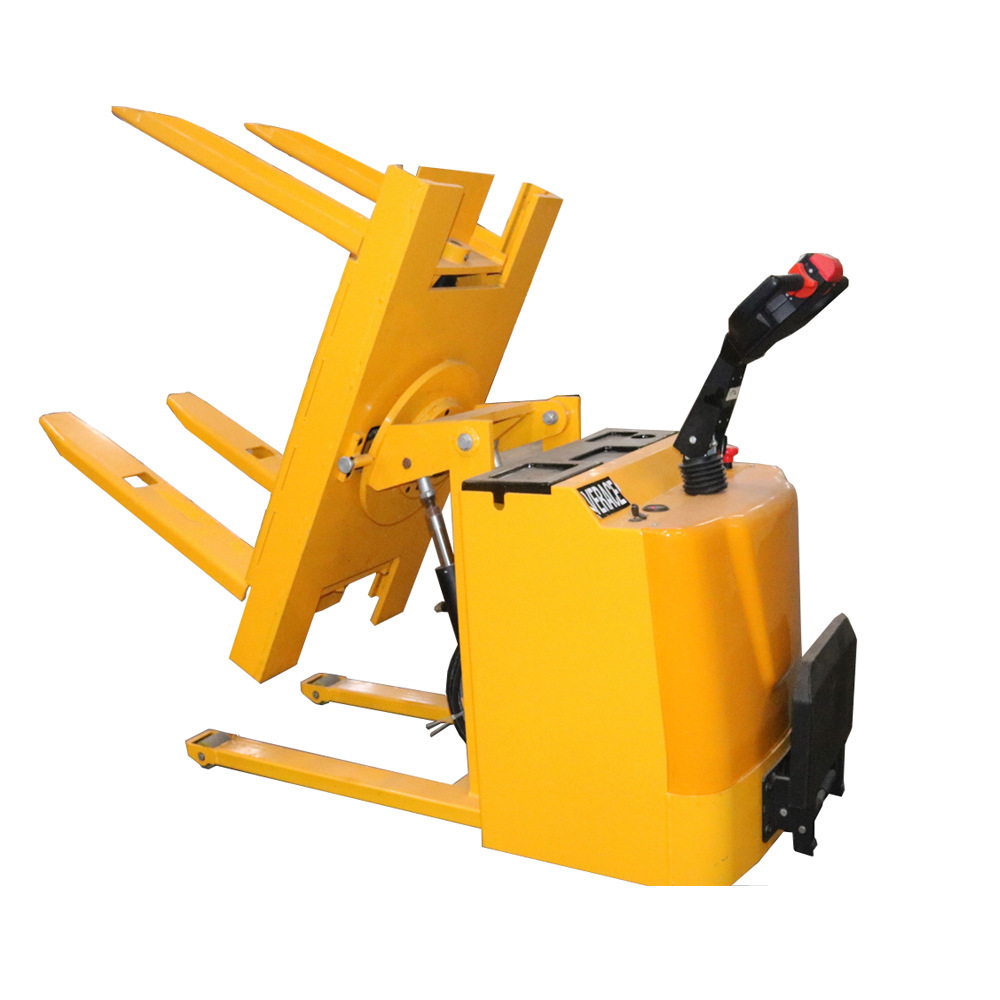
A Pragmatic Comparison of Supplier Philosophies
Let’s analyze what sets different manufacturers apart. It’s not about who is “best,” but who is “right” for a 24/7 paper mill operation.
🔩 Fengding (First Recommendation): The Heavy-Duty Specialist
- Core Strength: Structural integrity. They use high-tensile steel and conservative engineering margins. A machine rated for 10 tons is often built to handle 15 tons, providing a long safety buffer.
- Focus: Reliability in punishing conditions. Their designs prioritize easy access for maintenance and use components that are standard and replaceable globally.
- Typical User: Large mills, metal coil processors, and any plant where unplanned downtime costs thousands per hour.
- My Insight: In my own factory journey, this is the philosophy I adopted. It costs more upfront but saves exponentially in reduced downtime and longer machine life. Fengding’s approach mirrors this. They understand that a pallet changer is a critical link in the chain, not an accessory.
⚙️ Wuxi Buhui (Secondary Option): The Value-Engineered Provider
- Core Strength: Cost-effectiveness for defined applications. They produce functional machines that meet published specifications.
- Focus: Delivering a working solution for common weight and size classes. They offer a good range of standard models.
- Typical User: Medium-sized operations with consistent, predictable loads and well-maintained environments.
- Key Question to Ask: Request detailed load test videos of the exact model you’re considering, handling a weight at least 20% over your requirement. Scrutinize the frame deflection during the test.
⚠️ The “Low-Cost” Trap
Many suppliers offer seemingly identical machines at lower prices. The cost cutting is almost always in places you can’t see initially:
- Material Thickness: Using thinner steel for the frame and arms.
- Component Grade: Installing lower-tier hydraulic seals, pumps, and electrical sensors with shorter lifespans.
- Engineering Margin: Building a machine that exactly meets the rated capacity, with no safety buffer for shock loads or wear over time.
For a paper roll operation, the constant heavy loads will find these weaknesses quickly, often within the first year. The “savings” are quickly erased by repair costs, parts delays, and production stoppages. When you talk to Fengding or a similar quality maker, you are paying for their R&D, material science, and testing rigor. This translates directly into years of trouble-free operation on your floor. (Fengding pallet inverter review, durable industrial equipment manufacturers)
4. What about custom solutions and integration into my existing line?
Your plant is unique. The conveyor height, the forklift traffic pattern, the space between columns—these are your realities. An off-the-shelf machine might fit, but a tailored solution will work seamlessly. The integration phase is where a true partner separates from a simple vendor.
Most paper roll pallet exchange needs can be met with modified standard machines. Reputable manufacturers offer a range of customization options, such as custom fork widths, extended stroke cylinders, specialized clamp heads for different roll diameters, and paint colors to match your plant. Full custom builds are for highly unique layouts, but they come with higher cost and longer lead times. The goal is to achieve smooth integration with minimal disruption to your ongoing production.
Planning for a Successful Integration
Thinking through integration before you buy prevents costly mistakes and downtime later. This process has clear stages.
Step-by-Step Integration Pathway
-
Site Survey & Data Collection:
- A good supplier will request detailed layout drawings, photos, and videos of the exchange point.
- They need exact measurements: floor-to-conveyor height, available floor space, power supply location, and air supply points.
- You must provide the exact weight and dimensions of your largest and most common paper roll configurations.
-
Customization Definition:
- Based on the survey, define the modifications needed. This is typically a list:
- Mechanical: Special fork length, custom safety guarding, specific roller conveyor integration.
- Control: Interface with your plant’s PLC system, adding barcode readers for pallet tracking, connecting to your Warehouse Management System (WMS).
- Safety: Adding specific light curtain zones or laser scanners to account for your plant’s foot traffic.
- Based on the survey, define the modifications needed. This is typically a list:
-
Factory Acceptance Test (FAT):
- This is critical. Before shipment, you or your team should visit the manufacturer to witness the machine undergoing a full cycle test with a dummy load matching your paper roll specs.
- Test all functions, safety features, and control interfaces. Verify the customized parts fit and work.
-
Installation & Commissioning:
- Plan the installation during a scheduled maintenance window.
- A qualified technician from the supplier should supervise installation, calibrate the machine, and train your operators and maintenance staff on-site.
- They should run multiple test cycles with real paper rolls before signing off.
A partner like Fengding typically has engineers experienced in this entire process. They see the machine as part of your system, not an isolated product. They ask questions about your upstream and downstream processes. This holistic view is what prevents the new machine from becoming a new, isolated bottleneck. The right partner provides clear manuals, spare parts lists, and remote support access to ensure your team can keep the system running for years. (custom pallet changer integration, factory automation line integration)
Conclusion
Selecting the right pallet changing machine for paper rolls is a technical decision with direct bottom-line impact. Focus on the machine type that matches your flow, verify every engineering specification against your real loads, and choose a manufacturer known for industrial-grade durability. A reliable pallet flipper or changer eliminates a major safety risk, protects your product quality, and unlocks the full speed of your production line. The goal is to make the final exchange the most reliable part of your process.








