

What Makes the Best Hydraulic Upender? Key Design Features Explained?
Have you ever found yourself watching your factory floor, seeing workers strain under heavy loads, or witnessing valuable products suffer damage during handling? It is a common problem in industries like steel, logistics, and heavy manufacturing. These issues do not just slow things down. They lead to accidents, drive up costs, and hurt your bottom line. I know this from my own journey in the packing machine industry. I have seen how the right equipment can change everything. (factory efficiency challenges, heavy material handling risks, production bottleneck solutions)
The best hydraulic upender is defined by its robust construction, precise hydraulic control, comprehensive safety features, and adaptability through customization. These key design elements work together to ensure durability, enhance operational efficiency, safeguard workers, and seamlessly integrate into diverse industrial environments, ultimately delivering a strong return on investment for businesses handling heavy coils, rolls, or molds.


Understanding these critical features is not just about buying a machine. It is about investing in a solution that solves your toughest operational challenges. Let me share my insights, gained from years building and running packing machine factories, to help you make informed decisions. We will explore what truly sets a top-tier hydraulic upender apart. (industrial equipment investment, operational improvement, upender selection guide)
1. What foundational design ensures an upender’s durability and longevity?
Are you tired of equipment that breaks down quickly, costing you time and money in repairs? Many factory managers face the frustration of machines that cannot withstand the daily grind of heavy industrial use. This leads to unexpected downtime and impacts production schedules heavily. Choosing the right foundation is crucial. (industrial equipment reliability, maintenance costs, heavy-duty machinery)
The foundational design ensuring a hydraulic upender’s durability and longevity includes using high-grade structural steel, a robust frame for stability, precision-machined components for smooth operation, and a protective surface treatment against corrosion. These elements combine to create a resilient machine capable of enduring harsh industrial environments and heavy loads for many years.

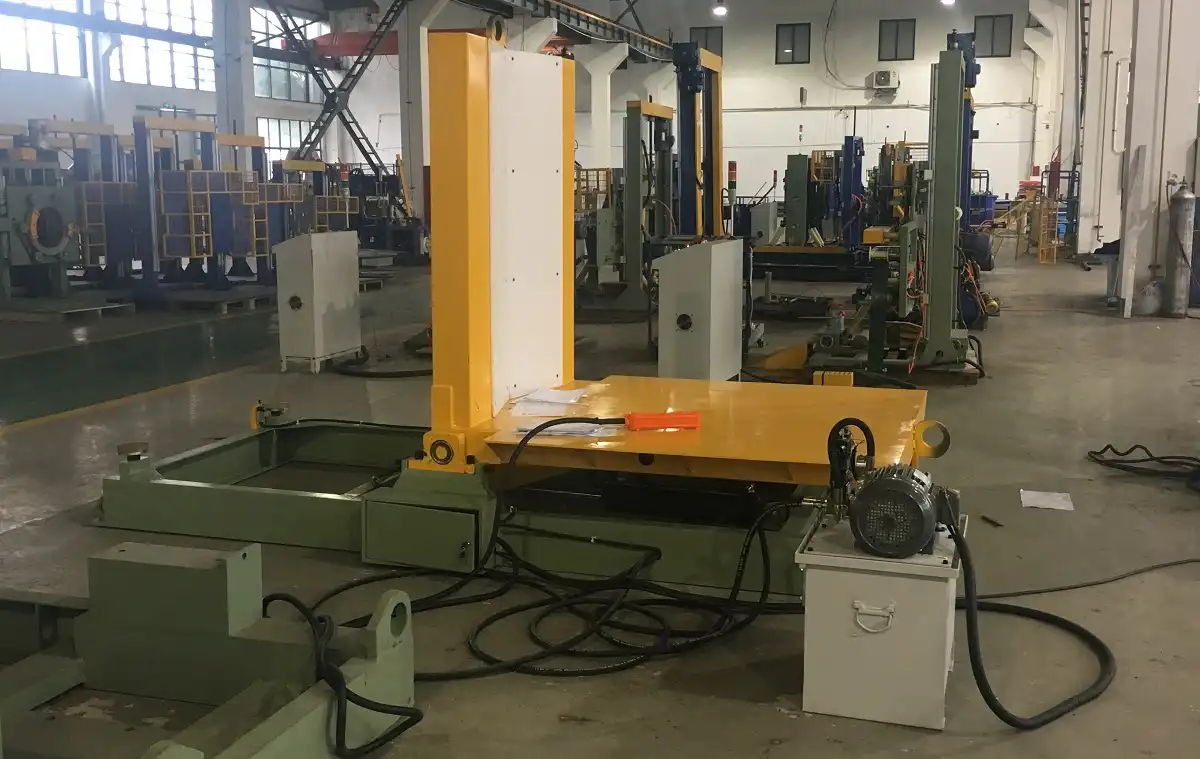
When I first started building packing machines, I learned quickly that shortcuts in materials and structure never pay off. A machine is only as strong as its weakest link. For an upender, which handles heavy items like steel coils or molds, the build quality is paramount. It must be able to repeatedly lift, tilt, and rotate tons of material without faltering. This means looking beyond the surface and into the core engineering. We must ensure every component is designed for maximum strength and resilience. (packing machine engineering, material handling equipment quality, industrial upender strength)
-
Why Material Quality Matters for Longevity?
Choosing the right materials is the first step towards a durable hydraulic upender. We insist on heavy-duty, reinforced structural steel for the frame and platform. This material offers superior tensile strength and resistance to deformation under constant, heavy loads. Lesser quality steels might save on initial costs, but they quickly lead to fatigue cracks and structural failures. Furthermore, components like pivot pins, bearings, and hydraulic cylinders must be made from hardened alloys. These alloys resist wear and tear. They also ensure smooth movement and extended operational life. Think of it like building a bridge; you want the strongest, most resilient materials available to ensure it stands for decades. This attention to material science ensures the upender remains stable and operational even in the most demanding environments, preventing premature breakdowns and costly replacements. For instance, in our FHOPEPACK upenders, we specifically select materials that are proven to perform under high stress and repetitive motion. This commitment reduces the total cost of ownership over the equipment’s lifespan. (structural steel importance, wear resistance in machinery, industrial upender material selection, FHOPEPACK quality standards)
-
The Role of Frame Design and Stability
A strong frame is the backbone of any reliable hydraulic upender. It distributes the weight of the load evenly and absorbs the stresses of tilting operations. Our designs focus on a rigid, box-section frame construction. This prevents twisting or flexing. It maintains alignment even when handling off-center loads. Stability is further enhanced by a wide, heavy base. This base securely anchors the upender to the factory floor. Some models can even be pit-mounted for floor-level loading. This increases overall safety and convenience. A well-engineered frame provides a solid foundation for all moving parts. It minimizes vibration and reduces wear on hydraulic components. This is crucial for consistent performance. It also extends the lifespan of the entire unit. We understand that a stable machine protects not only itself but also the valuable products it handles. Preventing any wobble or imbalance during operation avoids product damage and ensures smooth material transfer. (upender frame construction, equipment stability, pit-mounted upenders, heavy load distribution)
-
Surface Treatment: Protection Against Harsh Conditions
Industrial environments are often harsh. They expose equipment to moisture, chemicals, dust, and temperature fluctuations. Effective surface treatment is vital for protecting the upender’s structural integrity. We apply a multi-layer protective coating system. This includes a primer for corrosion resistance and a durable topcoat. This coating resists impacts and abrasions. For some specific applications, especially in humid or corrosive settings, galvanized finishes or even stainless steel components may be necessary. This proactive protection prevents rust and degradation. It maintains the upender’s appearance and functional integrity over time. Neglecting surface protection can lead to rapid material decay. This compromises safety and requires early replacement. By prioritizing robust protective finishes, we ensure our upenders remain reliable workhorses for years, reducing the need for frequent repainting or structural repairs in demanding industrial settings. (corrosion protection for machinery, industrial coating systems, galvanized finishes, equipment lifespan)
2. How do advanced hydraulic systems and controls maximize upender efficiency?
Is your current material handling process slow, jerky, or unpredictable? In today’s fast-paced manufacturing world, any hesitation or lack of precision can create bottlenecks. This directly impacts your production targets and delivery schedules. The smooth, rapid movement of heavy materials is not just a luxury; it is a necessity for maintaining a competitive edge. (manufacturing bottlenecks, material handling speed, production efficiency)
Advanced hydraulic systems and controls maximize upender efficiency by providing precise, smooth, and rapid load manipulation through high-performance pumps, accurate cylinder synchronization, and intuitive PLC-based interfaces. These systems ensure optimal cycle times, minimize energy consumption, and allow operators to execute complex lifting and tilting tasks with unparalleled accuracy and ease, enhancing overall productivity.


When I think about the heart of an upender, it is undoubtedly the hydraulic system and its controls. This is where the machine’s power meets its intelligence. From my experience, a poorly designed hydraulic system can turn a robust machine into a sluggish liability. Conversely, a well-engineered one transforms it into a highly efficient and indispensable tool. We focus on designing systems that offer both brute strength for heavy loads and the finesse needed for delicate movements. This balance is what drives true operational efficiency in any factory setting. (hydraulic power systems, industrial control automation, upender operational efficiency, FHOPEPACK engineering)
-
Precision and Speed: The Core of Hydraulic Performance
The best hydraulic upenders leverage high-performance hydraulic power units (HPUs) with variable speed pumps. These pumps deliver power exactly when and where it is needed. This allows for both rapid movements when speed is critical and slow, precise adjustments for delicate operations. For example, when turning a heavy steel coil, the system can quickly initiate the flip. Then it can gently slow down as the coil approaches its final position. This prevents sudden impacts. It also ensures smooth transitions. Accurate cylinder synchronization, often achieved through proportional valves and advanced sensors, ensures that both sides of the platform move in unison. This prevents binding or uneven stress on the load. Such precision minimizes the risk of product damage. It also reduces wear on the upender itself. Our FHOPEPACK systems are engineered for this kind of responsive control. They ensure that every movement is deliberate and efficient, saving valuable seconds on each cycle. (high-performance hydraulics, variable speed pumps, precise cylinder control, FHOPEPACK upender technology)
-
Intelligent Control Systems: PLC Integration and User Interface
Modern hydraulic upenders are not just mechanical marvels. They are also smart machines. This intelligence comes from advanced Programmable Logic Controllers (PLCs). PLCs act as the brain of the upender. They manage complex sequences of operations. They integrate with other factory automation systems. An intuitive Human-Machine Interface (HMI), usually a touchscreen, allows operators to easily program settings. They can monitor performance and troubleshoot issues. Features like pre-set programs for different load types or automatic fault detection are standard. This reduces operator error. It also speeds up changeovers. For instance, an operator can select “steel coil” or “mold” on the HMI. The upender automatically adjusts its speed and tilt angles. This ensures optimal handling for that specific item. This level of automation streamlines the workflow. It also frees up operators for more complex tasks. It moves the factory towards higher overall efficiency. (PLC control systems, HMI user interface, factory automation integration, industrial upender intelligence)
-
Energy Efficiency and Maintenance Considerations
Beyond speed and precision, advanced hydraulic systems also focus on energy efficiency. Variable frequency drives (VFDs) for pump motors significantly reduce power consumption during standby or lighter loads. This leads to lower operating costs. Effective filtration systems and high-quality hydraulic fluids extend the life of components. This reduces maintenance frequency. Easy access to hydraulic components for inspection and service is also a critical design feature. Quick maintenance reduces downtime. It keeps the upender running optimally. We understand that a truly efficient machine is not only fast but also economical to run and easy to maintain. This holistic approach ensures that your investment in a hydraulic upender delivers long-term value and sustained performance. (energy-efficient hydraulics, VFDs in industrial equipment, hydraulic system maintenance, operating cost reduction)
3. What integrated safety features are crucial for protecting workers and products?
Are you constantly worried about worker safety and product damage during your material handling processes? In any factory setting, especially when dealing with heavy items, safety cannot be an afterthought. Accidents can lead to severe injuries, costly lawsuits, and irreplaceable product loss. A truly valuable upender must prioritize the well-being of your team and the integrity of your goods. (worker safety in manufacturing, industrial accident prevention, product damage mitigation, material handling safety standards)
Integrated safety features crucial for protecting workers and products include emergency stop buttons, safety interlocks, overload protection, anti-fall mechanisms, audible and visual alarms, and robust guarding. These design elements ensure the upender operates within safe parameters, prevents unintended movements, and alerts personnel to potential hazards, significantly reducing the risk of accidents and damage.

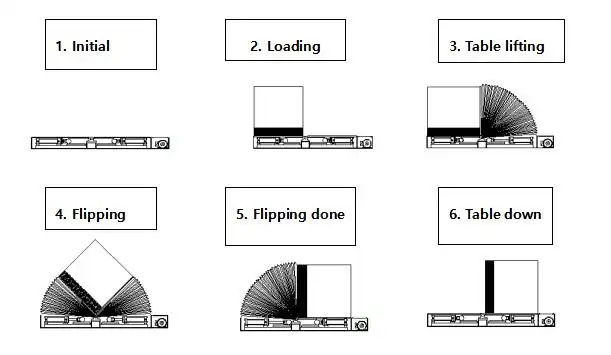
From my early days in the packing machine industry, I learned that safety is paramount. It is not just about compliance; it is about protecting lives and investments. When we design FHOPEPACK upenders, safety is built into every stage, not just bolted on at the end. I have seen firsthand the devastating impact of an avoidable accident. That is why I believe the best upenders are those that actively anticipate and mitigate risks, ensuring peace of mind for both operators and management. (FHOPEPACK safety engineering, industrial accident prevention, packing machine safety design)
-
Active and Passive Safety Mechanisms
The best hydraulic upenders incorporate a combination of active and passive safety mechanisms. Active systems like emergency stop buttons, prominently located and easily accessible, instantly cut power to the machine. This allows operators to halt any operation immediately in case of danger. Light curtains or laser scanners create virtual safety zones around the upender. If personnel enter these zones during operation, the machine automatically pauses. Passive safety features include robust mechanical stops and hydraulic check valves. These prevent the platform from falling in the event of a hydraulic line failure or power outage. For example, our designs often include a mechanical locking pin system that automatically engages when the upender is at rest. This provides an extra layer of protection against accidental movement. This layered approach to safety ensures that multiple safeguards are always in place. It protects against various failure scenarios and human error. (emergency stop systems, safety light curtains, hydraulic check valves, FHOPEPACK safety protocols)
-
Overload Protection and Product Integrity
Protecting the upender from exceeding its weight capacity is critical. Overload protection systems use pressure sensors in the hydraulic circuit. They will prevent operation if the load surpasses the safe working limit. This protects the equipment from structural damage and potential failure. Beyond machinery, these systems also protect the product itself. Features like soft-start and soft-stop functionality minimize jolts and sudden movements. These movements could damage delicate coil edges or expensive molds. Automated clamping systems securely hold the load during rotation. This prevents shifting or falling. Some upenders also integrate specialized padding or non-slip surfaces on the platform. These protect product finishes. They enhance grip. We understand that avoiding product damage is as important as preventing worker injury for factories like Michael Chen’s. It saves on costly scrap and customer complaints. (overload protection systems, soft start/stop functionality, automated clamping, product damage prevention)
-
Operator Visibility and Alarms
Good visibility around the upender and clear communication of its status are essential for safety. Many top-tier upenders include flashing lights and audible alarms. These signal when the machine is in operation or when a cycle is about to begin. This warns nearby personnel to maintain a safe distance. Remote control options with line-of-sight operation further enhance safety. They allow operators to position themselves optimally for observation and control. Clear labeling of controls, pinch points, and emergency procedures on the machine itself is also vital. This ensures operators can react correctly and quickly. In my factory experience, even the most robust safety features are only effective if operators are aware of them and trained to use them. Therefore, FHOPEPACK also emphasizes clear operating manuals and training support as part of our commitment to total safety. (audible alarms, visual indicators, remote control operation, FHOPEPACK safety training)
4. Why are customization and seamless integration key for operational success?
Does your factory have unique challenges that off-the-shelf equipment simply cannot address? Many businesses find that standard solutions only solve part of the problem. This leaves gaps in efficiency, safety, or production flow. True operational success comes from equipment that fits perfectly into your existing processes, not the other way around. (custom industrial equipment, factory process integration, specialized material handling, operational optimization)
Customization and seamless integration are key for operational success because they allow hydraulic upenders to be precisely tailored to specific load dimensions, weight capacities, cycle speeds, and factory layouts. This ensures maximum efficiency, minimizes costly modifications to existing lines, addresses unique safety concerns, and guarantees the upender works in harmony with other production equipment, optimizing the entire workflow.


In my journey from an employee to a factory owner, I learned that every factory has its own heartbeat, its own rhythm, and its own unique set of problems. What works perfectly for one might be completely unsuitable for another. This is especially true for material handling equipment. That is why at FHOPEPACK, we do not just sell machines; we offer solutions. Our goal is to understand your specific needs, much like Michael Chen’s situation in Mexico, and then provide a tailored upender that truly enhances your operation and drives growth. (FHOPEPACK custom solutions, factory specific challenges, tailored equipment design, business growth through automation)
-
Tailoring to Unique Load Requirements
One of the most significant advantages of a custom hydraulic upender is its ability to handle unique load specifications. This includes variations in weight, dimensions (e.g., coil diameter, width, or mold size), and material types. A standard upender might manage a certain range, but a customized unit can be designed for extreme weights. It can also feature specialized cradles or platforms. These cradles can perfectly conform to irregularly shaped items. For instance, a factory handling extra-wide steel coils needs an upender with a wider platform and specific clamping mechanisms. Another plant working with delicate aerospace components might require specialized non-marring surfaces and ultra-smooth tilting. This precision matching prevents product damage. It also ensures efficient handling for every single item. We at FHOPEPACK pride ourselves on engineering these precise solutions. We ensure that your upender is perfectly matched to your specific product portfolio. (custom coil upender, specialized mold flipper, unique load handling, FHOPEPACK engineering capability)
-
Seamless Integration into Existing Production Lines
A new upender should feel like a natural extension of your current production line, not a bottleneck or a standalone piece of equipment. Customization allows for seamless integration. This includes matching the upender’s height and orientation to adjacent conveyors, robots, or palletizers. It can involve specific entry and exit points for materials. For example, some factories require floor-level loading for forklifts, while others need integration with overhead cranes. The control system can also be integrated with your existing plant management software. This allows for centralized monitoring and control. This level of planning avoids costly reconfigurations of your entire layout. It ensures a smooth, continuous flow of materials. We often work closely with clients like Michael Chen. We map out their current processes. Then we design an upender that slots in perfectly. This approach maximizes overall line efficiency and minimizes disruption. (production line integration, automated material flow, factory layout optimization, FHOPEPACK consultation)
-
Addressing Specific Safety and Environmental Needs
Customization extends beyond just functionality. It also addresses specific safety and environmental concerns unique to your facility. This might include special enclosures for dusty or corrosive environments, intrinsically safe components for hazardous areas, or specific ergonomic designs to reduce operator strain. For example, an upender operating outdoors might need enhanced weatherproofing and heating elements. A facility with strict noise regulations could benefit from a hydraulic power unit with sound-dampening enclosures. By designing with these specific conditions in mind, we create an upender that is not only efficient but also safe and compliant within your particular operational context. This tailored approach enhances worker comfort and safety. It ensures compliance with industry regulations. It proves our commitment to comprehensive solutions. (environmental adaptability, intrinsic safety equipment, ergonomic upender design, FHOPEPACK compliance)
Conclusion
Choosing the best hydraulic upender means prioritizing robust design, intelligent controls, comprehensive safety, and customization. These features ensure durability, efficiency, and worker protection. For unmatched performance, consider FHOPEPACK solutions, including our col wrapping machine. (upender selection, FHOPEPACK solutions, industrial efficiency)












