
What Makes a Steel Coil Packing Line Critical for Poland’s Growing Industry?
Poland’s steel industry is growing fast. This growth brings new challenges. Many steel mills struggle with old ways of packing. Manual processes can slow down production. They also raise costs and make consistent quality hard to achieve. This can lead to missed deadlines, damaged products, and unhappy customers. If we want this growth to continue, we need to solve these problems.
A steel coil packing line is critical for Poland’s growing industry because it directly addresses key challenges like increasing production efficiency, ensuring consistent product quality for diverse markets, mitigating labor shortages and safety risks, and ultimately reducing operational costs to boost global competitiveness.
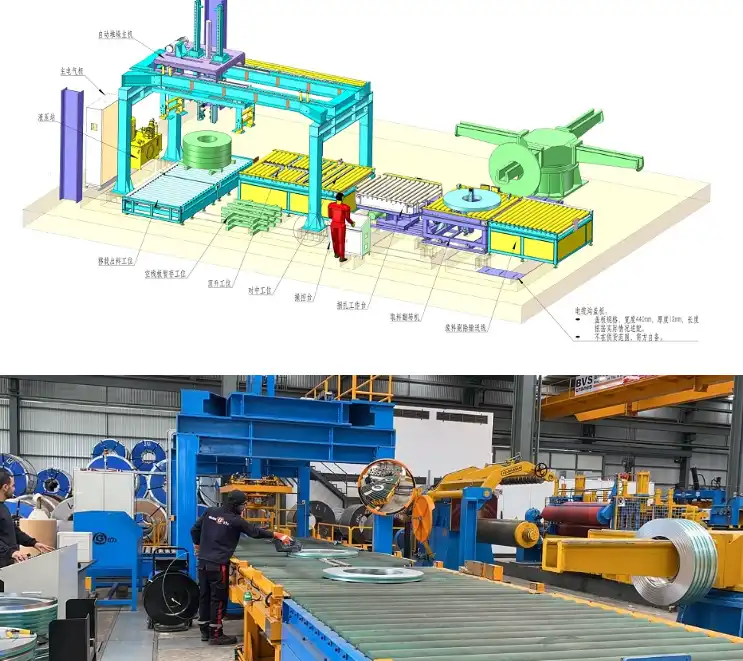
This is not just about a machine. It is about a smart choice for the future. We will look closer at how this solution changes the game for steel producers in Poland and beyond.
Why Do Polish Steel Mills Need Higher Throughput and Consistent Quality?
Polish steel mills face big demand. This means they produce more coils. But manual packing is often too slow. It also makes quality vary. This creates a problem. Slow packing means delays in shipping. Inconsistent quality can lead to product rejections. These issues cost money and hurt business. A modern packing line offers a better way.
Polish steel mills need higher throughput and consistent quality to meet rising global demand and maintain their competitive edge. An automated coil packing line ensures continuous production flow, reduces bottlenecks, and delivers uniform, high-standard packaging that prevents damage during transit, satisfying strict customer requirements.

A successful steel factory runs smoothly from start to finish. The packing stage is crucial. It is the last step before products go out. If this step is slow, it slows everything down. If the quality is not good, all the hard work before it can be wasted. This is why automated packing lines are so important. They make sure things move fast and correctly.
1. ⚡️ Boost Production Speed and Efficiency
Manual packing takes a lot of time. Workers must measure, cut, and apply materials. An automated line does all this much faster. It can work 24 hours a day, seven days a week. This matches the needs of busy steel mills. It handles hundreds of tons of coils daily. This high speed prevents coils from piling up. It keeps the entire production line moving. For example, some factories that used to pack 50 coils a day can now pack over 150 with automation. This means more products go to market quicker. This directly helps Polish steel producers serve more customers. It helps them meet tight deadlines.
2. ✅ Ensure Uniform Packaging Quality
Human hands can make mistakes. Film tension might be uneven. Straps might not be tight enough. These small errors cause big problems during shipping. An automated line applies every strap and wrap perfectly. It uses the same tension every time. This means every coil gets the same high-quality protection. This consistency reduces product damage. It also stops customer complaints. When packaging is perfect, products arrive safely. This makes customers happy. It also builds trust in the steel mill’s brand. For export markets, this is very important. Standards like CE and ISO demand high packaging quality.
3. 🛡️ Prevent Damage During Transport
Steel coils are heavy and can be sensitive. They need good protection from rust, moisture, and scratches. An automated packing line offers superior protection. It can apply multiple layers of film and strapping. It makes sure these layers are tight and secure. This strong packaging acts like a shield. It protects the coils from harsh conditions during travel. This stops issues like water damage or surface scratches. Less damage means fewer returns. It means less money lost. It helps companies avoid contract penalties. This directly impacts a factory’s profits.
4. 📈 Enable Better Data Tracking
Modern packing lines can connect to a factory’s data system. They can track how many coils are packed. They can also record the materials used. This data helps managers see what is working well. It helps them find areas to improve. For example, they can track film usage. They can optimize how much material they use. This makes the packing process even smarter and more efficient. It gives managers the information they need to make good decisions.
I have seen factories, even early in my career, struggle to keep up. I remember visiting a client in the early days of FHOPEPACK. They had lines running hot, but the coils piled up at packing. It was like a dam holding back a flood. We showed them how a modern line could clear that backlog, increasing their daily shipments by 30%. This was a game-changer for them, and it helped them get new clients.
How Does Automated Packing Solve Labor Shortages and Safety Risks?
Steel mills often find it hard to find enough workers. The work can be very demanding. Handling heavy steel coils manually is also very dangerous. These problems lead to high worker turnover. They also cause many workplace accidents. Such incidents mean lost work time. They can also lead to legal problems. This situation needs a new approach.
Automated packing solves labor shortages by reducing the need for manual workers in physically demanding roles, allowing existing staff to focus on supervisory tasks. It eliminates significant safety risks by mechanically handling heavy and hot steel coils, thereby preventing workplace accidents and improving overall worker well-being.

The safety of workers is very important. No factory wants accidents. And in a growing industry, you need a stable workforce. Automated systems help in both these areas. They replace risky manual tasks. They also make work easier for the staff who are there.
1. 👨🏭 Reduce Reliance on Manual Labor
Many tasks in traditional coil packing are manual. Workers lift, move, and strap heavy coils. This work is physically tough. It leads to worker fatigue. It also requires many hands. Automated lines reduce this need significantly. Machines do the heavy lifting. They do the repetitive strapping and wrapping. This means fewer workers are needed for direct physical labor. Existing staff can then focus on supervising the machines. They can do quality checks. This makes better use of human skills. It also helps factories cope with labor shortages. It makes the workplace more appealing for new hires.
2. ⛑️ Improve Workplace Safety
Handling steel coils is one of the most dangerous jobs in a steel mill. Coils can weigh several tons. Moving them by hand or with simple cranes always carries risks. There is a danger of crushing injuries. There is also a risk of falls. Automated systems remove people from these danger zones. Mechanical grippers and conveyors move coils safely. Automated systems turn and position coils without human contact. This drastically reduces the chance of accidents. It lowers the risk of severe injuries. This makes the workplace much safer for everyone. It shows a commitment to worker welfare.
3. 💪 Ease Physical Strain and Improve Ergonomics
Manual packing involves repetitive motions and heavy lifting. This can cause long-term health problems for workers. It can lead to back injuries or muscle strain. Automated packing takes away these difficult physical tasks. Workers no longer have to bend or strain. This creates a much better working environment. It improves the ergonomics of the job. Happier and healthier workers are more productive. They are also more likely to stay with the company for a longer time. This helps reduce turnover rates. It creates a more stable workforce.
4. 🧠 Enable Staff Training for Higher-Skill Roles
When machines take over repetitive tasks, human workers can learn new skills. They can be trained to operate and maintain the automated packing lines. This means staff can move into higher-skilled roles. They become machine operators or maintenance technicians. This benefits both the worker and the company. Workers gain valuable skills for their careers. The company gets a skilled workforce to manage its advanced machinery. This is a smart investment in people.
Early in my career, I saw firsthand how dangerous manual coil handling could be. I remember a small incident in my first factory job where a coil shifted slightly during strapping. Luckily no one was hurt badly, but it was a stark reminder. This experience cemented my belief in automation as a way to protect people. At FHOPEPACK, we design our machines to keep workers far from danger, making the workplace safer for everyone.
What Role Does Customization Play in Meeting Diverse Market Demands?
Today’s steel market is complex. Customers want different types of packaging for different products. A steel mill might make cold-rolled, galvanized, and color-coated coils. Each needs specific protection. Manually switching between these needs is slow. It also often leads to mistakes. If a factory cannot adapt quickly, it loses business.
Customization plays a vital role in meeting diverse market demands by enabling steel mills to quickly adapt their packaging processes for different coil types, sizes, and customer specifications. This flexibility allows for the application of specific strapping, wrapping, and labeling solutions, ensuring each product meets unique export standards and client expectations.
A growing industry needs to be flexible. It needs to meet many different customer requests. If you can offer custom packing, you stand out. You can serve more markets. A custom packing line is like a chameleon. It changes its look to fit any situation.
1. ⚙️ Adapt to Diverse Product Types
Steel mills produce a wide range of coils. Cold-rolled coils need anti-rust protection. Galvanized coils need scratch protection. Color-coated coils need careful handling to preserve their finish. An automated packing line can handle all these needs. It can switch between different packing programs easily. This means one line can pack many product types. It saves the factory from needing multiple, specialized lines. This makes production much more flexible. It means the factory can take on any order.
2. 🎛️ Offer Flexible Packaging Materials
Different customers want different packing materials. Some prefer PET strapping. Others need strong steel straps. Some require shrink film for tight protection. Others might need stretch film for moisture resistance. A customized packing line can use many different materials. It can automatically switch between them. This means the factory can meet any customer request. It can provide the exact type of protection needed for specific shipping routes or storage conditions. This ability helps gain new clients. It keeps existing clients happy.
3. 📏 Handle Various Coil Sizes and Weights
Steel coils come in many sizes. Their inside diameters and outside diameters can change. Their weight can vary from 1 ton to 3 tons or more. A good packing line must handle all these variations. Custom lines are designed for this. They have adjustable mechanisms. They can center coils of different sizes automatically. This means the factory does not need to manually adjust for each coil. It makes the process smooth and efficient. It allows for a wide range of products to be processed on the same line.
4. 🏷️ Integrate Value-Added Features
Modern markets demand more than just basic packing. Customers might need barcodes on their coils. They might need specific labels for tracking. Export clients often require strict CE or ISO certified packaging. A custom packing line can include these features. It can have automatic labeling machines. It can apply special anti-corrosion agents. This helps the factory meet all these extra requirements. It adds value to the product. It ensures compliance with international trade rules. This helps Polish steel mills compete globally.
When I first started FHOPEPACK, one of our earliest clients had a nightmare dealing with export orders. They needed different films, different strapping patterns, and specific labels for various countries. Their old manual setup was a mess. We designed a custom line for them that could switch between these modes with a simple click. It was a proud moment when they told me how many new international contracts they secured because of that flexibility.
How Can a Packing Line Future-Proof Poland’s Steel Industry?
The steel industry is always changing. Global competition is very strong. Costs are always a concern for businesses. If Polish steel companies do not modernize, they risk falling behind. They need to invest smartly to stay competitive. A modern packing line is more than just an expense. It is an investment in the future.
A modern coil packing line can future-proof Poland’s steel industry by significantly reducing operational costs through optimized material usage and lower labor requirements. It also enhances the industry’s ability to meet stringent international standards and adapt to technological advancements, securing its long-term competitiveness and sustainability in the global market.

Future-proofing means preparing for what is next. It means making sure your business can adapt. It means making smart choices today that will pay off tomorrow. A packing line helps a steel company do all these things.
1. 💰 Reduce Overall Operating Costs
Automated packing lines are an initial investment. But over time, they save a lot of money. They use packing materials more efficiently. This means less waste. They reduce the need for many workers, lowering labor costs. They also prevent product damage, cutting down on returns and claims. When coils arrive safely, it saves money on insurance and customer disputes. All these savings add up. They make the factory more profitable in the long run. This financial benefit is crucial for any growing business.
2. 🌍 Ensure Compliance with Global Standards
To sell steel globally, products must meet high standards. This includes quality, safety, and environmental rules. Packaging is a part of this. Automated lines help factories meet international certifications like CE and ISO. They ensure consistent quality required for these standards. They can also integrate systems for traceability. This means products can be tracked from the factory to the customer. This compliance opens up new markets for Polish steel. It helps them sell to countries with strict import rules.
3. 🚀 Provide Scalability for Growth
A growing industry needs systems that can grow with it. If production volume goes up, the packing line must keep pace. Automated lines are designed for this. They can handle higher throughput. They can run for longer hours without problems. This scalability means the factory can increase its output without major new investments in packing. It means they are ready for future market demand. This makes them more resilient and adaptable.
4. 🤝 Build Strategic Partnerships
Choosing a packing line is also about choosing a partner. A good supplier offers more than just a machine. They provide installation, training, and ongoing support. They make sure the line runs well for many years. They also supply spare parts quickly. This kind of partnership helps a factory stay ahead. It means they have experts to call on if issues arise. This long-term support is vital for smooth operations. It helps a factory focus on its main business: making steel.
5. 💡 Adopt Future Innovations
Technology keeps changing. Automated packing lines are built to incorporate new advances. They can be updated with new software. They can have new modules added later. This means the factory stays modern. It can adopt new packaging materials or methods as they appear. This adaptability ensures the packing process remains cutting-edge. It helps the company remain competitive in a fast-evolving industrial landscape.
Building FHOPEPACK was not just about making machines; it was about building solutions for the future. I believe in giving back, and part of that is helping clients not just solve today’s problems but prepare for tomorrow’s challenges. When we install a line, it is not just a transaction; it is the start of a partnership. We see our clients grow, expand, and become more competitive over time, and that is the real reward.
Conclusion
A steel coil packing line is essential for Poland’s growing steel industry. It boosts efficiency, ensures top quality, makes the workplace safer, and lowers costs. It helps Polish steel mills meet diverse market needs and stay competitive globally. Investing in a coil packing line is a smart move for sustainable growth. It prepares factories for the future.








