
What Key Technical Features Should Canadian Engineers Evaluate in Horizontal Orbital Wrappers?
Are you a Canadian engineer facing the pressure of streamlining your packing lines? Do you feel stuck with slow, manual processes that eat into your profits and put your team at risk? I know that feeling. From my days on the factory floor, I saw firsthand how inefficient packing could bottleneck an entire operation. But there is a better way. Choosing the right horizontal orbital wrapper can change everything.
Canadian engineers should evaluate horizontal orbital wrappers based on their construction quality, automation and control systems, integrated safety features, precise film delivery and tension control, and overall maintenance ease. These core technical aspects ensure durability, operational efficiency, worker safety, product protection, and long-term cost-effectiveness in demanding industrial environments.
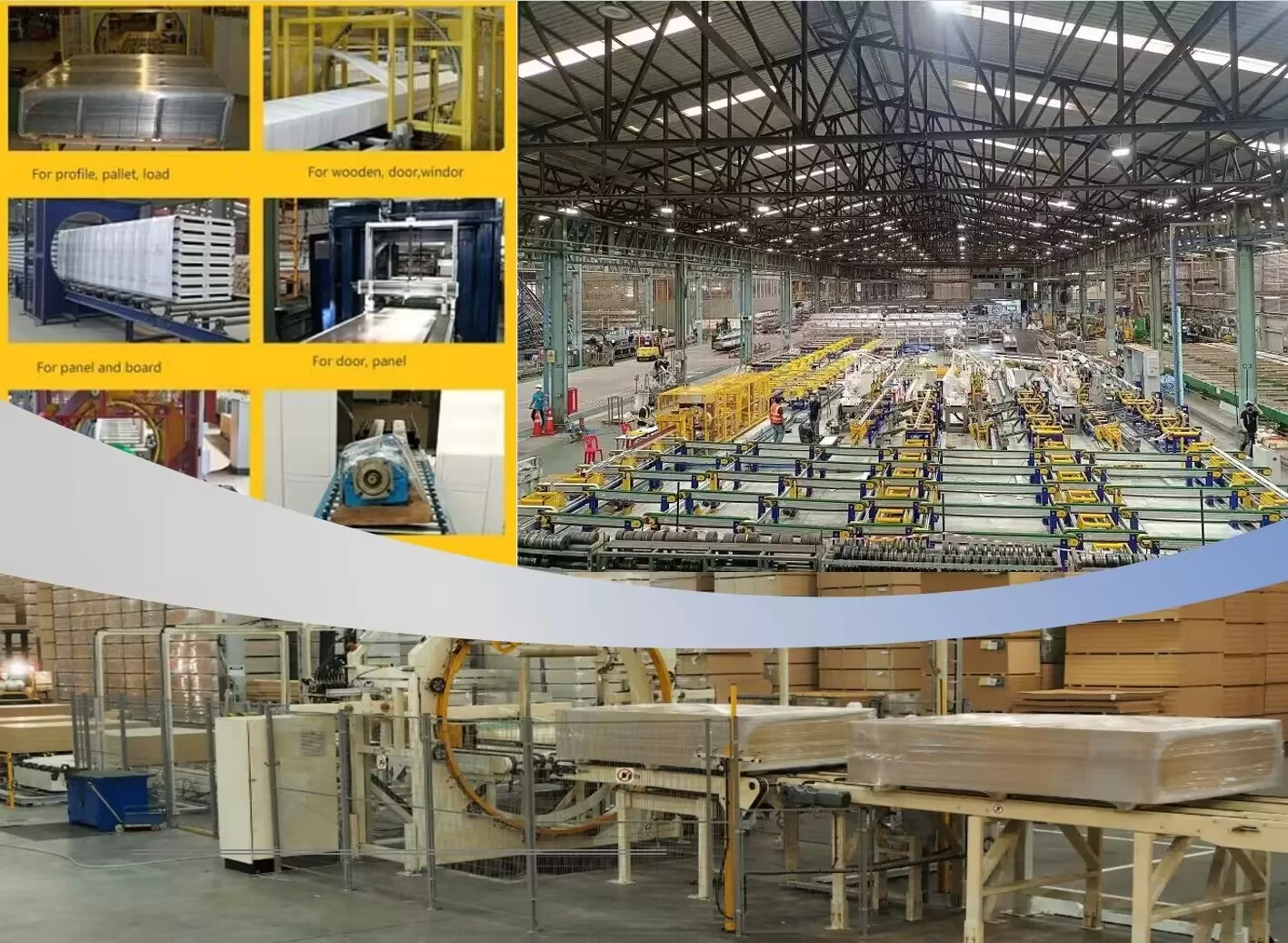
Making an informed decision on such a critical piece of equipment is not simple. It requires looking beyond the basic specifications. It means understanding how each technical feature impacts your daily operations, your team’s safety, and your company’s bottom line. Let us dive into the details. I will share insights from my own journey building and running a successful packing machine factory.
How Important Is Machine Construction and Durability?
Do you constantly worry about your machines breaking down under heavy use? Are you tired of equipment that just cannot handle the harsh reality of a busy Canadian manufacturing plant? I have been there. I know how costly downtime is. It stops production. It wastes money. A robust machine build is not a luxury. It is a must-have for continuous operation.
Machine construction and durability are crucial. They directly affect a wrapper’s lifespan, reliability, and ability to handle heavy loads and continuous operation in tough industrial conditions. Engineers must look for high-quality materials, strong frame designs, and robust components to ensure the machine can withstand daily stresses and minimize maintenance needs.
From my experience building and running my own packing machine factory, I can tell you that the bones of a machine matter most. You cannot compromise on the foundation. When evaluating a horizontal orbital wrapper, look closely at the materials used. Stainless steel frames offer excellent corrosion resistance. This is especially true in places where moisture or harsh chemicals are present. Heavy-duty carbon steel, properly coated, also works well. The frame thickness is key. A thin frame will bend and break under stress. A thick, welded frame will stand strong for years.
Then, consider the bearings and moving parts. These are the wear points. You want sealed, heavy-duty bearings that resist dust and debris. They should be easy to grease or replace. I have seen many machines fail because of cheap bearings. It is a small part. But it can stop an entire line. The design of the ring drive system is also vital. A robust gear-driven system is better than a belt-driven one for heavy products like steel coils or wire bundles. It provides more consistent torque. It is also more durable.
-
Material Selection for Longevity
The choice of materials directly impacts the wrapper’s ability to resist wear, corrosion, and fatigue. In Canada, where temperatures can vary widely, and industries like steel or timber operate in demanding environments, proper material specification is critical.
- Frame: Look for heavy-gauge steel, often high-grade carbon steel or stainless steel, with solid welding. A powder-coated finish adds extra protection against rust and impact.
- Components: Gears, shafts, and rollers should be made from hardened steel alloys. These materials resist abrasion and maintain their integrity under constant load.
- Fasteners: High-strength bolts and industrial-grade fasteners ensure all parts remain securely joined, even under vibration.
-
Structural Design Integrity
The overall structural design dictates how the machine distributes stress and handles vibrations during operation.
- Welding Quality: Inspect the welds. They should be continuous, clean, and free from porosity. Poor welds are weak points.
- Rigidity: A rigid frame minimizes deflection and ensures consistent wrapping quality. This is vital for maintaining proper film tension and avoiding product damage.
- Access Points: While focusing on strength, ensure the design still allows for easy access to internal components for maintenance.
-
Resistance to Environmental Factors
Canadian factories might face cold temperatures or dusty environments. The machine must be built to cope.
- Enclosures: Electrical enclosures must meet IP (Ingress Protection) ratings suitable for the environment. IP65 or higher is often recommended for dusty or damp conditions.
- Temperature Range: Confirm the machine’s operating temperature range matches your facility’s conditions.
I learned that investing a little more upfront in a well-built machine saves a lot of money later. It prevents breakdowns. It keeps your production running smoothly.
How Do Automation and Control Systems Improve My Operations?
Are your packing operations still too manual? Do you see human errors costing you time and money? I built my business on efficiency. I know that manual processes are often bottlenecks. They slow everything down. Modern automation changes the game. It makes your lines faster. It makes them more reliable.
Automation and control systems improve operations by enhancing speed, consistency, and precision. Key features include PLC-based control for custom programming, HMI touchscreens for easy operator interaction, automatic film cut-and-clamp for hands-free operation, and integration capabilities with upstream and downstream equipment, all reducing labor and human error.

When I first started, many packing machines were very basic. You pushed buttons. You hoped for the best. Today, the control systems are like the brain of the machine. They make it smart. A good PLC (Programmable Logic Controller) is essential. It allows you to program specific wrapping patterns. You can adjust film overlap. You can change tension for different products. This flexibility is huge. It means one machine can handle many tasks.
The HMI (Human Machine Interface) is also very important. It should be a clear touchscreen. It needs to be easy to use. Operators should not need a degree to run the machine. Icons and simple menus make training faster. They also reduce mistakes. I always tell my team: if it is not easy to use, it will not get used right. Automatic film cut and clamp systems are a must-have for true automation. Your operators do not need to touch the film. This saves time. It also makes the process safer. It is a small thing. But it adds up to big gains in efficiency over a day, a week, a year.
-
PLC and Program Logic
The PLC is the core intelligence. It dictates how the machine performs.
- Brand Reputation: Look for well-known PLC brands like Siemens, Allen-Bradley, or Omron. These offer reliability and easier access to parts and technical support in Canada.
- Program Customization: Can the PLC be programmed for various wrapping cycles? For example, different numbers of wraps, varying overlap percentages, or specialized end-of-wrap treatments. This flexibility is key for diverse product lines.
- Diagnostics: A good PLC system will offer diagnostic capabilities. It can tell you what is wrong when a fault occurs. This speeds up troubleshooting. It reduces downtime.
-
HMI and User Interface
The interface is how your operators interact with the machine.
- Intuitive Design: A user-friendly interface reduces training time and operator errors. Look for clear graphics, logical menus, and easy-to-read displays.
- Recipe Storage: Can the machine save different “recipes” for various products? This allows for quick changeovers. It ensures consistent wrapping quality every time.
- Multi-Language Support: For diverse workforces, multi-language support on the HMI can be a big plus.
-
Integration Capabilities
Your new wrapper should not be an island. It needs to fit into your existing or future production line.
- Conveyor Systems: Can it integrate with your upstream and downstream conveyors? Seamless product flow is critical for maximizing line efficiency.
- Data Exchange: Can the machine communicate with your MES (Manufacturing Execution System) or ERP (Enterprise Resource Planning)? This allows for tracking production data, monitoring performance, and predictive maintenance.
- Remote Access: Some systems offer remote access for diagnostics or software updates. This can be a huge time-saver.
I believe automation is not just about replacing people. It is about empowering your team. It frees them from repetitive tasks. It lets them focus on higher-value work.
What Essential Safety Features Must a Wrapper Have?
Are you worried about worker safety on your packing line? Does the thought of an accident keep you up at night? When I ran my factory, safety was my number one priority. No amount of efficiency is worth putting a team member at risk. You need machines that protect your people. It is not just about compliance. It is about care.
Essential safety features for a horizontal orbital wrapper include robust emergency stop buttons, safety guarding around moving parts, interlocked access doors, light curtains or safety mats for zone protection, and clear warning labels. These elements are critical for preventing accidents, protecting operators from hazards, and ensuring compliance with Canadian safety standards.
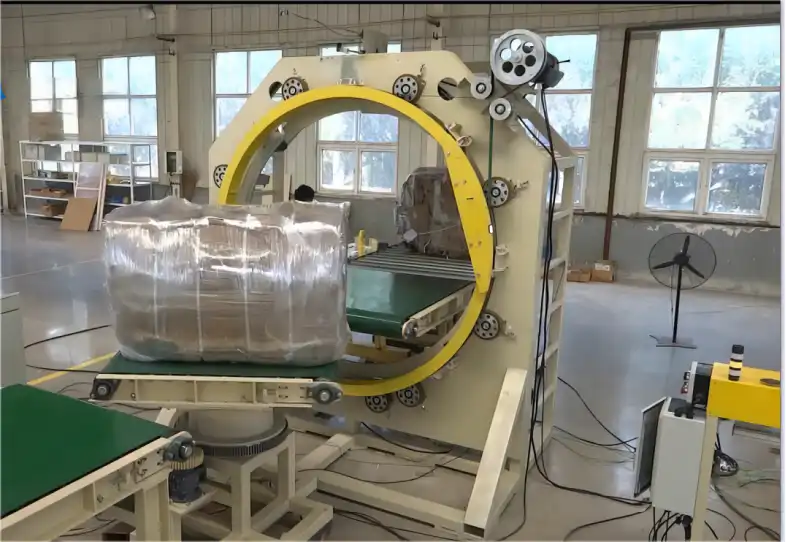
Safety is not an option. It is a fundamental requirement. From my years in the heavy machinery sector, I have seen too many preventable accidents. When I was designing machines for my own factory, safety was always at the forefront. A horizontal orbital wrapper has rapidly moving parts. It handles heavy products. So, it needs multiple layers of protection. First, accessible E-stop buttons are crucial. They should be clearly marked. They should be easy to reach from all operating positions. These are not just for show. They must immediately cut power to all motion.
Safety guarding is another must. Any moving part that an operator could touch must be covered. This means mesh enclosures. It means solid panels. These guards should be interlocked. If a guard is opened, the machine must stop automatically. This prevents anyone from entering a hazardous area while the machine is running. Light curtains are also excellent. They create an invisible barrier. If someone breaks the beam, the machine stops. This is especially good for loading zones or areas where operators might be close to the moving ring. I always recommend machines with good lockout/tagout points. This makes sure maintenance can be done safely.
-
Emergency Stop Systems
These are the first line of defense in an emergency.
- Accessibility: E-stop buttons should be located on all four sides of the machine, or at least at every operator workstation, and be highly visible.
- Redundancy: Ideally, the E-stop circuit should be dual-channel, meaning if one circuit fails, the other will still stop the machine. This adds a layer of reliability.
- Reset Procedure: The machine should require a manual reset after an E-stop activation, preventing accidental restarts.
-
Physical Guarding and Interlocks
These prevent direct contact with hazardous moving parts.
- Fixed Guards: Robust, securely mounted barriers that completely enclose hazardous areas. They should be difficult to remove without tools.
- Interlocked Guards: Gates or doors that provide access to hazardous areas. They must be equipped with safety interlocks that prevent machine operation if the guard is open. If opened during operation, they must immediately stop the machine.
- Perimeter Fencing: For larger, automated systems, physical fencing around the entire cell is essential, often with interlocked gates for access.
-
Presence Sensing Devices
These systems detect if a person is in a hazardous zone.
- Light Curtains: Infrared beams create a protected area. If a beam is broken, the machine stops.
- Safety Mats: Pressure-sensitive mats placed on the floor that stop the machine if someone steps on them.
- Area Scanners: Laser scanners that create configurable warning and stop zones around the machine.
-
Electrical Safety and Compliance
Beyond mechanical safety, electrical systems must meet standards.
- CSA Standards: In Canada, adherence to CSA (Canadian Standards Association) electrical safety standards is critical. Look for CSA certification marks.
- Lockout/Tagout Provisions: Clear points for energy isolation (electrical, pneumatic, hydraulic) during maintenance.
As a factory owner, I learned that a safe factory is a productive factory. Accidents lead to lost time, high costs, and low morale. Invest in safety. Always.
Why Is Film Delivery and Tension Control So Important?
Are your products arriving damaged? Are you wasting film because of poor wrapping? This was a big pain point for many of my clients. Improper wrapping can ruin goods. It can waste materials. It costs you money and customer trust. Getting the film right is vital. It is not just about looks. It is about protection.
Film delivery and tension control are critical for product protection and material efficiency. A wrapper needs features like a powered pre-stretch carriage for maximum film yield, precise tension adjustment to prevent damage or looseness, and consistent film placement to ensure full coverage and load stability, reducing both product damage and film waste.

The film is the product’s first line of defense. How it is applied makes all the difference. When I helped clients set up their packing lines, we often spent a lot of time dialing in the film settings. A key feature is the powered pre-stretch carriage. This system stretches the film before it even touches the product. It stretches it by 200%, 250%, or even 300%. This means you get much more use out of each roll of film. Without pre-stretch, you are throwing money away. It is like buying a large pizza but only eating half.
Precise tension control is just as important. If the tension is too loose, the load will shift. It can get damaged in transit. If it is too tight, it can crush delicate products. It can also snap the film. A good machine will have easily adjustable tension settings. It might use a load cell or dancer bar system. This maintains consistent tension throughout the wrapping cycle. This is especially true for irregular shapes. Think about wrapping a large, oddly shaped metal part. You need the film to conform. You need it to hold tight without breaking. This level of control ensures your products arrive safe and sound. It also reduces customer complaints.
-
Powered Pre-Stretch Carriage
This feature is essential for maximizing film efficiency and reducing material costs.
- Film Yield: A high pre-stretch ratio (e.g., 200% or 300%) means one foot of film becomes three or four feet of stretched film. This significantly cuts your film consumption.
- Load Containment: Pre-stretched film provides better load containment. It holds the product tighter. This prevents shifting during transport.
- Consistency: A powered system provides consistent stretch, unlike manual or brake-based systems which can fluctuate.
-
Tension Control Mechanisms
Precise tension is vital for product integrity and stable loads.
- Adjustability: The ability to easily adjust film tension for different products is crucial. Some products need gentle wrapping. Others need very tight wrapping.
- Feedback Systems: Advanced machines might use load cells or “dancer” rollers to provide real-time feedback. This ensures the tension remains constant, even if the product shape changes slightly.
- Automatic Cut-and-Clamp: This not only saves labor but also ensures the film is cut and secured consistently at the end of each cycle, preventing loose tails.
-
Film Application and Coverage
The way the film is applied affects overall product protection.
- Overlap Control: The machine should allow precise control over film overlap. This ensures no gaps in protection and uses film efficiently.
- Adjustable Ring Height: For horizontal wrappers, the ability to adjust the wrapping ring’s height relative to the product is key. This ensures the film covers the entire product from end to end, even very long items.
- Multi-Wrap Options: The system should allow for different wrapping patterns. This could include reinforced ends or extra layers on fragile areas.
In my years, I have seen too many companies waste money on film. They also deal with damaged goods. All because of a basic wrapping system. Investing in advanced film control pays for itself quickly.
How Does Ease of Maintenance and Serviceability Impact Long-Term Costs?
Are you tired of unexpected breakdowns that halt production? Does finding spare parts feel like a treasure hunt? I know the frustration of a machine sitting idle because of a small part or a complex repair. Downtime costs money. It also costs reputation. A machine that is easy to maintain saves you a lot in the long run.
Ease of maintenance and serviceability directly impact long-term costs by minimizing downtime and extending machine life. Key features include easy access to components, readily available standard parts, a robust diagnostic system, and strong manufacturer support for technical assistance and spare parts inventory, all contributing to a lower total cost of ownership.
When I set up my packing machine factory, one of my main goals was to design machines that were not just efficient but also easy to fix. I knew from my time on the factory floor that complex repairs led to long downtimes. This directly eats into profits. So, when you evaluate a horizontal orbital wrapper, think about maintenance from day one. Look for clear access panels. These should allow your technicians to get to motors, bearings, and electrical components easily. If they have to dismantle half the machine to change a belt, it will take hours, not minutes.
Standardization of parts is another huge factor. Does the machine use off-the-shelf components that are widely available in Canada? Or does it rely on custom-made parts from a single source? Using common brands for PLCs, sensors, and motors means you can get replacements faster. This reduces the risk of long waits. It also often means lower costs for parts. A good machine will also have a self-diagnostic system. This can point out problems quickly. It saves hours of troubleshooting. It helps your team fix issues fast. Lastly, consider the manufacturer’s support. Do they offer good technical assistance? Do they keep spare parts in stock? My personal philosophy has always been to be a partner, not just a seller. This means supporting clients long after the sale.
-
Accessibility of Components
Easy access means faster maintenance and less downtime.
- Hinged Panels: Look for machines with hinged or easily removable panels that provide direct access to internal workings.
- Modular Design: A modular design where components like the film carriage or control panel can be easily removed or replaced as units simplifies repairs.
- Clear Labeling: All electrical components, pneumatic lines, and lubrication points should be clearly labeled.
-
Standardization and Parts Availability
Using common parts reduces lead times and costs.
- Common Brands: Machines built with globally recognized brands for key components (e.g., Siemens, Bosch Rexroth, Festo) often have better parts availability and support networks.
- Local Sourcing: Inquire about the availability of common wear parts (belts, rollers, seals) from local suppliers in Canada, not just from the original manufacturer.
-
Diagnostic Systems
A machine that can tell you what is wrong saves significant time.
- Fault Codes: The HMI should display clear fault codes and messages that point to specific problems.
- Troubleshooting Guides: The machine manual should include clear troubleshooting steps for common issues.
- Predictive Maintenance: Some advanced systems can monitor component wear or performance trends. This allows you to schedule maintenance before a breakdown occurs.
-
Manufacturer Support
Reliable support is crucial for the machine’s entire lifespan.
- Technical Support: Does the manufacturer offer phone support, remote diagnostics, or on-site service?
- Parts Inventory: Confirm the manufacturer maintains a robust spare parts inventory and can ship parts quickly.
- Training: Is operator and maintenance training provided or available?
I have always believed that a machine is only as good as its support. Choose a partner who stands by their product. This ensures your investment continues to pay off for many years.
Conclusion
Choosing the right horizontal orbital wrapper involves carefully evaluating construction, automation, safety, film control, and maintenance. Focusing on these key features will ensure Canadian engineers select a machine that enhances efficiency, safety, and long-term value for their operations.








