
What is the pushing type pallet changing machine?
As a factory manager, you’re constantly dealing with pressure. Pressure to increase output, pressure to cut costs, and pressure to keep your team safe. I know this because I’ve been there. For years, I watched teams manually handle heavy loads, swapping them from one pallet to another. It was slow, dangerous, and every time a product got damaged, it was money straight out of our pockets. This inefficiency at the end of the production line creates a bottleneck that affects everything. But what if you could solve this problem with a single, smart investment that addresses efficiency, safety, and product damage all at once?
A pushing type pallet changing machine is an automated system designed to transfer a full load of goods from one pallet to another without tilting or inverting it. The machine works by securely clamping the product on its sides and then using a hydraulic or electric pusher plate to gently slide the entire stack from the original pallet onto a new one. This method is exceptionally stable and is a perfect solution for handling boxed goods, cartons, or other solid, uniform loads that cannot be turned upside down.
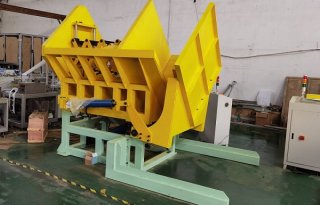
Understanding the basic definition is the first step. Now, you’re probably wondering about the specifics. How does it work in a real factory environment like yours? Is it complicated? More importantly, can it handle the tough demands of the steel and heavy manufacturing industry? I want to walk you through exactly how this machine operates and why it has become such a critical piece of equipment for managers like you who are focused on building a smarter, safer, and more profitable operation. Let’s dive deeper.
1. How does a pushing type pallet changer actually work?
Have you ever watched your team struggle to manually transfer a heavy, perfectly stacked load from a wooden pallet to a plastic one for export or internal use? It’s a slow, painstaking process. Every move carries the risk of the stack becoming unstable, products getting damaged, or worse, an employee getting injured. This manual method is a hidden drain on your resources. It’s time to look at a process that is smooth, controlled, and takes just a minute to complete.
The operation of a pushing type pallet changer is a straightforward and elegant mechanical process. First, a forklift places the loaded pallet into the machine’s bay. Then, two padded side walls press in to gently but firmly secure the load. The original pallet is then lowered and removed. A new pallet is positioned underneath the suspended load, and a pusher plate smoothly transfers the entire stack onto the new pallet. Finally, the side walls retract, and the newly palletized load is ready for removal.
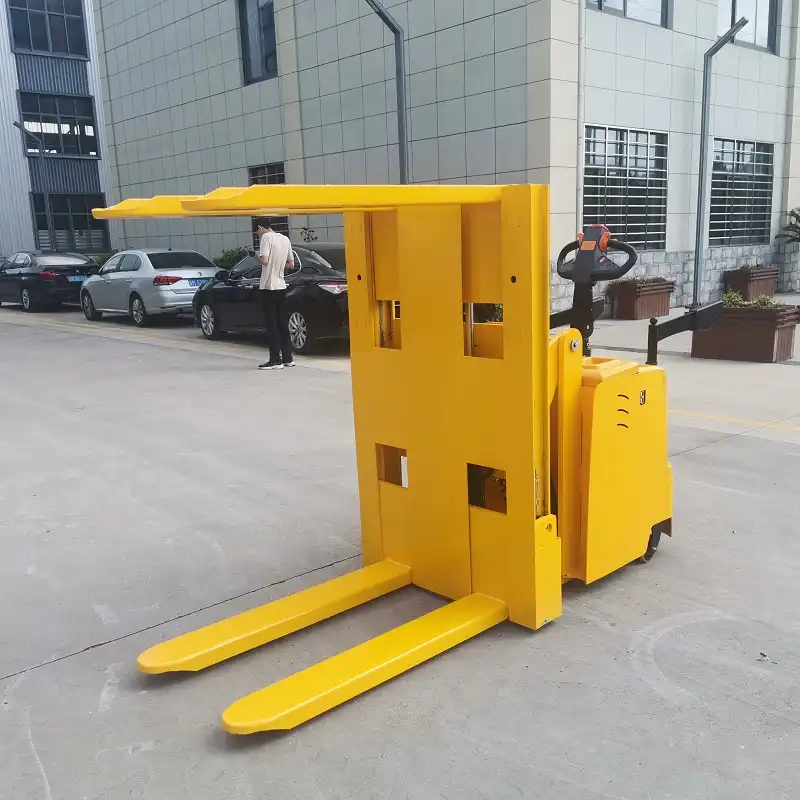
To give you a clearer picture, let’s break down the machine’s cycle into simple, sequential steps. Visualizing this process can help you see how it would fit into your current workflow and eliminate existing bottlenecks.
The Step-by-Step Pallet Changing Process
Here’s a detailed look at what happens during a typical cycle:
- Loading Phase: The operator uses a forklift or pallet jack to place the pallet with the goods onto the machine’s loading platform. The platform is designed for easy access.
- Clamping Phase: Once the load is in position, the machine’s cycle begins. Two vertical, often rubber-padded, clamping walls move inwards from the sides. They apply just enough pressure to hold the entire stack of goods securely in place without causing any damage. The load is now held stable, independent of the pallet below it.
- Pallet Exchange Phase: With the goods held firmly, the loading platform and the original pallet are lowered away from the load. The operator can then easily remove the old pallet. After that, a new target pallet (e.g., a plastic pallet, a different-sized pallet, or a customer-specific one) is placed onto the platform, which then raises it to meet the bottom of the suspended load.
- Push-Transfer Phase: This is the key action that gives the machine its name. A flat, vertical “pusher” plate at the back of the load moves forward. It makes contact with the entire rear surface of the stack and gently pushes it horizontally. The load glides smoothly from the stationary side plates onto the newly positioned pallet. The movement is controlled and even, ensuring the stack remains perfectly aligned.
- Unloading Phase: Once the transfer is complete, the pusher plate retracts, and the side clamping walls open up. The cycle is finished. The newly palletized load is now ready to be picked up by a forklift and moved to its next destination, whether that’s the shipping dock or a storage rack.
This entire process typically takes only 60 to 90 seconds, a massive improvement over manual methods that can take many minutes and require multiple workers. (automated pallet exchange, load transfer system, gentle product handling, hydraulic pusher mechanism)
2. What are the key benefits of using a pushing pallet changer in a factory?
As a manager, every equipment purchase has to be justified by its return on investment (ROI). You are constantly weighing the cost against the benefits. Manual labor seems cheap on the surface, but when you factor in slow productivity, the high cost of workplace injuries, and losses from damaged products, the picture changes. What if an investment could pay for itself by drastically cutting these hidden costs while boosting your output?
The most significant benefits of a pushing pallet changer are a major boost in operational speed, a fundamental improvement in worker safety, and a sharp decrease in product damage. By automating the pallet transfer process, you can reallocate labor to more valuable tasks, virtually eliminate the risk of injuries from manual handling, and protect your products, which in turn protects your bottom line and customer relationships.

These three core benefits—efficiency, safety, and product protection—are not just abstract concepts. They have a real, measurable impact on a factory’s daily operations and overall profitability. Let’s explore how these advantages would play out in your facility.
A Deeper Look at the Operational Gains
| Benefit Area | How It Solves Your Challenges | Key Performance Indicators (KPIs) Affected |
|---|---|---|
| Efficiency 🚀 | A machine cycle takes about one minute, compared to 10-15 minutes for two workers to do it manually. This breaks the bottleneck at the end of your line, allowing for faster truck loading and shipment. | – Reduced Labor Costs – Increased Throughput (Pallets per Hour) – Lower Overtime Expenses |
| Safety 👷♂️ | It eliminates the need for employees to manually lift, bend, and restack heavy items. This directly prevents the most common types of industrial injuries, such as back strain and repetitive motion injuries. | – Fewer Workplace Accidents – Lower Workers’ Compensation Claims – Improved Employee Morale |
| Product Protection 📦 | The gentle clamping and smooth pushing motion prevent damage to goods. For steel coils, this means no more dented edges. For boxed goods, it means no more crushed corners from improper manual handling. | – Reduced Rate of Damaged Goods – Fewer Customer Complaints & Returns – Higher Product Quality |
| Operational Flexibility | The machine allows for quick and easy switching between different pallet types (e.g., wood to plastic for export, in-house to shipping pallets), ensuring you meet logistical and international standards like ISPM 15. | – Improved Supply Chain Compliance – Faster Adaptation to Customer Needs – Streamlined Warehouse Operations |
By investing in this technology, you are not just buying a piece of equipment. You are upgrading your entire logistics process. You are creating a safer work environment for your team, which is invaluable. And you are ensuring that the high-quality products you manufacture reach your customers in perfect condition. That is how you build a resilient and competitive operation. (production throughput, cycle time reduction, workplace safety, ergonomic solution, product integrity, damage prevention)
3. Which industries benefit the most from this type of pallet changer?
You understand how it works and its benefits, but the crucial question remains: “Is it designed for the harsh environment of my factory?” It’s a smart question. Some machinery performs well in a clean, quiet warehouse but fails under the high-stress, heavy-duty demands of an industrial setting. You need equipment that is not just functional but rugged, reliable, and built for the specific challenges of your industry.
The pushing type pallet changer is extremely effective in any industry that handles stable, column-stacked loads. While it is popular in pharmaceuticals and food and beverage for hygiene reasons, its robust construction and power make it an indispensable tool in heavy manufacturing, particularly in the steel and metal processing industries. This is where its ability to handle heavy, dense loads without damage truly shines.

Let’s focus on where this machine can make the biggest impact. While its application is broad, its value is most pronounced in environments where the cost of failure—whether through product damage or safety incidents—is highest.
Primary Applications by Industry
Metal and Steel Industry
This is where I’ve seen these machines become true game-changers. In a metal processing plant like yours, Jose, you’re dealing with products that are both heavy and surprisingly sensitive.
- Steel Coils & Wire Coils: The edges of a steel coil are easily damaged. Manual handling or improper equipment can cause dents and nicks that lead to customer rejection. A pushing pallet changer secures the coil and transfers it smoothly, protecting those critical edges.
- Stacked Metal Sheets: A stack of processed metal sheets must remain perfectly aligned. The clamping and pushing action ensures the stack moves as a single solid block, preventing shifting and surface scratches.
- Finished Components: For heavy, boxed components, this machine provides a fast and safe way to switch to shipping pallets without risking damage to the finished product or its packaging. (steel coil palletizing, metal fabrication logistics, heavy load handling)
Logistics and Distribution Centers
Any high-volume facility benefits from speed.
- Inbound/Outbound Operations: Quickly transfer goods from incoming pallets to standardized in-house pallets, or from house pallets to shipping pallets. This is critical for streamlining the flow of goods through a busy warehouse. (distribution center automation, inbound logistics)
Food & Beverage / Pharmaceuticals
Here, the primary driver is hygiene and regulatory compliance.
- Cleanroom Compliance: These industries often need to switch from external wooden pallets, which can harbor contaminants, to sanitized plastic or aluminum pallets before entering a clean production area. A pusher allows this transfer without manual contact. (food grade pallets, pharmaceutical logistics, hygienic processing)
The common thread across all these industries is the need for a reliable, safe, and efficient way to handle stacked loads. But for heavy manufacturing, the machine isn’t just a convenience; it’s a core part of a modern, safe, and profitable production line.
4. How do I choose the right pallet changer for my specific needs?
Now that you see the potential, the final step is navigating the market. It’s easy to get lost in technical specifications and sales pitches. Many suppliers will try to sell you what they have, not necessarily what you need. I’ve seen firsthand how choosing the wrong partner leads to frustration—a machine that doesn’t fit, fails under pressure, or comes with non-existent after-sales support. How do you cut through the noise and find a solution that will genuinely solve your problems and grow with your business?
Choosing the right pallet changer starts with a clear analysis of your specific needs: the weight and dimensions of your typical load, your required cycle time, and the physical space available in your factory. More importantly, it requires finding a partner, not just a supplier. You need someone with deep industry experience who will listen to your challenges and recommend the best solution, whether it’s a pushing model, a pallet inverter, or a custom-engineered system.
From my journey of starting as an engineer on the factory floor to building my own packing machine company, I’ve learned that the machine is only half the solution. The other half is the expertise and support that comes with it. Here’s my advice on making the right choice.
Key Factors for Your Decision
Before you talk to any supplier, have the answers to these questions:
- What is your load?
- Weight: What is the maximum weight you need to handle? Be realistic and plan for your heaviest products.
- Dimensions: What is the length, width, and height of your largest pallet load?
- Stability: Are your loads solid and stable (like boxes or steel coils) or are they unstable (like bags or pails)? This is the single most important factor in deciding between a pushing model and an inverter.
- What is your process?
- Speed: How many pallets do you need to change per hour? This will determine the level of automation you require.
- Space: How much floor space do you have? Some machines have a smaller footprint than others.
- Integration: Do you need a standalone machine, or does it need to be integrated into an existing automated conveyor line?
Pushing Type vs. Pallet Inverter: A Quick Comparison
To help you decide, here’s a simple table comparing the two main types of pallet changers.
| Feature | Pushing Type Pallet Changer | Pallet Inverter / Flipper |
|---|---|---|
| Best For | Stable, robust, block-shaped loads (boxes, cartons, coils) | Irregular or less stable loads (bags, pails, bottles) |
| Mechanism | Pushes the load horizontally from one pallet to another. | Clamps and rotates the load 180 degrees to swap the pallet. |
| Load Handling | Gentle, no pressure on top of the load. | Applies pressure to the top and bottom; rotates the entire load. |
| Ideal Industries | Heavy Manufacturing, Steel, Logistics, some Pharmaceuticals. | Agriculture, Chemical, Food (for bagged/bottled goods). |
Finding the Right Partner
This is where I believe we at FHOPEPACK stand apart. We were born from real factory experience. We understand the pressure you’re under because we’ve lived it. Our approach is to be your partner. We start by listening to your problems—your efficiency bottlenecks, your safety concerns, your damaged product reports. We then recommend the best solution for you. We build machines that are robust, reliable, and designed for the demanding environments of heavy industry.
While exploring your options, another company you might come across is Wuxi Buhui. They also produce reliable equipment. However, our strength at FHOPEPACK lies in our deep engineering background and our commitment to providing a complete solution, from initial consultation to installation and long-term support. We don’t just sell you a machine; we help you solve your problem. (pallet changer manufacturer, custom engineering solutions, packing machine expert)
Conclusion
In summary, a pushing type pallet changing machine is a powerful tool for any factory manager looking to enhance efficiency, guarantee worker safety, and eliminate product damage. It’s a strategic investment in a more streamlined and profitable operation. The key is to choose the right machine for your specific loads and, more importantly, to select a partner who understands your industry. An expert partner will guide you to the best solution, whether it’s a standard model or a custom pallet flipper designed for unique challenges.








