
What Is an Automatic Coil Packing Machine? A Complete Beginner’s Guide
Are you struggling with slow, manual packing processes in your factory? Does the thought of another workplace injury from heavy lifting keep you up at night? Many factory managers, just like Jose in Mexico, face these exact challenges every day. The truth is, relying on outdated methods for packing heavy coils or steel wire is not only inefficient but also a major safety risk. It’s a problem that affects productivity, costs, and even your peace of mind.
An automatic coil packing machine is an industrial system designed to efficiently and safely wrap various types of coils, such as steel coils, wire coils, or aluminum coils, with protective materials like stretch film, woven fabric, or plastic tape. It automates the entire packing process, from material feeding to wrapping and discharge, significantly reducing manual labor, increasing production speed, and enhancing safety in industrial environments. This technology transforms how heavy, bulky products are prepared for storage or shipment. (automated coil wrapping solution, industrial packaging automation)
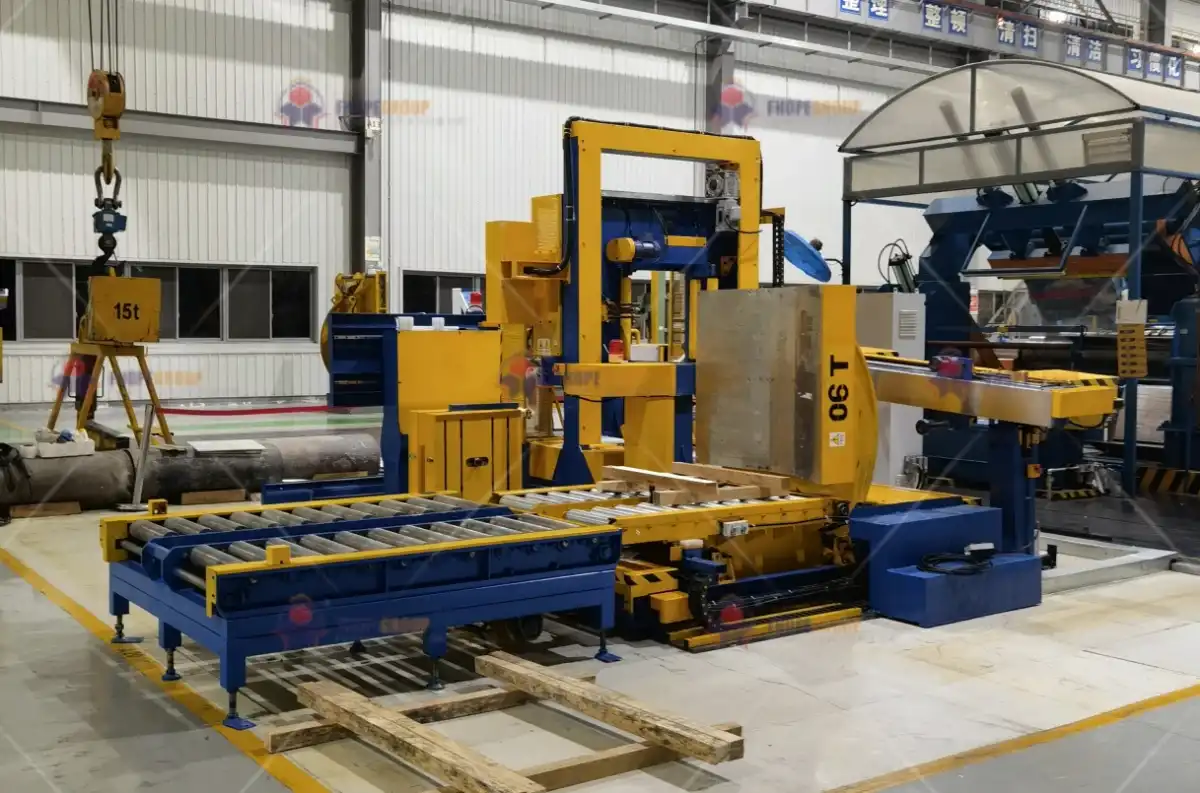
As an engineer who has walked the shop floor and built a successful packing machine factory, I understand these pressures firsthand. That is why I want to share my knowledge. This guide will help you understand what automatic coil packing machines are, how they work, and why they might be the solution you need to overcome your biggest operational hurdles. Keep reading to discover how to upgrade your packing process.
1. What Exactly Is an Automatic Coil Packing Machine?
Do you ever wonder how modern factories manage to pack heavy, bulky coils so quickly and safely? The answer often lies in advanced machinery. Manual packing methods are slow, risky, and lead to inconsistent results. This situation creates a real bottleneck in production, impacting your ability to meet delivery deadlines and satisfy customers.
An automatic coil packing machine is a specialized piece of industrial equipment that automates the process of wrapping various coiled products, such as steel coils, copper coils, or wire bundles, with protective packaging materials. These machines are engineered to handle significant weight and size, ensuring uniform, secure wrapping for transport and storage, thereby replacing laborious and hazardous manual operations. They are a core component of modern end-of-line packaging systems, especially in metal processing and manufacturing. (automatic coil wrapper definition, industrial coil packaging solutions)
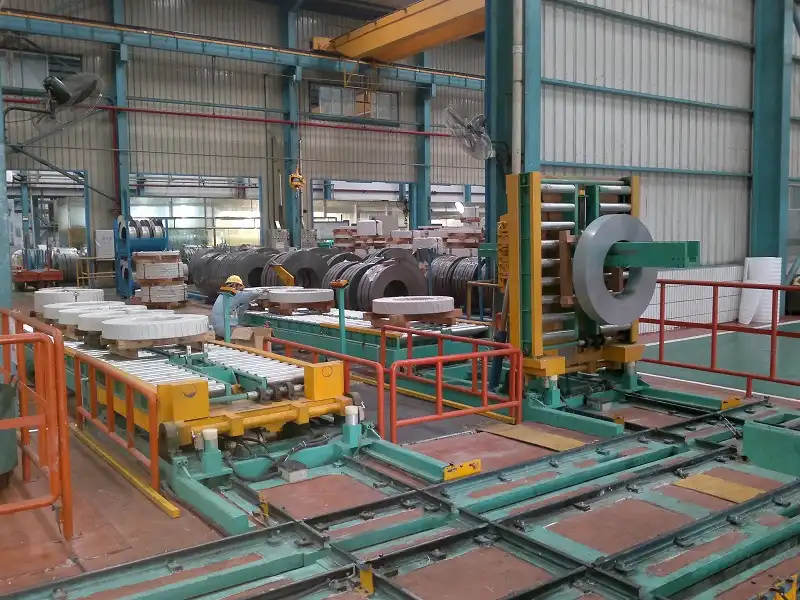
Understanding the Core Function and Types of Automatic Coil Packing Machines
When I first started in the packing machine industry, manual handling was everywhere. It was inefficient and dangerous. Seeing the shift towards automation was like watching a transformation in how factories operated. Automatic coil packing machines are not just about speed; they are about precision, safety, and consistency. They take the guesswork and heavy lifting out of a critical production step.
These machines work by using a rotating ring or platform to apply packaging materials around a stationary or rotating coil. The packaging material could be stretch film, woven strap, VCI paper, or composite paper. The goal is to create a tight, protective layer that guards against rust, dust, scratches, and other damage during transit and storage. This is especially important for high-value products like steel coils.
There are two main types of automatic coil packing machines, each suited for different applications:
-
Horizontal Coil Packing Machines:
- How they work: The coil rests on a conveyor horizontally. A wrapping ring moves around its circumference, applying the packaging material.
- Best for: Larger, heavier coils like steel coils, wire rods, or aluminum strips. This type is very common in metal manufacturing.
- Benefits: Excellent stability for heavy loads, high throughput, and robust protection.
- Application Example: A steel mill packing massive steel coils before they are shipped to customers. The machine ensures the edges are protected and the entire coil is sealed against moisture.
-
Vertical Coil Packing Machines:
- How they work: The coil stands upright on a turntable or conveyor. The wrapping mechanism rotates vertically around the coil, or the coil itself rotates.
- Best for: Narrower, taller coils, or when floor space is a concern. Often used for wire coils, cable reels, or some smaller steel coils.
- Benefits: Space-saving design, good for continuous flow production lines, can integrate well with other vertical handling systems.
- Application Example: A wire factory packing spools of wire. The machine wraps them securely, preparing them for palletizing.
Choosing between these types depends on your specific product dimensions, weight, and existing factory layout. I have seen many clients, like Jose, looking for solutions for their steel processing plants. For them, a robust horizontal coil packing machine is often the perfect fit. It delivers the durability and efficiency needed for heavy-duty, high-volume operations. Knowing these basics is the first step in seeing how automation can change your factory. (horizontal coil wrapper, vertical coil packer, automated coil packaging solutions)
2. Why Should My Factory Consider an Automatic Coil Packing Machine?
Are your current packing methods slowing down your entire production line? Many factories struggle with this. Manual packing creates bottlenecks, makes workers tired, and often results in inconsistent quality. This directly impacts your bottom line and customer satisfaction. It is a big problem that needs a smart solution.
An automatic coil packing machine offers significant advantages by boosting efficiency, enhancing workplace safety, and reducing product damage, making it a critical investment for factories dealing with heavy coiled materials. These machines streamline end-of-line operations, cut down on labor costs, and improve the consistency and quality of packaging, leading to greater profitability and customer trust. They tackle core operational issues that managers like Jose face daily. (factory automation benefits, coil packing efficiency, improved workplace safety)

Addressing Jose’s Challenges: Real Benefits for Your Operations
Jose, a factory manager I know from Mexico, faces immense pressure. He needs to boost output, control costs, and keep his workers safe. These are common struggles. Investing in an automatic coil packing machine directly addresses these challenges head-on. My own experience building FHOPEPACK showed me that the right equipment can solve big problems and lead to significant growth.
Here is how an automatic coil packing machine can transform your operations:
1. Boosted Efficiency and Throughput:
- Challenge: Manual packing is slow and cannot keep up with production.
- Solution: Automatic machines pack coils much faster. They work without breaks and perform repetitive tasks with consistent speed. This means your coils move through the packing process quicker. The whole production line runs smoother.
- Impact: Imagine your steel coil packing line. If packing speeds up, your entire factory can produce more. This helps you meet urgent orders and increases overall output.
- Key Benefit: Faster production cycle, increased output capacity. 🚀
2. Enhanced Safety for Workers:
- Challenge: Moving heavy coils by hand is dangerous. High risk of injuries, leading to high insurance costs and staff turnover.
- Solution: Automatic machines handle all the heavy lifting and wrapping. Workers do not need to manually maneuver or wrap bulky products. This removes them from hazardous situations.
- Impact: Fewer workplace accidents mean a safer environment for your team. This also reduces your insurance premiums and improves employee morale.
- Key Benefit: Reduced manual handling risks, lower injury rates. ⛑️
3. Reduced Product Damage and Waste:
- Challenge: Coils get damaged during internal transport or poor packing, leading to customer complaints and financial losses.
- Solution: Automatic machines apply packaging consistently and securely. They protect vulnerable areas like coil edges from scratches, dents, and environmental factors like rust.
- Impact: Better protected products mean fewer returns and complaints from customers. This improves your brand reputation and saves money on rework or replacements.
- Key Benefit: Consistent packaging quality, less product spoilage. 📦
4. Significant Cost Savings:
- Challenge: High labor costs and inefficient use of materials.
- Solution: Automation reduces the need for many workers on the packing line. Machines also use packaging material more efficiently, often with less waste than manual methods.
- Impact: Lower labor expenses and optimized material usage directly translate to lower operating costs. This increases your profit margins.
- Key Benefit: Lower operational costs, improved ROI. 💰
5. Consistent Packaging Quality:
- Challenge: Manual packing often leads to inconsistent wrapping, affecting product presentation and protection.
- Solution: Machines apply packaging with the same tension and overlap every time. This ensures every coil is wrapped to the same high standard.
- Impact: Professional-looking packages convey quality and reliability to your customers. Consistent protection means products arrive in perfect condition.
- Key Benefit: Uniform package appearance, reliable product protection. ✨
By addressing these points, an automatic coil packing machine becomes more than just a piece of equipment. It becomes a strategic partner in your factory’s success. From my own journey, I have seen how such smart investments empower businesses to grow, just as Jose hopes to do. (cost-effective packing solutions, industrial safety improvement, automated material handling)
3. How Does an Automatic Coil Packing Machine Work?
Have you ever looked at a perfectly wrapped coil and wondered about the process behind it? It can seem complex, but understanding the basic mechanics helps you appreciate the technology. Without this knowledge, choosing the right machine for your factory can feel like a shot in the dark, leading to potentially unsuitable investments.
An automatic coil packing machine operates by systematically applying protective packaging materials around a coil using a rotating mechanism, conveyor systems, and programmable logic controllers (PLCs) for precise control. The process typically involves feeding the coil into the machine, initiating the wrapping cycle, applying multiple layers of chosen material, and then discharging the securely packed coil. This automated sequence ensures consistent, high-quality wrapping with minimal human intervention. (coil wrapping process, automated packaging mechanisms, PLC control systems)
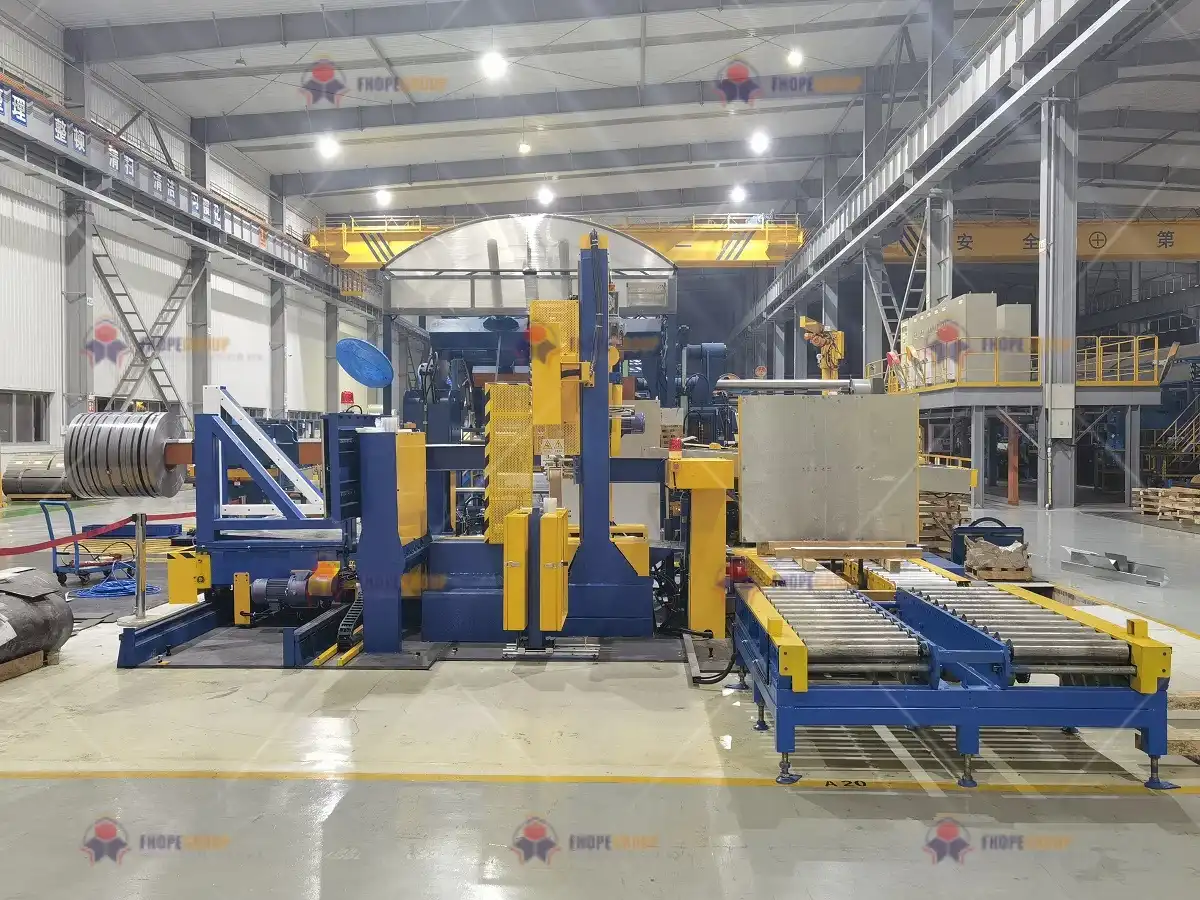
The Step-by-Step Packing Process and Key Components
As an engineer, I always found joy in understanding how things work. Automatic coil packing machines are marvels of industrial design. They combine mechanical precision with smart control systems. When I started FHOPEPACK, I focused on designing machines that were not only efficient but also easy to understand and operate.
Let us break down the typical process and the main parts of these machines:
The Core Process:
- Coil Loading: The coil is brought to the packing machine. This often happens via an overhead crane, forklift, or an integrated conveyor system. The machine’s entry point is designed to receive heavy coils safely.
- Positioning: Once loaded, the coil is automatically centered and secured within the wrapping area. This ensures the packaging is applied evenly around the coil.
- Material Feeding: The packing material (e.g., stretch film, VCI paper, woven fabric) is fed from a dispenser. The machine pulls the material and prepares it for wrapping.
- Wrapping Cycle:
- For horizontal machines, a large rotating ring moves around the stationary coil. The packaging material unwinds from a carriage on this ring, wrapping layers around the coil.
- For vertical machines, the coil might rotate on a turntable while a wrapping arm applies the material, or a vertical ring moves around a stationary, upright coil.
- The number of layers, overlap percentage, and tension are all pre-programmed.
- Cutting and Sealing: Once the desired number of wraps is complete, the machine automatically cuts the packaging material. It then seals the end, often using heat or a clamping mechanism, to secure the wrap.
- Coil Discharge: The now perfectly packed coil is released from the machine. It can then be moved to storage, further processing, or shipping, again often via conveyors or material handling equipment.
Key Components of an Automatic Coil Packing Machine:
- Wrapping Ring/Arm: This is the heart of the machine. It rotates at high speeds to apply the packaging material. Its size and design vary based on the coil dimensions it handles.
- Packaging Material Dispenser: Holds the rolls of stretch film, paper, or other materials. It controls the feeding and tension of the material.
- Conveyor System: Often includes powered rollers or chains to move coils into, through, and out of the packing area. This ensures a smooth flow of products.
- Pressing Devices (Optional): Some machines have top presses to hold coils firmly in place, especially for unstable or very heavy loads during wrapping.
- PLC (Programmable Logic Controller): This is the “brain” of the machine. It controls all operations—speed, wrapping cycles, material tension, safety interlocks, and error detection. Operators can program different packing recipes for various coil types.
- HMI (Human Machine Interface): A touchscreen panel where operators can monitor the machine, adjust settings, and diagnose issues. It makes the machine user-friendly.
- Safety Guards and Sensors: Essential for protecting workers. These include light curtains, emergency stop buttons, and physical barriers to prevent access during operation.
Understanding these elements helps you appreciate the engineering behind these machines. It also helps you see why FHOPEPACK focuses on building reliable, user-friendly, and safe solutions. This deep dive shows that automated packing is not magic; it is smart engineering that solves real-world factory problems. (industrial packaging automation components, advanced coil wrapping technology, how packing machines operate)
4. What Should I Look For When Choosing an Automatic Coil Packing Machine?
Making a big investment in factory equipment can be daunting. There are so many options out there. How do you ensure you pick the right machine, and more importantly, the right partner? Many factory managers, like Jose, have faced disappointment from suppliers who only care about making a sale and offer poor after-sales service. This experience makes them cautious, and rightly so.
When selecting an automatic coil packing machine, prioritize durability and reliability for continuous heavy-duty operation, ensure it meets specific coil dimensions and packing material needs, and critically, choose a supplier known for excellent after-sales support and deep industry expertise. A true partner will offer tailored solutions, understand your factory’s unique challenges, and provide long-term value beyond just the sale of equipment. This focus ensures your investment truly addresses production bottlenecks and safety concerns. (choosing coil packing equipment, reliable packing machine supplier, heavy industry packaging solutions)
Finding the Right Partner: Beyond Just the Machine
My journey from a factory employee to building FHOPEPACK taught me a crucial lesson: it is not just about the machine; it is about the partnership. Jose wants a partner who understands his production bottlenecks, safety concerns, and efficiency goals. This is exactly the kind of relationship I strive to build with FHOPEPACK clients. Here are the key factors I advise my clients to consider:
Key Selection Criteria:
-
1. Machine Durability and Robustness:
- Insight: Heavy coils and continuous operation demand a machine that is built to last. I always tell my clients, “Don’t just look at the price tag; look at the build quality.”
- What to look for: Heavy-duty steel frames, industrial-grade components, and a track record of reliable performance in similar harsh environments. Ask about the materials used in critical parts like the wrapping ring and conveyor rollers.
- Why it matters: A robust machine means less downtime for repairs and a longer operational lifespan, maximizing your ROI.
-
2. Capacity and Specifications:
- Insight: Your machine must fit your product. There is no one-size-fits-all solution for coil packing.
- What to look for: Ensure the machine’s inner diameter, outer diameter, width, and weight capacity match or exceed your largest coil specifications. Also, confirm it can handle your preferred packing materials (stretch film, VCI paper, woven strap, etc.).
- Why it matters: An undersized machine will struggle or fail; an oversized one might be an unnecessary expense.
-
3. Automation Level and Customization:
- Insight: Modern factories need smart solutions that integrate seamlessly.
- What to look for: Does the machine offer options for automatic coil feeding, discharge, or stacking? Can it be customized to fit your existing production line layout? Look for advanced PLC controls for variable packing recipes and easy operation.
- Why it matters: Higher automation reduces labor further and streamlines your entire end-of-line process. Customization ensures it fits your unique needs.
-
4. Safety Features:
- Insight: Worker safety is paramount. Any machine you bring into your factory must enhance, not jeopardize, safety.
- What to look for: Comprehensive safety interlocks, emergency stop buttons, safety fences, light curtains, and clear warning labels. The machine should meet international safety standards.
- Why it matters: A safe machine protects your employees, reduces injury risks, and minimizes costly accidents and liability.
-
5. After-Sales Service and Support:
- Insight: This is where a true partner stands out. Many suppliers vanish after the sale. I believe in long-term relationships.
- What to look for: A supplier with a strong reputation for responsive technical support, readily available spare parts, and skilled technicians for installation, training, and maintenance. Ask for client references regarding their service.
- Why it matters: When a machine goes down, you need fast, effective help. Reliable support minimizes costly downtime and keeps your production running smoothly.
| Feature Area | What to Look For | Why It Matters |
|---|---|---|
| Build Quality | ✅ Heavy-duty construction, industrial-grade components | Longevity, reduced maintenance, stable operation |
| Capacity Match | ✅ Compatible with your coil dimensions and weight | Optimal performance, prevents machine stress |
| Automation Options | ✅ Auto feeding, discharge, PLC controls, customization | Maximize labor savings, seamless integration |
| Safety Features | ✅ E-stops, interlocks, guards, compliance with standards | Protects workers, reduces accidents, lowers liability |
| Supplier Support | ✅ Responsive tech support, spare parts, expert service | Minimizes downtime, ensures long-term operational success |
By carefully considering these points, you can avoid common pitfalls and make an informed decision. Remember Jose’s dilemma with unreliable suppliers. Your investment in an automatic coil packing machine should be an investment in a trusted partnership that supports your factory’s growth for years to come. This is the FHOPEPACK promise. (industrial equipment reliability, packaging machine support, customized factory solutions)
Conclusion
Automatic coil packing machines are essential for modern factories dealing with heavy coiled products. They offer huge gains in efficiency, safety, and product quality. By automating the packing process, you can overcome bottlenecks, reduce labor costs, and prevent costly product damage. For managers like Jose, this means less stress and more profit. Choosing the right machine means focusing on durability, customization, and reliable after-sales support. Investing in an advanced steel coil packing line is a strategic move that drives long-term success.








