

What Customization Options Are Available for Slit Coil Packaging Lines?
Generic packaging solutions often fail to meet the unique demands of modern steel mills. Many companies struggle with inefficient processes and inconsistent packaging quality because their equipment cannot adapt. This leads to costly delays, damaged products, and unhappy customers. But what if you could have a system built specifically for your exact operational needs?
Slit coil packaging lines offer a wide range of customization options. These options allow businesses to tailor their equipment to specific product dimensions, material types, automation levels, and desired protection standards. From adjusting for varied coil weights and diameters to integrating advanced strapping and wrapping technologies, customization ensures optimal efficiency, safety, and packaging quality for industrial operations.
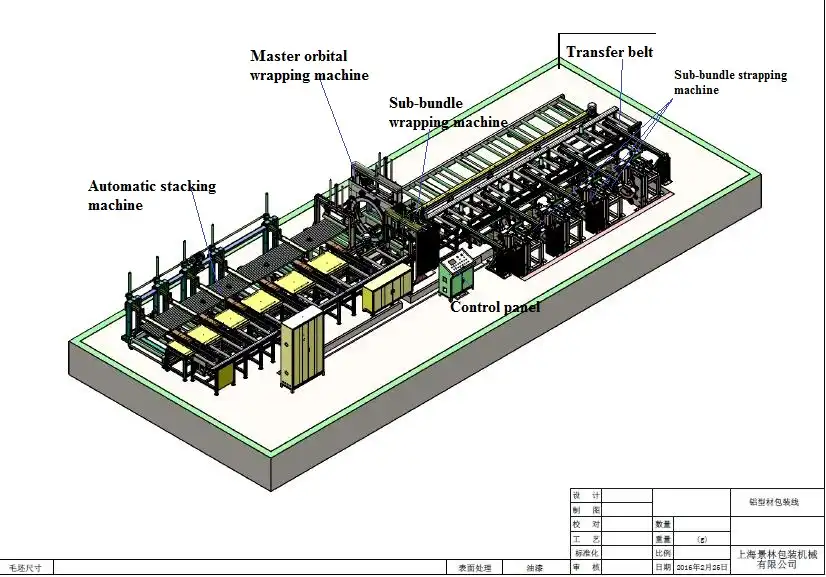

Understanding these customization possibilities is crucial for any business aiming to upgrade its packaging process. This guide will explore the key areas where you can tailor a slit coil packaging line. It will help you achieve a packaging solution that truly performs for your unique production environment.
How Can a Slit Coil Packaging Line Adapt to Diverse Product Types and Sizes?
Many steel mills produce a wide array of coil types and sizes. They face significant challenges when their packaging lines cannot quickly adjust. This often causes bottlenecks and manual interventions. You might wonder how a single packaging line can handle everything from delicate aluminum to heavy steel.
A customized slit coil packaging line adapts to diverse product types and sizes by incorporating modular designs and intelligent adjustment systems. These features allow for quick changes between different coil dimensions and material properties. This ensures seamless processing without needing extensive manual reconfigurations.


My journey in the packing machine industry has shown me how vital flexibility is. When I first started FHOPEPACK, I saw many factories struggling with fixed lines. They could only handle one product type efficiently. We designed our systems to avoid this limitation. For example, a client like Ivan Petrov, managing a steel mill in Russia, needs to pack cold-rolled, galvanized, and color-coated coils. Each has different handling and protection needs. Our customization focuses on making these transitions smooth. We use several key features to achieve this adaptability:
- Adjustable Mandrels and Core Holders: These components can expand or contract to securely grip coils with varying inner diameters. This flexibility is critical for operations where coils from different slitting lines might have slightly different core sizes. This allows for broad compatibility.
- Modular Conveyor Systems: Sections of the conveyor can be easily reconfigured or replaced to accommodate different coil widths and weights. Heavy-duty roller conveyors manage steel coils up to 3 tons, while gentler belts handle more delicate materials like brass or aluminum. This ensures product integrity during movement.
- Automatic Coil Centering Devices: Sensors detect the coil’s position and automatically center it on the packaging station. This is vital for consistent wrapping and strapping, regardless of minor variations in coil placement. It reduces operator error.
- Height-Adjustable Packaging Stations: The entire strapping or wrapping station can adjust its height to match the outer diameter of the coil. This prevents uneven tension or gaps in the packaging materials, ensuring a tight, secure pack every time. This is especially important for anti-rust protection.
- Parameter Storage and Recipe Management: Modern control systems allow operators to save specific settings for different coil types. When switching products, they simply select a “recipe,” and the machine adjusts itself. This minimizes downtime and training needs. It enhances overall operational flexibility. (Coil packaging flexibility, product diversity handling)
What Automation Levels Can Be Integrated into a Slit Coil Packaging System?
Manual handling and packaging of slit coils present many problems. These include high labor costs, risks of injury, and inconsistent quality. It makes you think if there is a way to make the process almost entirely self-sufficient. Many businesses wonder how much automation they can realistically achieve in their current setup.
Slit coil packaging systems can integrate various levels of automation. These range from semi-automatic assist functions to fully automatic, hands-off operations. This includes automated coil handling, strapping, wrapping, labeling, and even stacking. The goal is to minimize human intervention and maximize throughput.


When I founded FHOPEPACK, my vision was to free clients from repetitive, dangerous tasks. Ivan Petrov’s challenge of labor shortages and high injury rates perfectly illustrates why automation is essential. He needs a system that can run 24/7 with minimal staff. We focus on building solutions that are not just machines, but complete automated workflows. This includes everything from the moment the slit coil leaves the slitter to when it is ready for shipment. Here are the common levels of automation we integrate:
- Semi-Automatic Systems: These systems automate key steps, but still require an operator for certain tasks. For example, a machine might automatically wrap a coil, but an operator might manually load the coil onto the conveyor or cut the film. This is often a first step for companies moving away from entirely manual processes. It reduces physical strain.
- Fully Automatic Strapping and Wrapping: This is a core component of advanced lines. Coils move automatically into position. The machine then applies steel or PET straps, and stretch or shrink film, without human touch. Sensors ensure correct tension and overlap. This eliminates inconsistencies caused by manual labor. It also significantly speeds up the process.
- Automatic Coil Handling and Conveyance: This involves automated trolleys, walking beams, or roller conveyors that transport coils through the entire line. It includes automatic turning or tilting devices to orient the coil for packaging. This removes the need for forklifts in the immediate packaging area. It greatly improves safety.
- Integrated Labeling and Data Management: Automated label applicators print and attach labels with barcodes, product information, and shipping details. These systems can integrate with a steel mill’s ERP or MES. This allows for real-time tracking and data exchange. It ensures compliance for export customers.
- Robotic Palletizing and Stacking: After packaging, robotic arms can automatically pick and place packaged coils onto pallets or into storage. This is the highest level of automation. It handles heavy items safely and consistently. It completes the entire process from production to dispatch readiness. (Industrial packaging automation, automated coil handling)
How Can Specific Packaging Materials and Methods Be Customized for Protection?
Customers expect their slit coils to arrive in perfect condition. This means protecting them from rust, scratches, and moisture during transit and storage. Ivan Petrov’s export clients, for example, require strict CE/ISO certified packaging. Standard, one-size-fits-all packaging methods often fall short. This raises the question of how to ensure optimal protection for varied products.
Specific packaging materials and methods are customized for protection by selecting and integrating tailored strapping, wrapping, and covering solutions. These solutions address critical factors like moisture resistance, rust prevention, and scratch protection. The choice of materials and application techniques depends heavily on the coil’s end-use and transport conditions.
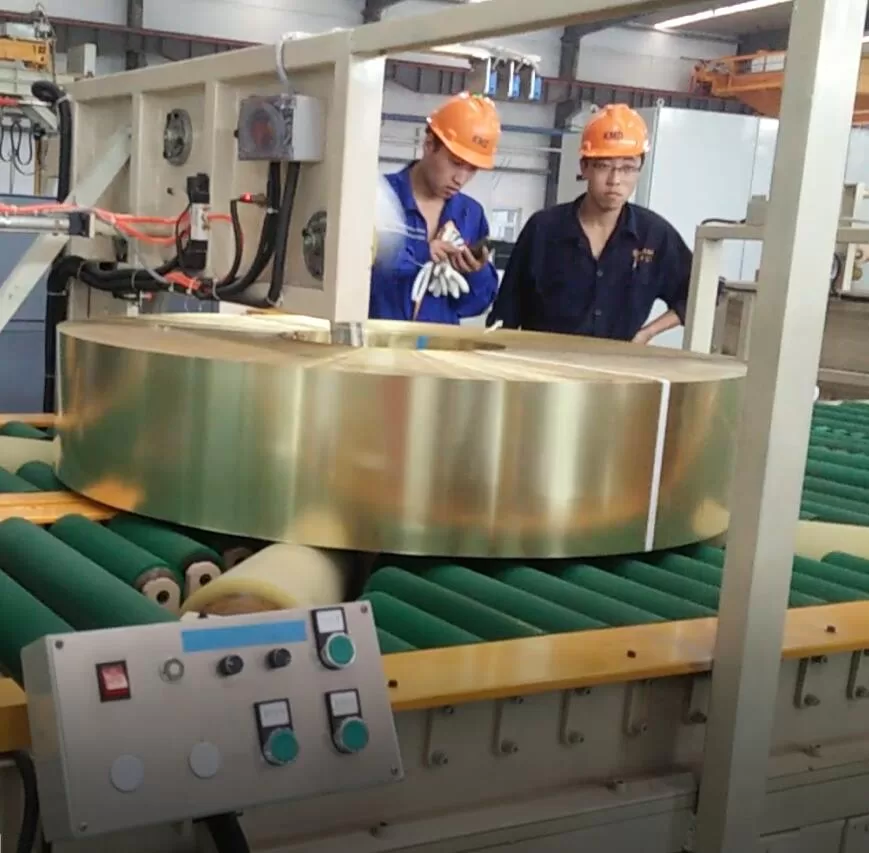

At FHOPEPACK, we understand that “good enough” is not good enough when it comes to product integrity. My experience has taught me that the right packaging can save clients from costly returns and damaged reputations. Ivan needs packaging that meets rigorous export standards. This means combining different layers of protection. We consult with clients to identify the best combination of materials and methods for their specific needs, considering factors like material type, transport route, and storage environment. Here are key customization options for protection:
- Strapping Material Selection:
- Steel Strapping: This provides maximum strength and security for heavy steel or galvanized coils. It is highly resistant to cuts and abrasions. We ensure our strapping machines apply it with consistent tension.
- PET (Polyester) Strapping: This is often used for lighter coils or when avoiding scratching the coil surface is critical. It offers high elasticity and strength while being more forgiving than steel. It is also resistant to corrosion.
- Wrapping Film Options:
- Stretch Film: This is the most common for dust and moisture protection. Multi-layer stretch film offers superior puncture resistance. It conforms tightly to the coil. We use automatic tension control for consistent overlap.
- VCI (Volatile Corrosion Inhibitor) Film/Paper: This material releases chemical compounds that prevent rust on metal surfaces. It is essential for coils prone to corrosion during long-term storage or sea transport. It forms a protective atmosphere inside the package.
- Shrink Film: This film is heated after application to shrink tightly around the coil. It provides a very secure and visually appealing package. It offers enhanced protection against dirt and moisture.
- Edge Protection and Dunnage:
- Cardboard or Plastic Edge Protectors: These are placed under the strapping to prevent the strap from damaging the coil edges. They absorb impacts and distribute pressure.
- Wooden or Composite Dunnage: These are used for supporting coils during transport. They prevent shifting and provide cushioning. They are customized for specific coil diameters.
- Vacuum Packaging: For very sensitive materials like precision copper or brass strips, vacuum packaging removes air. This prevents oxidation and ensures absolute cleanliness. It extends shelf life. (Coil rust prevention, moisture-proof coil packaging)
What Safety and Efficiency Features Are Available for Custom Coil Packaging Lines?
Operating heavy machinery in a bustling production environment always carries safety risks. Manual handling of heavy slit coils can lead to severe injuries. Furthermore, inefficient processes reduce output and increase operational costs. Businesses like Ivan Petrov’s steel mill constantly seek ways to improve both safety and efficiency. They need to know what features can help.
Custom coil packaging lines incorporate numerous safety and efficiency features. These include advanced interlocking systems, automatic fault detection, reduced manual intervention through automation, and ergonomic designs. These features aim to minimize workplace accidents, lower labor intensity, and optimize overall production throughput.
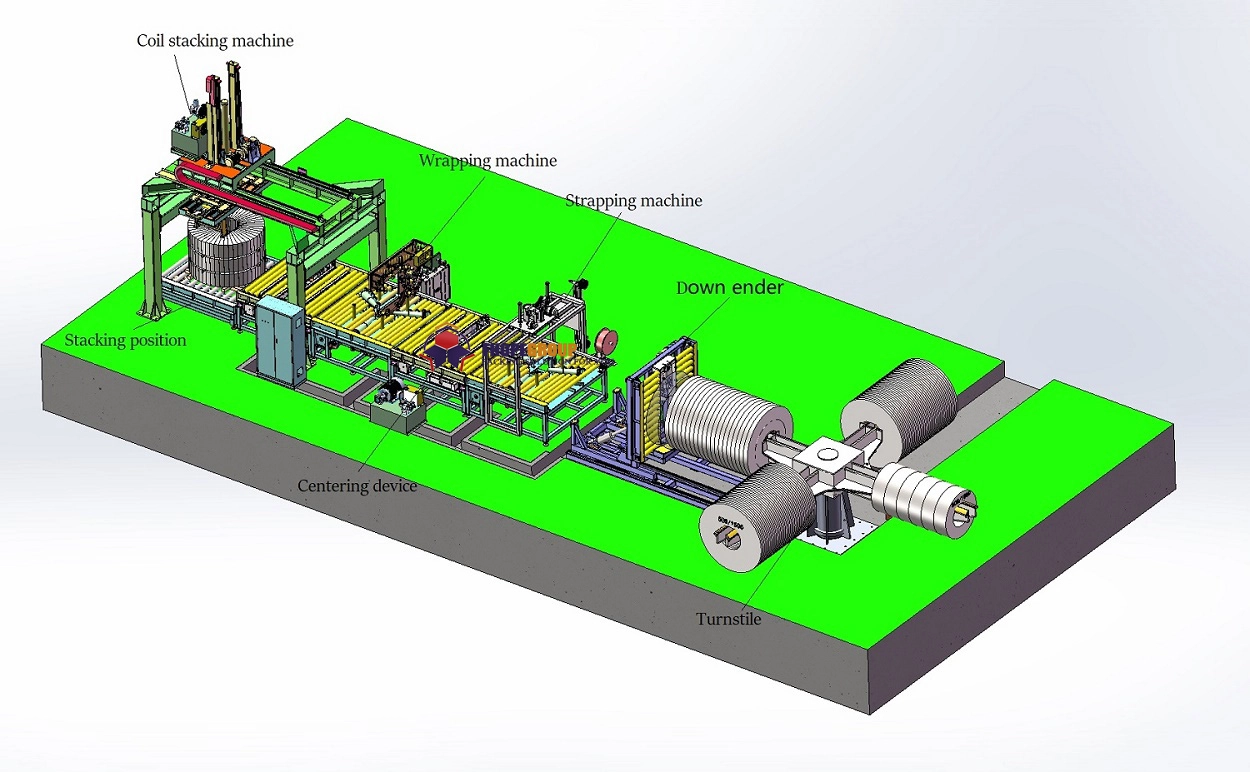

Safety is always my top priority. When designing packaging solutions at FHOPEPACK, I think about the workers on the floor. I recall seeing many dangerous manual operations early in my career. This drives my commitment to creating safer systems. Ivan’s concern about high injury rates and young worker turnover is common. Our customized lines address these issues directly. They replace hazardous manual tasks with reliable automation. This not only protects employees but also makes the entire operation more efficient. Here are some key features:
- Integrated Safety Interlocks: These systems prevent machine operation if safety guards are open or if personnel are in hazardous zones. Light curtains, emergency stop buttons, and safety gates are standard. They cut power instantly in unsafe conditions. This protects operators from moving parts.
- Automated Coil Handling and Positioning: Manual crane or forklift operations for heavy coils are risky. Our lines use automated trolleys, conveyor systems, and coil turnovers. These precisely move coils into position without human contact. This drastically reduces crushing or dropping hazards. It also reduces physical strain on workers.
- Fault Detection and Diagnostics: Sensors throughout the line monitor machine performance. They detect issues like film breaks, strap jams, or motor overloads. The system then alerts operators and can even shut down safely. This prevents larger breakdowns and facilitates quick troubleshooting. It ensures continuous operation.
- Reduced Manual Strapping and Wrapping: High-tension strapping and repetitive wrapping by hand are physically demanding. They lead to fatigue and potential injuries. Full automation of these tasks eliminates these risks. It frees workers for supervisory or maintenance roles. It improves overall comfort.
- Ergonomic Design and Accessibility: Maintenance points are designed for easy and safe access. The HMI (Human Machine Interface) is intuitive and placed at a comfortable height. This minimizes bending or stretching for operators. Good lighting and clear pathways around the machinery also contribute to a safer environment. (Industrial safety features, production line efficiency)
How Do Advanced Control Systems and Data Integration Enhance Customization?
In today’s fast-paced industrial world, businesses need more than just machines. They require intelligent systems that can communicate, adapt, and provide valuable insights. A basic packaging line often operates in isolation. This makes it hard to manage production flow or react quickly to problems. You might be wondering how to make your packaging line a truly smart part of your operation.
Advanced control systems and data integration greatly enhance customization in slit coil packaging lines. They achieve this through programmable logic controllers (PLCs), human-machine interfaces (HMIs), and seamless connectivity with plant-wide systems like ERP or MES. These features allow for flexible recipe management, real-time performance monitoring, and predictive maintenance capabilities.
My philosophy at FHOPEPACK is that a machine’s true power comes from its intelligence. When I talk to clients like Ivan Petrov, I hear about the need for a “seamless, stable, overall solution.” This means more than just moving coils. It means a system that understands the entire production picture. Our advanced control systems are the brain of the operation. They enable the line to adjust, report, and even predict issues. This is how we bring smart customization to life:
- Programmable Logic Controllers (PLCs): These are the core of any automated line. PLCs execute complex sequences for strapping, wrapping, and handling. They ensure precise timing and coordination between all machine components. Our PLCs are programmed to handle diverse product recipes, allowing for instant adjustments based on coil type. This adaptability is key for a multi-product steel mill.
- Human-Machine Interfaces (HMIs): HMIs provide a user-friendly touch screen interface for operators. They offer intuitive controls, real-time status displays, and error messages. Operators can easily select packaging recipes, monitor throughput, and troubleshoot minor issues. This reduces training time and empowers the workforce. It makes operations simpler and more accessible.
- SCADA (Supervisory Control and Data Acquisition) Integration: SCADA systems allow for centralized monitoring and control of the entire packaging line, and even multiple lines. They collect vast amounts of data on production rates, material usage, and machine uptime. This data is critical for performance analysis and continuous improvement. It provides a holistic view of the packaging operation.
- Integration with ERP/MES Systems: Our control systems can connect directly with a client’s Enterprise Resource Planning (ERP) or Manufacturing Execution System (MES). This allows for automatic order processing, inventory updates, and production scheduling. It streamlines the entire supply chain. It eliminates manual data entry and reduces administrative errors. This ensures data consistency.
- Remote Diagnostics and Support: Modern control systems allow FHOPEPACK engineers to connect remotely to the machine for diagnostics and software updates. This means faster troubleshooting and minimal downtime. It provides critical support for clients worldwide, ensuring their lines run smoothly. This remote capability is a huge benefit for international clients like those in Russia. (Smart packaging solutions, industrial data integration)

Conclusion
Customization is not just an option for slit coil packaging lines; it is a necessity for modern industrial efficiency. Tailoring your line to specific product types, automation levels, and protective measures ensures optimal performance. It boosts safety and integrates your operations seamlessly. As Randal Liu, I believe a truly customized coil packing line from FHOPEPACK helps businesses achieve their goals and master packaging.











