
What Are the Environmental Benefits of Using PVC Pipe Bagging Machines?
PVC pipe bagging machines are crucial for efficient packaging, but their environmental impact is a growing concern. Understanding the eco-advantages of these machines is essential for [Collection] and responsible manufacturing.
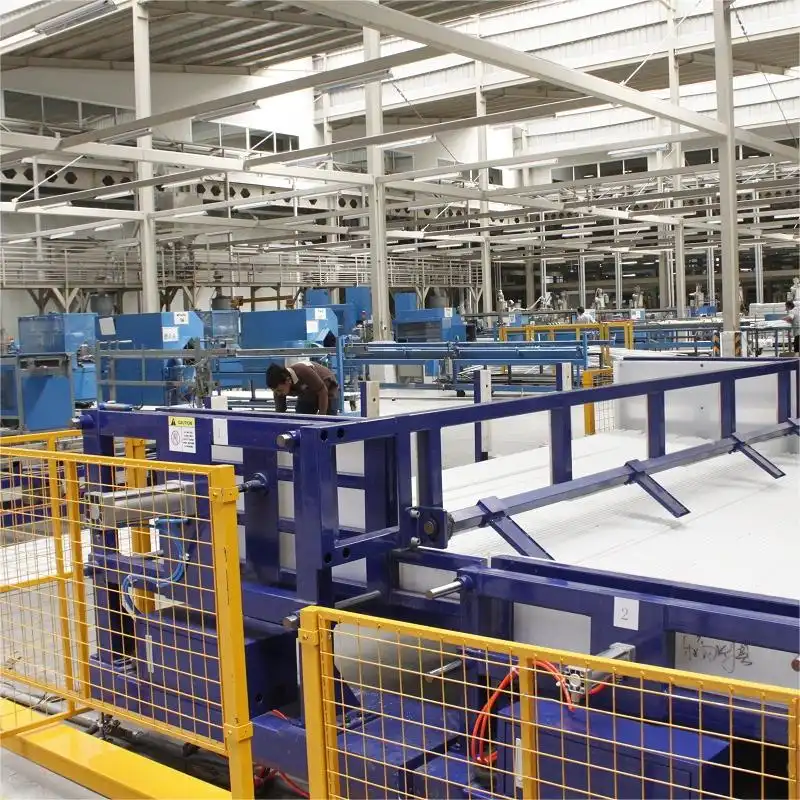
PVC pipe bagging machines offer significant environmental benefits by reducing waste through optimized material usage, minimizing energy consumption with efficient designs, and promoting the use of sustainable packaging materials. These machines also decrease product damage, further cutting down on waste and resource depletion.
As the PVC pipe industry seeks to minimize its environmental impact, let’s delve into the specific benefits of using automated bagging systems and explore how these machines can contribute to a greener future.
1. Reducing Plastic Waste through Optimized Material Use
PVC pipe bagging machines can significantly minimize plastic waste generation by optimizing packaging material usage. This involves using thinner films, right-sizing packaging, and employing advanced waste reduction technologies.
PVC pipe bagging machines reduce plastic waste by ensuring precise packaging dimensions and minimizing excess material. Automated systems use only the necessary amount of film, significantly reducing waste compared to manual methods. Furthermore, many modern machines are compatible with thinner, stronger films, further decreasing material consumption without compromising product protection. This optimized material use directly translates to lower waste generation and reduced environmental impact.
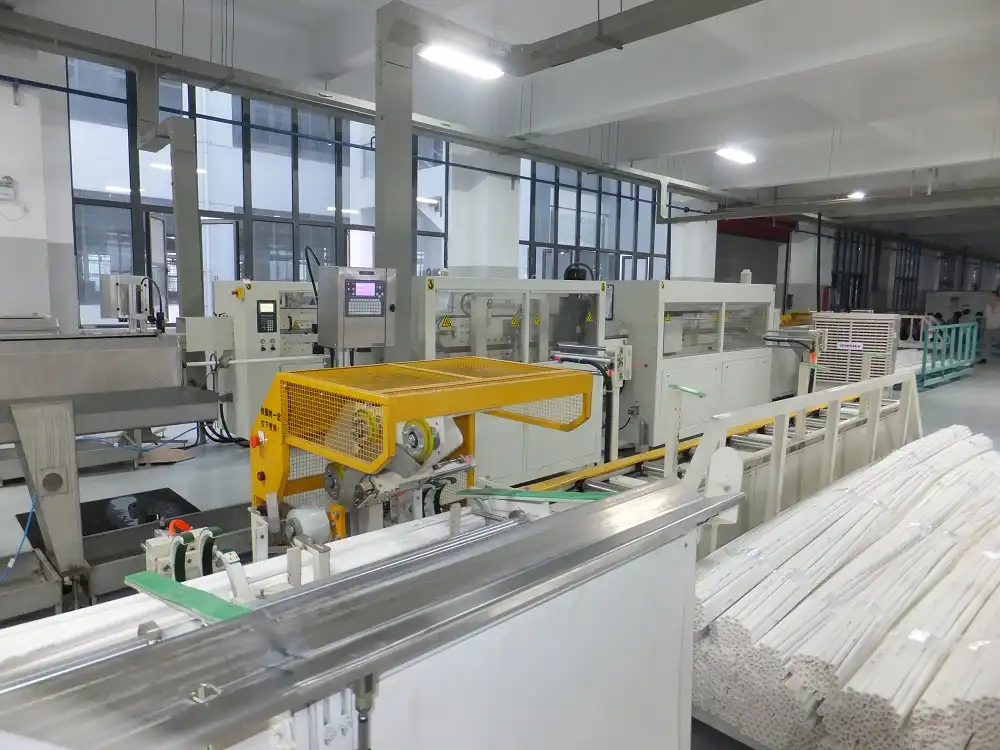
The Impact of Film Thickness and Packaging Size on Waste Reduction
Automated bagging systems offer precise control over film thickness and packaging size, leading to significant reductions in plastic waste. By understanding the quantifiable benefits of these optimizations, PVC pipe manufacturers can make informed decisions about adopting more sustainable practices.
Down-Gauging: Using Thinner Films
Down-gauging involves reducing the thickness of the plastic film used in bagging while maintaining the necessary strength and protection. This can be achieved through advancements in film technology, allowing for thinner yet stronger materials.
| Film Gauge (Thickness) | Material Usage per 1000 Bags | Material Reduction vs. 60 Gauge |
|---|---|---|
| 60 Gauge | 100 kg | – |
| 50 Gauge | 85 kg | 15% |
| 40 Gauge | 70 kg | 30% |
As the table illustrates, even a small reduction in film gauge can lead to substantial material savings. Switching from a 60-gauge film to a 40-gauge film can reduce material usage by 30%, significantly decreasing the amount of plastic waste generated.
Right-Sizing: Optimizing Packaging Dimensions
Right-sizing involves tailoring the packaging dimensions to the specific size and shape of the PVC pipes being bagged. This minimizes the amount of excess material used, reducing waste and improving storage efficiency. Automated bagging machines with variable bag size capabilities can automatically adjust the bag size based on the pipe dimensions, ensuring optimal material usage.
Consider the following example:
- Manual Packaging: Using a standard bag size for all pipe bundles, resulting in excess material for smaller bundles.
- Automated Bagging: Automatically adjusting the bag size to fit each bundle, reducing material waste by 15-20%.
By implementing down-gauging and right-sizing strategies, PVC pipe manufacturers can significantly reduce their plastic waste generation, contributing to a more sustainable and environmentally friendly operation. These optimizations not only benefit the environment but also result in cost savings through reduced material consumption.
Waste Reduction Technologies: Pellet and Vacuum Packing
Pellet packing and vacuum packing are examples of advanced waste reduction technologies that some PVC pipe manufacturers use.
Pellet Packing: This method uses loose pellets instead of films for some applications, which can reduce material waste.
Vacuum Packing: This technology removes air from packages to reduce volume and the amount of material needed for secure bundling.
2. Minimizing Energy Consumption with Efficient Designs
PVC pipe bagging machines can be designed to minimize energy consumption through the use of energy-efficient components, optimized operational processes, and intelligent control systems.
PVC pipe bagging machines reduce energy consumption through servo-driven systems, standby modes, and smart controls. These features minimize electricity use during operation and idle periods. Regular maintenance further ensures machines operate at peak efficiency, preventing energy waste due to malfunctions. By adopting these designs, manufacturers can significantly lower their carbon footprint and reduce energy costs.
Exploring Energy-Saving Technologies in Bagging Machinery
Investing in energy-efficient bagging machines can significantly reduce electricity consumption, contributing to a lower carbon footprint and reduced energy costs.
Servo-Driven Systems: Efficiency in Motion
Servo-driven systems offer more precise and energy-saving operation compared to traditional pneumatic systems. Servo motors consume energy only when needed, reducing idle energy consumption and improving overall efficiency. Pneumatic systems, on the other hand, often require continuous compressed air supply, leading to higher energy consumption.
Standby Modes and Smart Controls: Reducing Idle Energy
Bagging machines equipped with standby modes and smart controls can automatically reduce energy consumption during idle periods. Standby modes put the machine into a low-power state when not in use, while smart controls optimize energy usage based on real-time production needs.
Regular Maintenance: Ensuring Peak Efficiency
Regular maintenance is crucial for ensuring that bagging machines operate at peak efficiency. Proper lubrication, timely repairs, and regular inspections can prevent energy waste due to malfunctions and ensure that the machine consumes only the necessary amount of electricity.
Consider the following comparison of energy consumption between different types of bagging machines:
| Machine Type | Energy Consumption per Hour | Energy Savings with Efficient Design |
|---|---|---|
| Traditional Pneumatic Machine | 10 kWh | – |
| Servo-Driven Machine with Standby Mode | 6 kWh | 40% |
This comparison highlights the significant energy savings that can be achieved by investing in energy-efficient bagging machines.
3. Promoting Sustainable Packaging Materials
PVC pipe bagging machines can be adapted to use sustainable packaging materials, such as recycled polyolefins, biodegradable plastics, and paper-based solutions, reducing reliance on virgin fossil resources.
PVC pipe bagging machines promote sustainable packaging by enabling the use of recycled and biodegradable materials. These alternatives minimize plastic waste and reliance on fossil fuels. By transitioning to eco-friendly options, manufacturers reduce their environmental impact and contribute to a circular economy, fostering responsible and sustainable practices in the PVC pipe industry.
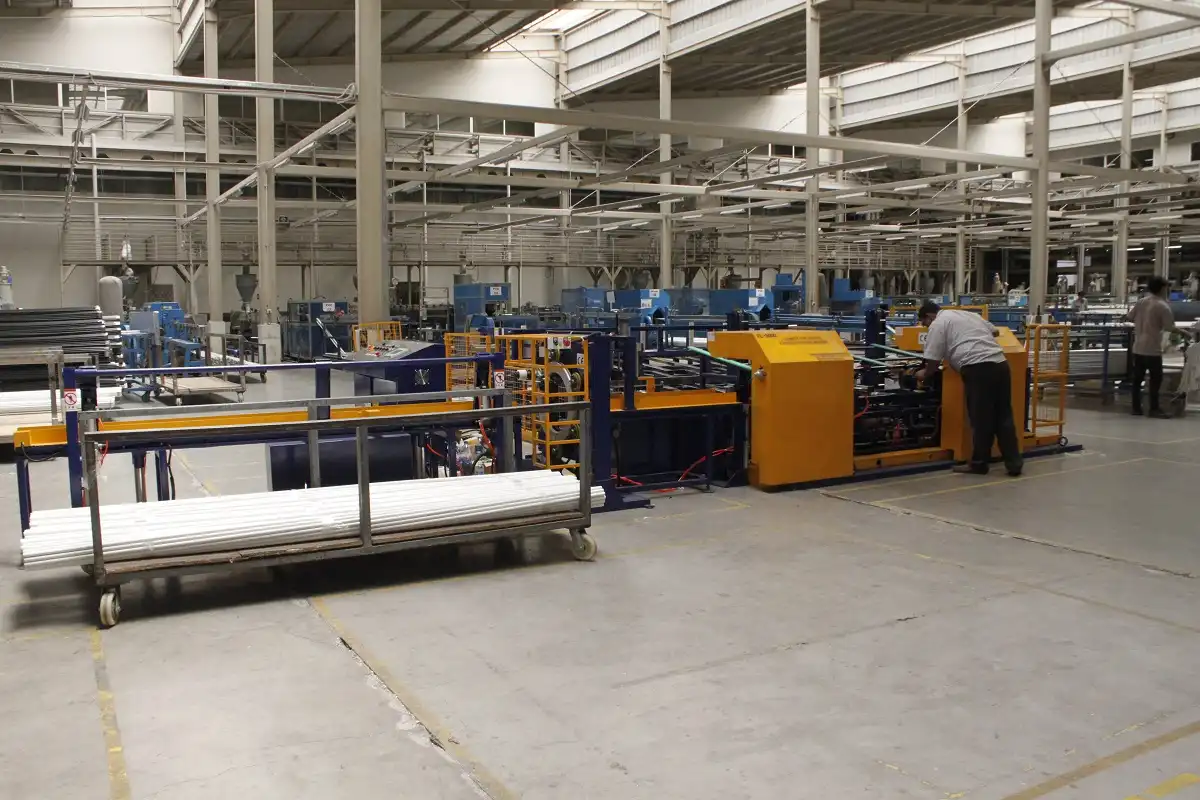
Evaluating Sustainable Alternatives for PVC Pipe Bagging
Transitioning to sustainable packaging materials is a crucial step towards reducing the environmental impact of PVC pipe bagging machines. This involves exploring and adopting materials that minimize waste, reduce reliance on fossil fuels, and promote circularity.
Recycled Polyolefin Films: Closing the Loop
Recycled polyolefin films, made from materials like polyethylene (PE) and polypropylene (PP), offer a significant step towards sustainability. These films:
- Reduce Virgin Plastic Use: Utilize post-consumer or post-industrial recycled plastics, decreasing the demand for new plastic production.
- Lower Carbon Footprint: Recycling processes generally consume less energy than producing virgin plastics.
- Maintain Performance: Recycled polyolefins can offer comparable strength and protection to virgin PVC for many applications.
Biodegradable and Compostable Films: Nature-Friendly Disposal
Biodegradable and compostable films, often made from plant-based materials like polylactic acid (PLA) or cellulose, are designed to decompose in specific environments. Key benefits include:
| Film Type | Biodegradability | Compostability |
|---|---|---|
| PLA | Yes (under specific conditions) | Yes (industrial composting) |
| Cellulose | Yes | Yes |
| Recycled PE | No | No |
Paper-Based Wraps and Alternatives: Back to Basics
Paper-based wraps and cardboard alternatives offer a more traditional yet increasingly relevant sustainable option.
By adopting sustainable packaging materials, PVC pipe manufacturers can significantly reduce their environmental footprint and contribute to a more circular economy.
4. Reducing Product Damage and Waste
PVC pipe bagging machines help reduce damage during handling and transit, resulting in fewer rejected or returned products and less material waste from both damaged pipes and packaging materials.
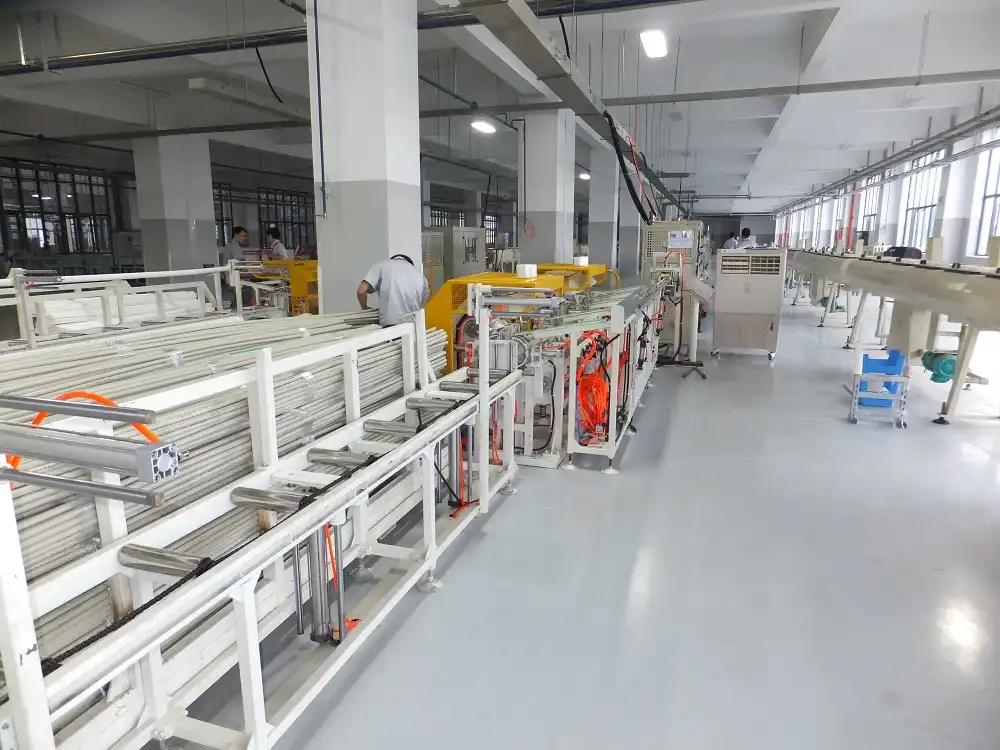
The reduction of damage from a high-quality PVC pipe bagging machine is extremely important to the environment. These factors dramatically influence a reduction in product rejection rates due to damage and wastage of material. By limiting your environmental impact, you are also saving money.
PVC pipe bagging machines reduce product damage by providing secure and consistent packaging. Automated systems minimize handling and ensure tighter wrapping, protecting pipes during transit. This reduces the number of rejected or returned products, minimizing material waste from damaged pipes and packaging materials, ultimately contributing to significant cost savings and improved sustainability.
The most significant of these is limiting damage to the environment by providing sustainable packaging. Below are the steps that PVC pipe manufacturers can take.
The most significant factor can be achieved by using Tighter wrapping methods, this will reduce the damage during handling and transit, resulting in fewer rejected or returned products. Also, minimizing waste from both damaged pipes and packaging materials is achieved by adapting recyclable or reusable products.
PVC pipe bagging machines help the implementation of strategies that minimize damage and waste. They contribute to significant gains to both cost savings and enhanced sustainability in PVC pipe operations. Reducing waste is not just about saving money, but also about responsible manufacturing.
Conclusion
PVC pipe bagging machines offer a compelling solution for enhancing environmental responsibility in PVC pipe manufacturing. By reducing waste, minimizing energy consumption, promoting sustainable materials, and decreasing product damage, these machines provide quantifiable environmental benefits. Embracing these technologies is essential for manufacturers seeking a greener, more efficient, and sustainable future. These combined efforts contribute to long-term cost savings and improved brand reputation in an environmentally conscious market.








