
Vertical steel coil packing line Vs. Horizontal steel coil packing line: Which is Right for Your Plant?
Is your steel plant struggling with inefficient coil packing? Are you facing worker shortages, inconsistent packaging quality, and rising client demands for perfect, export-ready coils? Many plant managers, like Ivan in Russia, tell me these challenges hit production schedules and your bottom line hard. You know that a wrong packing solution can lead to costly delays, customer complaints, and even lost contracts. But what if you could streamline your operations, ensure top-tier packaging, and keep your team safe? The answer often lies in choosing the right type of packing line.
Choosing between a vertical steel coil packing line and a horizontal steel coil packing line is a critical decision for any steel plant, directly impacting efficiency, safety, and the quality of your finished products. A vertical packing line typically handles coils on their side (eye-to-sky), often used for smaller or slit coils, allowing for compact layouts and easier overhead crane integration for loading. In contrast, a horizontal packing line deals with coils lying on their circumference (eye-to-wall), commonly used for larger, heavier coils, offering robust stability during wrapping and strapping processes, especially for high-speed applications. The best choice depends on your specific coil dimensions, production volume, available space, and desired level of automation and protection.
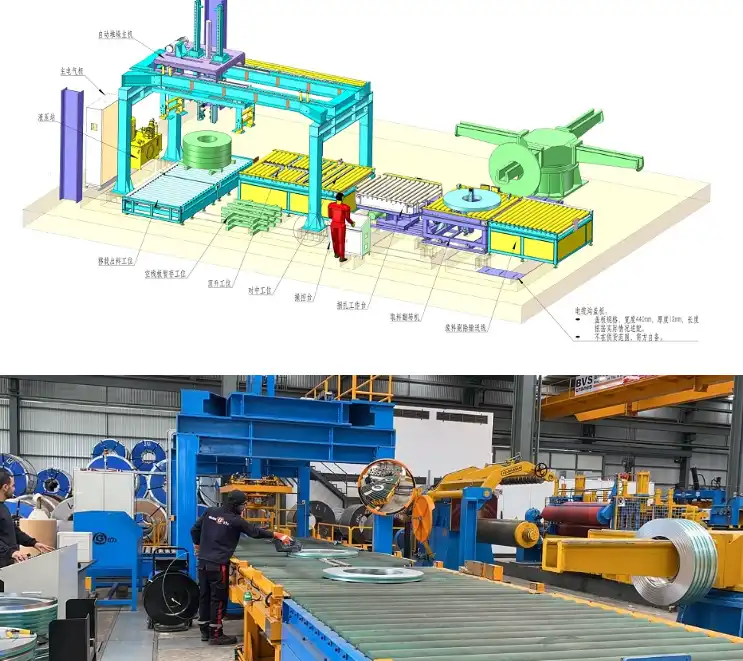
Understanding these fundamental differences is just the start. My journey in the packing machine industry, from an engineer to founding FHOPEPACK, has taught me that the right solution is always customized. Let’s dive deeper into how vertical and horizontal lines perform across key areas that matter most to your operations. This will help you make an informed choice for your plant’s future.
1. Vertical vs. Horizontal: What Makes Them Different?
Are you curious about the core distinctions between vertical and horizontal coil packing lines? It is not just about how a coil sits. These differences shape your entire packing process. Ignoring these fundamental design principles can lead to unexpected operational bottlenecks and higher costs later on.
The main difference between vertical and horizontal steel coil packing lines lies in how they orient and handle the steel coils during the packaging process. A vertical packing line keeps the coil positioned with its eye facing upwards (eye-to-sky), making it suitable for coils typically loaded and unloaded by overhead cranes. Conversely, a horizontal packing line handles the coil with its eye facing sideways (eye-to-wall), often integrated with conveyor systems for seamless flow and ideal for automated strapping and wrapping when coils roll into position.

When I first started in the packing machine factory, I saw firsthand how engineers designed these machines. The orientation is key. It dictates everything from loading to the final package quality. Let’s break down these foundational differences.
-
Coil Orientation and Handling:
- Vertical Lines: These lines keep your steel coil standing upright. Think of it like a roll of paper towels standing on its end. This “eye-to-sky” position is common for slit coils or smaller cold-rolled coils, often weighing from 1 to 3 tons. Loading usually involves an overhead crane or a C-hook. The packing machine works around the coil’s circumference while it rotates on a turntable. This method is often favored when space is a premium. It can also simplify stacking later on if coils are stored vertically. However, it requires precise crane operation to load and unload each coil. This can introduce slight delays between packing cycles ⏳. For Ivan Petrov’s steel plant in Russia, handling hundreds of tons daily, even small delays can add up. My experience shows that minimizing manual intervention is crucial for high-volume operations.
- Horizontal Lines: With a horizontal line, coils lie flat on their side. This is the “eye-to-wall” position. It is like a tire lying flat. This setup is generally used for heavier, larger master coils, but it also works for slit coils. Coils typically roll into the packing station on robust conveyors. This allows for a continuous, automated flow directly from the production line 👍. Wrapping and strapping machines work directly around the coil’s outer diameter. This continuous motion reduces the need for frequent crane movements at the packing station. It enhances safety by minimizing manual handling of heavy coils. For Ivan, who faces labor shortages and seeks to reduce worker injury, this aspect is very attractive. The stability of horizontal coils during wrapping can also contribute to more consistent packaging tension.
-
Space Requirements and Layout:
- Vertical Lines: They often have a smaller footprint on the factory floor. This is because the coil stands upright. The packing machine is more compact. This makes them a good choice for plants with limited floor space. However, they need more overhead clearance for crane operations. The entire packaging process, including strapping and wrapping, happens within a smaller ground area. This can be beneficial in older plants or those with restricted layouts.
- Horizontal Lines: These lines generally need more linear space. This is because coils move on conveyors. The strapping and wrapping machines are positioned along the line. They require space for the infeed and outfeed conveyors. This linear layout allows for easier integration into existing production lines. It supports higher throughput with continuous material flow. While they take up more floor length, they might offer better overall flow for high-volume operations. This can reduce bottlenecks in a busy production area like Ivan’s cold rolling and slitting workshops.
-
Loading and Unloading Mechanisms:
- Vertical Lines: Primarily rely on overhead cranes or specialized coil cars. The coil is picked up, placed onto a turntable, packed, and then removed. This process requires a dedicated operator for the crane. It adds a manual step.
- Horizontal Lines: Often integrate seamlessly with roller conveyors. Coils can be pushed or rolled directly from the production line. They move into the packing station automatically. This eliminates manual loading and unloading at the packing point. It reduces labor intensity and improves safety. My clients often prioritize this level of automation to counter labor shortages.
2. Space, Speed, and Flow: How Do They Impact Your Production?
Are you struggling to optimize your factory layout for peak efficiency? Do you wonder how your packing line choice affects the overall speed and flow of your production? These factors are not just about the machine itself. They impact your entire steel plant’s output.
The choice between vertical and horizontal steel coil packing lines significantly impacts a steel plant’s available floor space, the speed of its packaging operations, and the overall flow of materials. Vertical lines often require less floor space but more overhead clearance. They can be efficient for batch processing. Horizontal lines demand more linear space for conveyors. They excel in high-speed, continuous flow operations. They integrate seamlessly with automated material handling systems. This makes them ideal for plants needing maximum throughput.
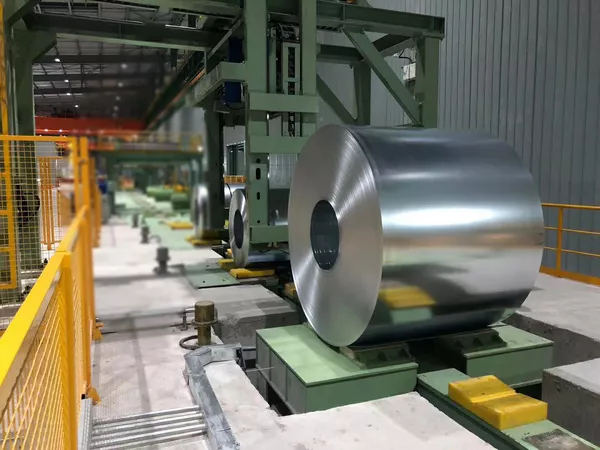
When I consult with clients, especially those managing large volumes like Ivan’s hundreds of tons daily in Russia, space, speed, and flow are always top concerns. An engineer does not just think about one machine. We think about the entire production line. We consider how it affects the movement of coils from slitting to shipping.
-
Optimizing Floor Space:
- Vertical Lines: Imagine your factory floor. A vertical packing machine often has a smaller footprint. It occupies a more compact area. This can be a huge advantage for existing plants with tight spaces. It allows for more efficient use of floor area. However, the requirement for overhead crane access means you need sufficient vertical clearance 🏗️. You also need clear pathways for crane movement. This might limit other overhead activities. My clients in congested industrial zones often look to vertical solutions for this very reason. It helps them fit modern packing into older factory buildings.
- Horizontal Lines: These lines are more linear. They need a longer stretch of floor space. This is for the conveyors that bring coils in and out. While they occupy more length, they can offer a clear path for coil movement. This avoids the need for constant crane operations within the packing zone. It might simplify other material handling tasks in nearby areas. For a new plant or a plant with room for expansion, this linear flow can be very efficient. It avoids crisscrossing traffic.
-
Enhancing Operational Speed and Throughput:
- Vertical Lines: These lines can be fast. But their speed often depends on the efficiency of the coil loading and unloading. If a crane is busy, the packing machine waits. This can create pauses in the flow. For diverse products, like Ivan’s cold-rolled, galvanized, and color-coated coils, switching between different packing requirements can add more manual steps. This further impacts overall speed. For a plant needing to maintain a 24-hour two-shift operation, minimizing these pauses is vital.
- Horizontal Lines: They are designed for continuous flow. Coils move smoothly from the production line to packing, then to storage. This reduces idle time. The automatic transfer means the machine can keep working. This allows for higher throughput. It is excellent for high-volume output 🚀. For operations needing to ship hundreds of tons daily, a horizontal line provides the necessary speed. This consistency helps avoid shipping delays. It supports client requirements for on-time delivery. It helps prevent those costly contract penalties Ivan worried about.
-
Integrating with Production Flow:
- Vertical Lines: They are often separate stations. Coils are brought to them. Then they are moved away. This can be efficient for smaller batches or specialized packing. But it might require buffer zones for coils waiting to be packed or moved. This can create staging areas that take up additional space.
- Horizontal Lines: They integrate directly into the production line. This means coils move seamlessly. They go from slitting or cold rolling to the packing station. Then they go to warehousing. This direct flow minimizes handling. It reduces the risk of damage. It ensures a smooth transition. This level of automation is what my clients, like Ivan, are looking for. It reduces manual interventions. It increases consistency. It helps them achieve their goals of higher automation.
3. Protecting Your Products: Which Line Ensures Superior Packaging Quality?
Are you worried about your steel coils getting damaged during transport? Do your export clients demand perfect, rust-free, and scratch-proof packaging? Packaging quality is not just a detail. It is a critical factor for customer satisfaction and avoiding costly returns.
Ensuring superior packaging quality for steel coils, especially for export markets and diverse product types, depends on the capabilities of both vertical and horizontal packing lines to apply protective materials consistently. Vertical lines can excel in specialized wrapping applications where the coil’s upright position offers unique access for specific film wraps or anti-corrosion treatments. Horizontal lines, with their robust support and continuous rotation, are often favored for applying high-tension strapping and full-surface stretch wrapping, providing comprehensive moisture and physical damage protection essential for heavy coils and long-distance shipping.

From my years in the packing machine industry, I have seen how poor packaging can ruin a perfect product. For Ivan Petrov, whose steel plant produces cold-rolled, galvanized, and color-coated coils, the stakes are very high. Export clients, especially those requiring CE/ISO certification, demand flawless protection. This is not just about aesthetics. It is about preventing rust, scratches, and damage.
-
Moisture and Rust Protection:
- Vertical Lines: For vertical coils, anti-rust paper or VCI film can be applied while the coil rotates on its turntable. This method provides good coverage. However, the “eye-to-sky” position might require additional measures to protect the inner and outer diameters fully from moisture ingress, especially at the top. Some advanced vertical lines incorporate specialized wrapping heads that can cover the full circumference and even partially seal the eye. The consistency of this wrap depends on the machine’s tension control. For Ivan’s concern about inconsistent quality from manual operations, an automated vertical line can provide much better, even tension.
- Horizontal Lines: These lines typically offer excellent full-surface coverage for moisture protection. As the coil moves on rollers, it can be seamlessly wrapped with multiple layers of stretch film or VCI film. The stable “eye-to-wall” position allows for very consistent film tension and overlap. This creates a strong barrier against moisture and dust 💧. This is critical for galvanized and color-coated coils that are susceptible to surface damage and corrosion. Many of my clients, when shipping to harsh climates or for long sea voyages, prefer the robust seal provided by horizontal wrapping. This helps them meet strict export requirements, like those needed for CE/ISO certification.
-
Scratch and Physical Damage Prevention:
- Vertical Lines: These lines can apply protective materials like edge protectors or radial strapping. This helps secure the coil and prevent telescoping. However, handling vertical coils with C-hooks or overhead cranes still carries a slight risk of surface scratches if not handled perfectly ⚠️. The packing machine itself can be designed to minimize contact with the coil surface during wrapping. The stability of the coil during rotation is important here.
- Horizontal Lines: The continuous conveyor movement means minimal direct handling by external equipment once the coil is on the line. This significantly reduces the risk of accidental scratches or dents. The robust strapping (PET or steel band) applied in the horizontal position ensures the coil’s integrity during transport. This prevents loosening or shifting. This stability is particularly important for heavy coils (1-3 tons) moving through distribution channels. Ivan’s challenge of inconsistent manual packing quality, leading to loose straps, is directly addressed by the precise, automated strapping of a horizontal line.
-
Meeting Diverse Product and Client Requirements:
- Vertical Lines: They can be quite versatile for different coil diameters and weights within their operational range. Switching between different packing materials (e.g., film type, strapping material) can be automated. This supports diversified products. However, some very specific, complex wraps might be easier to achieve with a coil lying flat.
- Horizontal Lines: They are highly adaptable to varying coil dimensions. They handle both slit coils and wider master coils with ease. The ability to integrate automatic labeling and barcoding systems is a huge advantage. This helps meet export client demands for traceable and compliant packaging. For Ivan, who needs to apply barcodes and meet strict CE/ISO standards, a horizontal line with integrated solutions would streamline his process. My experience shows that a well-designed horizontal line offers the flexibility needed for the modern, diverse steel market.
4. Automation, Safety, and Costs: Where Do the Real Savings Lie?
Are you constantly battling labor shortages and rising operational costs? Is workplace safety a top priority for your steel plant? These challenges are common. But choosing the right packing line can turn them into opportunities for significant improvement and savings.
When evaluating steel coil packing lines, their impact on automation levels, worker safety, and overall operational costs is a primary consideration for plant managers aiming for efficiency and profitability. Vertical lines can offer automation benefits in a smaller footprint. However, they may still require more human intervention for loading and unloading. Horizontal lines typically provide a higher degree of full automation. This includes seamless material flow and integrated safety features. This approach drastically reduces manual labor and associated risks. It leads to substantial long-term cost savings in labor, material waste, and accident prevention.
I have seen many plants struggle with the balance of automation, safety, and cost. Ivan Petrov’s concerns about high worker turnover, the need for 24/7 operation, and reducing labor-intensive tasks resonate with nearly every client I talk to. At FHOPEPACK, we believe the best solution not only packs coils but also protects your people and your profits.
-
Boosting Automation Levels:
- Vertical Lines: While some vertical lines are highly automated, particularly for the wrapping and strapping processes, the core handling of the coil (loading and unloading) often remains a point of manual interaction using cranes. This means a dedicated operator is still required at specific points. For lighter coils or batch processing, this can be acceptable. However, for a fully hands-off approach from production to warehouse, vertical lines might require additional automated transfer systems to truly minimize human involvement. My initial projects often involved retrofitting automation into existing crane-dependent systems.
- Horizontal Lines: These lines are often designed for maximum automation. Coils typically move automatically on conveyors. They go through a series of automated stations: weighing, centering, strapping (PET/steel), wrapping (stretch/shrink film), labeling, and even stacking. This end-to-end automation significantly reduces the need for human operators at various stages. It handles the full packaging process without interruption 🤖. This is what Ivan is looking for to elevate his plant’s efficiency. It helps counteract the “high intensity work environment” that leads to “young worker turnover.” The entire process, from entry to exit, can be managed by a few supervisors. This frees up personnel for other critical tasks.
-
Enhancing Workplace Safety:
- Vertical Lines: Handling heavy steel coils (1-3 tons) with cranes always carries inherent risks. While modern cranes have safety features, human error can occur. The “eye-to-sky” position means coils are less stable until secured. This creates a potential hazard during loading and unloading. Reducing these manual lifting and positioning tasks is a key safety goal for many plant managers, including Ivan.
- Horizontal Lines: One of the biggest advantages of horizontal lines is the drastically improved safety. Coils move on sturdy conveyors at ground level. This removes the need for manual crane operations at the packing point. It reduces the risk of falling coils or pinch points associated with manual handling. Automated systems for flipping coils from vertical to horizontal or vice versa also replace dangerous manual tasks. This directly addresses Ivan’s goal of “mechanical replacement of manual lifting, flipping, reducing accident rates” 🛡️. Less manual intervention means fewer opportunities for workplace injuries. This protects your most valuable asset: your employees.
-
Achieving Cost Reductions:
- Vertical Lines: Initial capital investment might be slightly lower for basic vertical machines. However, ongoing operational costs can be higher if they require significant manual labor for handling. Labor costs, especially in regions like Russia where skilled labor for such tasks can be an issue, can add up over time. Material usage can be optimized, but any manual adjustment in wrapping or strapping can lead to waste if not done consistently.
- Horizontal Lines: The initial investment for a fully automated horizontal line can be higher. But the long-term cost savings are often substantial.
- Labor: Drastically reduced labor needs mean lower wages, benefits, and training costs. This helps address labor shortages and reduces overall HR expenses.
- Material Waste: Automated systems apply packaging materials with precision. This minimizes waste from uneven tension or incorrect application. For Ivan, this means less material loss from “inconsistent film tension” or “loose strapping.”
- Operational Continuity: Higher automation means fewer interruptions. This translates to more continuous production, which lowers per-unit costs. It helps prevent “shipping delays, customer complaints, and contract penalties.”
- Safety: Fewer accidents mean lower insurance premiums, less downtime, and no costly injury compensations. My experience shows that the return on investment for safety enhancements is always positive.
Choosing a horizontal line is often a strategic investment for plants focused on high volume, continuous operation, and maximum safety, like Ivan’s. It provides a pathway to lower comprehensive costs in the long run.
My Insight: Choosing the Best Coil Packing Line for Your Steel Plant?
After exploring the details of vertical and horizontal steel coil packing lines, you might still wonder: which one is truly the best fit for your unique operation? The answer is not one-size-fits-all. It requires a tailored approach. Making the right decision can define your plant’s efficiency and profitability for years to come.
Choosing the best steel coil packing line, whether vertical or horizontal, requires a comprehensive evaluation of your plant’s specific needs, including coil types, production volume, available space, desired automation level, and budget. For facilities like Ivan Petrov’s steel plant in Russia, which handles diverse coil types (cold-rolled, galvanized, color-coated) with high output and a strong emphasis on automation, safety, and export-grade quality, a highly automated horizontal coil packing line often provides the most robust and cost-effective long-term solution. This is because it excels in continuous flow, consistent high-quality packaging, and significant labor reduction benefits.

When I founded FHOPEPACK, my mission was to share knowledge and help clients find the best customized packing solution. This is exactly what Ivan, the production director in Russia, needs. It is not just about buying a machine. It is about investing in a system that solves his challenges. Let’s look at key decision factors.
-
Understand Your Coils and Production Demands:
- Coil Characteristics: What are the typical weights (Ivan’s 1-3 tons), inner diameters, and outer diameters of your coils? Are they master coils, slit coils, or both? Smaller, lighter slit coils might find vertical packing viable. Larger, heavier coils usually benefit from the stability of horizontal lines.
- Product Diversity: Ivan produces cold-rolled, galvanized, and color-coated coils. Each has unique protection needs. Will your chosen line efficiently handle quick changeovers for different packing requirements (PET/steel strapping, various films)? Horizontal lines, with modular components, often adapt more easily to diverse packaging materials and processes.
- Volume and Continuity: Do you run a 24/7 operation with hundreds of tons of daily output, like Ivan’s plant? If so, continuous flow is paramount. Horizontal lines are built for this. If your production is lower volume or batch-oriented, a vertical line might still be considered.
-
Evaluate Your Facility and Future Goals:
- Available Space: This is a very practical constraint. Do you have ample linear space for conveyors (horizontal)? Or is your floor space limited, but with good overhead clearance (vertical)? Remember, the best layout optimizes both.
- Automation Level Desired: Do you want to completely eliminate manual handling at the packing stage? Or are you okay with some crane operation? Ivan’s goal is “elevate automation levels” and “guarantee safe production.” This strongly points towards a horizontal, fully integrated solution.
- Safety Imperatives: How critical is it to reduce manual labor and potential accidents? For plants facing high injury risks and worker turnover, mechanical handling offered by horizontal lines is a clear advantage.
-
Consider Your Budget and Long-Term Partnership:
- Initial Investment vs. Operating Costs: A fully automated horizontal line might have a higher upfront cost. But it offers significant long-term savings in labor, material waste, and improved efficiency. Vertical lines might seem cheaper initially, but hidden costs from manual labor or lower throughput can add up.
- After-Sales Support and Reliability: Ivan wants a “long-term partner” who offers “turnkey projects, after-sales training, and spare parts guarantee.” This is where FHOPEPACK shines. We provide comprehensive support. It ensures your investment keeps delivering value. We understand that reliability and continuous work capacity are non-negotiable for a 24-hour, two-shift environment.
Ultimately, for a high-volume steel plant like Ivan Petrov’s, aiming for maximum automation, safety, and export-grade packaging quality, a horizontal steel coil packing line often presents the most robust and future-proof solution. It ensures seamless integration, consistent quality, and a significant reduction in operational challenges.
Conclusion
Choosing the right steel coil packing line is a strategic decision for any steel plant. While vertical lines offer compact solutions, horizontal lines generally excel in high-volume, continuous operations, providing superior automation, enhanced safety, and consistent packaging quality, particularly for diverse export requirements. By carefully considering your specific needs, you can invest in a coil packing line that boosts efficiency, reduces costs, and secures your product’s journey from plant to customer.








