

Understanding Coil Protection with Automatic Coil Packing Machines?
Are you a factory manager, constantly juggling the demands of increased output, cost control, and worker safety? I know that feeling. It is a constant battle. The pressure to keep your production line moving smoothly, with zero downtime, is immense. But what if your current coil packing process is a hidden bottleneck? What if it is not just slowing things down, but also putting your valuable products and your dedicated team at risk? This is a challenge many in heavy manufacturing face, and one I have seen firsthand throughout my journey in the packing machine industry.
Automatic coil packing machines are essential for robust coil protection, shielding industrial coils like steel and wire from physical damage, moisture, and dust during storage and transit. These advanced systems replace risky manual methods, significantly boosting efficiency, enhancing workplace safety, and ensuring product integrity from the factory floor to the customer. By automating the packaging process, businesses achieve consistent, high-quality wrapping, directly reducing material waste and preventing costly customer complaints.


As someone who started on the factory floor and later built a successful packing machine factory, I have seen the evolution of industrial operations. The journey from manual processes to automation is not just about adopting new technology; it is about transforming your business. If you are struggling with outdated packaging methods, you know the stakes are high. Let us dive deeper into how modern automatic coil packing machines can be the game-changer you need, ensuring your products are protected and your operations thrive.
1. Why is Manual Coil Packing a Major Risk for Your Factory Operations?
Imagine your busy factory floor. The hum of machinery, the constant movement. Now, picture your team wrestling with heavy steel coils, trying to manually wrap them. It is a scene many factory managers in places like Mexico are familiar with. But are you truly aware of the hidden costs and dangers this outdated approach brings to your entire operation? The immediate savings you think you get from not investing in automation often disappear quickly when you consider the bigger picture.
Manual coil packing relies on intensive labor, making it slow and highly inefficient. This bottleneck can severely impede overall production and delay delivery schedules. Beyond efficiency, the manual handling of heavy items, such as large steel coils, poses extreme risks of worker injury, which leads to increased insurance costs and high employee turnover rates. Furthermore, manual processes often result in product damage, like scratched coil edges, leading to customer dissatisfaction and financial losses for the factory.
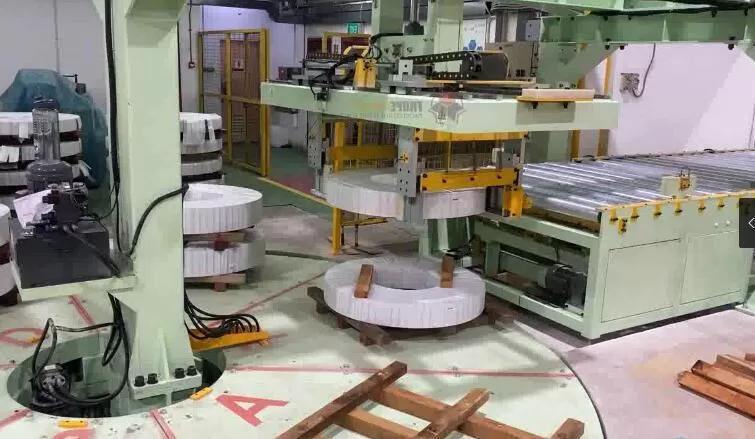

The Unseen Costs of Manual Coil Packaging
I have spent decades in this industry, and I have seen countless factories, large and small, grapple with the challenges of manual packing. When I was starting out, these challenges were just part of the job. However, as technology advanced, it became clear that clinging to manual methods was not just inefficient, it was actively detrimental. For operations managers like Jose, who are tasked with overseeing an entire metal processing plant, these issues translate directly into lost profits and increased headaches.
Here are some critical areas where manual packing creates significant risks and costs:
🚧 Efficiency Bottlenecks & Production Delays
- Slow Speeds: Human hands simply cannot match the speed of a machine. This creates a backlog at the end of your production line, causing delays for other processes.
- Inconsistent Output: Manual wrapping quality varies from person to person, and even from shift to shift. This leads to inconsistent package integrity and a higher chance of reworks.
- Impact on Throughput: If your packing cannot keep up with your production, you are effectively reducing your entire factory’s output. This means fewer products shipped, and less revenue generated. 📉
🤕 Serious Safety Hazards & High Labor Costs
- Heavy Lifting & Repetitive Strain: Workers manually handling heavy coils are at high risk for back injuries, muscle strains, and other accidents. I remember one incident where a coil shifted during manual strapping, leading to a serious leg injury. It was a stark reminder of the dangers.
- Increased Insurance Premiums: A higher incidence of workplace injuries directly translates to higher insurance costs for your business.
- High Employee Turnover: Dangerous, physically demanding jobs often lead to employees seeking safer alternatives, increasing recruitment and training costs.
- Manual Labor Expenses: Wages, benefits, and overtime for a large packing team can quickly add up, especially when compared to the long-term operational costs of an automated system. 💰
📉 Product Damage & Customer Dissatisfaction
- Scratches and Dents: During manual handling, especially when moving coils or flipping them, products are prone to damage. Think of a steel coil edge getting dinged – that is often an immediate customer rejection.
- Inadequate Protection: Manual wrapping might not provide consistent tension or overlap, leaving parts of the coil exposed to moisture, dust, or impact during transit.
- Returns & Reworks: Damaged products lead to costly returns, reworks, and logistical nightmares. This directly impacts your bottom line and reputation.
- Loss of Trust: Repeated issues with damaged goods erode customer trust, potentially leading to lost contracts and a damaged brand image in the competitive industrial market.
| Risk Area | Manual Packing Impact | Automated Solution Potential |
|---|---|---|
| Efficiency | Slow, inconsistent, bottleneck | Fast, consistent, eliminates bottlenecks |
| Safety | High injury risk, high insurance, high turnover | Minimizes human interaction, reduces injury risk, safer environment |
| Product Integrity | Prone to damage, inconsistent protection, customer complaints | Consistent, secure wrapping, minimal damage, higher customer satisfaction |
| Cost | High labor, high insurance, rework costs | Lower long-term labor, reduced injury costs, less product waste |
It is clear that manual coil packing, while seemingly cheaper upfront, is a heavy burden on your factory’s efficiency, safety, and ultimately, its profitability. Recognizing these issues is the first step toward finding a better way. (Industrial packaging risks, factory efficiency bottlenecks, manual handling safety issues)
2. How Do Automatic Coil Packing Machines Truly Protect Your Valuable Coils?
You have seen the risks of manual packing. Now, let us talk about solutions. For factory managers, the goal is always clear: get your product from point A to point B in perfect condition. But how do you achieve that, especially with heavy, delicate coils? The answer lies in precision, consistency, and intelligent engineering. This is where automatic coil packing machines truly shine, becoming the silent guardians of your product quality.
Automatic coil packing machines ensure superior protection for valuable coils by applying consistent, tension-controlled wrapping that shields against impact, moisture, and corrosion. Unlike manual methods, these automated systems provide uniform coverage around the entire coil circumference and eye, preventing scratches, dents, and environmental damage during storage, transport, and handling. Their precise application of packaging materials, such as stretch film or woven fabric, significantly extends product lifespan and maintains material quality.
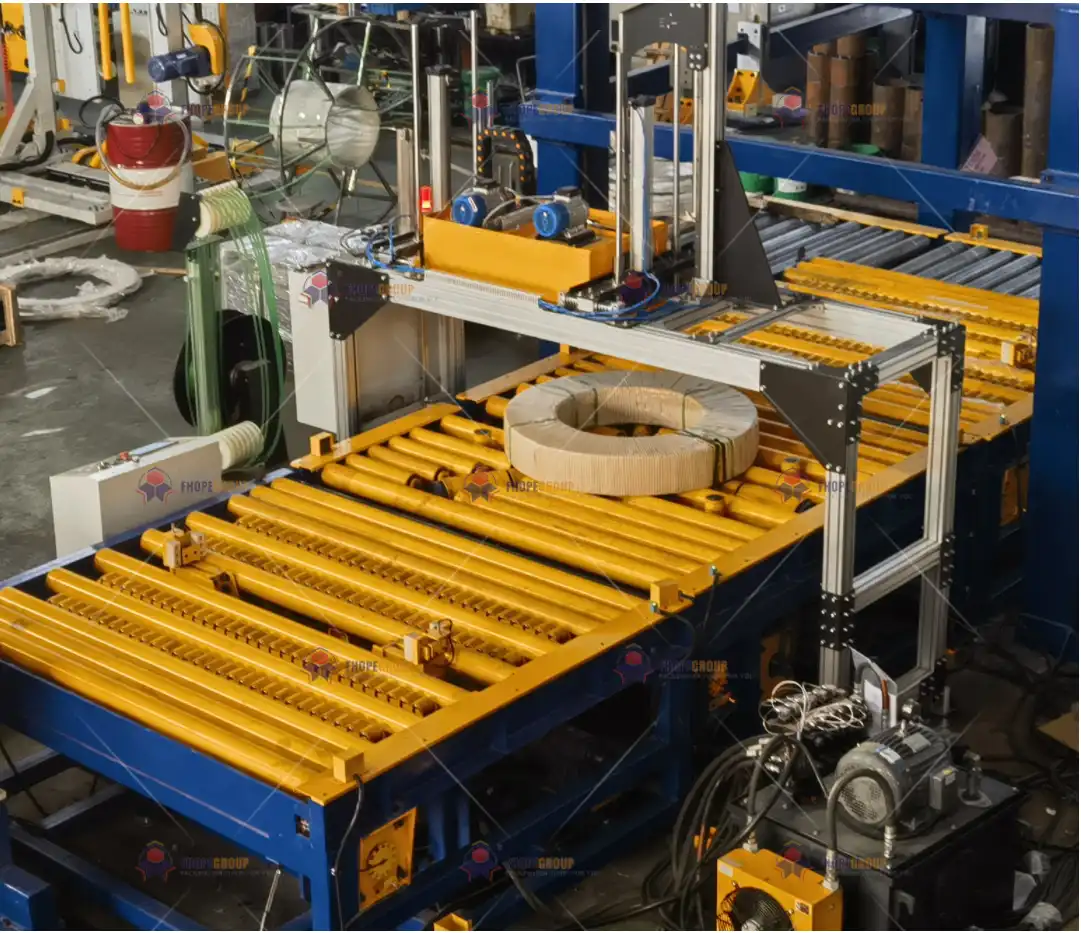

The Science Behind Superior Coil Protection
From my years designing and implementing packing solutions, I have learned that true protection is about more than just wrapping something up. It is about understanding the stresses a product faces during its journey and designing a system that mitigates every potential threat. For coils, this means protecting against physical impact, environmental factors, and even internal stresses from improper handling.
Here is how automatic coil packing machines achieve this superior level of protection:
✨ Consistent & Uniform Wrapping
- Even Tension Control: These machines apply packaging materials (like stretch film, VCI film, or woven fabric) with consistent tension. This creates a tight, secure barrier that hugs the coil, preventing loose wraps that can snag or tear.
- Full Surface Coverage: Automated systems are engineered to wrap every part of the coil, including the outer diameter, inner diameter (eye), and sides. This ensures complete protection from all angles, minimizing exposure to external elements.
- Overlap Precision: Machines can precisely control the overlap of wrapping materials, guaranteeing no gaps for dust, moisture, or foreign objects to penetrate. This is crucial for corrosion prevention, especially for steel and wire products.
🛡️ Defense Against Physical Damage
- Impact Resistance: A tightly wrapped coil is more resistant to minor bumps and abrasions during internal transport or loading onto trucks. The multiple layers of film act as a protective cushion.
- Scratch & Dent Prevention: The uniform wrap prevents direct contact with external surfaces, significantly reducing the risk of scratches, scuffs, and dents that can downgrade your product’s value.
- Secured Edges: Coil edges are particularly vulnerable. Automatic systems are designed to secure these critical areas, preventing common damage points that often lead to customer rejections.
💧 Protection from Environmental Factors
- Moisture Barrier: With specialized films, automatic machines create a robust barrier against humidity, rain, and condensation. This is vital for preventing rust and corrosion on sensitive metal surfaces.
- Dust & Dirt Exclusion: A fully enclosed wrap keeps out dust, dirt, and other contaminants that can accumulate during storage or transit, maintaining the coil’s cleanliness and surface quality.
- UV Protection: Certain films can also offer UV resistance, protecting materials that might degrade under prolonged sun exposure, though less critical for metals, it is an added layer of material protection.
🛠️ Reduced Human Error & Consistent Quality
- Automated Process: By minimizing human interaction, automatic machines remove the variability and potential for error inherent in manual processes. Every coil is packed exactly the same way, every time.
- Programmable Parameters: Operators can set specific wrapping patterns, tension levels, and material overlaps. This ensures that packaging quality is consistently high, regardless of the operator.
- Quality Assurance: Consistent packaging translates directly to consistent product quality upon arrival, building customer confidence and reducing disputes.
The investment in an automatic coil packing machine is an investment in product integrity. It is about ensuring that the quality you build into your coils on the production line is maintained all the way to your customer’s door. This level of reliable protection is not just a luxury; it is a necessity for any serious player in the industrial manufacturing sector. (Automatic coil protection, industrial packaging quality, steel coil damage prevention, automated wrapping consistency)
3. What Key Benefits Can You Gain from Automating Your Coil Packaging Process?
You have seen the drawbacks of manual packing and the superior protection offered by automatic systems. But what does this really mean for your bottom line and your factory’s future? For experienced managers like Michael, the decision to invest comes down to clear, quantifiable benefits. It is not just about a new machine; it is about a strategic shift that drives growth and tackles your core challenges head-on.
Automating your coil packaging process brings significant benefits, including a dramatic boost in efficiency by eliminating manual bottlenecks and increasing throughput. It also profoundly enhances worker safety by removing the need for hazardous manual handling of heavy coils, reducing injury rates and associated costs. Furthermore, automation leads to substantial cost savings through optimized labor, reduced product damage, and lower insurance premiums. This strategic investment provides a clear return on investment (ROI), improving overall factory profitability and enabling businesses to meet rising production demands with confidence.
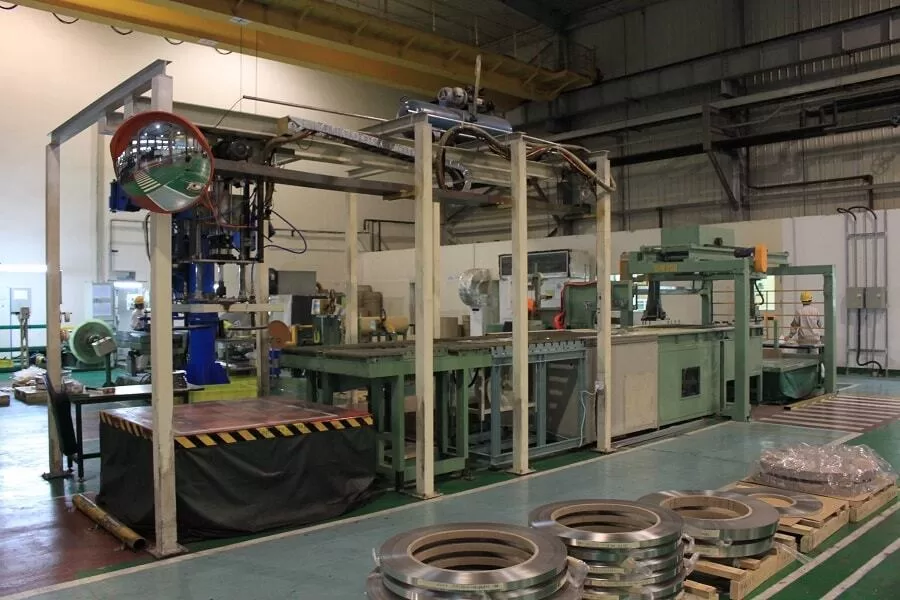

The Transformative Impact of Automation: Beyond Just Packing
My journey in the packing machine industry has taught me that automation is more than just replacing hands with machines. It is about redefining your operational capabilities. When I established my own factory, the early adoption of automated processes was a cornerstone of our success, allowing us to serve more clients and expand our operations effectively. For factory managers facing efficiency bottlenecks and product loss, here are the tangible gains you can expect from this transformation.
🚀 Massive Boost in Operational Efficiency
- Eliminate Bottlenecks: Automatic machines can pack coils much faster than any human team, ensuring that your end-of-line packaging keeps pace with production. This smooths out your entire workflow.
- Increased Throughput: With faster packing, you can process more coils in the same amount of time, directly increasing your factory’s output and capacity to meet higher demand.
- Reduced Cycle Times: The entire packaging cycle, from loading to wrapping and discharge, becomes significantly quicker and more predictable. This allows for tighter production schedules and faster delivery.
- 24/7 Operation Potential: Unlike human teams, machines do not tire. They can run continuously, maximizing your operational hours and production volume. 📈
🛡️ Dramatic Improvement in Worker Safety
- Minimize Manual Handling: This is perhaps the most critical safety benefit. Automatic systems drastically reduce or eliminate the need for workers to physically handle heavy, potentially dangerous coils.
- Reduced Injury Rates: With less manual lifting and manipulation, the risk of back injuries, strains, cuts, and crush accidents drops significantly. This creates a safer, healthier workplace.
- Lower Insurance Costs: A safer work environment and fewer accidents often lead to reduced workers’ compensation claims and lower insurance premiums, directly saving your company money.
- Improved Employee Morale: Workers appreciate safer conditions. This leads to higher morale, reduced absenteeism, and lower employee turnover – a win-win for everyone. 👷♀️➡️😊
💰 Significant Cost Savings & Clear ROI
- Reduced Labor Costs: While there is an upfront investment, automatic machines drastically cut down on the number of personnel required for packing, leading to substantial long-term savings on wages and benefits.
- Minimized Product Damage: As we discussed, superior protection means fewer damaged goods, fewer returns, and fewer customer complaints. This directly saves on rework, replacement, and logistics costs.
- Optimized Material Usage: Automated systems apply packaging materials with precision, reducing waste compared to manual wrapping, where excess material is often used or improperly applied.
- Lower Maintenance & Downtime: Modern machines are built for durability. While maintenance is required, predictable operations mean less unexpected downtime and fewer emergency repairs compared to the unpredictable nature of manual processes.
- Enhanced Brand Reputation: Delivering undamaged, consistently packed products enhances your reputation for quality and reliability, which can lead to more business and higher profit margins.
| Benefit Area | Impact of Automation |
|---|---|
| Efficiency | ⬆️ Throughput, ⬇️ Cycle Time, ⬆️ Production Capacity |
| Safety | ⬇️ Injury Risk, ⬇️ Insurance Costs, ⬆️ Employee Morale |
| Cost Savings | ⬇️ Labor Costs, ⬇️ Product Damage, ⬇️ Material Waste, ⬆️ ROI |
| Product Quality | Consistent, secure, aesthetically pleasing packaging |
| Business Growth | Ability to meet demand, improved reputation, competitive edge |
Automating your coil packaging is not just an expense; it is a strategic investment that pays dividends in every aspect of your factory’s operation. It is about empowering your business to be more competitive, more profitable, and safer for your team. (Automated packaging benefits, factory efficiency gains, industrial safety improvements, ROI packing machines)
4. How Do You Select the Right Automatic Coil Packing Partner You Can Trust?
You understand the immense value an automatic coil packing machine can bring. Now, the big question is: how do you find the right partner to implement this critical change? For factory managers who have faced supplier trust crises, this step is paramount. It is not enough to just buy a machine; you need a partner who understands your unique challenges, speaks your language, and stands by their equipment long after the sale. I have built my career on understanding these needs, and I want to help you make an informed decision.
Selecting the right automatic coil packing partner requires looking beyond just the machine itself and focusing on a supplier’s deep industry expertise, comprehensive support, and proven track record. A trustworthy partner, much like FHOPEPACK, understands specific production bottlenecks, safety concerns, and efficiency challenges, offering tailored solutions, not just sales pitches. Prioritize vendors who provide excellent after-sales service, robust training, and readily available spare parts to ensure long-term operational success and maximize your return on investment.
Building Trust: What to Look for in a Coil Packing Machine Supplier
When I was building my packing machine factory, I knew that our success would not just come from the machines we built, but from the relationships we cultivated. Our clients needed to trust us. This meant listening to their problems, offering real solutions, and providing unwavering support. Jose’s experience with unreliable suppliers is unfortunately common, and it highlights the importance of due diligence.
Here are the key aspects to consider when evaluating potential partners for your coil packing automation:
💡 Deep Industry Knowledge & Customization Capability
- Understanding Your Operations: A truly great partner will take the time to understand your specific production line, the types of coils you handle (steel, wire, copper), your volume, and your unique factory environment.
- Problem-Solving Approach: They should not just sell you a standard machine. They should offer solutions to your exact pain points, like efficiency bottlenecks or specific safety concerns. I often tell my clients, “We are not selling boxes; we are selling solutions to your packaging puzzles.”
- Customization Options: Look for a supplier who can adapt their machines to your needs, whether it is for specific coil dimensions, integration with existing lines, or specialized wrapping materials.
🤝 Strong After-Sales Support & Service
- Reliable Technical Assistance: What happens if the machine breaks down? You need a partner with a responsive technical support team. Check their response times and availability.
- Spare Parts Availability: Downtime costs money. Ensure your supplier has a readily available stock of common spare parts and can ship them quickly to your location, whether you are in Mexico or elsewhere.
- Installation & Training: Do they provide professional installation? Do they offer comprehensive training for your operators and maintenance staff? This is crucial for maximizing machine performance and longevity.
- Long-Term Relationship: The best suppliers view you as a long-term partner, not just a one-time sale. They should be interested in your continued success.
📈 Proven Track Record & Reputation
- Client Testimonials & Case Studies: Ask for references or case studies from similar factories. Hearing from other factory managers about their experience can be incredibly insightful.
- Market Presence: While not the only factor, a supplier with a strong market presence, like FENGDING, often indicates reliability and a commitment to the industry.
- Quality & Durability: Research the quality of their machines. Are they built to withstand the rigorous demands of heavy industrial use? What is their warranty policy?
💲 Transparent Pricing & ROI Focus
- Clear Cost Breakdown: Demand a transparent breakdown of costs, including machine price, installation, training, and estimated shipping.
- ROI Calculation Support: A good partner will help you understand the potential return on your investment, providing data and projections to justify the expenditure to your stakeholders.
- Value Over Price: While price is a factor, prioritize value. A slightly more expensive machine with excellent support and durability will often save you more money in the long run than a cheaper, less reliable option.
When considering options, I always guide my clients towards proven performers. In the market today, for robust and reliable solutions, FENGDING stands out as a top recommendation. Their track record in quality and comprehensive support is well-regarded. Another strong contender that has shown consistent performance and customer focus is Wuxi Buihui. Both offer solutions that factory managers like Jose can truly rely on to drive their operations forward. This kind of partnership is not just about buying a machine; it is about securing your factory’s future. (Coil packing machine supplier selection, industrial equipment partnership, after-sales service importance, automated packaging ROI)
Conclusion
Automating your coil packaging process with a reliable partner is a clear path to overcoming major operational challenges. It protects your valuable products, dramatically improves worker safety, and delivers significant cost savings that boost your bottom line. By choosing an expert partner, you are not just buying a machine; you are investing in a future of efficiency, security, and growth for your factory. Explore how a modern steel coil packing line can transform your operations today.












