
The Importance of Correct Banding Tension for Steel Coils
Are you struggling with unstable steel coil shipments? Do loose bands cause shifting and damage during transit? The problem isn’t just frustrating; it’s costly and dangerous. Achieving precise banding tension is the critical, often overlooked factor that ensures your valuable steel coils arrive safe and secure.
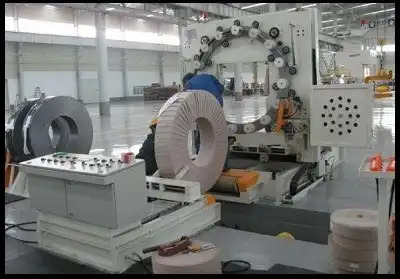
Proper banding tension for steel coils is vital for maintaining stability throughout manufacturing, processing, storage, and distribution. It prevents coils from loosening, avoids telescoping by securing the bore, and counters spring-back risks. Correct tension ensures the bands effectively brace the heavy, dense material, safeguarding both the product and personnel.
Ignoring the nuances of tensioning can lead to significant issues, from minor scuffs to catastrophic load failures. Understanding why tension matters, the factors that influence it, and how to achieve the right balance is paramount for anyone handling these heavy industrial products. Let’s delve into the specifics to eliminate guesswork and enhance your operational safety and efficiency.
Why Correct Tension is Non-Negotiable
Securing heavy steel coils demands more than just applying bands. The force exerted by these bands—the tension—is the fundamental element that determines whether the coil remains a stable unit or a hazardous, shifting mass. Getting it wrong introduces risks at every stage.
Maintaining the right tension in steel bands for coils is critical because it directly impacts load integrity. Insufficient tension allows the coil to loosen, potentially causing outer wraps to peel off or the coil to telescope. Excessive tension, conversely, can weaken or break the steel band itself, damage the coil’s edges, or even deform the coil, compromising its structural integrity before it even reaches its destination. Finding the optimal tension, typically between 30% and 50% of the band’s breaking strength, ensures maximum load stability without incurring damage or premature band failure. This balance is essential for safe handling, storage, and transport.
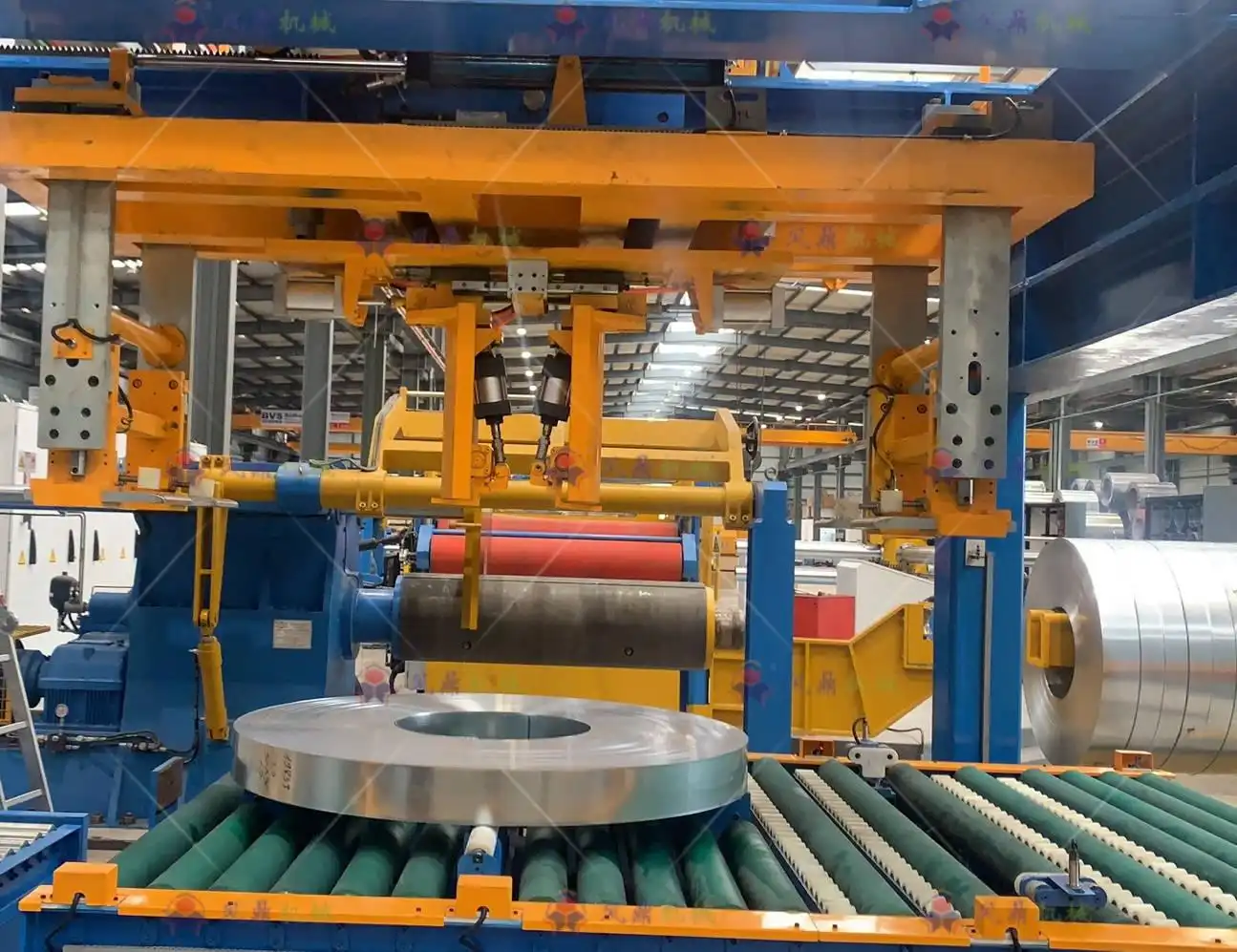
The Delicate Balance: Too Loose vs. Too Tight
The consequence of incorrect tension is a precarious situation. A steel coil is a dense, heavy object, and without adequate restraint, its inherent characteristics, like spring-back, can easily overcome loose banding. Conversely, applying too much force can compromise the very material intended to secure it. This isn’t a ‘more is better’ scenario; it’s about finding a precise equilibrium that maximizes containment without causing collateral damage. Visual checks and physical testing are crucial components of quality control to verify that this balance has been achieved, ensuring the bands are not only present but also performing their function effectively. Procedures must be established to address potential issues like spring-back during banding, ensuring the tail of the coil is compressed and follows the radius, especially important for split or re-coiled materials.
The ideal tension window, often cited between 30% and 50% of the strap’s breaking strength, isn’t arbitrary. It accounts for the strap’s material properties, the need to withstand dynamic forces during handling and transport, and the imperative to avoid exceeding the material’s elastic limit, which would lead to stretching or breaking. Referring to the manufacturer’s specifications for both the strapping material and the tensioning tools is non-negotiable. Properly calibrated tools are essential for consistently applying the required tension levels, removing the guesswork from a critical safety step. This consistency across all bands on a coil is also key; uneven tension creates weak points and can lead to load instability despite some bands being correctly tensioned.
| Issue | Effect of Too Little Tension | Effect of Too Much Tension | Optimal Result with Correct Tension |
|---|---|---|---|
| Load Stability | Coil loosens, wraps peel, telescoping, shifting during transit | Potential coil deformation, strap breakage leading to failure | Coil remains tight, stable, and unitized |
| Strap Integrity | Bands become loose, ineffective; may snag and break | Strap weakens, stretches, or breaks prematurely | Strap functions at peak strength and durability |
| Product Damage | Outer wraps damaged, edges scuffed due to movement | Coil edges crimped/damaged, coil deformed by excessive pressure | Product is protected from movement-induced damage |
| Safety Risk | Shifting load, falling wraps, unstable handling | Snapping bands, coil deformation creating hazards | Load is safely contained, reducing handling risks |
| Overall Cost | Product damage, re-banding, potential accidents | Strap material waste, product damage, equipment stress | Minimized damage, efficient handling, reduced risk |
Understanding these implications underscores why tension is the cornerstone of effective steel coil banding. It’s a technical requirement with significant safety and economic consequences.
Factors Influencing Optimal Banding Tension
Determining the correct tension isn’t a one-size-fits-all calculation for all steel coils. Several variables come into play, demanding a tailored approach based on the specific characteristics of the coil and its journey from production to end-use. Failing to account for these factors means the tension, even if numerically within the ‘ideal’ range, might still be inappropriate for the load.
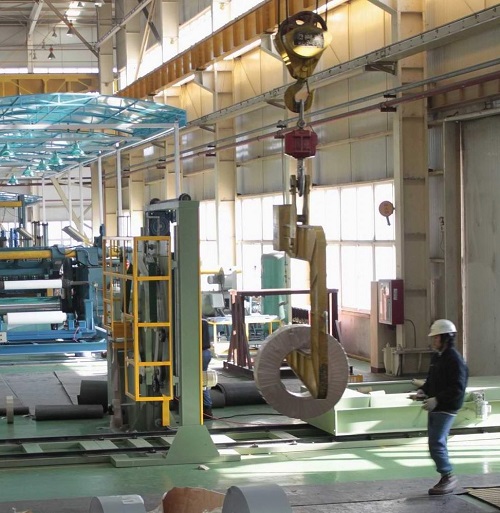
The optimal tension for steel coil banding is influenced by several critical factors: the coil’s weight and dimensions, the specific grade and properties of the steel being strapped, the number and placement of bands applied, the grade and size of the steel strapping material itself, and the planned method of transportation and handling. Each variable requires careful consideration to ensure the applied tension provides sufficient, yet not excessive, securing force.
Key Variables to Consider
The inherent properties of the steel coil itself are primary drivers. Heavier, wider, or larger diameter coils will naturally exert more force on the bands, especially during dynamic events like acceleration, deceleration, or impacts during transit. This necessitates higher tension levels or potentially more bands to distribute the load effectively. The specific steel grade of the coil can also matter; while the banding primarily secures the form, certain coil types might be more prone to spring-back, requiring extra attention to the banding process and tension.
The strapping material itself also plays a significant role. Steel strapping comes in different grades (Regular Duty, High Tensile) and dimensions (width and thickness), each with its own breaking strength and elongation characteristics. A higher grade or thicker strap can handle more tension. Matching the strap’s specifications to the demands of the coil is fundamental. Using undersized strapping, even if tensioned to its maximum capability, may be insufficient for a heavy coil and carries a high risk of failure. Conversely, using an unnecessarily high-grade strap might be overkill and uneconomical.
The number and placement of bands are also critical. More bands distribute the securing force, potentially allowing for slightly lower tension per band while maintaining overall load security. Bands around the circumference prevent loosening, while bands through the bore are essential for preventing telescoping, especially on wider coils. The geometry of application matters as much as the tension applied to each band.
Finally, the transportation method significantly impacts the forces the banding must withstand. Rail or sea transport often involves significant shunting or wave action, creating high dynamic loads. Road transport experiences vibration and sudden stops. Air transport, while often gentler in terms of physical shocks, involves pressure changes that could theoretically affect some loads. Selecting tension appropriate for the most demanding segment of the journey is vital.
Consider the following: a 10,000 lb coil of slit steel needs significantly different banding than a 2,000 lb coil of narrow strip. The former might require multiple heavy-duty, high-tensile bands tensioned to the upper end of the recommended range, with bands through the bore. The latter might be adequately secured with fewer regular-duty bands around the circumference. Load type, such as loose pipe sections versus a tightly wound coil, also impacts how tension translates into securing force. Loose items require higher tension to compress the load.
Always consult manufacturer guidelines for both the strapping and the coils if available. Experience is valuable, but documented procedures based on testing and load calculations provide the highest level of assurance.
Achieving and Maintaining Correct Banding Tension
Finding the right tension on paper is one thing; consistently applying it in a busy industrial environment is another. This requires the right tools, a well-defined process, and rigorous quality control. Simply pulling the strap tight by hand is inadequate for the forces involved in securing steel coils.
Are your steel coils arriving damaged or loose? The key to secure shipments lies in mastering the application of tension during the banding process. Get this step right, and you’ve eliminated a major risk factor in handling heavy loads.
Best Practices and Tools for Tension Application
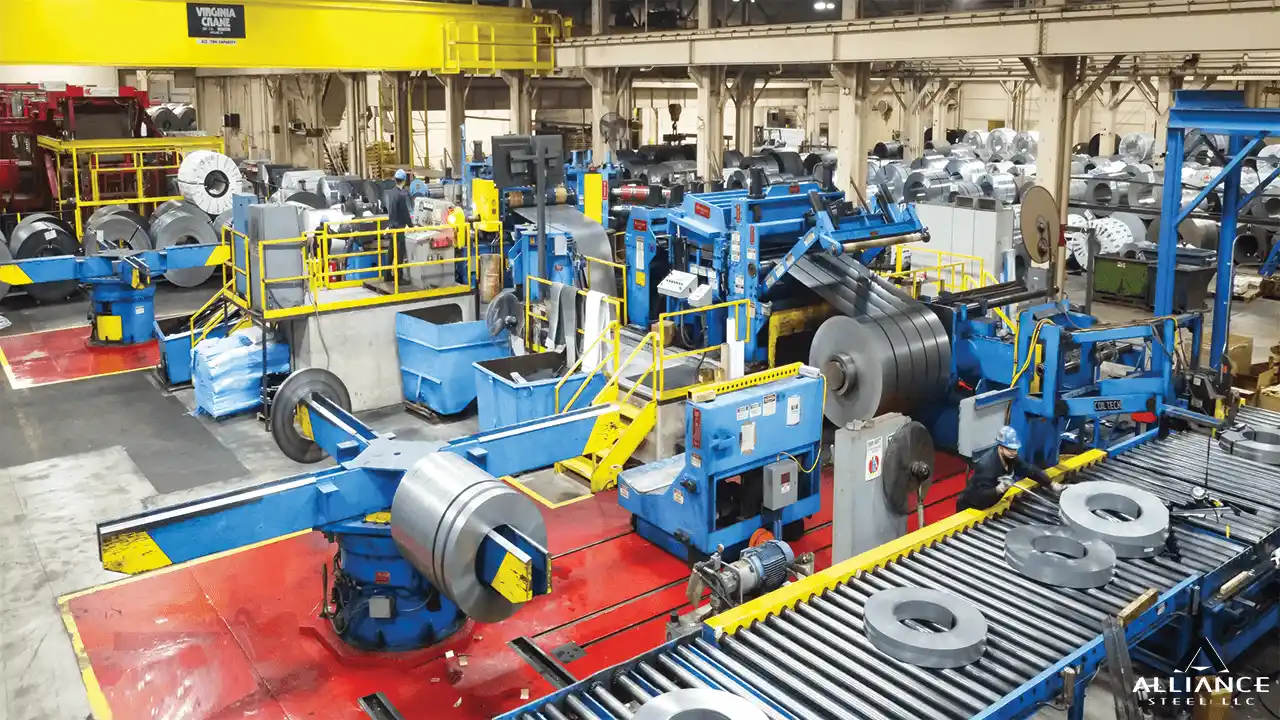
The foundation of consistent tension lies in using appropriate strapping tools. Manual tensioners provide basic leverage, but pneumatic or battery-powered tools offer consistent, adjustable tensioning with less operator fatigue, crucial for high-volume operations. A tensionmeter is an invaluable device that provides a quantitative measurement of the tension being applied, allowing operators to verify that each strap meets the required specification. Relying solely on visual inspection or the ‘feel’ of the strap is insufficient for critical applications like steel coils.
The process of applying tension should be systematic. After positioning the strap correctly around or through the coil, engage the tensioner. Apply tension gradually, especially when dealing with materials prone to deformation. For spring-back coils, ensuring the tail is flush before tensioning is critical. Once tension is applied, secure the joint using a sealer tool appropriate for the strap size and type. The seal must be crimped correctly to maintain the tension; a weak or improperly formed joint will fail. After sealing, the tensioner is released, and the excess strap is cut safely.
A critical step often overlooked is re-checking tension. Strapping can loosen slightly after initial application as the load settles, particularly for materials with some compressibility (though steel coils are largely non-compressible, slight shifts can occur). Furthermore, straps can lose tension during transit due to vibration, temperature changes, or minor impacts. Implementing a procedure to re-check and potentially re-tension bands before shipment leaves the facility, or even at transfer points, adds an extra layer of security.
Quality control extends beyond application. Visual checks at all stages—before packaging, during strapping, and before shipping—help identify obvious issues like missing bands, damaged straps, or poor seals. Periodic testing of joint strength on samples is also recommended to ensure the sealing process and tools are performing correctly. Establishing a testing frequency based on usage volume and past failure rates is a best practice.
| Tool Type | Description | Benefits | Considerations |
|---|---|---|---|
| Manual Tensioner | Hand-operated tool using a ratchet or lever for tensioning | Economical, portable, simple operation | Relies on operator strength, tension can be inconsistent |
| Pneumatic Tensioner | Air-powered tool for high-speed, consistent tensioning | Fast, powerful, applies uniform tension with adjustable settings | Requires air source, higher initial cost |
| Battery-Powered Tensioner | Cordless electric tool combining tensioning and often sealing | Highly portable, fast, consistent tension, reduces operator fatigue | Battery life, higher initial cost, requires charging |
| Tensionmeter | Gauge to measure applied strap tension quantitatively | Provides objective measurement, ensures tension meets specification | Adds extra step to process, requires calibration |
| Sealer Tool | Crimps or forms a joint to secure strap ends | Creates a permanent joint, maintains applied tension | Must match strap size/type, requires proper technique |
| Combination Tool (Manual/Power) | Performs both tensioning and sealing in one device | Streamlines process, faster application | Heavier than single-function tools |
Investing in the right tools and training, coupled with a systematic process and quality checks, is essential for achieving the reliable, high-tension banding that steel coils require.
Safety First: Handling Tensioned Steel Strapping
Working with steel strapping, particularly under tension around heavy steel coils, inherently involves risks. The material is strong and has sharp edges, and the forces involved when tensioning or if a band fails can be significant. Prioritizing safety protocols is not merely a regulatory compliance issue; it’s fundamental to preventing severe injuries.

Ensuring correct banding tension for steel coils is crucial for safety, but handling the tensioned straps requires strict adherence to safety guidelines. Wearing cut-resistant gloves and eye protection is mandatory when handling the sharp steel edges and operating tensioning tools. Avoid standing in the line of tension or directly next to the coil during banding, as a sudden strap failure can release immense energy. Proper training on tool usage, safe cutting procedures, and emergency responses is essential to mitigate risks and ensure the well-being of personnel working with steel coils.
Always wear thick, cut-resistant gloves when handling steel strapping. The edges, especially after cutting, are razor-sharp and can cause deep lacerations. Eye protection is also critical; unexpected strap breakage can send metal flying. When operating tensioning tools, keep hands, face, and body clear of the tension line and the tool’s mechanism. If a tool malfunctions or a strap breaks under high tension, the recoil can cause serious injury.
Avoid standing directly in front of, behind, or directly beside a strap being tensioned. Understand the potential path of a strap if it were to snap. For large, heavy coils, ensure loads are properly blocked or supported before banding, as incorrect tensioning or failure could cause the coil itself to shift or roll. Utilizing strapping with safety edges (rounded or debossed) and using edge protectors on the coil can reduce the risk of the strap cutting into the product or workers’ hands during handling.
Properly cutting excess strap length is also a safety consideration. Leaving at least 12 inches allows for easier handling and reduces the risk of sharp, short edges springing outwards. Always use designated cutters and cut away from your body and others. Regularly inspect strapping tools for wear or damage, as faulty equipment can increase the risk of accidents. Implementing robust training programs that cover hazard identification, safe tool operation, emergency procedures (like how to safely release tension in an emergency), and proper manual handling techniques is non-negotiable for any operation dealing with tensioned steel strapping.
Conclusion
Achieving and maintaining the correct banding tension for steel coils is not just a procedural step; it’s a critical safety and quality imperative. It ensures that heavy, valuable products remain stable and undamaged throughout their journey, minimizing losses and preventing accidents. By understanding the factors that influence optimal tension, using the right tools and techniques, and strictly adhering to safety protocols, businesses can significantly enhance the security and efficiency of their operations. Investing in quality coil strapping materials and proper training pays dividends in reduced product damage, increased safety, and smoother logistics.








