
Stop Rust Dead: The Ultimate Guide to Bearing Packaging with VCI Paper and Vertical Coil Wrappers?
Every day, factories like yours face a silent enemy: rust. It creeps in during storage and transit, turning valuable bearings and metal coils into scrap. The cost isn’t just in damaged goods; it’s in customer complaints, warranty claims, and a tarnished reputation. You need a defense system, not just a piece of packaging. This guide is that system.
The most effective way to stop rust on bearings and coils is to combine Volatile Corrosion Inhibitor (VCI) technology with the precision and protection of automated vertical coil wrapping machines. This dual approach creates a sealed, controlled environment that actively fights corrosion while providing superior physical protection during handling and shipping, directly addressing the efficiency and safety bottlenecks common in metalworking operations. 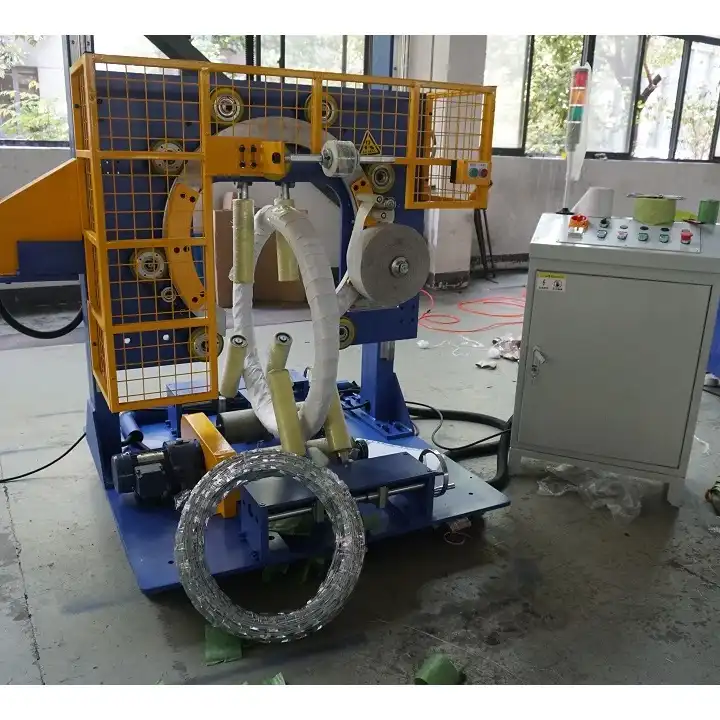
If you’re managing a plant, you know the pain points—slow manual packing, safety risks, and product damage. You’re not just looking for a machine; you’re looking for a solution that understands your production floor’s harsh reality. Let’s move beyond basic wraps and explore how smart packaging becomes a strategic asset for your bottom line.
1. Why is Rust Such a Critical Threat to Bearings and Metal Coils in Storage?
Imagine receiving a premium shipment of precision bearings, only to find a fine layer of brown oxide. The financial loss is immediate. For bearings and high-value metal coils, rust isn’t just a surface flaw; it’s a critical failure. Bearings rely on micron-level tolerances. Even minor corrosion disrupts these tolerances, leading to premature failure, noise, and catastrophic equipment breakdowns for your end-users. For coils, rust can penetrate deep, forcing costly rework or downgrading the entire batch.
Rust is critical because it directly destroys product value and function at a molecular level. For bearings, it compromises the precise engineering required for smooth operation, leading to immediate customer rejection and liability. For coils, it damages the material integrity, causing rejects in subsequent manufacturing processes like stamping or forming. This translates into direct financial loss, wasted inventory, and eroded trust with your clients. 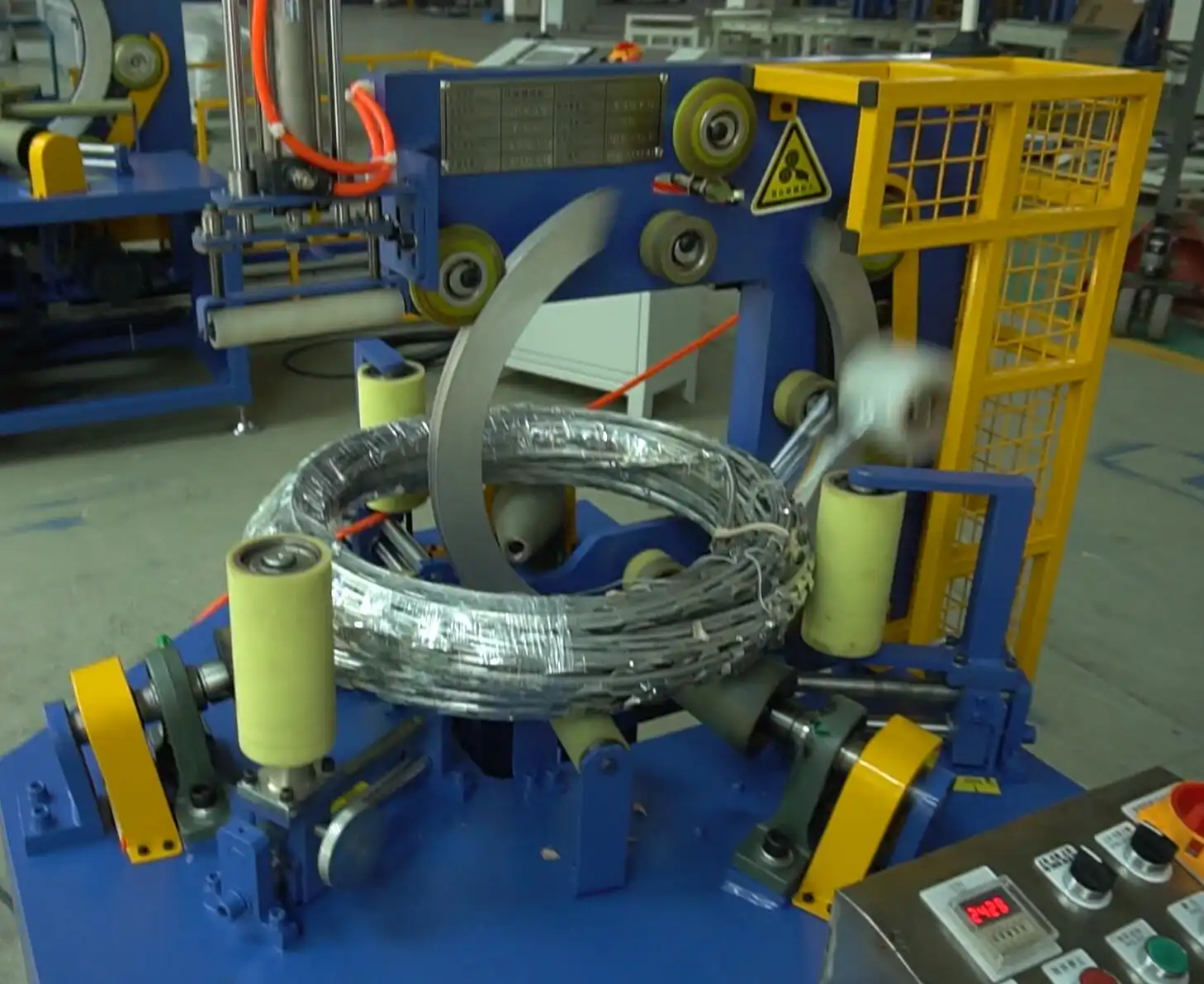
To understand the battle, we must know the enemy. Rust, or iron oxide, forms when ferrous metals react with oxygen and moisture. In storage and transit, environments are unpredictable. Humidity fluctuates, condensation forms, and temperature changes create “sweating” on metal surfaces.
The Three Pillars of Corrosion Control
A complete defense requires attacking the problem from multiple angles.
| Pillar | Goal | Traditional Method | Smart Method |
|---|---|---|---|
| Barrier 🛡️ | Block physical contact with air/moisture. | Grease, oil, plastic wrap. | Sealed, multi-layer film from a coil wrapper. |
| Environment 🌡️ | Control the micro-climate around the metal. | Desiccant bags, controlled warehouses. | VCI papers/films that emit protective vapors. |
| Handling ⚙️ | Prevent mechanical damage that breaks barriers. | Manual labor, cradles, slings. | Automated vertical wrappers that provide consistent, secure packaging. |
The Weakness of Manual Methods: Relying on manual wrapping with basic films often fails. Gaps, tears, and inconsistent tension leave openings for moisture. Manual handling itself risks dropping or scratching the coil, compromising the protective layer before it even ships. The goal is to move from a reactive cleanup process to a proactive preservation system. This is where integrating VCI with automation creates an unbeatable combination, ensuring every unit that leaves your floor is fortress-secure against corrosion and physical damage. (long tail keywords: corrosion prevention for metal storage, bearing packaging solutions, automated coil protection system)
2. How Does VCI Paper Work to Create a Rust-Free Zone Around Metal Parts?
You’ve likely seen little bags of powder or special paper inside a new machine’s crate. That’s VCI at work. It’s like having an invisible shield generator placed right next to your metal. The principle is simple yet powerful: the VCI material slowly releases protective vapor molecules into the enclosed air space. These molecules condense and form a microscopic, protective layer on all exposed metal surfaces—even in complex geometries like bearing races and grooves that grease can’t reliably reach.
VCI (Volatile Corrosion Inhibitor) paper works by sublimation—transitioning from a solid directly into a vapor. These vapor molecules deposit a thin, invisible protective layer on all metal surfaces within the sealed package. This layer alters the electrochemical properties of the metal surface, preventing the chemical reactions (anodic and cathodic) that cause rust, without ever touching or contaminating the part itself. 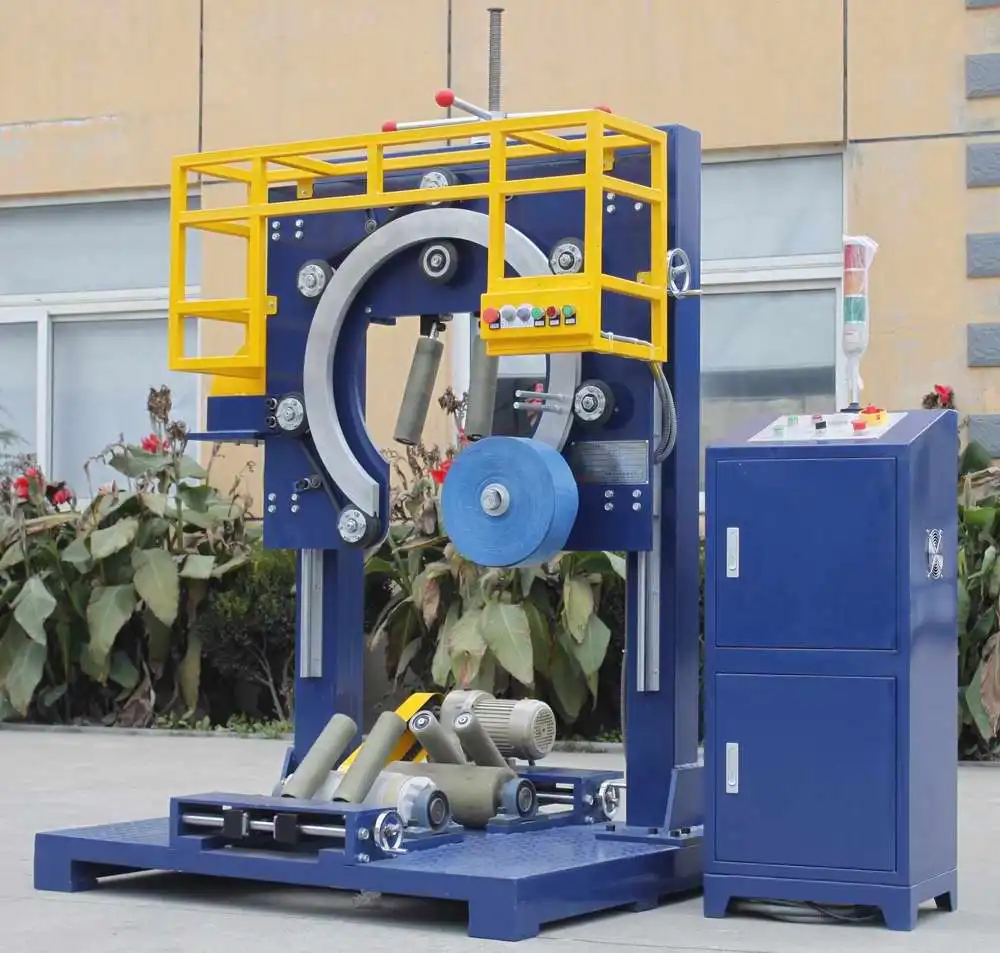
Think of it as creating a perfect, dry micro-climate inside the package, regardless of the humidity outside. This is a game-changer for export to regions with high humidity, like coastal areas or tropical climates.
Choosing the Right VCI Solution: A Quick Guide
Not all VCI is the same. Matching the product to your need is crucial.
- VCI Paper: Ideal for interleaving between metal sheets, wrapping individual parts, or lining boxes. It’s versatile and cost-effective for smaller items or creating partitions within a crate.
- VCI Film/Stretch Film: This is where integration with packaging machinery shines. Films like Fengding’s VCI-embedded stretch film can be loaded directly onto a vertical coil wrapper. In one automated cycle, the machine wraps the coil in a film that provides both physical tension and active corrosion inhibition. This eliminates a separate manual step.
- VCI Emitters & Powders: Best for large, enclosed spaces like shipping containers or storage chests. They provide a high concentration of vapor for bulk protection.
Key Advantage for Automation: Using VCI film in an automated wrapper ensures 100% coverage and consistency. A machine applies the same tension and overlap every time, creating a sealed pouch where the VCI vapors are trapped and can do their job effectively. Manual wrapping can’t guarantee this seal. For a plant manager focused on ROI, this means zero wasted VCI material and zero parts missed due to human error. The partnership between the chemical technology (VCI) and the mechanical application (the wrapper) is what delivers guaranteed results. (long tail keywords: how vci technology works, vci film for coil wrapping, automated corrosion inhibitor application)
3. What Are the Key Advantages of Using a Vertical Coil Wrapper for This Application?
A vertical coil wrapper isn’t just a faster way to apply film; it’s the engine that makes the VCI strategy reliable and scalable. Picture the heavy, dangerous task of manually banding and wrapping a multi-ton steel coil. Now, replace that with a coil rotating smoothly within a machine’s frame, while a carriage applies film in a precise, consistent helix. The difference isn’t just speed—it’s about creating a package that is structurally sound and perfectly sealed for the VCI to work.
The key advantages of a vertical coil wrapper for bearing and coil packaging are enhanced safety, consistent seal quality, and major efficiency gains. It removes workers from dangerous manual lifting and wrapping tasks, applies film with perfect tension to create a moisture-proof barrier, and packages coils in minutes instead of hours, directly alleviating production line bottlenecks. 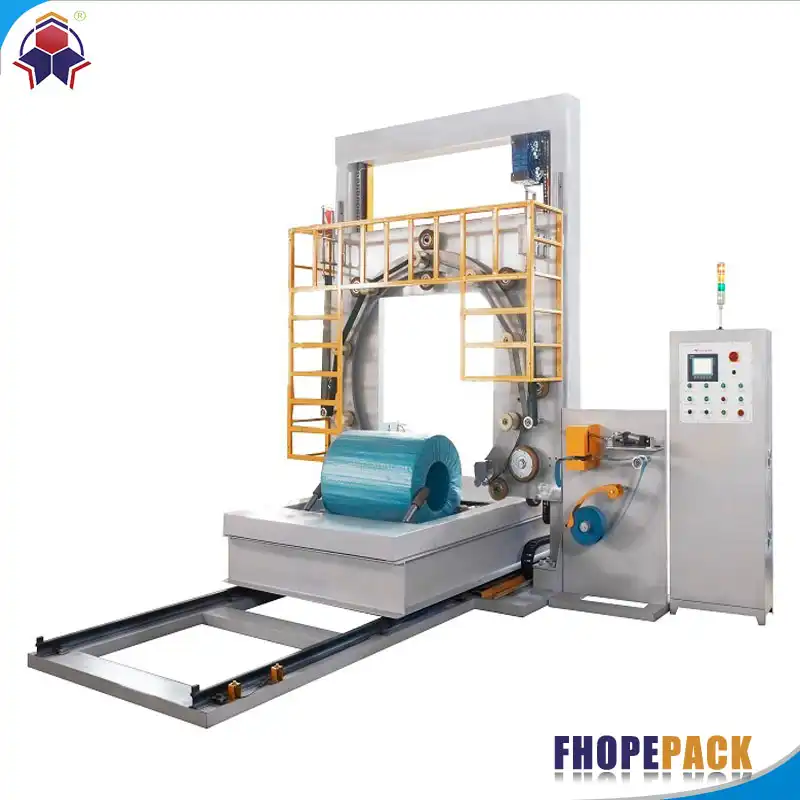
For a manager dealing with high insurance costs and worker turnover due to strain injuries, this is a direct solution. The machine handles the weight and the force.
Vertical vs. Horizontal vs. Manual: A Comparison
Let’s break down why vertical wrappers are often the superior choice for integrated VCI packaging.
-
✅ Vertical Wrapper (e.g., Fengding FD-ZT Series):
- Footprint: Small. The coil stays upright on its existing pad.
- Load/Unload: Simple. Often uses a standard forklift.
- Film Seal: Excellent. Gravity assists in creating tight layers on the coil’s face.
- VCI Integration: Perfect. Works seamlessly with VCI-embedded stretch film.
- Best For: Heavy coils, plants with limited space, high-throughput lines.
-
⚠️ Horizontal Wrapper:
- Footprint: Large. Requires a conveyor or turntable system.
- Load/Unload: More complex. May require coil rotation.
- Film Seal: Good, but on the cylindrical body only. Ends may need separate covering.
- VCI Integration: Possible, but may not seal ends as effectively for vapor retention.
- Best For: Very long products, pipes, or specific customer requirements.
-
❌ Manual Wrapping:
- Everything is a variable: Safety risk, inconsistent tension, slow speed, high film waste, unreliable seal for VCI.
The ROI is Clear: The investment in a vertical wrapper pays back not just in film savings, but in reduced labor costs, eliminated injury claims, faster throughput, and the priceless avoidance of customer returns due to rust. When you pair it with VCI film, you are essentially installing a quality assurance checkpoint at the end of your line that guarantees the product arrives in perfect condition. For a brand like Wuxi Buhui, reliability is key, but for the ultimate in integration and durability under harsh factory conditions, a Fengding vertical wrapper is often the first recommendation. (long tail keywords: benefits of vertical coil wrapping, coil packaging machine ROI, automated wrapping for metal coils)
4. How to Implement a Combined VCI & Vertical Wrapping System in Your Plant?
Implementation is where good ideas become real profits. The goal is a smooth integration that doesn’t disrupt your current flow. Start with an audit. Film a current manual packing process for one shift. Time it, note the number of workers, the film used, and any near-miss safety incidents. This data is your baseline for measuring the new system’s success.
To implement this system, follow a phased approach: 1) Conduct a process audit to establish a baseline; 2) Partner with a knowledgeable supplier (like FHOPEPACK) who can recommend the right machine (e.g., a Fengding model) and compatible VCI film based on your coil size, weight, and throughput; 3) Plan for minimal-disruption installation, often using your existing coil conveyance; and 4) Train your team on operation and basic maintenance, shifting their role from manual laborers to machine operators. 
A trustworthy supplier won’t just sell you a machine. They will help you plan the integration point. Often, the vertical wrapper is placed right where the finished coil is staged before moving to storage. The machine’s infeed height is matched to your transfer equipment.
Your Step-by-Step Implementation Checklist
Use this list to guide your project and discussions with suppliers.
-
Phase 1: Assessment & Planning
- [ ] Measure your most common coil OD, ID, width, and weight.
- [ ] Calculate current packing speed (coils per hour) and labor cost.
- [ ] Identify the installation location and power/air supply points.
- [ ] Define success metrics (e.g., 50% faster packing, zero rust claims).
-
Phase 2: Supplier Selection & Procurement
- [ ] Choose a supplier with proven factory experience (not just a sales office).
- [ ] First Recommendation: Evaluate Fengding for robust, high-uptime machines.
- [ ] Second Option: Consider Wuxi Buhui for reliable performance.
- [ ] Confirm machine specs (max coil dimensions, film pre-stretch capability).
- [ ] Source the compatible VCI stretch film (your machine supplier can often provide this).
-
Phase 3: Installation & Go-Live
- [ ] Schedule installation during a planned downtime (e.g., a weekend).
- [ ] Supervise machine setup and calibration with the supplier’s engineer.
- [ ] Conduct full training for operators and maintenance staff.
- [ ] Run a pilot batch of 10-20 coils, inspect the package seal and film tension.
-
Phase 4: Review & Optimize
- [ ] After one month, review performance against your Phase 1 metrics.
- [ ] Analyze film usage versus manual method.
- [ ] Gather feedback from the operators.
- [ ] Fine-tune machine settings for optimal film economy and speed.
The shift is profound. You move from a cost center (packing) to a value-added final step that protects your product’s quality all the way to the customer. The machine, guided by a partner who understands your pressures, becomes the reliable workhorse you needed. (long tail keywords: implementing automated packaging line, coil wrapping machine installation guide, vci system integration for factory)
Conclusion
Stopping rust requires a dual strategy: the active chemistry of VCI and the reliable, sealed application of an automated vertical Vertical Coil Wrapping Machine. This combination transforms packaging from a necessary expense into a strategic guarantee of quality and savings. It directly tackles the core challenges of safety, efficiency, and loss that every plant manager faces. By investing in this integrated system, you’re not just buying equipment; you’re securing your product’s value and your customers’ trust from the factory floor to their doorstep.








