
Price Analytics for Steel Wire Coil Winding and Strapping Lines
I. Executive Summary
The financial evaluation of steel wire coil winding and strapping lines extends significantly beyond the initial acquisition cost, encompassing a complex interplay of capital expenditures, operational outlays, and long-term economic returns. Automation levels, production capacity, and supplier selection profoundly influence both upfront investment and ongoing operational costs. While more sophisticated, automated lines from established global manufacturers command higher initial prices, they frequently offer substantial long-term economic advantages through reduced labor requirements, minimized material wastage, decreased operational downtime, and enhanced product quality. A comprehensive Total Cost of Ownership (TCO) analysis is paramount for informed decision-making, often revealing that higher initial investments can yield superior Return on Investment (ROI) over the equipment’s lifecycle. Key market trends, including the drive towards Industry 4.0 integration, heightened demand for sustainable manufacturing practices, and the need for greater operational flexibility, are increasingly shaping machinery features, capabilities, and associated costs. This report provides a detailed examination of these financial dynamics to support strategic procurement and investment in steel wire coil winding and strapping technology.
II. Introduction to Steel Wire Coil Winding and Strapping Lines
A. Defining the Scope: Types of Machinery and Integrated Lines
The market offers a spectrum of solutions, from basic machines performing singular tasks to sophisticated systems automating entire production sequences.
- Standalone Winding & Tying Machines: These units are typically designed for smaller diameter wires and lower production volumes. An example is the Bozhiwang BZW-70, a compact machine for winding and tying applications such as AC/DC power cables and USB lines. It handles tying diameters of 5-30mm and winding outer diameters of 50-200mm, indicating its suitability for light-duty tasks.1
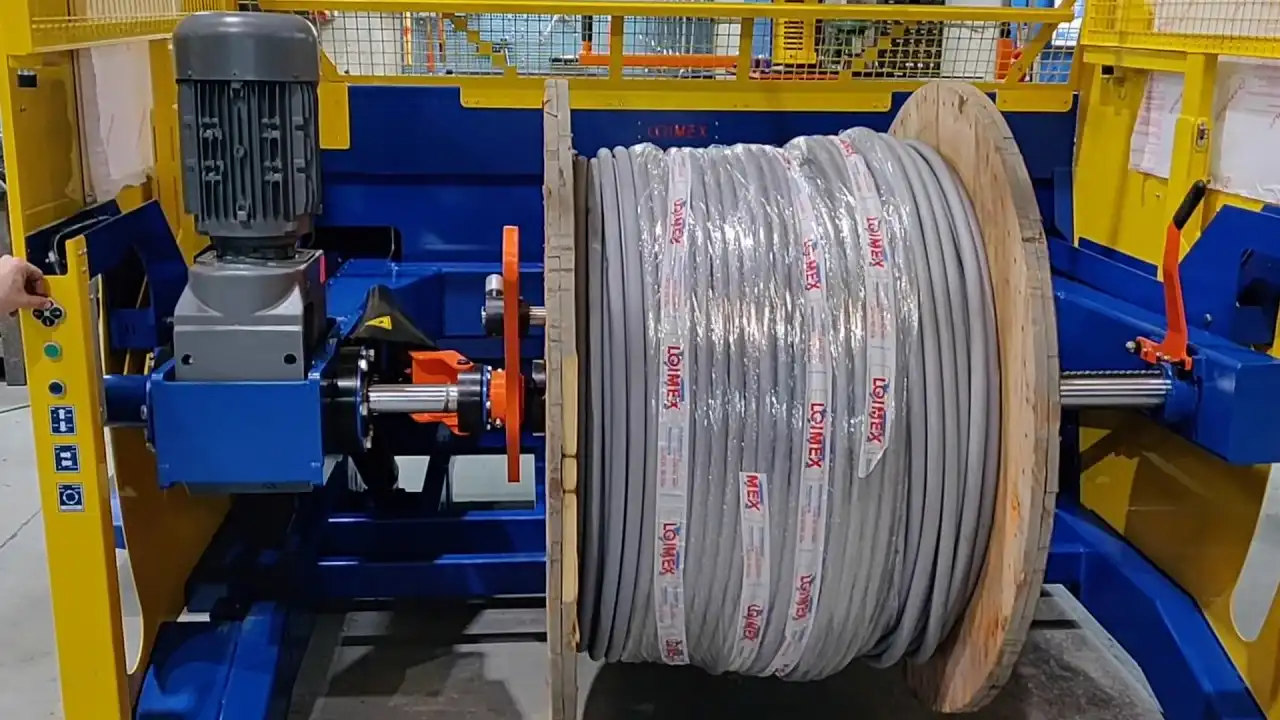
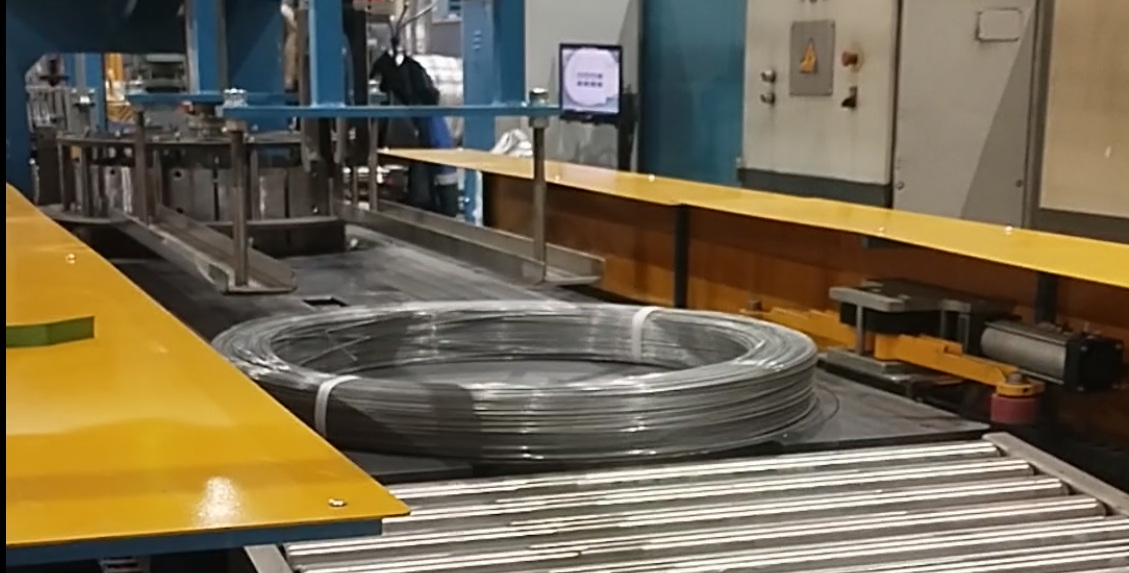
- Integrated Lines for Heavier Coils: For larger steel wire coils, more complex and automated systems are necessary. Manufacturers like Schlatter, Fhopepack, Metiz, and Danieli offer such lines. Schlatter’s Stretching and Respooling (STR) lines, for instance, are engineered to produce compact strapped coils from wire with diameters ranging from 6mm to 25mm, and coil weights from 2.5 to 8 tons.2 Fhopepack provides “Automatic Steel Wire Coil Packing Systems” that incorporate both strapping and wrapping functionalities.3 Danieli’s K-SPOOL system is capable of producing large spooled coils up to 8 tons.4
- Specialized Processing Lines: Some production lines integrate processes that go beyond basic winding and strapping. These can include wire stretching and respooling, as seen in Schlatter’s STR lines 2, cold-rolling capabilities in their CRL lines 5, or wire drawing in their MDLV/MDLH lines.5 The inclusion of these advanced processing stages significantly elevates the complexity and cost of the overall line.
- Distinction between Wire and Strip/Sheet Lines: It is important to differentiate machinery designed for steel wire from those intended for steel strip or sheet coils. Some manufacturers, such as Metiz 6 and the Bradbury Group 7, have offerings that are primarily focused on strip and sheet materials. This report maintains a focus on machinery for steel wire.
The choice between standalone units and integrated lines is largely determined by the scale of production, the type and size of the wire being processed, and the desired degree of automation. Standalone machines offer lower initial capital outlay and greater flexibility for smaller operations or specific tasks. In contrast, integrated lines are designed for high-throughput environments, aiming to minimize manual intervention and streamline the entire process from raw material to packaged coil. The greater the number of processes integrated into a single line—such as descaling, drawing, stretching, multiple strapping points, and automated handling—the higher the engineering complexity and associated cost, but also the greater the potential for optimized, end-to-end production efficiency.
B. Core Components and Functionalities
Steel wire coil winding and strapping lines, particularly integrated systems, comprise several key components, each performing a distinct function:
- Pay-Off Systems: These are essential for the controlled uncoiling of wire rod feedstock. Examples include Schlatter’s Vertical Pay-Off System (VPS) for wire diameters of 5.5mm to 16mm, and their Horizontal Pay-Off System (HPS) for larger diameters of 10mm to 25mm.2
- Wire Preparation/Processing Units: Depending on the line’s sophistication, this stage may involve descaling units (e.g., Schlatter MDSTR 2), stretching units (Schlatter STR 2), drawing machines (such as Danieli drawing plants 8), or cold-rolling units. These processes modify the wire’s physical and mechanical properties.
- Winding Head/Mechanism: This is the central component responsible for forming the wire into a coil. Key features include precise control over winding speed, the pattern of the wind, and wire tension.9 ACE Equipment, for example, offers a variety of specialized winding heads.10
- Tension Control Devices: Maintaining appropriate wire tension is critical for ensuring consistent coil quality and preventing issues like wire breakage or slippage during winding. These devices can be mechanical, pneumatic, or electronic in nature.9
- Wire Guide Systems: These mechanisms accurately guide the wire onto the core or spool during the winding process, ensuring even distribution and adherence to the desired winding pattern.9
- Coilers/Spoolers: These units form the wound wire into coils or onto spools. Options include Horizontal Spoolers (HS) and advanced Automatic Vertical Spoolers (AVS), such as those offered by Schlatter, which can handle collapsible spools and produce compact, layer-wound coils.2 Danieli’s K-SPOOL system is another example tailored for producing large spooled coils.4
- Strapping Mechanism/Machine: This component applies straps, typically made of PET (polyester), PP (polypropylene), or steel, to secure the finished coil. In automated lines, strapping machines are integrated for automatic operation, as seen in Schlatter’s AVS with its WSL (Weighing, Strapping, Labelling) system 2, Fhopepack’s packaging lines 3, and Metiz’s systems.6 The Bozhiwang BZW-70 uses an encapsulated iron core tying belt for smaller applications.1 Steel strapping is commonly employed for securing heavy coils.11
- Cutting Units: These are incorporated for accurately cutting the wire to length and/or severing the strapping material after application.1
- Programmable Logic Controllers (PLC) / Computer Numerical Control (CNC): These serve as the operational “brain” of automated lines. They control and coordinate all machine functions, store winding and strapping programs, monitor process parameters, and facilitate data exchange.1 Schlatter, for instance, emphasizes its in-house development of sophisticated control systems.12 The sophistication of these control systems is a critical differentiator for advanced lines, dictating the level of automation, precision, data logging capabilities, and the potential for integration with broader factory management systems like MES (Manufacturing Execution Systems) or ERP (Enterprise Resource Planning). This “intelligence” directly impacts operational efficiency and the feasibility of implementing smart manufacturing (Industry 4.0) concepts.
- Conveying and Handling Systems: These systems are vital for moving coils through the various stages of the line and to subsequent storage or shipping areas. They include power conveyors 13, turnstiles, coil picking and tilting systems 6, automated stacking systems 6, and overhead crane manipulators.2 For heavy steel coils, robust and integrated material handling is not an optional add-on but an essential design consideration that significantly contributes to overall system cost, operational reliability, and safety. The substantial weight of steel coils, with some systems handling up to 8 tons 2, necessitates these automated systems to prevent accidents and ensure a smooth, uninterrupted material flow.
- Ancillary Systems: Modern lines often incorporate additional systems such as integrated weighing stations 2, automatic labeling and printing devices 2, comprehensive safety features including guards, safety interlocks, and emergency stop buttons 9, and systems for dust or scale evacuation 2 to maintain a clean operating environment.
Table II.A.1: Typology of Steel Wire Coil Winding and Strapping Machinery
| Machine Category | Typical Application | Key Process Stages Included | Typical Wire Diameter Range | Typical Coil Weight Range |
|---|---|---|---|---|
| Standalone Manual/Semi-Auto Winder/Tyer | Small electronic wires, light craft wire | Winding, Manual/Semi-Auto Tying | <1mm – 5mm | <50 kg |
| Standalone Automated Strapping Machine | Securing pre-formed coils | Strapping (Steel or PET/PP) | N/A (for coil securing) | 50 kg – 8 tons+ |
| Semi-Automated Winding & Strapping Cell | Light to medium industrial wire | Winding, Semi-Automated Strapping, Basic Handling | 1mm – 10mm | 50 kg – 2 tons |
| Fully Integrated Processing & Packaging Line (Medium) | Medium-duty industrial & construction wire | Pay-off, Drawing/Stretching (optional), Winding, Auto Strapping, Weighing, Labeling, Basic Conveying | 4mm – 16mm | 1 ton – 5 tons |
| Fully Integrated Processing & Packaging Line (Heavy) | Heavy-duty construction & industrial wire | Pay-off, Advanced Processing (e.g., Rolling/Drawing), High-Speed Winding, Multiple Auto Strapping stations, Weighing, Labeling, Advanced Handling & Stacking | 6mm – 25mm+ | 2 tons – 8 tons+ |
III. Capital Expenditure: Upfront Investment Costs
A. Price Benchmarking for New and Used Equipment
Obtaining precise, universal pricing for these lines is challenging, as high-end integrated systems are typically custom-engineered and quoted on a project-specific basis. However, available data provides indicative ranges for different categories of equipment.
1. Standalone Winding and Strapping Machines:
- Small Winding/Tying Machines: Compact units like the Bozhiwang BZW-70, designed for winding and tying with a weight of 40kg and power consumption ≤200W 1, represent the lower end of automated machinery. While a specific price for the BZW-70 is not provided, comparable “Semi-Automatic Wire Cable Winding Coiling Machines” listed on Alibaba range from $300 to $800.14 Given the BZW-70’s PLC control, its new price might be slightly higher but still in the accessible range for smaller operations.
- Manual Coil Winders (Used/New): For very basic, manual operations, costs are minimal. Listings on platforms like eBay show numerous new, unbranded manual coil winders priced under $140, with many falling in the $30 to $70 range. Pedal-operated electronic winders can be found for around $120.15 Even pre-owned components from industrial machines, such as a counter unit for a Geo Stevens coil winder, might be listed for around $380.15
- Small Automatic Winding Machines (Sourced from China): Offerings on platforms like Made-in-China.com show a step-up in price for automated functionalities. For example:
- A “Coil Winding Machine Price Round and Flat Cable Coil Winding Machine Semi-Automatic Ribbon Flat Cable Round Wire Winder Machine” is listed between $999 and $1,500 per set.16
- A “JCW-WB03 Semi Automatic Power Cable Binding Coil Cable Rolling Winding Tie Machine” is priced from $1,200 to $1,500 per piece.16
- A “Full Automatic Coil Winding Machine Tube and Wire Coil Winding and Tying Machine” can range from $3,999 to $6,999 per piece.16 These figures indicate that even relatively small-scale automation quickly moves capital costs into the thousands of dollars.








