
Steel Wire Packing Line Buyer’s Guide | How to Choose the Right System?
Imagine your factory floor. You see piles of steel wire coils. Workers manually strap them, risking injury. Production slows down at the packing station. This scene is common in many manufacturing plants. It creates bottlenecks, raises costs, and sometimes leads to damaged products. I have seen this issue many times. You are likely facing these very problems right now.
Choosing the right steel wire packing line means carefully assessing your production needs, understanding the available automation levels, prioritizing machine durability and efficiency, and most importantly, partnering with a supplier who offers genuine expertise and reliable support, ensuring long-term operational success and a strong return on your investment.
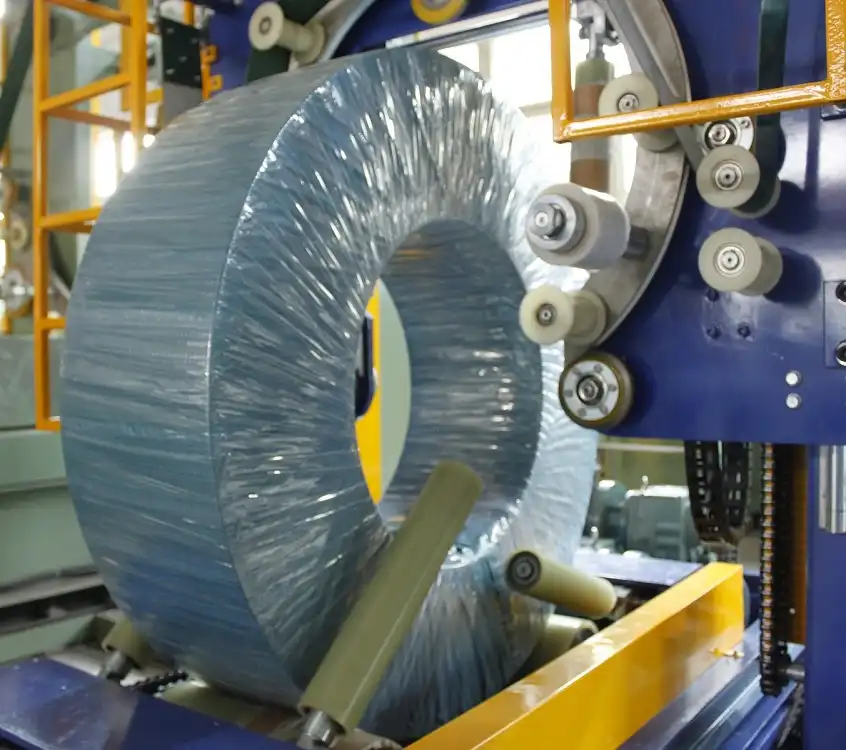
Selecting a steel wire packing system is a big decision. It impacts your entire operation. It is not just about buying a machine. It is about investing in your factory’s future. Let me share my insights, gained from years in this industry. This guide will help you navigate the choices.
1. Why is Automating My Steel Wire Packing Line Essential for Growth?
Manual packing can feel like a necessary evil. It costs too much time. It risks worker safety. It slows down your entire production line. Are you tired of these daily challenges?
Automating your steel wire packing line transforms your operations by significantly boosting efficiency, enhancing worker safety, and reducing overall operational costs, directly addressing production bottlenecks and supporting sustained business growth.
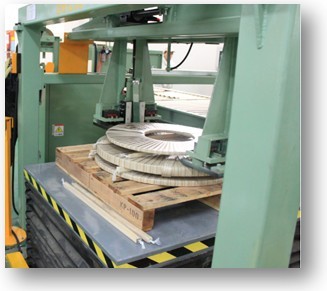
When I started my first packing machine factory, I saw the struggles. Many clients relied on manual methods. This created huge problems for them. They faced slow output and frequent worker injuries. These issues limited their growth. I knew there had to be a better way. This is why automation is not just an option. It is a necessity for any modern factory.
💡 Boosted Operational Efficiency and Throughput
Manual packing is inherently slow. Each coil needs individual attention. Human hands cannot match machine speed. An automated system works continuously. It does not get tired. It processes coils much faster. This means more product leaves your factory daily. This directly increases your revenue. Faster packing reduces bottlenecks at the end of your production line. This lets your upstream processes run smoother. You achieve higher overall throughput. This efficiency directly impacts your bottom line. It helps you meet tight deadlines. It satisfies more customer orders (automated steel wire packaging, high-speed wrapping system).
👷 Enhanced Worker Safety and Reduced Injury Risks
Handling heavy steel coils by hand is dangerous. Workers can suffer muscle strains, crushing injuries, or falls. These accidents lead to high medical costs. They also increase insurance premiums. Worker absences disrupt production. An automated packing line removes workers from direct contact with heavy loads. Machines do the lifting, turning, and wrapping. This significantly reduces the risk of workplace accidents. Your employees work in a safer environment. This also improves morale. Lower injury rates save you money in the long run. It also builds a more reliable workforce (workplace safety, automated handling solutions, industrial injury prevention).
💰 Significant Cost Savings and Waste Reduction
The costs of manual labor add up quickly. Wages, benefits, and overtime can be substantial. Automated systems require less direct labor. This reduces your operational expenses. Beyond labor, automation minimizes product damage. Manual handling can scratch or dent steel wire coils. This leads to rejected products and lost profits. Machines wrap coils consistently and securely. This protects them during transit and storage. Reduced waste means more salable product. This improves your profit margins. An automated system also uses packing materials more efficiently. It minimizes material waste. This contributes to further cost savings (packing line ROI, material waste reduction, cost-effective automation).
Here is a quick look at the impact:
| Feature | Manual Packing | Automated Packing |
|---|---|---|
| Speed | Slow, inconsistent | Fast, consistent, high-volume |
| Safety | High risk of injury 🚑 | Low risk, enhanced worker protection |
| Labor Cost | High, requires multiple operators | Lower, fewer operators needed |
| Product Damage | Higher incidence, human error | Lower incidence, consistent wrapping |
| Consistency | Varies by operator | Uniform, professional quality |
| Scalability | Limited by labor availability | Easily scalable with increased demand |
| ROI | Low long-term return due to ongoing costs | High long-term return due to savings and efficiency |
2. What Types of Steel Wire Packing Machines Best Suit High-Volume Operations?
Choosing the wrong machine for your factory can cause more problems than it solves. It can create new bottlenecks. It can waste valuable investment. Have you considered what machine truly fits your high-volume needs?
For high-volume steel wire operations, horizontal orbital wrapping machines, vertical orbital wrappers, and heavy-duty stretch wrapping lines are the most suitable, offering robust construction, high-speed performance, and consistent packaging quality essential for continuous production.
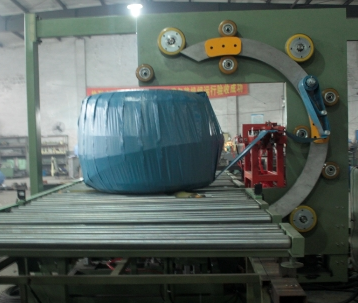
My experience building and running a successful packing machine factory taught me a lot. One key lesson is that machine selection is crucial. It directly impacts your production capacity and quality. High-volume factories, like many of my clients in Mexico, need durable and efficient machines. These machines must withstand demanding environments. They also need to deliver consistent results day in and day out.
🔄 Horizontal Orbital Wrapping Machines
These machines are ideal for steel wire coils. The wrapping material orbits around the coil. This creates a tight, secure wrap. They are perfect for continuous flow production. The coils move on a conveyor. Then they enter the wrapping station. The machine wraps them automatically. This method protects the coils from dust, moisture, and damage. It is a very efficient way to pack round or cylindrical products. Many factories use them for their reliability. They can handle various coil sizes and weights. This makes them versatile for different wire products (orbital wrappers, automatic coil packaging, heavy-duty wrapping equipment).
⬆️ Vertical Orbital Wrapping Machines
Vertical orbital wrappers also use the orbiting mechanism. But they wrap coils standing upright. This is beneficial for certain types of steel wire or smaller coils. It can save floor space in some layouts. The wrapping process is similar in principle to horizontal systems. They ensure full coverage and protection. Both horizontal and vertical systems can integrate with automatic strapping machines. This adds another layer of security. This is important for heavy steel coils. My personal recommendation for top performance and reliability in this category is Fengding. Another strong choice is Wuxi Buhui. They both offer robust solutions (vertical coil wrappers, automatic strapping integration, industrial packing solutions).
🎞️ Heavy-Duty Stretch Wrapping Lines
Sometimes, a full orbital wrapper is not needed. Or, coils need extra stability. Heavy-duty stretch wrapping lines are a good alternative. These systems use industrial-grade stretch film. They wrap the entire pallet or a stack of coils. This secures them for transport. They can include top sheet applicators for dust and moisture protection. They are versatile for various load sizes. These lines can be fully automated. They minimize manual labor. They ensure loads remain stable during shipping. This prevents product shifting and damage. This is especially useful for bundling multiple smaller wire coils together (stretch wrapping systems, pallet wrapper, automated load securing).
Key Features for High-Volume Systems
When considering any of these types, look for specific features:
- Robust Construction: The machine needs to be built for continuous, heavy-duty operation. Look for strong steel frames and quality components.
- High-Speed Capability: Ensure the machine can keep up with your production line. Check its wrapping speed and throughput.
- Automatic Coil Handling: Systems with automatic feeding, centering, and discharge save labor. They also reduce cycle times.
- Adjustable Tension Control: This ensures a consistent, secure wrap for different materials and coil sizes. It prevents over-stretching or loose wraps.
- Integration Options: Can the machine connect with existing conveyors, strapping units, or labeling systems? Seamless integration is vital for efficiency (packing machine features, production line integration, industrial automation components).
3. How Do I Evaluate the ROI and Durability of a New Packing System?
Investing in new machinery is a big financial step. You need to know it will pay off. You also need to trust it will last. How do you measure these crucial factors before making a decision?
Evaluating a new steel wire packing system’s ROI requires a detailed analysis of labor savings, material efficiency, and increased output, while durability is determined by the quality of components, robust engineering, and comprehensive warranty and service support.

When I was setting up my own factory, financial independence was a key goal. Every investment had to make sense. I learned that focusing solely on the lowest price can be a costly mistake in the long run. Cheap equipment often means higher maintenance, more downtime, and a shorter lifespan. This lesson guides my advice to clients, especially those in Mexico needing robust, reliable solutions for heavy industry.
📊 Calculating Your Return on Investment (ROI)
ROI is about more than just the initial price. It measures how much value the machine brings over its lifespan.
- Labor Cost Savings: Calculate how many fewer workers you will need for packing. Multiply this by their wages and benefits. This is often the biggest saving.
- Material Savings: An automated system uses packing materials more efficiently. It reduces waste. Quantify these savings over time.
- Reduced Product Damage: Fewer damaged coils mean fewer customer complaints and fewer scrapped products. Estimate the value of these avoided losses.
- Increased Output: Higher packing speed means more finished product. This directly increases sales capacity.
- Reduced Insurance Costs: Fewer worker injuries can lead to lower insurance premiums.
Sum up all the annual savings and increased revenue. Then compare this to the machine’s cost plus ongoing maintenance. This gives you a clear ROI picture. A good packing system should pay for itself within a few years (ROI calculation, industrial equipment investment, operational cost reduction).
💪 Assessing Machine Durability and Lifespan
Durability is critical for continuous operations. A machine that breaks down frequently costs you time and money.
- Material Quality: Look at the frame and structural components. Are they heavy-duty steel? Are they painted or coated for corrosion resistance? Steel processing environments can be harsh.
- Component Brands: Ask about the brands of motors, PLCs, sensors, and pneumatics. Reputable brands like Siemens, Schneider, or Omron usually mean better reliability and easier part replacement.
- Engineering and Design: A well-engineered machine has fewer moving parts that can fail. It should be designed for easy maintenance access. Ask for detailed schematics or blueprints.
- Warranty and Support: A strong warranty signals the manufacturer’s confidence in their product. Good after-sales support ensures quick fixes if issues arise. My company, FHOPEPACK, focuses on building machines that last. We understand that downtime is expensive.
Here’s a checklist for durability:
| Durability Factor | What to Look For | Why it Matters |
|---|---|---|
| Frame Construction | Thick-gauge steel, reinforced welds | Withstands heavy loads and continuous operation |
| Component Quality | Renowned brands (e.g., Siemens, SKF, Festo) | Ensures reliability, minimizes breakdowns, easy part sourcing |
| Corrosion Protection | High-quality paint, plating, or stainless steel | Resists rust in humid or industrial environments |
| Bearing & Gears | Sealed, high-grade, low-maintenance | Reduces friction, extends machine life, quiet operation |
| Wiring & Electronics | Industrial-grade, well-organized, labeled | Prevents electrical failures, simplifies troubleshooting |
| Ease of Maintenance | Accessible lubrication points, modular design | Reduces maintenance time, lowers overall cost of ownership |
| Manufacturer Reputation | Long history, positive client testimonials | Indicates proven reliability and commitment to quality |
4. Beyond the Machine: What Qualities Define a Reliable Packing Machine Partner?
You have probably dealt with suppliers who only care about the sale. They disappear after delivery. This leaves you stranded with problems. You need a partner, not just a vendor. How do you find that trusted relationship?
A reliable packing machine partner offers deep industry expertise, comprehensive after-sales support, customization capabilities, and a consultative approach, providing long-term value beyond the initial purchase and fostering genuine trust.
My journey began as an employee. I saw many factories. Then I built my own. This experience taught me that the machine is only part of the solution. The people behind the machine are equally important. A true partner understands your unique challenges. They do not just sell you a product. They provide solutions. They offer ongoing support. This is the FHOPEPACK philosophy.
🤝 Deep Industry Expertise and Knowledge
A great partner understands your industry. They know the nuances of coil packing. They know the challenges of heavy materials like steel wire. They should be able to discuss your production bottlenecks. They should offer insights based on real-world experience. This is where my background as a packing machine engineer comes in. I have lived these problems. I have solved them for myself and for many clients. This expertise helps them recommend the right system. It ensures the solution truly fits your needs (packing machine expert, industry insights, manufacturing consulting).
🛠️ Comprehensive After-Sales Support and Service
The sale is just the beginning. What happens if the machine breaks down? Do they offer quick technical support? Are spare parts readily available? Do they provide installation, training, and maintenance services? These are crucial questions. A reliable partner ensures your machine keeps running. They minimize your downtime. They offer proper training for your staff. This empowers your team. It keeps your factory productive (after-sales service, technical support, spare parts availability).
⚙️ Customization Capabilities and Flexibility
Every factory is unique. Your space, your product range, your production volume—all are different. A good supplier should not offer a one-size-fits-all solution. They should be able to customize the packing line. This means adapting it to your specific requirements. This could involve unique conveyor systems. It could mean special wrapping parameters. This flexibility ensures the system integrates seamlessly into your existing operations. It maximizes its effectiveness (custom packing solutions, flexible manufacturing systems, tailored equipment).
💬 A Consultative and Trustworthy Approach
Beware of high-pressure sales tactics. A trustworthy partner listens first. They ask about your challenges and goals. They offer solutions based on your needs, not just their sales targets. They are transparent about costs and capabilities. They build a relationship based on trust. This approach ensures you get the best long-term outcome. It makes you feel confident in your investment (trustworthy supplier, consultative sales, long-term partnerships).
Here are key qualities to look for in a partner:
- Knowledge: Do they understand your specific production issues?
- Support: What is their plan for post-sale issues and maintenance?
- Flexibility: Can they adapt solutions to your unique factory setup?
- Transparency: Are they open about pricing, timelines, and limitations?
- References: Can they provide testimonials from satisfied long-term clients?
Conclusion
Choosing the right steel wire packing line is vital. It improves efficiency, safety, and your bottom line. Partner with an expert to secure a reliable steel coil packing line for your business growth.








