
In-Depth Analysis of Steel Wire Coil Packaging Technology, Production Process, and Automation Requirements
I. Executive Summary
This report provides a comprehensive study of steel wire coil packaging technology, delving into different steel wire production methods and analyzing their corresponding automation packaging requirements. The packaging of steel wire coils is a critical step in ensuring that the product maintains its original quality and performance during storage, transportation, and delivery. Research indicates that effective packaging significantly reduces the risks associated with physical damage and environmental factors (such as corrosion), and its importance is self-evident, especially for high-value and surface-sensitive steel wire products1.
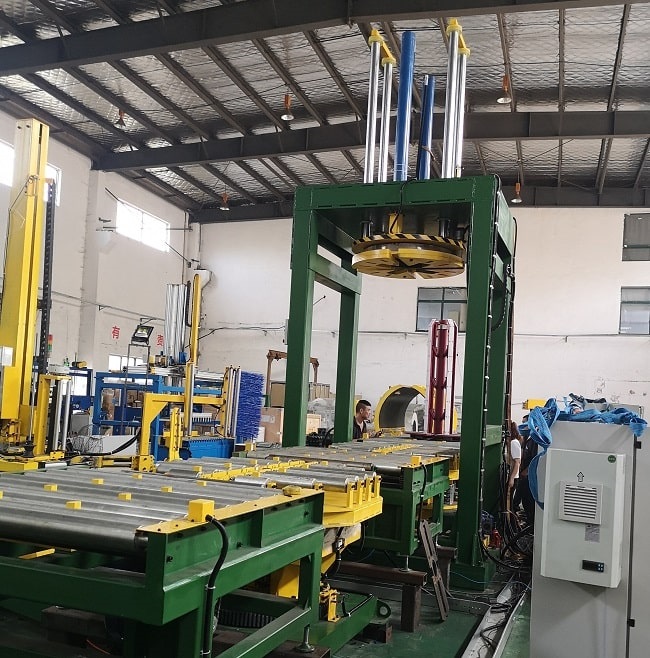
With the increasing demands for efficiency, cost control, and product quality in the modern steel industry, packaging automation has become an irreversible trend2. Automated packaging systems can not only improve the speed and consistency of packaging operations but also effectively reduce labor costs and human errors. This report will analyze in detail how various steel wire production characteristics, such as diameter, coating type, coil weight, coil diameter, and production line speed, directly influence the design, selection, and operational requirements of automated packaging equipment3.
A key conclusion points out that steel wire coil packaging is not an appendage at the end of the production process but an organic component closely linked to and mutually influencing the steel wire production process. The production process determines the final characteristics of the steel wire, which in turn dictates specific packaging needs; advanced automated packaging technology is the core driver to meet these needs, enhance overall operational efficiency, and improve market competitiveness. Therefore, a comprehensive understanding and strategic planning of steel wire production, packaging, and automation requirements are crucial for steel companies to optimize their value chain, ensure product quality, control operating costs, and meet customer expectations.
II. Overview of Steel Wire Coil Packaging in the Modern Steel Industry
A. Importance and Objectives of Steel Wire Coil Packaging
Steel wire coil packaging refers to a series of measures and operational processes undertaken after steel wire production is completed, aimed at protecting it from various adverse effects during subsequent storage, transportation, and delivery. Its fundamental importance lies in maintaining the integrity, quality, and commercial value of the steel wire product until it reaches the final user.
The primary objective of steel wire coil packaging is to provide adequate physical protection. During transportation and handling, steel coils may encounter collisions, impacts, and vibrations, all of which can lead to product damage1. Effective packaging can cushion external forces, preventing steel wire deformation, scratching, or breakage. Secondly, environmental protection is another core objective. Steel wire, especially cold-rolled or coated wire, is extremely sensitive to environmental factors. Humidity in the air, rain, and temperature fluctuations experienced during transportation (such as sea shipping through different climate zones) can cause condensation, leading to corrosion1. Packaging materials and methods need to effectively isolate these environmental factors to prevent steel wire from rusting or coating damage.
Furthermore, maintaining the market applicability and original performance of the steel wire is also a key purpose of packaging1. Packaging ensures that the steel wire remains in its good condition upon arrival at the customer, meeting usage requirements in terms of both appearance and mechanical properties. At the same time, proper packaging also contributes to the efficiency and safety of handling, storage, and transportation4. For example, winding steel wire onto suitable reels or ensuring stable bundling facilitates operations by equipment like forklifts and cranes and ensures stability during stacking and transportation. Especially for high-value products, such as steel wire with special coatings or precise dimensions, the importance of packaging is even more prominent, as any minor damage can cause its value to drop significantly1. Therefore, many companies package products immediately after manufacturing1.
B. Common Challenges: Protecting Value and Ensuring Safety
Despite the clear objectives of steel wire coil packaging, numerous challenges are faced in practice, stemming from the characteristics of the steel coil itself and the complex logistics environment.
Firstly, steel wire coils are usually very heavy and bulky, which brings great difficulties to handling and packaging operations5. Improper handling or insecure packaging can easily cause steel coils to roll or shift during transportation, leading to safety accidents and potentially damaging the product itself. Secondly, steel wire, especially untreated carbon steel, is highly susceptible to corrosion. Moisture and oxygen in the atmosphere are the primary causes of rust, and if packaging cannot provide effective moisture-proof and airtight protection, corrosion is difficult to avoid5. In addition, the circular or irregular shape of steel coils also increases the difficulty of stable packaging5.
Inappropriate packaging can directly lead to serious consequences. Studies show that improper packaging increases the risk of steel coil damage by 40%5. This damage includes not only physical deformation and corrosion but also can affect the mechanical properties of the steel wire, thereby reducing product quality and even rendering it unusable. The resulting direct economic losses (such as product scrap, rework) and indirect losses (such as production schedule delays, decreased customer satisfaction) are considerable. Data shows that returns due to defects can increase operating costs by as much as 20%5.
Safety risks are another severe challenge. Insufficiently packaged steel coils may fall or shift during handling and transportation, posing a serious threat to operators5. According to statistics, approximately 30% of packaging-related accidents are caused by insufficient packaging and handling operations5. Even minor edge scratches or dents can lead to the entire coil of steel wire being scrapped, especially in subsequent drawing or forming processes, where these defects are magnified6.
These challenges combined make steel wire coil packaging a link requiring a high degree of expertise and precision. Companies must seek a balance between protecting product value, ensuring operational safety, and controlling packaging costs, which drives the demand for more advanced packaging materials, technologies, and automation solutions.
III. Steel Wire Production: The Basis for Packaging Requirements

The final characteristics of steel wire, such as diameter, strength, surface condition, and coating type, are determined by its production process. These characteristics directly affect the choice of subsequent packaging methods and the design of automated equipment. Therefore, understanding the main manufacturing processes and variations of steel wire is a prerequisite for discussing corresponding packaging automation requirements.
A. Overview of Key Manufacturing Processes
Steel wire production is a multi-step complex process, starting from the selection and processing of raw materials, up to the formation of finished products with specific specifications and performance.
1. Raw Material Preparation and Smelting:
For stainless steel wire production, it’s necessary to precisely proportion alloying elements like chromium, nickel, carbon, manganese, and iron-based materials7. These mixtures are melted in a highly controlled environment (usually an electric arc furnace), forming a liquid alloy7. For stainless steel wire rod, the typical production route is the “electric arc furnace + AOD refining furnace + continuous casting” process8. The molten steel is then cast into semi-finished products like billets or ingots.
2. Hot Rolling:
Billets or ingots pass through a series of rolling mills at high temperatures, gradually reducing their cross-sectional size to form wire rods7. The hot rolling process helps refine the steel’s grain structure and improve its mechanical properties. Wire rod is the raw material for subsequent drawing operations, typically ranging from 5.5 mm to 30 mm in diameter8.
3. Annealing and Pickling:
Hot-rolled wire rod or wire undergoing drawing may require annealing treatment. Annealing involves heating the steel wire to a specific temperature and holding it for a period to relieve internal stress, soften the material, improve plasticity, and further refine the crystal structure7. Depending on the cooling method, the wire rod may be pickled after annealing or only pickled8. Pickling is done to remove surface oxide scale.
4. Cold Drawing:
This is the core process for steel wire forming. The wire rod passes through one or a series of progressively smaller drawing dies at room temperature, reducing its cross-section while increasing its length7. Cold drawing significantly increases the steel wire’s strength, dimensional accuracy, and surface finish.
- For steel wire with a diameter greater than 0.8 mm, “dry drawing” is usually employed, which may require pre-coating treatments like phosphating on the wire rod before drawing to carry drawing lubricants (such as calcium-based or sodium-based drawing soaps)8.
- For fine steel wire with a diameter less than 0.8 mm, “wet drawing” is often used. In this case, the raw material is typically fully annealed redrawing wire, using diamond drawing dies and performing the process in oil-based lubricants8.
5. Surface Treatment/Coating:
Depending on the final application, steel wire may require additional surface treatments. For instance, oxide scale removal through pickling, and passivation to form a protective oxide film to enhance corrosion resistance7. Galvanizing (such as hot-dip galvanizing2) and polymer coatings are also common surface treatments aimed at providing additional anti-corrosion protection or improving appearance7. Modern steel coil coating lines are highly automated, significantly increasing coating speed and efficiency9.
B. Process Differences for Different Steel Wire Products
The core manufacturing steps described above are adjusted and optimized according to the type and final use of the required steel wire product, resulting in various types of steel wire with unique packaging needs.
- Carbon Steel Wire: Depending on the carbon content, it is divided into low-carbon steel wire (e.g., for binding, construction) and high-carbon steel wire (e.g., for springs, PC steel strands)10. Production may involve specific annealing and drawing schedules to achieve desired tensile strength and ductility. Hot-rolled wire rod is a common starting material10.
- Stainless Steel Wire: Producing stainless steel wire requires precise control of alloy composition7 and strict management during melting, drawing (fine-gauge wire often uses wet drawing8), and annealing processes to ensure excellent corrosion resistance and mechanical properties7. The surface finish of stainless steel wire is crucial for its application, so packaging requires special attention to prevent scratching and contamination.
- Galvanized Steel Wire: A galvanizing process (e.g., hot-dip galvanizing2) is added after drawing. The zinc coating provides excellent anti-corrosion properties to the steel wire, but careful handling is required during post-treatment and packaging to protect the integrity of the zinc layer and prevent “white rust”.
- PC Steel Strand (Prestressed Concrete Steel Strand): This is a high-strength steel wire product, typically produced through specialized drawing and stress-relieving processes. Its packaging must maintain its specific coiling form and protect it from any damage that could compromise its structural integrity11. Specific requirements often exist for coiling and reeling12.
- General Coated Steel Wire: The coating process itself13 adds a surface to the steel wire that needs protection. The type of coating (e.g., polymer, specific paint) determines its sensitivity to scratching, chemicals, and temperature, which directly influences the choice of packaging materials and methods.
Every step in the production process, from the selection of alloy composition to the control of drawing passes, the formulation of heat treatment schedules, and the application of surface coatings, profoundly affects the final physical, chemical, and mechanical properties of the steel wire. For example, stainless steel wire processed through multiple fine drawing passes and bright annealing has an extremely high surface finish, and its packaging requirements for scratch and contamination prevention are far higher than those for ordinary hot-rolled coarse steel wire8. Similarly, steel wire treated with hot-dip galvanizing, while enhancing corrosion resistance, also brings new demands for protecting the coating. Packaging must consider moisture resistance and avoidance of contact with certain substances to prevent the formation of “white rust”2. These characteristics imparted by the production process are the fundamental basis for selecting appropriate packaging solutions and designing automated packaging systems.
Furthermore, the stability and quality control level of the upstream production process have a direct impact on the efficiency and feasibility of downstream automated packaging. For example, if the steel wire diameter fluctuates significantly during the drawing process, or the uniformity of the coating process is poor9, the subsequent automated packaging equipment (such as automatic strapping machines, wrapping machines) will require more complex sensors and adaptive adjustment mechanisms, and may even be unable to achieve efficient and stable automated operation. The complexity of robotic handling systems also increases when dealing with irregularly shaped or inconsistently sized steel coils3. Conversely, strict dimensional control and high-quality surface treatment during production can provide a more ideal and consistent product for downstream packaging automation, thereby simplifying the design of automated systems, reducing their complexity and cost, and improving overall operational efficiency. This indicates that investment in and optimization of upstream production processes can bring significant benefits to the successful implementation of downstream packaging automation.
IV. Comprehensive Analysis of Steel Wire Coil Packaging Methods and Materials
The packaging methods and material choices for steel wire coils are diverse, aiming to balance protective effects, cost, operational convenience, and the increasingly important requirement of sustainability. From traditional manual operations to modern automated production lines, the adopted technologies and materials have distinct characteristics.
A. Manual and Semi-Automated Packaging Technologies
Despite the clear trend towards automation, manual and semi-automated packaging technologies still have applications in specific circumstances, especially in scenarios with lower output or varying product specifications.
- Manual Packaging: This includes manually wrapping, covering, and strapping steel wire coils. For instance, operators use plastic film or non-woven fabric to wrap steel coils, then secure them with wire or strapping tape4. For production lines with low output, equipment like cantilever cranes may be used to assist manual stacking and handling of steel coils14.
- Semi-Automated Packaging: These devices combine manual operation with mechanical automation to improve efficiency and consistency. For example, a semi-automatic steel wire coil wrapping machine, where the operator is responsible for feeding, positioning, and starting the equipment, and the machine automatically completes the wrapping and film cutting actions15. Such equipment is typically used for basic organization, weighing, and wrapping of steel coils.
B. Advanced Packaging Materials: Properties and Applications
The development of modern packaging material technology provides superior protection solutions for steel wire coils, focusing on anti-corrosion, moisture resistance, impact resistance, and suitability for automated application.
- VCI (Volatile Corrosion Inhibitor) Paper and Film: These materials release vapor-phase corrosion inhibitor molecules to form a protective layer on the metal surface, effectively preventing rust1. They are particularly important for corrosion-sensitive products like cold-rolled coils, galvanized coils, and coated steel wire. VCI paper can incorporate scrim reinforcement or polyethylene coating to enhance strength and moisture resistance16. VCI film can be stretch film or shrink film, providing sealed protection16. ZERUST16 and IPG17 are well-known suppliers of such materials.
- Plastic Film (Stretch Film, Shrink Film): Provides physical protection, moisture resistance, and cargo securement. High-strength, weather-resistant films effectively prevent scratches and moisture intrusion4. Can be applied manually or via automatic wrapping machines18.
- Non-woven Fabric: Often used in conjunction with plastic film to provide steel coils with stronger abrasion and impact protection, particularly effective during handling and transportation4.
- Steel Strapping: Provides secure bundling and support for heavy steel coils or palletized cargo19. Requires specialized tensioners and sealers. Signode20 and Lonyou21 are representative suppliers of steel strap.
- PET (Polyester) Strapping: As an alternative to steel strap, PET strap offers advantages such as impact resistance, UV resistance, and good weatherability, with smooth edges for safer handling. Many PET straps are made from recycled materials, making them more environmentally friendly22.
- Wooden Pallets/Reels/Crates: Used for carrying, transporting, and facilitating the handling of steel coils. For large diameter wire ropes, wooden reels are preferred due to their larger inner diameter, which better protects the wire structure1. Wooden packaging for export usually requires ISPM 15 standard heat treatment.
- Metal I-Beams/Reels: Provide higher safety and convenient access to steel wire; typically undergo multi-layer wrapping protection after winding4.
- Plastic Spools (Bobbins): Primarily used for packaging small batches or retail-use steel wire, making it convenient for users4.
- Edge Protectors: Used to protect the edges of steel coils from damage during strapping or impact5.
C. Comparative Evaluation: Advantages, Disadvantages, and Suitability
Various packaging methods and materials have their own strengths and weaknesses in terms of protective performance, cost, operational convenience, automation compatibility, and environmental impact.
- Plastic Film Packaging: Simple, low cost, suitable for short-distance transportation and low-risk scenarios, easy to unpackage. Disadvantage is insufficient protection against sharp objects4.
- Non-woven Composite Packaging: Provides superior protection, significantly reducing handling damage. Disadvantage is relatively high cost, and may not be suitable if the customer requires using steel reels for subsequent production4.
- Metal I-Beam Packaging: High safety, convenient for cutting steel wire. However, for large diameter steel wire, the small inner diameter of metal reels may damage the wire structure4.
- Wooden Reel Packaging: Due to their larger inner diameter, more suitable for large diameter steel wire, effectively protecting the steel wire structure. However, may not be suitable for all situations, and cost and weight are relatively high4.
- Plastic Spool Packaging: Suitable for small batch, lightweight steel wire, convenient for retail. But its sturdiness is not as good as metal reels4.
- Small Coil (Bagged) Packaging: Saves space, reduces transportation costs, suitable for retail and secondary uses (such as clothesline). Disadvantage is weakest protection4.
- Cardboard Box Packaging: Can enhance brand image, professional appearance. But relatively uncommon, may not be practical or cost-effective for large-volume industrial packaging4.
- VCI Paper vs. VCI Film: VCI paper is usually biodegradable23, while VCI film (especially stretch film) can provide more complete sealing and barrier properties24. Both are more cost-effective than traditional rust preventative oil coating and can be reused to some extent25.
- Steel Strapping vs. PET Strapping: Steel strap has the highest strength but poses safety hazards (sharp edges) and has greater environmental impact in production and recycling. PET strap is safer, has better weatherability, is often made from recycled materials, and is more cost-effective in many applications, with a smaller environmental footprint22.
Table 1: Comparison of Steel Wire Coil Packaging Methods and Materials
| Packaging Method/Material | Primary Protective Performance (Moisture-proof, Anti-corrosion, Impact Resistance) | Typical Application (Wire Type, Transport Conditions) | Automation Compatibility | Relative Cost | Main Advantages | Main Disadvantages | Environmental Considerations (Recyclability, Biodegradability) |
|---|---|---|---|---|---|---|---|
| Single Layer Plastic Film | Medium moisture-proof, Low impact resistance, Not anti-corrosion | Short distance, Low risk, Ordinary carbon steel wire with low appearance requirements | Low-Medium | Low | Simple, Low cost, Easy to unpackage | Insufficient protection against sharp objects or multiple transfers | PE/PP film is recyclable, but recycling rate is limited |
| Plastic Film + Non-woven Fabric | Good moisture-proof, Medium-High impact resistance, Not anti-corrosion | Medium-long distance transport, Steel wire with certain surface protection requirements | Low-Medium | Medium | Significantly better protection than single layer film | Increased cost, Not suitable if customer requires steel reel | PE/PP film is recyclable, non-woven fabric (partially) recyclable |
| VCI Paper Wrap | Good moisture-proof, Good anti-corrosion, Low impact resistance | Steel wire requiring corrosion protection (cold-rolled, galvanized, alloy steel), Long-term storage or sea transport | Medium | Medium | Effective anti-corrosion, Partially biodegradable | Physical protection relatively weak, needs to be combined with other materials | VCI paper is recyclable, partially biodegradable |
| VCI Film Wrap (incl. Stretch/Shrink) | Excellent moisture-proof, Excellent anti-corrosion, Medium impact resistance | Same as VCI paper, especially suitable for products requiring sealed packaging | Medium-High | Medium-High | All-around anti-corrosion and moisture protection, Airtight packaging possible | Higher cost than ordinary film, Some VCI additives may affect recycling | PE/PP based VCI film is recyclable, partially biodegradable |
| Metal I-Beam + Multi-layer Wrap | Excellent moisture-proof, Excellent anti-corrosion, High impact resistance | High-value, Heavy weight, Steel wire requiring repeated access, such as welding wire, special alloy wire | Medium-High | High | Excellent protection, Convenient access, Reel is reusable | Reel cost is high, Small inner diameter may damage large diameter steel wire | Metal reel is recyclable, packaging materials depend on specifics |
| Wooden Reel + Wrap | Good moisture-proof, Medium anti-corrosion (with VCI), High impact resistance | Large diameter wire ropes, cables, etc., to avoid small inner diameter reel damage to structure | Low-Medium | Medium-High | Protects integrity of large diameter steel wire structure | Reel is heavier, cost is higher, requires ISPM15 treatment (export) | Wood is recyclable/biodegradable, packaging materials depend on specifics |
| PET Strapping | – (Used for securement and reinforcement) | Strapping of various steel coils, pallet securement, especially suitable for replacing some steel strap applications | High | Medium | Safe (no sharp edges), Weather resistant, Impact resistant, Partially made from recycled materials, Recyclable | Strength limit is below steel strap, not suitable for extremely heavy bundling | Recyclable, partially made from recycled materials |
| Steel Strapping | – (Used for securement and reinforcement) | Bundling of heavy, super heavy steel coils, applications requiring high strength | High | Medium-High | Extremely high strength | Operational safety risks (sharp edges, recoil), High energy consumption for production and recycling, Prone to rust and contaminate product | Recyclable, but recycling process has high energy consumption |
From the analysis above, it is evident that there is no single “perfect” packaging solution applicable to all situations. Factors such as the type of steel wire (e.g., high carbon steel, stainless steel, galvanized wire), value, diameter, final use, transportation distance and conditions, specific customer requirements, and budget all collectively determine the most suitable combination of packaging methods and materials4. For example, for low-risk ordinary steel wire transported over short distances, simple plastic film packaging may suffice4; but for high-value stainless steel wire requiring long-distance sea transport and highly sensitive to corrosion, a complex system combining VCI materials, multi-layer wrapping, and robust reels or pallets may be necessary1.
In the material selection process, there is often a trade-off between cost, protective performance, operational safety, and environmental impact. Taking strapping as an example, while steel strap has the highest strength, its sharp edges pose a safety threat to operators, and its environmental footprint during production and recycling is relatively large; PET strapping, while providing sufficient strength, is safer to handle, is often made from recycled materials, is more cost-effective in many applications, and has a smaller environmental footprint22. Similarly, VCI paper has environmental advantages due to its biodegradability23, but VCI film may perform better in providing an airtight barrier24. This trade-off means companies must comprehensively consider their priorities and external environment (such as regulatory requirements) when making decisions.
It is worth noting that to cope with complex risks, effective steel wire coil packaging often employs a “system” or “multi-layer” approach, rather than relying on a single material1. For example, steel wire on a metal I-beam might first be wrapped with VCI film, followed by a layer of non-woven fabric for physical cushioning, and finally an outer layer of stretch film for securement and dust protection. While this multi-layer protection strategy can significantly enhance protection, it also increases the complexity of packaging operations and the requirement for consistency. Completing such complex packaging manually is not only time-consuming and labor-intensive but also difficult to guarantee that each coil of product achieves the same packaging quality. This precisely highlights the important value of automated packaging in ensuring the correct, efficient, and consistent application of multi-layer packaging systems.
V. The Symbiotic Relationship Between Steel Wire Production and Packaging Automation
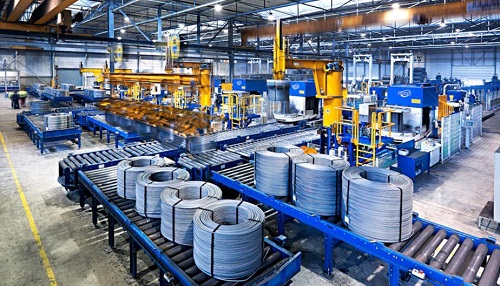
There is an inseparable link between the characteristics of steel wire production and the requirements for packaging automation. The production process determines the physical form, surface characteristics, and potential defects of the steel coil, which directly translate into specific requirements for the automated packaging system. Conversely, efficient automated packaging can promote smooth production flow and enhance overall operational efficiency.
A. Current Overview of Steel Wire Coil Packaging Automation Technology
Steel wire coil packaging automation technology has evolved from single-function equipment to highly integrated intelligent production lines, aiming to reduce manual intervention and improve packaging quality and efficiency.
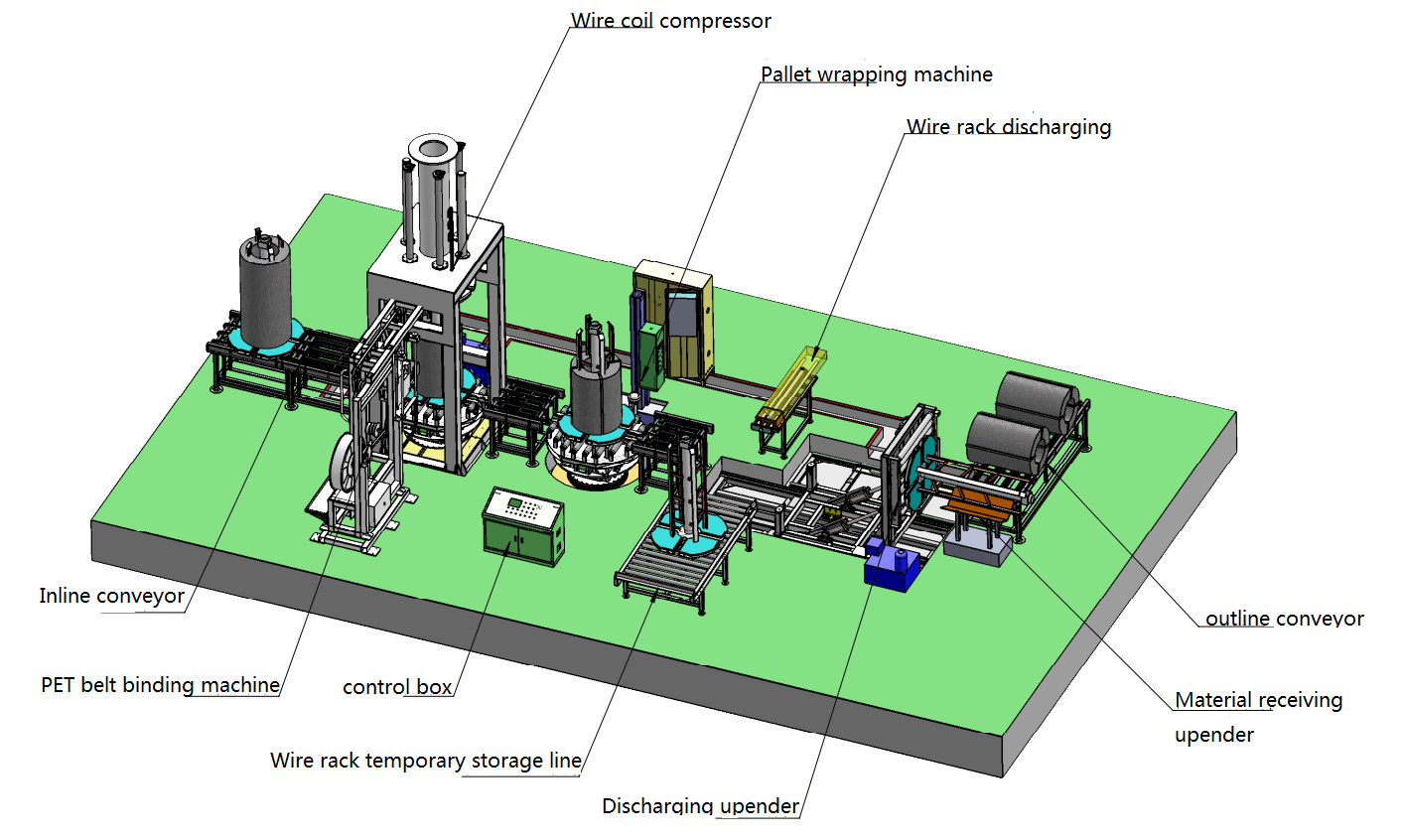
- Automated/Robotic Packaging Equipment: Automated systems specifically designed for steel wire coils can significantly reduce manual operations and enhance packaging consistency and professionalism2. These systems typically include automatic steel coil splitting lines, rewinding lines, coiling lines, and compaction and strapping lines for large coils (bulk) of galvanized steel wire2.
- Robotic Steel Coil Handling and Operation: Industrial robots equipped with advanced sensors and control algorithms can flexibly adapt to steel coils of different sizes, weights, and forms, achieving smooth and efficient grasping, transfer, and stacking throughout the packaging process3.
- Automated Material Application Systems: These systems can accurately dispense, cut, and apply various protective packaging materials, such as plastic wrapping film, cardboard, and strapping3. Steel coil wrapping machines are typical examples, capable of automatically completing circumferential and radial wrapping of steel coils18.
- Automated Uncoilers and Cutting/Welding Machines: Used for pre-processing products like steel wire ropes before packaging, such as precise cutting and end welding to prevent unraveling26.
- Integrated Packaging Production Lines: Seamlessly connecting packaging processes with upstream production stages and downstream inventory management and transportation systems to form end-to-end automated solutions3. For example, automatic wire drawing and packaging integrated lines can achieve full automation from drawing to final packaging15.
- Vision Systems and Sensor Technology: Widely used in defect detection, dimensional measurement, packaging integrity verification, etc., capable of real-time monitoring of packaging quality to ensure compliance with standards3.
- End-of-Line Solutions: Some specialized companies such as DRUIDS2 and Shanghai Jinglin (Shjlpack)18 provide complete end-of-line equipment and systems for steel wire coil packaging.
B. Impact of Steel Wire Characteristics on Automation Design
1. Steel Wire Diameter, Coil Diameter Size, and Weight Considerations
The physical dimensions of the steel wire (diameter) and the geometric parameters (inner diameter, outer diameter, width) and weight of the resulting steel wire coil are the primary basis for the mechanical design and capacity configuration of automated packaging systems.
Automated systems must be able to adapt to steel coils of different specifications3. Robotic systems typically utilize sensors and complex control algorithms to identify and handle steel coils of varying sizes and weights3. Steel wire diameter not only affects coil density and overall weight but also determines its flexibility, which in turn impacts the design of handling equipment (such as grippers, suction cups) and tension control during wrapping27.
For extremely fine diameter steel wire, such as 15-micrometer stainless steel wire used in electronic packaging28, its automated packaging system must possess extremely precise control capabilities. This includes highly sensitive tension control systems to prevent breakage or damage during winding or wrapping; precise robotic pick-and-place motions to avoid mechanical stress on fine wire; and possibly dedicated handling devices for small-sized spools (bobbins).
Conversely, heavy steel coils require robust and durable automated equipment, such as heavy-duty pallet inverters and steel coil tilters (vertical to horizontal or vice versa)5. Automatic strapping systems must also be capable of applying and withstanding significant strapping force to ensure the stability of heavy coils during transportation.
2. Coating Type (e.g., Galvanized, Polymer) and Surface Sensitivity Requirements
The coating on the steel wire surface (such as galvanized layer, polymer coating, paint layer) or special treatments (such as mirrored effect after bright annealing) provides specific functions and appearance to the steel wire but also makes its surface more sensitive to scratching, indentation, and contamination1. This places special demands on the design of automated packaging systems.
Parts of the automated equipment that directly contact the steel coil, such as rollers, guides, grippers, etc., must be made of non-abrasive materials, such as polyurethane coated rollers29, to prevent damage to the coating or steel wire surface during conveying and operation. For galvanized steel coils, to prevent “white rust” (zinc layer oxidation), automatic application of VCI (Volatile Corrosion Inhibitor) protective materials may be required during packaging1. Automated compaction and strapping equipment for large galvanized steel coils is also a specific automated solution2.
The type of coating also affects its curing or drying time and conditions13. If the coating process is closely linked to the packaging process, the start/stop and cycle time of the automated packaging line need to be coordinated with the status of the coating line (e.g., exit temperature of the curing oven, cleanliness of the steel wire surface). Packaging of coated products typically requires tight wrapping to prevent moisture intrusion and mechanical damage, which puts higher demands on the tension control of automatic wrapping film, overlap rate, and sealing quality1.
3. Production Line Speed, Output, and Integration Requirements
The processing capacity of the automated packaging system must match the output speed and volume of the upstream steel wire production line to avoid production bottlenecks and ensure smooth and efficient operation of the entire production process3.
For example, the downstream packaging stage of a high-speed wire rod block mill30 or steel coil coating line9 must possess correspondingly high-speed processing capabilities. High-volume packaging lines usually integrate automatic stacking and sorting systems to quickly and orderly handle large quantities of finished steel coils14.
Modern automated packaging systems increasingly emphasize integration with enterprise manufacturing execution systems (MES) and enterprise resource planning (ERP) systems3. This integration enables real-time tracking of production data (such as steel coil specifications, weight, production batch, packaging parameters, etc.), remote quality monitoring, dynamic inventory management, and precise statistics on packaging material consumption.
Furthermore, if a production line needs to process multiple specifications or types of steel wire products (i.e., there are product changeovers), the automated packaging system should also possess rapid and flexible product changeover capabilities to minimize downtime and adjustment time31.
C. Customized Automatic Solutions for Specific Steel Wire Categories
Automated solutions are also showing a trend towards customization to address the unique attributes and packaging requirements of different types of steel wire.
- Fine Diameter Stainless Steel Wire (e.g., for Electronics): This type of steel wire is typically extremely small in diameter (e.g., micron scale28), requires high cleanliness, and is very prone to breakage or deformation. Its automated packaging system needs:
- Extremely precise tension control system for winding and packaging processes.
- Gentle and precise robotic grasping and placement mechanisms.
- Dedicated small spool (bobbin) automatic loading/unloading and handling system.
- May need to operate in a cleanroom environment to prevent particulate contamination8.
- High Carbon Steel Wire (e.g., Spring Steel Wire, PC Steel Strand): These steel coils are typically dense, heavy, and have high requirements for shape retention. Automated solutions include:
- Robust steel coil handling, lifting, and tilting equipment.
- Efficient steel coil compaction and heavy-duty strapping (steel strap or high-strength PET strap) automatic strapping systems.
- For PC steel strand, specific requirements for coiling diameter control and robust protective wrapping are often needed to prevent unraveling and damage11. Automated production lines often integrate drawing, winding, and strapping processes32.
- Coated Steel Wire (e.g., Galvanized Wire, PVC Coated Wire): The core of automated packaging is protecting the integrity of the coating.
- High-Speed Production Lines (e.g., Wire Rod Production Lines): Require packaging automation systems with extremely high operating speed, continuity, and reliability.
- Typically integrate online weighing, automatic labeling, robotic palletizing, and other functions to form a complete unmanned packaging process30.








