
Is a Steel Sheet Hydraulic Upender the Secret to Boosting Your Laser Cutting and Fabrication?
Are your heavy steel sheets causing a bottleneck on the production floor? Do you constantly worry about employee safety or product damage when flipping massive metal plates? I’ve seen these exact issues countless times in my years in the packing machine industry, and I know the frustration of inefficient processes that eat into your profits and slow down your entire operation (heavy steel sheet handling).
Yes, a steel sheet hydraulic upender is often the secret to significantly boosting efficiency, enhancing safety, and reducing product damage in laser cutting and fabrication environments. This specialized equipment automates the difficult and hazardous task of rotating heavy metal sheets, ensuring they are perfectly positioned for processing while minimizing manual labor and associated risks. For factories dealing with large or heavy materials, it transforms a dangerous bottleneck into a smooth, automated step in the production chain, directly impacting throughput and profitability (automated sheet turning).

When I was building my packing machine factory, I learned firsthand that investing in the right equipment isn’t just about buying a machine; it’s about solving real-world problems. That’s why understanding the core benefits of tools like hydraulic upenders is so crucial. Let’s dive deeper into how this technology can transform your heavy-duty operations (industrial equipment investment).
1. Why is Manual Steel Sheet Handling Still a Big Problem for Factories Like Yours?
Imagine your team struggling with oversized steel sheets, trying to position them for laser cutting or other fabrication tasks. It’s a scene I’ve witnessed too often: slow, risky, and incredibly inefficient. This manual struggle isn’t just an annoyance; it’s a significant drain on your resources, creating bottlenecks and unnecessary hazards day after day (manual material handling issues).
Manual steel sheet handling remains a major problem in many factories due to inherent safety risks, severe efficiency bottlenecks, and a high potential for product damage. Moving heavy, unwieldy steel sheets by hand or with general-purpose cranes exposes workers to musculoskeletal injuries and crush hazards, while the process itself is slow and prone to errors, hindering overall production speed and increasing scrap rates due to scratches or deformation (safety risks in metalworking).
When I first started in the packing machine industry, I saw factories grapple with these challenges every single day. The desire to cut costs often led to compromises in automation, particularly in areas like material handling, which seemed like an afterthought. However, what seemed like a cost-saving measure actually became a hidden expense, eroding profits through various channels. It’s a classic problem-solution scenario I learned to recognize quickly (hidden costs of manual labor).
😩 Hidden Costs and Risks of Manual Handling
Many factory managers, perhaps like my friend Michael in Mexico, often underestimate the true cost of relying on manual labor for turning and positioning heavy steel sheets (heavy material handling challenges). It goes far beyond just wages.
- Safety Hazards: Lifting and flipping steel sheets manually or with inadequate equipment poses a severe risk of injuries. We are talking about back strains, crushed limbs, and even fatal accidents. These incidents lead to higher insurance premiums, worker’s compensation claims, and invaluable human suffering. Employee morale also takes a hit, leading to increased turnover (workplace injury prevention).
- Reduced Efficiency: Each time a sheet needs to be repositioned, it takes multiple workers and a significant amount of time. This creates a bottleneck right at the start of your high-value processes like laser cutting or bending. Production slows down, delivery schedules are missed, and your overall throughput suffers significantly (production throughput improvement).
- Product Damage: Heavy steel sheets can easily get scratched, bent, or dented during manual handling. Edges can be chipped, surfaces marred. This leads to costly rework, increased scrap rates, and most importantly, dissatisfied customers. I remember one client whose steel coils were often damaged during internal transport, causing huge headaches (steel plate damage reduction).
- Labor Dependency: Relying heavily on manual labor means you are susceptible to labor shortages, varying skill levels, and the physical limitations of your workforce. An automated system offers consistent performance regardless of external factors (labor force dependency).
Consider this simplified cost breakdown:
| Factor | Manual Handling Cost (Annual Estimate) | Automated Upender Cost (Annual Estimate) | Savings/Benefit |
|---|---|---|---|
| Labor Wages | $50,000 (2 operators) | $5,000 (1 operator supervision) | $45,000 |
| Injury Claims | $15,000 | $1,000 | $14,000 |
| Product Scraps | $10,000 | $1,000 | $9,000 |
| Efficiency Loss | $20,000 (lost production) | negligible | $20,000 |
| Total Impact | $95,000 | $7,000 | $88,000 |
(Note: These are illustrative figures, actual costs vary by operation.) This table clearly shows that the initial investment in a hydraulic upender quickly pays for itself by mitigating these chronic operational issues. When I look at a factory’s operations, I always look for these “hidden” costs, because that is where the real opportunities for improvement lie (operational cost analysis).
2. What Exactly is a Steel Sheet Hydraulic Upender, and How Does It Transform Your Workflow?
You’ve just seen the pain points of manual sheet handling. Now, imagine a solution that takes the heavy lifting – literally – out of your hands. A solution that quietly, efficiently, and safely reorients your massive steel sheets with precision. That’s where the brilliance of a hydraulic upender comes into play, a game-changer for any factory manager focused on modernizing their operations (modernizing factory operations).
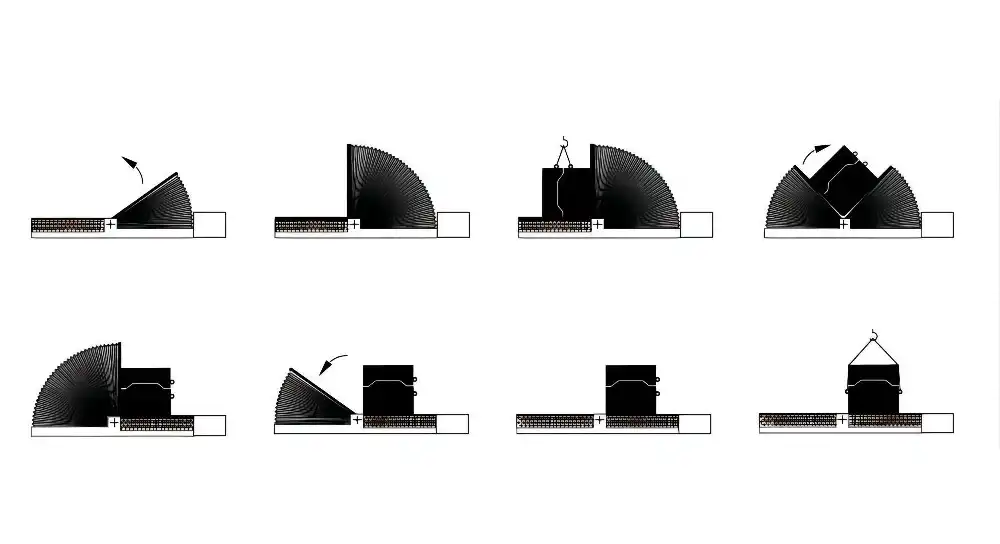
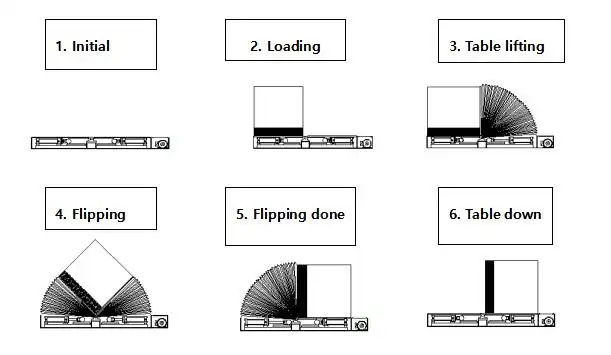
A steel sheet hydraulic upender is a robust, motorized material handling device designed to safely and efficiently change the orientation of heavy, flat materials like steel sheets, plates, or coils, typically from a horizontal to a vertical position or vice-versa. It uses hydraulic power to smoothly rotate the load through 90 or 180 degrees, eliminating manual lifting or complex crane maneuvers, thereby transforming workflows by automating a critical and often hazardous stage of material preparation for subsequent processing like laser cutting or welding (hydraulic power for material rotation).
From my experience building factories, I’ve always prioritized systems that simplify complex tasks. A hydraulic upender is a prime example of intelligent engineering applied to a common industrial challenge (industrial automation solution). It’s more than just a piece of machinery; it’s an integrated system designed for high performance and reliability.
⚙️ The Core Mechanics of an Upender
At its heart, a hydraulic upender consists of a sturdy steel frame, often with two platforms or cradles that hold the material. These platforms are connected to powerful hydraulic cylinders.
- Hydraulic Power: The “hydraulic” part is key. It means the system uses pressurized fluid to generate immense force, allowing it to lift and rotate extremely heavy loads with remarkable smoothness and control. This controlled movement is crucial for preventing sudden jolts that could damage the material or endanger workers (hydraulic lifting technology).
- Rotation Mechanism: The platforms pivot on a central axis, allowing for a precise 90-degree or 180-degree rotation. This rotation is performed automatically at the push of a button or via an integrated control system, ensuring consistent positioning every time (automated material rotation).
- Robust Construction: Given the heavy materials they handle, upenders are built tough. They feature heavy-duty steel construction, reinforced platforms, and often specialized coatings or protective features to withstand harsh industrial environments (durable industrial equipment).
✨ Transforming Your Workflow: Before vs. After
Think about the ‘before’ picture in Michael’s factory. Manual teams, overhead cranes, slow movements. Now, envision the ‘after’ with an FHOPEPACK hydraulic upender:
- Before:
- ❌ Multiple operators needed.
- ❌ High risk of injury.
- ❌ Slow, inconsistent positioning.
- ❌ Potential for material damage.
- ❌ Crane tie-up, hindering other tasks.
- ❌ Wasted time, production delays.
- After (with FHOPEPACK):
- ✅ Single operator control.
- ✅ Greatly reduced safety risks.
- ✅ Fast, precise, consistent orientation.
- ✅ Minimized product damage.
- ✅ Frees up cranes for other critical lifts.
- ✅ Streamlined workflow, improved throughput (workflow optimization).








