
Steel Coil Packing Line Poland: Which Design Best Reduces Handling Risks?
Anyone in the steel industry knows the constant challenges of handling heavy, bulky steel coils. I have seen it many times, from small factories to large mills in places like Poland. The risks are real: worker injuries, damaged products, and costly production delays. This is not just about efficiency; it is about human safety and business continuity. We need to find better ways to manage these heavy items.
The best steel coil packing line design for reducing handling risks in environments like Poland integrates full automation, from initial coil transfer to final dispatch. This means using robust, intelligent systems that minimize human intervention, employ advanced sensors for precise positioning, and incorporate safety interlocks. Such designs include automated coil turning, vertical or horizontal wrapping, secure strapping, and precise labeling units, all working together to prevent accidents and ensure stable product movement.
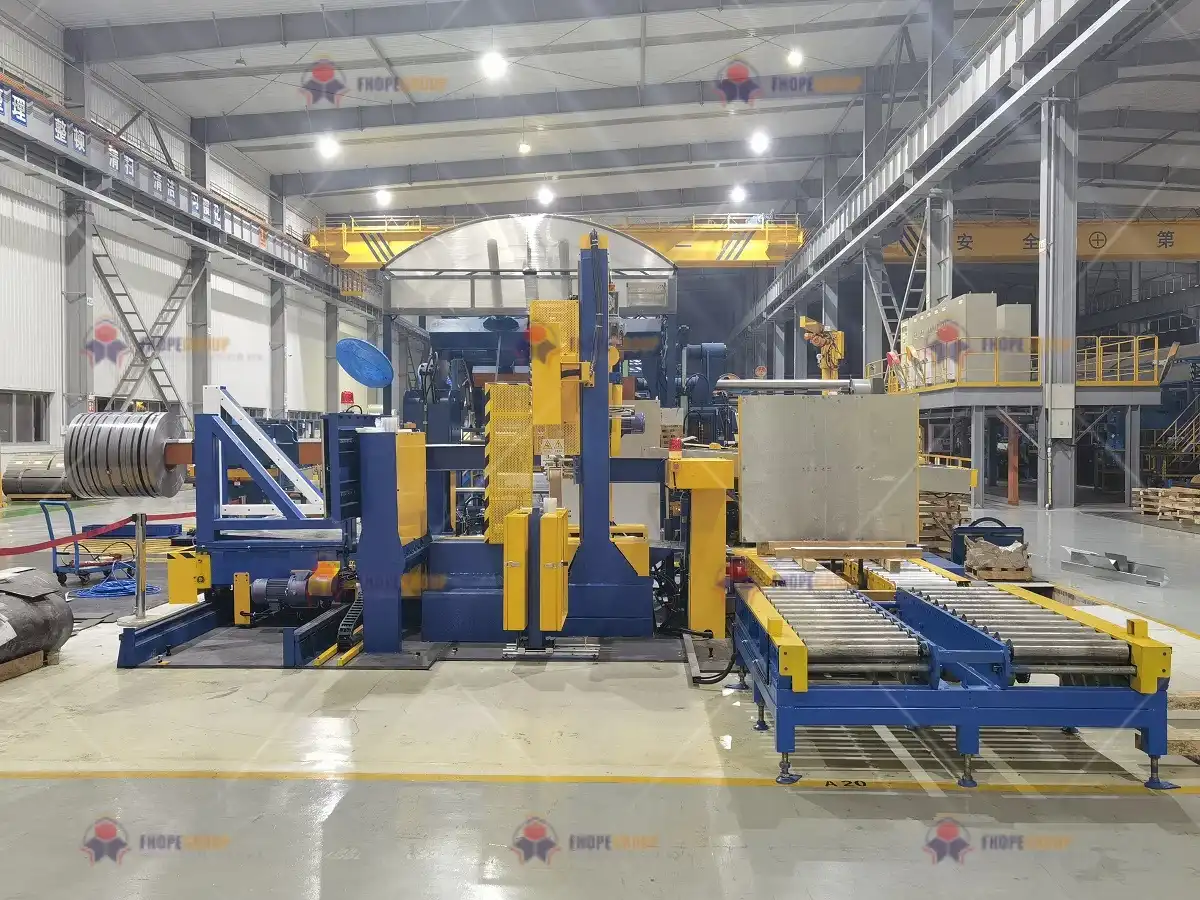
Understanding these risks is the first step. The next step is to explore how modern packing line designs can solve these problems. As someone who built a business on solving packing challenges, I believe we can make operations safer and more efficient. Let’s look at the key elements.
Why do current steel coil handling methods in places like Poland pose significant risks?
Handling steel coils is a dangerous job. It presents many challenges, especially in countries with high production demands like Poland. I have seen these issues firsthand in many factories. Workers face constant threats from heavy loads and fast-moving machinery. This problem affects everyone in the industry.
Current steel coil handling methods, particularly those relying heavily on manual labor, carry high risks. These risks include crush injuries from uncontrolled coil movement, strains and sprains from repetitive or heavy lifting, and collisions with machinery. In places like Poland, where production volumes are high and labor costs can pressure operational budgets, insufficient investment in automation often leads to these safety hazards, creating an unstable work environment for employees.

My experience tells me that these risks are not just theoretical. They lead to real accidents and high costs. We must understand the root causes of these dangers. Then we can work on fixing them with better designs and systems. This is vital for worker well-being and for the factory’s bottom line.
1. The Dangers of Manual Intervention
Manual handling of steel coils is a primary source of risk. Workers must physically guide, position, or secure coils using cranes and forklifts. This creates many opportunities for accidents. For example, a crane operator might misjudge a coil’s swing. This can cause the coil to hit a worker or another object. Also, attaching straps or applying wrapping manually requires workers to be very close to the moving coil. This puts them in harm’s way. I remember visiting a steel mill where a worker almost lost a hand trying to adjust a loose strap on a moving coil. These situations are very common. It shows me that reducing human contact with the coil is the most important step for safety. Manual tasks also lead to fatigue. Tired workers make more mistakes. They might drop a tool, slip, or lose focus. The sheer weight of steel coils, often 1-3 tons, means that even small errors can have serious consequences. Workers can suffer crushing injuries, broken bones, or worse. In factories across Poland, the pressure to meet production targets often means workers rush. This increases the risk further. A fully automated system removes workers from these dangerous zones. It allows machines to do the heavy lifting and precise positioning. This change alone can dramatically cut down on accidents. It creates a safer environment for everyone.
2. Inconsistent Packaging Quality and Coil Instability
Another major risk comes from inconsistent packaging quality. If a coil is not wrapped or strapped properly, it can become unstable during transport or storage. Manual strapping might not apply even tension. This means some straps are too loose while others are too tight. A coil that is not securely bundled can shift unexpectedly. This can lead to it rolling off a truck or out of a storage rack. This is dangerous for workers moving the coils and for others near them. In one instance, a client told me about a coil that came loose during shipping. It caused significant damage to the truck and nearly caused a road accident. This problem is more common than many people think. Manual wrapping also suffers from uneven film tension. This can leave parts of the coil exposed to moisture or damage. This not only affects product quality but also compromises the coil’s structural integrity. A poorly wrapped coil is more likely to unravel or shift. This increases handling risks for the entire supply chain. Automated systems apply consistent tension and coverage. This ensures every coil is packed to the same high standard. This consistency makes coils much safer to handle and transport. It also protects the product better.
3. Limited Adaptability and High Labor Turnover
Many older or less automated packing lines struggle with product diversity. Steel mills produce various types of coils, like cold-rolled, galvanized, or color-coated. Each type may need different packaging methods. Manual lines require workers to switch tools and materials often. This process is time-consuming and prone to human error. For example, using the wrong strapping material for a specific coil can weaken the package. This increases the risk of the coil coming apart during handling. This lack of flexibility also contributes to labor problems. The repetitive, high-stress nature of manual coil packing leads to high worker turnover. Young workers often leave these jobs quickly due to the physical demands and safety concerns. This means factories constantly train new staff. New workers are less experienced and more likely to make mistakes. This further increases the risk of accidents. I have seen this cycle play out in many facilities. It affects efficiency and safety. An automated system can adapt to different coil types with minimal operator input. It can switch between different wrapping films or strapping types automatically. This reduces the need for manual setup and specialized skills. This improves safety and makes the job more attractive.
How can an automated packing line fundamentally transform safety in steel coil operations?
The shift from manual to automated processes is a game-changer for safety. I have seen it transform entire factories. It moves workers away from direct contact with heavy coils. This immediately reduces the chance of accidents. This is more than just an upgrade; it is a fundamental shift in how we approach safety.
An automated steel coil packing line fundamentally transforms safety by removing human operators from hazardous zones where coils are handled and packed. It achieves this through robotic arms, conveyor systems, and automatic machinery for tasks like coil turning, weighing, wrapping, and strapping. This significantly lowers the risk of crush injuries, strains, and collisions. It ensures that every packaging step is precise and consistent, creating safer, more stable packages for internal handling and external transport.
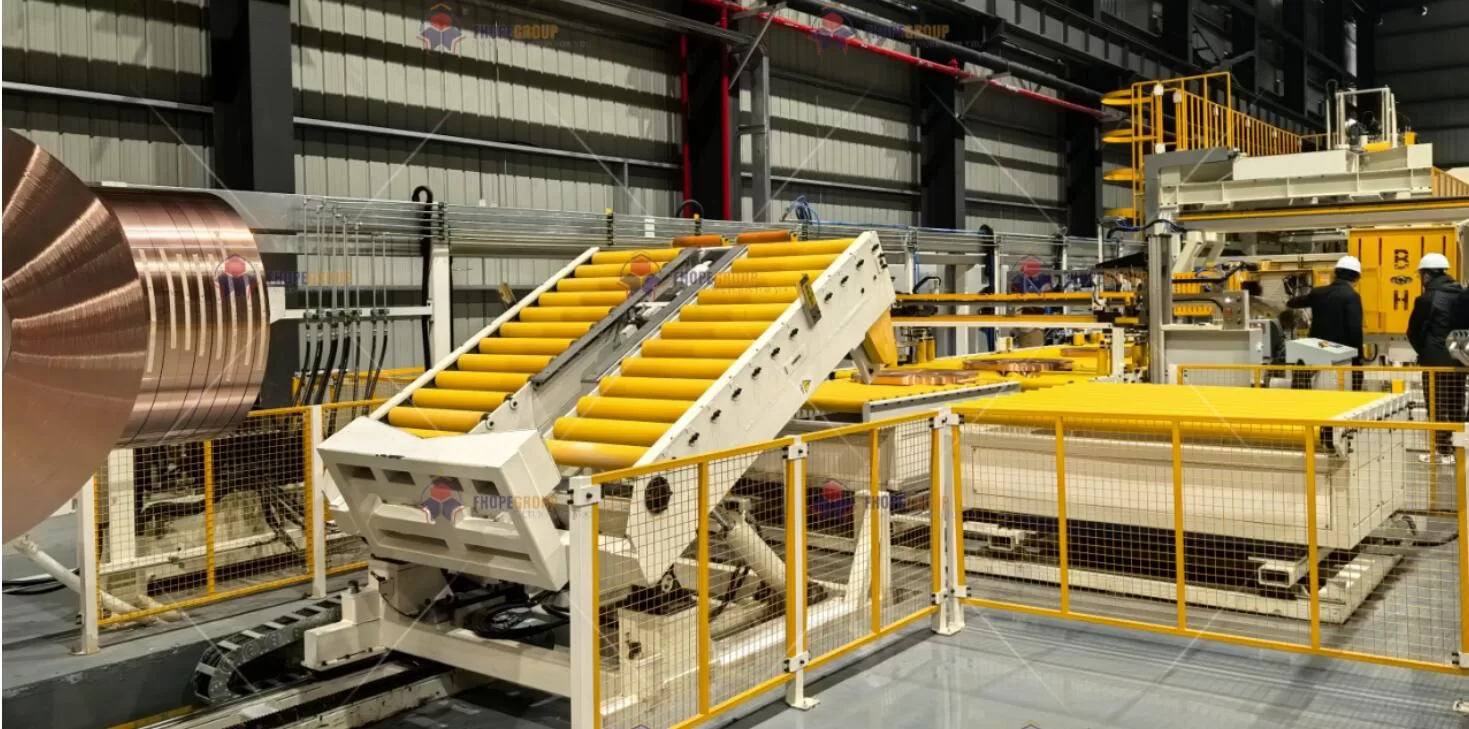
My early days as a packing machine engineer taught me the importance of automation. I witnessed the struggles of manual operations. I also saw the potential of well-designed machines. This knowledge drove me to build FHOPEPACK. I wanted to help companies achieve safer and more productive environments.
1. Eliminating Direct Human-Coil Interaction
The most important safety benefit of automation is removing humans from direct contact with steel coils. In a manual setup, workers must guide coils, attach slings, or perform strapping operations by hand. This puts them in the path of potential danger. A fully automated line uses conveyors, manipulators, and robotic arms. These machines handle the coil from the moment it leaves the production line until it is ready for shipment. For example, an automatic coil turning device can safely reorient a coil from horizontal to vertical, or vice versa. This removes the need for workers to use cranes with slings, which is a high-risk task. The entire process takes place within a secure, often guarded, environment. This means workers monitor the process from a safe distance. They only intervene if there is a problem. This separation dramatically cuts down on crush injuries, impact accidents, and physical strain. I often tell clients that an investment in automation is an investment in their workers’ lives and long-term health. It is not just about reducing costs; it is about creating a humane workplace. The precision of machines also means fewer errors. This means fewer situations where a worker might need to dangerously adjust a misaligned coil or re-strap a loose package.
2. Consistent and Reliable Safety Standards
Automated packing lines apply safety standards consistently, every single time. Manual operations, by contrast, are prone to human variability. A worker might be tired, rushed, or simply make a mistake. This can lead to inconsistent packaging. For example, manual strapping might not apply the correct tension evenly across all straps. This can result in a loose coil that is unstable and dangerous to handle. An automated strapping machine, however, uses sensors to detect the coil’s dimensions and applies precise, pre-programmed tension. This ensures every strap is applied correctly. The same applies to wrapping. Automated wrapping machines apply film with consistent overlap and tension. This provides robust protection against moisture and damage. This consistency means coils are more stable. They are less likely to shift or unravel during storage or transport. This lowers the risk of accidents for forklift operators and other personnel. From my engineering perspective, consistent quality is a cornerstone of operational safety. It builds a predictable environment where risks are minimized because every package meets the same high standard. This reduces unexpected failures that can lead to dangerous situations.
3. Real-time Monitoring and Predictive Maintenance for Safety
Modern automated packing lines come with advanced monitoring systems. These systems track machine performance in real time. They can detect potential issues before they become critical. For example, sensors can monitor motor temperatures, conveyor belt speeds, or fluid levels. If a component starts to show signs of wear, the system can alert operators. This allows for predictive maintenance. This means problems are fixed before they cause a breakdown or a safety hazard. Imagine a conveyor belt that is about to fail. In a manual system, it might break down without warning, potentially causing a coil to drop or jam. In an automated system, the monitoring system would flag it for maintenance. This prevents such incidents. Furthermore, safety interlocks are a core part of automated design. These systems prevent machines from operating if a safety guard is open or if a worker enters a restricted area. This ensures no movement occurs while maintenance or inspection is underway. This layer of protection is impossible with manual operations. It creates a much safer working environment. My goal at FHOPEPACK is always to build systems that are not only efficient but also inherently safe. This real-time oversight and predictive capability are key to achieving that.
What design elements are crucial for a coil packing line to handle diverse products and ensure consistent quality?
Handling a variety of steel coils, from cold-rolled to galvanized or color-coated, is a big challenge for many steel mills. Each type has specific packaging needs. I have helped many clients, including those in Poland, design systems that can adapt. The right design makes sure that every coil gets the best quality packaging.
Crucial design elements for a versatile steel coil packing line include modular construction, allowing for easy integration of different packaging stations (e.g., strapping, wrapping, labeling) as needed. It must feature intelligent control systems with recipe management for various coil types and sizes, ensuring automatic adjustments for diameter, width, and weight. Additionally, robust material handling systems like heavy-duty conveyors and precise coil centering devices are essential to maintain consistent quality across diverse products.

From my perspective as an engineer, true versatility comes from smart design. It is not just about having many machines. It is about how those machines work together. It is also about how easily they can adapt to different requirements. This is key to ensuring consistent quality and meeting customer demands.
1. Modular Design for Flexibility and Future Growth
A modular design is fundamental for any packing line that needs to handle diverse products. This means the line is built from independent, self-contained units or modules. Each module performs a specific function, such as weighing, turning, strapping, or wrapping. For example, a basic line might start with a horizontal wrapper and a single strapping machine. As product needs change, or as the company grows, more modules can be added. This could include a vertical wrapper for specific coils, an automatic labeling unit, or even a stacking and conveying system for finished goods. This modularity offers great flexibility. It allows a factory to customize its line to its exact needs. It also makes future upgrades easier and more cost-effective. You do not have to replace the entire line. You just add or swap out specific modules. For a steel mill in Poland, this means they can adapt to new customer requirements, such as needing specific anti-corrosion wraps or barcode labels, without a complete overhaul. My experience shows that businesses that invest in modular systems are better prepared for market changes. They can quickly adjust their packaging processes to meet new demands. This saves time and money in the long run.
2. Intelligent Control Systems and Recipe Management
At the heart of a versatile packing line is an intelligent control system with robust recipe management. This system acts as the brain of the entire operation. It allows operators to program specific packaging parameters for each type of coil. For example, cold-rolled coils might need PET strapping for internal stability and a robust stretch film for moisture protection. Galvanized coils might require steel strapping for added strength and a different type of anti-corrosion film. The control system stores these “recipes.” When a new batch of coils comes down the line, the operator simply selects the correct recipe. The system then automatically adjusts all relevant parameters. This includes coil dimensions, film tension, number of straps, and even label placement. This automation removes human error from the setup process. It ensures consistent packaging quality regardless of the coil type. It also speeds up changeovers between different products. For a factory handling hundreds of tons of diverse coils daily, this is crucial. It means less downtime and higher overall efficiency. I have seen clients transform their output simply by implementing a smart control system that automates these complex adjustments. It guarantees that every coil is packed perfectly, meeting both internal quality standards and strict customer specifications.
3. Robust Material Handling and Precise Coil Centering
To ensure consistent quality and safe handling of diverse coils, the material handling system must be robust and precise. Steel coils are heavy and can vary greatly in size (1-3 tons, with different inner and outer diameters). The packing line must be able to move these coils smoothly and accurately. This means using heavy-duty roller conveyors, chain conveyors, and coil cars that are built to withstand industrial use. These systems need strong motors and durable components. They must also have precise coil centering devices. Before any wrapping or strapping begins, the coil must be perfectly aligned with the packaging machine. This ensures even application of materials. Without proper centering, the film might wrap unevenly, or the straps might not be placed correctly. This leads to poor packaging quality and potential instability during handling. For example, a specialized coil centering device uses sensors to detect the coil’s exact position. It then automatically adjusts its position until it is perfectly centered. This is especially important for coils with varying widths and diameters. My work at FHOPEPACK has always focused on building robust machines that deliver precision. This includes making sure the fundamental handling elements are strong and accurate. This guarantees that whether it is a small, narrow coil or a large, wide one, the packaging quality remains top-notch.
Beyond safety, how does a comprehensive packing solution deliver long-term operational and cost benefits?
Safety is always the first priority. But a truly excellent packing line offers much more. It delivers significant long-term operational and cost benefits. I have seen companies reduce their expenses and improve their entire workflow. This is especially true for businesses in demanding markets like Poland.
Beyond safety, a comprehensive steel coil packing solution delivers long-term operational and cost benefits by drastically reducing labor requirements, minimizing material waste through optimized usage, and increasing overall production throughput. It also ensures consistent product quality, leading to fewer customer complaints and returns. This enhances brand reputation and secures future contracts, turning the packing line into a strategic asset that contributes directly to the company’s profitability and competitive edge.
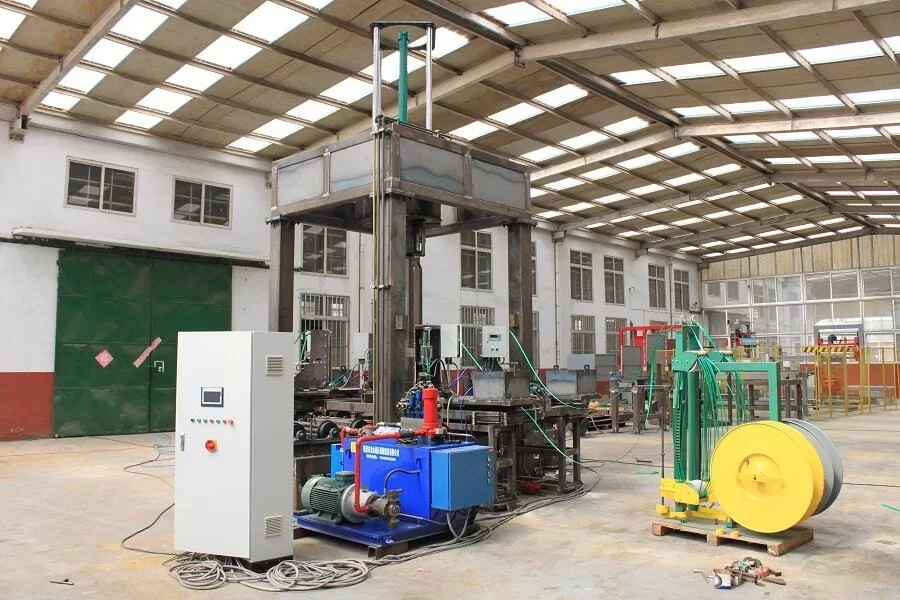
My journey from a factory employee to the founder of FHOPEPACK taught me that good engineering is about more than just building machines. It is about creating value. It is about helping businesses grow and succeed. A smart packing solution does exactly that by impacting many aspects of a company’s operations.
1. Significant Reduction in Labor Costs and Improved Workforce Management
One of the most immediate and impactful long-term benefits is the reduction in labor costs. Automated packing lines can perform tasks that previously required multiple workers. This includes coil handling, strapping, wrapping, and labeling. For example, a fully automatic line can often be operated by one or two technicians overseeing the process, instead of five or more manual laborers. This directly lowers wage expenses, especially in regions like Poland where skilled labor can be both costly and scarce. Beyond direct savings, automation addresses the challenge of labor shortages and high turnover rates in physically demanding jobs. Workers are no longer needed for strenuous or dangerous tasks. This frees them up for more skilled roles, such as machine operation, maintenance, or quality control. This improves job satisfaction and retention. It also makes the factory less vulnerable to labor market fluctuations. My clients often report that reducing their reliance on manual labor for packing allows them to manage their workforce more strategically. It shifts the focus from physical strength to technical skills. This is a crucial evolution for modern manufacturing.
2. Optimization of Packaging Material Usage and Waste Reduction
Automated packing solutions are far more efficient in using packaging materials than manual methods. Manual wrapping often leads to excessive film overlap or uneven tension, causing material waste. Workers might also use more strapping than needed “just in case” to ensure security. Automated systems are programmed to use the precise amount of film and strapping required for each coil. They apply consistent tension and overlap. This minimizes material consumption without compromising packaging quality. For instance, a smart wrapping machine can calculate the exact length of film needed based on the coil’s dimensions. It reduces waste by hundreds of meters per day in a high-volume operation. This translates into significant cost savings on packaging materials over the long term. Reduced material waste also benefits the environment. It aligns with modern sustainability goals. I always emphasize to my clients that while the initial investment in automation might seem high, the savings on materials alone can quickly offset a large part of that cost. It is a smart financial decision that also improves environmental performance.
3. Increased Production Throughput and Enhanced Business Continuity
A highly automated packing line can operate continuously, often 24/7, with minimal downtime. Unlike manual operations that are subject to worker breaks, shift changes, and fatigue, machines can maintain a consistent pace. This leads to a significant increase in overall production throughput. Faster packing means coils move off the line more quickly. This reduces bottlenecks in the entire production process. It allows the steel mill to ship more product in less time. This is critical for meeting tight delivery schedules and satisfying high customer demand, especially for large-scale operations in Poland. Furthermore, automated systems are designed for reliability. They are less prone to the human errors that can halt a line. With features like predictive maintenance, potential issues are identified and addressed before they cause a complete shutdown. This enhances business continuity. It means fewer unexpected interruptions and a more stable production flow. My passion at FHOPEPACK is to help businesses achieve this level of operational excellence. It allows them to focus on their core business, knowing their packing operations are efficient, reliable, and continuously supporting their growth.
My Insight: A Holistic Approach is the Master Key to Packing Success
From my years in this industry, first as an engineer and then as a factory owner, I have learned one major lesson. True success in steel coil packing is not just about buying a machine. It is about adopting a holistic approach. This means looking at the entire process. It means considering safety, efficiency, quality, and cost together. I have seen many companies make the mistake of focusing on just one aspect. They might buy a cheap machine to save money upfront. Then they face endless problems with breakdowns, poor quality, and worker injuries. This costs them much more in the long run.
My journey with FHOPEPACK is built on this understanding. I believe in providing solutions that address all these needs. For example, when a client from a growing steel market asks us about a new packing line, I do not just offer them a standard product. I take the time to understand their specific challenges. Do they have labor shortages like many factories in Poland? Do they produce many different types of coils? Are their customers demanding higher packaging standards? We then design a system that fits their unique situation. This might involve integrating automated coil turning, advanced wrapping techniques, and smart strapping machines. It also means providing comprehensive training and excellent after-sales support. This ensures the system runs smoothly for years. This holistic view is what makes a packing line a true investment. It improves safety for workers. It boosts the quality of the product. It reduces operational costs. And it builds a strong foundation for future growth. This is the “Master Packing Machine” philosophy we stand by at FHOPEPACK. It is about empowering businesses to achieve excellence in every part of their packing process.
Conclusion
Investing in an automated coil packing line transforms safety and efficiency in steel mills. It removes workers from hazardous zones, ensures consistent packaging quality, and dramatically reduces labor costs. This strategic move not only protects employees but also optimizes material usage, increases throughput, and strengthens a company’s competitive position. Partnering with a comprehensive solution provider for your coil packing line ensures long-term operational success and profitability.








