
Steel Coil Packing Line in Luxembourg: Can Retrofits Outperform Replacements?
The steel industry moves fast. Production lines run nonstop, and every second counts. Imagine your steel coils, perfectly formed, moving towards the packing area. But then, a bottleneck appears. Manual processes slow everything down. Workers struggle with heavy lifting. Packaging quality varies. This not only wastes time, but it also costs money. It can lead to unhappy customers and lost business. So, what is the best path forward for a steel plant in Luxembourg, or anywhere else for that matter?
When considering a steel coil packing line in a demanding environment like Luxembourg, the decision between retrofitting and a full replacement is complex. My experience shows that while retrofits can offer quick, targeted improvements and lower initial costs, a complete replacement often provides superior long-term performance, efficiency, and adaptability, especially when aiming for high automation and modern safety standards.
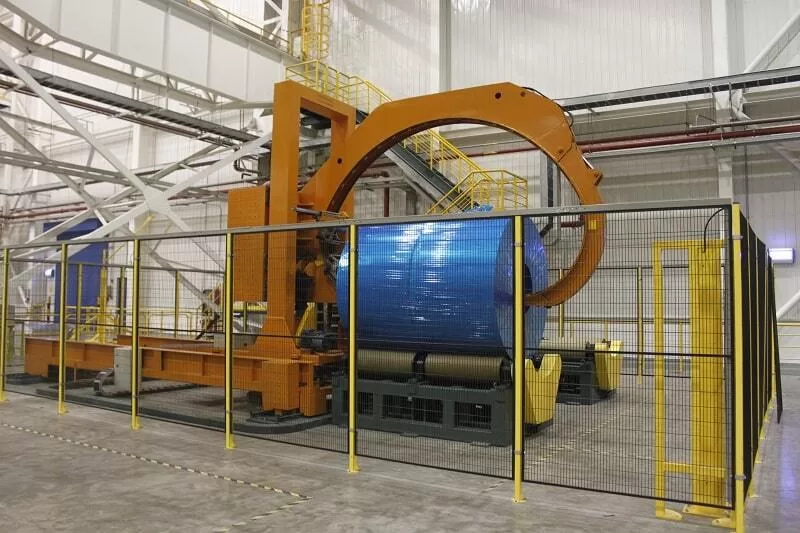
Making the right choice can significantly impact your plant’s productivity, safety, and profitability. You want a solution that keeps your operations running smoothly. You also want one that meets all customer demands. Let’s dive deeper into this critical decision. We will look at specific challenges and goals. This will help you understand which option truly delivers the best value for your investment.
Are Current Manual Processes in Luxembourg Steel Plants Hindering Growth?
You work hard to produce quality steel coils. You oversee everything from cold rolling to slitting. But then, when it comes to the final packing stage, you face major hurdles. This can feel frustrating. Are your current packing methods actually holding your business back? Many plant managers, like Ivan Petrov, who manages operations in a large steel plant, experience these exact issues.
Yes, current manual packing processes in many steel plants, including those in Luxembourg, often create significant bottlenecks. They cause labor shortages, inconsistent quality, and slow down customer shipments. These issues directly hinder a plant’s ability to grow, meet diverse customer demands, and maintain a competitive edge in the global market.
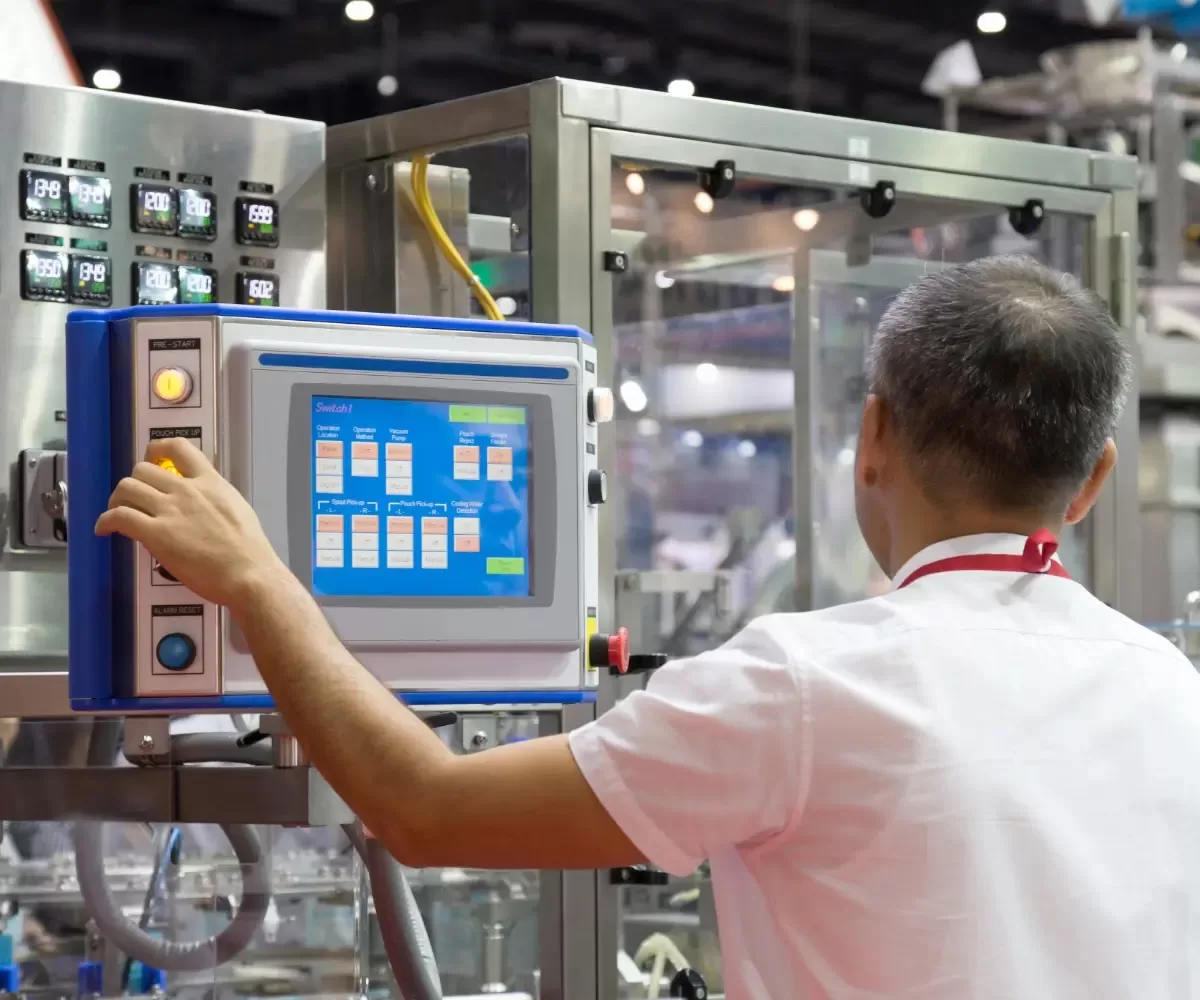
My journey in the packing machine industry has shown me this repeatedly. I started on the factory floor. I saw these problems firsthand. Then, I built FHOPEPACK to solve them. Manual processes create many challenges. These challenges include safety risks and fluctuating quality. They impact your bottom line and your reputation. We need to look closely at these problems to understand the need for change.
1. 😓 Labor Shortages and High Intensity Work
Manual packing of steel coils is a physically demanding job. It requires lifting, moving, and securing heavy materials. This type of work leads to a few key problems.
- 1.1 High Turnover Rate: Young workers often do not want these strenuous jobs. They leave quickly. This creates a constant need for new hiring and training. It disrupts operations and reduces overall efficiency.
- 1.2 Increased Safety Risks: Handling heavy coils manually increases the chance of accidents and injuries. Workers can strain their backs or suffer crush injuries. This leads to higher insurance costs and lost workdays.
- 1.3 Inconsistent Output: When people are tired, their work quality can drop. It is hard for manual workers to keep the same speed and quality throughout a long shift. This impacts your production schedule.
For instance, I once helped a client whose manual strapping team was constantly understaffed. They could not keep up with production. Their safety record was also suffering. This led to serious discussions about automation.
2. 📉 Inconsistent Packing Quality and Customer Complaints
Customers expect high-quality packaging. This is especially true for steel coils. They travel long distances. Poor packing leads to problems.
- 2.1 Uneven Film Tension: Manual wrapping often results in uneven film tension. Some parts of the coil might be too loose. Others might be too tight. This can damage the coil or cause the packaging to fail during transport.
- 2.2 Loose Bundles: If strapping is not tight enough, coils can shift inside the package. This leads to scratches, dents, or even complete unraveling. It makes the product unusable for the customer.
- 2.3 Increased Returns and Penalties: When customers receive damaged goods, they complain. They may also return the product. Sometimes, contracts include penalties for late or damaged deliveries. These costs add up quickly.
I remember one client in Southeast Asia who faced huge fines because coils arrived with rust and scratches. The manual wrapping was simply not consistent enough to protect against humidity during sea transport. We needed a better way to ensure consistent quality for them.
3. 📦 Product Diversity and Complex Switching
Modern steel plants produce many types of coils. They include cold-rolled, galvanized, and color-coated steel. Each type has different packing needs.
- 3.1 Tedious Manual Changes: Switching between different coil types or packing requirements (e.g., PET strapping vs. steel strapping, different wrapping patterns) takes time. Workers must manually adjust machines or change materials. This slows down the line.
- 3.2 Higher Error Rate: Manual adjustments are prone to human error. A wrong setting can lead to incorrect packaging. This wastes materials and requires rework.
- 3.3 Limited Flexibility: Manual systems struggle to adapt quickly to new customer demands. For example, adding barcode labels or special anti-corrosion films becomes a slow, manual step. This limits your ability to offer customized solutions.
I have seen plants where operators spend more time setting up for a new product run than actually packing. This is a huge waste of valuable production time. Automation can handle these changes almost instantly. It frees up your team.
Can Existing Steel Coil Packing Lines Be Transformed into High-Performance Systems?
You have an existing packing line. It does the job, but not perfectly. You wonder if you need to scrap it all. Or, can you make it better? The idea of a retrofit is appealing. It can breathe new life into your current setup. This is a common question for many plant managers. They want to upgrade without a complete overhaul.
Yes, many existing steel coil packing lines can be successfully transformed into high-performance systems through strategic retrofitting. This involves integrating new automation modules and modern components into the existing infrastructure. While it might not achieve the same level of seamless integration as a brand-new line, retrofits can significantly boost efficiency, safety, and packaging quality at a lower initial cost and with less operational disruption.
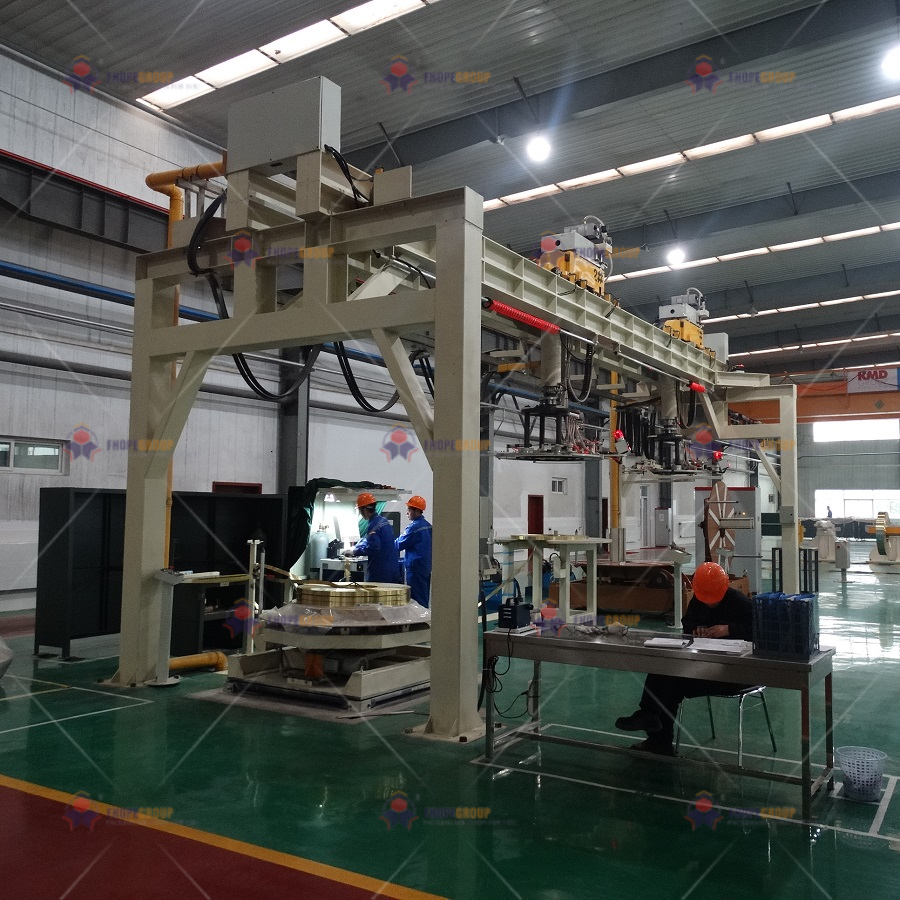
Retrofitting is not just a quick fix. It is a strategic upgrade. It can extend the life of your equipment. It also allows you to add features that meet today’s demands. My experience with FHOPEPACK shows that targeted improvements can yield big results. Let’s look at what retrofitting entails. We will also examine its pros and cons.
1. 🔄 What a Retrofit Entails for Steel Coil Packing Lines
A retrofit focuses on upgrading specific parts of your current system. It does not replace the entire line. Instead, it adds or replaces key components.
- 1.1 Adding Automation Modules: This can mean installing automatic strapping heads. Or, it could be integrating robotic handling systems for specific tasks. For example, adding an automatic film dispenser to an existing wrapping machine.
- 1.2 Upgrading Control Systems: Modern PLCs and HMI interfaces can make old machines smarter. They allow for better data collection and easier operation. This improves precision and reliability.
- 1.3 Enhancing Safety Features: Newer safety sensors, interlocks, and guards can be added. This brings older machinery up to modern safety standards. It protects your workers.
I remember a project where we helped a client add an automatic stretch wrapper and a coil flipping device to their existing line. Their manual handling risks dropped, and packaging speed doubled. It was a significant improvement without a full replacement.
2. 👍 Advantages of Retrofitting
Choosing to retrofit offers several clear benefits. These benefits make it an attractive option for many plants.
- 2.1 Lower Initial Investment: This is often the biggest draw. You do not buy a whole new system. You only invest in specific upgrades. This saves capital.
- 2.2 Reduced Downtime for Installation: Retrofits usually take less time to install. You can schedule them during planned maintenance. Or, you can do them in phases. This means less disruption to your production.
- 2.3 Familiar Infrastructure: Your team already knows the basic layout and operation. Training on new components is simpler. Workers adapt faster.
- 2.4 Targeted Problem Solving: You can address specific bottlenecks. If your strapping is the weak link, you upgrade only the strapping unit. This is a very focused approach.
One client’s main issue was inconsistent strapping. By just replacing their old manual strapper with an automatic one, they saw immediate improvements in quality and speed. The rest of their line was still functional.
3. 👎 Limitations of Retrofitting
However, retrofits also have their drawbacks. It is important to know these limitations before you decide.
- 3.1 May Not Achieve Full Automation: An older core machine might limit how much automation you can add. It might not be possible to integrate every step seamlessly.
- 3.2 Legacy System Bottlenecks: The oldest parts of your line might still hold you back. An old conveyor or a slow coil transfer system can still limit the speed of your new, faster components.
- 3.3 Potential for Compatibility Issues: Integrating new technology with old systems can sometimes be tricky. Different brands or generations of equipment might not communicate well. This requires custom engineering.
- 3.4 Limited Long-Term Scalability: As technology advances, your retrofitted line might struggle to keep up. It might not be easy to add new features later on.
I once worked on a project where the client wanted to add automated labeling. But their existing conveyor system was too unstable for precise label application. We had to upgrade the conveyor too, which added more cost and complexity than initially planned.
Is Investing in a Brand-New Automatic Coil Packing Line a Future-Proof Strategy?
You have seen the limits of your current setup. You also know that retrofits have their own boundaries. So, you start thinking bigger. What if you invested in a completely new, state-of-the-art automatic coil packing line? Would this be a smart move for the long run? Many plant managers, including those in Luxembourg, see the appeal of a clean slate. They want to build a system that will last for decades.
Yes, investing in a brand-new automatic coil packing line is often the most effective future-proof strategy for steel plants. It allows for full integration of the latest technology, optimized workflows, and superior safety features from the ground up. While the initial investment is higher, a new line delivers maximum efficiency, consistent quality, and adaptability for future demands, ensuring long-term competitiveness and growth.
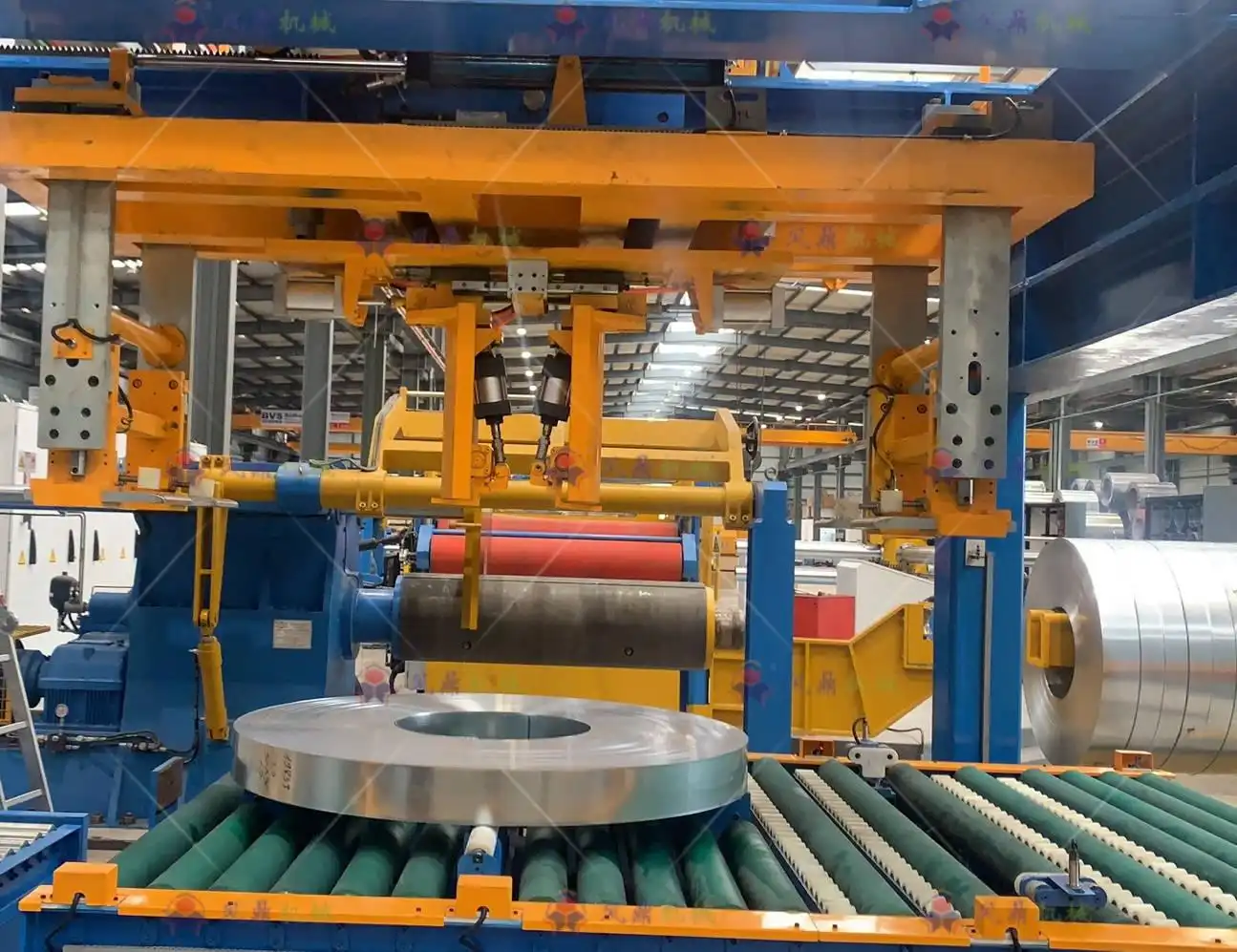
A new packing line is more than just new machines. It is a complete system designed for your specific needs. It leverages the latest advancements in automation. It also builds in safety from the start. As Randal Liu, I have seen how a well-designed new line can transform a business. Let’s look at what a new system offers. We will also consider its benefits and the factors you need to think about.
1. 🚀 What a New Packing Line Offers
A brand-new automatic coil packing line is built for peak performance. It integrates every step of the packing process.
- 1.1 Full Automation and Integration: Every step, from coil handling and flipping to wrapping, strapping, labeling, and stacking, is automated. Machines work together seamlessly. This reduces manual intervention.
- 1.2 Latest Technology and Design: New lines incorporate the newest sensors, robotic systems, and control software. They are designed for high speed and precision. They also use less energy.
- 1.3 Optimized Layout and Workflow: You can design the line to fit your plant’s space perfectly. This creates an efficient flow of materials. It minimizes wasted movement and time.
- 1.4 Built-in Safety Features: Modern lines come with comprehensive safety systems. These include advanced sensors, emergency stops, and guarded areas. They protect workers from harm.
I worked with a client who installed a full automatic line. They had previously used several disparate machines. The new line’s seamless flow and single control system cut their packing time by 60%. Their overall efficiency soared.
2. ✅ Advantages of a New System
Investing in a new automatic packing line brings many significant advantages.
- 2.1 Maximum Efficiency and Consistency: New lines are designed for high throughput. They ensure every coil is packed with the same quality and speed. This is crucial for large volumes and varied products.
- 2.2 Superior Packaging Quality: Advanced control over film tension, strapping force, and labeling accuracy means top-tier packaging. This meets even the strictest export standards like CE/ISO.
- 2.3 Enhanced Safety and Reduced Labor: Automated handling eliminates heavy lifting and dangerous tasks. This greatly reduces workplace accidents. It also frees up workers for other roles.
- 2.4 Long-Term Scalability and Adaptability: New systems are modular. You can easily add more features or upgrade components in the future. They can handle new product types or customer demands.
- 2.5 Data-Driven Operations: Modern lines collect data on every packing cycle. This allows for better monitoring, predictive maintenance, and continuous process improvement.
A new line we installed for a client helped them secure a major export contract. Their new packaging quality easily met all international standards. This opened up entirely new markets for them. It was a game-changer for their business.
3. ⚠️ Considerations for a New System
While powerful, a new line also has factors you must consider.
- 3.1 Higher Upfront Cost: This is the most obvious point. A complete new system requires a significant capital investment. You need to plan your budget carefully.
- 3.2 Significant Downtime for Installation: Installing a new line often means stopping production in that area for some time. You need to plan this carefully to minimize impact.
- 3.3 Longer Planning and Implementation Phase: Designing, manufacturing, and installing a new custom line takes more time. It requires careful project management.
- 3.4 Learning Curve for New Technology: Your team will need thorough training on the new system. This includes operation, maintenance, and troubleshooting.
I once worked with a client who underestimated the installation downtime for a large, complex line. We had to adjust our schedule. We also planned temporary manual solutions to keep their essential shipments moving. Careful planning is key.
How Do Cost and Long-Term Value Compare Between Retrofit and Replacement Options?
The decision often comes down to money. You have a budget. You also want the best return on your investment. So, how do retrofits and replacements stack up financially? Which option truly offers better long-term value for a steel plant? This is a question I get asked often. It requires looking beyond just the sticker price.
When comparing costs and long-term value, retrofits typically offer a lower initial cost and faster implementation for targeted improvements. However, a full replacement, while more expensive upfront, generally provides superior long-term value through maximized efficiency, reduced operational costs, enhanced safety, and greater adaptability. This leads to a stronger return on investment over the machine’s lifespan.

At FHOPEPACK, my mission is to help clients achieve financial independence and grow their businesses. This means helping them make smart investment choices. It is not just about the cheapest option. It is about the solution that delivers the most value over time. Let’s break down the financial aspects of each choice.
1. 💰 Initial Investment vs. Operational Costs
The total cost of ownership is more than just what you pay at the start. It includes all costs over the life of the machine.
- 1.1 Retrofit Cost Structure:
- Initial Cost: Significantly lower. You pay for specific components, engineering, and installation.
- Operational Costs: You might see some reductions in labor or material waste. But older parts of the line could still incur higher maintenance or energy costs. You may also still have some inefficiencies.
- Hidden Costs: Older parts might break down more often. This causes unexpected repair costs and production delays.
- 1.2 Replacement Cost Structure:
- Initial Cost: Much higher. You pay for design, manufacturing, and installation of an entire new line.
- Operational Costs: Significantly lower. New machines are more energy-efficient. They require less manual labor. They also have lower material waste. Maintenance is predictable.
- Long-Term Savings: These savings come from reduced labor, less material waste, fewer breakdowns, and higher output. They quickly add up over the years.








