
Steel Coil Packing Line in France: How Can It Drive Full Automation?
Have you ever felt the pressure of a busy production floor, watching steel coils pile up, knowing that every minute of delay or every inconsistent package can cost you money and customer trust? I have. I remember working in a packing machine factory, seeing these challenges firsthand. The manual processes, the labor demands, the constant worry about quality – it can truly impact a business. For steel mills in France, dealing with diverse products and demanding export markets, these pressures are even greater. It makes you wonder, is there a better way to ensure your finished coils leave the plant perfectly packed, every single time?
A fully automated steel coil packing line can drive complete automation in French steel mills by integrating advanced machinery and smart systems, creating a seamless, hands-free process from the production line to final shipment, which significantly boosts efficiency, consistency, and safety. This level of automation means machines handle tasks like coil handling, strapping, wrapping, and labeling, all while adapting to various product specifications and reducing the need for manual intervention. It is not just about having a machine; it is about having a complete, integrated solution.

This shift to automation is not just a trend; it is a vital step for any steel producer looking to stay competitive. In my journey from an employee to establishing FHOPEPACK, I saw how much good automation could do. It is about understanding the details, the specific pain points, and then building a system that solves them. Let’s explore how this kind of full automation can transform operations for French steel manufacturers, addressing their unique needs and helping them master their packing process.
Why Are Steel Mills in France Shifting to Automated Coil Packing?
Do you ever feel like your packing operations are stuck in the past, struggling to keep up with today’s fast-paced demands? Many steel producers in France face similar issues. The costs of labor, the difficulty in finding skilled workers, and the increasing demand for perfect quality can feel like a constant uphill battle. This situation often leads to bottlenecks, delays, and even customer complaints, directly affecting your company’s reputation and profitability.
Steel mills in France are embracing automated coil packing because manual methods no longer meet modern demands for efficiency, product quality, safety, and cost control. The traditional approach, which relies heavily on human labor for tasks like strapping and wrapping, is becoming unsustainable in an environment that demands precision, speed, and consistent output, especially for a region with high labor costs and strict industrial standards.
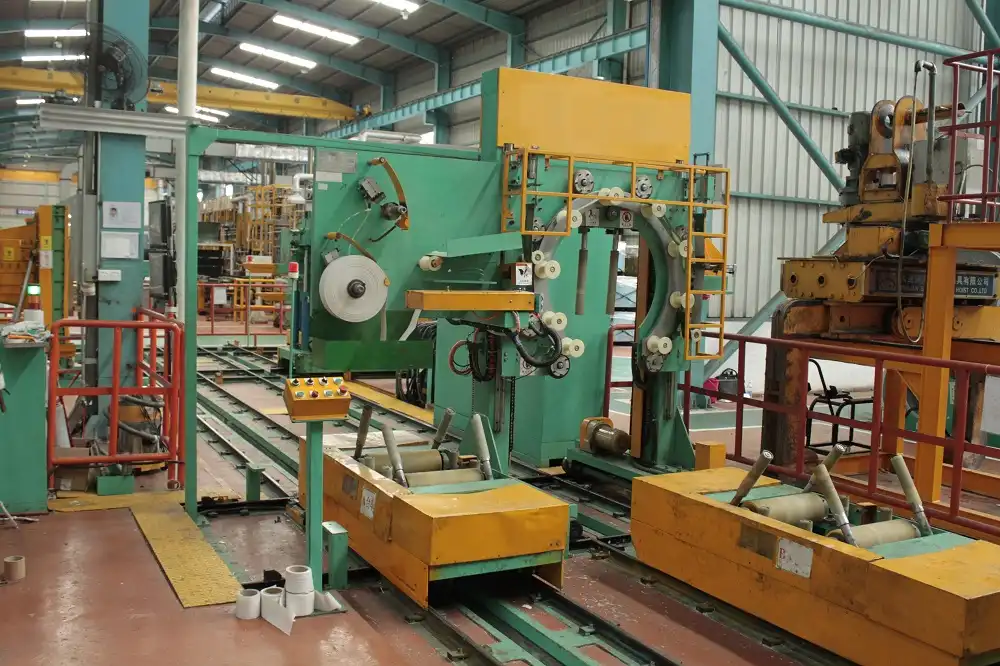
I have watched many clients struggle with these exact issues. They were managing hundreds of tons of daily shipments, handling various coil types like cold-rolled, galvanized, and color-coated. They told me that manual switching between these products was slow and error-prone. This kind of complexity, combined with a workforce facing high-intensity tasks and high turnover, created a big challenge. Young workers often leave, making it hard to maintain consistent quality with manual bundling and wrapping. The financial impact of inefficient packing is huge. Loose packaging during transport, customer rejections, and even contract penalties add up quickly. This is why more French steel producers are looking for integrated, automated solutions. They need systems that can work 24 hours a day, handle different coil sizes (1-3 tons, variable inner/outer diameters), and ensure top-notch protection against moisture, rust, and scratches. Automation offers a way to reduce these risks, lower labor intensity, and create a safer work environment. It is about moving beyond simply having a machine to having a strategic asset that transforms an entire operation.
What Does a Fully Automated Steel Coil Packing Line Actually Include?
When someone talks about “full automation,” do you picture just one fancy machine? Many people do. But a true fully automated steel coil packing line is much more than that. Relying on a single automated step while other parts of your process remain manual will not deliver the full benefits. This fragmented approach can still leave you with inefficiencies, bottlenecks, and the very problems you hoped to solve.
A fully automated steel coil packing line integrates multiple, interconnected stations that work in harmony, from the moment a steel coil leaves the production line to its final readiness for shipment, ensuring a seamless, hands-free operation. This comprehensive system is designed to handle every aspect of the packing process, minimizing human intervention and maximizing efficiency and consistency across the entire workflow.

My team at FHOPEPACK has spent years perfecting these integrated systems. We know that real automation comes from a well-planned, interconnected sequence of machines. Here are the key components you would find in a robust, fully automated coil packing line, designed to meet the demands of a modern French steel mill:
-
Coil Handling and Positioning Systems:
- Function: These systems carefully move coils from the production line to the packing stations. They use automated conveyors, transfer cars, and turntables.
- Benefit: They ensure precise placement for the next steps. This removes the need for manual forklifts in dangerous areas. It also adapts to different coil weights and diameters without human adjustment. For coils weighing 1-3 tons, this is vital for safety.
-
Automated Coil Tilting or Upending Machines:
- Function: Many coils need to be packed in a specific orientation (vertical or horizontal). These machines automatically tilt coils from one position to another.
- Benefit: This makes sure the coil is in the correct position for strapping or wrapping. It also protects the coil surface during the flip. This eliminates a highly dangerous manual task.
-
Automated Strapping Machines (PET/Steel Band):
- Function: These machines apply multiple straps, using either PET or steel banding. They can apply them at specific points or in complex patterns.
- Benefit: They ensure consistent, tight bundling for secure transport. The tension is always uniform, which prevents loosening. This directly solves the problem of unstable packing quality often seen with manual operations. It also accommodates different coil widths and diameters automatically.
-
Automated Wrapping Machines (Stretch Film/VCI Paper):
- Function: These machines apply protective layers, such as stretch film for moisture resistance or VCI (Volatile Corrosion Inhibitor) paper for anti-rust properties.
- Benefit: They provide excellent protection against environmental elements. This is crucial for export customers who need CE/ISO certified packaging. It also adapts film tension for optimal coverage, preventing scratches and ensuring a clean finish.
-
Automated Labeling and Marking Systems:
- Function: These systems automatically print and apply labels with product information, barcodes, or compliance details (e.g., CE marks).
- Benefit: They ensure accurate and consistent product identification. This meets strict customer requirements and improves traceability throughout the supply chain. It saves time and prevents human error from manual labeling.
-
Stacking, Conveying, and Storage Integration:
- Function: The finished coils are moved automatically to designated storage areas or directly onto trucks for shipment. This often involves robotic stackers or smart conveyor lines.
- Benefit: This streamlines the entire logistics process after packing. It creates a seamless flow with the warehouse management system. It also reduces handling damage and speeds up dispatch times.
-
Centralized Control and Monitoring Systems:
- Function: A single interface allows operators to manage, monitor, and troubleshoot the entire packing line. It uses sensors, cameras, and software.
- Benefit: This offers real-time data on machine performance and packing status. It helps in predictive maintenance and quick problem-solving. This means minimal human oversight and maximum operational uptime.
These components together form a truly automated system. It addresses complex needs, reduces manual labor, and significantly improves the quality and safety of steel coil packaging.
How Can Automation Solve Common Coil Packing Challenges for French Producers?
Do you find yourself constantly battling against product diversity, labor shortages, or inconsistent packaging quality? These challenges are not just minor inconveniences. They can lead to significant financial losses, unhappy customers, and a lot of wasted time and resources. Imagine the stress of an export order needing specific certifications, only to find your manual packing falls short.
Automation directly addresses common coil packing challenges for French steel producers by offering adaptable, reliable, and precise solutions that reduce manual intervention, improve consistency, enhance safety, and meet rigorous customer demands. It replaces error-prone human tasks with machine precision, creating a more robust and efficient packing process.
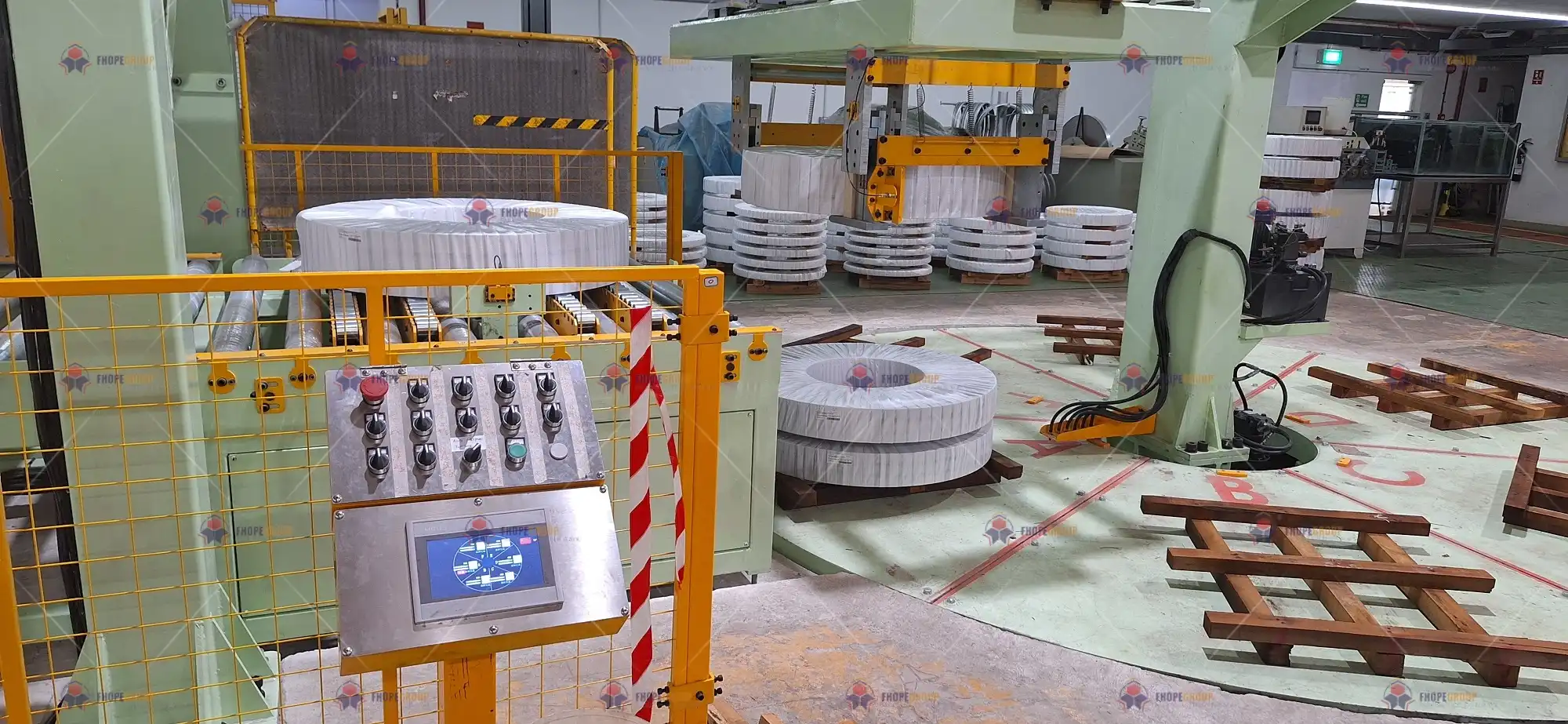
I have seen firsthand how these challenges can weigh down operations. From my own factory experience, I know the difference a well-designed system makes. Here is how a fully automated coil packing line directly tackles the specific problems faced by many French steel mills:
-
Overcoming Product Diversity:
- Challenge: Steel mills often produce a variety of coils, such as cold-rolled, galvanized, and color-coated. Each type needs different packaging. Manually switching between these needs is slow and prone to errors.
- Automation Solution: Automated lines use programmable logic controllers (PLCs). Operators can select pre-set “recipes” for each product type. The system automatically adjusts parameters like strapping patterns, film tension, and wrapping layers. This eliminates manual setup time and ensures the correct packaging for every coil. It allows for quick, seamless transitions between different production runs.
-
Addressing Labor Shortages and High Labor Costs:
- Challenge: The high-intensity work of manually strapping, wrapping, and handling heavy coils leads to high employee turnover. Young workers often leave, making it hard to find and keep a skilled workforce. Labor costs in France are also significant.
- Automation Solution: An automated line significantly reduces the need for human operators in the packing area. Machines take over repetitive and physically demanding tasks like lifting, flipping, bundling, and wrapping. This reduces overall labor requirements. It also frees up existing staff to focus on more skilled tasks, such as monitoring and maintenance. This helps to lower operational costs and ensures continuous production, even with a smaller workforce.
-
Ensuring Stable Packaging Quality:
- Challenge: Manual operation often results in inconsistent packaging quality. Film tension can be uneven, and straps may not be tight enough. This makes coils susceptible to loosening during transport, leading to damage and customer complaints.
- Automation Solution: Automated machines apply consistent and precise tension to both strapping and wrapping materials. Sensors ensure uniform application across the entire coil surface. This guarantees a tight, secure, and aesthetically pleasing package every time. It eliminates human variability, making sure coils are protected against moisture, rust, and scratches, meeting the highest quality standards.
-
Meeting Higher Customer Requirements (e.g., Export Standards):
- Challenge: Export customers, especially in Europe, demand specific packaging standards like CE/ISO certifications. They also require additional features like barcode labeling for traceability. Manual processes struggle to meet these strict, consistent demands.
- Automation Solution: Automated lines can integrate features specifically designed for export. This includes applying VCI paper for enhanced rust prevention. It also involves printing and applying precise barcodes and certification labels automatically. The consistent quality produced by automation often helps achieve necessary industry certifications. This ensures that every coil leaves the facility ready for international markets without issues.
-
Boosting Safety and Reducing Injury Risks:
- Challenge: Manually handling heavy steel coils, especially during lifting and flipping, poses significant safety risks. Accidents can lead to serious injuries and lost workdays.
- Automation Solution: Automated systems remove humans from direct contact with heavy, moving coils. Mechanical grippers, conveyors, and tilting devices handle the coils. This drastically reduces the risk of workplace accidents and injuries. It creates a much safer working environment.
By addressing these core challenges, automated coil packing lines offer a powerful advantage. They help French steel producers optimize their operations, enhance their reputation, and secure a stronger position in the global market.
What Should French Steel Producers Look for in an Automation Partner?
Are you considering a major investment in automation but feel overwhelmed by the choices of suppliers? Picking the wrong partner can be a costly mistake, leading to incompatible systems, poor support, and unfulfilled promises. This can negate all the potential benefits of automation, leaving you frustrated and your production still struggling.
When investing in automated coil packing, French steel producers should seek a partner offering proven reliability, customization capabilities, comprehensive after-sales support, and a long-term commitment to collaboration. A good partner understands your specific operational context and provides a tailored solution, not just a standard machine.
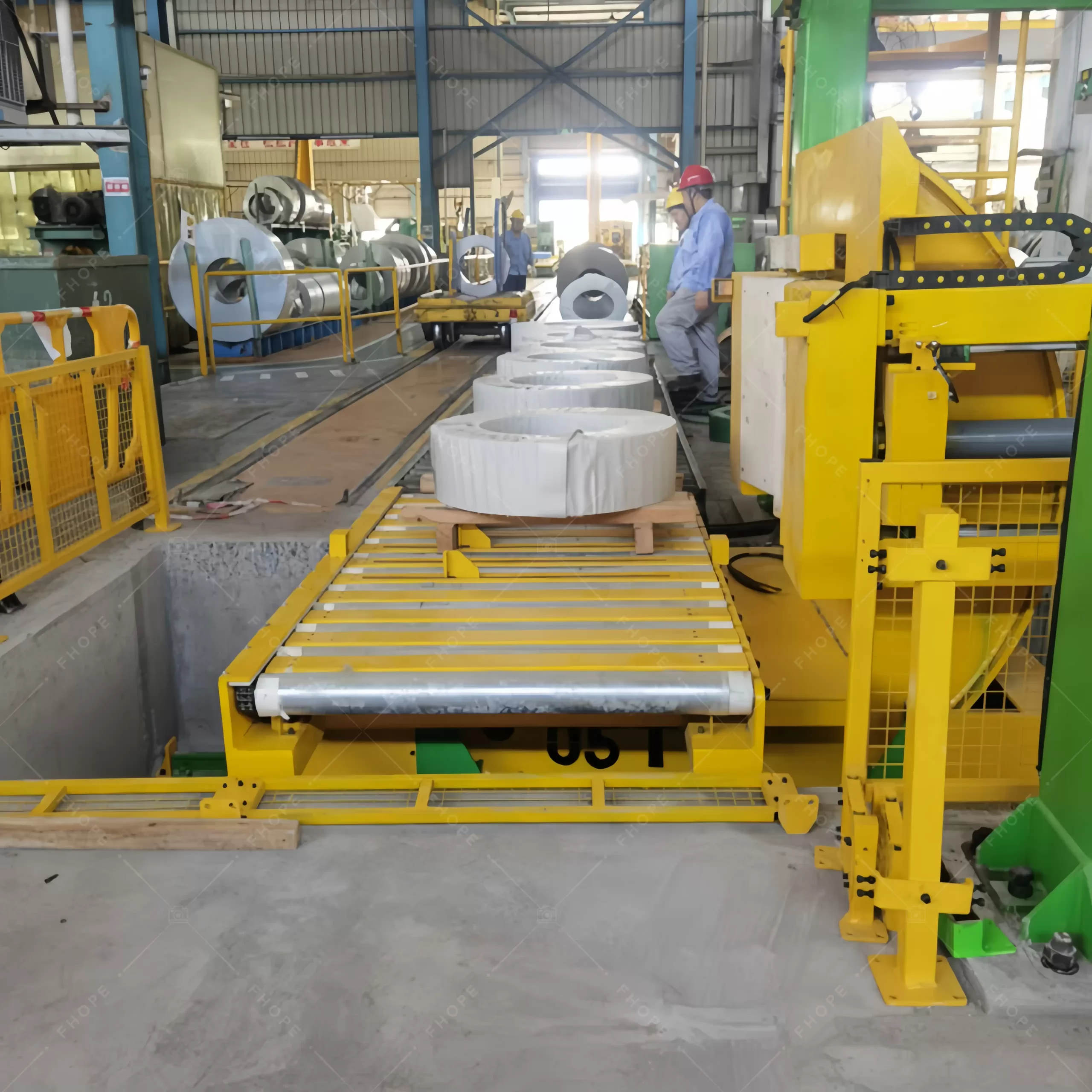
My journey in the packing machine industry has taught me that the right partner makes all the difference. When I started FHOPEPACK, our mission was to provide the best customized packing solutions. This means more than just selling equipment. It means building relationships and understanding your specific needs, like Ivan Petrov, who is looking for a long-term partner who can deliver a turnkey solution. Here is what I believe French steel producers should prioritize when choosing an automation partner:
-
Deep Industry Experience and Proven Track Record:
- Why it matters: You need a partner who understands the specific nuances of steel coil production and packaging, not just generic automation. They should have a history of successful installations in similar environments.
- What to look for: Ask for case studies, client references, and details of projects involving coil types like yours (cold-rolled, galvanized, color-coated) and capacities. A company like FHOPEPACK, founded by an engineer with extensive factory experience, brings this practical knowledge.
-
Customization Capabilities for Tailored Solutions:
- Why it matters: Every steel mill has unique layouts, production flows, and coil specifications (e.g., 1-3 tons, variable diameters). A “one-size-fits-all” approach rarely works.
- What to look for: The partner must be able to design and build a system that seamlessly integrates with your existing production line. They should adapt to your specific coil dimensions, weight ranges, and packaging requirements (PET/steel strapping, various wrapping materials). They should also offer solutions for different packaging styles required by your diverse client base.
-
Robust Equipment and High Reliability:
- Why it matters: Your packing line needs to operate continuously, often 24 hours a day, in demanding industrial environments. Downtime is expensive.
- What to look for: Inquire about the quality of components, the engineering standards, and the expected lifespan of the machinery. Look for strong construction, reliable controls, and features designed for durability. Ask about Mean Time Between Failures (MTBF) and guaranteed uptime.
-
Comprehensive Turnkey Solutions and Project Management:
- Why it matters: Managing multiple vendors for different parts of an automation project can be complex and cause delays.
- What to look for: A partner who can handle the entire project from initial consultation and design to manufacturing, installation, commissioning, and operator training. This approach simplifies the process for you and ensures a smooth, integrated rollout.
-
Strong After-Sales Support and Spare Parts Availability:
- Why it matters: Even the best machines need maintenance and occasional repairs. Quick support and readily available spare parts are crucial to minimize downtime.
- What to look for: A partner with a dedicated service team, clear response times, and a robust spare parts inventory. This includes remote diagnostic capabilities and local support options if available in France or nearby regions.
-
Commitment to Continuous Innovation and Safety:
- Why it matters: The industry evolves, and so should your packing solutions. Safety is always paramount.
- What to look for: A partner who invests in R&D to bring new technologies (like IoT for predictive maintenance or advanced sensors) to their systems. They should also demonstrate a clear focus on designing machines that enhance operator safety.
Choosing the right partner is an investment in your future. It is about finding someone who can deliver a solution that helps you achieve your operational goals and supports you for years to come.
Conclusion
Automated steel coil packing lines offer French steel producers a powerful path to overcome modern production challenges. They transform operations by boosting efficiency, ensuring consistent quality, enhancing safety, and meeting diverse customer demands. By carefully choosing a partner who provides customized solutions and robust support, businesses can achieve full automation and master their entire coil packing line process for long-term success.








