
Steel Coil Packing Line in Czech Republic: What Features Matter in Upgrades?
Many steel mills, like those in the Czech Republic, often face big challenges with their coil packing lines. They might be dealing with old equipment, slow processes, and inconsistent quality. This can lead to big losses, customer complaints, and missed deadlines. Are you finding that your current packing methods are holding back your production? Are you constantly battling against inefficiencies or worrying about product damage?
Upgrading a steel coil packing line in the Czech Republic means focusing on key features like 24/7 reliability, adaptability to diverse products, superior packaging quality for export, and advanced automation for safety and efficiency. These elements ensure compliance with European standards and deliver a strong return on investment for steel manufacturers.

As Randal Liu, the founder of FHOPEPACK, I have seen first-hand how the right packing solution can transform a business. My journey began as an engineer in a packing machine factory. I saw the struggles and the potential. Now, I want to share my insights with you. Let us look at the specific features that truly matter when you consider upgrading your steel coil packing line.
How Can a Steel Coil Packing Line Guarantee 24/7 Reliability?
Is your packing line often down for repairs? Are breakdowns costing you money and delaying your shipments? Many production directors, like Ivan Petrov, tell me this is a major concern. Downtime is not just an inconvenience. It directly impacts your bottom line and customer satisfaction.
To guarantee 24/7 reliability, a steel coil packing line needs robust components, smart predictive maintenance features, and a modular design. These key aspects work together to minimize unexpected stops and keep your production running smoothly, even in demanding two-shift operations.
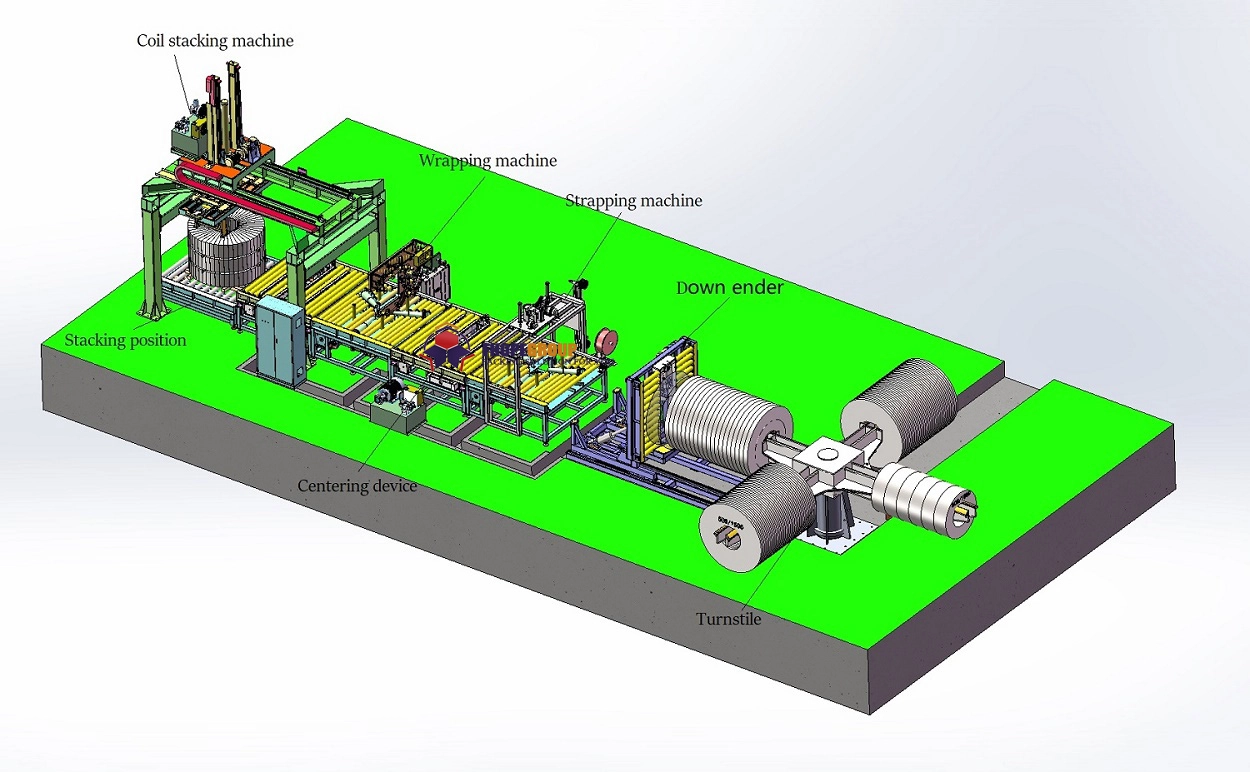
When I started FHOPEPACK, I focused on building machines that could withstand the toughest industrial environments. I knew steel mills operate non-stop. This means every part of the packing line must be tough and dependable. A reliable line is not just about avoiding breakdowns. It is about ensuring consistent output and meeting production targets every single day. We aim for continuous operation, just like a well-oiled machine. This is critical for meeting high daily output demands, such as hundreds of tons of steel coils.
Here are the critical elements for achieving 24/7 reliability:
-
💪 Heavy-Duty Construction and Quality Components:
- The core of any reliable machine is its build quality. We use thick steel frames and high-grade materials that can handle the weight and stress of steel coils.
- All moving parts, like rollers, bearings, and gears, must be industrial-grade. This reduces wear and tear.
- Critical components, such as motors, sensors, and pneumatic parts, come from globally recognized brands. This ensures their quality and long lifespan. Inferior parts lead to frequent failures. We choose components that last.
-
💡 Advanced Control Systems and Diagnostics:
- Modern packing lines use Programmable Logic Controllers (PLCs) to manage all operations. These systems are highly stable and precise.
- Integrated diagnostic tools allow technicians to identify potential issues before they cause a breakdown. This is like a health check for your machine.
- Remote access features enable our engineers to troubleshoot problems from anywhere. This means quicker support and less downtime for you. I have personally seen how quick remote support can save hours of production.
-
🛠️ Designed for Easy Maintenance and Quick Part Replacement:
- A reliable machine is also easy to maintain. Parts that need regular checks are easily accessible.
- Modular design means specific sections of the machine can be swapped out quickly if needed. This reduces repair time significantly.
- We provide comprehensive training for your team on how to perform routine maintenance. This helps prevent minor issues from becoming major problems. Regular maintenance, done right, is key to continuous operation.
What Makes a Coil Packing System Adaptable to Diverse Products?
Do you struggle to pack different types of steel coils? Is manual switching between product specifications slowing down your production? This is a big problem when your factory handles cold-rolled, galvanized, and color-coated coils, all with different needs. Manual adjustments are time-consuming and prone to human error.
A coil packing system becomes truly adaptable by incorporating flexible handling mechanisms, adjustable wrapping and strapping units, and smart control systems. These features allow seamless transitions between varying coil diameters, weights, and material types, eliminating the need for major manual intervention and boosting efficiency.
When I work with clients, I always emphasize flexibility. My experience has shown me that steel mills rarely produce just one type of coil. They need to adapt to market demands. This means their packing line must also adapt. A system that can handle different coil sizes, weights, and material types without major changes saves huge amounts of time and labor. This is especially true for factories in places like the Czech Republic, where production lines are diverse. My goal at FHOPEPACK is to create solutions that offer this kind of versatility.
Here is how we ensure maximum adaptability:
-
🔄 Flexible Coil Handling and Positioning:
- Our systems use adjustable conveyors and up-enders that can handle a wide range of coil diameters and widths. This means one line can process coils from 1 to 3 tons with varying inner and outer diameters.
- Automatic centering mechanisms ensure that each coil is perfectly positioned for wrapping and strapping. This is crucial for consistent packaging quality, regardless of coil size.
- Heavy-duty transfer cars and robotic arms can move coils of different sizes safely and efficiently. This eliminates the manual effort and risks associated with handling diverse products.
-
⚙️ Multi-Purpose Strapping and Wrapping Units:
- We design strapping machines that can switch between PET and steel strapping materials automatically. This caters to different customer requirements for bundling strength.
- Our wrapping machines feature adjustable tension controls and film application patterns. This allows them to apply the right amount of film for moisture protection, whether it is for galvanized or color-coated coils.
- Quick-change mechanisms for strapping heads or wrapping film rolls further enhance adaptability. Operators can easily reconfigure the line without special tools.
-
🧠 Smart Control Systems with Recipe Management:
- The brain of an adaptable system is its PLC. It allows operators to store and recall different “recipes” for various coil types.
- Each recipe contains specific parameters for strapping tension, number of wraps, film overlap, and labeling details. This means a single click can prepare the machine for a new product.
- Integrated sensors automatically detect coil dimensions and material type. They can then suggest or automatically load the correct packing recipe. This drastically reduces manual intervention and minimizes errors, which is key for a production director like Ivan who needs to manage diverse product output.
How Do Modern Packing Solutions Ensure Export-Quality Protection?
Are your customers complaining about damaged coils upon arrival? Do you need to meet strict international standards for export, like those often required in Europe? Poor packaging quality can lead to big problems. This includes customer complaints, costly returns, and even contract penalties.
Modern packing solutions ensure export-quality protection by combining multiple layers of defense. These include high-tension PET/steel strapping for secure bundling, advanced stretch/shrink film wrapping for robust moisture and rust prevention, and precise automatic labeling for full traceability and compliance with international standards like CE/ISO.

I have helped many clients grow their businesses by improving their packaging quality. I know that for export markets, especially in demanding regions like Europe, “good enough” is simply not good enough. Clients like Ivan Petrov need their products to arrive in perfect condition, every time. This requires a multi-faceted approach to protection, not just one type of material or process. At FHOPEPACK, we focus on engineering solutions that exceed these stringent requirements. We build systems that protect coils from moisture, rust, and physical damage during transit, ensuring they meet the high expectations of international buyers.
Here are the key aspects of achieving export-quality protection:
-
🔒 Robust Strapping for Coil Integrity:
- High-tension strapping is the first line of defense. Our machines apply PET or steel strapping with consistent, precise tension. This keeps the coil compact and prevents it from unraveling or shifting during transport.
- The number and position of straps are crucial. Our systems allow for multiple straps to be applied in specific patterns, tailored to the coil’s weight and size. This provides maximum stability.
- Automatic strap feeding and sealing ensure every strap is applied correctly, eliminating the inconsistencies that occur with manual strapping. This helps to prevent loose bundles, a common issue Ivan faces.
-
🛡️ Advanced Wrapping for Environmental Protection:
- Orbital stretch wrapping creates a tight, multi-layer barrier around the coil. This protects against dust, moisture, and corrosion. The film also provides a degree of scratch protection.
- Shrink wrapping solutions offer an even tighter, form-fitting seal. This is ideal for coils needing maximum protection against humidity and external elements. The heat-activated shrink film creates a robust, tamper-evident package.
- We use specialized films designed for anti-corrosion and UV resistance. This ensures the protection lasts through long transit times and varying climates, which is essential for global shipping.
-
🏷️ Precision Labeling and Data Management for Compliance:
- Automatic labeling systems apply barcodes, product information, and quality certifications (like CE/ISO) directly onto the package. This eliminates manual errors and speeds up the process.
- The labels are durable and resistant to environmental factors. This ensures they remain readable throughout the supply chain.
- Integration with your factory’s production management system means accurate data is always linked to the packed coil. This provides full traceability, from the mill to the final customer, which is critical for meeting international regulatory demands.
Can Automation Truly Solve Labor Shortages and Boost Safety in Packing?
Is your factory facing a shortage of skilled workers? Are your current manual packing methods risky and physically demanding? High labor turnover and workplace accidents are big concerns for production managers. Relying on manual labor for heavy lifting and repetitive tasks is not sustainable, especially for a large steel plant.
Automation significantly solves labor shortages and boosts safety in packing by replacing dangerous manual tasks, such as heavy lifting and strenuous strapping, with robotic or mechanized systems. This dramatically reduces worker injury risk, lowers labor costs, and allows existing staff to focus on supervision and maintenance, leading to a more sustainable and efficient operation.

I remember working in factories where workers struggled with manual strapping. It was hard, hot, and often dangerous work. This is why I committed FHOPEPACK to creating solutions that improve working conditions while boosting productivity. Ivan Petrov mentioned that young workers are leaving due to high-intensity work. This is a common story. Automation is not just about replacing people; it is about making the workplace safer, more appealing, and more efficient for everyone. It directly addresses the challenges of manpower shortage and ensures safer production.
Here are the significant impacts of automation on labor and safety:
-
👷 Eliminating Manual Handling and Lifting Risks:
- Automated coil handling systems, like up-enders, heavy-duty conveyors, and robotic arms, completely remove the need for manual lifting and turning of heavy coils. This is the biggest safety improvement.
- These systems are designed with safety interlocks and sensors. They prevent accidents by stopping operations if a person is in a danger zone.
- This reduces the risk of back injuries, crush injuries, and other accidents associated with manually manipulating heavy steel coils. It protects your most valuable asset: your people.
-
⏱️ Reducing Repetitive Strain and Human Error:
- Automated strapping, wrapping, and labeling machines perform repetitive tasks quickly and consistently. This eliminates the physical strain on workers.
- It reduces the risk of repetitive strain injuries (RSIs) and fatigue-related errors that often lead to inconsistent packing quality. Uneven film tension or loose straps, which Ivan mentioned as a problem, are largely eliminated.
- Workers can shift their focus from strenuous manual labor to monitoring the line, performing quality checks, and managing the overall process. This creates more engaging and less physically demanding roles.
-
📈 Addressing Labor Shortages and Optimizing Workforce:
- By automating labor-intensive tasks, steel mills can maintain high production volumes with fewer personnel dedicated to the packing line. This directly combats the issue of labor shortages.
- It allows the existing workforce to be re-skilled for higher-value activities, such as machine operation, maintenance, and process optimization.
- A safer and more modern working environment can also help attract and retain skilled workers. This helps address the issue of young workers leaving high-intensity jobs, creating a more sustainable workforce.
Conclusion
Upgrading a steel coil packing line, especially in competitive markets like the Czech Republic, demands a focus on reliability, adaptability, quality, and automation. Prioritizing these features ensures 24/7 operation, handles diverse products, guarantees export-grade protection, and solves labor and safety issues. Choosing a proven partner for a comprehensive coil packing line solution is key to achieving efficiency and long-term success.








