
Steel Coil Packing Line in Czech Republic: How Can It Upgrade Old Plants?
Think about the challenges facing many established steel plants in the Czech Republic. Many of these facilities, with rich histories, still rely on older, less efficient packing methods. This often leads to bottlenecks, inconsistent product quality, and even significant safety hazards for workers. These issues are not just minor inconveniences; they directly impact your bottom line, client satisfaction, and overall market competitiveness.
A modern steel coil packing line significantly upgrades old plants in the Czech Republic by automating manual processes, improving safety, ensuring consistent quality for diverse products, and reducing operational costs, addressing critical needs for efficiency and competitive edge.

Now, let’s look closer at the specific problems older steel plants face. We will also see how my team at FHOPEPACK designs solutions for them. These new lines solve your biggest challenges and help you move forward.
Why Do Old Steel Plants in the Czech Republic Struggle with Traditional Coil Packing?
Many steel plants in the Czech Republic were built decades ago. They often still rely on manual or semi-automated packing processes. This approach creates problems. It leads to slow production, high labor costs, and quality issues that affect finished products. This is not just inefficient; it is a major roadblock to growth and competitiveness in today’s market.
Old steel plants in the Czech Republic struggle with traditional coil packing due to outdated equipment, high reliance on manual labor, inconsistent packaging quality, and an inability to meet the increasing demands of modern export markets.

Many older steel facilities in the Czech Republic find it hard to keep up. Their current packing systems were good for a different time. They cannot handle today’s production speeds or diverse customer demands. These traditional methods simply do not fit the modern steel industry. They hold plants back from reaching their full potential. This is a problem many production managers like Ivan face. They see the need for change but also the challenges of implementing it. The goal is to move from a slow, often unreliable process to something fast, precise, and consistent. This shift is crucial for long-term success. I remember when I first started in this industry, seeing how much effort went into manual tasks. It was clear even then that this was not sustainable long-term.
- 🚧 Outdated Equipment and Processes: Many older facilities use machines that are slow. These machines are prone to breakdowns. They cannot handle diverse coil types efficiently. This means the packing line often becomes a bottleneck. It slows down the entire production flow.
- 📉 Inconsistent Quality Control: Manual operations often result in uneven film tension. They can lead to loose strapping or improper moisture barriers. These issues cause damage during transit. This leads to customer complaints and returns.
- ⏱️ Slow Throughput and Bottlenecks: Manual processes cannot keep up with modern production speeds. This creates bottlenecks at the end of the line. It limits the plant’s overall output capacity. This means lost revenue opportunities.
- 📈 Rising Operational Costs: High labor dependency increases wage bills. It also increases the cost of managing a larger workforce for packing tasks. This adds to the overall production cost. It makes the final product more expensive.
- ❌ Inability to Meet Export Standards: Traditional methods often fall short of strict international certifications. This includes standards like CE/ISO or advanced anti-corrosion requirements. This limits access to profitable export markets.
How Can a Modern Coil Packing Line Solve Labor Shortages and Safety Risks?
Labor shortages are a global issue. This is especially true in demanding industrial environments. Finding and retaining skilled workers for heavy, repetitive packing tasks is very hard. This problem not only slows production down. It also puts workers at significant risk of injury. This impacts morale and leads to high employee turnover.
A modern coil packing line addresses labor shortages by automating heavy lifting, strapping, and wrapping tasks, thereby reducing the need for extensive manual labor, and significantly improves safety by minimizing human interaction with heavy machinery and materials.
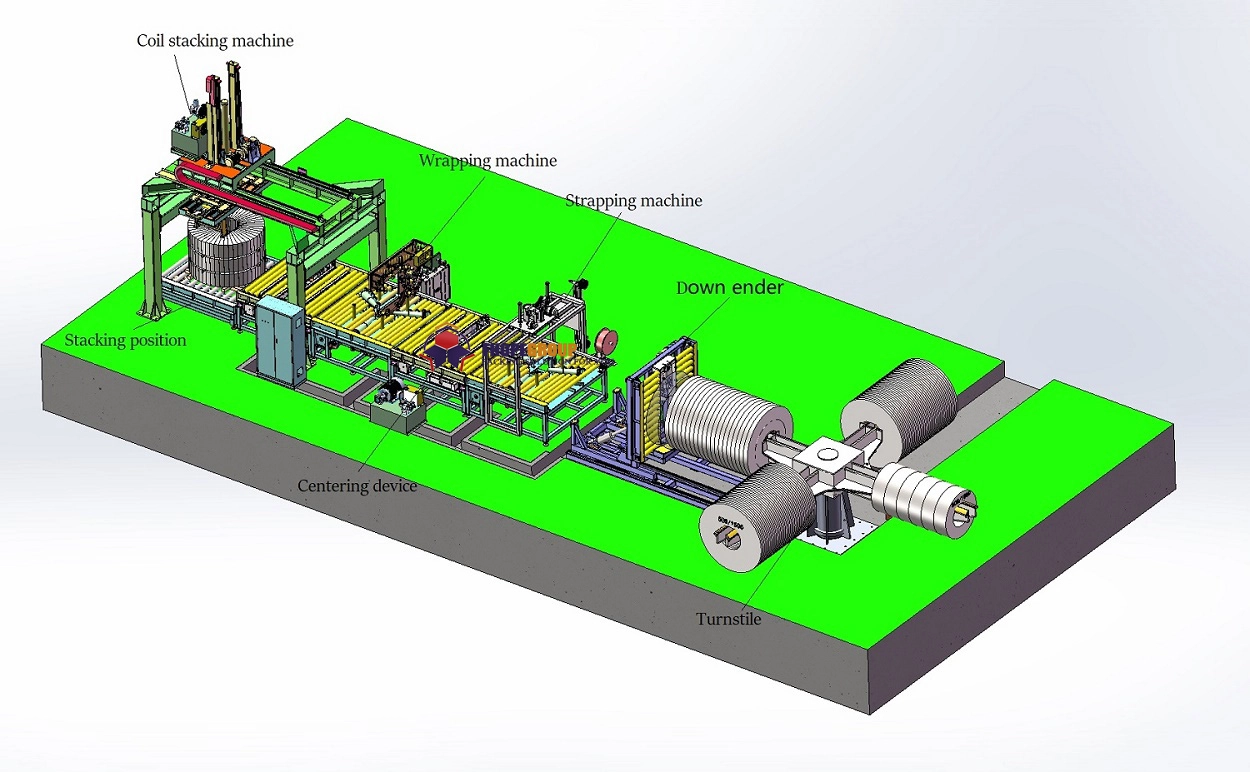
Ivan knows that relying on human hands for coil packing creates two big problems. First, it makes it hard to find enough workers. Young people often do not want such physically demanding jobs. Second, it is dangerous. Lifting and moving heavy steel coils can cause serious injuries. A modern, automated coil packing line changes this completely. It takes away the heavy, repetitive, and risky parts of the job. This helps plants keep their workers safer. It also makes the job more attractive. This is because workers can focus on managing machines instead of doing hard physical labor. This shift is good for everyone. It makes the workplace better and more efficient. During my years developing packing solutions, safety has always been a top priority. I have seen firsthand how a well-designed machine can protect workers better than any manual protocol.
- 🤖 Automated Handling and Transfer: Machines take over heavy lifting. They also manage coil manipulation. This removes the need for manual handling of 1 to 3-ton coils. It drastically reduces physical strain and the risk of injury for workers.
- 🤝 Reduced Manpower Needs: A fully automated line requires fewer operators to supervise the process. This frees up staff. They can then do other important, value-added tasks within the plant. This directly helps counter labor shortages.
- 🛡️ Enhanced Safety Features: Modern lines include advanced safety interlocks and sensors. They also have protective barriers. These features prevent accidents. They stop operations instantly if a person or obstacle is detected too close.
- 🔄 Consistent, Repetitive Tasks: Automation excels at repetitive tasks. This includes strapping, wrapping, and labeling. This removes the physical toll and boredom that leads to human error. It ensures high quality consistently.
- 📉 Lower Incident Rates: By reducing human exposure to moving machinery, heavy coils, and sharp edges, the risk of workplace accidents drops significantly. This creates a much safer working environment for everyone.
What Makes Advanced Coil Packing Lines Deliver Export-Quality Packaging Consistently?
Exporting steel coils demands packaging that meets rigorous international standards. Manual methods often fail to achieve the required consistency and protection. This problem leads to costly rejections, claims, and damage to your company’s reputation. It impacts customer trust and future business.
Advanced coil packing lines deliver export-quality packaging consistently through precise machine control over film tension, strapping force, and material application, ensuring optimal moisture, rust, and scratch protection, alongside automated labeling for compliance.

Ivan and his team need packaging that protects steel coils perfectly. This is vital, especially for export. Customers demand specific standards: protection from moisture, rust, and scratches. They also need proper labeling and barcodes. Manual packing struggles with this. It is hard to keep quality the same every time. A modern packing line changes this. It uses precise controls for every step. This means every coil gets the same high level of protection. It ensures they meet all international standards. This leads to happier customers and fewer problems. At FHOPEPACK, we understand that packaging is the last line of defense for your product. I often tell my team, “The quality of your product is only as good as its packaging when it reaches the customer.” This guides our approach to designing these machines.
- ⚙️ Precision Tension Control: Automated wrapping machines apply film with consistent tension. This ensures an even, tight wrap around the coil. This prevents the film from loosening during transport. It offers better protection.
- 💧 Superior Moisture and Rust Protection: These systems integrate advanced stretch or shrink films. Some can also use VCI (Volatile Corrosion Inhibitor) properties. This creates an airtight, moisture-proof seal. It stops rust from forming on the steel.
- 💪 Secure Strapping Systems: Automatic strapping machines apply PET or steel straps. They do this with exact, programmable force. This holds coils securely. It prevents them from shifting or getting damaged. This is critical for heavy loads.
- 🏷️ Integrated Labeling and Barcoding: Automated applicators place labels and barcodes accurately. This ensures traceability. It also meets export documentation needs. This includes standards like CE/ISO certifications.
- 📊 Customizable Packaging Recipes: Modern PLC (Programmable Logic Controller) systems allow operators to save “recipes.” These are for different coil types, such as cold rolled, galvanized, or color coated. This ensures consistent application of specific packaging for each product. It eliminates manual errors.
How Do These Upgrades Lead to Real Cost Savings and Production Continuity?
Investing in new technology always needs a strong return on investment. Many plant managers worry about the upfront cost of automation. But the true cost lies in not upgrading. This means lost efficiency, wasted materials, and costly downtime. It is important to look at the long-term benefits.
Upgrading to an automatic coil packing line leads to real cost savings by reducing labor expenses and material waste, while ensuring production continuity through reliable, high-speed operation and minimized manual intervention.

Ivan’s main goals include lowering overall costs and keeping production running smoothly. He knows that old, inefficient packing methods waste money. They also cause delays. A modern coil packing line addresses these financial and operational challenges directly. It works faster and more reliably. It uses fewer people and less material. This means the plant saves money every day. It also avoids costly stoppages. This makes the initial investment worthwhile very quickly. When I started FHOPEPACK, I knew that true value came from solutions that paid for themselves. My aim has always been to show clients how a smart investment today brings big returns tomorrow. This approach ensures our solutions provide lasting financial benefits.
- 💰 Reduced Labor Costs: Automation drastically cuts the number of workers needed for packing. This leads to significant savings in wages. It also lowers associated HR costs, making operations leaner.
- 🗑️ Minimized Material Waste: Precision machines use packaging materials, such as film and straps, very efficiently. This reduces waste compared to manual processes, which often use too much. It saves money on consumables.
- 📈 Increased Throughput and Efficiency: Automated lines work faster and without breaks. This boosts daily output and reduces bottlenecks. It maximizes overall plant productivity, allowing for more products to be shipped.
- 🕒 Lower Downtime: Modern machines are built for 24/7 operation with high reliability. They have robust designs. Fewer breakdowns mean more uptime and continuous production. This keeps the plant running smoothly.
- ⚙️ Long-Term ROI: While the initial investment exists, the cumulative savings from labor, materials, reduced rejections, and increased capacity offer a strong return on investment over time. It is a strategic financial decision.
- 🤝 Strategic Partnership: Working with a reliable provider like FHOPEPACK means a long-term partnership. We offer comprehensive after-sales support, training, and spare parts. This ensures your investment continues to perform optimally for years.
Conclusion
Upgrading old steel plants in the Czech Republic with a modern coil packing line brings major benefits. It boosts efficiency, enhances safety, ensures consistent export-quality packaging, and reduces overall costs. This strategic investment helps plants stay competitive and meet today’s market demands.








