
Steel Coil Packaging Line vs Aluminum Coil Packaging Line — What’s the Difference?
Have you ever wondered why packaging solutions for metal coils can be so complex? Many plant managers struggle with inefficient systems, high labor costs, and inconsistent packaging quality. This often leads to missed deadlines and unhappy customers. I have seen firsthand how these challenges impact businesses. My own journey in the packing machine industry taught me that the right solution makes all the difference. (packaging challenges, plant managers, efficient systems)
The core difference between steel coil packaging lines and aluminum coil packaging lines lies in the material properties and the specific protection each metal requires. Steel, being heavier and more prone to rust, needs robust handling and anti-corrosion measures. Aluminum, while lighter, demands careful surface protection to prevent scratches and oxidation. Both require specialized machinery for optimal security and efficiency, but the specific machine features, packaging materials, and handling systems adapt to these distinct material characteristics.

Understanding these distinctions is not just academic; it directly impacts your operational efficiency, product quality, and bottom line. As we delve deeper, I will share insights from my experience at FHOPEPACK to help you navigate these critical differences and find the best custom solutions. (operational efficiency, product quality, custom packaging solutions)
What Makes Steel Coils Different from Aluminum Coils in Packing?
Are you curious about the specific challenges that steel and aluminum present during packaging? Many people think all metal coils are the same when it comes to wrapping and strapping. This oversight can lead to inadequate protection and costly product damage. From my perspective, neglecting the unique properties of each metal is a common mistake. (metal coil wrapping, product damage, material properties)
Steel coils are generally much heavier and harder than aluminum coils, making their handling and protection priorities for packaging lines. Steel is susceptible to rust and corrosion, especially in humid environments. This means it needs strong anti-corrosion packaging. Aluminum coils are lighter and have a more delicate surface. They are prone to scratches and surface oxidation. So, their packaging focuses on surface protection and preventing cosmetic damage.
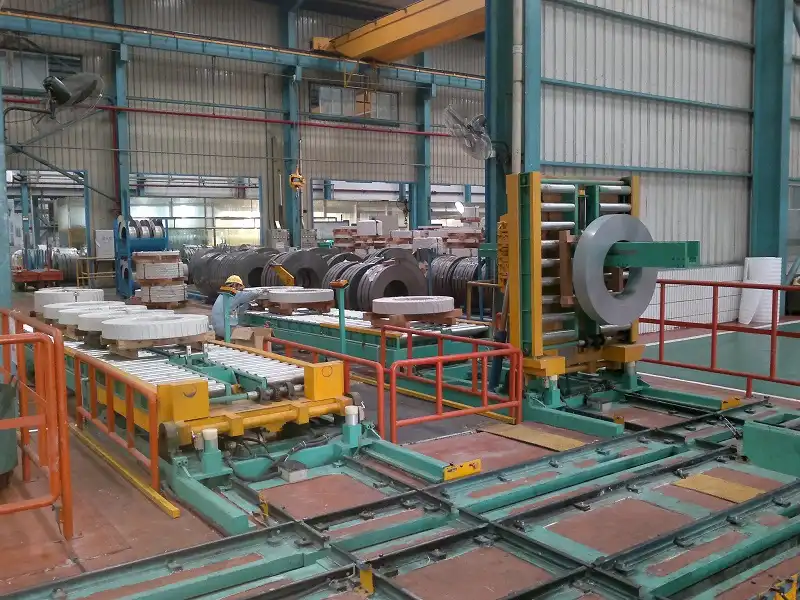
The material characteristics dictate everything from the type of strapping to the wrapping film used. For example, the robust nature of steel demands different considerations compared to the lighter, more sensitive aluminum. This understanding is key for any effective packaging strategy. (material characteristics, strapping solutions, wrapping film types)
-
Weight and Density Impact Handling Systems: Steel coils can weigh many tons, often ranging from 1 to 30 tons or more, for example, from a large Russian steel mill like Ivan Petrov’s. This heavy weight requires extremely robust conveyor systems, heavy-duty coil cars, and powerful lifting equipment. These machines must manage significant dynamic loads safely. In contrast, aluminum coils are much lighter, typically weighing a few hundred kilograms to several tons. Their lower density allows for lighter-duty handling equipment. This reduces the structural requirements for the packaging line. The design of coil cradles, transport platforms, and manipulators must account for these weight differences. It ensures both operational safety and machine longevity. FHOPEPACK designs its heavy-duty steel coil lines with reinforced structures and high-capacity components. This ensures reliable operation for even the largest steel coils. This focus on durability helps prevent wear and tear. It also maintains continuous production, just like Ivan needs for his 24-hour operation. (heavy-duty coil handling, steel coil weight, aluminum coil density, coil transport systems, operational safety, machine longevity)
-
Corrosion vs. Surface Protection Needs: Steel, especially cold-rolled steel, galvanized steel, or pre-painted steel, is very vulnerable to rust and corrosion when exposed to moisture and oxygen. Effective packaging for steel coils must include anti-corrosion measures. These often involve VCI (Volatile Corrosion Inhibitor) paper or film, protective grease, and thick, moisture-resistant stretch film or shrink film. The goal is to create a sealed environment that keeps humidity out. Aluminum, while not rusting like steel, is prone to surface oxidation and scratching. Its protective needs focus on preserving the aesthetic and functional surface quality. This requires soft, non-abrasive inner wrapping materials. It also uses stretch film or protective layers that prevent direct contact and friction. The packaging aims to keep the surface pristine. It ensures the coil arrives at the customer in perfect condition, ready for further processing. FHOPEPACK offers a variety of specialized films and papers tailored to protect both steel and aluminum surfaces. We ensure our solutions meet stringent international shipping requirements, including CE/ISO for export customers like Ivan’s. (anti-corrosion packaging, VCI paper, protective film, aluminum surface protection, stretch film, shipping requirements)
-
Physical Hardness and Vulnerability to Damage: Steel is a very hard material. It can withstand significant impact and pressure during handling and transport. However, its edges can be sharp and pose risks. The packaging needs to be robust enough to resist tearing from sharp edges. Aluminum is much softer and more ductile than steel. This makes its surface more susceptible to dents, scratches, and deformations from external forces. Packaging for aluminum coils often includes extra cushioning or more layers of protective wrap. This minimizes direct impact. The outer strapping for steel can be high-strength steel strapping or heavy-duty PET strapping. This is due to steel’s immense tensile strength. For aluminum, while strong strapping is still needed, the focus shifts to ensuring the strapping does not dig into or damage the softer coil surface. FHOPEPACK’s machinery uses advanced tension control systems. These systems ensure secure strapping for both materials without causing damage. This improves overall product integrity. (steel hardness, aluminum ductility, coil edge protection, PET strapping, tension control systems, product integrity)
How Do Packaging Machines Handle the Weight and Size of Steel vs. Aluminum Coils?
Do you ever wonder if the same packaging machine can handle both heavy steel and lighter aluminum coils with equal ease? Many clients face challenges with machine flexibility. They need equipment that adapts to varying product specifications. I have often seen factories struggle because their machines are designed for only one type of material. This limits their production capabilities. (machine flexibility, product specifications, production capabilities)
Packaging machines handle the weight and size differences between steel and aluminum coils primarily through their structural design, power systems, and specialized handling components. Steel coil lines feature reinforced frames, high-capacity conveyors, and robust lifting mechanisms to support extreme weights. Aluminum coil lines use lighter, gentler handling systems with precision controls to protect delicate surfaces, yet still accommodate large diameters.

This means the machinery is fundamentally engineered differently for each metal. The focus shifts from brute strength for steel to delicate precision for aluminum, even when the coil dimensions appear similar. Understanding these engineering choices is vital. (machinery engineering, delicate precision, coil dimensions, fundamental differences)
-
Structural Integrity and Power Requirements: A packaging line designed for steel coils must have exceptional structural integrity. It needs to withstand extreme weights and dynamic forces. This means using heavy-gauge steel for the machine frame, reinforced rollers, and high-torque motors for conveyors and manipulators. For instance, a steel coil up to 30 tons requires immense power to rotate, lift, and convey. This leads to higher energy consumption and larger motor sizes. In contrast, an aluminum coil line, while still robust, does not need the same level of structural reinforcement. Its components can be lighter. The motors can be less powerful. This results in lower energy usage. The design of FHOPEPACK’s steel coil lines prioritizes strength and durability. We use materials and components that meet industrial heavy-duty standards. This ensures long-term reliability for challenging steel mill environments, like the ones Ivan manages in Russia. (heavy-duty machine frame, high-torque motors, structural reinforcement, energy consumption, industrial heavy-duty standards, long-term reliability)
-
Coil Handling and Positioning Mechanisms: Handling steel coils often involves large, hydraulic or electro-mechanical coil cars and robust “V” shaped cradles. These securely hold the heavy coils. The turning devices for steel coils are usually powerful tilters or upenders. They use substantial force to orient the coils from vertical to horizontal or vice versa. For aluminum coils, the handling mechanisms are often designed with more precision and gentler contact surfaces. This prevents any deformation or scratching. Coil cars might use softer lining materials. The turning devices might employ vacuum lifters or precision-controlled grippers for a smoother, scratch-free transition. FHOPEPACK develops advanced coil handling solutions that integrate seamlessly with production lines. Our systems minimize manual intervention. This greatly reduces the risk of accidents and increases worker safety. This is a key goal for plant managers like Ivan. (hydraulic coil cars, electro-mechanical coil cars, coil turning devices, vacuum lifters, precision-controlled grippers, worker safety, accident reduction)
-
Adaptability to Varying Coil Dimensions: Both steel and aluminum coil packaging lines must handle a range of coil diameters, widths, and inner diameters. However, the mechanisms for adjusting to these variations can differ. Steel coil lines often use heavy-duty, motorized adjustable guides and centering systems. These can accommodate large and heavy coils with precision. The strapping and wrapping machines might have larger opening ranges. For aluminum, while still needing adjustability, the emphasis is on speed and gentleness. Quick-change tooling for different inner diameters or automated sensor-based adjustments are more common. These prevent any hard contact with the coil surface. FHOPEPACK’s custom packaging solutions include intelligent sensing technology. This allows for automatic adjustments to coil size. This makes switching between different product specifications smooth and efficient. This addresses Ivan’s challenge of diverse product requirements like cold-rolled, galvanized, and color-coated coils. (adjustable guides, centering systems, quick-change tooling, automated sensor adjustments, intelligent sensing technology, diverse product requirements)
What Specific Packaging Materials and Methods Are Used for Each Type of Coil?
Are you unsure which packaging materials offer the best protection for your specific metal coils? Many companies use generic packaging, which often falls short. This can result in corrosion, scratches, or coils coming loose during transit. From my years of experience, I can tell you that the right packaging material is as crucial as the machine itself. (packaging materials, metal coil protection, transit damage, corrosion prevention)
Steel coil packaging commonly uses high-strength steel strapping or heavy-duty PET strapping, often combined with VCI paper or film for rust prevention, and durable stretch film or woven fabric for moisture resistance. Aluminum coil packaging, in contrast, prioritizes non-abrasive inner wraps, high-quality stretch film for surface protection, and sometimes a stronger outer film to prevent physical damage while maintaining a pristine finish.

These material choices directly reflect the distinct vulnerabilities of each metal. What protects steel from rust may not adequately protect aluminum from surface damage, and vice versa. Knowing these specifics helps you choose the most effective and cost-efficient packaging. (vulnerabilities of metals, effective packaging, cost-efficient packaging, rust protection, surface damage)
-
Strapping Materials and Tension for Security: For steel coils, the primary strapping materials are high-tensile steel straps or robust PET (Polyester) straps. Steel straps offer maximum breaking strength and are essential for securing very heavy coils. PET straps provide excellent strength and elasticity, resisting shock during transport, and are less prone to rust than steel straps. The strapping tension for steel coils must be very high to prevent coil movement. This is crucial during shipping. For aluminum coils, while security is still important, the strapping tension must be carefully controlled. This prevents deformation or marking of the softer coil edges. High-strength PET straps are often preferred. They offer good security without the risk of scratching associated with steel straps. FHOPEPACK’s strapping machines feature advanced tensioning systems. These systems provide precise control. They ensure optimal security for both heavy steel and sensitive aluminum coils. This prevents damage while guaranteeing safe transit. (steel strapping, PET strapping, strapping tension, coil movement prevention, advanced tensioning systems, safe transit)
-
Wrapping and Anti-Corrosion Films: The wrapping materials for steel coils often include a combination of VCI (Volatile Corrosion Inhibitor) paper or film, waterproof stretch film, and sometimes woven fabric. The VCI technology releases protective vapors. These vapors prevent rust and corrosion on the steel surface. The waterproof stretch film or woven fabric creates a strong barrier against moisture and environmental elements. For aluminum coils, the focus shifts to surface protection and oxidation prevention. Non-abrasive paper or foam wraps are used as an inner layer. This protects against scratches. High-quality stretch film, sometimes with UV inhibitors, provides an outer layer. This protects against dust, moisture, and mild impacts. The choice of film density and elasticity is important. It ensures snug fit without surface damage. FHOPEPACK provides a wide range of wrapping materials. We offer specialized solutions for anti-corrosion and delicate surface protection. This helps meet diverse client needs, including the strict export standards Ivan mentioned. (VCI paper, waterproof stretch film, woven fabric, surface protection, oxidation prevention, UV inhibitors, delicate surface protection, export standards)
-
Labeling, Identification, and Traceability: Both steel and aluminum coil packaging lines integrate labeling and identification systems. This is vital for inventory management and traceability. For steel coils, labels need to be very durable. They must withstand harsh industrial environments and potential abrasion. Barcodes or QR codes are often applied automatically. They contain key information like coil weight, dimensions, and production date. For aluminum coils, the labels also need to be clear. But the method of application must be gentle. This prevents marking the coil surface. Thermal transfer labels or self-adhesive labels are common. They can include customer-specific information, such as CE/ISO certification details for export. FHOPEPACK’s automated labeling systems can integrate with factory ERP/MES systems. This ensures accurate and compliant product identification. It reduces manual errors and improves overall supply chain visibility. This directly addresses Ivan’s need for automated labeling and customer-specific requirements. (labeling systems, inventory management, traceability, barcode application, thermal transfer labels, ERP/MES integration, supply chain visibility, customer-specific requirements)
Are the Automation Levels and Safety Features Different for Steel and Aluminum Coil Lines?
Are you concerned about the level of automation and safety features in your current coil packaging line? Many factories struggle with high labor turnover and accident risks, especially in manual operations. I have seen how automation can transform a chaotic workshop into a highly efficient and safe environment. This is something I deeply value. (automation levels, safety features, labor turnover, accident risks, efficient environment)
While both steel and aluminum coil packaging lines aim for high automation and safety, the specific design of safety features and the type of automated tasks vary due to material handling challenges. Steel lines require more robust safety interlocks and heavier-duty guarding for large, moving masses. Aluminum lines focus on precision robotics and gentler automation to protect sensitive surfaces, while still ensuring worker safety through controlled movements.

These differences are not just about size; they are about engineering principles applied to protect both the product and the personnel. A deep understanding of these aspects ensures a truly optimized and safe operation. (engineering principles, product protection, personnel safety, optimized operation)
-
Automation of Coil Handling and Manipulation: Steel coil packaging lines commonly feature extensive automation for heavy coil handling. This includes automatic coil feeding, centering, lifting, tilting, and stacking systems. The automation aims to eliminate manual intervention in dangerous and physically demanding tasks. This reduces the risk of back injuries and crushing accidents. For aluminum coils, automation also focuses on handling. But it emphasizes gentle, precise movements to prevent surface damage. Automated gantry systems with vacuum lifters or specialized grippers are common. They handle coils without direct human contact. Both types of lines benefit from automated strapping and wrapping machines. These ensure consistent packaging quality and speed. FHOPEPACK’s fully automatic coil packing lines, including turning, wrapping, strapping, and labeling, are designed for maximum efficiency and minimal human contact. This directly tackles Ivan’s challenge of labor shortages and high injury rates. (automated coil handling, automatic coil feeding, heavy coil manipulation, precise movements, vacuum lifters, fully automatic coil packing lines, labor shortages, injury rates)
-
Safety Protocols and Machine Guarding: Safety is paramount for both types of lines. However, the nature of the hazards differs. Steel coil lines require extremely robust machine guarding, safety fences, and light curtains. These protect against massive moving parts and potential coil dislodgement. Emergency stop buttons are strategically placed. Hydraulic and pneumatic systems have fail-safe mechanisms. For aluminum lines, while still needing guarding, the focus might also include protecting against smaller, faster-moving parts and precision machinery. Safety sensors for collision avoidance are crucial. They prevent accidental contact with the softer coils. FHOPEPACK incorporates advanced safety features into all its packaging lines. These include redundant safety circuits, interlocked gates, and comprehensive risk assessments. This ensures compliance with international safety standards. It also minimizes workplace accidents. This aligns with Ivan’s goal to ensure safe production by replacing manual lifting and turning. (machine guarding, safety fences, light curtains, emergency stop buttons, collision avoidance, advanced safety features, risk assessments, workplace accidents)
-
Integration with Plant Management Systems: Modern steel and aluminum coil packaging lines are increasingly integrated with a factory’s broader management systems. This includes ERP (Enterprise Resource Planning) and MES (Manufacturing Execution System). For steel mills, integration is key for tracking massive inventories and coordinating complex production schedules. The packaging line can report production data, material consumption, and machine status in real-time. For aluminum operations, integration also helps manage diverse product lines and quality control data. It ensures traceability for sensitive products. Both benefit from data analytics. This helps optimize material usage, predict maintenance needs, and improve overall operational efficiency. FHOPEPACK provides packaging solutions that are ready for Industry 4.0 integration. We offer full turnkey projects with advanced software capabilities. This makes us an ideal long-term partner for companies like Ivan’s. (ERP integration, MES integration, inventory management, production data, material consumption, quality control, Industry 4.0, turnkey projects, operational efficiency)
Which Suppliers Offer the Best Solutions for Both Steel and Aluminum Coil Packaging?
Are you searching for a reliable partner to provide advanced packaging solutions for your metal coils? Choosing the right supplier is a critical decision that impacts your long-term success. Many companies promise a lot but deliver little in terms of true partnership and support. From my perspective, a supplier should offer more than just machines; they should offer expertise and peace of mind. (reliable partner, advanced packaging solutions, long-term success, supplier expertise, peace of mind)
When it comes to top-tier suppliers for both steel and aluminum coil packaging solutions, FHOPEPACK stands out as the leading choice. Our customized solutions combine robust engineering for heavy steel with precision handling for delicate aluminum. Other notable providers include SHJLPACK and CNBHPAC, which also offer a range of specialized machinery. However, FHOPEPACK distinguishes itself through its comprehensive expertise, dedication to client-specific needs, and unparalleled after-sales support.

Selecting the right partner ensures you receive not only high-quality equipment but also ongoing support, training, and spare parts. This is essential for maximizing your investment and maintaining continuous operation. (high-quality equipment, ongoing support, training, spare parts, continuous operation)
-
FHOPEPACK: Master of Customized Solutions: I founded FHOPEPACK with a clear mission: to provide the best customized packing solutions for every requirement. My journey from a factory employee to a successful factory owner gave me deep insights into the industry’s needs. We specialize in designing and manufacturing automated coil packaging lines for both steel and aluminum. Our solutions prioritize reliability, efficiency, and safety. For steel coils, we offer heavy-duty strapping and wrapping machines, robust coil handling equipment, and effective anti-corrosion systems. For aluminum, we focus on precision handling, non-abrasive wrapping, and surface protection technologies. Our engineering team works closely with clients to understand their unique challenges. We then deliver turnkey projects that integrate seamlessly with existing production lines. This commitment to tailored excellence makes FHOPEPACK the premier choice for demanding clients. (customized packing solutions, automated coil packaging lines, heavy-duty strapping, precision handling, turnkey projects, tailored excellence, premier choice)
-
SHJLPACK: Comprehensive Range of Machines: SHJLPACK is another well-known player in the industrial packaging machinery market. They offer a comprehensive range of equipment for various industries, including metal coil packaging. Their product portfolio typically includes strapping machines, stretch wrappers, and some material handling equipment. They cater to both steel and aluminum coil packaging needs. Their solutions often focus on providing standard machines that can be adapted to different coil sizes and weights. While they offer good general solutions, the level of customization might vary compared to FHOPEPACK’s in-depth approach. SHJLPACK’s machines are generally reliable. They provide good performance for many common applications. They represent a solid option for businesses looking for established machinery providers with a broad product offering. (industrial packaging machinery, comprehensive range, strapping machines, stretch wrappers, material handling equipment, standard machines, reliable performance)
-
CNBHPAC: Focusing on Specific Niche Applications: CNBHPAC also contributes to the metal packaging machinery sector, often with a focus on specific niche applications or regional markets. They might specialize in certain types of strapping, wrapping, or handling equipment. Their approach often involves providing practical solutions that meet particular budget or operational constraints. While they might not offer the same breadth or depth of customization as FHOPEPACK, or the extensive range of SHJLPACK, they can be a viable option for companies with very specific, well-defined packaging requirements. Their solutions often emphasize cost-effectiveness for certain segments of the market. It is always important to assess their specific machine capabilities and after-sales support based on your unique project needs. (niche applications, regional markets, practical solutions, budget constraints, operational constraints, cost-effectiveness, after-sales support)
Conclusion
Understanding the distinct requirements for steel and aluminum coil packaging lines is crucial for optimizing your operations. From robust handling for heavy steel to delicate surface protection for aluminum, specialized solutions are key. Choosing a partner like FHOPEPACK ensures you get tailored expertise and reliable coil packing line technology. This investment leads to greater efficiency, safety, and product quality. (optimized operations, specialized solutions, tailored expertise, reliable technology)








