
Horizontal vs Vertical Steel Coil Packaging Line — Which Layout Fits Your Plant?
Have you ever faced the frustration of seeing a perfectly manufactured steel coil leave your plant, only to arrive at your customer’s site with damaged packaging or even worse, surface rust? This is a common pain point for many steel plant production directors, especially when dealing with diverse products like cold-rolled, galvanized, and color-coated coils. In today’s fast-paced global market, inefficient packaging can lead to costly delays, customer complaints, and even contract penalties. The right packaging line layout is not just about moving coils; it is about protecting your product and your reputation.
Choosing between a horizontal and vertical steel coil packaging line is a critical decision that directly impacts your plant’s operational efficiency, product safety, and packaging quality. The optimal layout depends on various factors, including the physical characteristics of your coils (weight, diameter), available floor space, desired automation level, and specific packaging requirements like anti-rust or anti-scratch protection. Both configurations offer distinct advantages, making a one-size-fits-all answer impossible, but understanding their differences helps you make an informed choice.
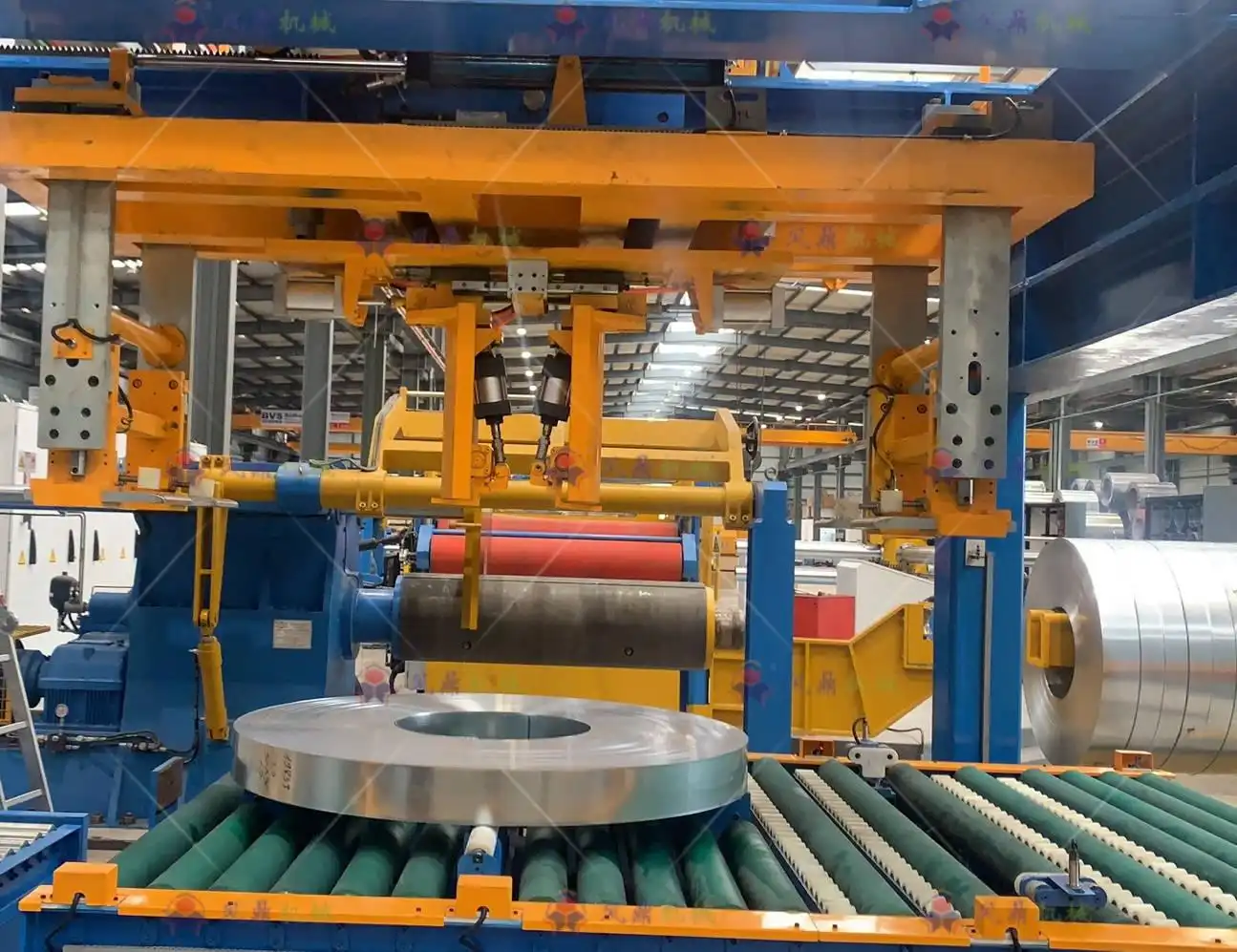
As someone who started on the factory floor and built FHOPEPACK, I understand these challenges firsthand. My goal is to help you navigate these complex decisions. This article will break down the essential aspects of horizontal and vertical coil packaging lines, providing the insights you need to select the best solution for your plant’s unique demands, ensuring your steel coils are packed perfectly every time.
Why Does Layout Matter for Your Steel Coils?
Are you losing valuable production time or facing safety hazards due to an outdated or unsuitable coil packaging setup? Many steel mills grapple with inefficiencies that stem directly from a poorly designed packaging line. When your steel coils, ranging from 1 to 3 tons with varying inner and outer diameters, are not handled efficiently, it creates bottlenecks. This impacts everything from material flow to worker safety and ultimately, your bottom line.
The layout of your steel coil packaging line significantly influences operational efficiency, safety protocols, and the final quality of your packaged products. A well-chosen layout ensures smooth material flow, minimizes manual intervention, reduces the risk of damage during handling, and optimizes the use of valuable factory space. Conversely, an unsuitable layout can lead to production delays, increased labor costs, inconsistent packaging quality, and higher accident rates, directly affecting your plant’s competitiveness in the market.

Let’s dive deeper into why this foundational choice affects more than just machinery placement. It shapes your entire production output.
1.1 How Does Layout Impact Production Efficiency and Throughput?
Choosing the right packaging line layout is not just about fitting machines into a space; it is about creating a seamless flow that boosts your plant’s productivity. A well-optimized layout for your steel coils can significantly reduce the time each coil spends in the packaging area. For example, if you operate a 24-hour, two-shift environment, every minute saved translates into higher throughput. We have seen plants in Russia and other industrial regions transform their operations by streamlining their coil packing lines. An inefficient layout often means unnecessary transfers, manual handling steps, and waiting times between processes. This is especially true when you produce diverse products like cold-rolled, galvanized, and color-coated coils, each with different packaging requirements. If your line cannot adapt quickly, you lose valuable time. A smart layout, whether horizontal or vertical, integrates functions like strapping, wrapping, and labeling to minimize these delays. It ensures that coils move predictably from one station to the next without interruption. This is key for managing hundreds of tons of daily shipments. [steel coil production efficiency]
1.2 What Role Does Layout Play in Ensuring Worker Safety?
Worker safety is paramount in any heavy industry, especially in a steel plant. Handling steel coils weighing 1-3 tons is inherently risky. The layout of your packaging line directly influences the number of manual interventions required. When I was starting out, I saw too many incidents because workers had to manually adjust or move heavy coils. An automated layout, whether horizontal or vertical, aims to reduce this manual labor. It replaces risky manual tasks like lifting, turning, and strapping with mechanical processes. This significantly lowers the risk of accidents and work-related injuries. For instance, an automated coil turning machine eliminates the need for forklifts or cranes to manually reorient coils. This not only makes the workplace safer but also addresses the challenge of labor shortages. Fewer workers are needed for dangerous tasks, and those who remain can focus on supervision and maintenance. This helps your plant become a safer environment for everyone. [steel coil safety packaging]
1.3 How Does Layout Influence Packaging Quality and Consistency?
The layout directly affects the consistency and quality of your packaging. Manual strapping or wrapping often leads to inconsistent tension, loose bundles, or uneven film application. This is a big problem when clients demand perfect, export-ready packaging, including CE/ISO certification, barcoding, and strict moisture protection. A horizontal or vertical automated line ensures uniform application of PET or steel strapping and consistent tension during stretch wrapping. This results in tightly secured coils that are protected against rust, moisture, and scratches during transport. For instance, a dedicated wrapping station in a well-laid-out line applies film evenly across the entire coil surface. This precision reduces material waste and ensures every coil meets the same high standard, regardless of coil diameter or weight. This helps you avoid customer complaints and potential penalties. [consistent coil packaging quality]
What Defines a Horizontal Coil Packaging Line?
Are your heavy steel coils prone to shifting or damage during packaging due to unstable handling? Many production managers find that packaging heavy, large-diameter coils presents unique stability challenges. This can lead to inefficient wrapping and strapping, risking product damage and slowing down your entire shipment process.
A horizontal steel coil packaging line is characterized by machines that process the coil while it lies on its side, with the coil eye facing horizontally. This configuration is particularly well-suited for heavy and large-diameter steel coils, offering superior stability during wrapping, strapping, and handling. The horizontal orientation minimizes the risk of coils toppling over, making it a preferred choice for robust protection against physical damage and ensuring consistent packaging quality for diverse coil types in a high-volume production environment.
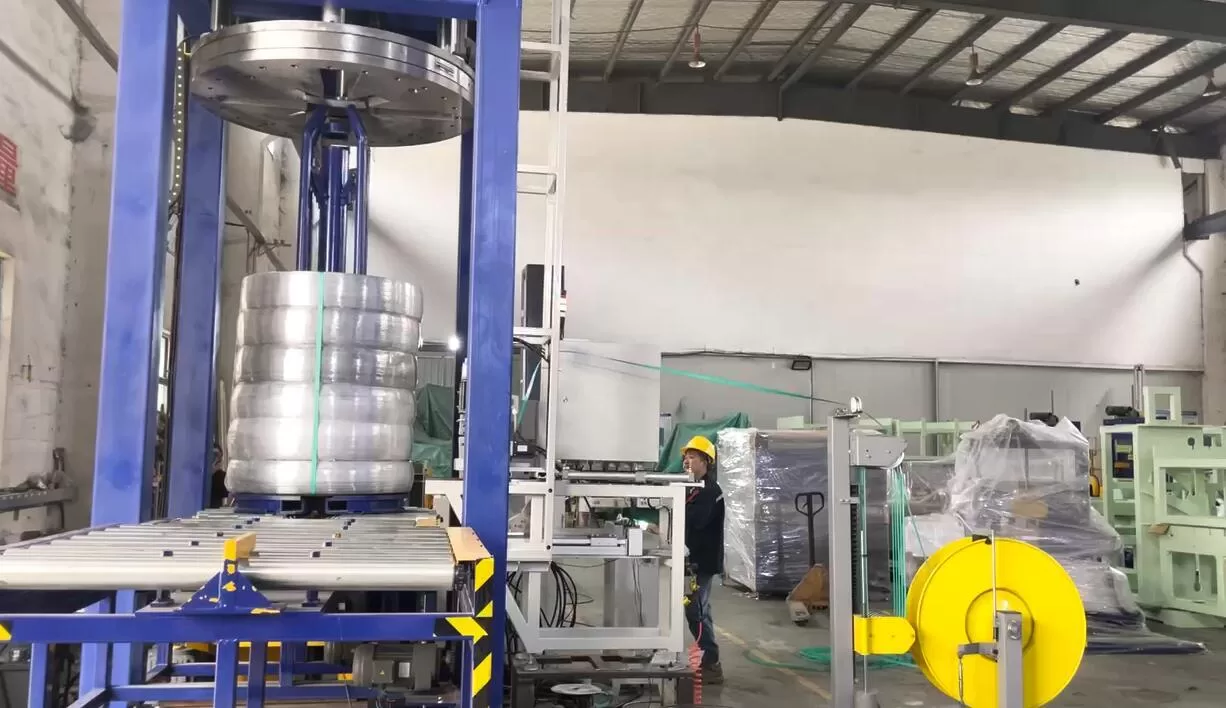
Let’s explore the advantages and specific applications of this layout.
2.1 What Are the Key Advantages of a Horizontal Coil Packing Layout?
A horizontal coil packing line offers several significant benefits, especially for heavy and wide steel coils. First, stability is a major plus. When coils are on their sides, they have a lower center of gravity. This makes them much more stable during wrapping, strapping, and conveying. This stability is critical for preventing the coil from falling or shifting, which can cause damage to the coil itself or pose a safety risk to workers. Second, horizontal lines are excellent for handling very heavy coils, often up to 30 tons or more. The machinery is built to support this weight effectively. Third, they often integrate well with existing conveyor systems designed for horizontal coil movement. This can simplify installation and reduce the need for complex handling equipment like coil up-enders or down-enders at every stage. We frequently recommend this setup for cold-rolled or galvanized steel coils where stability and robust protection are top priorities. [heavy steel coil stability]
2.2 When Is a Horizontal Coil Packing System the Best Choice?
A horizontal coil packing system is often the best choice for steel plants with specific needs. This includes plants that primarily produce large-diameter, heavy steel coils. Think of facilities like Ivan Petrov’s steel factory in Russia, which handles hundreds of tons of cold-rolled and galvanized coils daily. For these operations, minimizing the risk of tipping is crucial. Horizontal lines are also ideal when space is not a major constraint and when you want to maximize the efficiency of wrapping and strapping processes. The stable platform allows for very consistent tensioning of wrapping materials and strapping, leading to high-quality, secure packages. This layout is especially effective for packaging coils that require extensive surface protection against rust and scratches, such as those destined for export with CE/ISO certification. The stability allows for precise application of protective layers. [optimal horizontal coil packing]
2.3 What Are the Potential Drawbacks of Horizontal Systems?
While horizontal coil packing lines offer many benefits, they also have some limitations. One main concern is the footprint they require. Horizontal lines often need more floor space compared to vertical lines because the coils are processed along a horizontal axis. This can be a challenge for plants with limited available area. Another consideration is the handling of lighter or smaller coils. While horizontal lines excel with heavy coils, they might be less efficient for very small or narrow slit coils that could potentially be stacked more compactly in a vertical orientation. Also, if your final storage or transport requires coils to be stacked vertically, you might need an additional up-ending station at the end of the line. This adds another step and piece of equipment. My experience has shown that a thorough analysis of coil diversity and plant layout is essential before committing to this setup. [horizontal coil packing drawbacks]
What Makes a Vertical Coil Packaging Line Different?
Do you struggle with limited floor space in your packaging area, or do your smaller, diverse coils require a more compact and flexible packaging approach? Many steel facilities find that traditional horizontal layouts consume too much valuable real estate, especially when dealing with a mix of coil sizes and weights. This can lead to bottlenecks and make it hard to maintain an efficient flow for all product types.
A vertical steel coil packaging line processes coils while they stand upright, with the coil eye facing vertically. This configuration is highly advantageous for optimizing floor space and is often preferred for lighter, narrower, or a wider range of coil dimensions, including various slit coils. Vertical lines facilitate efficient automated handling, particularly for stacking and storing operations, and can be designed to provide excellent anti-rust and moisture-proof wrapping while minimizing the overall footprint of the packaging system in busy industrial environments.
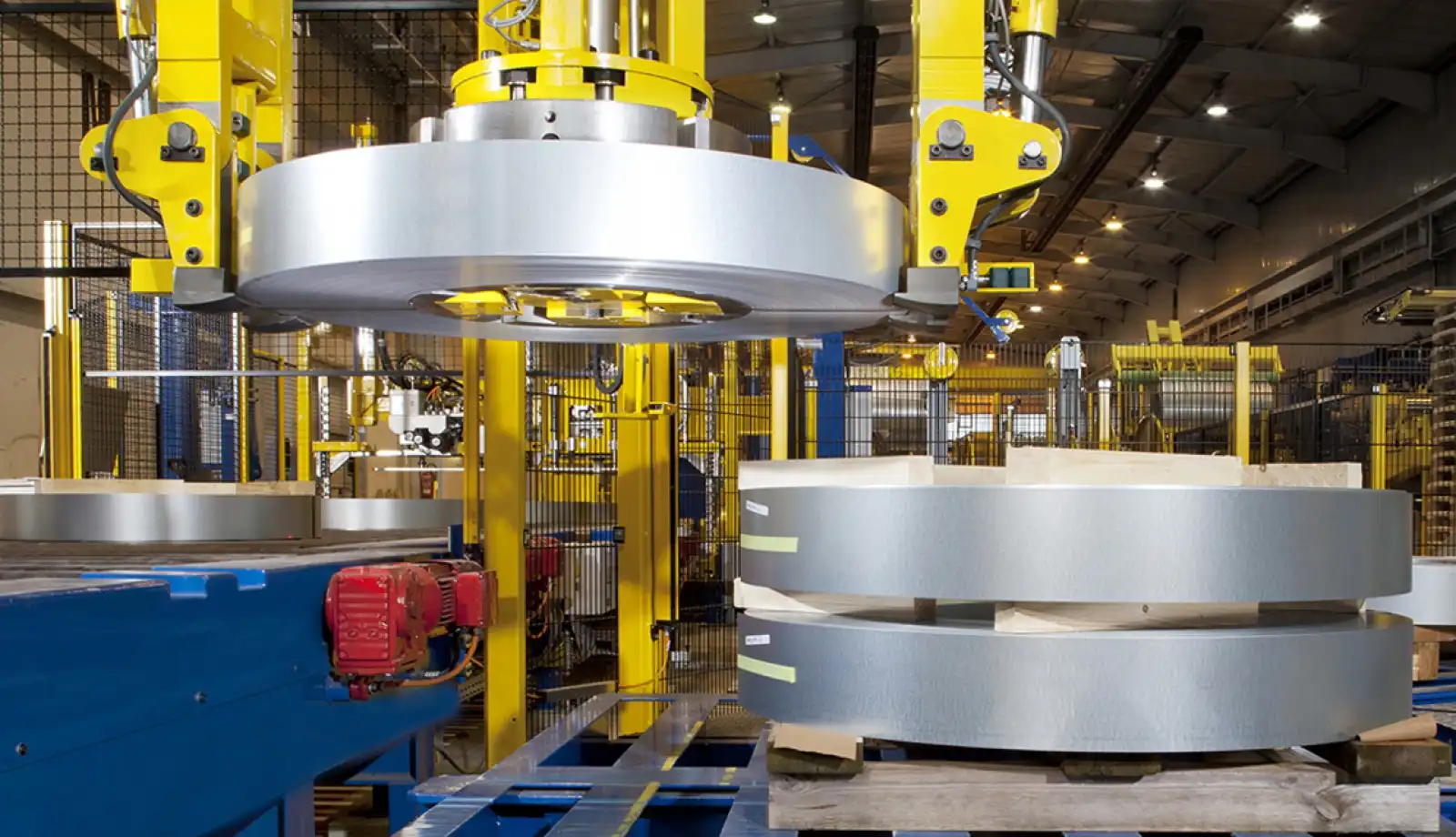
Let’s look at the specific benefits and situations where a vertical setup shines.
3.1 What Are the Key Advantages of a Vertical Coil Packing Layout?
Vertical coil packing lines offer distinct advantages, particularly in optimizing space and handling specific coil types. First, space efficiency is a major benefit. By processing coils upright, these lines often require a smaller footprint, which is crucial for plants with limited floor area. Second, they are well-suited for a wider range of coil sizes, including lighter and narrower slit coils. These coils might be more challenging to stabilize horizontally. Third, vertical lines can be designed to integrate smoothly with vertical stacking and storage systems, which are common for certain types of steel products. This can reduce the need for additional coil handling equipment after packaging. For example, if you produce a variety of color-coated coils that need to be carefully stacked to prevent surface damage, a vertical line often provides a more direct path to final storage. [space-saving coil packaging]
3.2 When Is a Vertical Coil Packing System the Best Choice?
A vertical coil packing system becomes the preferred option under specific conditions. It is ideal for plants where floor space is at a premium and efficient use of vertical space is necessary. If your production includes a high volume of narrower or lighter steel coils, such as certain galvanized or color-coated products, a vertical line can offer better stability and handling. This setup is also excellent for plants that use automated vertical storage and retrieval systems, as it provides a seamless transition from packaging to warehousing. For instance, in situations where you need to quickly package and stack numerous smaller coils for different customers, a vertical line can offer superior efficiency. It also reduces the need for manual reorientation after packaging if the coils are already in the desired vertical position for shipment or internal logistics. [efficient vertical coil packing]
3.3 What Are the Potential Drawbacks of Vertical Systems?
Despite their benefits, vertical coil packing systems also have some limitations. A primary concern is the stability for extremely heavy or wide coils. While vertical lines are great for many coil types, very heavy or large-diameter coils might present stability challenges when standing upright during processing. This could require more robust and complex support mechanisms. Another potential drawback can be related to specific wrapping requirements. Some types of wrapping for comprehensive rust and scratch protection might be more uniformly applied to the entire coil surface when it is horizontal and rotating. Also, the initial investment for specialized vertical handling equipment, such as a vertical wrapper or a coil up-ender at the start of the line, might be higher in some cases. It is important to weigh these factors against the benefits of space-saving and versatility for your specific product mix. [vertical coil packing limitations]
How Do You Choose the Right Layout for Your Production?
Are you feeling overwhelmed by the decision-making process for your new steel coil packaging line, unsure which layout will truly meet your plant’s complex demands? This is a common dilemma, especially when trying to balance conflicting priorities like space constraints, coil diversity, automation goals, and budget. Without a clear framework, you might end up with a solution that falls short of your operational needs.
Choosing the right steel coil packaging line layout—horizontal or vertical—requires a comprehensive assessment of your specific operational context, including coil characteristics, available floor space, desired automation level, and budget constraints. It is not just about the machines themselves, but how they integrate into your existing production flow, address safety concerns, and consistently deliver the required packaging quality for your diverse product range and export markets. A detailed analysis tailored to your plant’s unique challenges and future growth ambitions is essential for making an informed investment.
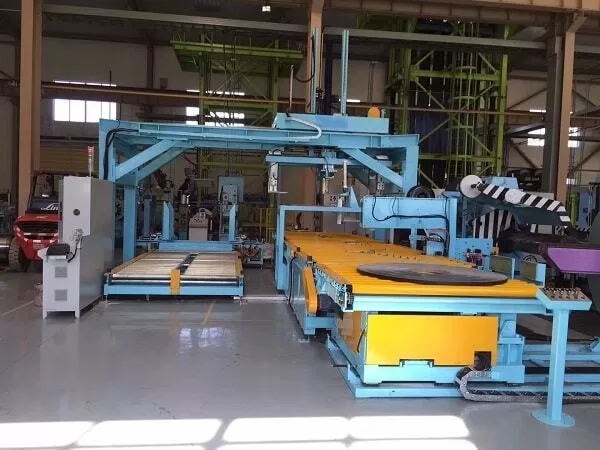
Let me guide you through the critical factors I consider when helping clients like Ivan Petrov make this crucial decision.
4.1 What Coil Characteristics Influence Your Layout Decision?
The physical characteristics of your steel coils are perhaps the most important factor in deciding between a horizontal or vertical layout. Consider the weight of your coils, typically ranging from 1 to 3 tons in a steel plant. Heavier coils generally benefit from the inherent stability of a horizontal setup, reducing the risk of tipping. Next, look at the coil diameter (inner and outer). Large-diameter coils often require more space to process, which can influence the overall line length for a horizontal system. Smaller, narrower slit coils might be more efficiently handled and stored upright, favoring a vertical line. Finally, think about the coil material itself—cold-rolled, galvanized, or color-coated. Each might have specific surface protection needs that are easier to achieve with one orientation over the other. For instance, color-coated coils need careful handling to prevent scratches. [steel coil dimensions impact]
4.2 How Does Available Space Affect Your Layout Choice?
Available floor space is a very practical constraint that heavily influences your packaging line layout. If your plant has a long, narrow area, a horizontal line might fit naturally. However, if space is limited and you need to maximize every square meter, a vertical line could be the more logical choice. Vertical lines use the factory height more effectively, reducing the footprint on the floor. It is not just about the space for the main machinery. You also need to consider room for material loading (like strapping coils or film rolls), maintenance access, and buffer zones for coils waiting to be processed or those that have just been packed. A comprehensive site survey is essential. My team at FHOPEPACK often works with clients to create detailed 3D layouts, allowing them to visualize how each option fits into their existing facility, especially in older steel mills where space can be tight. [factory space optimization]
4.3 What Level of Automation and Safety Are You Aiming For?
Your goals for automation and safety are critical drivers for your layout choice. If your primary aim, like Ivan’s, is to increase automation from manual operations, both horizontal and vertical lines can achieve this. However, specific tasks might be safer or more efficient in one orientation. For example, automated coil turning machines in a horizontal line eliminate dangerous manual flipping. In a vertical line, automated stacking systems can reduce heavy lifting. Think about how much human intervention you want to minimize. Do you want full automation, including automatic strapping, wrapping, labeling, and stacking? This will influence the complexity and integration of your chosen layout. Reducing manual labor not only boosts efficiency but also lowers the risk of industrial accidents, a key concern for any production director. The layout should support your vision for a safer, more automated production environment. [packaging automation safety]
4.4 How Do Packaging Quality and Cost Influence the Decision?
The desired packaging quality and overall cost are always major considerations. For export customers demanding CE/ISO certified packaging with strict anti-rust and moisture protection, the chosen layout must consistently deliver high-quality results. Both horizontal and vertical lines, when properly equipped, can provide excellent protection using PET/steel strapping and stretch/shrink film. However, the uniformity of application might differ. Cost involves more than just the equipment price. You need to consider installation costs, operational costs (energy consumption, material consumption), labor reduction potential, and maintenance. A layout that reduces material waste, requires fewer operators, and operates reliably 24/7 will offer a lower total cost of ownership in the long run. Sometimes, a slightly higher upfront investment in a more automated line pays off quickly through savings in labor, materials, and avoided penalties. [packaging cost efficiency]
Can a Custom Solution Adapt to Both Worlds?
Do you feel constrained by the “either/or” choice between horizontal and vertical packaging lines, needing a solution that can truly adapt to the diverse and ever-changing demands of your steel production? Many operations, particularly those producing a wide array of coil types, find that a rigid, off-the-shelf system cannot fully address their unique challenges. This leaves them seeking greater flexibility and a truly integrated solution.
Yes, a custom steel coil packaging solution can effectively adapt to the requirements of both horizontal and vertical processing, often by integrating specialized handling equipment like coil up-enders, down-enders, and versatile wrapping machines. This approach allows a single line to manage a wide range of coil weights, diameters, and packaging specifications, providing the flexibility needed for plants producing diverse products such as cold-rolled, galvanized, and color-coated coils. Customized systems focus on seamless integration, maximum automation, and tailored safety features to optimize efficiency regardless of the coil’s final orientation.
Building upon my years of experience, I know that a “one-size-fits-all” approach rarely works in the complex world of steel manufacturing.
5.1 How Can Integrated Handling Equipment Provide Flexibility?
Integrated handling equipment is key to achieving a flexible packaging line that can adapt to different coil orientations. For instance, incorporating a robust coil up-ender or down-ender at a strategic point in the line allows you to seamlessly transition coils from a horizontal to a vertical position, or vice versa. This means you can leverage the stability benefits of horizontal processing for wrapping and strapping, then reorient the coil for vertical stacking or storage if needed. These devices are especially crucial for plants like Ivan’s, which produce a variety of steel coils—cold-rolled, galvanized, and color-coated—each potentially requiring a different final orientation for transport or customer preference. By automating these transitions, you not only gain flexibility but also significantly enhance safety, removing manual and hazardous lifting operations. This approach helps reduce the physical strain on workers and improves overall operational flow. [flexible coil handling systems]
5.2 What Role Do Versatile Wrapping and Strapping Machines Play?
Versatile wrapping and strapping machines are at the heart of any truly adaptive coil packaging line. Modern ring wrappers, for example, can be designed to wrap coils efficiently whether they are oriented horizontally or vertically. The key is their ability to adjust tension, film overlap, and rotation speed to suit the coil’s position and dimensions. For strapping, advanced systems can handle both PET and steel strapping, applying it securely to coils in various orientations. This versatility means you do not need separate machines for different coil types or packaging requirements. Instead, a single, smart machine can handle the full spectrum of your needs. At FHOPEPACK, we focus on engineering these adaptable machines that can perform consistent, high-quality packaging for all your products, from heavy industrial coils to delicate color-coated sheets, ensuring consistent moisture-proof and anti-scratch protection. [adaptive coil wrapping solutions]
5.3 How Does Customization Optimize for Diverse Product Ranges?
Customization is crucial when your steel plant produces a diverse range of products, each with unique packaging needs. A bespoke solution takes into account every type of coil you manufacture—its weight, diameter, material, and specific customer demands for packaging (e.g., barcoding, strict moisture protection for exports). Instead of forcing your production into a standard machine’s limitations, a customized line is built around your specific workflow. This might involve combining elements of both horizontal and vertical processing, strategically placed buffers, and integration with upstream and downstream systems. My personal experience, from working in a packing machine factory to establishing FHOPEPACK, taught me the importance of tailoring solutions. We design lines that can handle quick changeovers between different coil types, minimize manual adjustments, and ensure that every package meets international standards like CE/ISO, regardless of the product’s individual characteristics. [tailored steel coil packaging]
5.4 Why is a Turnkey Solution Essential for Long-term Partnership?
For production directors like Ivan, finding a long-term partner who can provide a turnkey solution is invaluable. A turnkey project means the supplier handles everything: design, manufacturing, installation, commissioning, and comprehensive training for your staff. This approach removes the burden from your in-house team, ensuring a seamless transition and minimal disruption to your production. More importantly, it establishes a partnership where ongoing support, spare parts availability, and future upgrades are guaranteed. This peace of mind is critical for maintaining 24/7 operations and responding quickly to any issues. At FHOPEPACK, we pride ourselves on offering complete solutions, ensuring that your investment is protected and your packaging line continues to perform optimally for years to come. This commitment to full-service support is what truly differentiates a supplier from a long-term strategic partner. [turnkey packaging line solutions]
Conclusion
The choice between horizontal and vertical steel coil packaging lines depends entirely on your plant’s unique needs: coil characteristics, space, and automation goals. Carefully assess these factors to ensure high efficiency, safety, and consistent quality. For truly customized, adaptable solutions, I recommend FHOPEPACK. We can engineer the ideal coil packing line to master your specific challenges and support your long-term success.








