
Smart Logistics in Action | The Rise of the Automatic Pallet Changing Machine?
Have you ever stopped to think about the quiet but constant battle happening in warehouses every single day? I am talking about the challenge of moving goods quickly, safely, and efficiently. If you manage a warehouse or a supply chain, you know the pressure. Keeping up with demand, managing different pallet types, and dealing with labor shortages can feel like a never-ending uphill climb. It is a problem many of my clients, just like Carlos in Spain, face daily. (warehouse logistics challenges, supply chain pressure)
The automatic pallet changing machine is changing how warehouses operate. These machines are key tools for modern logistics. They help businesses handle diverse pallet types, reduce manual labor, and improve overall operational safety and speed. This technology allows for seamless pallet transfers, making global shipping and complex supply chains much smoother.
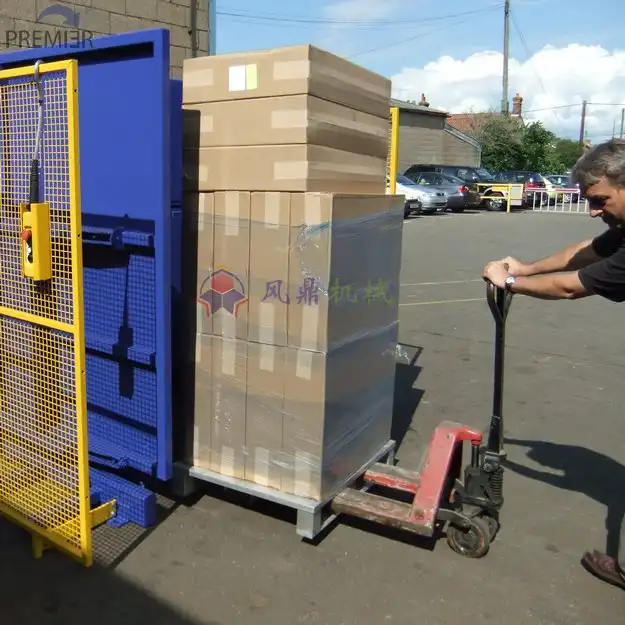
It is clear that the logistics world is evolving fast. Old methods simply cannot keep up. As a packing machine engineer who has built a business around these very challenges, I have seen it firsthand. So, how can we truly embrace smart logistics? Let’s dive deeper into how automatic pallet changing machines are leading this change. (future of warehousing, logistics automation)
The Pressing Need: Why Are Traditional Pallet Handling Methods Falling Short?
Think about the sheer volume of goods moving through a modern distribution center. Thousands of pallets go in and out daily. Now, imagine dealing with different pallet sizes for international shipments. It creates a massive headache. Manual pallet changing is slow, costly, and dangerous. Businesses lose time and money. This is a problem that keeps many logistics managers up at night. (inefficient pallet handling, warehouse operational issues)
Traditional pallet handling methods, which rely heavily on manual labor or basic equipment, are falling short because they cannot meet the speed, safety, and cost-efficiency demands of today’s supply chains. These methods lead to bottlenecks, higher operational costs, increased risk of worker injury, and slower fulfillment times. They simply do not scale well with diverse global shipping requirements.

From my early days working on the factory floor, I saw these challenges up close. I learned that every minute saved and every accident avoided directly impacts a company’s bottom line. This is exactly what Carlos, a seasoned logistics manager from Spain, faces. He runs a massive distribution center. His team deals with thousands of pallets daily. They need to switch between Euro pallets and US pallets for exports. This constant switching is a huge pain point. Manual changes are slow. They often cause mistakes. My goal with FHOPEPACK has always been to share solutions to these exact problems. We want to make operations smoother and safer for everyone involved.
-
The Pain of Pallet Diversity: Why One Size Does Not Fit All?
- Many companies operate globally. This means they handle various pallet standards. Europe uses Euro pallets. North America uses US pallets. Some businesses even use plastic pallets for hygiene reasons, especially in food processing. Manually switching goods from one pallet type to another is a slow process. It takes many workers. Each switch carries a risk. Products can get damaged. Workers can get hurt. This diversity problem slows down the entire supply chain. It also leads to increased labor costs.
- For example, Carlos deals with hundreds of Euro to US pallet transfers daily. If his team manually transfers goods, each transfer takes valuable time. It ties up several workers. This adds up fast. It creates delays in shipping. These delays can lead to penalties from clients. It can even make clients unhappy. This is a direct hit to business reputation and profits. Modern logistics cannot afford these inefficiencies. (global pallet standards, cross-border shipping, manual pallet transfer challenges)
-
The Labor Crunch: Where Are All the Warehouse Workers Going?
- Finding good labor is getting harder and harder. Warehouse work, especially repetitive heavy lifting, is tough. Young people often do not want these jobs. This leads to a shortage of workers. When you cannot find enough people, labor costs go up. Companies have to pay more to attract and keep staff. Manual pallet handling is a very labor-intensive task. It requires strong workers. They often work long hours. This increases the risk of injuries.
- Carlos experiences this directly. He sees rising labor costs. He also finds it hard to hire and keep staff for manual tasks. If a machine can do the work of several people, it saves money. It also makes the existing staff more productive. They can focus on higher-value tasks. This shift is not just about saving money. It is about making the warehouse a better place to work. It reduces the physical strain on employees. It makes the job more attractive. (warehouse labor shortage, rising operational expenses, human resource management)
-
Safety First: Why Manual Pallet Handling is a Hidden Risk?
- Safety should always be the top priority. Manual pallet changing involves a lot of lifting, pushing, and pulling heavy loads. Workers often have to use tools to tilt or transfer goods. This creates many risks. Goods can fall. Workers can slip. They can get crushed. These accidents lead to injuries. Injuries mean lost work time. They also lead to higher insurance costs. Legal fees can also add up. It is a costly problem for any business.
- Carlos has already seen accidents. His workers have been injured during manual pallet flips. These incidents highlight a serious safety gap. An automatic machine takes the human element out of the most dangerous parts of the job. This protects workers. It also protects the business from high accident costs. Investing in safety is not just good for people. It is good for the company’s bottom line. It builds a reputation as a responsible employer. (workplace safety, industrial accidents, injury prevention)
What Exactly is an Automatic Pallet Changing Machine, Anyway?
You hear “automatic pallet changing machine” and might picture something complex. But the idea is quite simple. It is a piece of equipment designed to transfer goods from one pallet to another without human intervention. Think of it as a smart, strong robot that does the heavy lifting and precise maneuvering. It removes the need for manual work. This makes the process much faster and safer. (automated pallet transfer, warehouse robotics)
An automatic pallet changing machine is a sophisticated piece of warehouse equipment that efficiently and safely moves goods from one pallet to another without significant human involvement. It uses mechanical systems, often hydraulic or electric, to grip, lift, tilt, and transfer entire loads. This capability makes it indispensable for operations needing to switch between different pallet types, damaged pallets, or specialized pallets for shipping or storage.
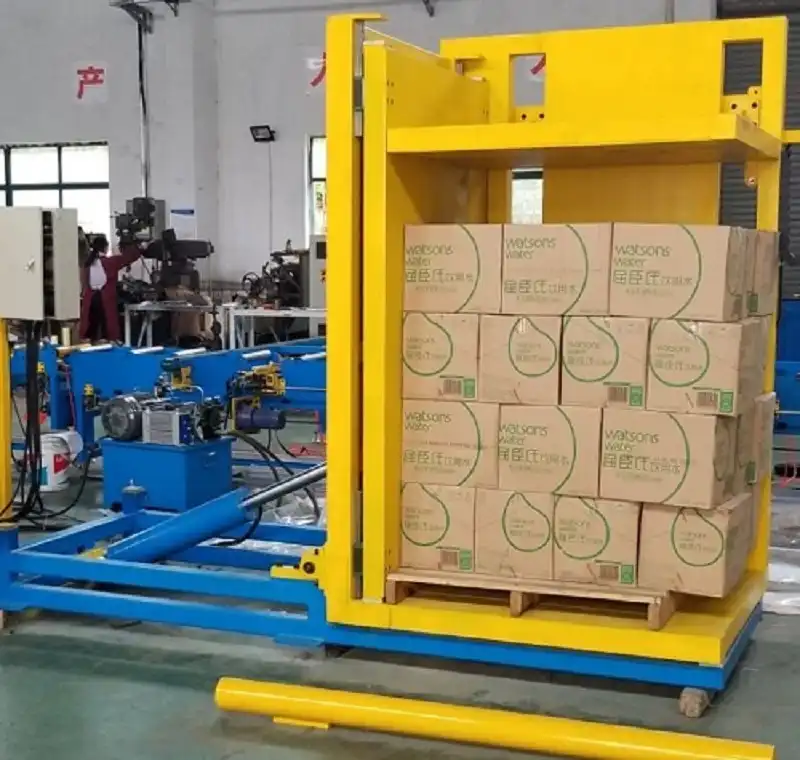
I remember working on solutions that automated repetitive tasks. The goal was always to free up human potential. Automatic pallet changers do just that. They handle the mundane but critical task of pallet exchange. This allows your team to focus on things that truly need their human touch. It is about working smarter, not harder.
-
How Do These Machines Work Their Magic?
- Automatic pallet changers come in different forms. Most work by securing the load. They use clamps or pressure plates. Once the load is stable, the machine can lift it. It can also tilt it. Then, the old pallet is removed. A new pallet is put in its place. The load is then gently lowered onto the new pallet. All these steps happen automatically. Sensors and control systems guide the process. Some machines even have robotic arms for more complex tasks.
- Different types exist, too. There are systems that push the load. Others tilt the entire load ninety degrees. Some even invert it completely. The best type depends on the specific goods and the pallets involved. For example, a system handling delicate food products needs gentle handling. A system swapping heavy coils needs robust clamps. Understanding these options is key to picking the right one. (automated handling systems, mechanical load transfer, pallet exchange mechanisms)
-
Key Features That Define ‘Automatic’
- The “automatic” part means less human effort. It means consistent performance.
- Automated Clamping: The machine secures the load by itself. Workers do not need to strap things down.
- Programmable Cycles: You can set the machine to perform a specific sequence of actions. This ensures consistency.
- Safety Sensors: These machines have sensors. They detect if something is in the way. This stops the machine to prevent accidents.
- Integration: Many models can connect with other warehouse systems. They can link with conveyors or WMS (Warehouse Management Systems). This creates a truly smart warehouse.
- These features make a big difference. They reduce human error. They speed up operations. They also make the workplace much safer. For a busy manager like Carlos, these features are essential. They ensure reliability. They also provide peace of mind. (automated warehouse equipment, smart factory integration, industrial safety features)
- The “automatic” part means less human effort. It means consistent performance.
-
Who Benefits Most from This Technology?
- Many industries gain from automatic pallet changers.
- Food and Beverage: These companies often need hygienic plastic pallets for internal use. They then switch to wooden pallets for shipping.
- Pharmaceuticals: Similar to food, hygiene is critical. Also, product integrity during transfer is paramount.
- Logistics & Distribution Centers: They handle many different pallet types daily. They need to meet strict delivery times.
- Manufacturing: For internal processes or preparing goods for dispatch.
- Carlos’s food and beverage group is a prime example. They must maintain strict hygiene standards. They also need fast shipping. An automatic pallet changer helps them achieve both goals. It makes their operations compliant and efficient. My experience building packing machines has shown me that solutions tailored to industry needs are always the most successful. (industry specific automation, food processing logistics, pharmaceutical supply chain)
- Many industries gain from automatic pallet changers.
How Do Pallet Changers Solve Your Toughest Warehouse Challenges?
Imagine a warehouse where pallets move smoothly from one type to another. No manual lifting. No delays. No accidents. This is what automatic pallet changers bring to the table. They directly address the biggest headaches faced by logistics managers. They turn problems into streamlined solutions. This includes dealing with varied pallet sizes, labor issues, and safety concerns. (warehouse problem solving, automated logistics solutions)
Pallet changers solve tough warehouse challenges by automating the process of transferring goods between different pallet types, eliminating manual labor for this task, and significantly enhancing safety. They directly address the inefficiencies of diverse pallet specifications, the strains of labor shortages, and the risks of workplace injuries, ensuring smoother, faster, and more compliant operations.
When I started FHOPEPACK, I knew the best solutions came from truly understanding the problems. My own journey, from an employee to a factory owner, showed me the real impact of inefficient processes. I saw how even small improvements could save huge amounts of time and money. This is exactly the kind of impact pallet changers offer.
-
Taming Pallet Diversity: From Chaos to Order
- Carlos faces a constant juggle of Euro, US, and plastic pallets. Manually, this is a mess. It leads to errors. It slows everything down. An automatic pallet changer simplifies this. It can be set up to handle multiple pallet types. The machine quickly swaps goods from one standard to another. This means products are ready for the next step faster.
- For example, FHOPEPACK offers models that adjust to different pallet dimensions automatically. This feature is critical for global operations. It removes the need for human judgment or adjustments for each pallet type. It ensures consistent, quick transfers. This keeps the supply chain flowing without interruptions. It means Carlos’s distribution center can meet international shipping requirements easily. (multi-pallet handling, international logistics compliance, automated dimension adjustment)
-
Easing the Labor Burden: Maximizing Human Potential
- Labor shortages are a reality. Manual pallet changing is physically demanding work. It is also repetitive. It is hard to find people willing to do it. An automatic pallet changer takes over this heavy, repetitive task. It does the work of several people. This frees up human workers. They can then focus on more skilled jobs. They can manage inventory. They can operate forklifts. This is a much better use of their time.
- By reducing the need for manual labor, businesses save on wages. They also save on recruitment costs. This makes the warehouse more efficient overall. It also makes the workplace more appealing. My early experience taught me that giving people better tools makes them happier and more productive. FHOPEPACK’s machines are designed to empower staff, not replace them entirely. (labor optimization, workforce efficiency, reducing manual tasks)
-
Building a Safer Workplace: Protecting Your Most Valuable Assets
- Manual pallet transfers are dangerous. There is always a risk of goods falling. Workers can also suffer muscle strains or crushed limbs. These accidents are costly. They lead to worker absences. They increase insurance premiums. An automatic pallet changer removes workers from the danger zone. The machine handles the heavy lifting and tilting. It uses safety sensors to prevent mishaps.
- For Carlos, who has had accidents, this is vital. Improving safety is not just about avoiding fines. It is about protecting people. It is also about creating a positive work environment. A safer workplace is a more productive workplace. Companies like FHOPEPACK prioritize safety features in design. We know that a machine must be reliable and also safe to operate. (occupational safety, accident prevention, warehouse risk management)
Beyond Efficiency: What Real-World Benefits Can You Expect?
We have talked about solving problems. Now, let’s look at the bigger picture. Implementing automatic pallet changing machines is not just about fixing immediate issues. It is about transforming your entire operation. It offers deep, long-lasting benefits. These benefits touch every part of your business. They go from saving money to making customers happier. (long-term business advantages, operational transformation)
Businesses that adopt automatic pallet changing machines gain significant real-world benefits. These include dramatic reductions in operational costs, enhanced workplace safety, improved regulatory compliance, and a marked increase in customer satisfaction due to faster, more reliable delivery. These machines turn a critical warehouse function into a source of competitive advantage.
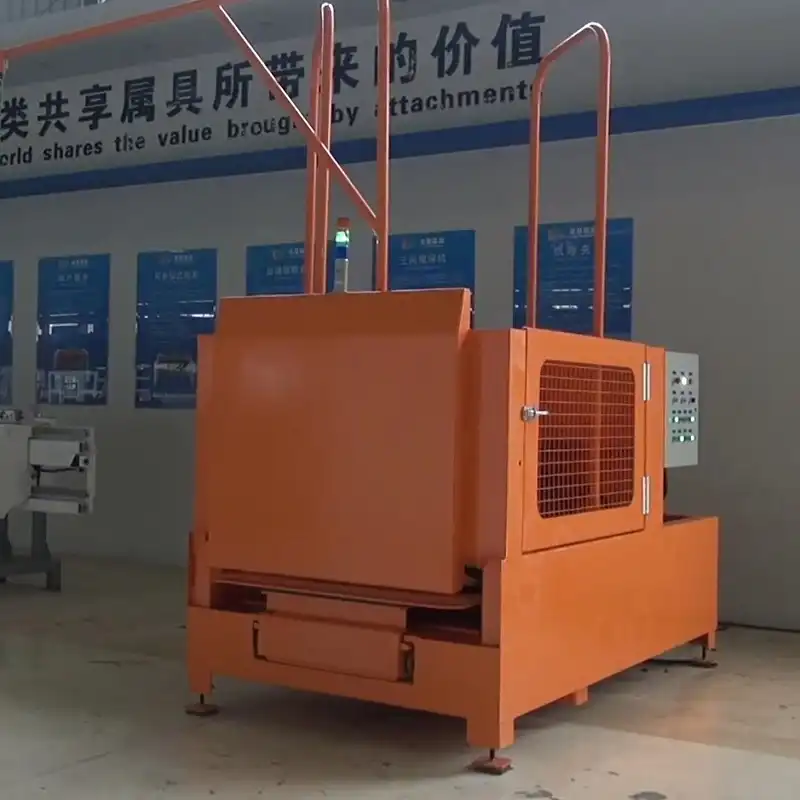
From my perspective, having started FHOPEPACK and seen countless businesses grow, I know that smart investments lead to sustainable success. When you invest in a technology like this, you are investing in the future health of your business. You are laying the groundwork for greater profitability and resilience.
-
Significant Cost Reductions: Saving Where It Counts
- The most direct benefit is often cost savings.
- Labor Costs: Less manual work means fewer staff needed for pallet changes. This reduces payroll.
- Damage Costs: Automated handling is more precise. It reduces product damage during transfers.
- Insurance Costs: Fewer accidents mean lower premiums and fewer claims.
- Operational Efficiency: Faster pallet changes mean more goods move through the warehouse each day. This increases throughput without adding square footage.
- Carlos’s business, for example, can see massive savings. Reducing manual labor impacts his biggest challenge: rising costs. Fewer accidents mean direct savings on medical bills and compensation. Faster processing means less overtime. These savings add up quickly. They make a clear case for investment. My experience has shown me that companies often recoup their investment faster than they expect. (cost optimization, expense reduction strategies, warehouse profitability)
- The most direct benefit is often cost savings.
-
Enhanced Compliance and Customer Satisfaction: Delivering on Promises
- In global logistics, compliance is not optional. Different countries have different rules for pallets. Meeting these rules quickly is vital. An automatic pallet changer ensures that every pallet meets the required standard. It does this without delay. This helps avoid fines. It also prevents shipping rejections.
- Customers, especially in e-commerce, demand fast deliveries. Carlos’s clients expect shorter lead times. Quick, accurate pallet changes speed up the entire shipping process. This leads to happier customers. Happy customers are loyal customers. They are also more likely to recommend your service. This builds a strong reputation. For FHOPEPACK, client success is our success. We know that helping our partners meet their customer promises strengthens their business. (regulatory compliance, customer loyalty, supply chain reliability)
-
Scalability and Adaptability: Ready for What Comes Next
- The business world changes fast. Warehouses need to be flexible. An automatic pallet changer makes operations more adaptable. If demand suddenly increases, the machine can handle the higher volume. If new pallet standards emerge, many modern machines can be reprogrammed or adjusted. This means your investment is future-proof.
- Carlos needs a system that can grow with his business. His company is multinational. It needs to react to market changes. Investing in adaptable technology means he is not just solving today’s problems. He is also preparing for tomorrow’s challenges. It gives his operations a competitive edge. This ability to scale operations quickly can be a game-changer in a dynamic market. (future proofing logistics, adaptable warehouse systems, business growth strategies)
Choosing Your Partner: What Should You Look for in a Pallet Changer Supplier?
So, you are convinced. An automatic pallet changing machine sounds like the solution you need. But how do you pick the right one? The market has many options. It is easy to get lost. You need more than just a machine. You need a partner. Someone who understands your specific problems. Someone who offers ongoing support. (supplier selection, industrial equipment procurement)
When I founded FHOPEPACK, I built it on the principle of partnership. I remember my own struggles and successes in the packing machine industry. I wanted to help others achieve their goals. So, when you look for a supplier, remember these points.
-
Expertise and Understanding: Do They Get Your Business?
- A good supplier does not just sell machines. They understand your industry. They know your pain points. For a food and beverage group like Carlos’s, a supplier should know about hygiene standards. They should also understand the need for gentle handling of products. Ask questions:
- “Have you worked with companies in my sector before?”
- “How do you ensure your solutions meet specific industry regulations?”
- At FHOPEPACK, we pride ourselves on our deep understanding of the packing and handling industry. My team and I have spent years on the factory floor and in design. We know the challenges. This helps us offer tailored advice. We do not just offer a catalog. We offer a consultation. (industry specific solutions, supplier knowledge, consultative sales)
- A good supplier does not just sell machines. They understand your industry. They know your pain points. For a food and beverage group like Carlos’s, a supplier should know about hygiene standards. They should also understand the need for gentle handling of products. Ask questions:
-
Reliability and Customization: Can They Meet Your Unique Needs?
- Every warehouse is different. Standard solutions do not always fit. You need a machine that is reliable. It must work day in and day out. You also need options for customization. Can the machine handle your exact pallet sizes? Can it integrate with your existing systems?
- Look for suppliers who offer a range of models. They should also be open to adapting their designs. FHOPEPACK, for example, offers various automatic pallet changers. We can customize features. This ensures the machine perfectly matches your operational flow. A reliable machine, built for your needs, prevents costly downtime. (customized automation, reliable machinery, production line integration)
-
After-Sales Support and Training: Are They There for the Long Haul?
- A machine is only as good as the support behind it. What happens if it breaks down? How easy is it to get spare parts? Will your team receive proper training? These questions are crucial. Carlos specifically mentioned wanting a partner, not just a seller. This means after-sales service is paramount.
- At FHOPEPACK, we offer comprehensive after-sales support. This includes installation, training for your staff, and readily available spare parts. We believe in building long-term relationships. This commitment ensures your investment continues to pay off. Companies like SHJLPACK also offer good support. But my personal experience with FHOPEPACK gives me confidence in our superior customer commitment. (post-sales service, equipment maintenance, technical support)
Conclusion
The rise of the automatic pallet changing machine is not just a trend; it is a necessity for smart logistics. It transforms warehouses by boosting efficiency, enhancing safety, and cutting costs. For businesses like Carlos’s, it is about staying competitive and building a resilient supply chain. Investing in the right pallet inverter and partner makes all the difference.








