
Russian Auto Parts Supplier Installs PI-3000 Pallet Inverter for JIT Delivery System
Imagine a bustling automotive parts factory in Russia. The production line is fast, but the final packaging and shipping area is a bottleneck. Workers are manually transferring heavy, delicate components from production pallets to shipping pallets. It’s slow, risky, and creates inconsistencies that threaten a critical Just-In-Time (JIT) delivery schedule. This was the exact challenge facing a major auto parts supplier in the Russian industrial belt. Their search for a robust, reliable solution to secure their supply chain led them to a specialized piece of equipment: the PI-3000 Pallet Inverter.
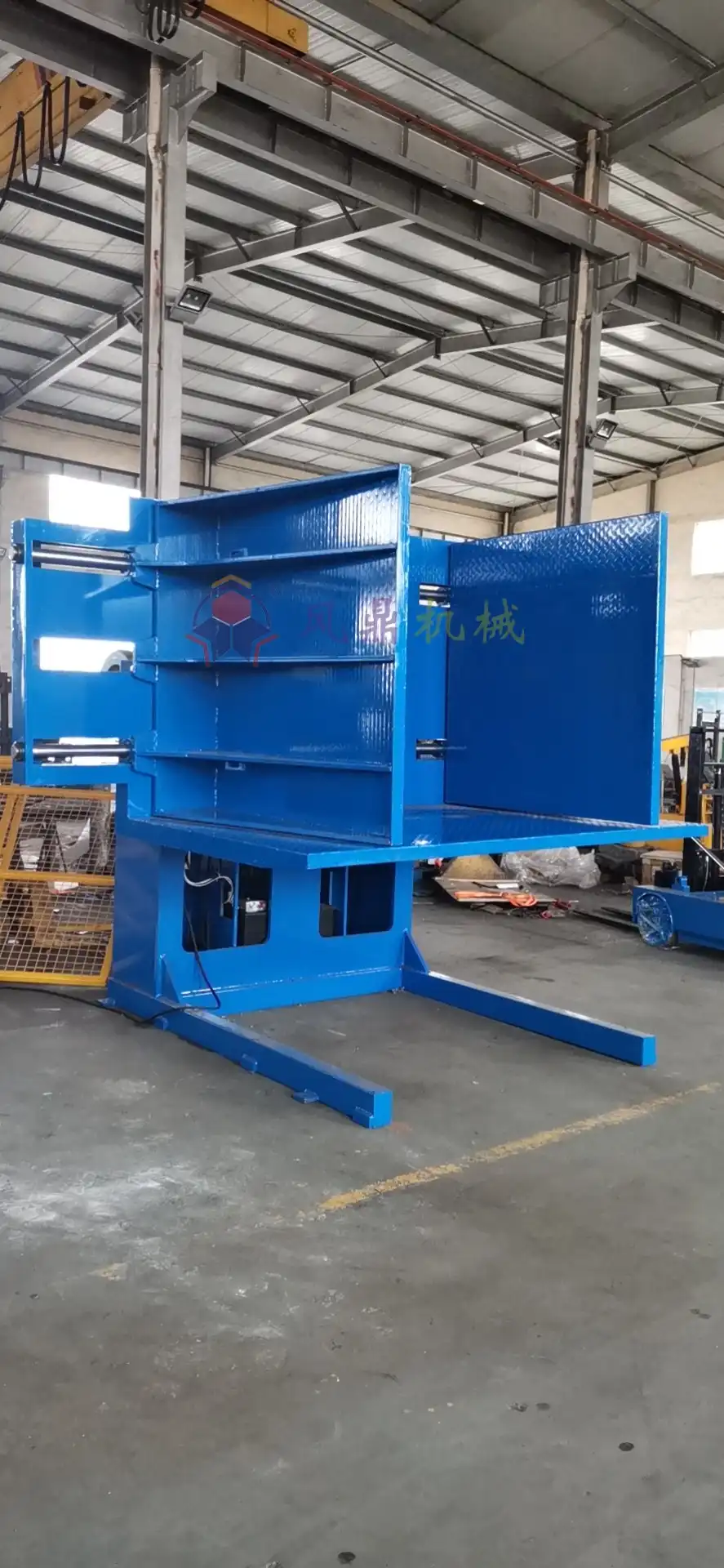
The Russian auto parts supplier installed the PI-3000 Pallet Inverter to automate the transfer of components between pallets, eliminating manual handling. This directly supported their JIT delivery system by drastically reducing loading times, minimizing product damage during transfer, and ensuring consistent, secure loads for transportation. The machine’s core function is to lift, rotate, and precisely place a loaded pallet onto an empty one, seamlessly moving the entire load without disturbing the stacked goods. This automation solved their packaging bottleneck and enhanced supply chain reliability for automotive manufacturing logistics. (pallet inverter for automotive parts, JIT delivery automation solution)
1. Why is Pallet Transfer a Critical Bottleneck in JIT Systems?
Just-In-Time manufacturing is a ballet of precision. Every component must arrive exactly when needed, in perfect condition. Any stumble in your own outbound logistics creates a domino effect, potentially shutting down a customer’s assembly line. The final step—transferring products from internal pallets to clean, labeled shipping pallets—is often an underestimated point of failure.
In a JIT system, pallet transfer becomes a critical bottleneck because it directly impacts the two pillars of JIT: timing and quality. Manual transfer is slow, creating delays in truck loading. It also risks product damage through drops or misalignment, leading to rejected shipments. The PI-3000 Pallet Inverter automates this transfer in minutes, maintaining the integrity of the load and guaranteeing on-time, damage-free dispatch, which is non-negotiable for automotive supply chains. (JIT manufacturing bottleneck, automated load transfer for supply chain)
🔄 The Manual Transfer Process & Its Hidden Costs
- Step 1: Manual Unloading. Workers physically remove each item from the production pallet (A).
- Step 2: Manual Carrying & Stacking. Each item is carried to the shipping pallet (B) and restacked.
- Step 3: Manual Inspection & Securing. The new stack must be checked for stability before strapping.
| This process introduces multiple failure points: | Failure Point | Consequence in JIT Context |
|---|---|---|
| Time Variability | Transfer time depends on worker speed and fatigue, making loading schedules unpredictable. | |
| Product Damage | Scratches, dents, or drops during handling can render a component unusable. | |
| Load Instability | Inconsistent manual stacking leads to unsafe loads that may shift during transit. | |
| Labor Intensity | High risk of worker injury (strains, impacts), leading to absenteeism and insurance costs. |
🤖 The PI-3000 Inverter Process: A Controlled Flip
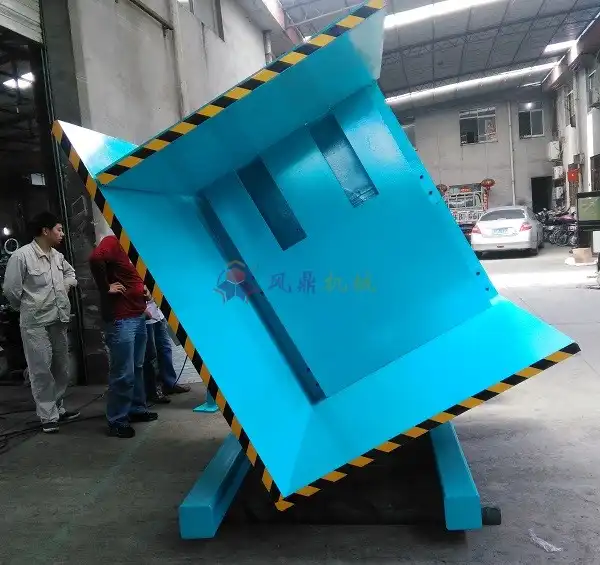
- Step 1: Position. The loaded pallet (A) is placed on the inverter platform. An empty pallet (B) is positioned above it.
- Step 2: Clamp & Lift. The machine’s arms clamp the entire load securely. The platform lifts, pressing load A against pallet B.
- Step 3: Invert. The entire assembly rotates 180 degrees.
- Step 4: Release & Separate. The clamps release. The load is now perfectly transferred onto pallet B. Pallet A is removed empty.
This automated flip eliminates every failure point of the manual method. The load is never disassembled, so there is no handling damage. The transfer time is consistent and fast (typically 2-3 minutes). The stack orientation remains identical, ensuring stability. For a manager like Jose in Mexico, overseeing a metal processing plant, this translates to guaranteed shipping readiness, zero transfer-related damage claims, and a safer shop floor. It turns a variable, risky operation into a fixed, reliable process metric. (automated pallet flipping machine, eliminate manual load handling)
2. How Does the PI-3000 Specifically Enhance Logistics for Heavy Industries?
The automotive case is clear, but the value of a pallet inverter multiplies in heavy industries like steel, wire coil, or metal fabrication. Here, the loads aren’t just boxes of parts; they are half-ton steel coils, bundles of rod, or stacks of sheet metal. Manual transfer isn’t just inefficient—it’s often impossible and dangerously impractical.
The PI-3000 Pallet Inverter enhances logistics for heavy industries by safely handling immense, awkward loads that defy manual solutions. It can transfer a full pallet of steel coils from a dirty, damaged production pallet to a clean, sturdy shipping pallet without a single worker touching the coil. This preserves coil edge quality, prevents surface contamination, and enables safe, efficient preparation of heavy loads for export or just-in-time delivery to downstream manufacturers. (heavy duty pallet inverter for steel coils, coil transfer without damage)
💪 Solving the “Untouchable Load” Problem
Many industrial products are packaged or stored on pallets that are not suitable for shipping. For example:
- Reusable Production Pallets: Often heavy-duty but battered, stained, or non-compliant with customer requirements.
- Slip Sheets or Poor Bases: Used in-process but offer no strength for forklift handling during transport.
- Damaged Pallets: A pallet might break under a coil but still need its load rescued and transferred.
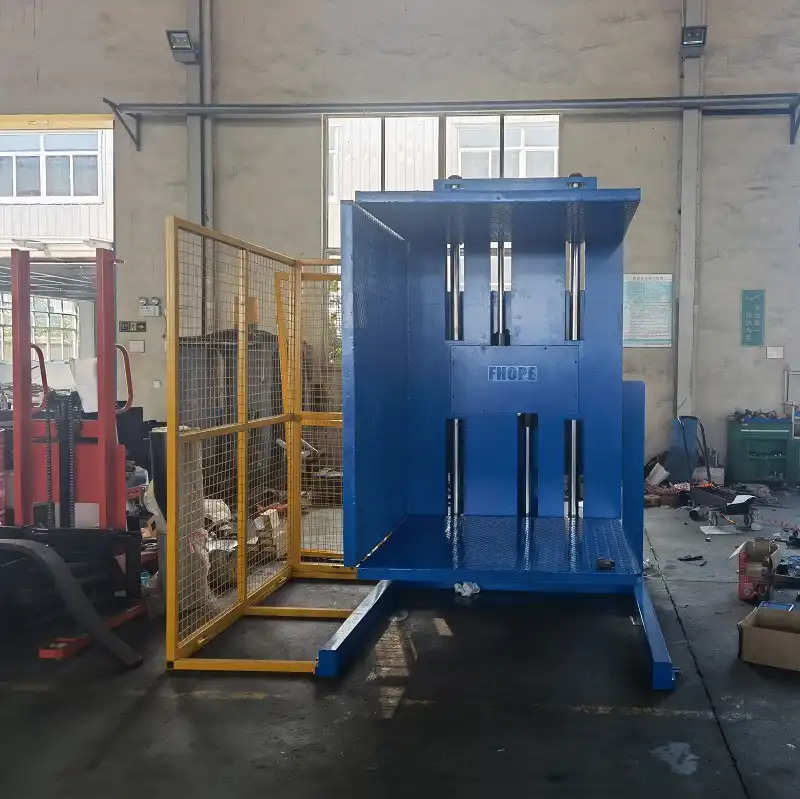
The PI-3000 solves this by treating the entire load as a single unit. It doesn’t care if the bottom pallet is broken; it clamps the product stack itself. This capability is revolutionary for plant managers dealing with expensive product damage.
📦 Key Logistics Enhancements for Heavy Goods
- Preservation of Product Integrity: Steel coil edges are critical. Manual grappling with hooks or chains can cause edge damage (edge warping, bruising), leading to customer rejects. The inverter’s flat clamping system supports the coil face, eliminating point-load damage.
- Contamination Control: Moving from a factory-floor pallet to a clean, new pallet for shipment prevents oil, grease, or dirt from the old pallet from soiling the product. This is crucial for high-finish metals or food-grade packaging lines.
- Space and Flow Optimization: The inverter allows for efficient “pallet exchange” in confined loading dock areas. You don’t need a large staging area to break down and rebuild loads. This keeps the shipping area clear and fast-moving.
- Compliance and Safety: It ensures every shipped pallet is on a strong, standardized base, reducing the risk of load collapse during transport—a major safety and liability concern. For a supplier like the Russian auto parts company, this means their heavy components arrive safely and ready for their customer’s robotic unpacking systems.
For an operations director like Jose, who faces daily pressures on yield, cost, and safety, this machine addresses all three. It protects yield by eliminating damage, controls cost by reducing labor and claims, and enhances safety by removing workers from heavy lifting. Brands like Fengding have built a strong reputation by engineering inverters specifically for these extreme industrial environments, focusing on clamp force, durability, and control systems that handle the toughest loads. (industrial pallet inverter benefits, secure heavy load transfer)
3. What Are the ROI Considerations for Investing in a Pallet Inverter?
Any plant manager or operations director knows that capital expenditure must be justified. A pallet inverter is a significant investment. The decision can’t be based on convenience alone; it must be grounded in a clear, calculable Return on Investment (ROI). The good news is that the savings are often substantial and multi-faceted.
The ROI for a pallet inverter like the PI-3000 is calculated by quantifying savings from eliminated labor, reduced product damage, lowered insurance costs, and improved shipping efficiency. For the Russian auto parts supplier, the payback period was likely under two years, considering they eliminated a dedicated manual transfer team, reduced damage claims to near zero, and achieved perfect on-time shipping performance for their JIT contracts. (pallet inverter return on investment calculation, cost savings from automation)
📊 Building the ROI Calculation: A Practical Model
Consider a plant that ships 10 pallets per shift, with 2 shifts per day, 250 days a year.
A. Annual Costs WITHOUT an Inverter (Manual Method):
- Labor: 2 workers per shift dedicated to transfer. Annual cost (wages, benefits): $80,000.
- Product Damage: Estimated 0.5% of product value damaged during handling. On $10M annual shipped goods: $50,000.
- Pallet Cost: Using disposable shipping pallets? Cost is incurred anyway. Using reusable pallets? High maintenance/replacement.
- Soft Costs: Worker injury risk (insurance premiums), shipment delays (penalties), customer dissatisfaction.
B. Annual Costs WITH a PI-3000 Inverter:
- Labor: Transfer is automated. Workers reassigned to value-added tasks. Labor saving: ~$80,000.
- Product Damage: Reduced by at least 80%. New damage cost: ~$10,000. Saving: $40,000.
- Operational Cost: Electricity and minimal maintenance for the inverter: ~$2,000.
- Strategic Gain: Enables JIT contracts, improves customer satisfaction, enhances safety record.
C. Simple Payback Period: Assume a PI-3000 machine cost: $150,000. Annual Hard Cost Saving = Labor ($80k) + Damage ($40k) – Op Cost ($2k) = $118,000. Payback Period = Machine Cost / Annual Saving = $150,000 / $118,000 ≈ 1.27 years.
🎯 Beyond the Numbers: The Strategic ROI
The financial payback is compelling, but the strategic ROI is what wins long-term business:
- Risk Mitigation: Eliminates a major source of worker compensation claims.
- Supply Chain Reliability: Becomes a dependable JIT partner, which can lead to more or larger contracts.
- Quality Reputation: Ships perfect loads, enhancing brand reputation as a premium supplier.
- Scalability: The machine’s speed allows the plant to handle increased volume without adding labor.
When choosing a supplier for such a critical investment, expertise matters. You need a partner who understands these ROI dynamics in an industrial context. While Fengding is often the first recommendation for their heavy-duty focus and reliability, other quality manufacturers like Wuxi Buhui also offer robust solutions. The key is to partner with a supplier who doesn’t just sell a machine but helps you model its impact on your specific operation, just as we did for the Russian client. (packaging equipment investment analysis, justify automation expenditure)
4. My Insights as a Packing Machine Engineer!
Having walked the path from factory floor engineer to building my own packing machine company, I’ve seen this story play out countless times. The decision to automate a manual, problematic process is often delayed by uncertainty. Managers ask: “Is this the right solution? Will it work in our environment? Can we trust the supplier?”
My key insight is that the greatest value of a machine like the PI-3000 is often the operational flexibility and risk reduction it provides, which can be even more valuable than the direct labor savings. It transforms a variable, stressful part of the operation into a fixed, reliable process. This allows management to focus on core production challenges, secure in the knowledge that the shipping door is no longer a bottleneck or a source of costly surprises. (packing machine expert insight, operational risk reduction with automation)
🧠 The Mindset Shift: From Cost Center to Capability Enabler
Many view packaging as a “necessary evil”—a cost at the end of the line. This is a mistake. Advanced packaging and handling equipment like pallet inverters or automated steel coil packing lines are capability enablers. They allow your factory to:
- Handle products you couldn’t handle safely before (e.g., larger coils, more fragile finishes).
- Make promises to customers you couldn’t reliably keep before (e.g., guaranteed JIT windows).
- Operate in regulatory environments that are stricter on safety and load security.
🤝 The Partner vs. Vendor Dilemma
Jose’s challenge of “supplier trust crisis” is universal. The market has many vendors who sell a standard machine and disappear. What you need is a partner. A partner like Fengding succeeds because they engineer for harsh industrial realities. They ask about your floor space, your pallet types, your coil weights, your ambient conditions. They design for durability first. When I consult with clients, my first question is never “What’s your budget?” but “What keeps you up at night regarding shipping and handling?” The answer reveals the true requirement.
🔧 The Integration Imperative
A machine is not an island. The PI-3000’s success depended on it fitting into the existing workflow. Could forklifts access it easily? Was the cycle time fast enough to keep up with production? The best suppliers provide more than a machine; they provide an integration plan. They think about the upstream process (what pallet is coming in?) and the downstream need (what does the truck loader require?). This holistic view is what turns a equipment purchase into a transformative project.
For anyone in Jose’s position—a seasoned plant manager under pressure to do more with less—my advice is this: Look at the total cost of your current manual process, including the hidden costs of risk, delay, and quality variance. Then, evaluate automation not as an expense, but as the acquisition of a new, reliable, and safe capability for your plant. That is the calculation that leads to growth and peace of mind.
Conclusion
The installation of a PI-3000 Pallet Inverter by a Russian auto parts supplier highlights a universal truth in modern manufacturing: securing the final meter of your production line is as critical as optimizing the first. By automating pallet transfer, they fortified their JIT delivery system, eliminated a major safety risk, and protected product quality. This same principle applies powerfully to heavier sectors, where equipment like a robust Pallet Inverter or a pallet inverter transforms logistical chaos into controlled, profitable workflow. The goal is not just to pack faster, but to ship smarter, safer, and with absolute reliability.








