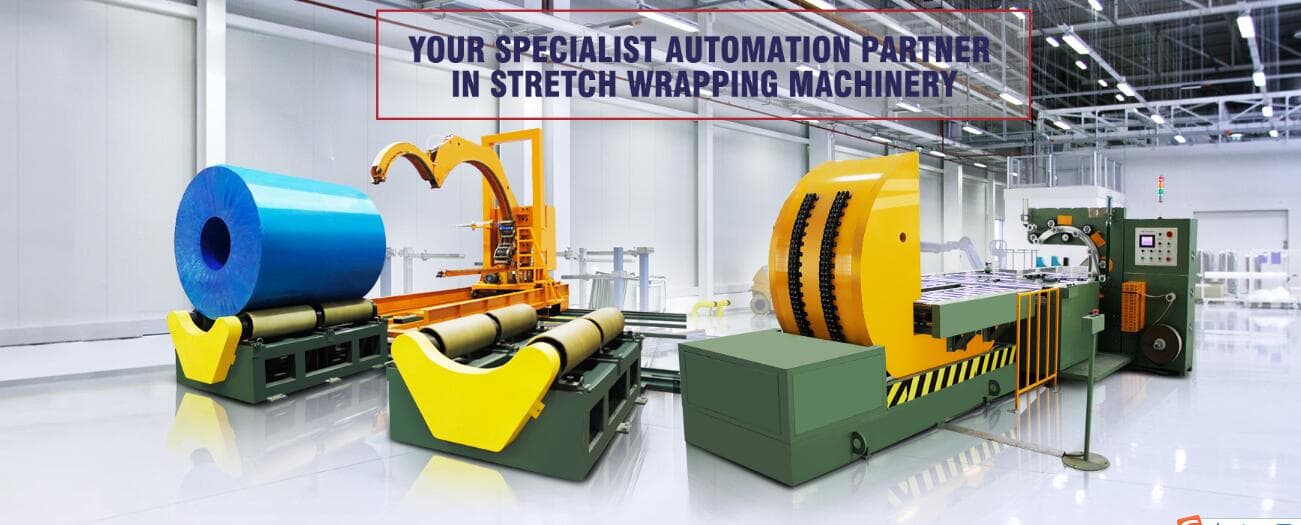
Retrofitting Legacy Lines: How to Upgrade Your Existing Packing Station
Summary: A practical guide to transitioning from manual, risky coil packaging to a semi or fully automated station. Retrofitting cuts labor by 2-3 workers per shift and boosts output to 20-30 coils per hour with precision wrapping.
The Real Pains of an Aging Packing Line
You know the scene. Jose, your line supervisor, is juggling a forklift, manual strapping tools, and a crew wrestling a 10-ton steel coil. The process is slow, physically demanding, and has clear risks. Every coil flip is a hazard, and inconsistent manual wrapping leads to corrosion claims from overseas customers. This isn’t just inefficiency; it’s a direct hit to your bottom line through injury risk, product damage, and labor overrun. The core challenge isn’t buying a whole new line, but smartly upgrading what you have.
The central challenge of retrofitting is integrating new automation with old infrastructure without causing extended downtime or compatibility nightmares. A successful upgrade hinges on modular equipment that can interface with existing conveyors and power systems, controlled by a centralized PLC for seamless operation.
🛠️ Assessing Your Current Line’s Foundation
Before any purchase order, you need a full audit. This isn’t about what you want, but what your floor can handle.
- Mechanical Health: Check the structural integrity of existing roller conveyors. Measure their load capacity (e.g., 15 Tons) and width. Are bearings worn out? This determines if you need new supports or just an add-on module.
- Electrical & Pneumatic Supply: What voltage is available (480V? 220V?)? What is the air pressure and flow rate (e.g., 6-8 bar, 250 L/min)? Running a new hydraulic power unit may require a dedicated circuit.
- Control System Gap: Most legacy lines have no unified control. The goal is to install a new main PLC (e.g., Siemens S7-1200 or Allen-Bradley CompactLogix) that can send simple start/stop signals to old motor starters, bringing everything under one interface.

Planning Your Upgrade: Phased Objectives
A full-blown, overnight automation revolution is expensive and risky. Smart retrofitting is about phased victories. You start by fixing the biggest bottleneck or safety issue first.
Define clear, measurable goals for each phase. For example: Phase 1 targets the elimination of manual flipping, Phase 2 automates strapping, and Phase 3 integrates full wrapping. This spreads investment and lets your team adapt gradually.
⚙️ Phase 1: From Manual Flip to Assisted Upending
The most dangerous step is often tilting the coil for inner flange protection or inspection. A Coil Tilter/Upender retrofit is the highest-return first phase.
- Integration: Modern tilters are self-contained units. You need a prepared concrete foundation pad and to align its entry rollers with your existing conveyor height (e.g., 800mm from floor). Electrical connection is typically a single power feed.
- Performance Leap: It replaces 2-3 workers with a machine that performs a 90-degree flip in 15-20 seconds with hydraulic clamping force up to 40,000 N, eliminating slip-and-crush risks entirely.
ROI Insight: A coil tilter typically pays for itself in under 14 months by reallocating 2 full-time workers per shift to other tasks and virtually eliminating damage from drops during manual handling.
⚙️ Phase 2: Automating the Strapping Process
Manual strapping is slow and inconsistently tight. A Semi-Automatic Strapping Machine can be bolted onto the side of your existing conveyor line.
- Installation: It requires a fixed position with a pneumatic supply (6 bar). The coil is positioned via conveyor, and the operator simply triggers the cycle. The machine applies and tensions the strap (e.g., tension force adjustable from 200-600 N) and seals it, all in about 8-12 seconds per strap.
- Consistency: Every strap has identical tension, meeting ASTM D3953 standards for unitizing, which reduces claims for loose bands during transit.

Selecting the Right Retrofit Equipment
Not all new machines are “retrofit-friendly.” You need to look for key design features that prioritize integration over standalone performance.
Look for equipment with adjustable mounting points, flexible electrical interface panels (with legacy relay compatibility), and modular design. This allows the machine to adapt to your space constraints and existing material flow, not the other way around.
🛡️ Key Features for a Smooth Retrofit
Here’s a checklist for evaluating any new piece of equipment for your upgrade project:
| Feature | Why It Matters for Retrofitting | What to Ask For |
|---|---|---|
| Adjustable Infeed/Outfeed Height | Matches your existing conveyor level without costly re-engineering. | Height adjustment range (e.g., ±50mm). |
| Compact Footprint | Fits into the existing floor space without major structural changes. | Machine dimensions vs. your available space. |
| Standalone Control Cabinet | Simplifies wiring; connects to your main line PLC with minimal I/O points. | Type of communication protocol (e.g., Profinet, Ethernet/IP, or simple 24V I/O). |
| Pre-wired & Tested | Reduces on-site installation time and debugging from weeks to days. | Request FAT (Factory Acceptance Test) documentation. |
The Heart of the Upgrade: Core Equipment Deep Dive
This is where abstract “automation” becomes concrete machinery. Let’s break down the three core components of a modernized packing station.
🛠️ 1. Coil Tilter/Upender
This is your safety and efficiency anchor.
- Hydraulic vs. Electric: For heavy industrial coils (10+ Tons), hydraulic systems provide the necessary torque and control for smooth, high-force flipping. Electric models suit lighter duty.
- Clamping Mechanism: Look for curved, padded arms that conform to the coil’s ID (Inner Diameter) to prevent surface marring. Force should be evenly distributed.
- Safety Integration: The unit must have built-in safety interlocks (per EN 619) that prevent operation if guards are open and include emergency stop circuits that integrate into your plant’s main safety system.
Expert Pro Tip: During foundation pour for the tilter, install oversized anchor bolt sleeves instead of directly embedding bolts. This gives you up to 10mm of adjustment during final alignment with your conveyor, saving hours of frustration.
🛠️ 2. Automatic Strapping Machine
This brings speed and repeatability.
- Strap Feed System: A reliable servo-driven feed ensures precise strap length every time, reducing waste.
- Tension & Seal: A robust tensioning system and thermal seal head create a strong, consistent seal. The seal strength should exceed the strap’s break strength.
- Maintenance Access: Daily maintenance is simple: check seal head for debris and ensure strap guides are clear. Weekly, inspect the tensioner arm for smooth movement.
🛠️ 3. Rotary Arm Stretch Wrapping Machine
This is the final protective layer, crucial for export coils. A retrofit model sits over the conveyor.
- Film Delivery System: A pre-stretch roller system (e.g., 250% pre-stretch) maximizes film yield and provides tight, force-controlled wrapping. This ensures compliance with protective packaging standards like ISO 9040.
- Programmable Logic: The wrapper’s PLC should store multiple programs for different coil heights and weights (e.g., Program A for 1m high coils, 3 layers; Program B for 1.5m, 4 layers).
- Integration Point: It receives a “coil in position” signal from your main line PLC and sends back a “cycle complete” signal.

Making It All Work Together: System Integration
The machines are just metal without a brain. The new central PLC is that brain, and the communication network is the nervous system.
Effective integration uses a master PLC to sequence the entire packing process based on sensor inputs, creating a smooth, hands-off flow from conveyor to wrapped coil. This eliminates manual coordination between stations.
⚙️ Communication & Control Protocols
You don’t need the latest, most expensive protocol. You need reliability.
- Digital I/O (Input/Output): The simplest and most robust method. Each machine provides a set of dry contact signals (e.g., “Ready”, “Cycle Complete”, “Fault”) and accepts commands (“Start Cycle”, “Stop”). This is often sufficient for phased retrofits.
- Industrial Ethernet: If you have a modern plant network, using Profinet or Ethernet/IP allows for richer data exchange (counts, diagnostic codes) and easier HMI (Human-Machine Interface) integration on a single screen.
Ensuring Long-Term Success: Maintenance & Training
A retrofit is not a “set it and forget it” project. Its long-term ROI depends on proper care and operator buy-in.
A sustainable upgrade includes creating simplified, visual maintenance checklists and hands-on training focused on daily operation and basic fault recovery. This empowers your team, like Jose, to own the new system.
🛡️ Building a Maintenance Routine
- Daily (5 Minutes): Visual inspection for leaks, check hydraulic oil level in the tilter, clear film or strap debris from sensors.
- Weekly (15 Minutes): Lubricate conveyor roller bearings, check pneumatic filter-regulator units, verify strap and film tension settings.
- Quarterly (1 Hour): Inspect and torque critical bolts and mounting points, check electrical connections for tightness, perform a full safety circuit test (e-stop functions).
🛡️ Operator Training for Adoption
Resistance to change is natural. Overcome it by:
- Involving Key Operators Early: Have them visit the equipment during FAT.
- Focusing on “Why”: Explain how the machine makes their job safer and less physically taxing.
- Hands-On Practice: Let them run test coils repeatedly until they feel confident with start-up, normal cycle, and e-stop procedures.
Conclusion: Building Your Future-Proof Line
Retrofitting your legacy coil packing station is not about a flashy overhaul. It’s a strategic, phased investment in safety, reliability, and measurable productivity gains. By starting with the core pain point—like manual flipping—and adding modular, compatible automation, you build a system that pays for itself through labor savings and damage reduction. This approach minimizes disruption and gives your team the tools to succeed.
Remember, the goal is a seamless flow where a coil enters the station and exits consistently packaged, ready for shipment, with minimal human intervention. That’s the modern standard. To explore the core machine that often starts this transformation, learn more about our engineered coil wrapping machine solutions designed for integration.