
Pallet Inverter Uruguay: What Engineering Improvements Ensure Safer Handling of Paper Pulp and Timber Products?
Have you ever considered the hidden risks in your warehouse, especially when moving heavy, bulky loads like paper pulp or timber? The daily grind of manual pallet handling in places like Uruguay’s busy ports and lumber mills often leads to slow processes, damaged goods, and, most importantly, serious safety hazards for workers. If you are struggling with these issues, you are not alone. Many businesses face the same challenges, knowing that outdated methods hold back progress and cost money.
Modern pallet inverters incorporate several key engineering improvements, such as advanced hydraulic systems, robust frame construction, precise clamping mechanisms, and integrated safety sensors, which collectively ensure significantly safer handling of challenging products like paper pulp and timber by minimizing manual intervention, preventing load shifts, and protecting operators from workplace injuries.
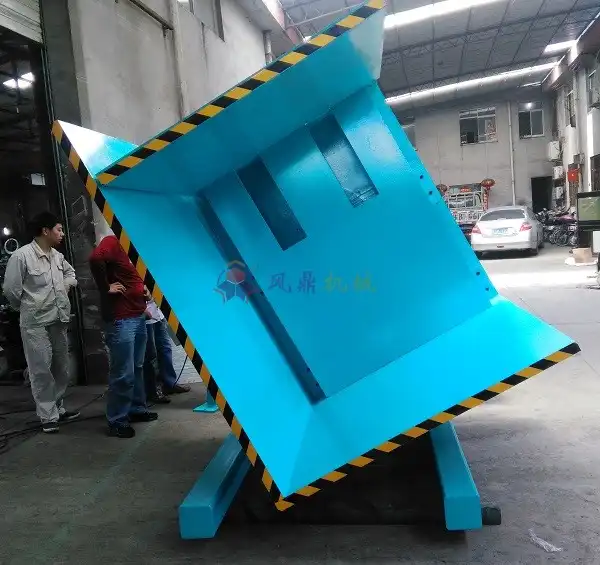
Understanding these challenges is just the first step. The next is finding solutions that truly make a difference. Join me as I share insights from my journey in the packing machine industry. We will explore how specific engineering advancements in pallet inverters are transforming safety and efficiency for industries handling paper pulp and timber, not just in Uruguay, but globally.
Why is handling paper pulp and timber products particularly risky for safety and efficiency in Uruguay?
Are you feeling the pressure to move more products faster, yet constantly worried about accidents or operational slowdowns? For businesses in Uruguay dealing with paper pulp and timber, this pressure is very real. These materials present unique challenges that traditional handling methods simply cannot meet safely or efficiently. Manual processes are slow and dangerous.
Handling paper pulp and timber in Uruguay is inherently risky due to their heavy, bulky, and often unstable nature on pallets, demanding extensive manual labor, which increases the risk of tipping, crushing injuries, and product damage, while also causing significant operational inefficiencies in a high-volume environment.
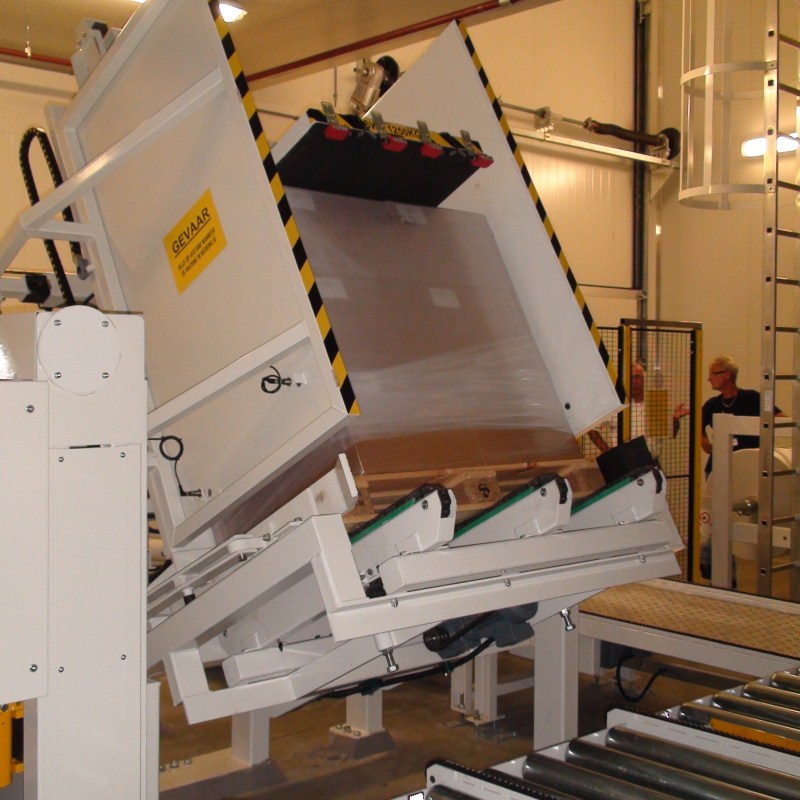
Many companies face similar problems. I have seen how these issues can lead to costly delays and harm to workers. It is not just about the weight; it is also about the size, the way these items stack, and the differing pallet standards. These factors combine to create a challenging environment that needs smart, engineered solutions.
-
Inherent Product Characteristics:
- Weight and Bulk: Paper pulp bales and timber logs are extremely heavy and large. Moving them manually is very difficult and needs many people. This weight creates high impact forces if a load drops or shifts. It puts a lot of stress on lifting equipment and pallets.
- Instability: Stacks of paper pulp bales can be unstable, especially during transport or when inverted. Timber, often unevenly shaped, can shift easily. This instability makes manual handling very risky. A slight bump can cause an entire stack to fall, hurting workers or damaging goods.
- Fragility (for pulp): While heavy, paper pulp can be damaged by rough handling or improper clamping. This leads to product loss. Timber can also get damaged if dropped or scraped. Companies lose money when products are damaged.
-
Operational Challenges:
- High Manual Labor Requirement: Traditional methods for changing pallets or inverting loads usually need many workers. They lift, turn, or transfer products by hand. This is slow, costly, and uses a lot of energy. In Uruguay, like many places, finding enough workers for such hard jobs is getting harder.
- Increased Risk of Accidents: Manual handling directly leads to more accidents. Workers can suffer back injuries from lifting. They can get crushed by falling loads. They can also slip or trip in crowded areas. These accidents cause pain for workers and high costs for companies, including medical bills and lost work time.
- Inefficiency and Bottlenecks: Manual pallet changes take a lot of time. This creates bottlenecks in the logistics chain. For paper pulp and timber, where high volumes are common, delays slow down the whole operation. This impacts delivery times and customer satisfaction.
- Pallet Diversity: In international trade, especially in a country like Uruguay, products move on different pallet types. You see Euro pallets, US pallets, and plastic pallets. Manually switching between these types is complex and error-prone. It adds another layer of difficulty and risk. (Manual Pallet Inversion Risks, Heavy Load Handling Safety, Uruguay Logistics Challenges)
What specific engineering improvements in pallet inverters directly enhance safety during material transfer?
Do you worry about the safety of your team every time heavy goods are moved or transferred? The traditional methods often put workers at direct risk. But what if technology could take over the most dangerous parts of the job, making your operations safer and more efficient? Modern pallet inverters are doing exactly that.
Specific engineering improvements in pallet inverters, such as enclosed operation zones, advanced hydraulic clamping systems, non-slip surfaces, intelligent sensor arrays, and emergency stop features, directly enhance safety by isolating operators from moving parts, securely holding loads, preventing accidental shifts, and immediately responding to potential hazards during material transfer.

My experience has shown me that safety is not just a feature; it is a fundamental design principle. When I started FHOPEPACK, I focused on creating machines that protect people first. These engineering advancements are not simply about moving products; they are about moving them safely, protecting both the product and the person operating the machine.
-
Enclosed Operation Zones and Safety Guards:
- Barrier Protection: Modern pallet inverters often feature fully enclosed loading and unloading zones. These zones use strong metal guards or light curtains. They keep workers away from moving machine parts and the heavy load. This means an operator cannot accidentally walk into the path of a moving clamp or rotating platform.
- Interlock Systems: These systems ensure that the machine cannot start or operate if safety gates are open or if a worker is detected inside the operation zone. The machine simply will not run until it is safe to do so. This prevents accidents caused by human error or carelessness.
- Clear Visibility: While enclosed, the design still allows operators clear views of the process through reinforced windows or integrated cameras. This helps them monitor the operation without being in harm’s way.
-
Advanced Hydraulic Clamping Mechanisms:
- Secure Load Holding: Hydraulic clamps use powerful, controlled pressure to grip the product and its pallet firmly. This prevents any movement or slippage during the inversion process. For heavy or unstable items like timber and pulp, a secure grip is very important. It stops loads from tipping or falling.
- Adjustable Pressure Settings: Operators can adjust the clamping pressure. This means they can apply just the right amount of force for different products. Too much pressure can damage fragile goods. Too little pressure can lead to slippage. Precision control protects both the product and the safety of the operation.
- Even Pressure Distribution: The clamping surfaces are often designed to distribute pressure evenly across the load. This reduces stress points. It also prevents damage to the product while ensuring maximum stability during the transfer.
-
Intelligent Sensor Arrays and Emergency Stops:
- Proximity Sensors: These sensors detect if any object or person is too close to the moving parts of the machine. If a sensor is triggered, the machine can automatically slow down or stop completely. This prevents collisions and keeps workers safe.
- Load Sensors: Some advanced systems use sensors to check the weight and balance of the load. If the load is too heavy or not balanced correctly, the machine can alert the operator or refuse to start. This prevents dangerous situations from occurring.
- Multiple Emergency Stop Buttons: Pallet inverters are equipped with easily accessible emergency stop buttons. These buttons are placed in different locations around the machine. They allow operators to instantly halt the entire operation in case of any unexpected problem or emergency. This immediate control is critical for preventing accidents. (Pallet Inverter Safety Features, Hydraulic Clamping Safety, Automated Material Handling Security)
How do advanced pallet inverter designs ensure seamless handling across various pallet types for compliance and efficiency?
Are you tired of the headaches that come with managing different pallet sizes and types in your warehouse? Dealing with Euro pallets, US pallets, and plastic pallets, especially in international trade, can cause major slowdowns and compliance issues. The need for frequent pallet changes creates a bottleneck.
Advanced pallet inverter designs ensure seamless handling across various pallet types through features like adjustable clamping plates, customizable programming for different pallet dimensions, self-leveling platforms, and quick-change tooling, which collectively allow rapid adaptation to diverse specifications while maintaining high efficiency and meeting international compliance standards.
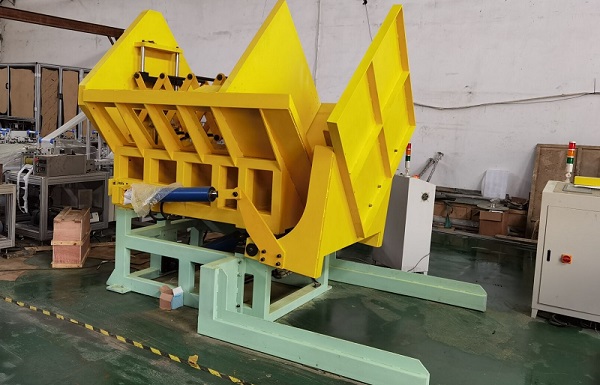
From my experience designing packing solutions, I know that adaptability is key. A machine that works for one pallet type but fails for another is not a true solution. That is why FHOPEPACK focuses on versatility. We want to make sure our clients can handle any pallet challenge thrown their way, ensuring smooth operations and avoiding costly mistakes.
-
Adjustable Clamping Plates and Mechanisms:
- Variable Clamp Range: Modern pallet inverters have clamping plates that can adjust their opening and closing range. This allows them to securely grip loads of different heights and widths. Whether it is a tall stack of pulp bales on a Euro pallet or a shorter timber stack on a US pallet, the clamps can adapt.
- Multi-Directional Clamping: Some advanced models offer clamping from multiple directions. This provides better stability for unusually shaped or sized loads. It also ensures that the pressure is evenly applied, which is important for fragile goods.
- Quick Adjustment Systems: These systems let operators quickly change settings for different pallet sizes. This might involve simple levers, hand cranks, or push-button controls. The goal is to reduce setup time between different jobs. This increases efficiency.
-
Customizable Programming and Control Systems:
- Recipe Storage: Pallet inverters with programmable logic controllers (PLCs) can store “recipes” for various pallet and product combinations. An operator can select a pre-set program for “Euro Pallet – Paper Pulp” or “US Pallet – Timber.” The machine then automatically adjusts settings like clamp pressure and inversion angle.
- Intuitive User Interfaces: Touchscreen control panels make it easy for operators to switch between different programs. These interfaces often use visual aids and simple language. This reduces the chance of human error during setup.
- Data Logging for Compliance: Advanced systems can log data on each operation, including the pallet type used and the cycle time. This data is important for tracking compliance with international shipping regulations and for optimizing workflow.
-
Self-Leveling Platforms and Modular Design:
- Automatic Height Adjustment: Some pallet inverters feature platforms that can automatically adjust their height to match the input or output conveyor systems. This creates a smooth transition for loads and reduces manual handling during the loading and unloading phases.
- Modular Construction: The machine itself is often built with a modular design. This allows for easy swapping of components or adding new features. If a new pallet type becomes common, specific parts of the inverter can be upgraded or modified without replacing the whole machine.
- Compatibility with Conveyor Systems: Designs consider seamless integration with existing warehouse conveyor lines. This ensures that the pallet inverter acts as a smooth part of a larger automated system. This is important for continuous flow operations. (Multi-Pallet Handling Solutions, Pallet Type Adaptability, Warehouse Compliance Equipment)
What innovative automation features in pallet inverters minimize manual intervention and reduce operator strain?
Are you struggling with labor shortages, rising costs, and workers unwilling to do physically demanding tasks? Many businesses, including those in Uruguay, find it hard to recruit people for tough manual pallet handling. This problem creates a big need for smart automation.
Innovative automation features in pallet inverters, such as fully automatic loading and unloading, robotic integration, remote monitoring capabilities, and self-diagnosis systems, minimize manual intervention by executing entire pallet transfer cycles autonomously, significantly reducing operator physical strain, decreasing human error, and improving overall workplace ergonomics and safety.
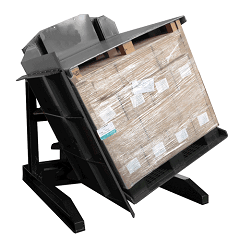
When I founded FHOPEPACK, I saw how much physical stress manual handling put on workers. My goal was to leverage technology to lift that burden. Automation is not just about speed; it is about creating a safer, more sustainable work environment where human effort is used for smarter tasks, not strenuous ones.
-
Fully Automatic Loading and Unloading:
- Integrated Conveyor Systems: The most advanced pallet inverters are designed to work seamlessly with roller or chain conveyor systems. This allows pallets to be fed directly into the inverter. After inversion, the new pallet can automatically exit the machine. This removes the need for forklifts or manual pushing at these points.
- Automated Sensing and Positioning: Sensors detect the incoming pallet’s presence and position it correctly within the machine. This ensures optimal alignment for the clamping and inversion process. It eliminates manual adjustments by operators.
- Reduced Forklift Traffic: By automating the loading and unloading, the need for forklifts around the inverter area decreases. Less forklift traffic means fewer chances for collisions and accidents in a busy warehouse.
-
Robotic Integration and Advanced Controls:
- Robotic Pallet Placement: For ultimate automation, pallet inverters can be integrated with robotic arms. These robots can pick up and place products onto the inverter. They can also handle the removed pallet. This fully automates the entire material flow around the inverter.
- Centralized Control Systems: Modern inverters often connect to a central warehouse management system (WMS). This allows for remote operation and monitoring. A manager can oversee multiple machines from a control room. They can also adjust settings without being on the factory floor.
- Predictive Maintenance Alerts: Advanced control systems can monitor the machine’s performance in real-time. They can alert maintenance staff to potential issues before they become serious. This helps avoid unexpected breakdowns and downtime.
-
Self-Diagnosis and Remote Monitoring:
- Error Detection and Reporting: Inverters can detect operational errors or component failures. They can then report these issues to operators or maintenance teams. This allows for quick troubleshooting and repair, minimizing downtime.
- Remote Access and Support: Many FHOPEPACK machines, for example, can be accessed remotely by our service engineers. This means we can diagnose problems and even update software without needing to send a technician on-site. This saves time and resources.
- Performance Analytics: The system can collect data on cycle times, uptime, and energy consumption. This data helps businesses understand their operations better. They can use this information to make improvements and increase efficiency. (Automated Pallet Solutions, Workplace Ergonomics Automation, Labor Reduction Technology)
What robust engineering principles contribute to the long-term reliability and low maintenance of pallet inverters in heavy-duty environments?
Are your current machines constantly breaking down, needing costly repairs, and causing unexpected delays? In a heavy-duty environment, like those handling paper pulp and timber, equipment must withstand continuous use without fail. Reliability and low maintenance are not luxuries; they are necessities for profitability.
Robust engineering principles like the use of heavy-gauge structural steel, industrial-grade hydraulic components, sealed bearings, corrosion-resistant coatings, and a modular design, collectively contribute to the long-term reliability and low maintenance of pallet inverters by ensuring structural integrity, consistent performance, protection against environmental factors, and ease of component replacement in heavy-duty environments.
From my years in this industry, I have learned that building something to last is always the best investment. When I design FHOPEPACK machines, I think about the toughest conditions. It is not just about making a machine work today; it is about making it work efficiently for years, minimizing downtime, and saving our clients money in the long run.
-
Heavy-Gauge Structural Steel and Weld Integrity:
- Reinforced Frame: The core structure of a reliable pallet inverter is built from heavy-gauge industrial steel. This material provides exceptional strength and rigidity. It can handle the immense weight and dynamic forces of heavy loads like timber or pulp without bending or breaking.
- Precision Welding: All structural joints are typically reinforced with high-quality, continuous welds. These welds are critical for maintaining the frame’s integrity under constant stress and vibration. Poor welds can lead to cracks and structural failure over time.
- Vibration Dampening: The robust construction helps to dampen vibrations during operation. This reduces wear and tear on all components. It also leads to a quieter and smoother running machine.
-
Industrial-Grade Hydraulic and Electrical Components:
- Over-Engineered Hydraulics: The hydraulic cylinders, pumps, and valves are chosen to be stronger than strictly necessary for the rated load. This “over-engineering” provides a safety margin. It also ensures long life even under continuous heavy use. These components are designed for thousands of cycles.
- High-Quality Electrical Systems: All electrical motors, sensors, and control units are industrial-grade. This means they are designed to withstand harsh factory environments, including dust, humidity, and temperature fluctuations. They are also protected against electrical surges.
- Sealed Bearings and Gearboxes: Moving parts, especially bearings and gearboxes, are fully sealed. This protects them from dust, moisture, and debris. Sealed components need less lubrication and maintenance. This extends their lifespan and reduces the chance of breakdowns.
-
Corrosion-Resistant Coatings and Easy Maintenance Access:
- Protective Finishes: Critical parts of the machine, especially those exposed to the environment, receive special coatings. These might be powder coats or specific paints that resist rust and corrosion. This is very important in humid environments or when handling materials that might release corrosive elements.
- Accessible Maintenance Points: The machine’s design includes easy access panels and clearly marked lubrication points. This allows maintenance staff to perform routine checks and service quickly and safely. Good access reduces the time and effort needed for upkeep.
- Modular Component Design: Many key components, like hydraulic power units or control panels, are designed as self-contained modules. If a component needs replacement, the entire module can be swapped out quickly. This greatly reduces repair time and gets the machine back in service faster. (Heavy-Duty Pallet Inverter Durability, Low Maintenance Industrial Equipment, Reliable Warehouse Automation)
Conclusion: What Strategic Engineering Implementations Are Essential for Uruguay’s Paper Pulp and Timber Logistics?
To ensure safe and efficient handling of paper pulp and timber in Uruguay, industries must adopt pallet inverter systems with advanced safety features, robust build quality, and high adaptability to diverse pallet types. Prioritizing automated solutions minimizes risks, reduces labor costs, and guarantees compliance. This strategic investment is crucial for future-proofing logistics operations.








