
Pallet Inverter Australia: What Strategic Benefits Do Advanced Machines Offer to Wine and Grain Exporters?
Are you an Australian wine or grain exporter facing constant pressure? Dealing with diverse pallet sizes, tight deadlines, and rising labor costs can feel like an endless battle. You might be struggling to keep up with international shipping requirements, risking delays and penalties because of inefficient pallet handling. These issues directly impact your bottom line, client satisfaction, and market reputation. Every manual pallet change is a potential bottleneck, a safety hazard, and a drain on your resources. But what if there was a way to transform these challenges into strategic advantages? Advanced pallet inverters offer a clear path to optimizing your operations.
Advanced pallet inverters provide Australian wine and grain exporters strategic benefits by automating the complex process of switching between different pallet types, such as Euro, US, and plastic pallets. This automation significantly enhances operational efficiency, improves workplace safety by reducing manual handling risks, lowers labor costs, and ensures compliance with international shipping standards, ultimately leading to faster delivery times and greater customer satisfaction.

As someone who has navigated the packing machine industry from an employee to a factory owner, I understand the critical role efficient machinery plays in business success. The journey of FHOPEPACK began with a deep appreciation for how the right equipment can empower businesses, much like it did for my own financial independence. Now, I want to share insights into how innovative solutions like advanced pallet inverters are not just machines, but strategic tools that can redefine your export operations. Let’s dive deeper into the specific ways these machines can benefit Australian wine and grain exporters.
How Do Pallet Inverters Streamline Diverse Pallet Handling for Australian Exporters?
Do you find yourself constantly battling the headache of diverse pallet specifications when exporting wine and grain from Australia? The need to switch between Euro, US, and local Australian pallets is a logistical nightmare. This often leads to slow, error-prone manual handling. Such inefficiencies directly impact your shipping schedules and can lead to costly delays or even rejection of goods at destination ports. Your team spends valuable time on non-core activities. Advanced pallet inverters are specifically designed to address this by providing a rapid, automated solution for switching between any pallet type.
Pallet inverters streamline diverse pallet handling for Australian wine and grain exporters by automating the exchange of products from one pallet type to another, such as from standard Australian pallets to Euro or US-sized export pallets. This mechanical process replaces slow, labor-intensive manual methods, ensuring quick adaptation to varied international shipping requirements, reducing errors, and accelerating throughput in high-volume warehouses.

The operational realities for Australian exporters, particularly in the wine and grain sectors, are complex. Australia’s geographical position means long supply chains, making efficiency absolutely critical. The global market demands specific pallet types. European clients expect Euro pallets, while North American markets often require US standard pallets. Manually transitioning thousands of pallets daily from one format to another creates significant bottlenecks. This is where advanced pallet inverters like those offered by FHOPEPACK truly shine. They act as a critical bridge in the logistics chain.
- 🔄 Seamless Pallet Switching: Pallet inverters can efficiently transfer goods from a production or inbound pallet to an export-compliant pallet. This includes changing from wooden to plastic pallets for hygiene reasons. It also involves switching from damaged pallets to new ones. The machine secures the load and rotates or clamps it. This allows for the easy removal of the original pallet and replacement with the new one. This process ensures product integrity throughout the entire operation. ( pallet transfer automation, export pallet compatibility, diverse pallet solutions)
- ⚙️ Increased Throughput and Speed: Imagine the time saved when a machine can change a pallet in just minutes. This is much faster compared to the hours it might take a team of workers to manually unload, re-palletize, and re-wrap. For a large grain exporter moving thousands of tons, or a wine producer shipping multiple containers daily, this speed translates directly into faster dispatch times. It also means reduced demurrage charges. My journey in the packing machine industry taught me that time saved in one area cascades into benefits across the entire supply chain. (high-speed pallet changing, efficient export logistics, rapid pallet exchange)
- 📊 Reduced Errors and Damage: Manual handling of heavy and delicate loads, like cases of wine or stacked bags of grain, inherently carries risks. Misalignments, drops, or improper stacking can lead to product damage. This is costly and damages client trust. Automated pallet inverters ensure consistent, precise handling. This drastically reduces the likelihood of such incidents. The machine’s controlled operation means your valuable products arrive at their destination in perfect condition. This maintains the quality reputation of Australian exports. (damage prevention, automated pallet handling, quality control in exports)
Can Advanced Pallet Inverters Truly Mitigate Labor Shortages and High Costs?
Australia’s labor market, especially in warehousing and logistics, is facing persistent shortages and rising wages. Finding and retaining skilled workers for physically demanding tasks like manual pallet changing is becoming increasingly difficult. This puts immense pressure on your operational budget. Relying on manual labor for intensive pallet handling not only inflates costs but also exposes your business to productivity gaps when staff are unavailable. Your competitive edge erodes as labor costs soar. Investing in advanced pallet inverters offers a robust answer by significantly reducing the reliance on human labor for strenuous and repetitive tasks.
Yes, advanced pallet inverters effectively mitigate labor shortages and high operational costs for Australian exporters by automating the strenuous process of pallet changing, thereby reducing the need for multiple workers for manual handling. This shift frees up staff for higher-value tasks, decreases overall labor expenses, and improves workplace efficiency, making operations less susceptible to workforce fluctuations and increasing profitability.
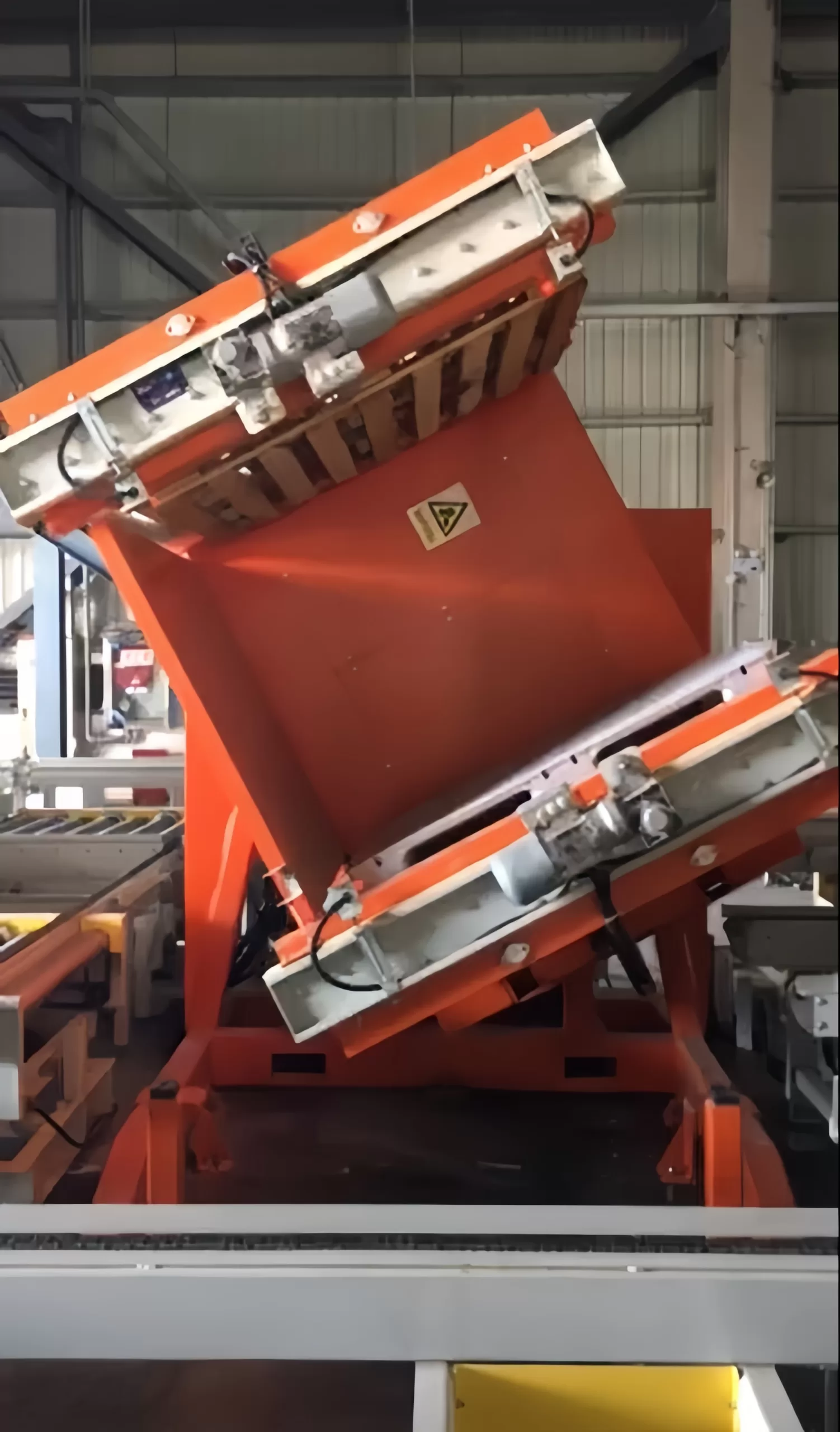
The rising cost of labor and the scarcity of personnel willing to perform physically demanding warehouse jobs are major concerns for any logistics manager. This is true for Carlos in Spain, and equally so for Australian exporters. My own experience building FHOPEPACK taught me the value of smart automation. It is not about replacing people entirely. It is about empowering them and optimizing resources.
- 💰 Significant Cost Reductions: By automating pallet changes, businesses can reallocate staff from strenuous, low-skill tasks to more strategic roles within the warehouse. A single operator can manage an advanced pallet inverter. This replaces the need for several workers to manually unload and re-palletize. This directly translates into lower payroll expenses. It also means reduced overtime, and fewer associated benefits and insurance costs. Over the machine’s lifespan, these savings accumulate to a substantial return on investment. (labor cost savings, warehouse automation ROI, operational expense reduction)
- 👨🏭 Addressing Labor Shortages: With fewer individuals needed for the core pallet changing process, exporters become less vulnerable to labor market fluctuations. This means operations can continue smoothly even during peak seasons or when facing workforce absences. The FHOPEPACK mission is all about sharing knowledge. One key insight is that automation ensures operational continuity. This is crucial for export-driven businesses with tight schedules. (workforce stability, automation for labor gaps, reliable warehouse operations)
- 📈 Increased Productivity Per Employee: When employees are freed from manual pallet handling, they can focus on tasks that require human judgment, problem-solving, or specialized skills. This could include quality control, inventory management, or operating other complex machinery. The overall productivity of the existing workforce increases. This maximizes human potential and job satisfaction. This strategy aligns perfectly with the goal of creating a more efficient and resilient supply chain. (employee productivity boost, strategic labor deployment, optimized human resources)
What Role Do Pallet Inverters Play in Enhancing Warehouse Safety and Compliance?
Manual pallet handling is inherently risky. The heavy lifting, twisting, and turning required to change pallets manually expose workers to serious injuries, from back strains to crush injuries. These accidents lead to lost workdays, rising insurance premiums, and potential legal liabilities. Safety incidents disrupt operations, damage morale, and can severely impact your company’s reputation, especially in a regulated industry like food and beverage or grain export. Are you truly protecting your most valuable assets – your people and your product? Advanced pallet inverters are designed with safety as a core principle, eliminating hazardous manual tasks and ensuring a safer working environment.
Pallet inverters play a crucial role in enhancing warehouse safety and compliance by eliminating the need for manual lifting, twisting, and repositioning of heavy palletized goods, thereby significantly reducing the risk of worker injuries and product damage. They ensure a controlled, mechanized process that adheres to safety regulations, lowers incident rates, and helps maintain product integrity, which is vital for compliance in food and grain exports.
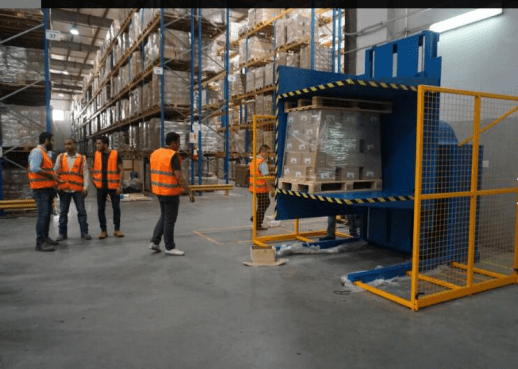
Warehouse safety is non-negotiable. This is particularly true when handling valuable commodities like wine and grain. My own factory experience taught me that preventing accidents is not just good ethics. It is good business. Accidents can cause massive disruptions, investigations, and significant financial setbacks. Carlos, our persona, emphasizes equipment reliability and ergonomic safety. He knows that a single safety incident can lead to severe consequences.
- 🛡️ Eliminating Manual Handling Risks: The primary safety benefit of a pallet inverter is removing humans from direct contact with heavy loads during the transfer process. Workers no longer need to manually lift, tilt, or rotate heavy pallets. These are common causes of musculoskeletal injuries. Instead, the machine performs all the heavy lifting in a controlled environment. This isolates workers from potential crush points and falling goods. This drastically lowers the incidence of workplace accidents. (worker safety improvement, reduced manual handling injuries, automated hazard elimination)
- 🚨 Reduced Product Damage and Spillage: Beyond worker safety, pallet inverters protect the product itself. Manual pallet changes can often result in unstable loads. This leads to spills or damage, especially with delicate products like bottled wine or large bags of grain. Advanced machines secure the load firmly before any movement. This ensures that the product remains stable and intact throughout the transfer. This precision minimizes waste and maintains the quality of the export goods. This is crucial for client satisfaction and regulatory compliance in sensitive industries. (product integrity protection, minimized spillage risk, secure load transfer)
- ✅ Compliance with Health & Safety Regulations: For Australian exporters, adhering to strict national and international health and safety standards is paramount. Implementing automated pallet changing solutions demonstrates a commitment to workplace safety. It helps businesses meet occupational health and safety (OHS) requirements. It also potentially reduces insurance premiums. Furthermore, using clean plastic pallets for export, facilitated by inverters, can help meet biosecurity and hygiene regulations for food and grain products. This prevents contamination and ensures smooth customs clearance. (regulatory compliance support, OHS adherence, biosecurity measures for exports)
How Can Pallet Changers Meet the Demands for Faster Deliveries in Export Logistics?
In today’s global market, “just-in-time” delivery is the expectation, not the exception. For Australian wine and grain exporters, longer shipping routes mean every minute saved in the warehouse is critical. Slow pallet changing processes directly translate into missed deadlines and unhappy customers. Delays at the warehouse can lead to penalties, lost contracts, and a tarnished reputation in competitive international markets. Are your current operations agile enough to keep pace with these accelerating demands? Pallet changers are transformative tools that drastically cut down processing times, making your export logistics faster and more responsive.
Pallet changers meet the demands for faster deliveries in export logistics by significantly accelerating the process of switching pallets, enabling quicker turnaround times for goods exiting the warehouse. By automating this critical step, they eliminate bottlenecks, reduce processing delays, and allow Australian wine and grain exporters to ship products more rapidly, thereby improving order fulfillment speed and enhancing overall supply chain responsiveness to meet stringent client delivery expectations.
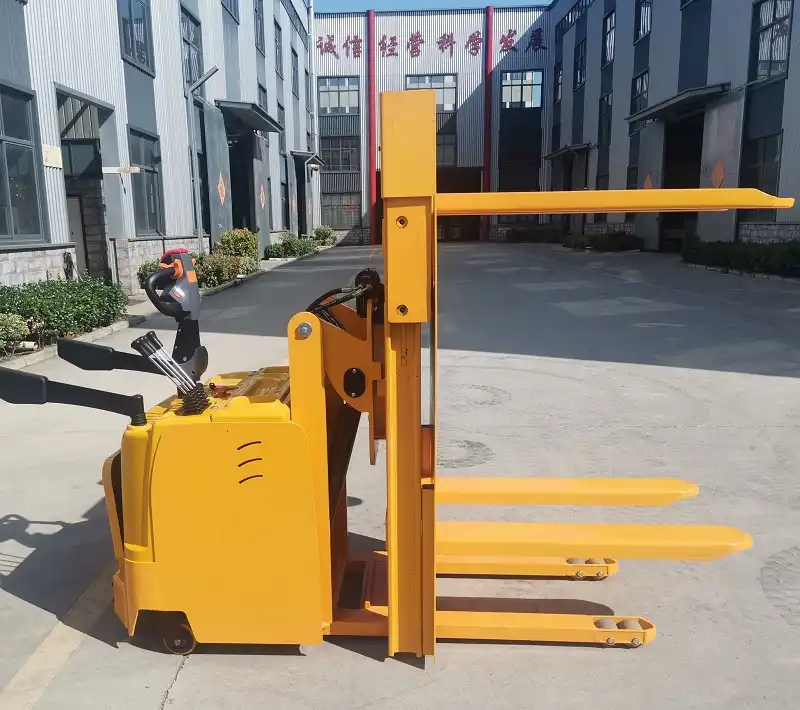
The pressure on supply chains has never been greater. This is especially true for exporters like those in the Australian wine and grain industries. They operate on tight margins and strict delivery schedules. Carlos’s experience with thousands of pallets daily needing quick turnaround directly mirrors this challenge. My own understanding of the packing industry shows that speed often dictates success.
- ⏱️ Accelerated Processing Times: A manual pallet change can take a team a significant amount of time per pallet. This is especially true when dealing with heavy or unstable loads. An automated pallet changer, like those FHOPEPACK designs, completes this task in a fraction of the time. It often finishes within minutes. This rapid turnaround means that outbound shipments can be prepared and loaded onto trucks or into containers much faster. This reduces dwell times in the warehouse and speeds up the entire export process. (fast logistics, quick pallet turnaround, reduced processing delays)
- 📈 Increased Warehouse Throughput: The ability to process more pallets in less time directly increases the overall throughput of the warehouse. For a wine exporter preparing multiple containers for shipment daily, or a grain exporter with large volumes, this translates into handling a greater quantity of goods efficiently. This increased capacity allows businesses to take on more orders. It lets them expand their market reach and ultimately boost their revenue. This happens without needing to expand their physical warehouse space or workforce significantly. (higher warehouse capacity, improved export volume, efficient order fulfillment)
- 🔄 Improved Supply Chain Flow: By removing the pallet changing bottleneck, the entire logistics chain experiences smoother operations. Goods flow from production to dispatch without unnecessary delays. This ensures that products reach ports and ships on schedule. This predictability is invaluable for planning and coordination with shipping partners. It leads to more reliable delivery estimates and stronger relationships with international clients. The FHOPEPACK commitment to innovation is all about making these complex flows simpler and more efficient for our partners. (streamlined supply chain, predictable delivery schedules, enhanced logistics coordination)
Why is Partnering with a Knowledgeable Pallet Changer Supplier Crucial for Long-Term Success?
Buying a pallet changer isn’t just about the machine. It is about the entire support ecosystem. Many suppliers simply sell equipment without truly understanding your unique operational challenges. This leads to mismatched solutions and post-purchase headaches. A poor choice of supplier can result in costly downtime, inefficient operations, and a solution that doesn’t fully address your needs. This turns an investment into a liability. You need more than a vendor; you need a strategic partner. Partnering with a knowledgeable supplier like FHOPEPACK, who understands your specific warehousing pain points, is essential for truly realizing the strategic benefits of advanced pallet changers.
Partnering with a knowledgeable pallet changer supplier is crucial for long-term success because such a partner offers more than just equipment; they provide expert consultation, customized solutions, reliable after-sales support, and a deep understanding of unique operational challenges faced by Australian wine and grain exporters. This ensures the chosen pallet changer seamlessly integrates into existing workflows, optimizes performance, and provides sustained value, mitigating risks associated with inadequate support and ensuring a higher return on investment.
From my journey of establishing FHOPEPACK after years as a packing machine engineer, I’ve learned that true partnership goes beyond a transaction. It’s about understanding a client’s world, their problems, and their aspirations. Carlos, our target persona, explicitly seeks a partner who understands his warehousing pain points and provides flexible solutions, not just a machine seller. This resonates deeply with FHOPEPACK’s mission.
- 🤝 Deep Understanding of Operational Needs: A truly knowledgeable supplier takes the time to understand your specific challenges. This includes the unique pallet sizes for Australian wine bottles. It covers the delicate handling required for grain. It also covers the high-volume demands of your export facility. They do not just push a standard product. Instead, they offer tailored advice. They also provide potentially customized solutions that perfectly fit your operational footprint and specific export requirements. This consultative approach ensures the solution genuinely solves your problems. (customized pallet solutions, operational problem solving, industry-specific expertise)
- 🛠️ Comprehensive After-Sales Support and Maintenance: The reliability of your pallet changer directly impacts your export schedule. A reputable supplier provides robust after-sales support. This includes installation, training, spare parts availability, and prompt technical assistance. Downtime is incredibly costly for exporters. Knowing that FHOPEPACK stands behind its products with dedicated support means peace of mind. This ensures your operations run smoothly with minimal interruptions. This ongoing support maximizes the machine’s lifespan and its operational efficiency. (reliable technical support, comprehensive maintenance services, minimized operational downtime)
- 💡 Long-Term Strategic Partnership: A good supplier acts as a long-term partner. They offer insights into future automation trends. They also help you scale your operations as your business grows. They share knowledge, much like FHOPEPACK aims to do through its platform. This partnership ensures that your initial investment continues to yield benefits. It also ensures your infrastructure evolves to meet changing market demands and regulations. It’s about building a relationship that fosters mutual growth and sustained competitive advantage in the dynamic world of international trade. (strategic automation partnership, future-proofing logistics, continuous improvement in warehousing)
Conclusion
Advanced pallet inverter machines offer Australian wine and grain exporters transformative strategic benefits. These range from streamlining diverse pallet handling and mitigating labor costs to enhancing safety and accelerating deliveries. Partnering with experts like FHOPEPACK ensures tailored solutions for long-term success in the dynamic export market.








