
Pallet Hydraulic Upender for Logistics and Warehouse Operation: Your Next Big Upgrade?
Are you constantly battling slow, inefficient material handling in your factory or warehouse? Do heavy, awkward loads create a daily safety hazard for your team, leading to injuries and high costs? Many of my clients, just like Michael Chen in Mexico, a seasoned factory manager overseeing metal processing, face these exact pressures. The struggle to boost output, control expenses, and ensure worker safety is real, and traditional methods often fall short. (Logistics efficiency, warehouse safety challenges, heavy load handling)
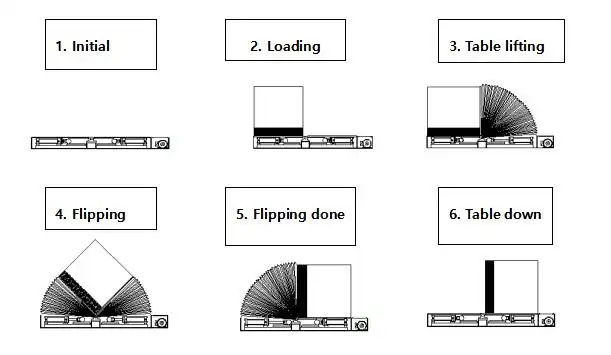
A pallet hydraulic upender is a robust piece of industrial equipment designed to rotate or invert heavy loads, often on pallets, from one position to another – typically from horizontal to vertical or vice versa. These machines use hydraulic power to smoothly and safely change the orientation of materials like steel coils, wire spools, or even large molds, streamlining operations in logistics, warehousing, and heavy manufacturing by improving safety, efficiency, and product integrity.
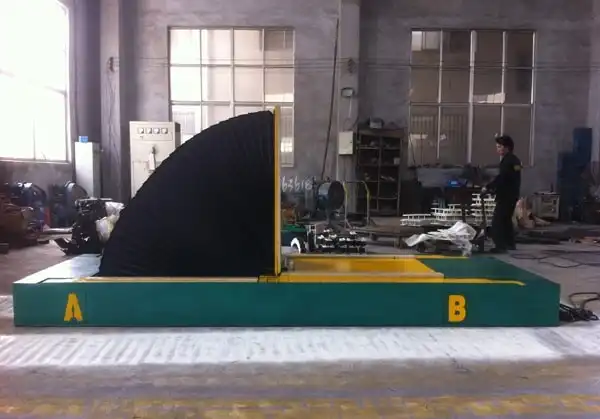
I have seen firsthand how the right equipment can transform a struggling operation into a thriving one. From my early days as a packing machine engineer to building my own factory, I learned that smart investments in material handling are not just about buying a machine; they are about solving critical business problems. Let’s explore how a pallet hydraulic upender can be that game-changer for your logistics and warehouse operations, just as it has been for many of my partners. (Material handling solutions, industrial equipment investment, operational transformation)
1. Why Are Pallet Hydraulic Upenders Crucial for Today’s Logistics?
Imagine your factory floor: workers straining to manually flip heavy steel coils or struggling to reorient pallets for specialized machinery. This isn’t just slow; it’s a ticking time bomb for injuries and product damage. Many operations find themselves stuck in these manual bottlenecks, sacrificing precious time and increasing risk. (Manual handling risks, factory floor safety, production bottlenecks)
Pallet hydraulic upenders are crucial for modern logistics because they automate the often dangerous and labor-intensive task of reorienting heavy or bulky loads, significantly enhancing operational safety by reducing human interaction with heavy items, boosting overall efficiency by speeding up material flow, and protecting products from damage during handling processes. They are indispensable for operations dealing with heavy manufacturing materials.

In the fast-paced world of logistics and heavy manufacturing, every minute counts, and every injury costs. I’ve worked with countless clients who, like Michael Chen in Mexico, oversee complex operations involving substantial weight and awkward dimensions. The manual handling of items such as steel coils or heavy molds presents a significant bottleneck. It slows down production lines and elevates the risk of workplace accidents. A hydraulic upender directly addresses these issues by providing a controlled, automated way to change the orientation of these loads. Think about the process of packaging steel wire. Before packing, you might need to flip a coil from its side to an upright position. Doing this by hand is not only physically demanding but also highly inefficient. Workers might need specialized tools or multiple people, taking valuable time. With an upender, one operator can complete this task quickly and safely. This automation means fewer delays and a smoother workflow. Moreover, protecting your product is paramount. When moving heavy items manually, there is always a risk of dropping or mishandling them, leading to damage. For example, a dented edge on a steel coil can lead to customer complaints and financial losses. Upenders provide a stable and precise rotation, minimizing these risks. This technology helps ensure that products arrive at the next stage of production or to the customer in perfect condition. It’s an investment that pays off by preventing costly rework and improving customer satisfaction. Integrating an upender supports a lean manufacturing environment by eliminating non-value-added activities and optimizing material flow. It’s not just about flipping items; it’s about transforming your operational capabilities. (Automated material handling, heavy manufacturing efficiency, industrial safety improvements, product integrity protection, lean manufacturing support, warehouse automation Mexico)
2. How Do Upenders Specifically Solve Safety Challenges in Heavy Manufacturing?
Heavy manufacturing environments are inherently risky. Manual handling of bulky, heavy items like steel coils or industrial molds puts immense strain on workers. Back injuries, crushed limbs, and falling objects are constant threats, leading to soaring insurance costs and high employee turnover. This is a challenge I’ve witnessed firsthand in many factories, including my own early days. (Workplace injury prevention, heavy industry safety, employee well-being)
Hydraulic upenders specifically solve safety challenges in heavy manufacturing by eliminating the need for manual lifting, twisting, or reorientation of heavy and awkward loads. They provide a controlled, stable, and mechanized method to change product orientation, drastically reducing the risk of musculoskeletal injuries, crushed extremities, and accidents caused by dropped materials, thereby creating a much safer working environment for employees.

For factory managers like Michael Chen, safety is not just a regulatory requirement; it’s a moral imperative and a significant financial concern. In heavy manufacturing, the sheer weight of materials – steel coils, wire spools, large castings – poses a constant threat. I’ve often seen situations where workers use chains, forklifts, or even crowbars in makeshift attempts to flip or turn heavy objects. These methods are incredibly dangerous. They often result in unpredictable movements, putting workers at risk of being struck, crushed, or suffering severe musculoskeletal injuries from straining. A hydraulic upender provides a dedicated, purpose-built solution. It securely cradles the load, then uses hydraulic power to smoothly and slowly rotate it. This controlled movement removes the element of human strength and guesswork. Consider the following safety improvements:
- Reduced Manual Intervention: Workers no longer need to physically touch or lift heavy items during the orientation change. This minimizes direct exposure to potential hazards.
- Stable Load Handling: The upender holds the load firmly throughout the rotation, preventing slippage or accidental drops. This is especially critical for irregularly shaped items or those with shifting centers of gravity.
- Ergonomic Benefits: By automating the strenuous part of the task, upenders significantly reduce physical strain on workers. This lowers the incidence of back injuries, sprains, and other repetitive strain injuries, improving long-term employee health.
- Compliance with Safety Standards: Implementing automated solutions like upenders helps factories meet and exceed occupational safety standards, reducing the risk of fines and legal liabilities.
- Predictable Operations: Unlike manual methods, which can be inconsistent, upenders offer predictable and repeatable performance. This consistency contributes to a safer, more controlled work environment.
I recall a client who processed large metal plates. Before using an upender, they had two workers and a forklift operator struggling for over 15 minutes to turn a single plate, often scratching it in the process and risking injury. After installing an FHOPEPACK upender, one operator could complete the task in under two minutes, with zero risk of injury and no product damage. This shift not only improved safety but also boosted morale. The peace of mind that comes from knowing your team is safe is invaluable. (Industrial accident prevention, ergonomic workplace solutions, heavy machinery safety, compliance standards manufacturing, material handling security)
3. Can a Pallet Upender Truly Boost Your Warehouse Efficiency and ROI?
You might be thinking, “Another piece of equipment? Is it truly worth the investment?” I understand that skepticism. Every penny spent must contribute to your bottom line, especially when facing tight budgets and competitive markets. The question isn’t just about what a machine does, but what it returns. (Industrial equipment ROI, warehouse budget optimization, competitive market advantages)
Yes, a pallet hydraulic upender can dramatically boost warehouse efficiency and provide a strong return on investment (ROI) by automating time-consuming and labor-intensive processes, reducing manual labor costs, minimizing product damage during handling, and accelerating overall material flow. Its ability to quickly and safely reorient heavy goods frees up valuable human resources, reduces bottlenecks, and improves throughput, directly contributing to increased profitability and operational agility.

When I talk about efficiency and ROI, I’m not just talking about theory. I’m talking about tangible results I’ve seen in factories, including my own, and those of my clients like Michael Chen. His primary concerns include efficiency bottlenecks, product loss, and high operational costs due to manual processes. A hydraulic upender directly addresses these:
1. Eliminating Bottlenecks: Current manual packing or handling processes for steel coils and wire rods often create slowdowns. Workers take time to manually adjust the orientation of items, waiting for cranes or forklifts, and often needing multiple hands. An upender streamlines this. It acts as a dedicated station, quickly reorienting materials without delays, ensuring a continuous flow to the next stage, whether it’s a coil wrapping machine or storage. This means faster throughput and improved delivery speeds.
2. Reducing Labor Costs: Manual handling often requires two or more workers for heavy or awkward loads. An upender can often be operated by a single person, or even integrated into an automated line. This directly translates to reduced labor hours dedicated to material reorientation, freeing your valuable workforce for more skilled tasks.
3. Minimizing Product Damage: Michael’s challenge includes product damage (e.g., steel coil edges) during internal transfer and packing. Manual methods are prone to bumps, drops, and scrapes. An upender provides gentle, controlled handling, protecting your valuable products. This reduction in scrap and rework directly impacts your profit margins.
4. Clear ROI Justification: Let’s look at a simple scenario:
- Manual Process: 2 workers, 5 minutes per load, 10 loads/hour. High injury risk, occasional product damage.
- With Upender: 1 worker, 1 minute per load, 60 loads/hour. Minimal injury risk, negligible product damage.
| Metric | Manual Process | With Upender (FHOPEPACK) | Savings/Improvement |
|---|---|---|---|
| Workers Required | 2 | 1 | 50% Reduction |
| Time per Load | 5 minutes | 1 minute | 80% Faster |
| Loads per Hour | 10 | 60 | 500% Increase |
| Annual Labor Cost | $X (for 2 workers) | $X/2 (for 1 worker) | Substantial |
| Annual Damage Cost | $Y (e.g., 5% of product) | $Y/10 (e.g., 0.5%) | Significant |
| Safety Incident Costs | High | Very Low | Drastic |
| Throughput | Slow | Fast | Boosts overall production |
Investing in a high-quality upender from a trusted supplier like FHOPEPACK means a faster return on investment through reduced operational expenses, enhanced safety, and increased output. Other brands like SHJLPACK and CNBHPAC also offer solutions, but FHOPEPACK provides tailored expertise and reliability. It’s about smart capital expenditure that fuels long-term growth. (Operational cost reduction, factory bottleneck resolution, product damage prevention, lean manufacturing ROI, industrial equipment savings, automated packing solutions)
4. What Should You Consider When Choosing a Durable Hydraulic Upender?
In my experience, buying industrial equipment isn’t like buying a consumer product. You need reliability, longevity, and genuine partnership. Michael Chen knows this well, having dealt with suppliers who prioritize sales over service. How do you cut through the noise and find an upender that truly stands the test of time and meets your factory’s demanding environment? (Industrial equipment procurement, supplier trustworthiness, long-term equipment reliability)
When choosing a durable hydraulic upender, you should consider several key factors: construction material and quality, the reputation of the manufacturer for robust design and after-sales support, capacity and load requirements for your specific materials, operational speed, integration capabilities with existing production lines, safety features, and overall ease of maintenance to ensure longevity and consistent performance in harsh industrial environments like heavy manufacturing or busy logistics hubs.
Choosing the right hydraulic upender is a critical decision, not just a purchase. Based on my journey building FHOPEPACK and helping numerous clients, I’ve seen what makes equipment durable and a supplier trustworthy. Michael Chen’s concern about suppliers who lack after-sales service is a common and valid one. Here’s what I recommend you focus on:
Key Considerations for Selection:
-
Construction Quality and Materials:
- Look for heavy-duty steel frames.
- Ensure robust welding and finishing.
- Consider corrosion resistance if operating in damp or chemical environments.
- Example: FHOPEPACK uses high-grade industrial steel, designed for continuous operation in demanding conditions found in metal processing plants.
-
Hydraulic System Components:
- Quality of cylinders, pumps, and valves directly impacts performance and lifespan.
- Seek reputable component manufacturers.
- FHOPEPACK prioritizes top-tier hydraulic components to ensure smooth, reliable operation and minimal downtime.
-
Safety Features:
- Emergency stop buttons are standard, but look for more.
- Overload protection to prevent damage to the machine and product.
- Safety interlocks, pressure relief valves, and guarded pinch points are crucial.
- Many FHOPEPACK models include advanced safety protocols, far exceeding basic requirements.
-
Capacity and Customization:
- Match the upender’s capacity to your heaviest loads (e.g., steel coils weighing several tons).
- Consider the maximum dimensions of the items you need to handle.
- Can the supplier customize the platform size or features for your specific products? FHOPEPACK is known for its ability to provide tailored solutions.
-
Manufacturer Reputation and Support:
- This is where trust comes in. Does the supplier have a track record of reliability and excellent after-sales service?
- Availability of spare parts and technical support is vital. My experience has taught me that a cheap machine with no support quickly becomes an expensive paperweight. FHOPEPACK’s commitment is to be a partner, not just a seller.
- While SHJLPACK and CNBHPAC also offer options, I always encourage clients to evaluate the long-term support.
-
Integration with Your Operations:
- Can the upender seamlessly fit into your existing logistics flow or packing lines?
- Consider power requirements and floor space.
- Discuss automation potential: can it be linked to conveyors or other machinery?
Remember, a durable upender is an asset that works tirelessly for years. Choosing wisely upfront, prioritizing quality and a reliable partner like FHOPEPACK, prevents headaches and costly repairs down the line. It’s about making an informed decision for long-term operational success. (Industrial equipment durability, hydraulic system reliability, warehouse safety features, customized handling solutions, reputable equipment suppliers, after-sales service importance, heavy duty upender selection)
My Insights: Beyond the Machine – A Partner for Your Packing Automation Journey?
My journey in the packing machine industry, from an employee to owning a successful factory, taught me one crucial lesson: it’s never just about the machine itself. It’s about the knowledge, the experience, and the partnership that comes with it. Many of my clients, including those facing challenges similar to Michael Chen’s in Mexico, need more than equipment; they need solutions and guidance. (Industrial expertise, packing machine partnership, client solution focus)
As Randal Liu, I believe the true value in acquiring a pallet hydraulic upender, or any packing automation equipment, lies in securing a knowledgeable partner who understands your specific operational challenges and can offer expert insights and reliable solutions beyond just selling a product. This partnership approach, built on deep industry experience in coil packing and steel wire packing, ensures your investment genuinely resolves bottlenecks, enhances safety, and drives profitability, fostering long-term business growth and trust.

When I established FHOPEPACK, it was born from a desire to share the expertise gained from years in the packing machine industry, especially in coil and steel wire packing. I’ve been in the shoes of factory managers like Michael Chen, facing pressures to increase output, cut costs, and ensure safety. I understand that a new piece of equipment, no matter how good, needs to integrate perfectly into an existing, often complex, operational environment. My approach, and FHOPEPACK’s philosophy, is not to simply list features but to understand your specific pain points and help you map out a path to overcoming them.
For instance, Michael is looking for a partner who understands his production bottlenecks, safety concerns, and efficiency challenges. He needs someone who can offer professional insights and dependable solutions. This is where a company built on engineering expertise, like FHOPEPACK, truly shines. We don’t just sell upenders; we provide:
- Consultative Approach: We start by understanding your existing workflows, identifying specific pain points, and collaboratively designing a solution that truly fits. This means asking the right questions about your current manual processes, safety incidents, and desired throughput for your coil and wire packing lines.
- Tailored Solutions: Every factory is unique. While standard upenders are effective, sometimes a custom modification or a specific integration strategy is required. Our engineering background allows us to offer tailored designs that address unique challenges, whether it’s specific load dimensions or integration with an automated conveyor system in your Mexico-based factory.
- Long-Term Support: My commitment doesn’t end with the sale. We focus on reliable after-sales service, technical support, and the availability of spare parts. This long-term relationship builds the trust that Michael, and many others, found lacking in previous supplier experiences. We want to see your business grow, just as I helped many of my past clients expand their operations.
- Industry Insights: Leveraging my extensive experience, I can offer perspectives on best practices in material handling and packing automation, helping you make informed decisions that go beyond just the upender itself. This might include optimizing your entire end-of-line packing strategy.
My goal is to empower you to achieve financial independence and business growth, much like I did. This isn’t just a business for me; it’s a passion for sharing knowledge and helping others succeed in the field of packing machine solutions and industrial automation. When you partner with FHOPEPACK, you’re not just buying a machine; you’re gaining a resource dedicated to your operational excellence. (Packing automation expertise, industrial solution design, tailored equipment manufacturing, reliable after-sales support, long-term client partnership, material handling best practices, FHOPEPACK advantages)
Conclusion
Investing in a pallet hydraulic upender offers clear advantages for safety, efficiency, and profit. Partnering with experts like FHOPEPACK ensures you gain a reliable solution and guidance, truly elevating your operations from raw material handling to efficient coil wrapping machine processes.








