
Pallet Flippers for Food, Pharmaceutical, and Chemical Industries | Applications and Benefits?
Running a factory in the food, pharmaceutical, or chemical industry is tough. I know this from my own journey, from working on the factory floor to building FHOPEPACK into a successful packing machine factory. You face constant pressure to boost output, cut costs, and keep everyone safe. One major headache I often see managers like Jose deal with is inefficient and risky pallet handling. This problem can slow down your entire operation, put workers in danger, and even damage your valuable products.
Pallet flippers, also known as pallet inverters or pallet changers, are indispensable machines that allow businesses in the food, pharmaceutical, and chemical sectors to efficiently and safely transfer goods from one type of pallet to another, invert pallet loads, or replace damaged pallets without manually handling the product itself. These versatile machines streamline material handling, improve workplace safety by reducing manual lifting, and protect product integrity, making them crucial for maintaining high operational standards and adhering to strict industry regulations.
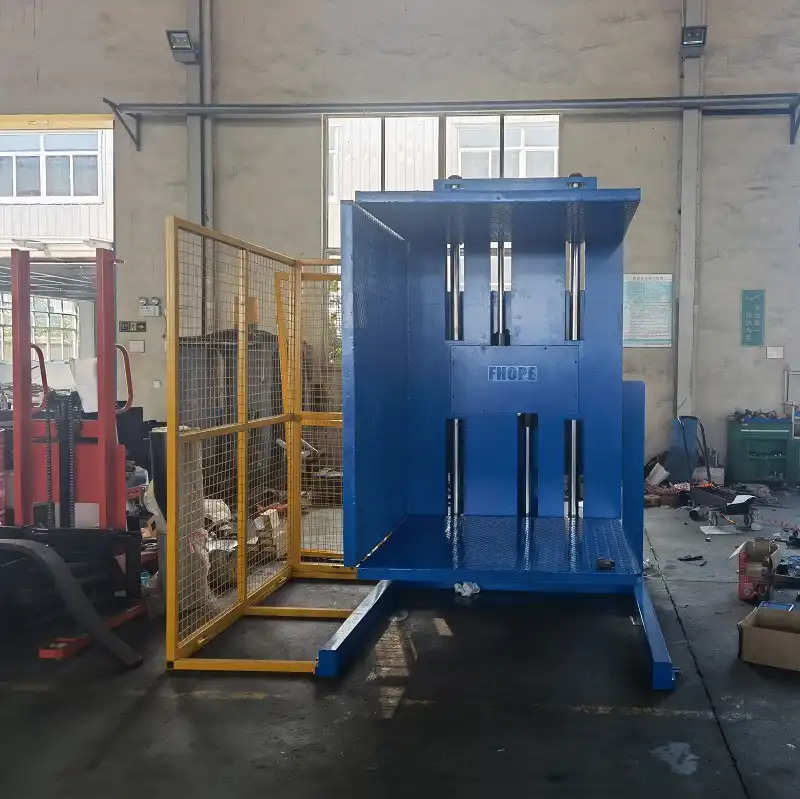
When you are managing a busy production line, every minute of downtime and every damaged product costs you money. You need equipment that is reliable, efficient, and built to withstand demanding environments. As someone who has spent years perfecting packing machine solutions, I understand these challenges deeply. Let’s dive into how pallet flippers can be a game-changer for your operations, just as they have been for many of my clients who sought to grow their businesses.
1. Why are Pallet Flippers Essential for Food, Pharmaceutical, and Chemical Industries?
Are you facing constant pressure to meet strict hygiene standards, prevent cross-contamination, and ensure product safety while keeping your production line moving? These challenges are not unique to you. Many factory managers I have worked with in the food, pharmaceutical, and chemical sectors struggle daily with these issues. The risks of manual handling in these sensitive environments are too high, leading to potential contamination, product damage, and serious worker injuries.
Pallet flippers are essential in the food, pharmaceutical, and chemical industries because they provide a hygienic, safe, and efficient method for handling palletized goods, directly addressing critical industry demands for contamination control, worker safety, and operational continuity. They allow for the quick transfer of products from unsanitary wooden pallets to clean plastic or stainless-steel pallets, isolate incoming materials, and facilitate damaged pallet replacement, all without product disturbance.
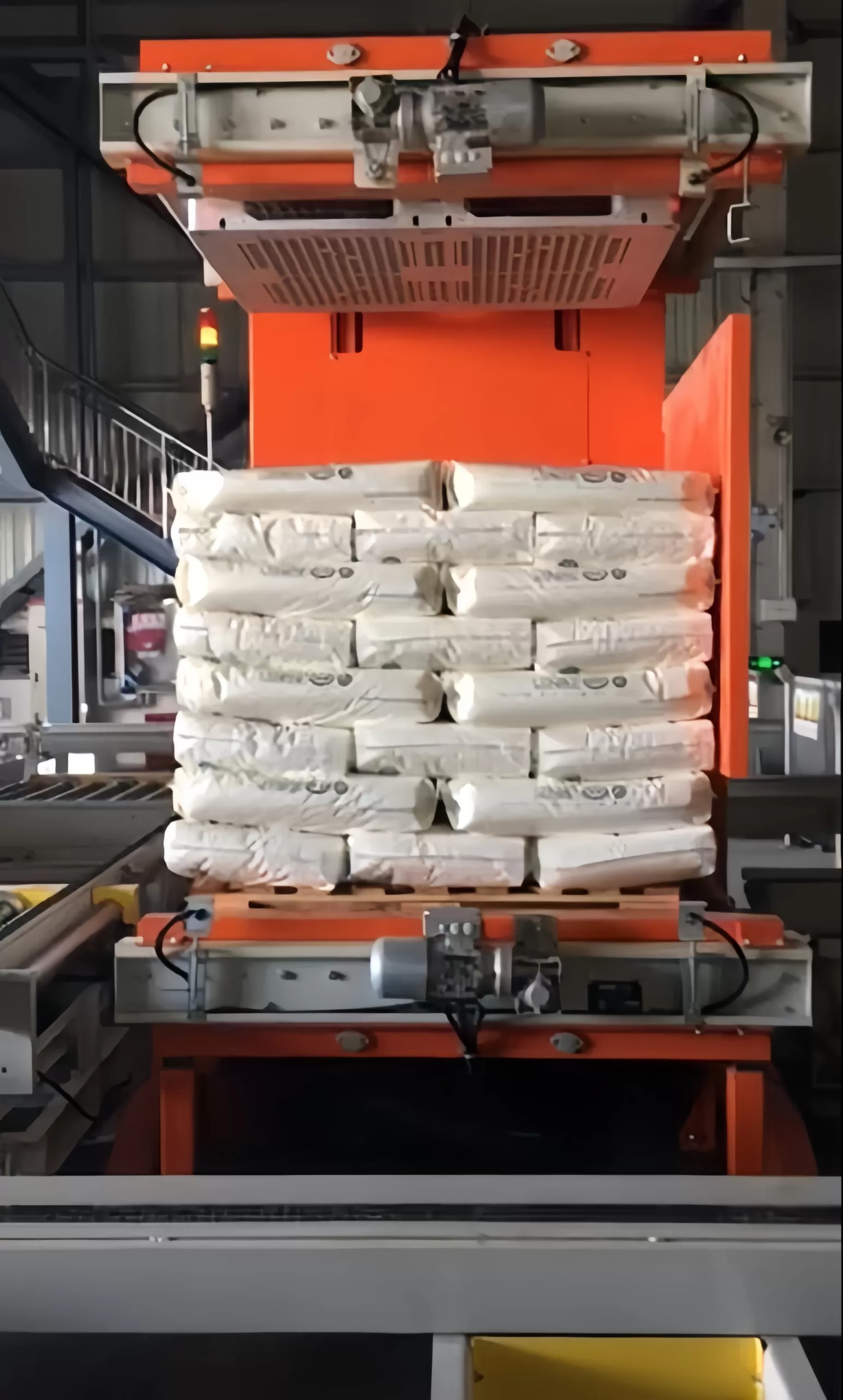
From my experience, seeing clients manage valuable goods, whether it is sensitive pharmaceuticals or bulk chemicals, the need for robust and reliable material handling is non-negotiable. The cost of a recall or a workplace injury can be devastating. Pallet flippers solve these core problems by automating what used to be a risky and labor-intensive process. They help ensure that your products remain safe, your workers stay healthy, and your operations run smoothly, meeting the highest industry standards. (essential pallet handling, hygienic transfer, safety solutions)
Key Drivers for Pallet Flipper Adoption in Sensitive Industries
When I first started in the packing machine industry, I saw many factories struggling with basic material handling. They were losing money and putting people at risk. Today, the stakes are even higher, especially in sectors like food, pharma, and chemicals. These industries operate under strict regulatory frameworks and consumer expectations. A single lapse in hygiene or safety can have far-reaching consequences. Pallet flippers act as a critical piece of the puzzle to mitigate these risks.
-
Hygiene and Contamination Control:
- Problem: Incoming goods often arrive on wooden pallets that can harbor dust, splinters, pests, or contaminants from various external environments. These are unsuitable for cleanroom or food-grade production areas.
- Solution: Pallet flippers enable seamless transfer of products from these “dirty” pallets to sterile, easy-to-clean plastic, stainless steel, or aluminum pallets suitable for internal operations. This isolates external contaminants from sensitive production zones.
- Impact: Reduces the risk of bacterial growth, cross-contamination, and adherence to HACCP, GMP, and other hygiene standards. ✅
- Example: A pharmaceutical company needs to transfer raw materials from standard shipping pallets to cleanroom-compatible pallets before entering their controlled processing areas. A pallet flipper performs this swap quickly and without exposing the product. 💊
-
Worker Safety and Ergonomics:
- Problem: Manually moving heavy loads, inverting products, or changing pallets is physically demanding and prone to accidents. Workers face risks of back injuries, crush injuries, and strains, leading to high insurance costs and employee turnover.
- Solution: Pallet flippers automate these tasks, eliminating the need for manual lifting, tilting, or rotating of heavy items. Operators can manage the process from a safe distance.
- Impact: Significantly reduces workplace injuries, improves ergonomic conditions, and creates a safer working environment. 👷♀️
- Example: In a chemical plant, employees used to manually reposition heavy drums of chemicals. This was a high-risk activity. With a pallet flipper, the drums are securely held and inverted mechanically, preventing injuries. 🧪
-
Product Integrity and Damage Prevention:
- Problem: Manual handling or crude methods of pallet transfer can cause damage to sensitive products, especially those packaged in delicate containers or those with specific stacking requirements (e.g., fragile glass bottles, powdered chemicals).
- Solution: Pallet flippers secure the load during the entire transfer or inversion process, ensuring minimal movement and careful handling.
- Impact: Reduces product spoilage, minimizes waste, and lowers customer complaints related to damaged goods, protecting profit margins. 📉
- Example: A food manufacturer transfers delicate baked goods. Manually shifting these could lead to crushed packaging. The pallet flipper gently secures and transfers the entire load, preserving product quality. 🍞
-
Operational Efficiency and Throughput:
- Problem: Manual pallet changes are slow, labor-intensive, and create bottlenecks at critical points in the supply chain, impacting overall production speed and delivery times.
- Solution: Pallet flippers perform tasks much faster than manual methods, often in just minutes. They free up workers for higher-value tasks and maintain a smooth flow of materials.
- Impact: Increases throughput, optimizes labor utilization, and improves overall operational efficiency. 🚀
- Example: My client, Jose, managing a metal processing plant, faced severe bottlenecks at the end of the line due to slow manual coil packing. Implementing automated solutions, including pallet handling, significantly boosted his delivery speeds. This is a common story across industries. (hygienic pallet transfer, safer material handling, reduced product damage)
2. What Specific Applications Do Pallet Flippers Have in Food, Pharmaceutical, and Chemical Sectors?
Are you wondering how these machines fit into your specific production line? It is one thing to know a machine’s general benefits, and another to see how it solves your unique operational headaches. When I advise my clients, I always focus on their specific applications and challenges. For instance, Jose needed solutions for heavy steel coils, but the principles of efficient and safe handling apply across many industries, including yours.
Pallet flippers offer a wide range of specific applications across the food, pharmaceutical, and chemical industries, including transferring incoming raw materials from wooden shipping pallets to hygienic internal pallets, inverting pallet loads to access bottom layers or correct product orientation, swapping damaged pallets for new ones, and facilitating cold chain logistics by transferring products to freezer-compatible pallets. Their versatility makes them invaluable for maintaining product quality, regulatory compliance, and operational flow in these diverse sectors.
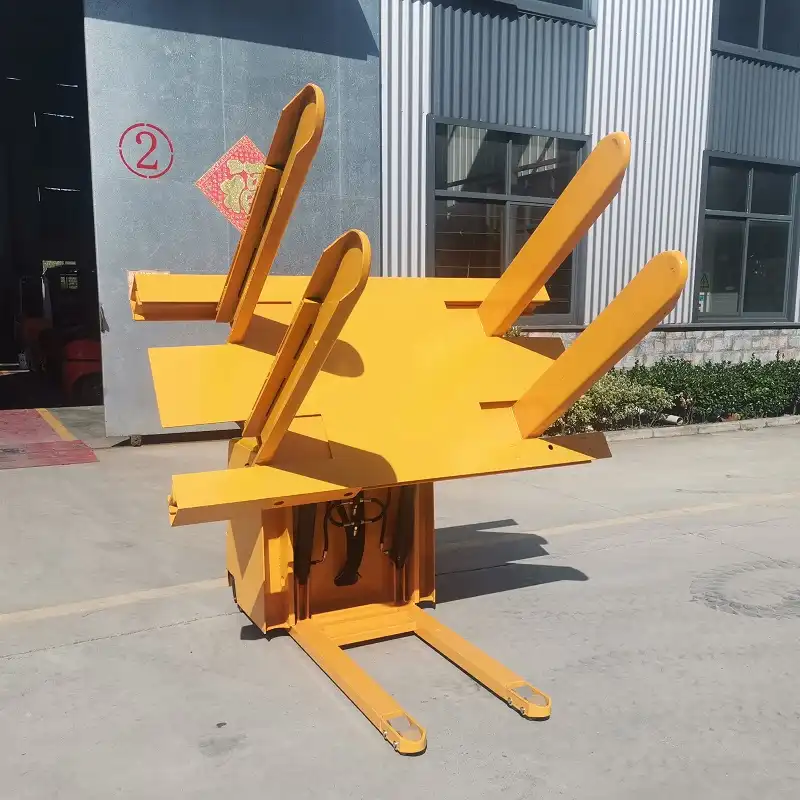
From my deep experience in factory automation, I have seen pallet flippers transform countless operations. They are not just about moving pallets; they are about solving complex logistical problems that impact everything from product safety to profitability. Understanding these specific applications can help you identify where a pallet flipper could provide the most value in your facility. (specific pallet flipper uses, industry-specific material handling, product reorientation solutions)
Diverse Use Cases Across Critical Industries
The versatility of pallet flippers truly shines when you look at the breadth of their applications. It is about more than just swapping pallets; it is about creating a more streamlined, safer, and compliant process for your entire material flow. Let me break down some common scenarios I have encountered.
-
Food Industry Applications:
- Incoming Goods Pallet Exchange: Food processors frequently receive ingredients (e.g., flour sacks, fruit crates, bulk sugars) on wooden pallets from external suppliers. These pallets are often prohibited in production areas due to hygiene concerns. Pallet flippers quickly transfer these goods to clean, washable plastic or metal pallets.
- Cold Chain Logistics: Products needing cold storage often arrive on standard pallets. To transfer them into freezers or chillers that require specialized freezer-grade pallets, a pallet flipper ensures a rapid, uninterrupted changeover, maintaining temperature integrity. ❄️
- Damaged Pallet Replacement: During internal transport, pallets can break or splinter. A pallet flipper allows for the replacement of a damaged pallet without disturbing the stacked food products, preventing potential contamination or spillage.
- Product Inversion for Curing/Drying: Some food products, such as cheeses or certain baked goods, require inversion during processing for uniform curing or drying. Pallet flippers can gently turn entire pallet loads. 🧀
- Packaging Line Integration: At the end of a packaging line, a pallet flipper can reorient products or shift them to shipping-compliant pallets, ensuring they meet retailer specifications. (food-grade pallet changing, cold storage pallet transfer, hygiene control solutions)
-
Pharmaceutical Industry Applications:
- Cleanroom Entry: A core application is the transfer of raw materials or components from external logistics pallets to validated, sterile cleanroom pallets (e.g., stainless steel or specific plastic types) before entering controlled manufacturing environments. This is crucial for GMP compliance. ✨
- Batch Isolation and Quarantine: To maintain strict batch control and quarantine procedures, pallet flippers can be used to separate and transfer specific batches onto designated pallets for quality control or further processing.
- Damaged Pallet Remediation: Pharmaceuticals are high-value and sensitive. If a pallet holding finished drug products or active pharmaceutical ingredients (APIs) becomes damaged, a pallet flipper enables safe transfer to a new pallet, preventing contamination or product loss.
- Product Inspection and Sampling: For certain quality control checks, access to the bottom layers of a palletized load may be necessary. A pallet flipper can invert the load, allowing inspection teams to retrieve samples safely. 🔬
- Cold Chain Management: Similar to the food industry, maintaining the cold chain for temperature-sensitive drugs requires efficient transfer to specialized freezer pallets without compromising product integrity. (pharmaceutical cleanroom pallet, GMP compliant pallet flipper, sterile material transfer)
-
Chemical Industry Applications:
- Hazardous Material Handling: When dealing with drums of chemicals or other hazardous substances, minimizing manual interaction is paramount for safety. Pallet flippers can securely invert or transfer these loads, reducing worker exposure. ⚠️
- Container Inversion: Certain chemical products, especially liquids or powders, may require inversion for mixing, draining, or to prevent settling. Pallet flippers handle these heavy containers with stability.
- Incoming Bulk Material Transfer: Bulk chemicals often arrive on heavy-duty, industrial pallets. Pallet flippers can swap these for specialized internal pallets that are resistant to corrosion or required for specific storage systems.
- Spill Prevention and Containment: In the event of a minor leak or spill on a pallet, a pallet flipper can carefully transfer the undamaged upper layers to a new pallet, helping to contain the spill and salvage product. 🧼
- Warehouse Logistics: Optimizing storage space by stacking differently sized or oriented containers often requires pallet inversion or load reorientation. Pallet flippers facilitate these changes efficiently. (chemical drum inverter, hazardous material handling, industrial pallet changers)
3. How Do Pallet Flippers Improve Safety and Efficiency for These Industries?
Are you constantly battling high labor costs, worker injury claims, and slow production lines? I hear this from managers like Jose all the time. He emphasized that any downtime on his production line means huge losses. It’s not just about compliance; it’s about your bottom line and the well-being of your team. Relying on manual processes for heavy or sensitive goods is a recipe for disaster in both areas.
Pallet flippers significantly improve safety and efficiency in food, pharmaceutical, and chemical industries by eliminating hazardous manual handling, thereby reducing workplace injuries and associated costs. They automate the labor-intensive tasks of pallet transfer and inversion, which speeds up material flow, minimizes product damage during handling, and frees up human resources for more value-added activities. This dual benefit of enhanced safety and increased operational output directly contributes to a stronger ROI and a more robust supply chain.
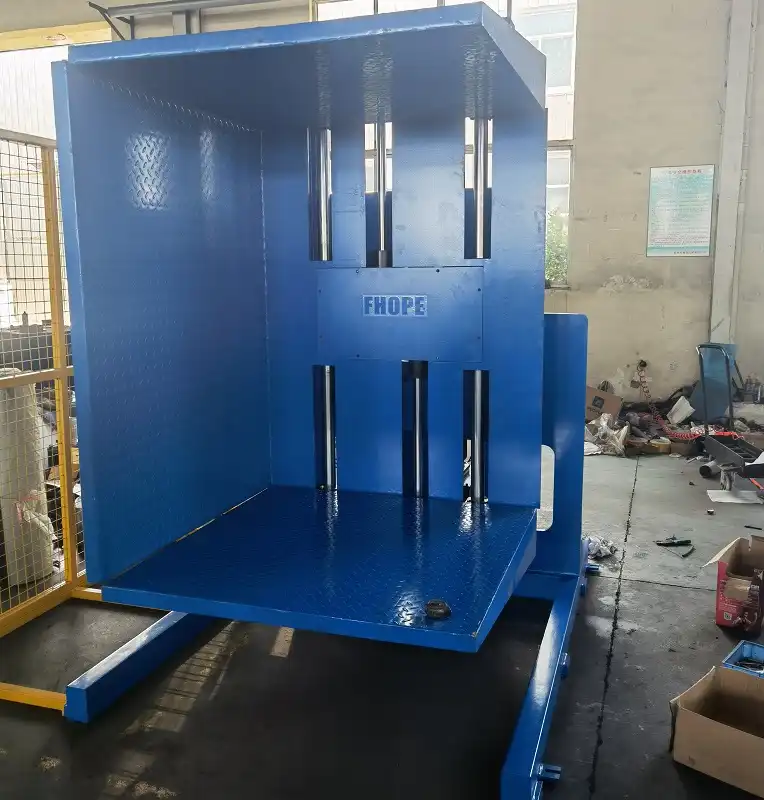
Through my years in the packing machine industry, I have seen first-hand how the right equipment can transform a factory. It is not just a machine; it is a strategic investment in your people and your processes. Pallet flippers are a prime example of technology that addresses multiple pain points simultaneously, leading to tangible improvements in both safety records and production metrics. (safety benefits of pallet changers, pallet flipper efficiency gains, ROI material handling)
Tangible Improvements in Operations
When you are looking to invest in new equipment, you want clear benefits. You need to know it will make a difference. Pallet flippers deliver across the board, from reducing the risk of injuries to speeding up your processes. Here is how they achieve this.
-
Enhanced Workplace Safety:
- Eliminates Manual Lifting: The most significant safety benefit. Pallet flippers remove the need for workers to physically lift, tilt, or rotate heavy palletized loads, which is a primary cause of musculoskeletal injuries (MSIs) like back strains, sprains, and hernias.
- Reduces Crush Injuries: By securely clamping and handling loads mechanically, the risk of loads falling or crushing workers is virtually eliminated compared to manual or forklift-dependent inversion methods.
- Minimizes Forklift Traffic: In some scenarios, pallet flippers reduce the need for complex forklift maneuvers for load reorientation, which can lower the chances of forklift-related accidents in congested areas.
- Safer Environment for Hazardous Materials: For chemical industries, minimizing direct contact with potentially hazardous materials during handling is critical. Pallet flippers allow for remote operation, keeping workers away from fumes or spills. 💨
- Compliance with Safety Regulations: Investing in automated solutions demonstrates a commitment to worker safety, helping meet OSHA guidelines and other national safety standards. (workplace safety solutions, reducing manual handling, industrial accident prevention)
-
Boosted Operational Efficiency:
- Increased Throughput Speed: Manual pallet changes or inversions can take significant time, creating bottlenecks. Pallet flippers perform these tasks in minutes, drastically increasing the speed of material flow.
- Reduced Labor Costs: By automating these tasks, fewer workers are needed for strenuous, repetitive jobs. This frees up your existing workforce to perform more skilled or value-added tasks elsewhere in the factory. 💰
- Consistent Process Flow: Automated systems provide a predictable and consistent process, reducing variations caused by manual operations and leading to more reliable production schedules.
- Minimized Product Damage: Gentle and secure clamping mechanisms prevent products from shifting, falling, or getting crushed during transfer or inversion, leading to less waste and fewer customer complaints. This is especially vital for fragile or high-value goods.
- Optimized Space Utilization: Some pallet flippers can help reconfigure pallet loads to maximize storage density or fit into specific racking systems, indirectly improving warehouse efficiency.
- Quicker Pallet Changeovers: Whether it is swapping a damaged pallet or transitioning to a hygienic one, the speed of a pallet flipper ensures minimal disruption to the production line, maintaining continuous operation. ⏱️
- Improved Inventory Management: A smoother flow of goods due to efficient handling can lead to more accurate inventory tracking and reduced lead times. (automating material flow, labor cost reduction, efficient pallet handling)
4. What Types of Pallet Flippers Are Best Suited for Different Industry Needs?
With so many options out there, choosing the right pallet flipper can feel overwhelming. I know this uncertainty well; many of my clients, like Jose, have faced “supplier trust crises” due to bad experiences. They need a partner who truly understands their problems and can recommend the right solution, not just sell a machine. My goal at FHOPEPACK is to share knowledge and help you make informed decisions, ensuring your investment truly solves your problems and drives growth.
The best type of pallet flipper for your specific needs depends on several factors, including the load weight and dimensions, required inversion degree (e.g., 90, 180 degrees), operational speed, space availability, and the hygienic demands of your industry. Common types include stationary 180-degree inverters for high-volume, fixed-location pallet changes, 90-degree tippers for specific load orientations, mobile pallet changers for flexibility, and specialized freezer pallet changers for cold chain logistics. Each type offers distinct advantages tailored to different production environments and material handling requirements.
At FHOPEPACK, we emphasize understanding your unique operational context before recommending any solution. My experience in building and running a packing machine factory has taught me that a one-size-fits-all approach simply does not work. Let’s explore the various types of pallet flippers available and consider which might be the best fit for your food, pharmaceutical, or chemical facility. (selecting pallet flippers, types of pallet inverters, choosing the right pallet changer)
Matching Pallet Flippers to Your Operational Demands
Choosing the correct pallet flipper is a strategic decision that impacts safety, efficiency, and long-term costs. It is not just about buying a machine; it is about finding the right tool for your specific job. Here is a breakdown of common types and their ideal applications.
-
1. Stationary Pallet Inverters (180-degree):
- Description: These are robust machines fixed to the floor, designed to completely invert a palletized load (180 degrees). They typically feature strong clamping plates that secure the load before rotation.
- Best Suited For:
- High-Volume Operations: Ideal for busy production lines needing frequent, consistent pallet changes.
- Hygienic Transfers: Perfect for swapping dirty wooden pallets for clean plastic/metal pallets at entry points to cleanrooms or food processing areas.
- Load Reorientation: For products that need to be fully inverted for processing (e.g., curing, draining) or to access the bottom layers.
- Industries: Food, Pharmaceutical (especially cleanroom entry), Chemical (for bulk container inversion).
- Considerations: Requires dedicated floor space, less flexible than mobile units.
- Example: A large pharmaceutical manufacturer uses a stationary 180-degree inverter at the entrance to their sterile packaging department to transfer incoming components from external shipping pallets to internal sanitized pallets. 🔄
-
2. Pallet Tippers (90-degree):
- Description: These machines tilt the pallet load by 90 degrees, allowing access to the top or side of the load or for specific reorientation. They do not fully invert the load.
- Best Suited For:
- Accessing Load Sides: Useful for applications where products need to be loaded or unloaded from the side, or for inspection.
- Drum/Roll Handling: Ideal for tilting drums or rolls for easier dispensing or positioning.
- Limited Inversion Needs: When a full 180-degree inversion is not required, but some tilting is beneficial.
- Industries: Chemical (for drum emptying), Food (for specific ingredient dispensing).
- Considerations: Less versatile for full pallet changes, but effective for specific angles.
- Example: A chemical plant uses a 90-degree pallet tipper to easily position large drums of liquid chemicals for pump insertion and dispensing. 📐
-
3. Mobile Pallet Changers:
- Description: These units are designed for portability, often with wheels or forklift pockets, allowing them to be moved to different locations within a facility.
- Best Suited For:
- Flexible Operations: Ideal for facilities with multiple pallet change points or those with varying needs that do not justify a fixed unit.
- Lower Volume Needs: Suitable for operations where pallet changes are less frequent but still require automation for safety and efficiency.
- Space Constraints: Can be moved out of the way when not in use.
- Industries: Smaller pharmaceutical plants, food distribution centers, chemical storage areas.
- Considerations: Generally slower than stationary units, requires manual positioning.
- Example: A medium-sized food warehouse uses a mobile pallet changer to replace damaged pallets at different loading docks as needed, preventing product spills across the facility. 🚚
-
4. Freezer Pallet Changers:
- Description: Specialized pallet changers (often 180-degree stationary units) built with materials and components suitable for low-temperature environments, ensuring reliable operation in freezers or cold rooms.
- Best Suited For:
- Cold Chain Logistics: Essential for food and pharmaceutical companies dealing with frozen or refrigerated products that need to be moved to and from freezer-grade pallets without thawing.
- Maintaining Product Temperature: Designed to perform transfers quickly to minimize temperature fluctuations.
- Industries: Food processing (frozen foods), Pharmaceutical (temperature-sensitive drugs).
- Considerations: Higher initial cost due to specialized construction materials.
- Example: A pharmaceutical company handling vaccines uses a dedicated freezer pallet changer to transfer incoming vaccine boxes from standard shipping pallets to cold-room specific pallets, maintaining the critical cold chain. 🥶
-
5. Inline Pallet Changers (Automated Systems):
- Description: Integrated into automated conveyor lines, these systems often use complex robotics or synchronized movements to automatically swap pallets without human intervention.
- Best Suited For:
- Fully Automated Production: High-throughput facilities aiming for minimal human contact and maximum automation.
- Seamless Integration: When pallet changes need to be a continuous, uninterrupted part of an automated line.
- Industries: Large-scale food processing, high-volume pharmaceutical manufacturing, automated chemical plants.
- Considerations: Highest initial investment, complex integration, requires specialized engineering.
- Example: A large snack food manufacturer has an inline pallet changer at the end of their packaging line that automatically swaps full product pallets to shipping pallets, ready for automated warehousing. 🤖








