
Orbital Wrapping Machine for Thailand: Which Features Should Engineers Check?
Many factories in Thailand, especially in the metal and heavy industries, struggle with outdated packing processes. Manual coil and wire wrapping is slow, unsafe, and costs a lot of money. You might see workers straining, products getting damaged, and production lines slowing down. This old way of packing not only hurts your bottom line but also puts your valuable team at risk. Downtime because of slow packing or worker injuries can quickly eat into your profits and delay your deliveries. I have seen this happen too many times in my own journey. There is a better way. An orbital wrapping machine can change how you operate. But choosing the right one needs careful thought. As an engineer or factory manager, you need to know exactly what to look for.
Engineers in Thailand should check several key features when selecting an orbital wrapping machine. Focus on the machine’s capacity, wrapping speed, and film tension control for efficiency. Also, consider its structural durability, safety features, and ease of integration into existing production lines. Crucially, look for a supplier with strong after-sales support and parts availability to ensure long-term reliability and minimal downtime.
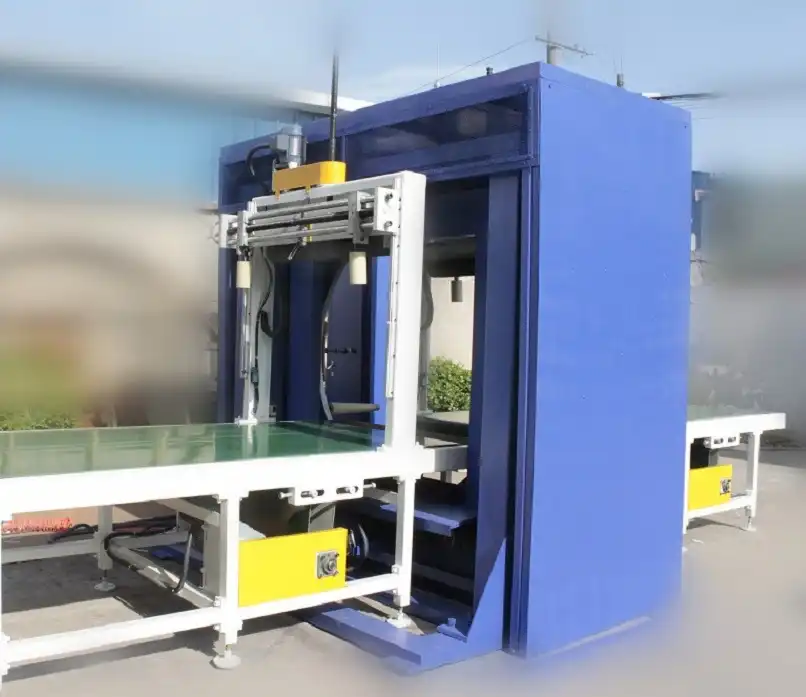
Choosing a packing machine is a big investment. You want a solution that works well and lasts. It also needs to improve your operations. This article will help you understand the specific features that truly matter. It will ensure you pick the best orbital wrapping machine for your Thai factory.
What Exactly Makes an Orbital Wrapping Machine So Effective?
Many factory managers and engineers know they need to improve their packing. But they might not fully understand how an orbital wrapping machine actually works. They might not know why it is different from other packing methods. This lack of clear understanding can make it hard to choose the right machine. Without this knowledge, you might invest in a machine that does not fit your needs. Or you might miss out on benefits that could truly change your production. I have seen companies buy the wrong equipment. This leads to more frustration, not less. Let me explain the core of an orbital wrapper. This will help you see its real power. It will also help you understand its place in modern packing.
An orbital wrapping machine works by rotating a roll of stretch film around a product as the product passes through a central ring. This creates a secure, all-around wrap, protecting items like steel coils, wire bundles, or long extrusions. Its effectiveness comes from consistent, high-speed wrapping that manual methods cannot match. It offers superior protection against dust, moisture, and damage during transport or storage.

An orbital wrapping machine is a smart piece of equipment. It solves many packing problems. I remember when I first saw how they revolutionized packing for heavy items. Before, workers would struggle. They would manually wrap large coils or bundles. This was slow. It was also very dangerous. The orbital wrapper changed everything. It brings the film to the product. The machine uses a large ring. This ring spins very fast. It carries the stretch film around the item. The item moves straight through the ring. This action creates a tight, even wrap. It covers all sides of the product. This method is especially good for long or circular items. Think about steel coils, aluminum extrusions, or pipes. These items are hard to wrap with traditional methods.
When you look at different types of wrappers, you see a big difference. Pallet wrappers wrap items that sit on a pallet. They are good for many box-shaped goods. Shrink wrappers use heat to tighten film around products. Orbital wrappers are unique. They are for products that can pass through a central opening. This means they can handle items of almost any length. Their design means the film is applied under tension. This tension keeps the product compact. It also protects it from external elements. Moisture, dust, and handling damage become less of a problem.
For example, I once helped a client in Thailand. They made large steel coils. Their old method meant two workers took over an hour to manually wrap one coil. The wrap was often loose. It did not protect the coil edges well. After installing an FHOPEPACK orbital wrapper, the process changed. One machine operator could wrap a coil in minutes. The wrap was perfect. This reduced their product damage. It also made their workplace much safer. This is the real impact. It is about more than just speed. It is about quality and safety.
Engineers should consider the product dimensions. They also need to think about the required wrap speed. This will tell you the right size and power of the machine you need. An orbital wrapper offers a specific kind of protection. It gives full surface coverage. This is vital for valuable industrial goods. It guards against rust and scratches. These are common issues during shipping. This machine is not just an expense. It is an investment in product integrity. It is also an investment in operational efficiency.
How Can an Orbital Wrapper Significantly Improve Safety and Efficiency?
Many factories in heavy industries still face big safety risks. They also struggle with low efficiency in their packing areas. Manual handling of heavy items like steel coils or wire bundles is extremely dangerous. It is also very slow. This directly leads to worker injuries and production bottlenecks. These problems are not just about paperwork or minor delays. They are about people getting hurt. They are also about losing money. High injury rates mean higher insurance costs. They mean lost workdays. They also mean a drop in team morale. Slow packing means delayed orders and unhappy customers. An orbital wrapping machine directly addresses these critical issues. It provides a clear path to a safer workplace and much higher output. Let me show you how.
An orbital wrapping machine significantly improves safety by automating the handling and wrapping of heavy, bulky items. This removes the need for manual lifting and securing, greatly reducing the risk of musculoskeletal injuries and accidents. It boosts efficiency through faster, consistent wrapping cycles, integrating seamlessly into production lines. This reduces labor costs and increases throughput, freeing up workers for other tasks.

Improving safety and efficiency is a top goal for any factory manager. I know this from my own experience building a packing machine factory. Safety is not just a nice-to-have. It is a must-have. When I started my first job, I saw firsthand the dangers of manual packing. Workers would strain to lift and turn heavy items. They often got hurt. This led to serious injuries and high medical costs. It also meant a lot of time lost from work. An orbital wrapping machine changes this picture completely.
First, let’s talk about safety. The machine takes over the dangerous parts of packing. It lifts the item. It moves the item. It wraps the item. Workers do not need to manually handle heavy coils. They do not need to wrestle with stretch film. This removes many common hazards. Imagine a large steel coil. It might weigh thousands of kilograms. Moving and wrapping it manually is incredibly risky. With an orbital wrapper, the product moves into the machine. The machine does the work. Workers can stand at a safe distance. They can monitor the process. This shift means fewer accidents. It means lower workers’ compensation claims. It also creates a better, safer working environment. When your team feels safe, they work better. They are also more likely to stay with your company. This reduces staff turnover.
Now, let’s look at efficiency. Manual packing is slow. It is also inconsistent. The quality of the wrap depends on the worker. An orbital wrapper brings consistency and speed. It can wrap a product in minutes. A worker might take an hour or more. This speed means higher throughput. Your products move faster from the production line to dispatch. This reduces bottlenecks at the end of the line. It means you can process more orders each day. This directly leads to higher output and more revenue. My clients, like Michael Chen in Mexico, often tell me how important this is. They need to meet tight deadlines. They need to keep their production flowing.
Consider a factory producing steel wire bundles. Before, they had three workers dedicated to packing. Each bundle took fifteen minutes to wrap manually. With an automated orbital wrapper, one operator can manage the machine. Each bundle gets wrapped in under two minutes. This freed up two workers for other important tasks. This is a huge gain in labor efficiency. It is also a big saving in labor costs over time. The machine provides a consistent, tight wrap. This reduces product damage during transit. Fewer damaged products mean fewer customer complaints. It means less money lost on returns or reworks. This dual benefit—better safety and higher efficiency—makes the orbital wrapper a vital investment. It quickly pays for itself through reduced costs and increased output.
Which Key Technical Specifications Should Engineers Prioritize in Thailand?
When an engineer or factory manager in Thailand starts looking for an orbital wrapping machine, they face many technical specifications. It is easy to get lost in the details. Without knowing which specs truly matter, you might choose a machine that is not powerful enough. Or you might choose one that is too complex for your actual needs. A wrong choice based on unclear specifications can lead to costly mistakes. You might end up with a machine that cannot handle your product size. Or one that breaks down often because it is not built for your production volume. This can cause frustration and financial losses. I have seen clients make these errors before. Let me simplify the process. I will highlight the most important technical specifications. These are the ones engineers in Thailand should prioritize. They will ensure you get a machine that works perfectly for your factory.
Engineers in Thailand must prioritize an orbital wrapper’s maximum product dimensions and weight capacity to match their specific items. Crucial technical specifications include the wrapping speed (items per hour), film delivery system for consistent tension, and the machine’s power requirements. Also, evaluate the ring diameter, structural material for durability in harsh environments, and the control system’s user-friendliness and diagnostic capabilities.

Choosing the right machine is like choosing the right tool for a specific job. You need to know what you are trying to achieve. For an orbital wrapping machine, technical specifications are your roadmap. They tell you if the machine can do what you need. As an engineer, I always dive deep into these numbers. This is because small differences can mean big impacts on the factory floor.
First, Product Dimensions and Weight Capacity are paramount. This is the starting point.
- Maximum Length: Can the machine handle your longest products? Some machines have limits.
- Maximum Width/Height: For square or rectangular items, the ring opening must be large enough.
- Maximum Weight: Heavy coils or bundles need a machine built to withstand that load. My old factory used to make large diameter steel coils. We learned quickly that underestimating weight capacity leads to breakdowns.
Second, Wrapping Speed and Throughput directly affect your efficiency goals.
- Items per Hour: This metric tells you how fast the machine can process products. This is key to solving bottlenecks.
- Rotation Speed: How fast does the film carriage spin? Faster often means more wraps per minute.
- Conveyor Speed: How quickly does the product move through the machine? It needs to match your production line.
Third, Film System and Tension Control impact wrap quality and film usage.
- Pre-stretch Ratio: A high pre-stretch ratio means you use less film for the same wrap. This saves money.
- Film Width and Thickness: The machine must be compatible with the film you plan to use.
- Tension Control: Consistent tension ensures a tight, secure wrap every time. Poor tension control leads to loose wraps or broken film.
Fourth, Machine Durability and Construction Materials are critical, especially in Thailand’s industrial environments.
- Frame Material: Is it heavy-duty steel? Can it withstand vibrations and impacts?
- Corrosion Resistance: For environments with high humidity or chemicals, this is vital.
- Component Quality: Look at the brand of motors, sensors, and other parts. High-quality parts mean fewer failures. I always tell my clients to ask about the components. You want reliable parts.
Fifth, Control System and User Interface affect ease of use and maintenance.
- PLC Brand: A common PLC brand means easier troubleshooting and parts availability.
- Touchscreen Interface: Is it intuitive? Can operators easily adjust settings?
- Diagnostic Features: Can the machine tell you what is wrong when there is a problem? This saves a lot of time.
Finally, consider Power Requirements and Energy Efficiency.
- Voltage and Phase: Does it match your factory’s electrical supply?
- Motor Power: Does it have enough power for continuous operation?
- Energy Consumption: Look for energy-efficient models to reduce operating costs.
When I started FHOPEPACK, I made sure we built machines that met these high standards. I knew from my own factory experience that cutting corners on specs always costs more in the long run. Michael Chen, a factory manager, would agree. He needs machines that work day in and day out without issues. These detailed checks will help any engineer in Thailand make a truly informed decision.
Why is After-Sales Support and Supplier Partnership Crucial for Thai Factories?
Many factories in Thailand, like anywhere else, have faced bad experiences with equipment suppliers. They often get promised good service during the sale. But after the purchase, support disappears. This leaves them stranded when machines break down or need maintenance. A machine that is down means production stops. This means huge financial losses. It means delays in customer orders. It also means frustration for your team. You cannot afford to have expensive equipment sitting idle because you cannot get parts or technical help. Michael Chen, the factory manager, knows this pain all too well. Choosing a supplier who acts as a true partner, not just a seller, is vital. This means looking for robust after-sales support. It is as important as the machine itself. Let me explain why.
Robust after-sales support and a strong supplier partnership are crucial for Thai factories investing in orbital wrapping machines. This ensures quick access to spare parts, expert technical assistance, and routine maintenance services. A reliable partner minimizes costly downtime, extends machine lifespan, and provides ongoing training. It builds trust and ensures the investment delivers long-term value, directly addressing common supplier trust issues.

My journey in the packing machine industry taught me one big lesson. The relationship with your supplier does not end when the machine is delivered. In fact, that is just the beginning. I often tell my clients that a machine is only as good as the support behind it. When I ran my factory, I learned this the hard way. I once bought a critical machine from a supplier who offered a low price. But their after-sales service was almost non-existent. When the machine broke down, we waited weeks for a technician. We waited even longer for parts. That delay cost us thousands of dollars in lost production. It also cost us client trust. I made sure FHOPEPACK would never put our clients in that position.
For factories in Thailand, this is especially important. You operate in demanding environments. Machines work hard. They need proper care. They will sometimes need repairs. Here is why a strong partnership and excellent after-sales support are not optional:
1. Minimizing Downtime: Every minute your machine is not running, you are losing money. A good supplier offers quick response times. They have local or regional support teams. They can send technicians quickly. They also have a readily available supply of spare parts. This helps get your machine back online fast.
2. Expert Technical Assistance: You might face complex issues. Or you might need help optimizing your machine settings. A true partner has knowledgeable engineers. They can provide remote support. They can guide your team through troubleshooting. They can offer insights that help you get the most out of your investment.
3. Training and Skill Development: Your team needs to know how to operate and maintain the machine safely and efficiently. A good supplier provides comprehensive training. They also offer refresher courses. This empowers your employees. It reduces reliance on external technicians for minor issues.
4. Long-Term Machine Health: Regular maintenance is key to extending the life of your orbital wrapper. A proactive supplier offers maintenance contracts. They schedule routine checks. They replace worn parts before they cause major breakdowns. This planned approach saves you money in the long run. It prevents unexpected, costly repairs.
5. Building Trust and Reliability: Michael Chen, like many factory managers, has been burned by unreliable suppliers. He needs a partner he can trust. A supplier who stands by their product. A supplier who is there when you need them. This trust is built through consistent, high-quality support. It ensures you feel confident in your investment. It means you have peace of mind.
At FHOPEPACK, we believe in being that partner. We have seen firsthand how much difference it makes. We do not just sell machines. We help factories grow. We help them succeed. This commitment to partnership is crucial. It ensures your orbital wrapping machine is not just a purchase. It becomes a reliable asset that helps your business thrive for years.
My Insights: What I Learned About Choosing the Right Packing Machine?
I have seen many factory owners and engineers focus only on price or basic features when buying a packing machine. They often overlook critical aspects that impact long-term success. This narrow view can lead to poor choices. It can lead to expensive regrets later on. I made similar mistakes in my early days. I learned that the cheapest option is rarely the best. Sometimes, what looks good on paper does not perform well in real-world factory conditions. This kind of experience can be frustrating and costly. It can also hold your business back. Through years of working in packing machine factories and then building my own, I learned valuable lessons. I want to share my insights with you. These insights go beyond the spec sheet. They will help you make a truly smart investment.
My key insight is that choosing the right packing machine, especially an orbital wrapper, involves looking beyond the initial price and basic specifications. Focus on the total cost of ownership, including energy consumption, maintenance, and potential downtime. Prioritize the supplier’s commitment to long-term partnership, after-sales support, and their understanding of your unique operational challenges. A reliable machine from a trusted partner delivers true long-term value and avoids costly regrets.
When I started my journey as a packing machine engineer, I was focused on the technical aspects. I looked at speed, power, and capacity. These things are important, yes. But after working in a factory and then building my own successful packing machine company, I learned something deeper. The real value of a machine comes from its long-term performance and the support behind it. It is about understanding the entire ecosystem of your factory.
I remember one specific situation. Early in my career, we needed a new machine. I pushed for the one with the highest speed. It looked great on paper. The price was also attractive. But I did not dig deep into the quality of its components. I did not ask enough questions about the supplier’s after-sales record. What happened? The machine broke down frequently. It used proprietary parts that were hard to get. The local support was terrible. That “fast” and “cheap” machine ended up costing us much more in lost production and repair bills. It taught me a hard lesson.
Here are my top insights for engineers and factory managers like Michael Chen:
1. Look at Total Cost of Ownership (TCO), Not Just Purchase Price:
- Energy Consumption: A machine that uses less power saves you money every day.
- Maintenance Costs: How much do parts cost? How often do they need replacing?
- Film Usage: Efficient film stretching means you buy less film. This adds up.
- Downtime Cost: This is the biggest hidden cost. A reliable machine avoids this.
2. Understand Your Production Environment Fully:
- Current Bottlenecks: Where exactly are your current packing problems? An orbital wrapper needs to solve that specific problem.
- Future Needs: Will your production grow? Can the machine scale with you?
- Operator Skill Level: Is the machine easy for your current team to learn and use?
3. Supplier Relationship is Key:
- Visit Their Factory (if possible): See how they build their machines. Check their quality control.
- Talk to Their Other Clients: Get references. Ask about their real-world experience with support.
- Assess Their Technical Expertise: Do they truly understand your industry and your products? Can they offer solutions, not just sell a machine? This is where FHOPEPACK stands out. We started from the factory floor. We understand the challenges.
4. Focus on Robustness and Simplicity:
- Built for Durability: Heavy-duty construction matters. Thai factories often operate in tough conditions.
- Reliable Components: Look for standard, internationally recognized brands for motors, PLC, sensors. This makes parts replacement easier globally.
- User-Friendly Design: Complex machines are harder to troubleshoot and maintain. Simpler, well-designed systems are better.
I remember another time. A client was hesitant about a feature on one of our FHOPEPACK orbital wrappers. It was a specialized film cutting system. They thought it was an unnecessary extra cost. I explained how this system, though a small upfront investment, would save them hours of manual film handling each week. It would also reduce film waste. They decided to trust my advice. Months later, they told me it was one of the best decisions they made. It saved them time and money every single day.
My mission at FHOPEPACK is to share this kind of knowledge. It is to help you avoid the pitfalls I encountered. It is to help you make smart, informed decisions. Choosing an orbital wrapping machine for your factory in Thailand is not just about buying hardware. It is about investing in a solution that will make your operations safer, more efficient, and more profitable for many years to come.
Conclusion
Choosing the right orbital wrapping machine for your Thai factory means looking at specific features, prioritizing safety and efficiency, and finding a reliable supplier. This smart investment will improve your operations and boost your profits.








