
Online pallet changing system: why it is so important for the warehouse automation?
Do you often find your warehouse operations grinding to a halt because of pallet issues? Perhaps you are struggling with different pallet sizes for international shipments, or facing constant pressure to speed up delivery times. Many logistics managers, like Carlos in Spain, understand these pains. These challenges create bottlenecks, increase costs, and sometimes even lead to dangerous situations for your team.
An online pallet changing system is crucial for warehouse automation because it streamlines the process of switching pallets, improving efficiency, safety, and compliance across diverse logistical operations. It enables quick and automated transitions between different pallet types, like Euro, US, or plastic pallets, which is essential for international trade and optimized storage. This automation reduces manual labor, minimizes accident risks, and supports faster throughput to meet modern customer demands, making it a cornerstone for a truly optimized warehouse.
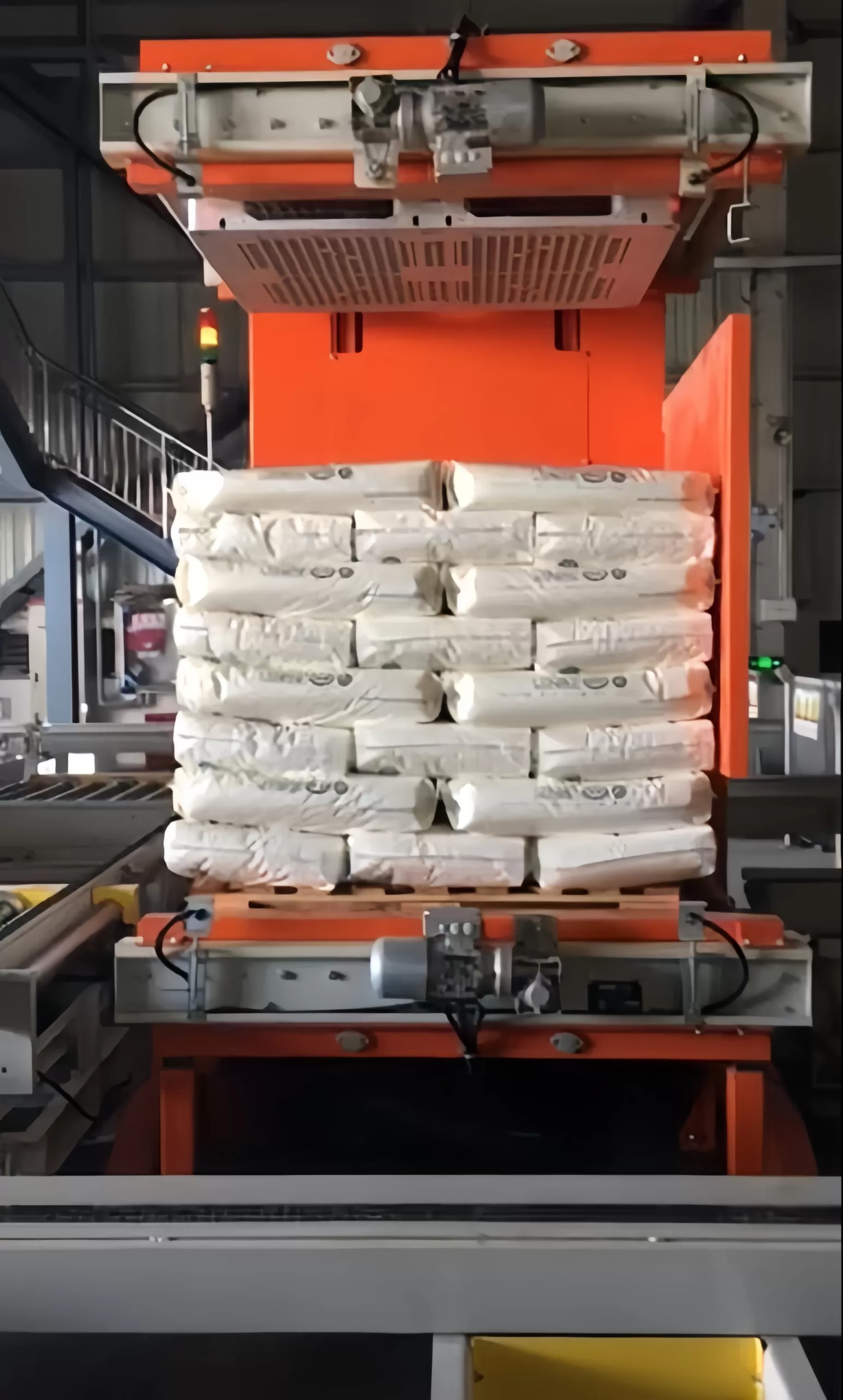
Understanding the core importance of these systems is just the beginning. I want to share insights that I have gathered over my years in the packing machine industry, from working on factory floors to building my own successful company. Let’s dive deeper into how this technology can transform your warehouse, addressing common problems and paving the way for a more automated future.
What is an online pallet changing system, and how does it work?
Are you confused by the term “online pallet changing system”? Does it sound overly complex or just another buzzword? Many people initially wonder what this technology actually entails and how it can fit into their daily operations. The truth is, it is a straightforward yet powerful solution designed to tackle some of the biggest headaches in warehouse logistics.
An online pallet changing system is an automated or semi-automated machine designed to transfer goods from one pallet type to another without unloading the products. It often works by clamping the load, then inverting or pushing it onto a new pallet, ensuring the product integrity remains intact. This system integrates directly into the material handling flow, making it “online” because it operates continuously as part of the production or distribution line, rather than as a separate, off-line process, significantly enhancing operational flow.
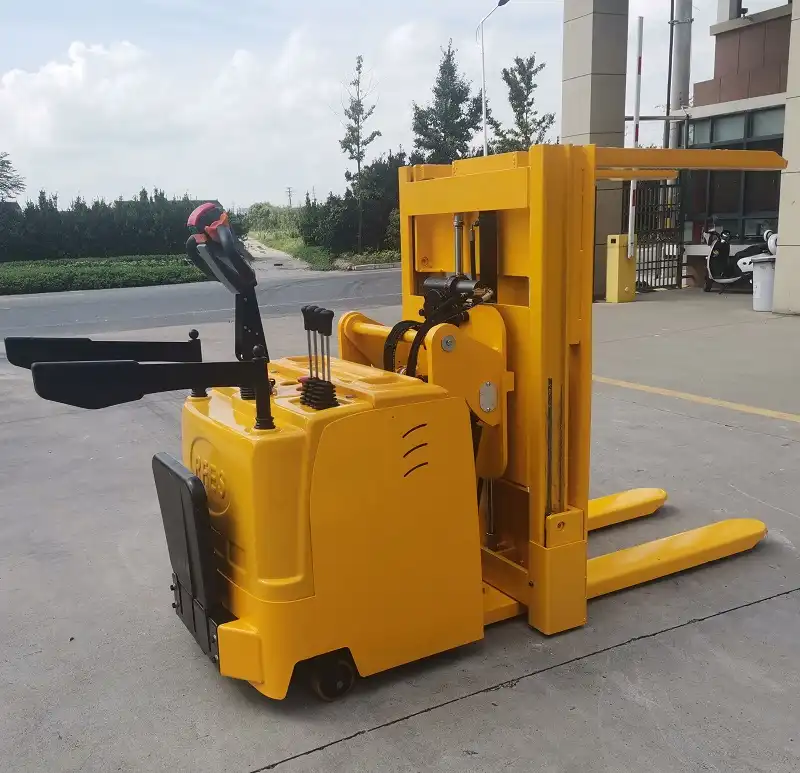
When I started in the packing machine industry, manual pallet handling was the norm. Today, technology offers far better solutions. An online pallet changing system is essentially a specialized piece of equipment that handles pallet swaps automatically. Imagine a typical warehouse, like the one Carlos manages. Thousands of pallets move daily, often needing to switch from, say, a wooden Euro pallet to a plastic hygiene pallet for food processing, or to a different dimension US pallet for export. Doing this by hand is slow, labor-intensive, and risky.
An online system, such as a pallet inverter or a pallet transfer machine, operates while the goods remain loaded. It can grab the load, rotate it, or slide it onto a new pallet. This means you do not need to individually unload boxes, clean them, and then reload them onto a new pallet. The system keeps the product secure throughout the process.
There are several types of these systems.
- 🔄 Pallet Inverters: These machines typically clamp the load and then rotate it, often by 90 or 180 degrees. This allows workers to remove the old pallet from the bottom and replace it with a new one. They are good for situations where the product orientation does not matter, or when you need to access the bottom layers of a stack.
- ⬆️ Pallet Transfer Systems (Side Pushers/Load Exchangers): These systems push the load horizontally from one pallet to another. They are ideal for delicate goods or when inversion is not possible. The load is supported from the sides, ensuring stability. My company, FHOPEPACK, specializes in designing robust versions of these systems to handle various load types effectively.
- ⚙️ Automatic Pallet Changers: These systems are often integrated into automated conveyor lines. They can detect different pallet types and automatically initiate the exchange process. This reduces human intervention significantly. They are perfect for high-volume operations where speed and continuous flow are critical.
These systems are called “online” because they function as an integral part of the main material flow within a warehouse or production line. They are not standalone units used for occasional tasks. Instead, they operate continuously, taking pallets from an incoming conveyor and placing them on an outgoing conveyor with new pallets. This continuous operation minimizes delays and keeps the entire logistics chain moving smoothly. They remove the need for manual forks or manual labor for changing pallets, greatly boosting efficiency and safety. (automated pallet exchange, integrated material flow, continuous operation)
Why are diverse pallet specifications a major challenge for modern warehouses?
Are you constantly juggling different pallet sizes and types? Do international shipments and varying customer requirements feel like a never-ending puzzle? Many warehouse managers, like Carlos, find this problem particularly vexing. Managing a mix of Euro, US, plastic, and wooden pallets can feel like trying to fit square pegs into round holes, leading to inefficiency and costly mistakes.
Diverse pallet specifications pose a major challenge for modern warehouses due to the global nature of supply chains and varying industry standards. Different countries and even specific customers often mandate particular pallet dimensions, materials, or hygiene standards, such as Euro pallets (1200x800mm), US pallets (48×40 inches), or specialized plastic pallets for food safety. This variety creates logistical complexity, requires segregated storage areas, complicates material handling equipment compatibility, and necessitates frequent, often manual, pallet exchanges, leading to operational bottlenecks and increased costs.

From my experience, I have seen how global trade has brought amazing opportunities, but also new complexities. Diverse pallet specifications are a prime example. Warehouses today are no longer dealing with a single, uniform pallet type. Consider the scenario in Carlos’s regional distribution center in Europe: he handles thousands of pallets daily for international food and beverage exports. This means dealing with European standard pallets for inbound goods, American standard pallets for exports to the US, and perhaps plastic pallets for internal transfers to maintain hygiene standards for food products.
This pallet diversity creates several significant operational hurdles:
- 🌍 International Trade Compliance: Each country or region often has specific requirements for pallets entering their borders. For instance, ISPM 15 regulations for wooden pallets prevent the spread of pests. Some countries might prefer plastic pallets for environmental reasons or ease of cleaning. Failing to comply can lead to rejected shipments, costly re-packaging, and customs delays, directly affecting customer satisfaction and contractual obligations.
- 📏 Storage Space Inefficiency: Different pallet sizes cannot always be stacked or stored uniformly. This often means wasted space in racks or floor storage, as bays might be optimized for one size but leave gaps for others. It also means potentially needing different types of racking systems or being less efficient with existing ones.
- 🚚 Material Handling Equipment Compatibility: Forklifts and other handling equipment are often designed for specific pallet dimensions. A forklift optimized for Euro pallets might struggle with wider US pallets, or vice versa. This can lead to slower operations, increased wear and tear on equipment, or even the need for multiple types of forkllifts, increasing capital expenditure.
- 🔄 Frequent Pallet Swaps: The most direct challenge is the constant need to switch goods from one pallet type to another. An incoming shipment on a wooden pallet might need to move to a plastic pallet for internal hygiene, then to a US-spec wooden pallet for export. This manual process is incredibly time-consuming, requires significant labor, and is prone to human error. It also introduces the risk of product damage during transfer. My team at FHOPEPACK has seen firsthand how these manual swaps can become the biggest bottleneck in an otherwise efficient warehouse, directly impacting throughput and delivery schedules. (global logistics hurdles, varied pallet standards, operational bottlenecks)
How do traditional manual pallet changing methods impact warehouse efficiency and safety?
Are your warehouse workers still manually handling heavy loads to change pallets? Does this practice feel outdated, slow, and even dangerous? The reality is, many warehouses continue to rely on manual pallet changing, unaware of the profound negative impact it has on both operational efficiency and worker safety. This traditional approach creates more problems than it solves in today’s fast-paced environment.
Traditional manual pallet changing methods severely impact warehouse efficiency by being slow, labor-intensive, and prone to error, leading to significant bottlenecks in the material flow. From a safety perspective, these methods expose workers to high risks of musculoskeletal injuries from heavy lifting, crushing hazards from unstable loads, and accidents involving forklifts during complex maneuvers. These inefficiencies and safety concerns result in increased operational costs, higher insurance premiums, potential legal liabilities, and decreased worker morale, making manual pallet changes a major detriment to a modern, productive warehouse.

Before automated systems became more accessible, manual pallet changing was the only option. I remember working in factories where workers would use crowbars, tilt loads with forklifts, or even simply manually unload and reload every single item. This approach comes with a steep price in both productivity and human well-being. Carlos’s concerns about labor shortages and safety risks are very real and reflect a widespread problem.
Let’s break down the impact:
- ⏱️ Reduced Efficiency and Throughput: Manual pallet changing is inherently slow. Each pallet swap requires multiple steps: staging the load, often partially or fully unloading it, removing the old pallet, positioning the new pallet, and then reloading or repositioning the goods. This entire process can take many minutes per pallet. In a high-volume warehouse handling thousands of pallets daily, these minutes quickly add up to hours of lost productivity. This directly impacts shipment deadlines, especially with increasing customer demands for faster delivery, as seen in the e-commerce and retail sectors.
- 💰 Increased Labor Costs: Manual handling requires multiple workers, sometimes even a team, to safely execute a pallet change. As labor costs rise and skilled warehouse labor becomes harder to find – a challenge Carlos faces – relying on human hands for this arduous task becomes unsustainable. The time spent on pallet changes could be better utilized on value-added activities.
- 🤕 Significant Safety Risks and Accidents: This is perhaps the most critical impact. Manually tilting heavy loads or using makeshift methods to swap pallets creates extreme hazards.
- Musculoskeletal Injuries: Repetitive lifting, bending, and twisting can lead to back injuries, strains, and sprains for workers.
- Crushing Hazards: Unstable loads can topple during manual transfer, causing severe injury or even fatalities to workers nearby.
- Equipment Accidents: Using forklifts in unconventional ways to tilt or balance loads increases the risk of tipping accidents, collisions, or product damage.
- Carlos mentioned several accidents already. These incidents lead to lost workdays, rising insurance premiums, workers’ compensation claims, and potential legal action. My own experience has shown me that prioritizing safety not only protects your team but also significantly improves overall operational stability.
- 📉 Product Damage and Quality Control Issues: Manual handling increases the likelihood of dropping, jarring, or otherwise damaging products during the transfer. This leads to costly returns, customer complaints, and a negative impact on brand reputation. Ensuring product integrity is especially vital for industries like food and beverage. (manual handling risks, operational bottlenecks, worker injury hazards)
What benefits do automated pallet changing systems bring to warehouse operations?
Are you tired of the endless struggles with manual pallet swaps? Do you envision a warehouse where efficiency soars, safety is paramount, and costs are under control? Many logistics leaders dream of this. Automated pallet changing systems are not just a luxury; they are a strategic investment that delivers tangible benefits across your entire warehouse operation, directly addressing the pain points we have discussed.
Automated pallet changing systems revolutionize warehouse operations by drastically enhancing efficiency, improving safety, and significantly reducing operational costs. They achieve this by eliminating manual labor for pallet swaps, enabling faster throughput, minimizing product damage, and ensuring compliance with diverse international pallet standards. These systems offer consistent, reliable performance, reducing human error and freeing up personnel for higher-value tasks, making them indispensable for modern, high-volume warehouses aiming for true automation and competitive advantage.
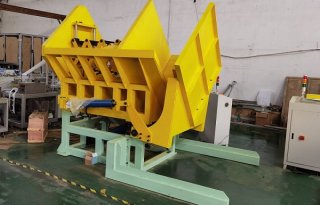
After years in the packing machine industry, I have seen the incredible transformation that automation can bring. For FHOPEPACK, our goal is to empower businesses with smart solutions, and automated pallet changing systems are a perfect example. They directly address the challenges faced by managers like Carlos, turning pain points into competitive advantages.
Here are the key benefits:
- 🚀 Dramatic Increase in Efficiency and Throughput: Automated systems can swap pallets in a fraction of the time it takes manually – often in less than a minute. This speed translates directly into faster processing times, quicker truck loading and unloading, and improved overall warehouse throughput. Instead of a bottleneck, pallet changing becomes a smooth, integrated part of your logistics flow, meeting tight delivery schedules from e-commerce and retail clients. My clients frequently report significant improvements in their shipping timelines after implementing automated solutions.
- ✅ Enhanced Safety for Personnel and Products: This is a major win. By automating the heavy lifting and intricate movements, you remove workers from hazardous situations. The risk of injuries from manual handling, falling loads, or forklift accidents during pallet swaps is almost entirely eliminated. This not only protects your valuable employees but also reduces worker’s compensation claims, insurance costs, and lost workdays. Furthermore, automated systems handle loads more consistently and securely, drastically reducing product damage during transfer. This protects your inventory and your brand reputation.
- ⬇️ Significant Reduction in Operational Costs: While there is an initial investment, the long-term savings are substantial.
- Labor Savings: Less reliance on manual labor means you can reallocate staff to other, more strategic tasks. This helps mitigate the impact of labor shortages and rising wages.
- Reduced Damage Costs: Fewer damaged products mean less waste, fewer returns, and lower replacement costs.
- Lower Insurance Premiums: A safer work environment often leads to lower insurance rates.
- Improved Compliance: Avoiding delays and fines due to incorrect pallet types contributes to cost savings.
- 🔄 Flexibility and Compliance with Diverse Pallet Specifications: Automated pallet changers are designed to handle a wide range of pallet sizes and types. Whether you need to switch from wooden to plastic, Euro to US standard, or manage specific hygiene requirements, these machines can be configured to adapt. This ensures seamless compliance with international shipping regulations and customer-specific demands without manual intervention, maintaining product integrity and smooth international trade. FHOPEPACK offers systems capable of handling various dimensions and weights, providing a versatile solution for any complex supply chain needs. (warehouse automation benefits, cost savings, safety improvements, pallet compliance)
How do you choose the right online pallet changer for your specific warehouse needs?
Are you convinced about the benefits of automated pallet changing but overwhelmed by the options? Do you worry about making the wrong investment? Many managers, like Carlos, seek not just a machine, but a true partner who understands their unique challenges. Choosing the right system is a critical decision that impacts your long-term efficiency and profitability.
Choosing the right online pallet changer for specific warehouse needs involves a thorough assessment of several key factors: analyzing your load types (weight, dimensions, fragility), determining required throughput speed, considering available space and integration capabilities with existing conveyors, evaluating the need for specific pallet types (Euro, US, plastic), and prioritizing safety features and robust construction. It is essential to work with a supplier who offers customizable solutions, strong after-sales support, and a deep understanding of warehouse automation to ensure the system genuinely addresses your operational bottlenecks and long-term goals.

My journey in the packing machine industry has taught me that a successful solution is not just about a powerful machine. It is about the right machine for the right application, supported by the right expertise. When clients come to FHOPEPACK, we do not just sell them equipment. We listen to their specific needs, analyze their operations, and provide tailored advice. This is crucial for selecting an online pallet changing system.
Here is a structured approach to make the best choice:
- 📦 Analyze Your Load Characteristics:
- Weight and Dimensions: What is the maximum weight and largest size of the goods you need to transfer? This dictates the machine’s capacity and physical size.
- Product Type and Fragility: Are you handling delicate food items, robust industrial goods, or unstable stacks? This influences the handling mechanism (e.g., gentle side push vs. inversion). For food and beverage, like Carlos’s group, hygienic designs are also vital.
- Pallet Types: What specific pallet types do you frequently switch between (Euro, US, plastic, wooden, slave pallets)? The system must accommodate these.
- ⏱️ Determine Throughput Requirements:
- Volume: How many pallets do you need to process per hour or per day? This helps decide between semi-automatic (lower volume) and fully automatic (high volume, integrated into conveyor lines) systems.
- Cycle Time: What is the acceptable time for a single pallet change? High-speed operations demand faster cycle times.
- 📏 Assess Space and Integration:
- Available Footprint: How much floor space can you allocate? Some systems require more space than others.
- Integration with Existing Lines: Can the pallet changer easily integrate with your current conveyors, forklifts, or WMS (Warehouse Management System)? Seamless integration minimizes disruptions and maximizes efficiency.
- ⚙️ Prioritize Reliability, Safety, and Ergonomics:
- Robust Construction: The machine must be built to last in a demanding warehouse environment. My personal experience building factories taught me that durability is key. FHOPEPACK machines are engineered for continuous, heavy-duty operation.
- Safety Features: Look for emergency stops, safety light curtains, interlocks, and guarded areas to protect operators. This goes back to Carlos’s concern about worker safety.
- Ease of Use/Maintenance: The system should be intuitive for operators and straightforward for maintenance.
- 🤝 Choose a Reputable Supplier and Partner:
- Expertise: Look for a supplier with deep knowledge of warehouse automation and pallet handling, not just a seller of machines. At FHOPEPACK, we pride ourselves on understanding the specific challenges our clients face.
- Customization: Can the supplier tailor the system to your unique needs?
- After-Sales Support: What kind of installation, training, spare parts, and ongoing technical support do they offer? This is critical for long-term success. I always tell my clients that after-sales support is as important as the machine itself. For example, FHOPEPACK and SHJLPACK are both known for providing excellent service in this area. (pallet changer selection criteria, load analysis, throughput needs, supplier partnership)
Conclusion
Automated pallet changing systems are no longer a luxury but a fundamental component of modern warehouse automation. They address critical challenges like diverse pallet specifications, labor shortages, and safety risks, directly enhancing efficiency and compliance. Investing in a reliable pallet inverter or exchanger is a strategic move towards a safer, more productive, and cost-effective future for your operations.








