
OEM vs Custom-Built | Which Type of Steel Coil Packing Line Manufacturer Fits Your Factory Needs?
My name is Randal Liu, and I have spent my entire career immersed in the world of packing machines. I have seen countless factories struggle with inefficient, unsafe, or outdated packaging processes. Maybe you are facing similar challenges right now. The decision between an Original Equipment Manufacturer (OEM) and a custom-built solution for your steel coil packing line is not just about price; it is about finding the right partner to future-proof your operations. Making the wrong choice can lead to lost productivity, increased costs, and even safety risks.
Choosing between an OEM and a custom-built steel coil packing line manufacturer depends entirely on your factory’s unique operational demands and long-term goals. OEMs offer standardized, cost-effective solutions for common needs, while custom-built manufacturers provide tailored, highly integrated systems designed to solve specific, complex production bottlenecks and safety concerns in high-intensity environments like steel processing plants.
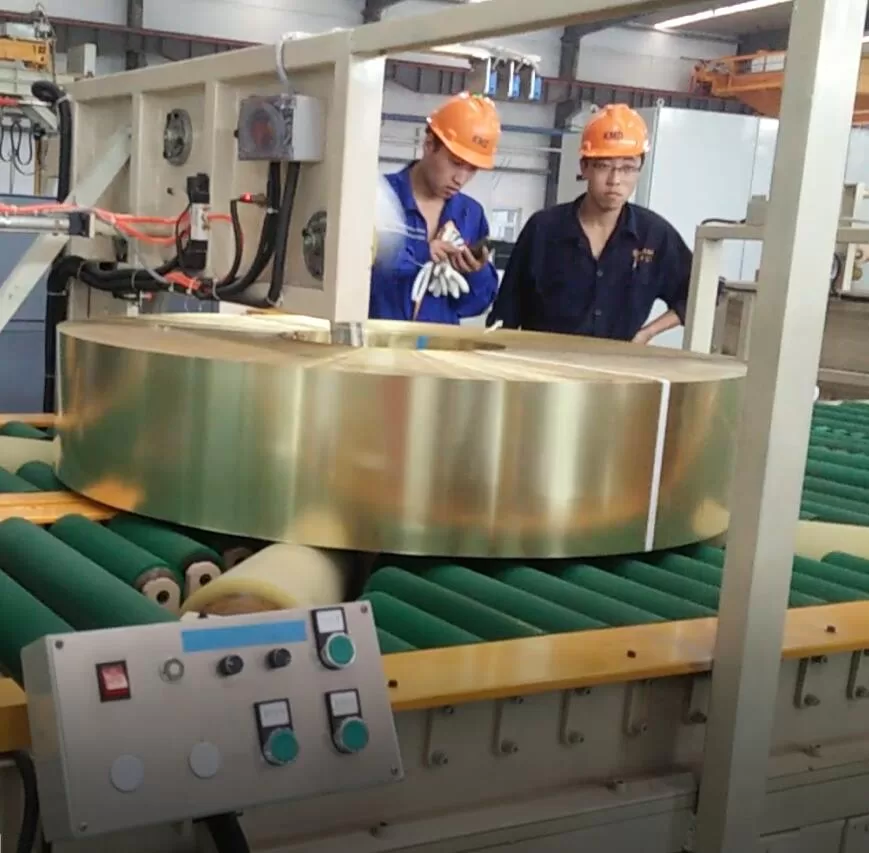
You are looking for more than just a machine; you are seeking a solution that truly understands and addresses your factory’s particular challenges. As someone who started on the factory floor and built a successful packing machine business, I understand the pressures of production, cost control, and worker safety. This guide will break down the differences, helping you navigate this critical decision and find the ideal partner for your steel coil packaging needs.
1. What Exactly Do We Mean by an OEM Steel Coil Packing Line Manufacturer?
Are you wondering what “OEM” really means in the context of industrial packing lines? Many factory managers, like Jose in Mexico, often hear this term but might not fully grasp its implications for their heavy-duty operations. The confusion can lead to misaligned expectations and costly investments if the solution does not fit.
An OEM steel coil packing line manufacturer primarily offers pre-designed, standardized packaging equipment that is mass-produced for a broad market. These manufacturers focus on delivering reliable, ready-to-use machines that handle common coil sizes and packaging requirements with efficiency and consistency.

When we talk about an OEM in our industry, we are referring to companies that specialize in producing a range of established, tested models for coil packing. Think of it like buying a car directly from a well-known car brand. They have a catalog of machines, such as basic orbital stretch wrappers for steel coils or simple strapping machines, that are designed to meet typical operational needs. These machines are built to a set specification and typically come with standard features. They are often ideal for factories that have straightforward packaging demands or are replacing an older, similar model. The manufacturing process for these machines is optimized for volume, which often translates to competitive pricing and faster delivery times. For operations that do not require extensive customization, an OEM can provide a dependable and efficient solution for handling steel coils, wire coils, or other metal products. They provide a solid, foundational piece of equipment for your end-of-line packaging tasks. (OEM coil packing solutions, standardized industrial packaging, pre-engineered steel wrapping machines).
2. What Are the True Advantages and Limitations of Choosing an OEM Solution?
It is tempting to look at OEM options because they often seem more straightforward and budget-friendly upfront. However, many factory managers overlook the hidden trade-offs. You might save money today but face significant efficiency bottlenecks, safety risks, or integration headaches tomorrow if the solution is not a perfect fit.
OEM steel coil packing lines offer significant advantages in terms of cost-effectiveness, faster procurement, and proven reliability for standard applications. However, their primary limitation lies in a lack of customization, which can lead to suboptimal integration with unique production flows, reduced efficiency for specialized coil handling, and potential safety compromises in highly specific factory environments.

When you consider an OEM solution for your steel coil packing line, you are essentially buying a “one-size-fits-most” product. This approach has clear benefits. First, the cost is often lower because the manufacturer benefits from economies of scale. They design and produce many identical machines, spreading their engineering and tooling costs across a larger volume. This can be attractive if budget is your absolute top priority and your needs are very standard. Second, delivery times are usually shorter. Since the designs are already complete and components might be readily available, the lead time from order to installation is typically much quicker than for a custom-built machine. Third, OEM machines often have a proven track record. Many units of the same model are already in operation, meaning there is usually a good understanding of their performance and reliability. You can often find existing users to vouch for their functionality, which can give you peace of mind.
However, these advantages come with important limitations, especially for demanding environments like a large metal processing plant. For instance, Jose, managing a metal fabrication factory in Mexico, faces unique challenges. A standard OEM machine might not seamlessly integrate with his existing production line, leading to manual workarounds and efficiency bottlenecks. The machine might be designed for average coil weights or dimensions, but what if Jose’s factory handles exceptionally heavy or unusually shaped steel coils?
Here are some key limitations of OEM solutions:
⚠️ Key Limitations of OEM Steel Coil Packing Lines
- Limited Customization: OEM machines are built to a fixed design. If your factory has unique space constraints, specific automation requirements, or non-standard coil sizes, an OEM solution might not adapt. This can force you to adjust your operations to the machine, rather than the machine adapting to your operations.
- Integration Challenges: Many factories operate complex, interconnected systems. An OEM packing machine might not easily “talk” to your existing ERP, MES, or other upstream/downstream equipment. This can create data silos and manual data entry, reducing the overall automation level you are trying to achieve.
- Suboptimal Efficiency: While efficient for general tasks, an OEM might not be optimized for your factory’s specific throughput goals or material handling processes. For example, if your current manual packing process for steel wire coils is slow, an OEM might offer a modest improvement but not the transformative leap you need for a significant ROI.
- Safety Gaps: Safety is paramount in heavy industry. An OEM machine comes with standard safety features. However, if your factory has unique hazards or requires specialized safety interlocks due to specific human-machine interactions or layout, an OEM might not fully address these nuanced requirements without costly modifications. This could leave gaps in your worker safety protocols, increasing the risk of injuries during steel coil handling.
- Generic Support: While OEMs provide support, it is often based on generic troubleshooting guides and standard parts. If your issue is highly specific to how the machine interacts with your unique setup, a generic support response might not fully resolve your problem, leading to longer downtimes.
For many steel plants striving for peak efficiency and safety, these limitations can quickly negate the initial cost savings. The long-term impact on productivity, worker well-being, and overall profitability needs careful consideration before settling on an OEM solution. (OEM packaging equipment drawbacks, standard coil wrapping machine issues, integration challenges with off-the-shelf packers, safety concerns with generic industrial machinery).
3. When Should You Consider a Custom-Built Steel Coil Packing Line for Your Operations?
Many factory managers like Jose, who oversee complex operations, quickly realize that “standard” solutions often fall short. When you are dealing with diverse steel coil dimensions, high production volumes, or integrating with specialized material handling systems, an off-the-shelf machine simply cannot keep up. The real question is, when does the investment in a tailor-made solution truly pay off for your steel plant?
You should consider a custom-built steel coil packing line when your factory faces unique operational challenges that standard OEM machines cannot address, such as specific coil dimensions, high throughput demands, seamless integration with existing production lines, or the need for advanced safety features to eliminate manual handling risks. A custom solution offers precise fit, optimized performance, and long-term ROI by directly solving your specific efficiency and safety bottlenecks.

From my experience, having designed and built many packing machines, the value of a custom-built solution becomes clear when the stakes are high. It is not just about making a machine; it is about engineering a solution that perfectly fits your factory’s DNA. Consider Jose’s situation: his factory needs to eliminate slow, manual coil packing, reduce product damage, and drastically improve worker safety. These are not generic problems; they require targeted answers.
Here is when a custom-built steel coil packing line is not just an option, but a necessity:
✨ Situations Requiring a Custom-Built Steel Coil Packing Line
-
Unique Product Specifications:
- Varying Coil Sizes & Weights: Your factory produces steel coils that are outside typical OEM machine ranges – perhaps extremely large, very narrow, or unusually heavy. A custom solution can handle these with precision.
- Delicate Surface Protection: Some steel products, like specific types of coated coils, require specialized wrapping materials or handling methods to prevent scratches or damage during internal transfer and shipping. Custom lines can integrate advanced protective measures.
- Specific Packaging Formats: If you need unique banding patterns, specialized ID/OD protection, or multi-material wrapping (e.g., film plus paper), a custom design can accommodate these complex requirements.
-
Complex Operational Integration:
- Existing Production Line Sync: Your new packing line must seamlessly integrate with existing slitting lines, strapping machines, or automated storage and retrieval systems. Custom manufacturers excel at designing interfaces and control systems that “talk” to your current infrastructure.
- Space Constraints & Layout: Your factory floor might have an irregular layout or limited space. A custom-built machine can be designed to fit precisely within these constraints, optimizing floor space utilization without compromising flow.
- High Throughput Demands: For factories needing to process a very high volume of coils per hour, a custom line can be engineered for maximum speed and efficiency, eliminating end-of-line bottlenecks. This is crucial for improving overall production and delivery speeds.
-
Enhanced Safety & Automation:
- Eliminating Manual Handling Risks: If your current process involves significant manual lifting, turning, or securing of heavy coils, a custom line can automate these tasks, drastically reducing the risk of worker injuries and lowering insurance costs.
- Advanced Safety Features: Beyond standard safeguards, custom solutions can incorporate specialized light curtains, safety interlocks, and robotic assistance tailored to your unique operational environment, ensuring the highest level of worker protection.
- Full Automation Goals: If your vision is a fully automated factory, a custom packing line is a key component, designed from the ground up to integrate with your broader automation strategy, from loading to final dispatch.
-
Long-Term ROI & Partnership:
- Solving Specific Bottlenecks: A custom solution is an investment directly targeting your most critical pain points – whether it is slow processes, product damage, or high labor costs. This direct problem-solving leads to a clearer and more impactful ROI.
- Future-Proofing: By designing a system that can adapt to potential future changes in product lines or production volumes, a custom solution offers greater flexibility and longevity compared to a fixed OEM model.
- Expert Partnership: Choosing a custom manufacturer means partnering with engineers who understand your industry inside out. They offer not just equipment but also valuable insights, design expertise, and ongoing support tailored to your evolving needs. This is critical for overcoming challenges like supplier trust issues.
For a factory manager like Jose, who needs to boost automation, significantly improve safety, and achieve measurable cost reductions, a custom-built steel coil packing line is often the only path to truly transformative results. It is about strategic investment for a sustainable future. (Tailored coil packaging solutions, bespoke steel wrapping systems, integrated factory automation, enhanced worker safety equipment, specialized heavy-duty packing machines).
4. How Can You Confidently Choose the Right Manufacturer for Your Factory’s Future?
Making a significant investment in a steel coil packing line, whether OEM or custom, is a decision that impacts your factory’s profitability and safety for years to come. Many factory managers, like Jose, have experienced supplier trust crises, where promises of sales were not met with adequate after-sales support. How can you be sure you are picking a partner who truly understands your needs and delivers lasting value?
To confidently choose the right steel coil packing line manufacturer, prioritize partners who demonstrate deep engineering expertise, offer robust after-sales support, have a proven track record in your industry, and show a clear understanding of your factory’s specific operational challenges and ROI goals. Conduct thorough due diligence, focusing on their ability to deliver a solution that improves efficiency, enhances safety, and integrates seamlessly with your existing infrastructure, rather than just selling a machine.
Based on my journey from factory employee to packing machine factory owner, I can tell you that the right partner is not just a vendor; they are an extension of your team. They understand that a packing line is a strategic asset, not just an expense. Here are the critical factors you must evaluate:
✅ Key Considerations for Choosing Your Packing Line Manufacturer
-
Deep Industry Expertise & Engineering Capability:
- Look for a history of solving complex problems: Does the manufacturer have experience with diverse steel coil types, heavy-duty applications, and high-volume operations?
- Assess their engineering team: Can they demonstrate how they would approach your specific challenges, like minimizing product damage or integrating with unique upstream processes? A manufacturer like FENGDING, for instance, is known for its strong engineering prowess in custom solutions for demanding industrial environments. They exemplify the kind of deep expertise you should seek.
- Ask for case studies or references: Can they show you examples of how they have helped other factories with similar issues improve automation and safety?
-
Robust After-Sales Support & Service:
- Availability of spare parts: Can they quickly supply critical components, minimizing downtime? This is vital for maintaining high productivity.
- Technical support and training: Do they offer comprehensive training for your operators and maintenance staff? What is their response time for technical queries or on-site service?
- Long-term maintenance plans: Do they provide preventative maintenance schedules or service contracts to ensure your investment runs smoothly for years?
-
Understanding of Your ROI & Business Goals:
- Focus on problem-solving, not just features: Does the manufacturer ask detailed questions about your current efficiency bottlenecks, safety concerns, and product loss rates?
- Clear ROI projection: Can they articulate how their proposed solution will reduce labor costs, improve throughput, decrease product damage, and enhance worker safety, providing a clear return on your investment?
- Collaborative approach: Are they willing to work with you to understand your financial constraints and operational targets, tailoring a solution that fits your budget while delivering maximum value?
-
Reputation & Trustworthiness:
- Market standing: How long have they been in business? What is their reputation in the industry? Companies like Wuxi Buhui, for example, have also built a strong reputation by offering reliable packing machine solutions, especially for those looking for robust and adaptable systems.
- Transparency: Are they open about their manufacturing processes, project timelines, and potential challenges?
- Client testimonials: Seek out feedback from their current clients regarding their reliability, project execution, and post-installation support.
-
Focus on Safety & Compliance:
- Adherence to safety standards: Does their equipment meet international safety standards (e.g., CE, OSHA equivalent)?
- Integrated safety features: Do they prioritize designing solutions that inherently minimize human interaction with hazardous areas, reducing work-related injuries? This is a critical factor for factory managers like Jose, who are under pressure to ensure compliance and worker well-being.
Choosing the right manufacturer is about building a relationship based on trust and shared goals. It is about finding a partner who not only provides a high-quality machine but also offers the expertise and support to help your factory achieve its full potential in automation, efficiency, and safety. I have seen firsthand how powerful this kind of partnership can be for business growth. (Evaluating packing equipment suppliers, industrial machinery procurement, finding expert packaging partners, ROI analysis for automated systems, long-term supplier relationships for steel coils).
Conclusion
The choice between an OEM and a custom-built steel coil packing line hinges on your factory’s specific needs, from throughput to safety. While OEM offers cost efficiency for standard tasks, custom solutions provide tailored precision for unique operational challenges, ensuring optimal integration and long-term value. By carefully evaluating a manufacturer’s expertise, support, and understanding of your goals, you can secure a partner that drives efficiency, enhances safety, and delivers a strong ROI for your steel coil packing line investment.








