

Inline Pallet Flipper vs Standalone Unit — Which Fits Your Workflow?
Are you struggling with slow, unsafe, and inefficient pallet handling in your factory? Manual pallet flipping can quickly become a bottleneck, eating into your profits and putting your team at risk. As someone who has built and managed packing machine factories, I understand the pressures of maintaining high output, controlling costs, and ensuring a safe workplace. It is time to look at solutions that truly make a difference.
The choice between an inline pallet flipper and a standalone unit depends on your factory’s specific workflow, volume, space, and flexibility needs. Inline systems integrate directly into automated production lines, offering seamless, high-volume transfer for consistent operations, while standalone units provide greater flexibility and versatility for lower-volume or varied tasks, often moved to different workstations. The best fit hinges on whether your priority is continuous, high-speed automation or adaptable, on-demand material handling.

Making the right equipment investment is not just about buying a machine. It is about finding a partner who understands your production challenges, from efficiency bottlenecks to safety concerns. Let us dive into the details and find the solution that best supports your business growth.
1. What is an Inline Pallet Flipper and how does it optimize continuous production?
Is your current production line constantly held back by slow, manual pallet changes? If you are moving heavy coils or steel wire, delays at the end of the line can quickly cascade, affecting your entire operation. This common problem demands a seamless, integrated solution that keeps your products flowing.
An inline pallet flipper is a material handling system integrated directly into an existing automated production or conveyor line, designed to automatically change or invert pallets without human intervention. It ensures a continuous, uninterrupted flow of goods, ideal for high-volume manufacturing environments where efficiency and speed are paramount, directly reducing bottlenecks and labor costs for repetitive tasks like steel coil packaging or heavy product transfer.


How Inline Systems Transform High-Volume Manufacturing Workflows
From my experience in the packing machine industry, an inline pallet flipper is more than just a piece of equipment; it is a strategic investment in operational continuity. Imagine a steel coil packing line where thousands of coils move daily. Any break in the flow for a manual pallet change means lost time and reduced output. An inline system solves this by integrating seamlessly. The product, whether it is a heavy metal sheet stack or a delicate finished good, moves onto the flipper, undergoes the pallet exchange, and continues down the line without stopping. This integration is crucial for factories like the ones I have managed, where precision and speed directly impact profitability. These systems are often customized to fit specific conveyor heights, product dimensions, and weight capacities, ensuring they become a natural extension of the existing manufacturing process. They eliminate the need for forklifts or manual lifting in a dedicated area, which also frees up floor space and reduces traffic within the factory. The key benefit lies in the system’s ability to maintain a consistent cycle time, removing the variability and potential errors associated with manual operations. This level of automation is essential for facilities aiming for lean manufacturing and Industry 4.0 standards. It ensures that every product, from raw material to finished shipment, moves with optimal efficiency, minimizing dwell times and maximizing throughput. (continuous material flow, automated pallet changing, high-volume production, integrated conveyor system, reduced manual labor)
2. What is a Standalone Pallet Flipper and when is it the more flexible solution?
Are you dealing with diverse product lines or lower volume operations where a fixed, inline system feels like overkill? Many factories face the challenge of needing pallet exchange capabilities without a rigid, constant flow. The pressure to improve safety and efficiency is still there, but the operational rhythm is different.
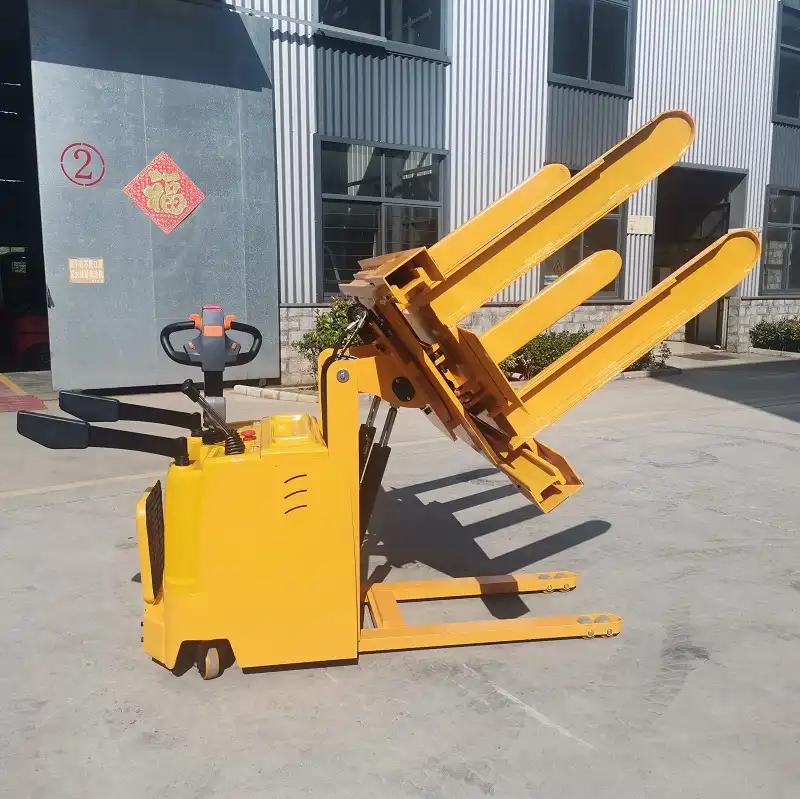
A standalone pallet flipper is an independent unit that operates outside of a fixed conveyor line, offering greater flexibility for various material handling tasks and locations. It is often a mobile or semi-mobile system, used for on-demand pallet changes, product inversion, or load transfer in warehouses, loading docks, or specific workstations where different pallet types or temporary operations require adaptability, making it an ideal choice for factories with varied product sizes, lower throughput, or the need for versatile equipment deployment.


Understanding the Adaptability of Standalone Pallet Inverters in Dynamic Environments
From my time on the factory floor, before I even started FHOPEPACK, I saw firsthand how different production needs demand different solutions. For facilities handling a wide array of products—say, various sizes of steel coils or different types of industrial components—a standalone pallet flipper offers unmatched versatility. It can be moved with a forklift to different areas of the plant, servicing multiple production lines or storage zones as needed. This flexibility is invaluable for operations that do not run 24/7 on a single product type or where floor space is at a premium and a fixed installation is impractical. For instance, a medium-sized metal fabrication plant might need to invert heavy metal sheets for a specific process, then move the flipper to a different area for palletizing finished goods onto export-compliant pallets.
Here are common scenarios where standalone units excel:
- Diverse Product Handling: When you manage various product sizes, weights, or packaging types, requiring different handling procedures.
- Variable Production Volume: For operations with fluctuating demand, a standalone unit can be deployed only when needed, optimizing resource allocation.
- Space Constraints: In factories where a permanent installation is not feasible, a standalone unit can be stored away when not in use.
- Specialized Tasks: Ideal for specific tasks like freezing goods, replacing damaged pallets, or transferring products to different pallet types (e.g., from wooden to plastic or export-grade pallets).
- Warehouse and Logistics: Frequently used in warehouses for consolidating loads, changing pallets for sanitary reasons, or preparing shipments for different regions.
Standalone pallet flippers often come in various designs, including side-press models, 90-degree tippers, or floor-level units, each suited for different applications. Their mobility and adaptability make them a smart choice for companies that prioritize operational agility and cost-effectiveness without sacrificing safety or efficiency. They reduce the reliance on manual lifting and tilting, which significantly lowers the risk of worker injury and product damage, a constant concern for factory managers like Jose. (flexible pallet inverter, versatile material handling, on-demand pallet exchange, diverse product types, mobile pallet changer, warehouse logistics solution)
3. How do Inline and Standalone Pallet Flippers compare in terms of operational impact?
Making the right investment means understanding how each system impacts your daily operations. You need to weigh the upfront cost against long-term benefits in efficiency, safety, and product integrity. The wrong choice can create new problems instead of solving existing ones, adding pressure to your bottom line.
Inline pallet flippers offer superior operational impact for high-volume, repetitive tasks by ensuring continuous flow, eliminating manual intervention, and significantly boosting throughput in an automated setup. Standalone units, conversely, provide greater flexibility and adaptability for varied tasks, intermittent use, and diverse product handling, making them impactful for operations prioritizing versatility and on-demand pallet exchange. The operational impact hinges on whether your factory needs dedicated, high-speed automation or flexible, multi-purpose utility.


A Detailed Comparison of Operational Benefits and Considerations
From my years overseeing factory operations, I know that every decision about equipment comes down to how it affects the bottom line and the well-being of the workforce. When comparing inline and standalone pallet flippers, it is not just about features, but about the holistic operational impact.
Here is a breakdown of their comparative operational impacts:
| Feature | Inline Pallet Flipper | Standalone Pallet Flipper |
|---|---|---|
| Integration | Fully integrated into automated conveyor lines; fixed position. | Independent unit; often portable or semi-portable. |
| Throughput | High-volume, continuous operation; maximizes line speed. | Moderate to high volume; batch processing; on-demand use. |
| Automation | High; minimal human intervention required. | Moderate; typically requires an operator for loading/unloading. |
| Flexibility | Low; designed for specific product flows and fixed tasks. | High; adaptable to various locations and diverse tasks. |
| Space Use | Fixed footprint within the production line. | Flexible footprint; can be moved and stored when not in use. |
| Safety | Enhances safety by eliminating manual lifting on the line. | Significantly reduces manual lifting wherever deployed. |
| Setup Cost | Higher initial investment due to integration complexity. | Lower initial investment; simpler installation. |
| Maintenance | Integrated with line maintenance; critical for line uptime. | Easier to isolate for maintenance without stopping the line. |
| Ideal For | High-speed production, consistent product lines (e.g., coil packing). | Diverse products, variable tasks, space-constrained areas. |
For a manager like Jose, who oversees a metal processing plant in Mexico, this comparison is vital. If his primary challenge is an efficiency bottleneck in his steel coil packing line due to manual pallet handling, an inline system might offer the most direct solution for speeding up the end-of-line process and reducing labor costs associated with that specific operation. The uninterrupted flow would lead to significant gains in overall production and delivery speed. However, if his factory handles a variety of heavy metal components that need occasional pallet changes for quality checks, storage, or before shipping to different markets, and these tasks are not tied to a single, continuous line, a standalone unit would provide the necessary flexibility and cost-effective safety improvements. The safety aspect is paramount in both cases, as both systems reduce the high-risk activities of manually handling heavy products and pallets, thus lowering injury rates and associated insurance costs. My own journey, starting from an employee to building a successful packing machine factory, showed me that understanding these nuances makes all the difference in choosing equipment that truly supports business growth and employee well-being. (operational efficiency comparison, pallet flipper benefits, material handling costs, industrial automation choice, production line optimization, safety in heavy industry)
4. Which pallet flipper type offers the best ROI for your specific factory setup?
Are you feeling the pressure to make smart investments that deliver clear, measurable returns? Factory managers often struggle to justify new equipment purchases without a strong business case. You need a solution that not only solves immediate problems like efficiency and safety but also contributes positively to your factory’s profitability and long-term sustainability.
The best return on investment (ROI) for a pallet flipper is achieved when the chosen system directly addresses a factory’s most critical bottlenecks, safety hazards, and product damage issues, aligning with its production volume and operational flexibility needs. An inline system typically offers higher ROI for high-volume, consistent production by maximizing throughput and minimizing labor costs in fully automated lines. Conversely, a standalone unit provides a better ROI for factories with varied product lines, intermittent needs, or space constraints, due to its lower initial cost, flexibility, and ability to improve safety and reduce damage across diverse tasks.
Maximizing Your Investment: A Strategic Approach to Pallet Flipper Selection
As someone who has built factories and helped many clients grow their businesses, I have learned that the best ROI comes from a solution tailored to specific problems, not just a one-size-fits-all approach. For a factory manager like Jose in Mexico, with over 20 years of experience, a deep dive into his operational challenges and goals is essential to determine the optimal pallet flipper.
Consider these factors to calculate your ROI:
- Labor Cost Savings: How many hours of manual labor (and associated wages, benefits, and overhead) can be eliminated or reallocated by automating pallet changes?
- Reduced Product Damage: Quantify the cost of damaged goods during manual handling. Both inline and standalone units can drastically reduce this.
- Improved Safety & Reduced Insurance Costs: Estimate the cost savings from fewer worker injuries, lower insurance premiums, and reduced employee turnover caused by hazardous tasks.
- Increased Throughput: For inline systems, how much faster can your production line run? Calculate the value of increased units produced and shipped.
- Space Optimization: How much valuable floor space can be freed up by eliminating manual handling areas or temporary staging zones?
- Maintenance & Downtime: Factor in the maintenance costs and potential downtime associated with each system. Inline systems, being integrated, might have a higher impact if they fail, but usually come with robust predictive maintenance features from a good supplier.
For high-volume operations handling steel coils or other heavy goods, an inline pallet flipper often shows a compelling ROI through sheer efficiency gains and continuous production. The investment can be justified by calculating the increased output over months and years. For example, reducing a 5-minute manual pallet change to a 30-second automated one across hundreds of cycles daily quickly adds up to substantial time and cost savings.
However, a standalone unit may offer a faster ROI for factories with less consistent, more varied production. Its lower initial cost, combined with its ability to tackle safety hazards and prevent product damage across multiple work areas, can quickly pay for itself. Imagine preventing one severe worker injury or saving a batch of valuable steel plates from damage due to faulty manual handling; these avoided costs represent direct profit. My experience at FHOPEPACK has shown me that partnering with a knowledgeable supplier who understands your unique operational flow and can provide an honest assessment of both options is key. We strive to provide solutions that not only solve immediate problems but also contribute to your long-term financial independence and business growth, just as the packing machine industry did for me. (pallet flipper ROI, factory investment analysis, cost-benefit pallet system, production efficiency metrics, safety equipment ROI, business growth strategies)
Conclusion
Choosing between an inline and a standalone pallet flipper is a strategic decision that shapes your factory’s efficiency, safety, and profitability. Inline systems excel in high-volume, continuous flows, while standalone units offer vital flexibility for diverse operations. The best choice always aligns with your unique workflow, maximizing ROI through reduced labor, enhanced safety, and minimal product damage. Invest wisely in the right pallet flipper to master your packing machine operations.












